On this page
Recipes often tell you to add sourdough starter at its peak, but that advice can feel mysterious when you watch the jar. One hour the starter is domed and full of bubbles; later there's a streak above the surface and the mixture is collapsing. Peak is simply the turning point between expansion and decline. Recognizing that moment helps you time fermentation and understand why two loaves using the same recipe can behave differently.
Peak starter, explained
After feeding, microorganisms consume available nutrients and produce gas. The starter expands as its structure traps some of that gas. Eventually it reaches its highest volume for that particular cycle; this is peak rise. It then begins to fall as gas escapes and the mixture loses some of its ability to hold its expanded shape.
The easiest way to see peak
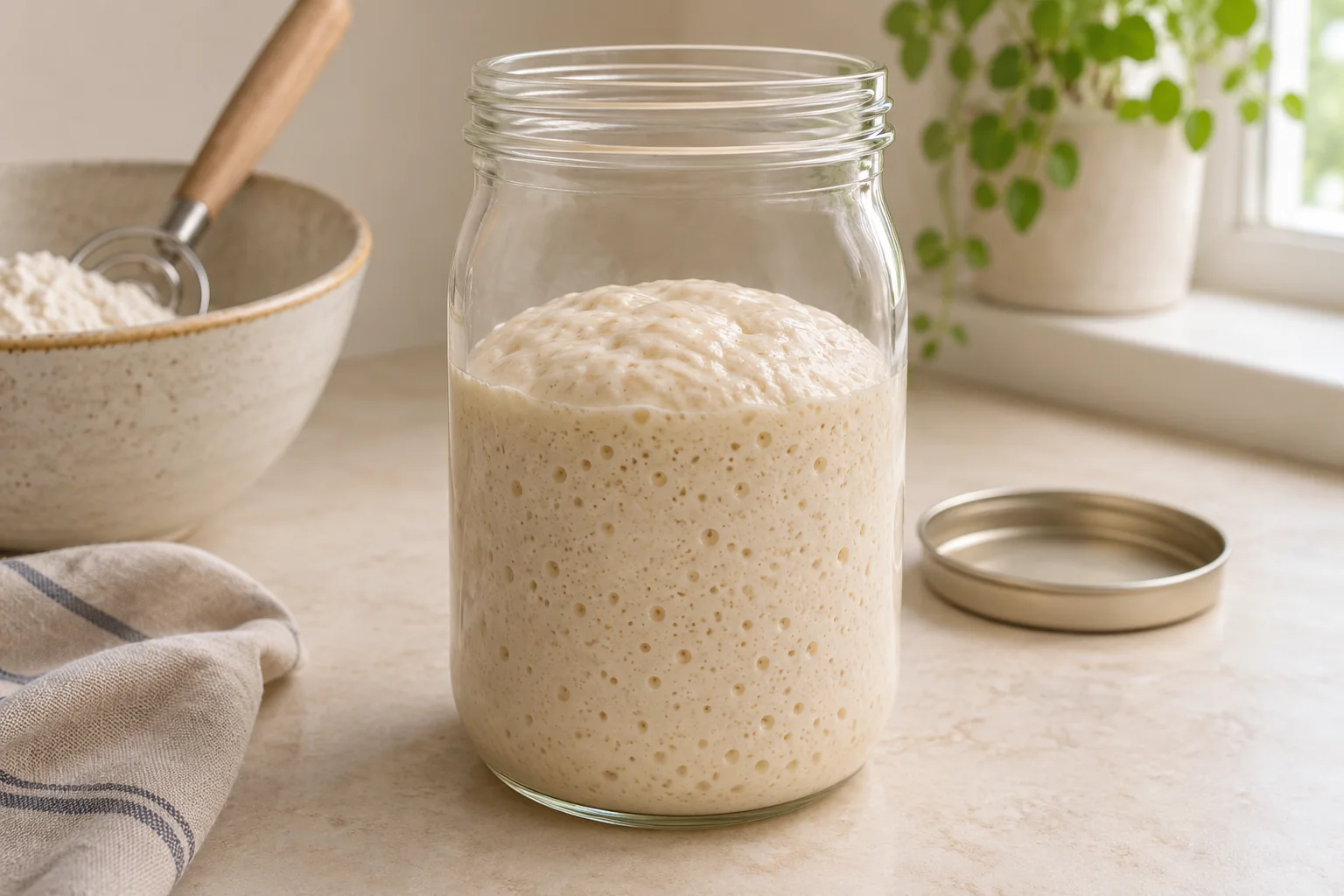
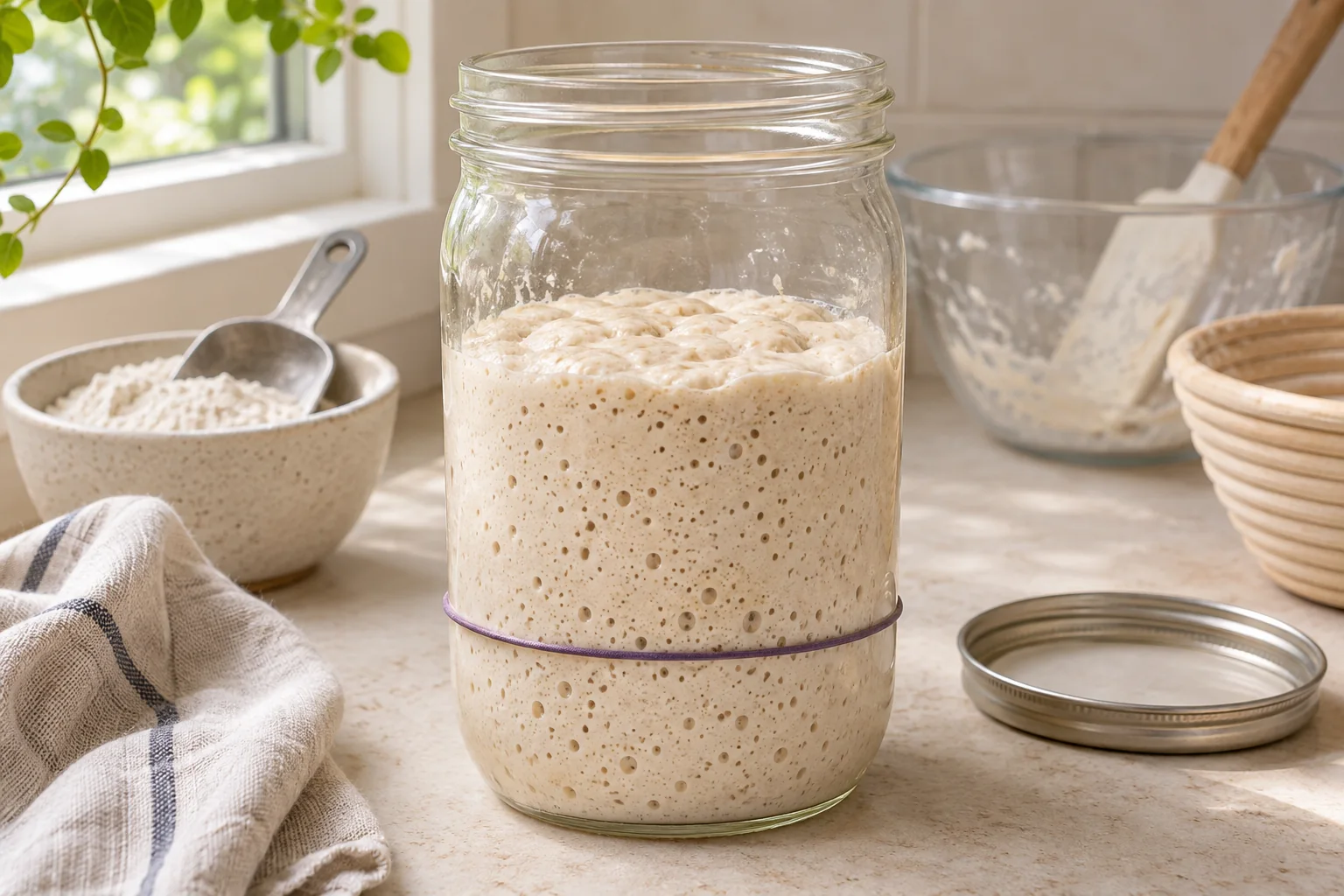
Use a transparent straight-sided jar and mark the level immediately after feeding. As the starter rises, compare its height with that mark. At or near peak, the top may look gently rounded, the sides show bubbles and growth slows before reversing. A clean line of dried starter above the surface indicates it has already fallen.
What a domed top tells you
A softly domed surface suggests the culture may still be rising or near its maximum height. A flatter or slightly sunken top after a large rise can indicate that the peak has passed. Not every starter forms an obvious dome; flour type, hydration and container shape influence appearance.
Why peak is useful for bread
Near peak, starter usually has vigorous fermentation activity and is well aerated. Many lean sourdough bread formulas rely on that stage for dependable dough fermentation. Using a recently fed but barely active starter can slow the loaf, while an excessively depleted culture may lead to less predictable results.
Recipe to try: Sourdough Country Loaf. The loaf calls for active starter. Check its maturity and the dough’s fermentation cues before moving on to shaping.

Peak is not the same as readiness from birth
A culture can have a visible short-lived peak during the early days of development without being mature enough to bake well. A reliable starter demonstrates similar rising behaviour over multiple feedings. Use consistency, aroma and full-cycle activity rather than declaring success because it once expanded dramatically.
How feeding ratios change peak time
At a consistent temperature, a larger feeding relative to the retained starter generally takes longer to mature. Record the feeding ratio and mark the starting level. Watch several cycles before choosing a feeding time for bread day.
Understanding 1:1:1
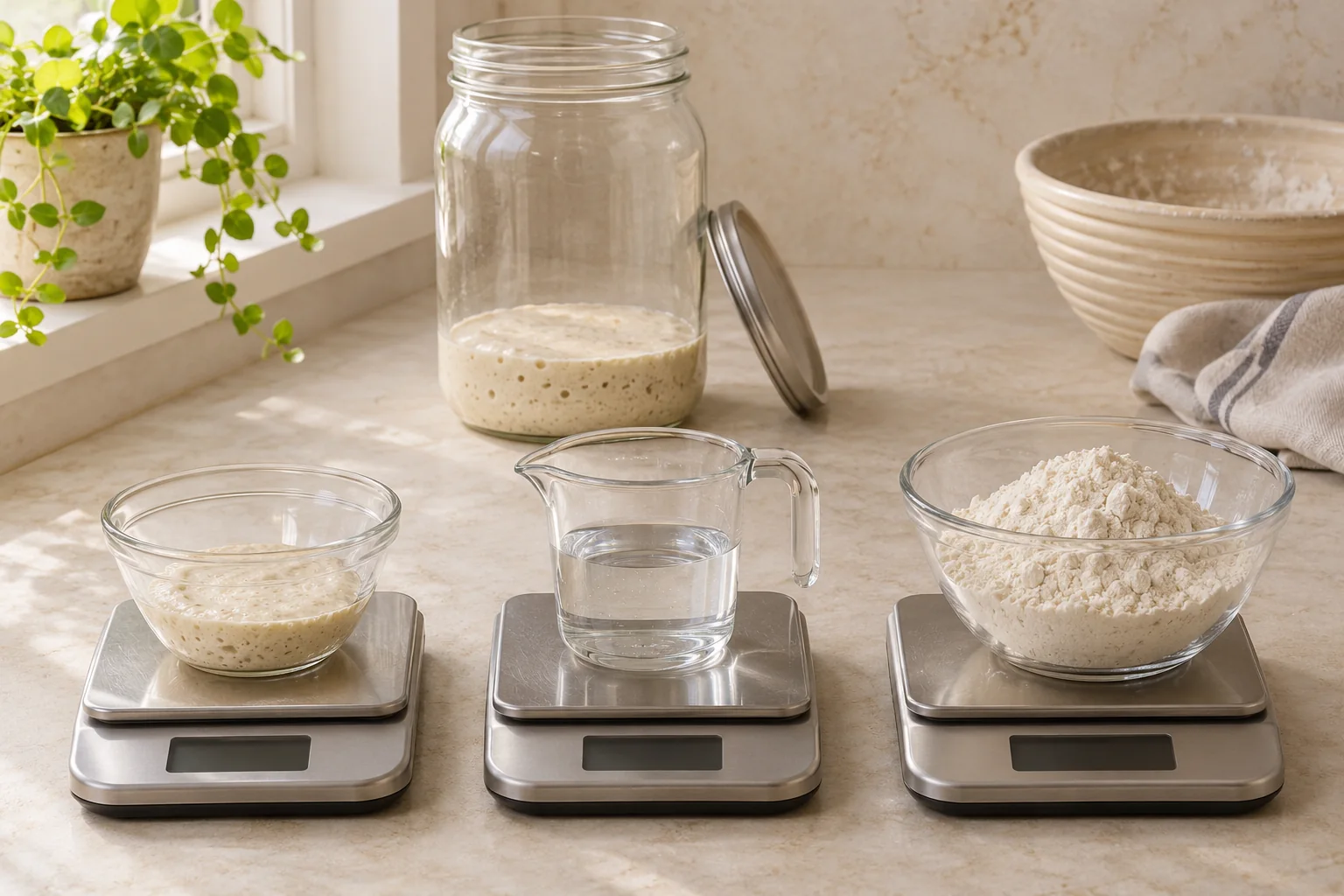
This ratio means one part existing starter, one part flour and one part water, all by weight. A 30 g starter seed plus 30 g flour and 30 g water yields 90 g after feeding. It's a common maintenance ratio and can make the peak occur relatively soon when the starter is already healthy and warm.
Understanding 1:2:2
Here the retained starter receives double its weight in flour and double in water. For example, 20 g seed plus 40 g flour and 40 g water yields 100 g. With more food per unit of existing culture, the starter generally takes longer to use its food and reach peak.
Understanding 1:4:4
A 10 g starter seed combined with 40 g flour and 40 g water yields 90 g. This larger feed ratio may be helpful when you need a later peak, such as after an overnight rise. Warmth and starter strength still determine whether it peaks on schedule; monitor the jar instead of assuming a fixed twelve-hour interval.
Temperature can change everything
A warm environment speeds most normal fermentation activity, while a cool room slows it. A starter that peaks after five hours in a warm kitchen may behave very differently on a chilly night. Record the room or starter temperature when comparing batches; otherwise, timing differences can look like unexplained weakness.
Flour choice changes the visual shape
A whole-grain starter may have a different bubble pattern and fermentation speed from a white-flour starter. A stiff starter can hold a rounded peak more visibly, while a highly liquid starter may expand less dramatically before falling. Judge each culture by its own normal behaviour.
Young starter versus ripe starter
A young levain refers to a preferment used earlier in its fermentation cycle, often for a milder profile within a formula designed for it. A ripe starter is at the maturity the recipe expects, often near its maximum rise. These are purposeful choices rather than one stage being universally correct.
Past-peak starter: is it unusable?
Not necessarily. The fermentation pace or flavour may differ from a peak sample. For beginners, following the bread recipe's intended starter stage produces more consistent timing.
What a collapsed starter tells you
A fallen surface and high-tide line on the jar usually mean the starter has completed much of its growth for that feeding. It may smell more acidic or alcoholic. This often signals a need for feeding rather than contamination. Check for mold, unusual discolouration or foul odours separately.
Peak and the float test
A starter near peak may float because it contains gas, but a floating spoonful isn't a precise clock for maximum activity. Stirring or sampling can release bubbles and make an otherwise healthy starter sink. Use the jar's growth curve as the primary observation.
How to estimate your personal peak window
Feed at a standard ratio, mark the height and check periodically until it stops increasing. Record the time and temperature. Repeat on several days. When you know its usual window, you can feed ahead of mixing dough without having to inspect the jar every fifteen minutes.
Recipe to try: Sourdough Ciabatta. Ciabatta provides a different dough and loaf shape to practise with. Keep its hydration and handling instructions together.

Scheduling an evening bake
If the starter reliably peaks faster than your workday allows, a larger feed ratio or cooler environment may help push its maturity into the evening. Follow a maintenance plan suited to that change, and test it before preparing a large bread batch for guests.
Scheduling a morning bake
Some bakers feed at a larger ratio before bed and mix in the morning. But an overnight feed in a hot kitchen may rise and fall sooner than expected; build your own timeline from observations.
Mistaking a flat surface for inactivity
A starter that rose overnight and fell may look almost the same height in the morning as it did immediately after feeding. Look for residue above the surface, bubbles and a different aroma. Without a marked jar, you may miss the entire rise and conclude the culture is dead.
When to feed after peak
For maintenance, follow the room-temperature or refrigerator feeding routine suitable for your starter and schedule. An active room-temperature culture typically requires more frequent feeding than one kept cold. Don't wait indefinitely after collapse merely to increase sourness.
Recipe to try: Sourdough Crackers. These crackers use sourdough discard. Use discard from a healthy established starter and bake it fully; this is not a raw-starter snack.

Frequently asked questions
Should I use starter at exactly the highest minute? No; many recipes tolerate a useful maturity window. Does peak mean it must triple? No. Why did it peak early? Temperature or a smaller feed ratio may explain it. Can starter peak without huge bubbles? Yes. Is a fallen starter always bad? No, but assess its overall health and recipe requirements.
Learn the curve, not the clock
The most useful sourdough habit is watching one complete feeding cycle. Once you understand how your starter grows and recedes at a given ratio and temperature, you can plan bread around its activity instead of constantly wondering whether the jar is ready.
IN PICTURES
From the baking notebook
FROM THE RECIPE BOX


