On this page
A cheesecake water bath is one of those baking techniques that inspires strong opinions. Some bakers use one for every cheesecake; others prefer a carefully controlled dry-oven recipe. Both methods can create delicious cakes, but the bath changes how heat reaches the custard. Understanding its strengths and limitations makes it easier to pick a method that matches your equipment and the finish you want.
What is a cheesecake water bath?
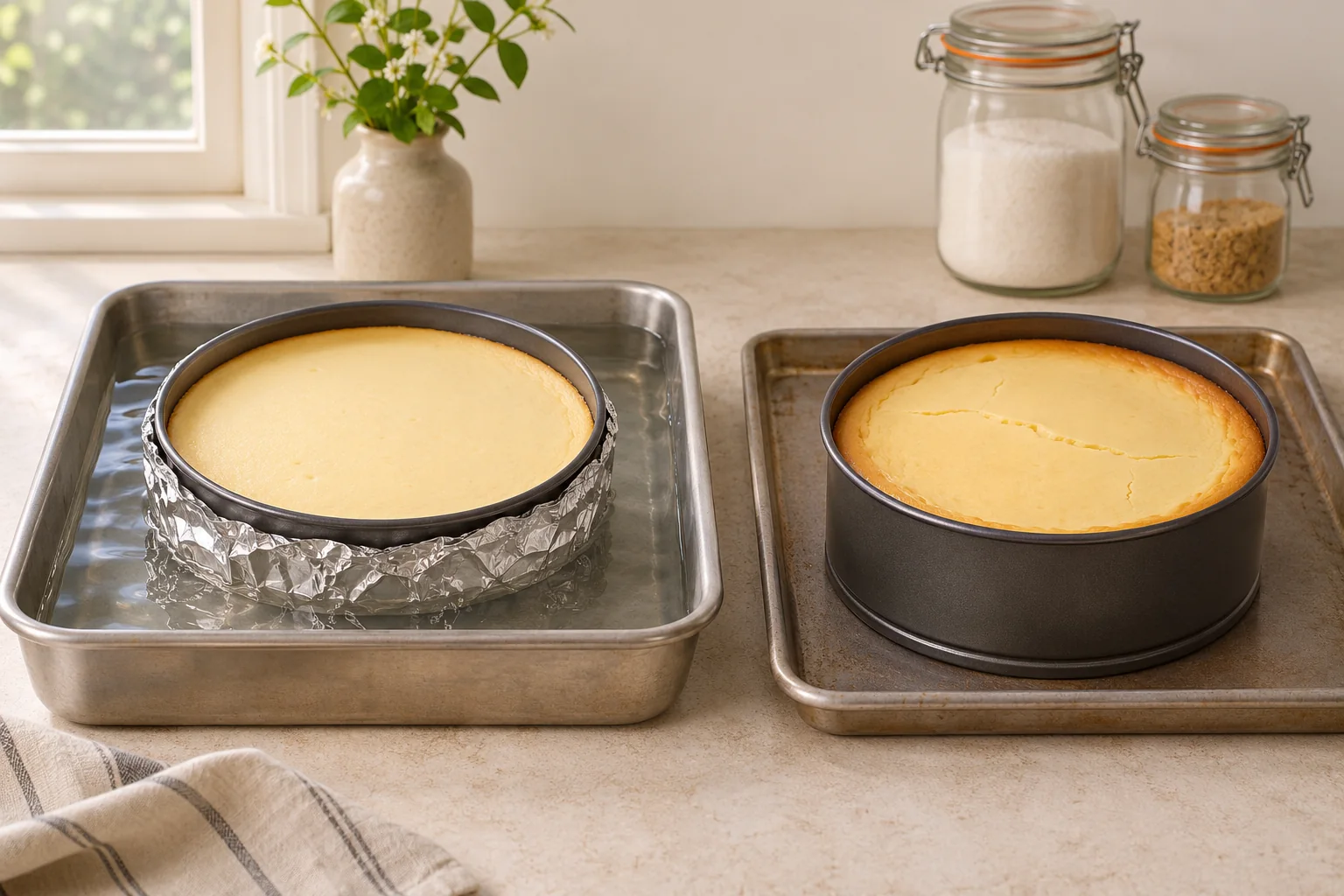
A water bath, or bain-marie, places the cheesecake pan inside a larger oven-safe pan with hot water surrounding part of its sides. The water buffers the heat delivered to the filling and helps it cook more evenly. This differs from simply setting a tray of water on a distant oven rack.
Why gentle heat matters for cheesecake
The filling contains eggs and dairy. Its proteins form a delicate structure as they cook, and high heat around the perimeter can firm that area before the centre is ready. A more gradual bake can protect creaminess and reduce contraction stresses that cause surface cracks.
How the water moderates heat
A water bath buffers heat around the submerged sides of the pan, helping the edge and centre cook more evenly. It can reduce cracking, but it cannot compensate for overbaking or an excessively aerated filling. A dry-oven recipe can also work when its method is designed for that setup.
The main advantage: more even heating
Water conducts and distributes heat around the pan differently from hot oven air, reducing the intensity of the sidewall heating. This can make the filling less likely to overcook at the outer edge while the centre finishes. It is especially useful for thick rich cheesecakes.
The main disadvantage: extra handling
You need a larger roasting pan, enough oven space and a safe way to manage hot water and a heavy cheesecake pan. The setup can be awkward. Water can also enter a poorly sealed springform and make the crumb crust soggy. These practical drawbacks are worth considering before starting.
How springform leaks happen
Springform pans have removable parts that create seams. Those joins may not be watertight under pressure from a surrounding bath. Some methods wrap the pan in multiple layers of appropriate foil; others place the springform inside a slightly larger solid pan. Follow the tested recipe and use equipment rated for the oven.
Is foil protection guaranteed?
No. Foil can tear or leave a small channel where water enters. Don't assume a wrapped pan is completely waterproof. A nested solid pan is another method in some recipes, but it changes dimensions and heat transfer; follow the formula's specified arrangement.
The Classic New York Cheesecake method wraps the springform pan in foil and places it in a deep roasting pan. It calls for hot water around the pan and a thermometer check at the centre. Use that complete method when practising a water-bath bake.
How much water should you add?
Use the recipe's depth, often a specified fraction of the cheesecake pan's height. Adding more water than needed increases spill and scald risks, while too little may reduce the intended buffering. The water temperature and pan arrangement also follow the chosen formula.
Avoid carrying an unstable pan of hot water
A large roasting pan full of very hot water is heavy and easy to spill. Some methods safely place the roasting pan in the oven before carefully adding water, when the equipment and recipe allow. Others use a controlled transfer. Never improvise if the arrangement feels unstable; severe steam and hot-water burns are possible.
Does a water bath prevent every crack?
No. Overmixed batter, excessive baking time, ingredient imbalance and rapid cooling can still cause cracks. The bath reduces one major problem—uneven or aggressive heating—but cannot repair a cheesecake already loaded with excess air.
What does no-water-bath baking offer?
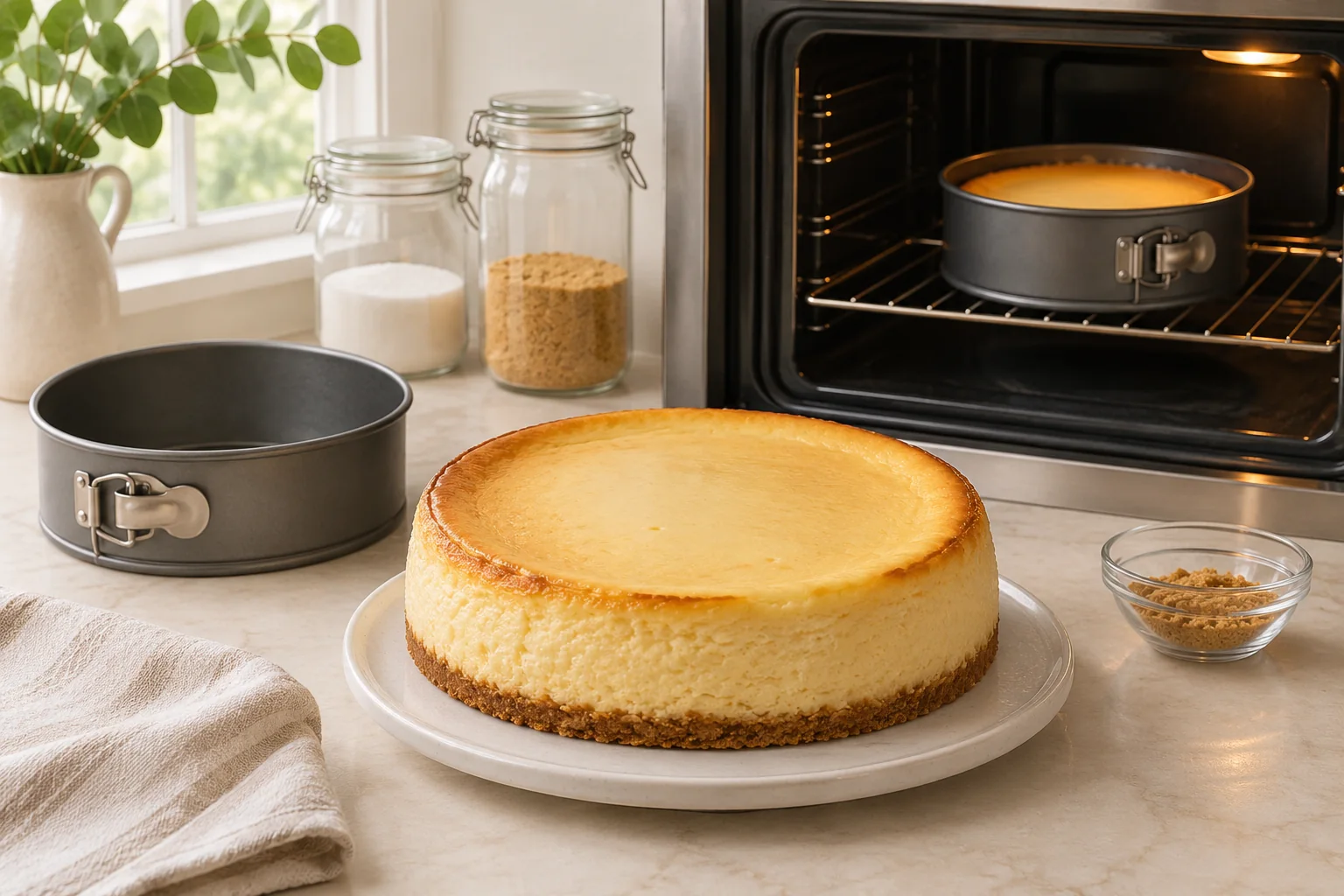
A dry-oven method avoids pan leakage and the task of lifting water-filled equipment. It is convenient for everyday home baking and can produce very good cheesecake when the formula has been designed around it. It may require more careful oven control and a greater tolerance for cosmetic cracking.
Does dry-oven cheesecake taste different?
Not inherently. Taste is primarily determined by cream cheese, eggs, sugar, dairy and flavourings. The baking method influences texture and the degree of browning. A slightly browned perimeter might taste differently from a pale water-bath cake, but this reflects the final bake rather than an entirely separate style.
What about a pan of water on a lower rack?
A separate tray can add some oven humidity, but it does not surround and insulate the cheesecake's sidewalls like a true bain-marie. Treat it as a different baking method requiring its own instructions, not a one-to-one substitute for the water bath.
What about cake strips?
Moistened baking strips can help temper heat along the outside of some pans, but their effectiveness varies with pan and formula. Use only strips or equipment specifically rated and suited to the pan and oven.
What about a lower temperature?
A dry-oven cheesecake sometimes uses gentler heat or a staged baking schedule to avoid an overdone edge. Lower heat alone does not determine doneness: the cake still needs to reach the recipe's safe cooked state. Use a tested schedule rather than reducing temperature by a guessed number.
The centre-wobble test applies to both
Many baked cheesecakes reach their ideal endpoint when their outer zone is set and the centre still wobbles gently. A thermometer can improve precision in recipes specifying a target. Regardless of bath method, completely rigid centres may indicate a firmer bake than desired.
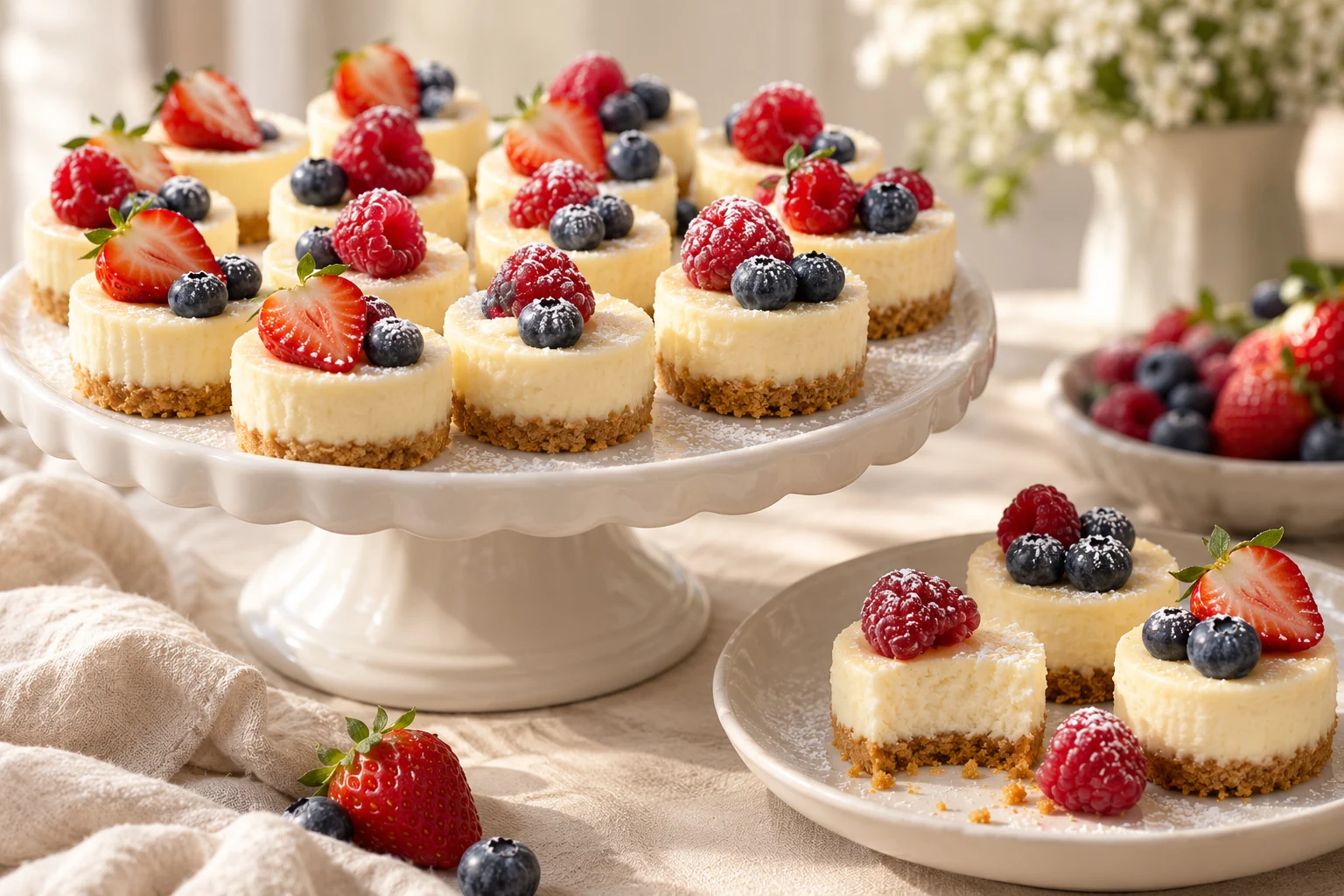
Recipe to try: Mini Cheesecake Bites. Mini cheesecakes have their own portion size and baking schedule. Do not use a whole cheesecake’s bake time for these small cups.
Cooling matters with either method
A cheesecake contracts as it cools. Some recipes use a switched-off oven rest; others employ a rack cool-down. The water bath doesn't eliminate this process, and a dry-oven cake especially benefits from following the recipe's finish schedule.
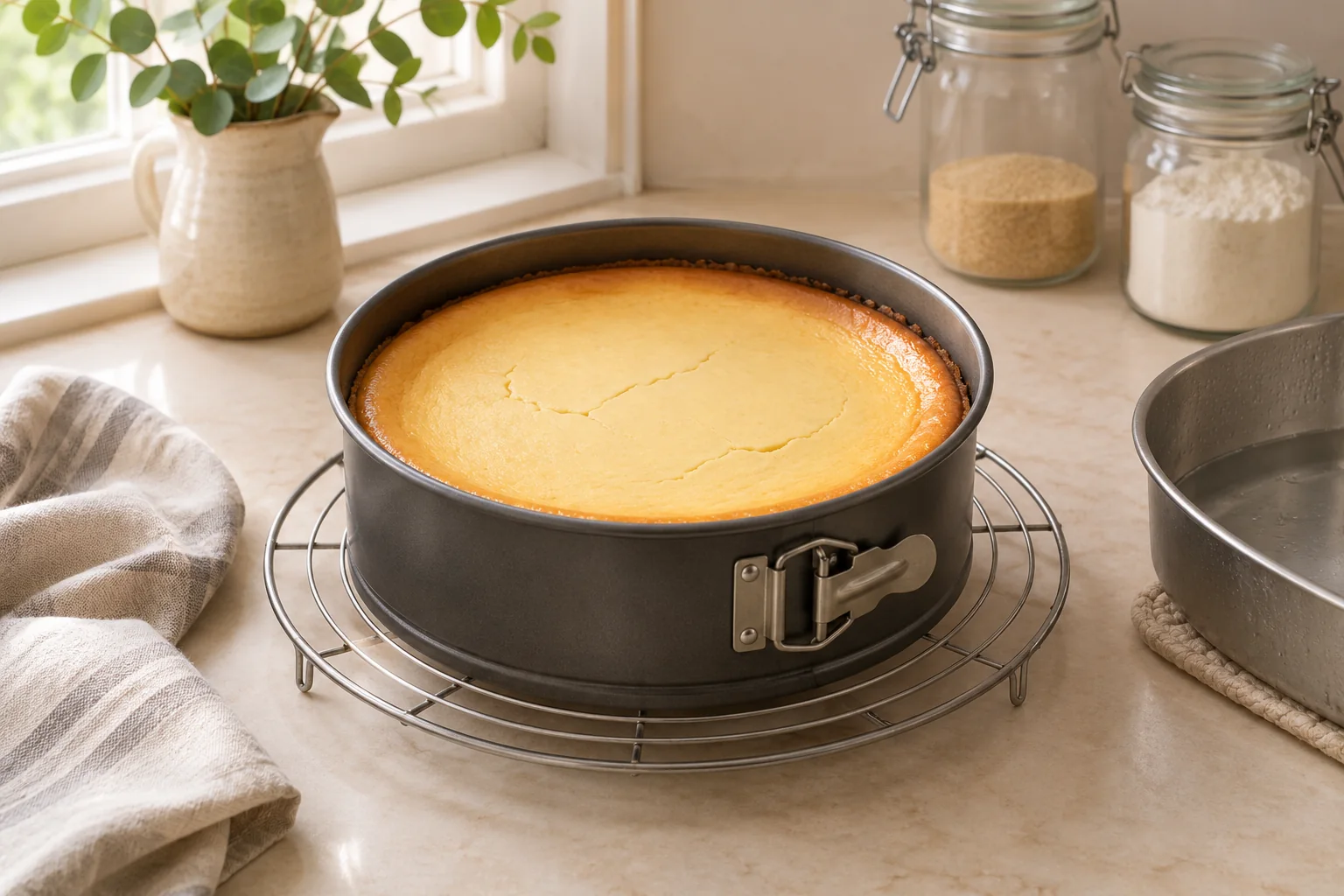
Which is best for beginners?
A good dry-oven recipe can be simpler because it removes the hot-water setup. A water bath may be worth the extra planning if presentation matters, and a properly designed technique can be learned safely. Choose based on the formula and your equipment rather than on the assumption that professional bakers all use one method.
Which is best for a celebration?
If you need an especially smooth uncracked surface for a tall cheesecake, the water bath may increase the odds of success. If you plan to add fruit compote or a topping and prefer simpler handling, a reliable no-bath recipe may be the more practical choice.
Recipe to try: No-Bake Cheesecake. For a chilled alternative, choose this no-bake formula. Its setting method is separate from an egg-based baked cheesecake.

Frequently asked questions
Is a water bath mandatory? No. Is a separate steam tray the same? No. Can a water bath leak? Yes, especially with springform seams. Will it stop overbaking? It reduces aggressive heating but you still must check doneness. Is a cracked cheesecake unsafe? A cosmetic crack alone isn't a safety problem.
Choose the right tool for the goal
Use a water bath when its gentler side heating helps you achieve the smooth texture and appearance you want. Choose a tested dry-oven formula when simplicity and easier handling matter more. Whichever you select, pay attention to mixing, actual doneness, cooling and proper refrigeration.
IN PICTURES
From the baking notebook
FROM THE RECIPE BOX


