On this page
Brunch works because breakfast and lunch flavors can share the same table. The trick is contrast: something hearty and savory, something fresh, and perhaps a memorable sweet bake. A menu dominated by cinnamon rolls, pancakes, waffles and muffins may look abundant but feel repetitive. A buffet built entirely from eggs and potatoes can feel heavy. Aim for a thoughtful mix rather than an equal number of dishes in each category.
Choose the main attraction
Decide whether the event is about homemade cinnamon rolls, a fluffy pancake bar, a savory strata or a beautifully baked quiche. One memorable centerpiece makes other choices easier. If the star is sweet, pair it with a simpler savory egg or cheese dish. If the star is a rich egg casserole, a small fruit tart or scone can provide a lighter sweet finish.
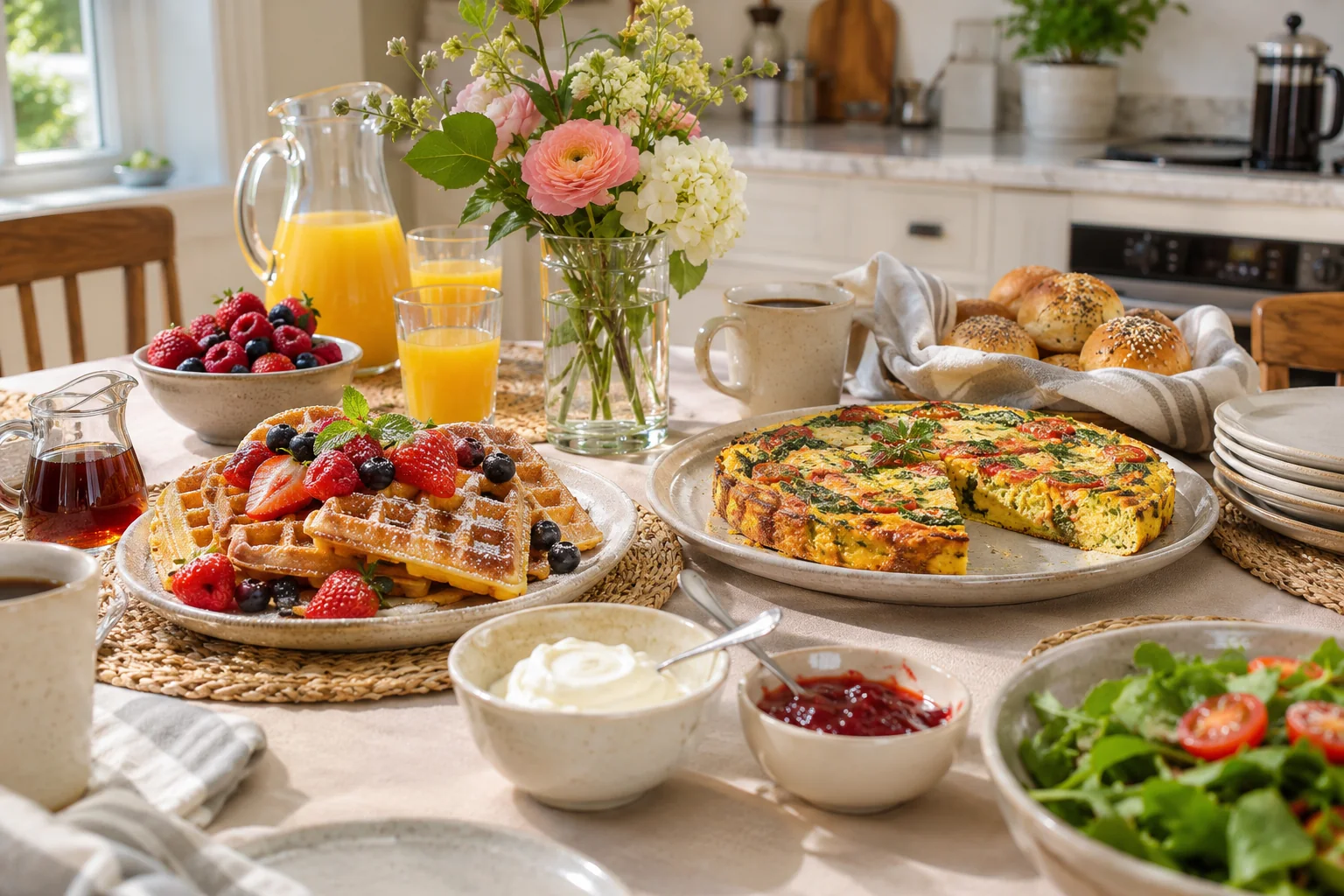
Build a savoury-led menu around Breakfast Casserole, then choose just one sweet bake to follow it.

Understand sweetness as part of the meal
Maple syrup, jam and pastry already contribute sweetness. Offering pancakes plus a heavily sugared fruit salad and dessert muffins can be overwhelming. You don't need to remove all sugar; simply choose where it matters most. Fresh berries, plain yogurt and unsweetened drinks provide contrast. A slightly tart fruit component can make buttery pastry taste more interesting.
Savory does not mean heavy
A savory brunch can use scrambled eggs, roasted mushrooms, tomatoes, herbs or a vegetable frittata rather than several meat-and-cheese dishes. Rich bacon, sausage, cheddar and buttery potatoes can become as repetitive as too many pastries. Include something crisp or acidic such as citrus, a lightly dressed salad or pickled vegetables when appropriate.
Crustless Quiche leaves room for a piece of bread or pastry on the same plate.

Protein makes the table satisfying
Eggs, yogurt, cheese, beans or suitable cooked meat can help create a substantial meal. If the menu's centerpiece is pancakes, a protein-rich option on the side may balance it. Plan for vegetarian preferences and allergies instead of assuming meat is the only satisfying option. A vegetable-and-egg strata can serve many guests while keeping the rest of the table simple.
Soft Scrambled Eggs are an easy savoury companion when the centrepiece is a sweet loaf or pancake platter.
Fresh produce has a purpose
Fruit isn't merely decoration between baked goods. Berries, melon and citrus refresh the palate; tomatoes, cucumbers or simple greens lighten a savory plate. Choose produce that is ripe and seasonally appealing rather than using an expensive out-of-season selection purely for color. Keep wet cut fruit away from crisp pastry so texture doesn't suffer.
For a chilled side, serve Fruit Yogurt Salad in a separate bowl and leave the pastries on a dry platter.

Look for texture contrast
A brunch of soft scrambled eggs, soft pancakes and soft muffins may lack crunch even with good flavors. Add crisp roasted potatoes, toasted nuts on a yogurt station where safe, or a flaky pastry. Conversely, a collection of crusty toast and crunchy granola can benefit from a creamy dip or tender bake. Texture makes the meal feel more varied without expanding the shopping list.
The browned edges in Sweet Potato Hash bring a crisp element to a plate of soft eggs.

Pair indulgent items with simple sides
Rich chocolate croissants and creamy quiche can be wonderful together, but each is substantial. A modest serving of both with fruit makes more sense than full portions of several heavy dishes. Consider offering slices or minis for sampling. A small piece of your special homemade bake is often more appreciated than a large piece alongside five other sweets.
Sweet-led brunch example
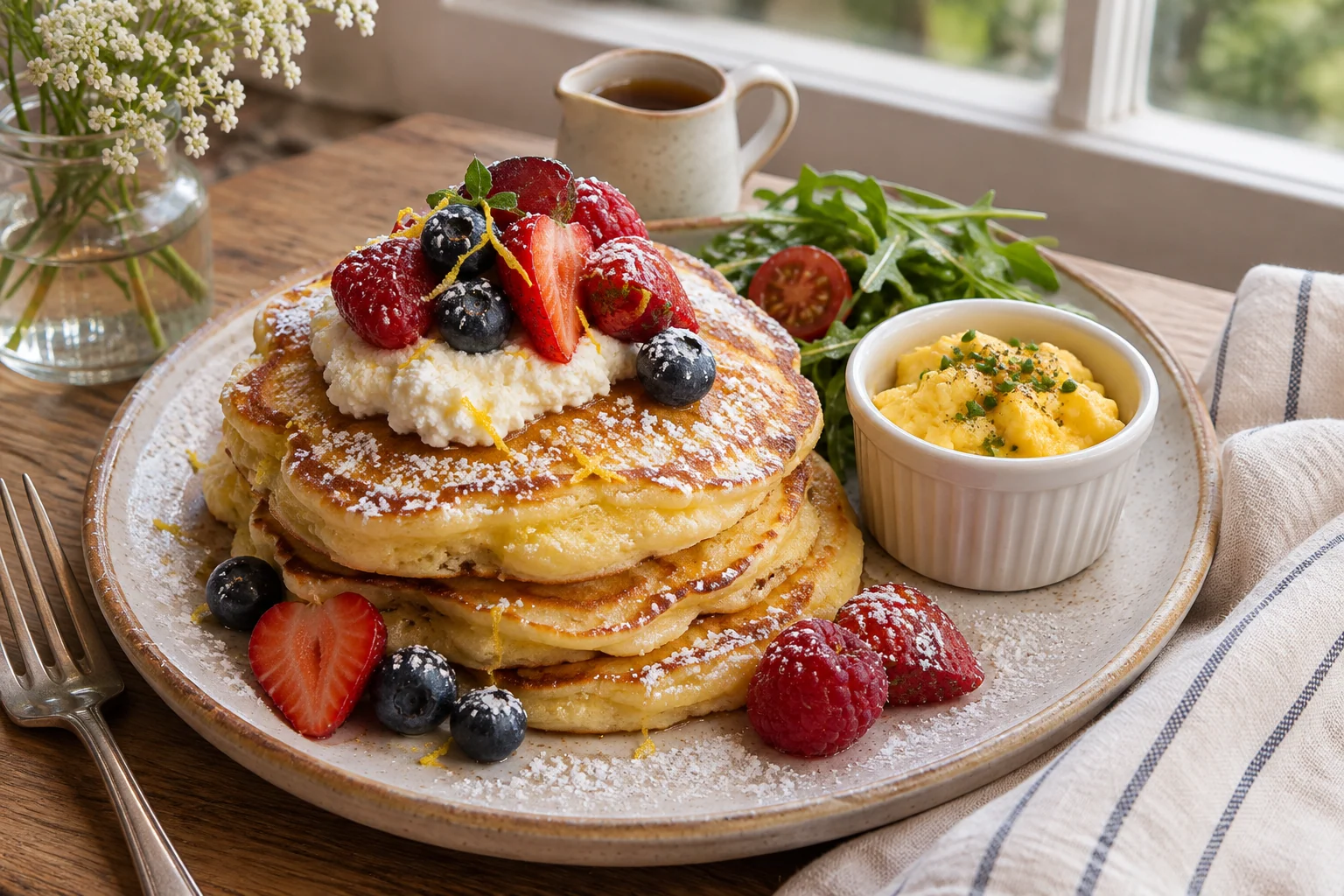
Begin with a pancake or waffle bar as the star, then offer one simple cooked egg dish, a bowl of fruit and coffee. Keep syrup and toppings separate so guests adjust sweetness. You don't also need cinnamon rolls, muffins and French toast at full quantities. If you want pastry, make it a small optional accent rather than a second main.
Lemon Ricotta Pancakes make a bright sweet centrepiece, with the syrup passed separately.
Savory-led brunch example
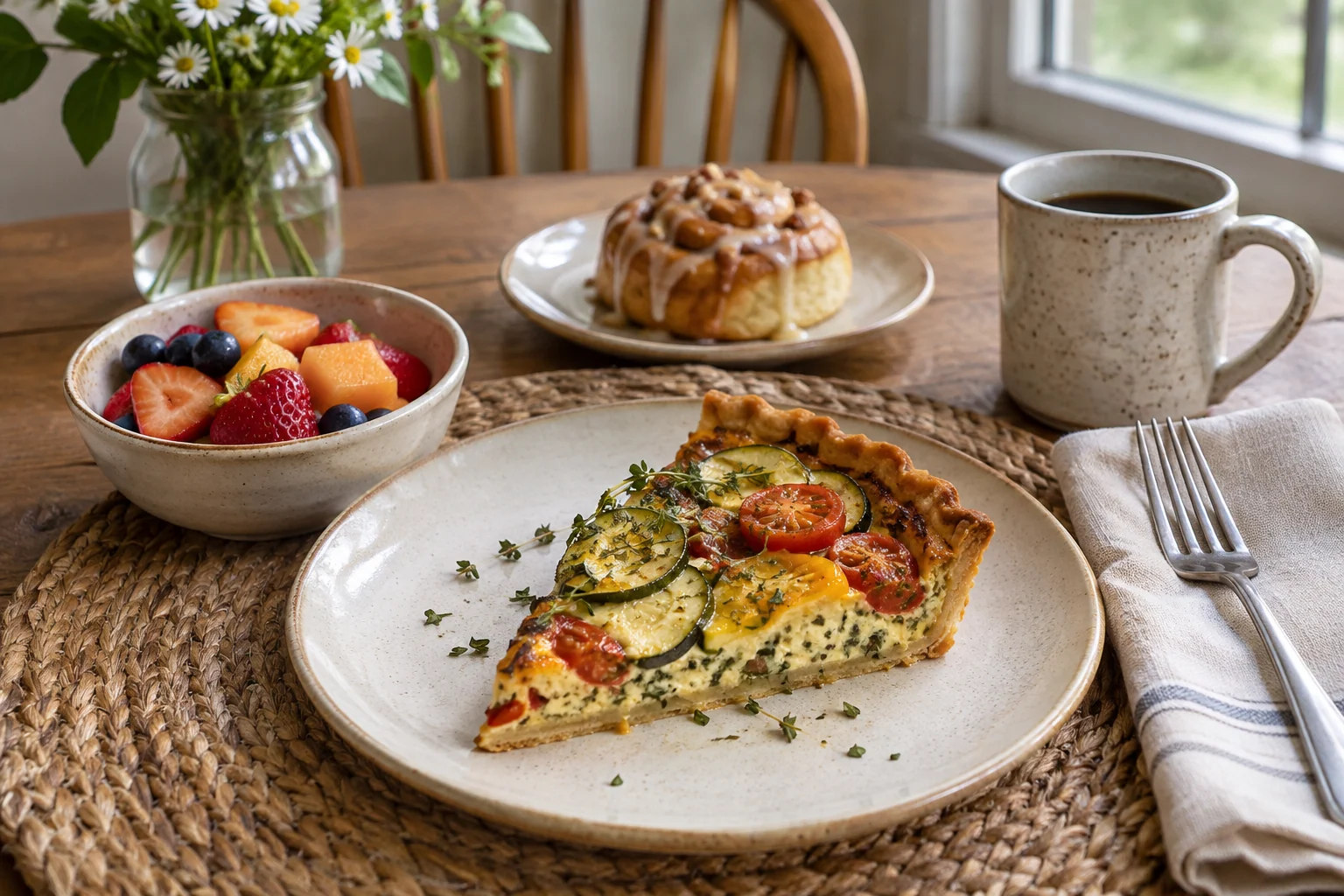
Use a vegetable strata or frittata with breakfast potatoes as the anchor, then add fruit and a modest basket of scones. The savory meal provides satiety and the sweet item gives brunch a celebratory feel. A yogurt bowl can act as a light alternative for someone who doesn't want eggs. A menu like this scales well to a buffet.
Start with Mushroom and Gruyère Quiche and keep the accompanying fruit and sweet roll small enough to complement it.
A baking-focused brunch
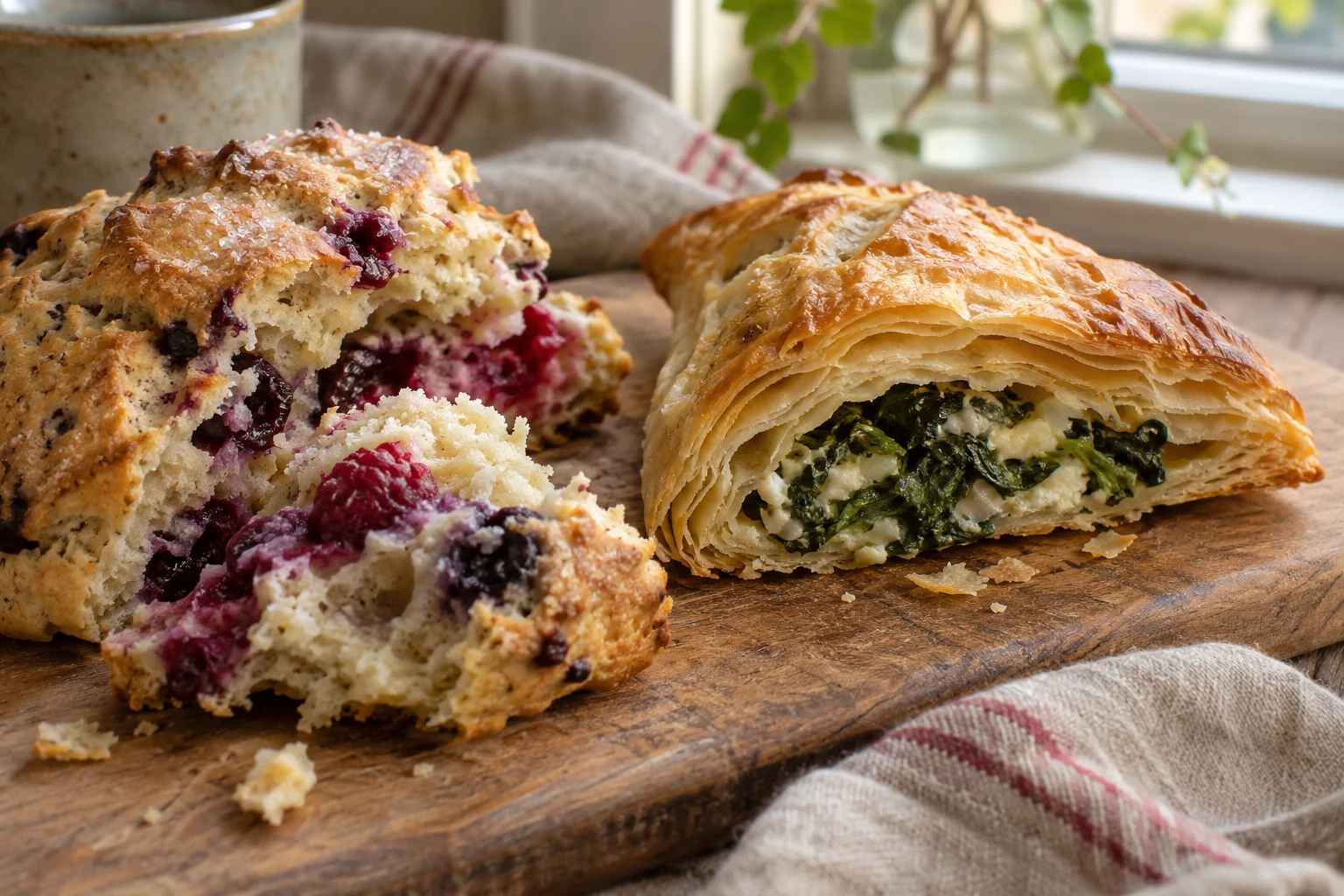
If you want to showcase homemade bread, choose one signature item such as sourdough toast or savory biscuits. Pair with a spread, eggs and fresh produce. Add a small sweet bake if desired, but avoid making four similar flour-heavy sides. People can taste the baker's work more clearly when each featured recipe has a distinct role.
For the savoury bake, Cheddar and Chive Scones contrast nicely with a berry scone or a piece of fruit loaf.
Coffee and tea pairings
Dark coffee complements sweet pastries, while tea can feel refreshing beside rich or spicy bakes. Offer milk or plant-based alternatives according to guests' needs and an unsweetened option. Drinks should not all be sweetened; syrup-topped pancakes plus sugary punch can become cloying. Provide water throughout the meal.
The warm Chai-Spiced Mocktail brings cardamom and cinnamon to the table and pairs well with a plain slice of cake.
What about juices and mocktails?
A citrus-forward nonalcoholic drink can brighten a savory menu, but pairing several sweet juices with an already sugary spread may be excessive. Choose one featured drink and make water easy to reach. Fresh fruit garnishes should be washed and handled safely. For a large group, pitcher service saves more time than individualized drinks.
A Cucumber Mint Cooler gives a sweeter brunch plate a refreshing drink alongside it.

Breakfast meats need a supporting role
Bacon, sausage and smoked salmon each bring salt and strong flavor. Serving all three can crowd the buffet, increase cost and complicate safe holding. Choose one if it suits the guests, with a satisfying vegetarian alternative. Smoked fish and cooked meats have their own refrigeration and handling needs; don't leave them exposed for hours.
How cheese influences balance
Cheese adds richness and salt to quiches, casseroles and grazing boards. If a main already contains cheddar and cream, avoid making all the sides cheese-heavy too. Fresh tomato salad or fruit offers a useful contrast. A board with cheese and pastries can also function as a lighter brunch when paired with appropriate protein and portions.
Choose your dessert moment
Brunch dessert might be a lemon loaf, a tray of cinnamon rolls or a single strawberry tart. It doesn't need to be a full additional course after pancakes and muffins. If the event celebrates a birthday, allocate room for the cake by keeping earlier sweet offerings restrained. Guests tend to appreciate a clear celebratory treat rather than competing desserts.

Balance for six
For six guests, one savory main, one sweet component and one fresh side may be sufficient, with coffee and water. Add another option only for a genuine dietary or serving need. A small menu can still feel abundant when food is prepared carefully and presented beautifully. Making five bakes for six people may create more leftovers than pleasure.
Balance for twelve
For twelve, consider two savory options—perhaps vegetarian and meat-based—plus one special sweet bake and fruit. Keep portions from actual recipe yields rather than making twelve full servings of every dish. Guests can taste both if pieces are modest. A separate topping station avoids cooking multiple different pancakes or French toast flavors.
Balance for twenty
At twenty, variety matters for preferences, but redundancy is still costly. Offer two substantial mains, a reliable vegetarian option if needed, a fruit station and one or two sweet items with sensible portion sizes. Multiple serving points can reduce the line. Replenish in batches and preserve temperatures, especially for eggs, dairy and cooked meats.
Budget-conscious contrasts
An inexpensive fruit platter, roast potatoes, seasonal vegetables and homemade quick bread can make a brunch feel varied without specialty ingredients. Spending heavily on smoked fish, imported cheese and multiple pastries isn't necessary. Choose one ingredient worth highlighting and support it with straightforward dishes. A menu that fits your budget is easier to execute calmly.
Bake one batch of Classic Dinner Rolls and let guests choose jam or a savoury filling from the same basket.

Make-ahead planning
Cook or assemble recipe-approved casseroles in advance, wash fruit, prepare pastry dough when suitable and set out serving dishes. Save last-minute skillet work for the special item. If both sweet and savory anchors require oven time, draw up a bake schedule. A balanced menu also balances the work across stove, oven and refrigeration.
Food safety is part of balance
Warm eggs and dairy-rich bakes must be cooked and held safely; yogurt, fresh cheese and smoked fish require appropriate chilling. Put smaller portions on the table and replenish from safe storage rather than displaying everything for a long event. A fresh fruit bowl can be refreshed without mixing it into a tray of hot pastry.
A menu editing exercise
Try arranging one guest’s plate before you finalise the menu. A wedge of quiche, half a berry scone and a few orange slices give each dish a different job. If you would choose just one of the scone, cinnamon roll and iced loaf, serve your favourite and save the other two for another weekend. This also frees up oven space for the main dish.
Common questions
Must brunch include eggs? No, but include a substantial alternative. Is fruit enough of a savory balance? It adds freshness but not a full savory course. Can you serve pastries with quiche? Yes, in considered portions. Do you need both waffles and pancakes? Usually one is sufficient. Is a vegetarian dish an optional afterthought? It should be a real satisfying choice when needed.
A menu that feels complete
Lead with one memorable dish, support it with a contrasting savory or sweet option and add fresh produce. Keep drinks simple and portions realistic. The most inviting brunch combines flavor variety with a schedule the host can actually enjoy.
How to serve a sweet finish
If brunch includes a birthday cake, serve smaller pastry portions during the main meal and reserve the celebration dessert for the end. Guests can enjoy a special sweet without feeling obliged to eat a full pancake breakfast and then a large frosted slice. Timing and portion size create balance just as effectively as adding a savory dish.
Thin slices of Vegan Lemon Blueberry Loaf give guests a small fruit-filled finish with their last cup of tea.

IN PICTURES
From the baking notebook
FROM THE RECIPE BOX


