On this page
A sourdough starter does not have to live on your counter and demand flour twice every day. For bakers who make bread on weekends or only occasionally, the refrigerator offers a practical way to slow fermentation and reduce maintenance. The starter still needs care, though, and a jar that has been cold for a week usually benefits from refreshment before it is asked to raise a loaf.
Yes, mature starter can be refrigerated
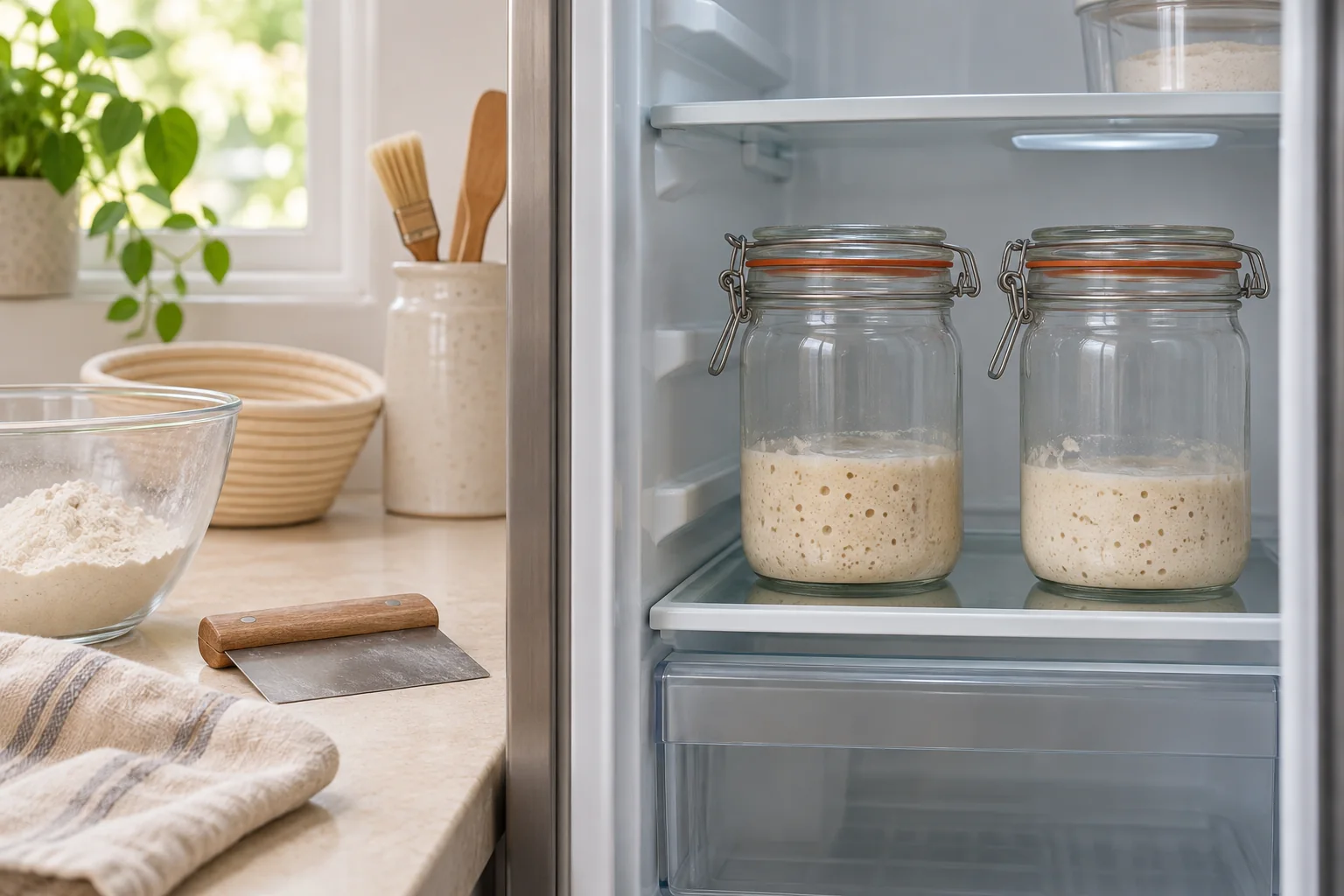
A well-established culture can usually be stored cold between baking sessions. Lower temperatures slow yeast and bacterial activity, extending the interval between feedings. This is a maintenance method, not a permanent preservation system: the starter will continue changing slowly in the refrigerator and should be refreshed according to a reliable schedule.
When to begin refrigerator storage
Wait until a newly created starter shows stable, predictable rise after repeated feedings. During its first days, the microbial community is still developing and needs the feeding routine described by a tested starter-building recipe. Moving an immature starter to the fridge can slow its development and complicate troubleshooting.
Choose an appropriate container
Use a clean food-safe jar with enough headroom for expansion. Follow the starter method's covering instructions, and don't seal a vigorously fermenting mixture in a vessel that cannot handle gas pressure. A straight-sided transparent container makes it easy to see the rise after feeding and any change while cold.
A common weekly routine
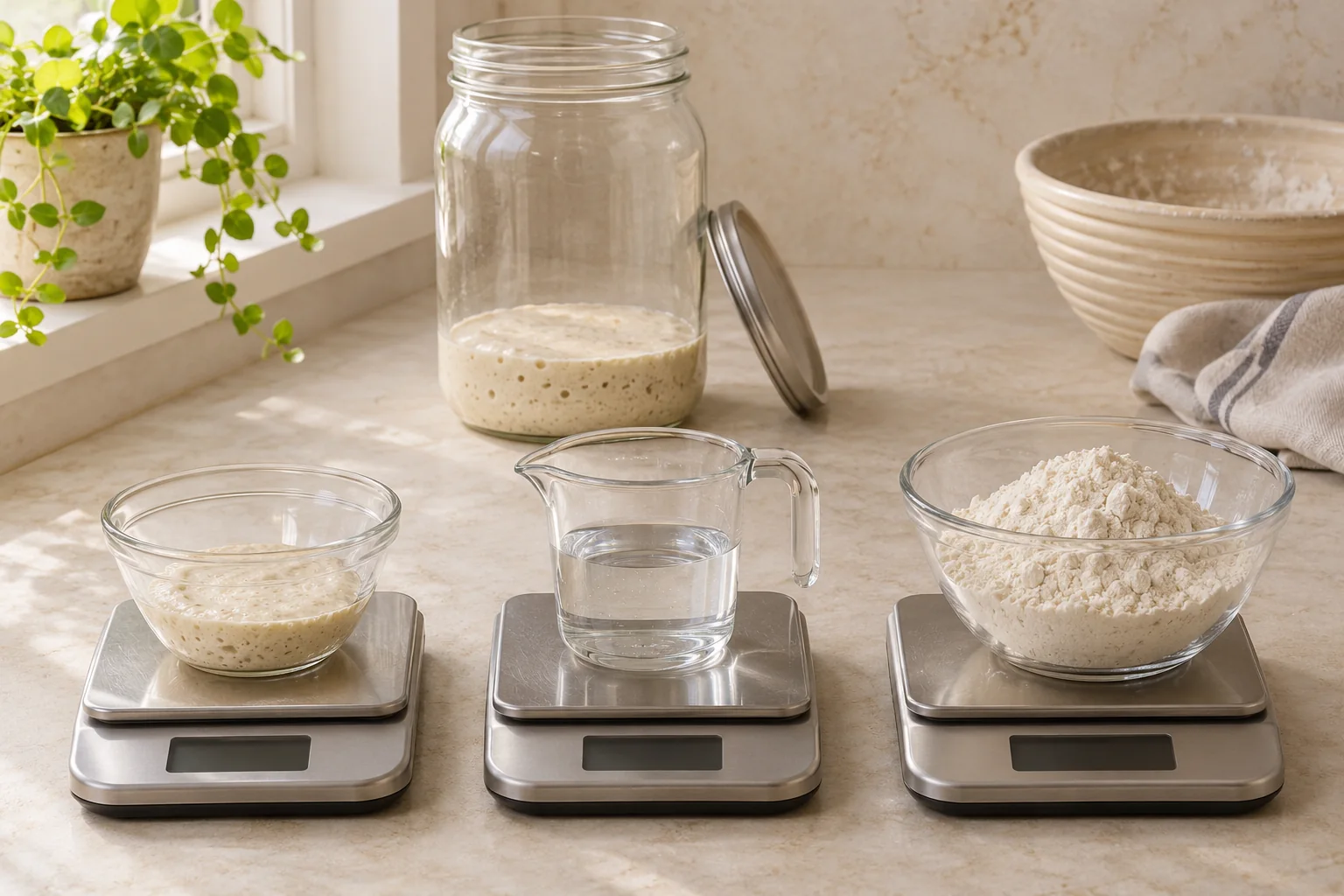
For an established starter, a weekly refrigerator check and feeding can be a practical starting routine. Use measured starter, flour and water, leave room for expansion and follow your maintenance method’s timing before returning the jar to the cold. Adjust the routine to the culture’s activity.
Should you feed before refrigeration?
Many maintenance plans recommend a fresh feeding before chilling, sometimes after a brief period of activity. This gives the microorganisms renewed food and helps the starter enter cold storage in a useful condition. Don't refrigerate an already exhausted, heavily fallen culture for weeks and expect it to be ready to bake immediately.
Why you still need to feed cold starter
Cold slows fermentation but doesn't stop metabolism entirely. Nutrients are gradually consumed, acidity can increase and gas production may diminish. Regular refreshments help preserve a culture that remains predictable when warmed again. A starter forgotten for months may recover, but recovery is less certain than routine care.
How much should you keep?
A small starter is enough for most home bakers because you can build more before bread day. Maintaining 20 to 50 g as the seed can reduce routine waste when accompanied by proportionate feedings.
What if the starter doubles in the refrigerator?
Some fermentation can continue while a newly fed starter cools, especially if the jar is large or the refrigerator is not particularly cold. Leave appropriate headroom and monitor the culture. A doubled cold jar doesn't mean it can remain unfed indefinitely or that it will automatically be at the correct maturity when you next bake.
What if liquid forms on top?
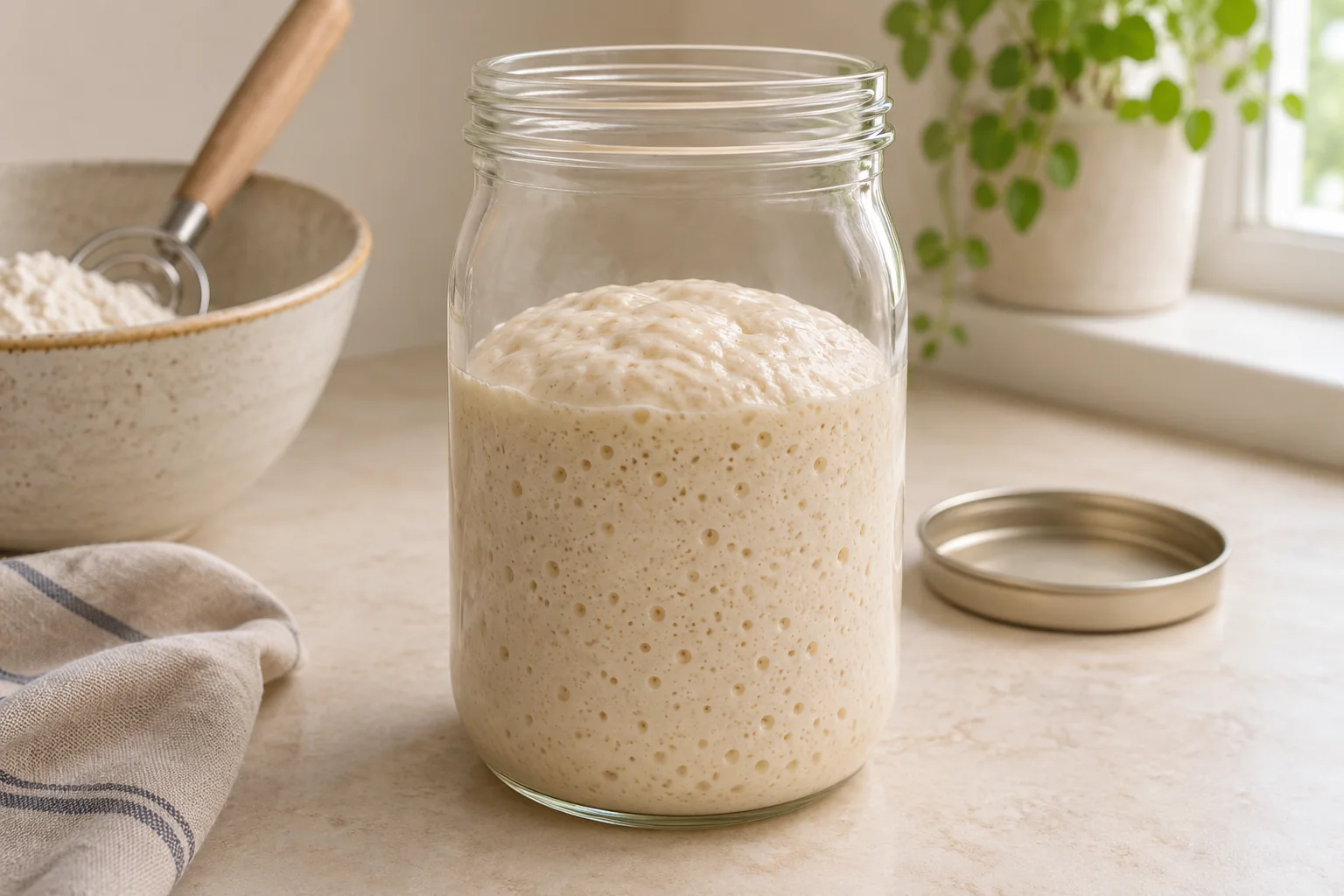
A hungry established starter may develop greyish or brownish liquid sometimes called hooch. It often indicates that feeding is overdue. Follow a trusted maintenance guide for handling it; visible mold, pink or orange discolouration and rotten odours are different warning signs that warrant discarding the culture.
What if the smell becomes very sharp?
A refrigerated starter may smell more acidic or alcoholic after a long interval. That can be consistent with hunger and is not the same as a putrid smell. If the starter otherwise looks normal, several room-temperature refreshments may restore balanced activity. Discard it if there is any clear evidence of contamination.
How to bring it back for baking
Before a bread day, remove the amount needed to seed a refreshment and feed at room temperature according to the formula. Watch for renewed expansion, bubbles and a predictable peak. Some strong starters may recover after one feeding; others need several. Don't rely only on the number of hours since it left the fridge.
Recipe to try: Sourdough Country Loaf. The loaf calls for active starter. Check its maturity and the dough’s fermentation cues before moving on to shaping.

A weekend bread schedule
One practical routine is to refresh refrigerated starter on Thursday or Friday, give additional room-temperature feedings as required, mix the dough when it is reliably ripe and bake on the weekend. This is a framework rather than a guarantee of a Saturday morning peak, because temperature and feeding ratio determine activity.
Recipe to try: Sourdough Ciabatta. Ciabatta provides a different dough and loaf shape to practise with. Keep its hydration and handling instructions together.

When to return the mother starter to the fridge
Once you've removed the ripe starter needed for dough, retain a small portion for maintenance and refresh it under your chosen schedule. Return that refreshed culture to the refrigerator after the method's recommended brief activity window. This keeps the next bread day separate from the large starter build.
Don't keep a huge jar unnecessarily
Regularly feeding 400 g starter requires significantly more flour than maintaining a small seed. If you use 200 g starter only once a week, build that quantity ahead of baking rather than storing it all the time.
Recipe to try: Sourdough Crackers. These crackers use sourdough discard. Use discard from a healthy established starter and bake it fully; this is not a raw-starter snack.

Can you freeze sourdough starter?
Freezing is a separate preservation method that may reduce activity and require rebuilding the culture later. A method specifically written for freezing can be useful for a backup, but don't assume thawed starter will immediately have the same rise as fresh ripe starter. Refrigeration is often simpler for routine weekly baking.
Can you dry starter for a backup?
Drying is another preservation technique, typically involving a healthy culture spread thinly under appropriate conditions and stored dry. Use authoritative directions for safe preparation and revival. Dried culture is a backup, not a replacement for verifying activity before you bake.
What about holidays and long absences?
If you'll be away longer than the normal refrigerator feeding window, prepare a backup or choose a maintenance plan explicitly designed for the period. Don't ask a neighbour to guess whether your jar is safe; leave clear written instructions for feeding weights, temperature and contamination signs.
Refrigerator safety and organisation
Keep starter covered and protected from spills and raw-food contamination. Label the jar with the last feeding date, flour type and intended schedule. A consistently cold refrigerator makes timing easier to interpret and keeps the culture away from accidental heating near an oven or sunny window.
Common mistakes
Refrigerating an immature starter, forgetting to feed for extended periods, returning a completely exhausted culture to cold storage, and baking with sluggish starter before it has recovered can all lead to disappointing loaves. More water or more flour isn't a substitute for a consistent refreshment schedule.
Frequently asked questions
Can I keep it cold all week? Usually yes for a mature starter under a weekly maintenance routine. Must I feed daily in the fridge? Usually not. Can I bake straight from the fridge? Some formulas allow it, but many lean loaves benefit from a revived ripe starter. Should I keep the jar airtight? Follow a container method designed to manage gas safely.
Make cold storage work for your life
Feed a modest amount, refrigerate under a predictable plan and revive the culture until it rises strongly before bread day. That is the practical balance: sourdough available when you want it, without unnecessary daily discard.
IN PICTURES
From the baking notebook
FROM THE RECIPE BOX


