On this page
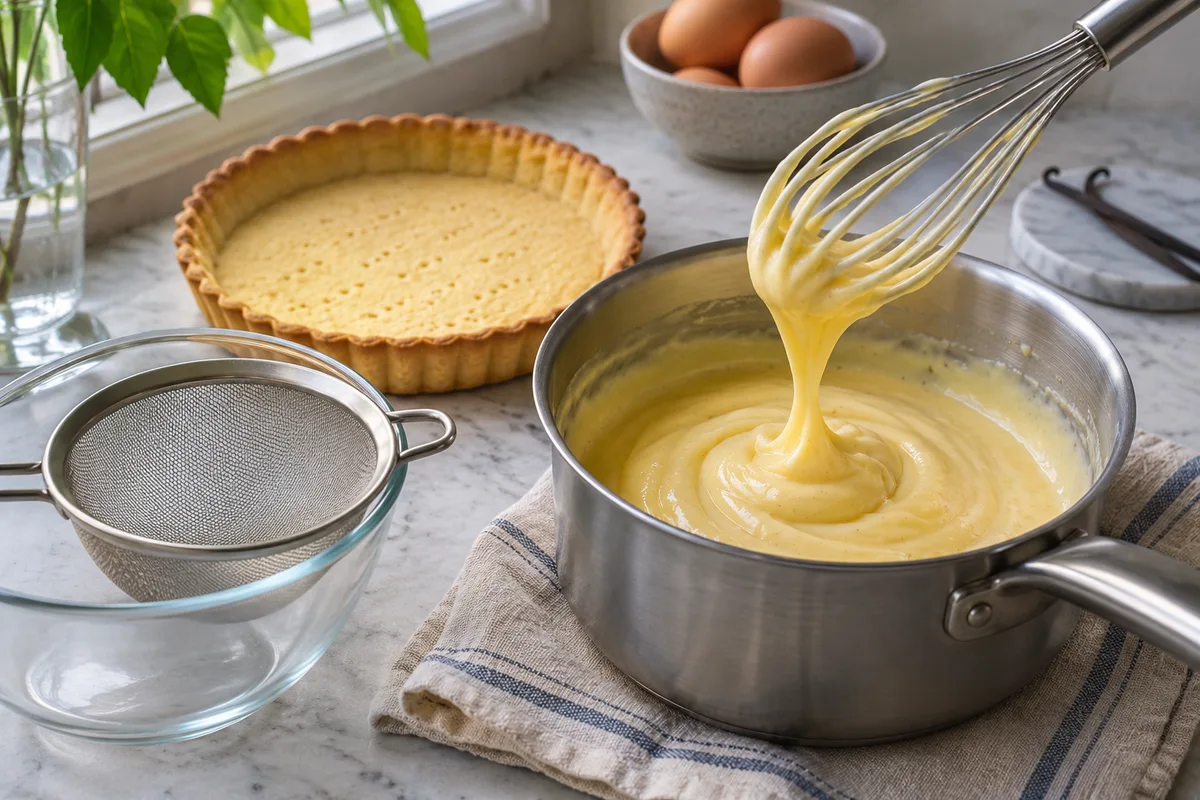
When did the texture change? Cream that lumps as it heats needs a different response from smooth cream that feels stiff straight from the fridge. Check it at three points: as the whisk follows the base of the pan, as it goes through a sieve and after the centre of the batch has chilled.
What pastry cream is made from
Many pastry cream formulas combine milk, sugar, egg yolks or eggs, cornstarch or flour and flavoring such as vanilla. Each ingredient contributes something distinct: dairy provides liquid and flavor, eggs help set the custard, starch contributes reliable thickening and sugar affects sweetness and cooking behavior. Some recipes finish with butter. Exact proportions vary with whether the cream must be piped into éclairs or spooned into a dessert bowl.
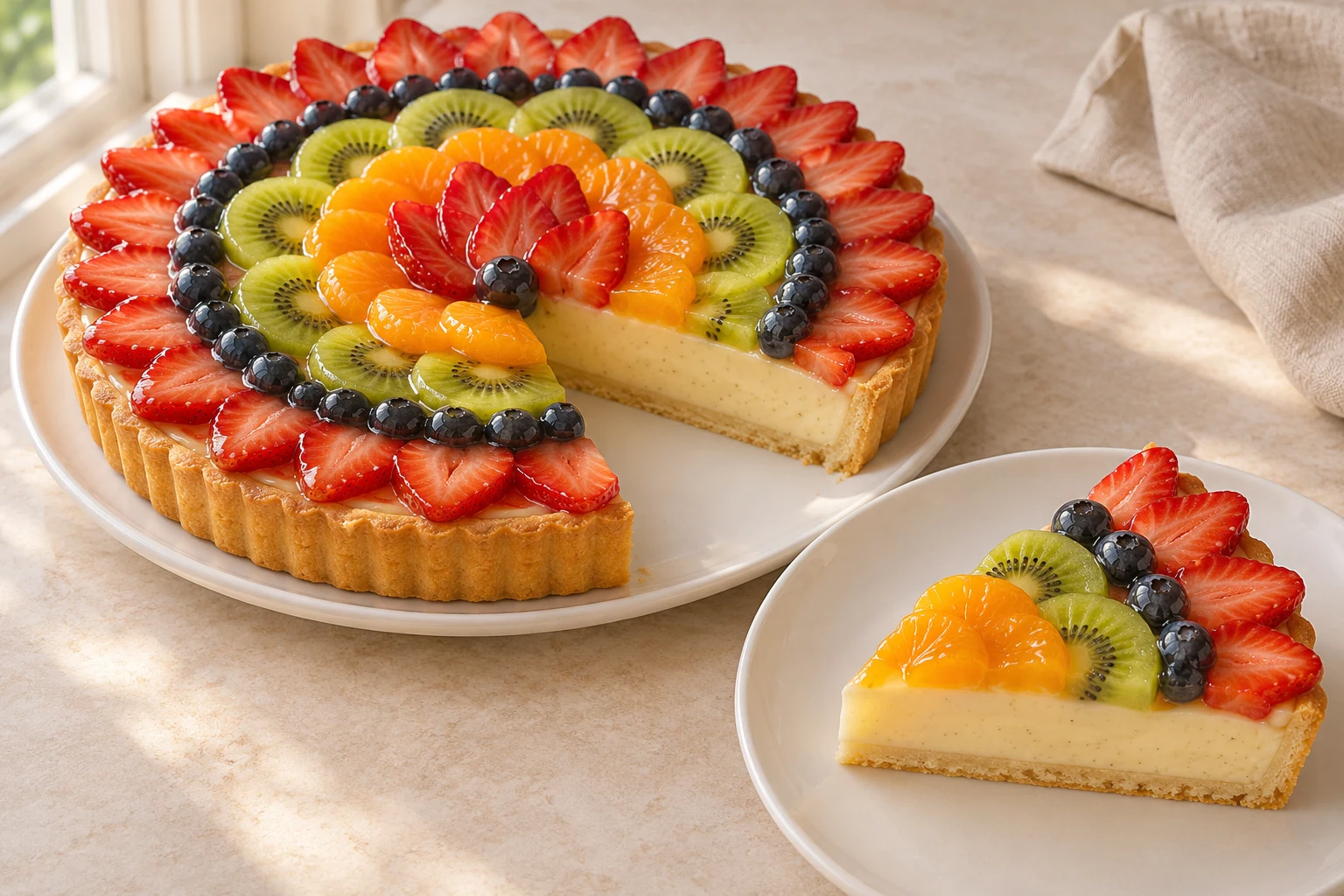
The filling in Classic Fruit Tart needs enough body to support the fruit and cut into neat portions.
Why the starch needs heat
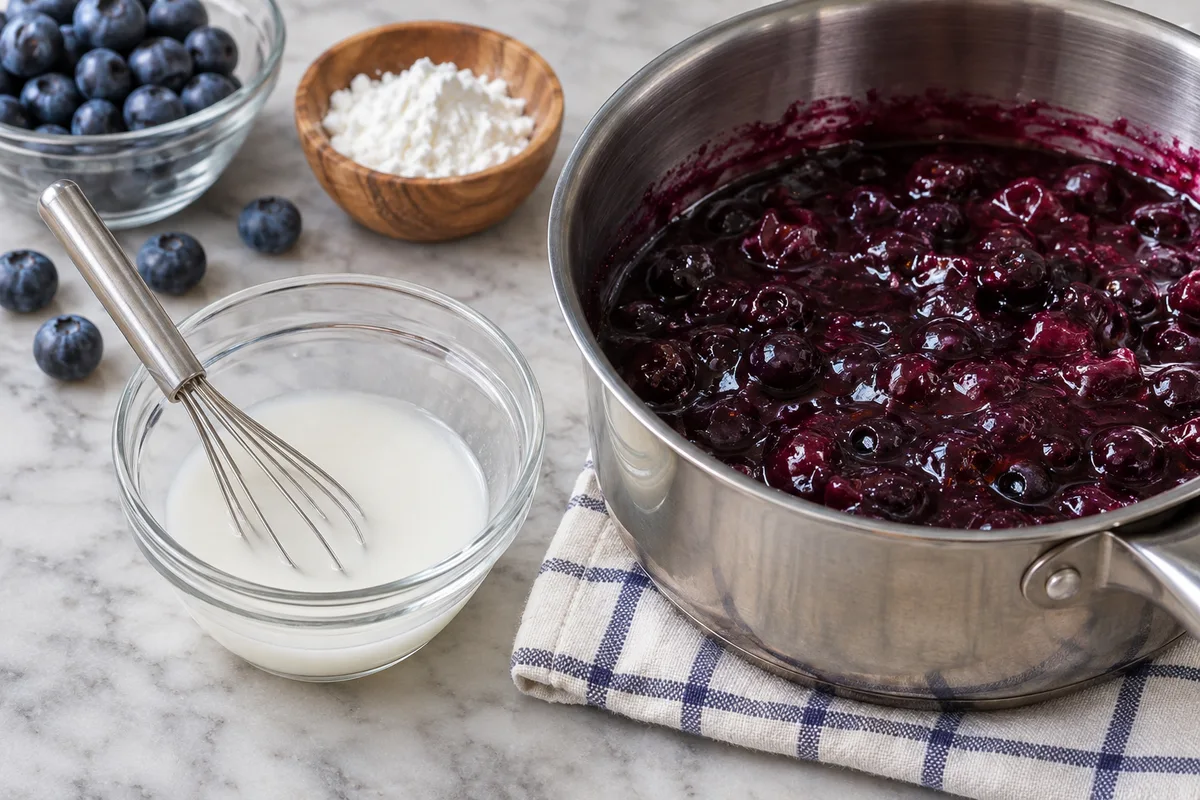
Ordinary cornstarch thickens as granules hydrate and gelatinize during cooking. Underheated starch may leave the custard loose or create a raw starchy taste. The exact cooking process is affected by sugar, acid and egg content. Follow a tested recipe's simmering or boiling stage where required, stirring constantly and scraping corners of the pot to avoid hot spots.
Eggs also thicken
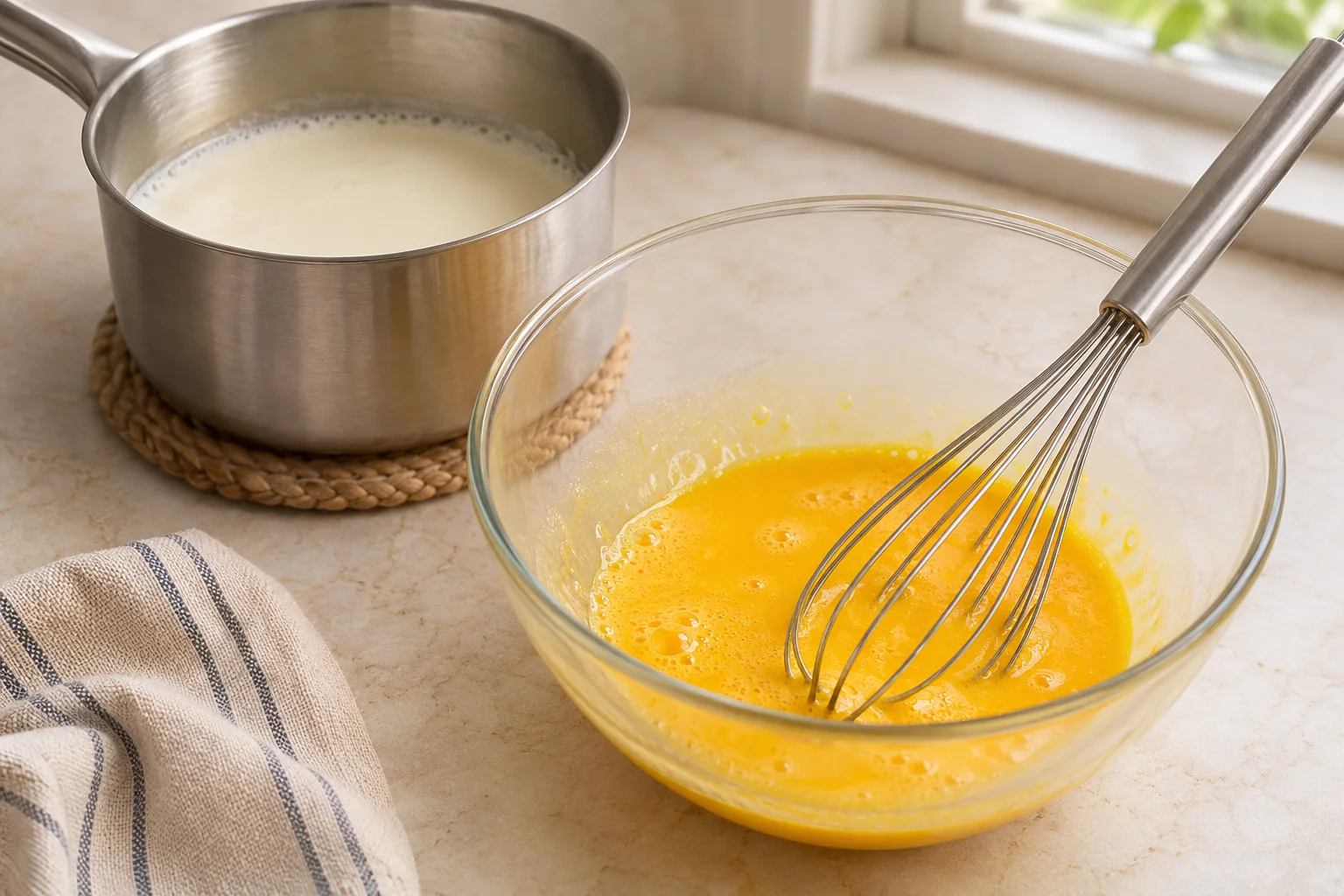
Egg proteins coagulate as the custard heats and contribute smooth structure when handled carefully. If part of the mixture becomes much hotter than the rest, the proteins may form little cooked lumps instead of a continuous cream. The presence of starch can help buffer some recipes, but that doesn't mean the mixture can be left unattended over intense heat. Gentle controlled heating and whisking are central to success.
Compare the oven-set filling in Classic Custard Tart with stirred, starch-thickened pastry cream before choosing a rescue method.

Temper eggs where the method requires
Many recipes slowly whisk some hot dairy into an egg-and-sugar mixture before returning everything to the pot. This reduces the shock of combining ingredients at very different temperatures. Other tested methods heat everything together from cold. Use the method provided rather than believing that tempering eggs is universally mandatory or that skipping it is always safe.
Stir every corner of the pan
Pastry cream can thicken rapidly as starch gelatinizes, and the mixture along the bottom or side may cook faster. Use a suitable whisk or heat-safe spatula to keep ingredients moving, including the edges. A heavy saucepan helps distribute heat more evenly. If you pause to answer a call, the bottom can scorch while the center still looks thin.
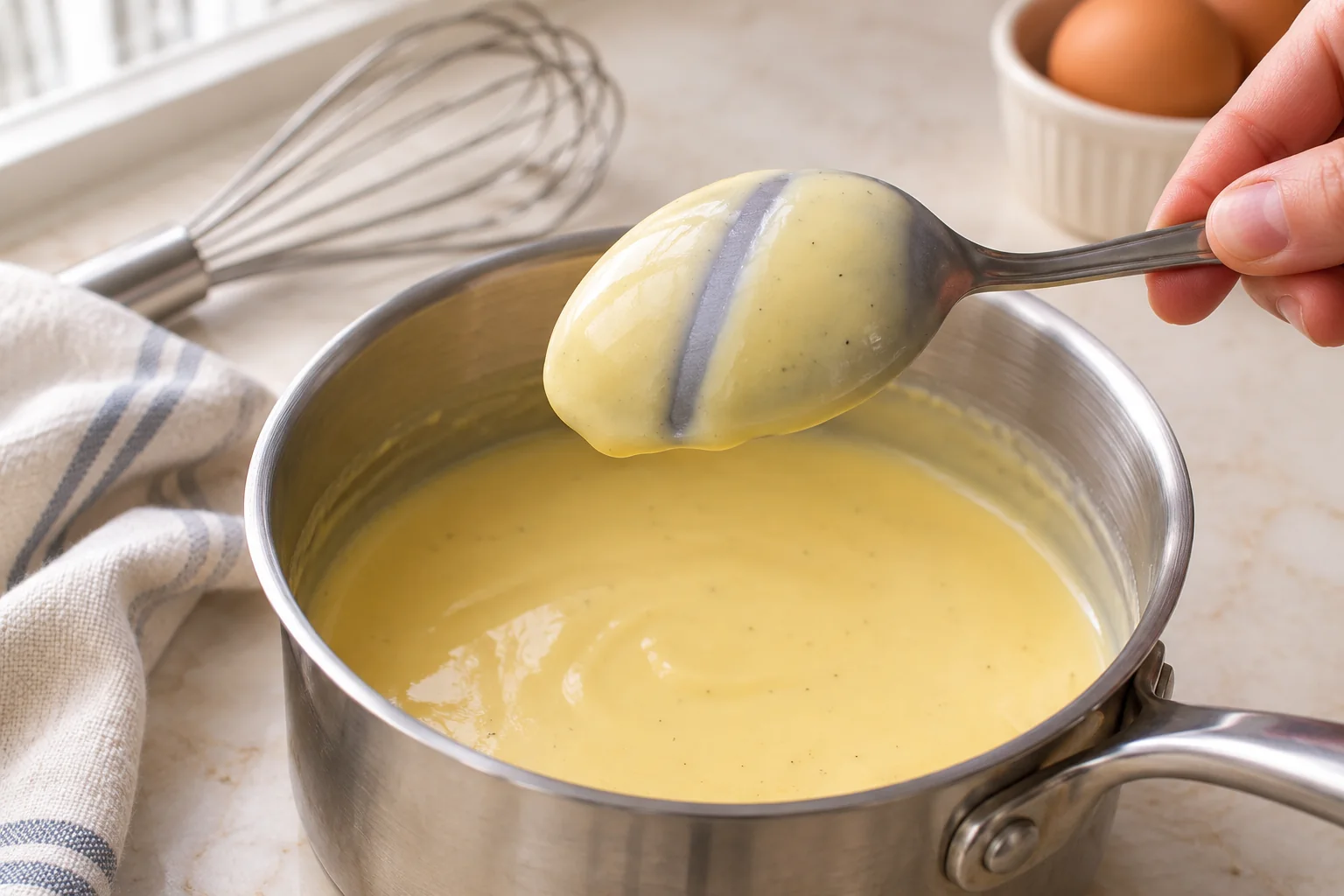
Why pastry cream is runny
Insufficient starch cooking, an incorrect starch quantity, excess milk or a recipe that hasn't completed its intended chill can all produce runny cream. Start by checking the ingredient weights and whether the mixture reached the required cooking stage. A warm custard may feel softer than it will after chilling. However, a completely liquid cooled cream may need a properly tested remake or rescue method.
Why a shortcut can backfire
Sprinkling raw cornstarch into finished cool pastry cream produces lumps because starch doesn't disperse and gelatinize properly that way. Adding a random extra egg creates food-safety and texture issues. A correction, if appropriate, requires a controlled method designed for the recipe. For an important celebration, making a fresh batch can be more reliable than repeatedly altering a failed one.
Why cream becomes lumpy
Lumps may be cooked egg, incompletely dispersed starch or areas of custard that thickened too quickly against the hot pan. Each has a different origin. Small lumps may sometimes be smoothed by whisking or promptly passing the cooked cream through a fine sieve under safe handling. Scorching or severe curdling is harder to disguise and can leave a permanent flavor defect.
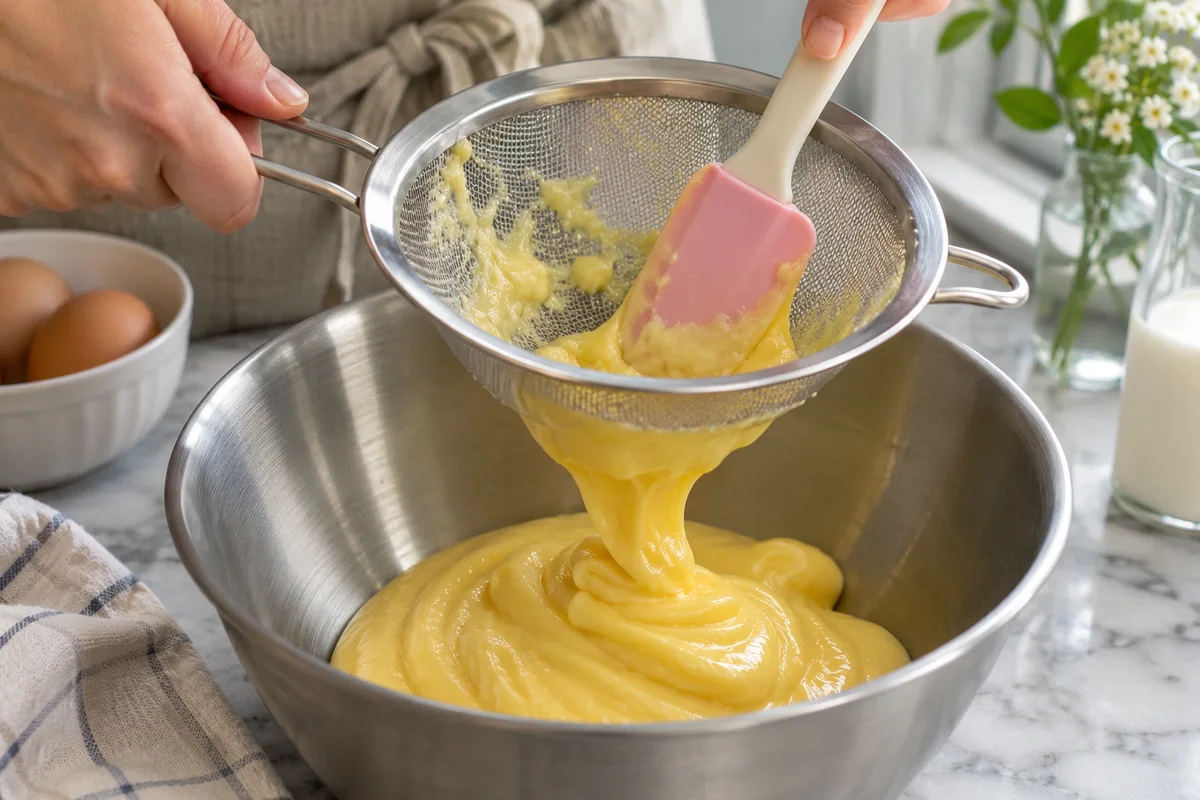
When to strain
A fine-mesh sieve can remove small cooked egg particles and improve texture if the base remains properly thickened. Work while the cooked cream is still manageable and follow safe cooling guidelines. Straining won't fix a batch lacking enough gelatinized starch, and it doesn't undo burnt flavor. Use clean tools and avoid pressing scorched bottom fragments through the sieve.
Set the sieve over the clean bowl before you start cooking. If you see small lumps as the cream finishes, lift the pan off the heat and strain the cream while it can still pass through. Leave scorched material on the bottom of the pan.
Why pastry cream turns too thick
Too much starch, excessive water loss during prolonged cooking or a formula designed for very firm piping can leave an unusually stiff gel. Chilled cream also firms compared with hot cream. Before thinning, check whether the intended application requires a stiff structure. An éclair filling and a plated custard sauce are not the same product.
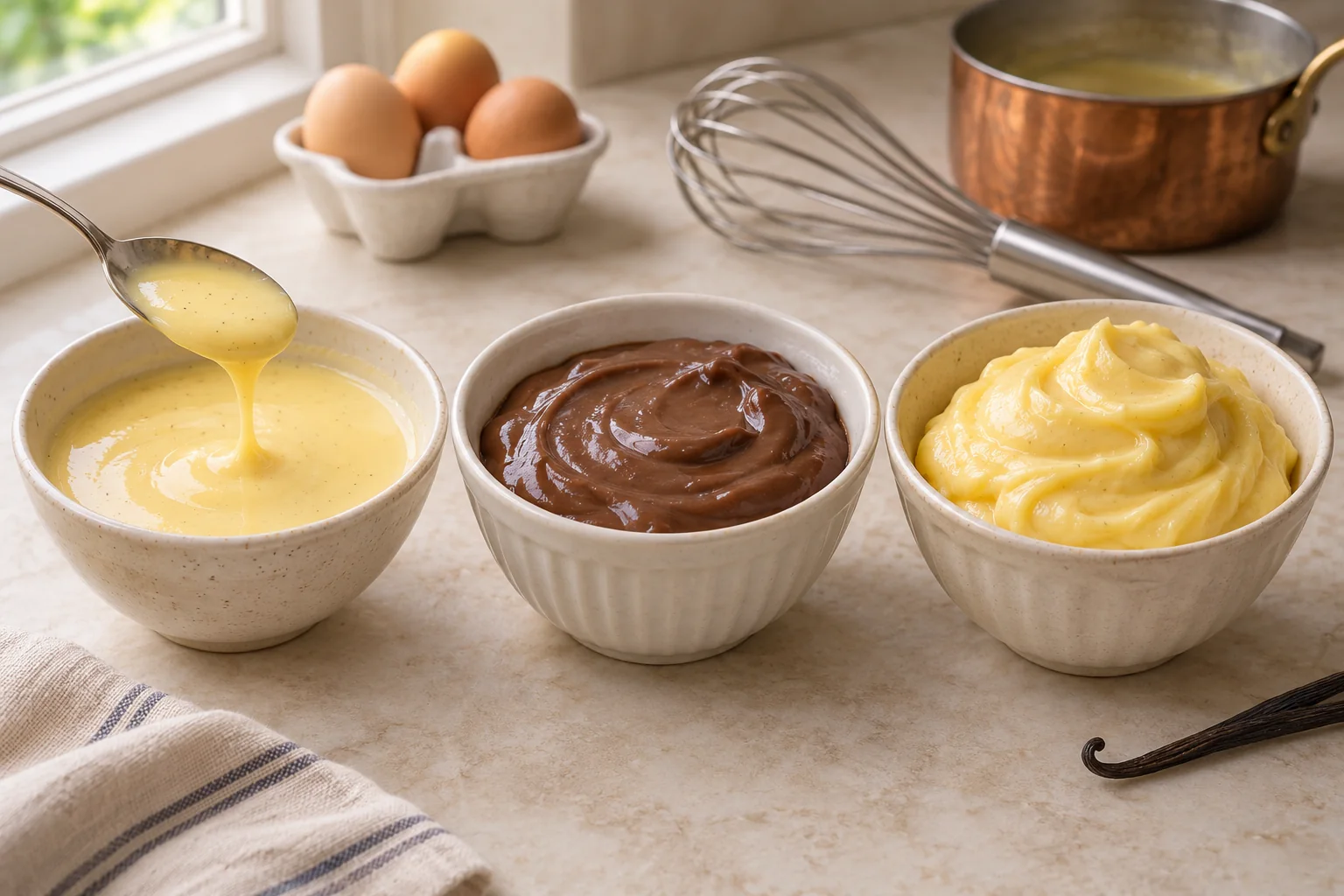
Whisking after chilling
Some pastry cream formulas become set like a soft gel in the refrigerator and need to be whisked briefly until smooth before piping. Other mixtures require gentler handling to preserve structure. Follow the method. Adding a large amount of cold milk at random may produce a thinner cream that leaks from pastry shells or no longer meets the original dessert's storage plan.
Check the filling texture for Lemon Cream Puffs after chilling, when it needs to hold inside the puff.
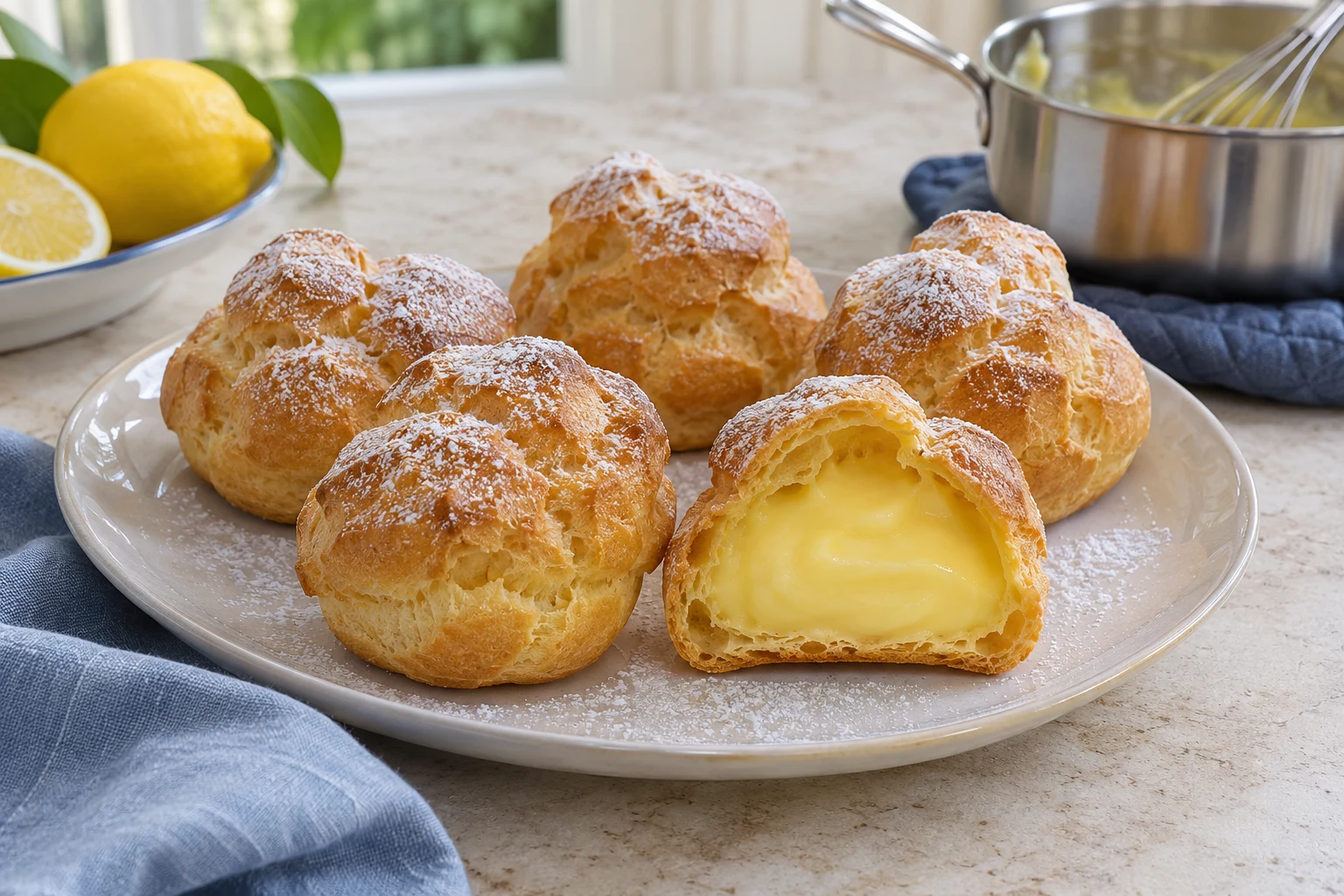
Why the cream tastes floury
A chalky or raw-starch taste can indicate incomplete cooking or excessive thickener. Cornstarch and flour have different thickening strengths and final textures, so exchanging equal spoonfuls is unreliable. Use the exact starch prescribed. A sufficiently cooked cream should taste smooth and balanced, with the vanilla or other flavor clearly present.
Why pastry cream tastes eggy
A high yolk ratio, uneven heating or weak flavoring can produce a pronounced egg impression. Some rich custards intentionally taste more egg-forward than a delicate vanilla cream. Check egg weights and the recipe before doubling vanilla or sugar to mask a structural problem. Proper cooking avoids scrambled egg notes but cannot erase an inherently egg-rich formulation.
Burning on the bottom
A dark scorched layer can form when heat is too high or the mixture isn't stirred across the entire pan. If you notice a burnt smell, do not scrape the blackened bottom into the rest of the cream. Carefully transfer only unaffected portions if a trusted method supports it, recognizing that burnt flavor may already permeate the batch. A fresh cream is often preferable for pastries meant to taste clean and delicate.
Cornstarch versus flour
Cornstarch provides concentrated starch thickening and can produce a smooth glossy custard. Wheat flour contains additional proteins and other components and may need a different amount and cooking schedule. Tapioca and arrowroot have still other properties. Choose an established formula for the chosen thickener rather than making a one-to-one swap.
Why acid changes the result
Lemon juice and fruit purée introduce acid and water. Prolonged acidic heating can affect some starch gels, and a large fruit addition can dilute the custard. If you want lemon pastry cream, use a recipe designed with the proper acid and thickener balance. Adding half a cup of juice to a finished plain vanilla cream may make it runny.
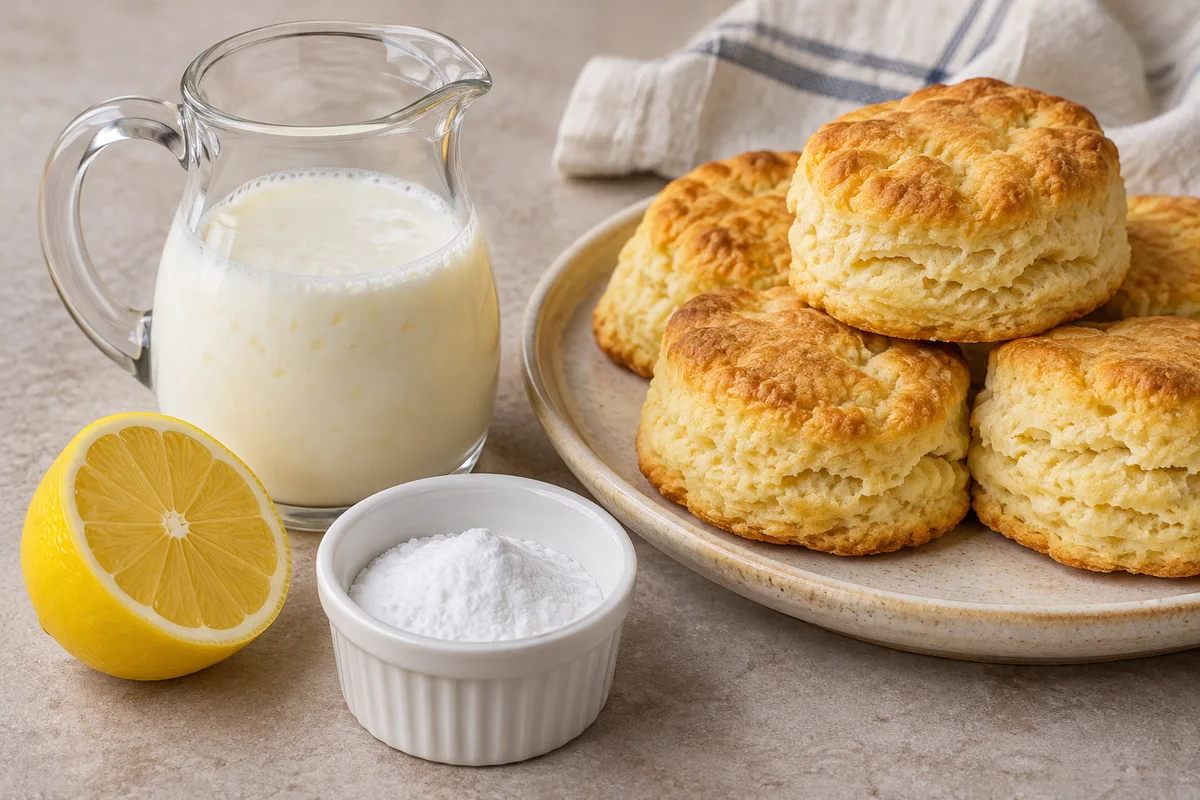
Chocolate pastry cream
Chocolate contributes cocoa solids, cocoa butter and sugar, changing thickness and flavor. A dark-chocolate version may set more firmly on cooling than the plain base. White chocolate has a different composition. Follow an appropriate recipe and add chocolate at the stated stage so it melts smoothly without scorching or causing separation.
For Chocolate Mille-Feuille, compare the set of the filling with the strength of the thin pastry sheets.
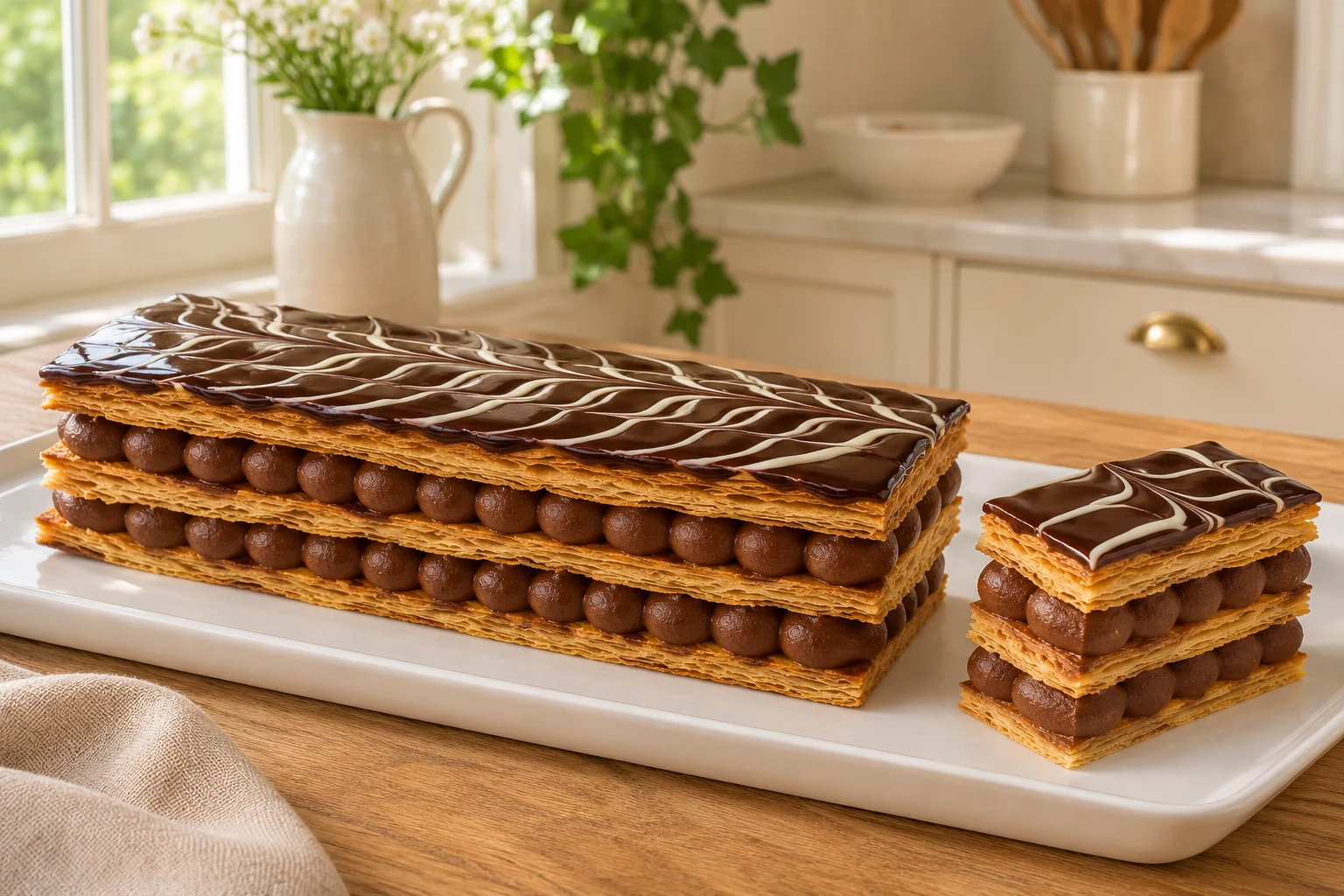
Whipped cream and diplomat cream
Diplomat cream often combines pastry cream with whipped cream and sometimes a stabilizer. Folding in cream lightens the custard but also changes its ability to support cake layers or pastries. Use a tested method and keep it properly refrigerated. Do not turn every runny pastry cream into diplomat cream by adding whipped cream; that may make it even less stable.
The diplomat cream in Layered Fruit Gel and Diplomat Cream Pie with Tempered Chocolate Work is an example of a pastry cream base lightened for assembly.

Cooling quickly and safely
Pastry cream contains egg and dairy and should be cooled promptly using a safe method, often spread into a shallow container and refrigerated as soon as practical. A protective cover touching the surface may help prevent a skin in recipes that recommend it. Do not leave a large hot bowl at room temperature overnight or place it under direct sunlight while waiting for it to cool.
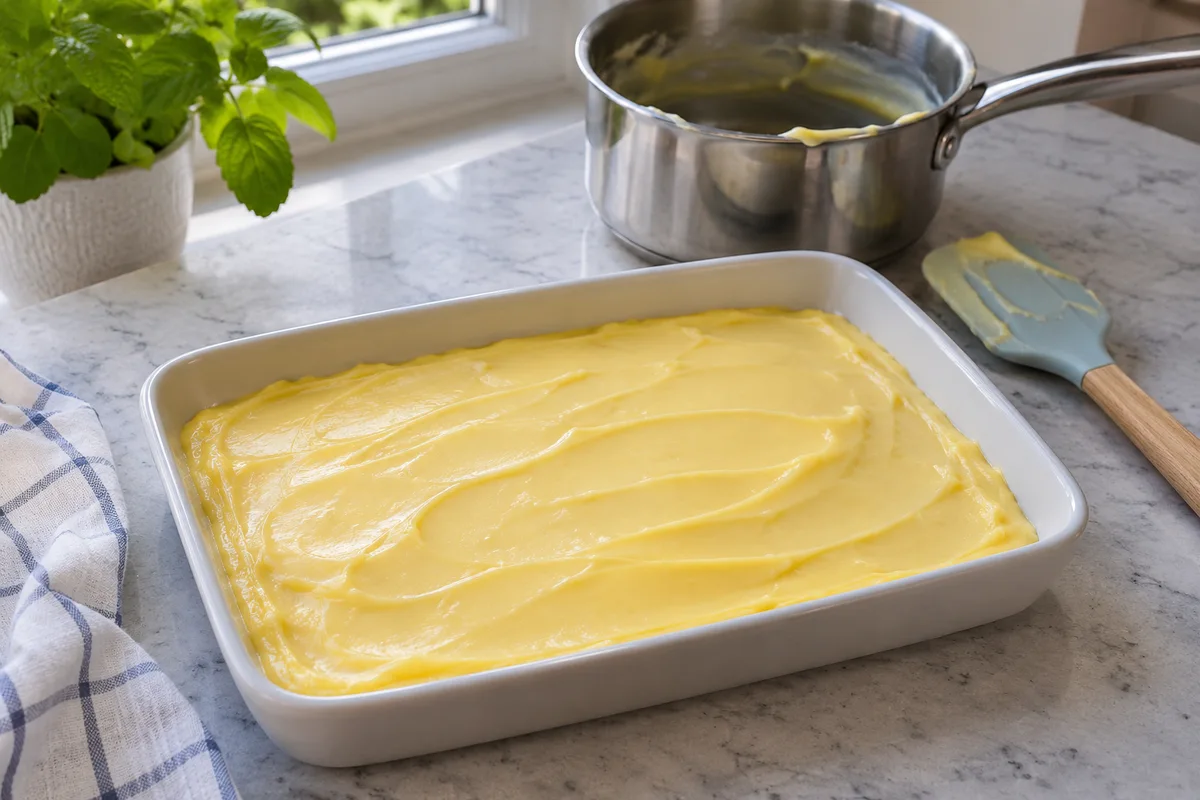
Refrigeration is essential
Keep completed pastry cream and filled pastries at or below 4°C (40°F) in accordance with food-safety guidance and the recipe's storage limit. A tart filled with cream can't remain on a buffet for hours simply because its shell is crisp. Use clean utensils and refrigerate leftovers promptly. Discard a batch with known unsafe holding rather than reheating it as a rescue.
Why a skin develops
A film can form on the surface as moisture evaporates and proteins or starch set at the air interface. Some formulas cover the cream directly with suitable wrap to reduce this, while others instruct stirring as it cools. A skin isn't the same as lumps throughout the custard. Follow the method to preserve a smooth piping consistency.
When pastry shells go soggy
A perfectly made pastry cream can still soften a tart crust after prolonged contact. Fully blind-bake tart shells, cool them and assemble within the recipe's timeline. Some desserts use a compatible chocolate barrier to delay moisture migration. Keeping pastry cream warm to protect crispness is not a safe alternative to proper cold storage.
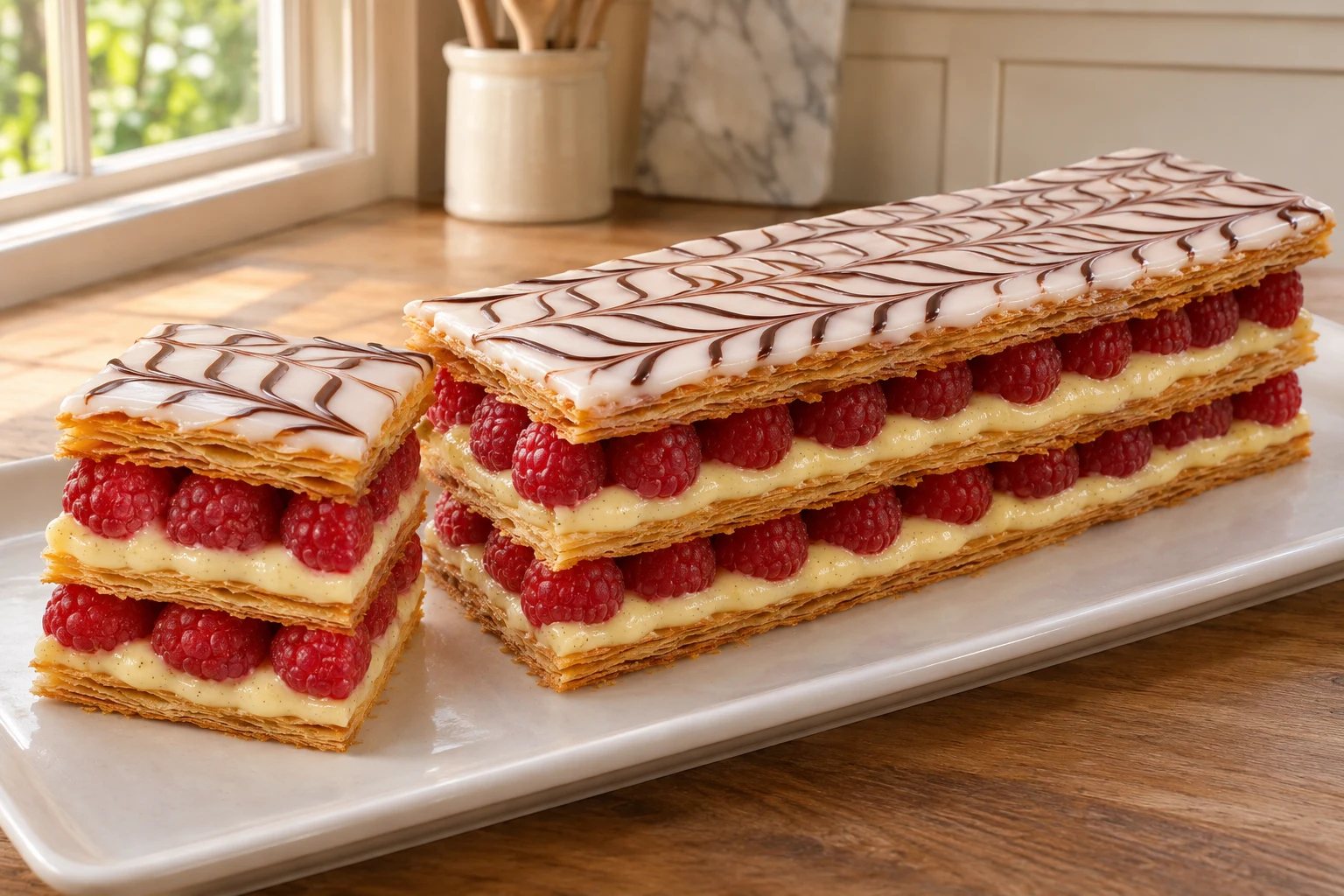
Assemble Raspberry Mille-Feuille close to serving when a crisp pastry layer is important.
A small batch to learn the endpoint
Make a tested vanilla pastry cream using weighed ingredients, a heavy saucepan and a timer for the recipe's required cook. Observe how it changes from thin milk to a thick smooth custard, then compare its cooled texture. Record stove intensity and whisking technique. Repeating one reliable base is more instructive than changing thickener and egg ratios each time.
IN PICTURES
From the baking notebook
FROM THE RECIPE BOX


