On this page
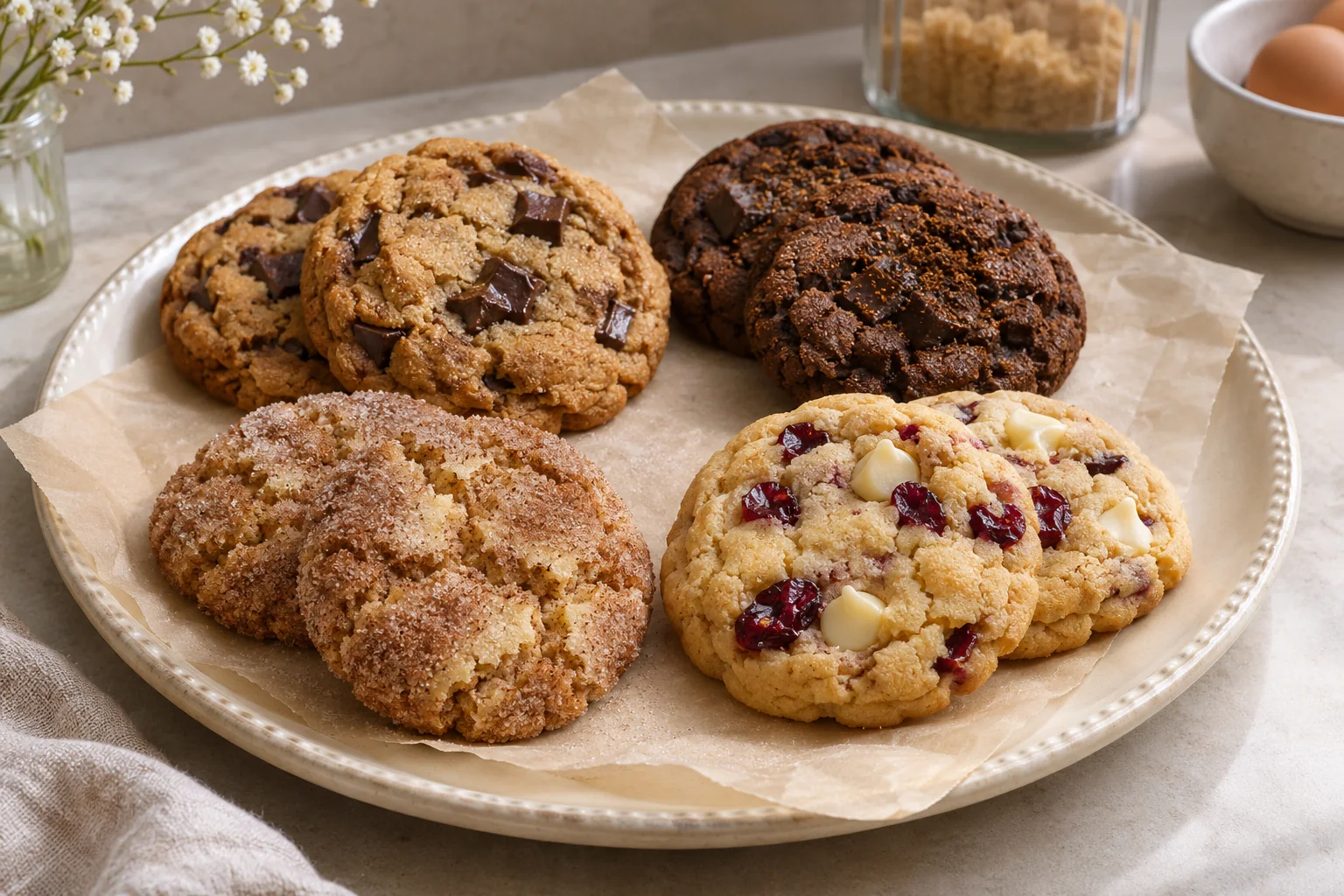
Making a holiday cookie box doesn't have to mean preparing six unrelated doughs and washing the mixing bowl after every batch. With the right base recipe, you can make one dough, divide it into portions, and turn each into a different cookie. The result is variety without an unnecessarily long ingredient list or a kitchen full of dirty dishes.
There is one important distinction: a versatile cookie base isn't a magic formula that can accept unlimited add-ins. Chocolate chunks, citrus zest, cocoa powder, nut butter and fruit preserves all change dough differently. This guide explains how to turn one cookie dough into multiple flavors while preserving the texture the original recipe was designed to produce.
Choose a Base Designed for Variations
Start with an established vanilla drop-cookie or slice-and-bake recipe that explicitly supports dividing and customizing the dough. A sturdy base made with flour, butter, sugar, egg and vanilla can often handle small amounts of dry mix-ins, but the correct limits depend on its formulation.
If the recipe was developed as a delicate lace cookie, a highly hydrated cake-like cookie, or a dough with a precisely balanced chocolate-to-flour ratio, it is a poor candidate for several improvisations. Choose a recipe that describes its dough as adaptable and follow its original method.
The Classic Chocolate Chip Cookies give you a familiar starting point. To experiment, divide the plain dough before the chocolate goes in. Bake one unmodified cookie beside the variations so you can compare the spread and sweetness.

What Changes When You Add a New Flavor?
Dry additions such as finely grated citrus zest, dry spices, chopped chocolate and some chopped nuts usually affect the base differently from liquids and pastes. Cocoa powder absorbs moisture; nut butter contributes fat; honey and syrups add liquid sugar; fruit purée brings substantial water. Those are not equal swaps.
For a reliable first batch, keep the base ingredients exactly as written and use variation quantities supplied by the base recipe. If you develop your own variations, test a small portion and record the results before committing an entire holiday batch.
Step 1: Make the Original Dough Correctly
Weigh ingredients when possible and use the specified butter and egg temperatures. Some recipes cream softened butter with sugar to incorporate air; others begin with melted butter for a denser texture. Changing that method may alter spread even before you divide the dough.
Mix flour only as long as the recipe instructs. Extended mixing can encourage gluten development and make certain cookies tougher. If the base dough requires chilling before portioning, honour that stage rather than rushing into the mix-ins.
Step 2: Divide Before Adding Mix-Ins
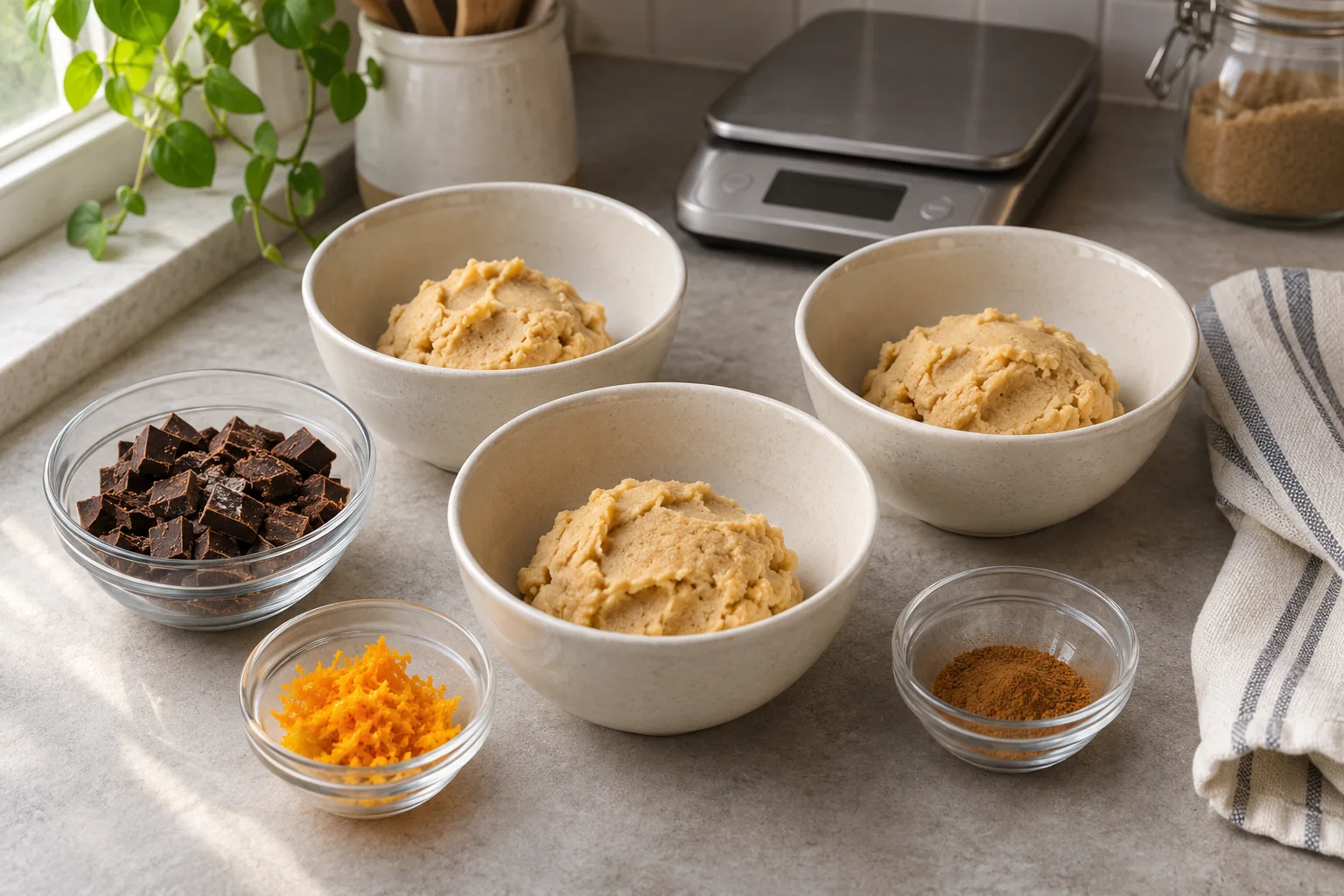
Transfer the finished dough to a scale and record its total weight. Divide it into equal portions for the number of flavors you want, or into unequal portions when one variation is likely to be more popular. Set each portion in a separate bowl and label it so chocolate, nuts and other ingredients do not accidentally cross into an allergen-sensitive batch.
If you are using a recipe with an egg that must be incorporated into the entire batch, dividing after the base dough is finished is usually simpler than trying to split a raw egg between tiny dough portions.
To make three flavours with an equal yield, weigh the plain dough and divide that weight by three. Make a note of which bowl gets each flavour. Once you mix in the additions, weigh the individual cookie portions so the finished cookies bake evenly.
Step 3: Mix Each Variation Gently
Fold in additions just until distributed, then stop. Kneading each portion extensively can alter texture, especially in a flour-based dough. Keep the dough cool if it begins to soften in your hands. Dough that warms substantially during handling may spread differently from portions shaped earlier.
Wash tools between variations where allergens or strong flavours might transfer. A clean spatula is worth the extra minute, especially when separating nut-containing and nut-free flavors; remember that a shared home kitchen may still present cross-contact risks.
Variation 1: Classic Chocolate Chunk
Chopped baking chocolate or suitable chips are a natural starting point. They add pockets of chocolate without necessarily altering the liquid balance as much as wet fillings. Follow the base recipe's maximum mix-in quantity so the cookies have enough dough to hold together.
Dark chocolate keeps a sweet vanilla base from tasting cloying; milk or white chocolate creates a sweeter result. Chop consistently so one scoop isn't overloaded with large chunks while another has almost none.
Variation 2: Orange Zest and Vanilla
Finely grated orange zest can make a plain cookie taste bright and bakery-like. Avoid digging into the bitter white pith beneath the coloured skin. Citrus zest contains aromatic oils, so a restrained amount can have more impact than extra juice.
Liquid orange juice is not a neutral replacement for zest. It can change dough hydration, spread and browning. Use a tested citrus variation rather than pouring juice into a finished dough.
If you like orange with chocolate, our Orange Chocolate Chip Cookies use that combination in a separate, complete recipe.

Variation 3: Cinnamon Sugar
For a comforting cinnamon variation, use a base recipe that permits a small quantity of spice in the dough, a cinnamon-sugar coating or both. Rolling the outside of dough balls in the coating gives a different flavour impression from blending all the cinnamon into the base.
When making snickerdoodle-style cookies, remember that a traditional snickerdoodle may have its own leavening and acidity profile. A vanilla cookie rolled in cinnamon sugar is a delicious variation, but it isn't necessarily the same formula.
For a spiced batch with chocolate, try the Cinnamon Chocolate Chip Cookies. Use that recipe when you want the full cinnamon-and-chocolate formula.
Variation 4: Espresso and Dark Chocolate
Instant espresso powder can deepen chocolate flavour and make a grown-up cookie. Use a baking-appropriate product and the quantity in a tested variation. Ground coffee beans are not interchangeable with soluble espresso powder: the grit and extraction will differ.
Pair with dark chocolate chunks and keep the coffee restrained so it supports rather than overwhelms the cookie. Label the batch for anyone avoiding caffeine.
Our Espresso Chocolate Chip Cookies are a starting point if you want the coffee flavour in the whole batch.

Variation 5: Toasted Pecans or Walnuts
Chopped toasted nuts bring a pleasant crunch and rich flavor to a vanilla or brown-sugar cookie base. Allow the nuts to cool before folding them into the dough. Use the quantity the recipe can support; too much chopped nut can make cookies fragile and crumbly.
Tree nuts are major allergens. Store, label and serve nut-containing cookies separately, and never describe another variation as allergy-safe if the preparation area or tools may have created cross-contact.
Variation 6: Lemon and Poppy Seed
Fine lemon zest and a restrained quantity of poppy seeds can make a fresh-tasting cookie, especially in a buttery base. Seeds bring tiny crunchy accents rather than large chocolate-style pieces. Some recipes add a light lemon glaze after baking for extra flavour.
If the glaze contains lemon juice, apply it after the cookies have cooled and allow it to set fully before stacking. A wet glaze placed on warm cookies can disappear into the surface.
Variation 7: White Chocolate and Dried Cranberry
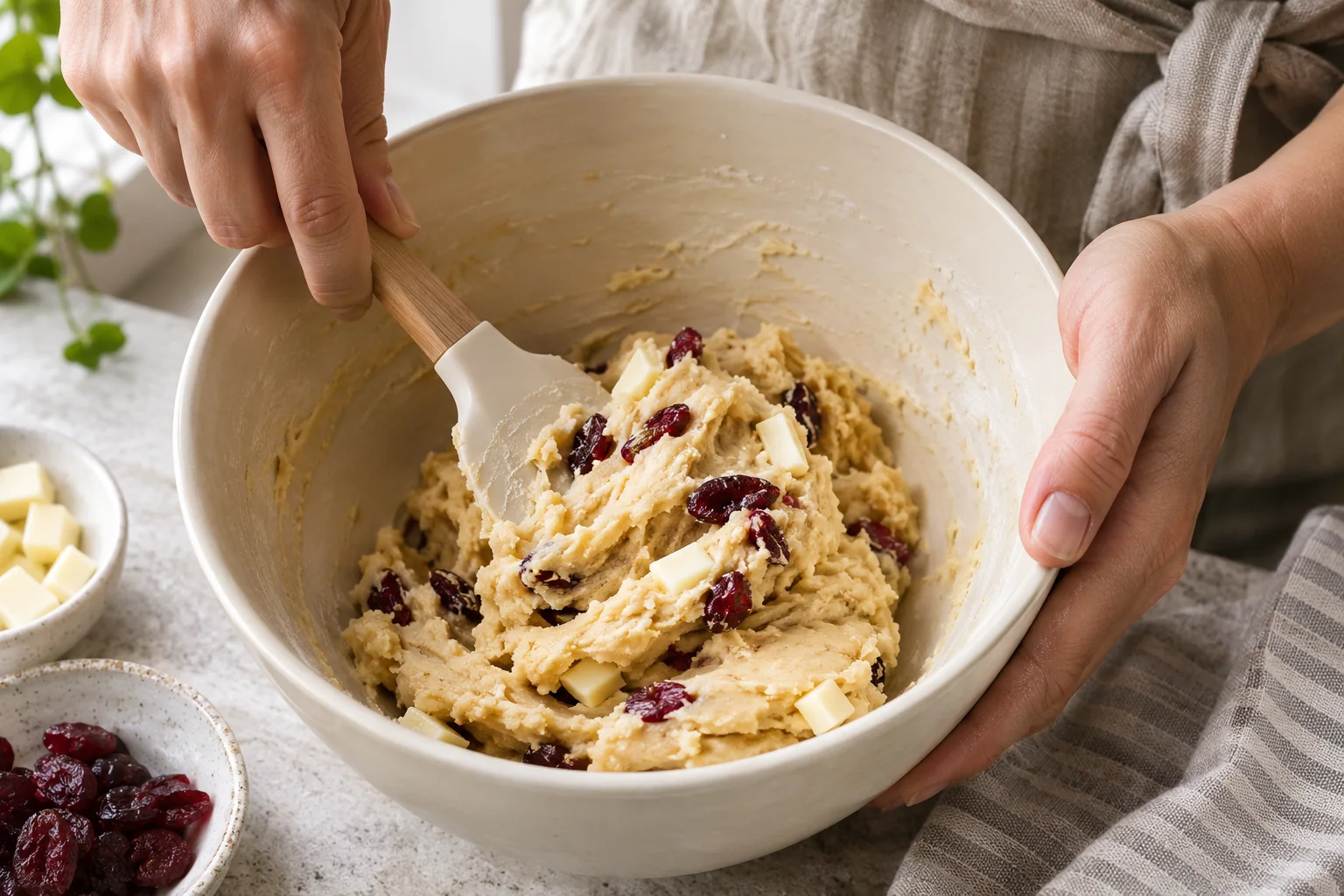
This combination is especially useful for autumn and Christmas cookie boxes. Dried cranberries contribute chew and tartness, while white chocolate brings a sweet creamy note. Use dried berries rather than substituting an equal amount of wet cranberry sauce.
Finely chop oversized dried fruit if a recipe recommends it, and fold gently. Too many mix-ins can prevent the dough from binding into even cookies.
Fold the cranberries and white chocolate through in just a few turns. Check the first scoops and redistribute any clusters before you chill the portions.
Variation 8: Cocoa Swirl or Chocolate-Vanilla
For a two-tone appearance, use a recipe specifically written to make vanilla and cocoa dough from the same foundation. Cocoa is a dry absorbent ingredient; simply stirring a large amount into half of a finished dough can make that portion drier than the plain side.
A tested adaptation may adjust flour, cocoa or another ingredient before mixing. Shape the two doughs together gently for a marbled appearance, without kneading until the colours disappear.
Which Add-Ins Usually Need a Different Formula?
Peanut butter, cream cheese, puréed banana, pumpkin, jam, caramel sauce, molasses and maple syrup can change moisture, fat or sugar balance. They may be excellent cookie flavours, but they work best in dough recipes developed around them. A thick jam thumbprint can also need a dough sturdy enough to hold a well and bake evenly around the filling.
Likewise, replacing a substantial share of plain flour with cocoa, almond flour or oat flour is a structural change, not simply a flavour adjustment. Save those substitutions for recipes designed for them.
Chilling the Divided Dough
Some doughs benefit from refrigeration to control spread or improve handling. Follow the base recipe's chilling instructions for every variation, particularly after repeated handling. A chocolate-rich portion and a plain portion may firm at different rates, so check their texture before scooping.
Label covered dough portions with their flavour and preparation date. Avoid assuming all cookie doughs can be kept refrigerated for the same number of days; raw ingredients and recipe formulation matter.
How to Keep Cookie Sizes Consistent
Use a cookie scoop or scale so every portion weighs approximately the same. Consistent size helps cookies bake evenly and makes an assorted box look intentional. Flatten or shape each dough ball only if the recipe instructs you to do so.
Different mix-ins can change actual spread, so run a small test batch before filling a whole baking sheet. If one variation spreads more, investigate its added ingredients and dough temperature rather than changing the oven setting for every cookie.
Can You Bake Multiple Flavors on One Tray?
Sometimes, when the variations are similar in size, require the same temperature, and have comparable bake times. But strongly different doughs may brown unevenly, and nut allergens can be an issue for anyone sharing. Separate sheets are safer for clear labelling and easier quality control.
Leave proper space between cookies and use the oven rack position stated in the recipe. Rotate the pan only when recommended.
Freezing a Multi-Flavor Cookie Batch
If the base recipe supports freezing, portion dough into labelled freezer-safe containers or bags and preserve each flavour separately. Some recipes permit baking from frozen with specific instructions; others need thawing first.
Frozen raw cookie dough still contains uncooked ingredients. Do not taste it. Use the recipe's safe storage window and bake fully as directed.
Building a Beautiful Assorted Cookie Box
For a balanced box, choose contrast rather than six variations that all contain chocolate. A helpful combination is one chocolate-heavy cookie, one bright citrus cookie, one warm spice cookie and one nutty or fruity cookie when appropriate for the recipient.
Let every cookie cool fully. Separate crisp and soft textures and use suitable food-safe dividers. Pack strong flavours and allergens carefully. A smaller box of four successful flavours is better than a large assortment with inconsistent baking.
Common Problems and Fixes
One Variation Spreads More Than the Others
Check whether that portion received extra liquid, fat or sugar, became warmer through handling, or was shaped differently. Follow the tested variation amounts and chill as directed before evaluating the next batch.
A Dough Portion Is Crumbly
Overloading with cocoa, chopped nuts or dry additions may be the cause. Do not automatically splash in milk; that can introduce new changes. Compare the portion with the original formula and use a tested variation next time.
The Flavours All Taste the Same
Choose distinct supporting ingredients, such as orange zest, espresso or cinnamon, instead of different combinations of the same chocolate chips. Keep stronger spices and coffee measured so the individual flavours remain balanced.
Cookies Have Uneven Sizes
Divide dough by weight and scoop consistently. Large chunks can make a scoop misleading, so adjust portions on a scale when uniformity matters.
Frequently Asked Questions
Can I make five cookie flavours from one dough?
Yes, with a base recipe developed for variation and mix-ins suited to its structure. Divide by weight and follow tested add-in quantities for each portion.
Should I add flavours before or after chilling?
Follow the base recipe. Many doughs are easier to divide and fold when freshly mixed, then chill after adding flavours. Very firm dough may be difficult to mix evenly.
Can I replace chocolate chunks with dried fruit?
Some recipes allow a comparable volume of suitable dry mix-ins, but the exact result depends on weight, moisture and size. Check a tested variation for reliable quantities.
Can I do this with a sugar-cookie dough?
Sometimes. A cutout sugar cookie and a drop cookie have different structural goals. Choose a sugar-cookie formula that explicitly supports the additions and decorating plans.
One Dough, Plenty of Personality
A single well-chosen cookie base can open the door to an assortment of treats. Keep the original recipe's structure intact, divide by weight, choose sensible dry flavour additions and test new variations before baking a large quantity. You'll spend less time mixing separate doughs and more time enjoying the cookies you made.
IN PICTURES
From the baking notebook
FROM THE RECIPE BOX


