On this page
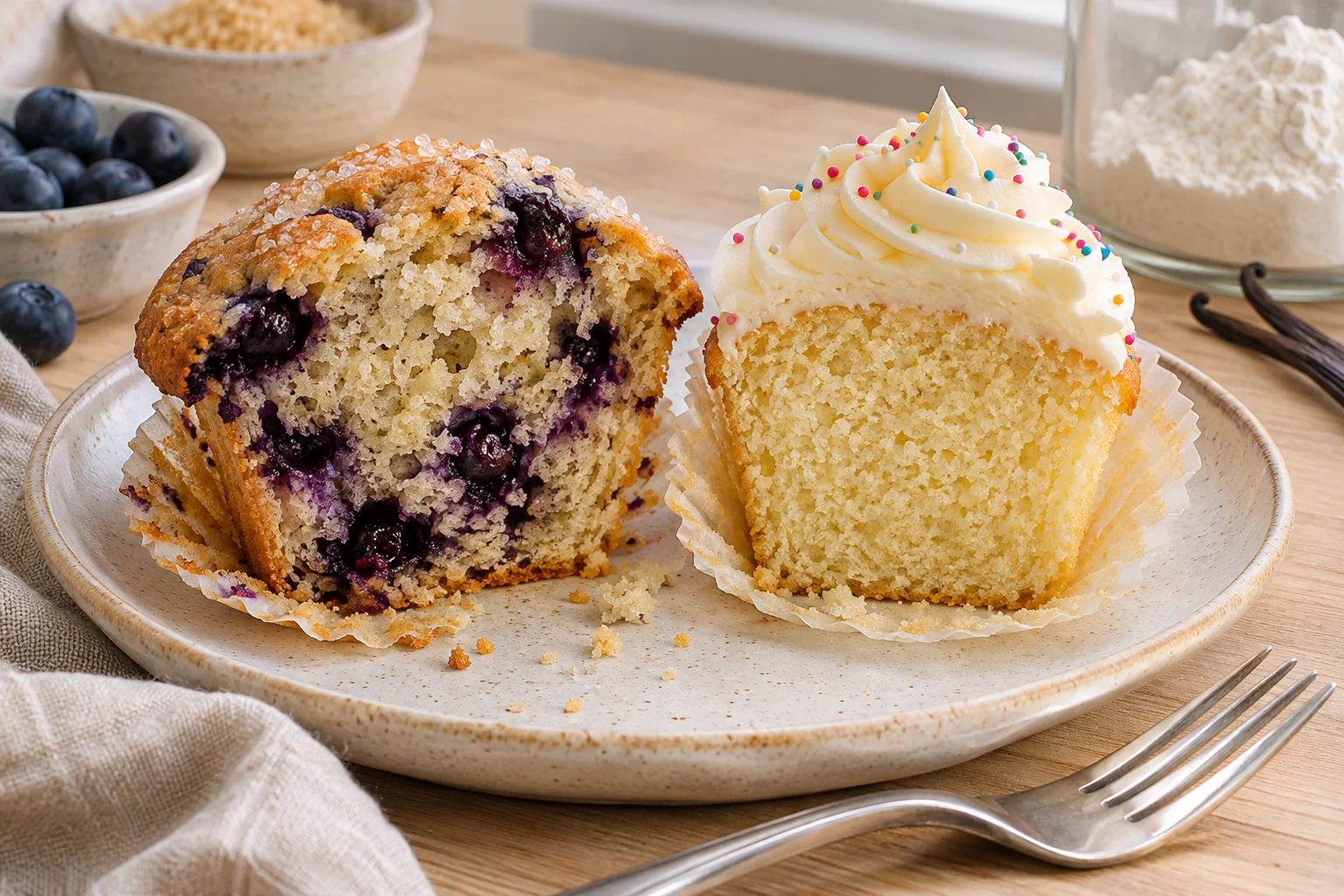
Split a blueberry muffin and you may find a berry pocket, a tender uneven crumb and a crisp patch of streusel. A vanilla cupcake is often fine enough to split neatly and sturdy enough to hold a rosette. The tin gives them a common shape. To understand the difference, follow the batter from the mixing bowl to the first bite.
The short answer
Muffins are generally served as individual quick breads and often have a hearty or less finely textured crumb. Cupcakes are small cakes, commonly sweeter, finer-textured and decorated for dessert. But neither category has a universally enforced ingredient threshold. A chocolate muffin can be rich and sweet, and an unfrosted cupcake is still a cupcake if its recipe is a miniature cake.
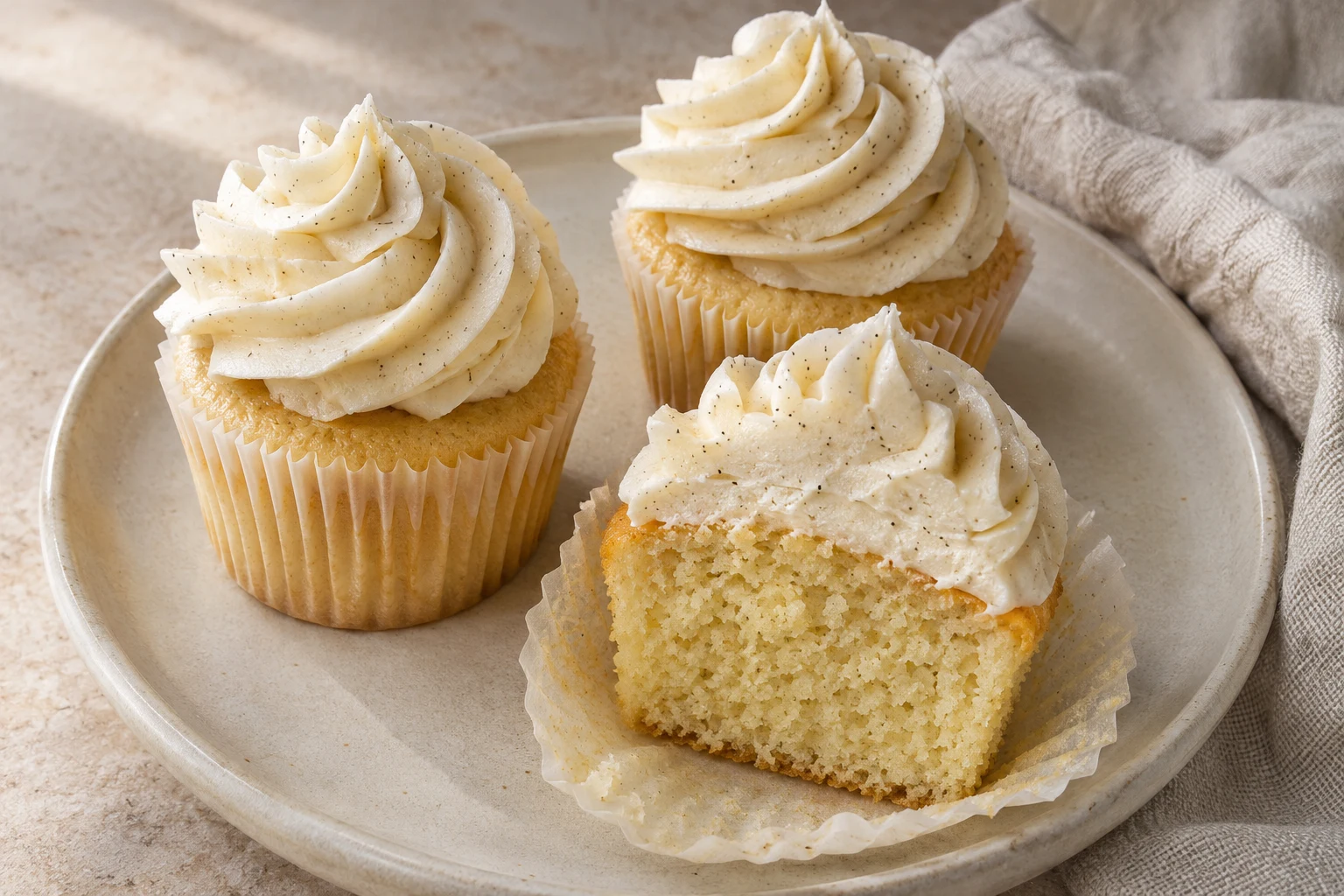
Cut one of the Vegan Vanilla Bean Cupcakes in half to see the even crumb that carries its swirl of frosting.
A shared pan doesn't mean a shared recipe
Standard muffin and cupcake pans commonly have the same basic well shape. Many bakers use one twelve-cup tin for both. The important difference is the batter formulation and technique, not the tool. Liner colour, a tall paper tulip or the presence of sprinkles cannot by itself tell you which dessert is in the pan.
The tin in Mini Muffins (Banana, Zucchini, or Apple) simply sets the portion. The fruit or vegetable folded into the batter helps determine the crumb.

The traditional muffin mixing method
In a classic muffin batter, whisk the flour, leavener and seasonings together first. Mix the liquids in a second bowl, then fold the two mixtures together just until the dry streaks disappear. A little lumpiness at that point is ordinary. Beating until perfectly smooth can leave the baked muffin tough.
Watch when the two bowls meet in Blueberry Muffins and when the berries go in. The last folds should distribute the fruit without crushing it.

The typical cupcake mixing method
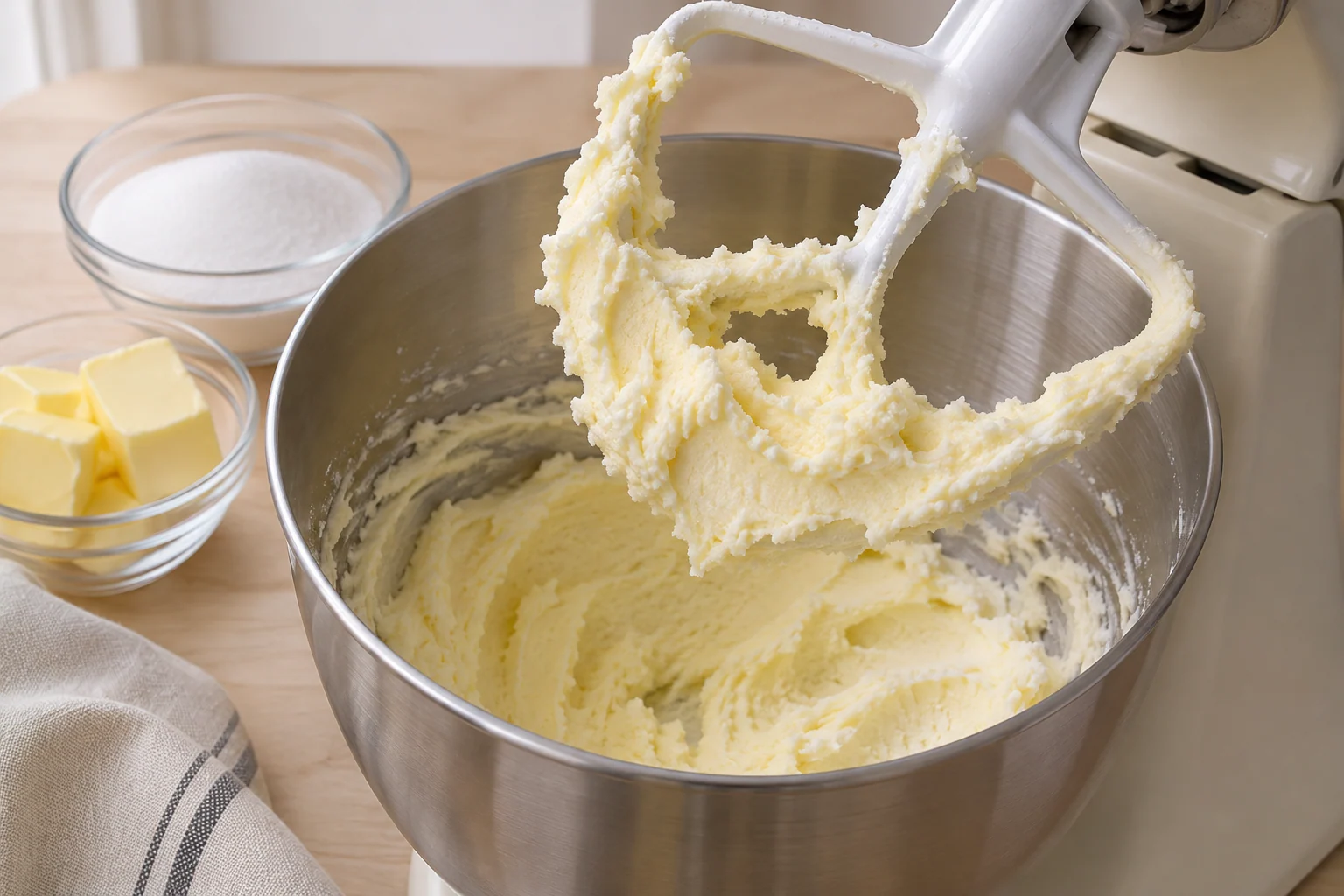
Many butter cupcakes begin by beating softened butter with sugar until lighter and aerated. The remaining ingredients go in gradually so that air survives mixing. Oil-based chocolate cupcakes can follow a different sequence and still produce the fine crumb you want under frosting.
Read the early mixing steps in Mint Julep Bourbon Cupcakes to see where the recipe starts building a fine cake crumb.
Can cupcakes use the muffin method?
Yes. Some moist oil-based cupcakes use a stir-together technique similar to muffin mixing and still bake with a fine dessert-cake texture. Likewise, some bakery muffins use creamed butter and sugar. Method is a helpful clue, not an absolute classification.
How the crumb usually differs
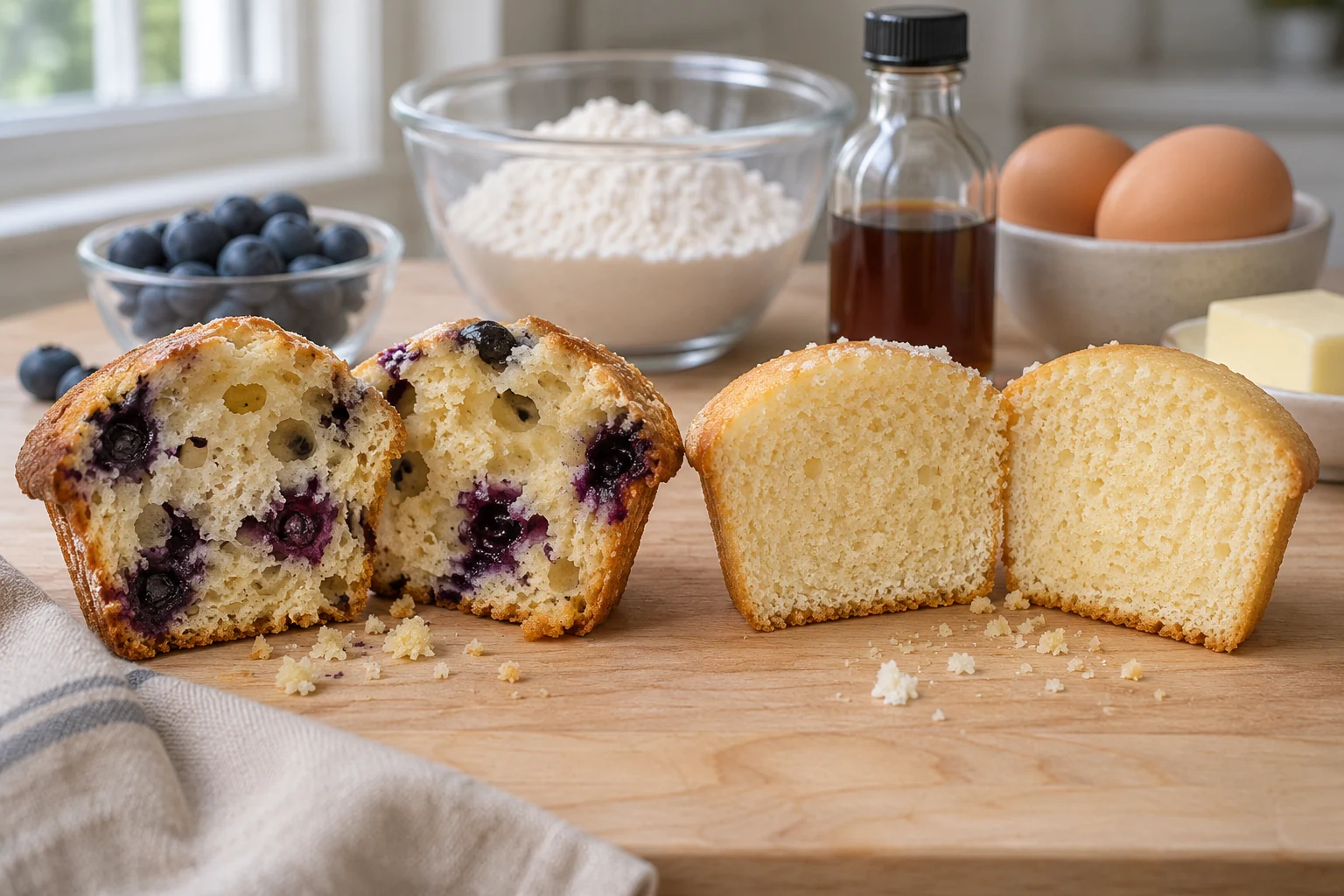
A conventional cupcake often has a fine, light, cohesive crumb designed to support frosting. A muffin may have a slightly coarser or more substantial texture, especially with whole grains, oats, fruit or nuts. But a delicate lemon muffin and a dense chocolate cupcake can reverse those expectations.
Split one of the Blackberry Cornmeal Muffins across the middle. The cornmeal and pockets of fruit give the crumb a different texture from a fine cake.
Is a muffin always less sweet?
A muffin can be sweet enough for dessert, particularly with chocolate chunks and a sugary topping. If sweetness matters, compare the finished servings as well as the batter. A small plain cupcake and a jumbo muffin with streusel are very different portions.
The chocolate in Tim Hortons Copycat Chocolate Chip Muffins makes a good reminder to compare ingredient lists when sweetness matters to you.
Is frosting the defining difference?
Imagine the same vanilla cupcake before the piping bag arrives. It already has its cake texture. Likewise, a muffin with a drizzle still has the crumb produced by its own batter. A topping is a clue to how the baker wants to serve it.
The fruit and finishing elements of Vegan Strawberry Shortcake Cupcakes are part of the dessert even before you add the final topping.

Cupcake structure and frosting
Cupcakes commonly support a frosting swirl, filled centre or decorative topping. The batter needs enough structural integrity for the intended assembly. However, a very tender cupcake may be fragile, and a dense muffin can support a substantial topping; both depend on the recipe.
Muffins and mix-ins
Blueberries, banana, raisins, nuts, zucchini and oats are familiar muffin ingredients. They contribute texture, moisture and flavour. Cupcakes can also include berries or nuts, but a muffin's identity often centres around those ingredients rather than a layered frosting combination.
Cut one of the Morning Glory Muffins to see how pieces of fruit and vegetables interrupt the crumb in a deliberate way.

Streusel versus buttercream
A crisp oat or cinnamon streusel is a familiar muffin finish that adds a contrasting crumbly top. Buttercream is a familiar cupcake finish, designed to spread or pipe. You could put either on both, but their moisture and sweetness influence the finished result.
The topping in Blueberry Streusel Muffins goes on before baking and develops a crisp surface in the oven.

What about chocolate muffins?
Chocolate muffins may use cocoa, melted chocolate and chocolate chips, sometimes in generous amounts. A chocolate cupcake may rely on a related batter but be topped with chocolate buttercream or ganache. Both can be sweet. Look at the complete recipe's intended texture, yield and presentation rather than the word chocolate.
The dark colour of Double Chocolate Muffins can suggest a cupcake, but the method and the chocolate folded through the batter tell you more.

Blueberry muffins versus blueberry cupcakes
A blueberry breakfast muffin may rely on a relatively sturdy batter with fruit folded through and a simple sugar top. A blueberry cupcake might use a delicate vanilla cake, blueberry filling and frosting. But a muffin can be tender and a cupcake can contain real fruit; there is no rigid ingredient boundary.
Why cupcakes are often lighter
Many cake recipes are built to create small uniform air cells through creaming, egg aeration or other specialized methods. That can produce a more delicate bite. A muffin method is often less aerated and more deliberately rustic, though leavening, fat, flour and baking conditions also control density.
The batter in Vegan Chocolate Cupcakes uses oil. Its fine crumb is a reminder that you can make a light cupcake without creaming butter and sugar.

Oil and butter in both categories
Both muffins and cupcakes can be made with butter, oil or a formula using both. Oil-based cakes may feel very moist, and butter-based muffins may taste rich and tender. Using melted butter doesn't automatically turn a cupcake into a muffin, and using oil doesn't mean a muffin cannot be dessert.
Look at the fat and flour together in Coconut Flour Cupcakes before borrowing an ingredient swap from a wheat-flour muffin.
Leavening ingredients
Both often use baking powder or baking soda, while some cakes also use aeration from eggs. The precise amount is determined by flour, acidity, sugar and pan size. Don't move a muffin recipe into a cupcake format by simply adding more baking powder.
How sugar affects texture, not just flavour
Sugar helps retain moisture and affects the tenderness and browning of both muffins and cupcakes. Reducing it substantially can change the crumb. Recipes developed for less sweetness may use different proportions of flour, fat and liquid rather than simply eliminating sugar from a sweet cupcake recipe.
Baking time and pan filling
Portion one batch with the same scoop so a single early check tells you something about the whole tin. Test the centre away from fruit or melted chips. Check mini and jumbo portions against their own recipes, since changing the depth changes when the middle sets.
The portions in Bakery-Style Jumbo Muffins call for their own timing. Their browned tops cannot tell you how long a small cupcake needs.

Why muffins get high domes
A thick muffin batter, particular portion level and appropriate leavening and oven heat can produce an attractive high crown. Cupcakes often aim for flatter surfaces that are easier to frost. But a dome is not proof the item is a muffin. Some cupcakes rise high, and some muffins bake almost flat.
When converting a cake into cupcakes
A conventional cake batter can often be portioned into cupcake wells with an adjusted baking time and yield. That does not automatically make it muffin batter. If you're serving it plain at breakfast, you can change the occasion but not necessarily the underlying formula's texture.
For a small frosted cake, Vegan Chocolate Espresso Cupcakes gives the cupcake portions and the matching finish together. Compare those instructions before dividing a full-size cake batter.

Are muffins always healthier?
The names alone tell you little about nutrition. If you are choosing breakfast, look at the ingredients and the size of the serving you will actually eat. A chocolate muffin, a cornmeal muffin and a frosted cupcake can differ in several ways at once.
Choosing for brunch
Muffins are convenient for brunch because they can contain fruit, oats and nuts and may be served without frosting. For a dessert table, cupcakes offer more decorating possibilities. But a lemon-poppy muffin can be a lovely dessert and a lightly frosted mini cupcake can work at brunch too.
For a brunch table, Apple Cinnamon Muffins brings fruit and spice in individual portions that need no last-minute frosting.
Storage differences
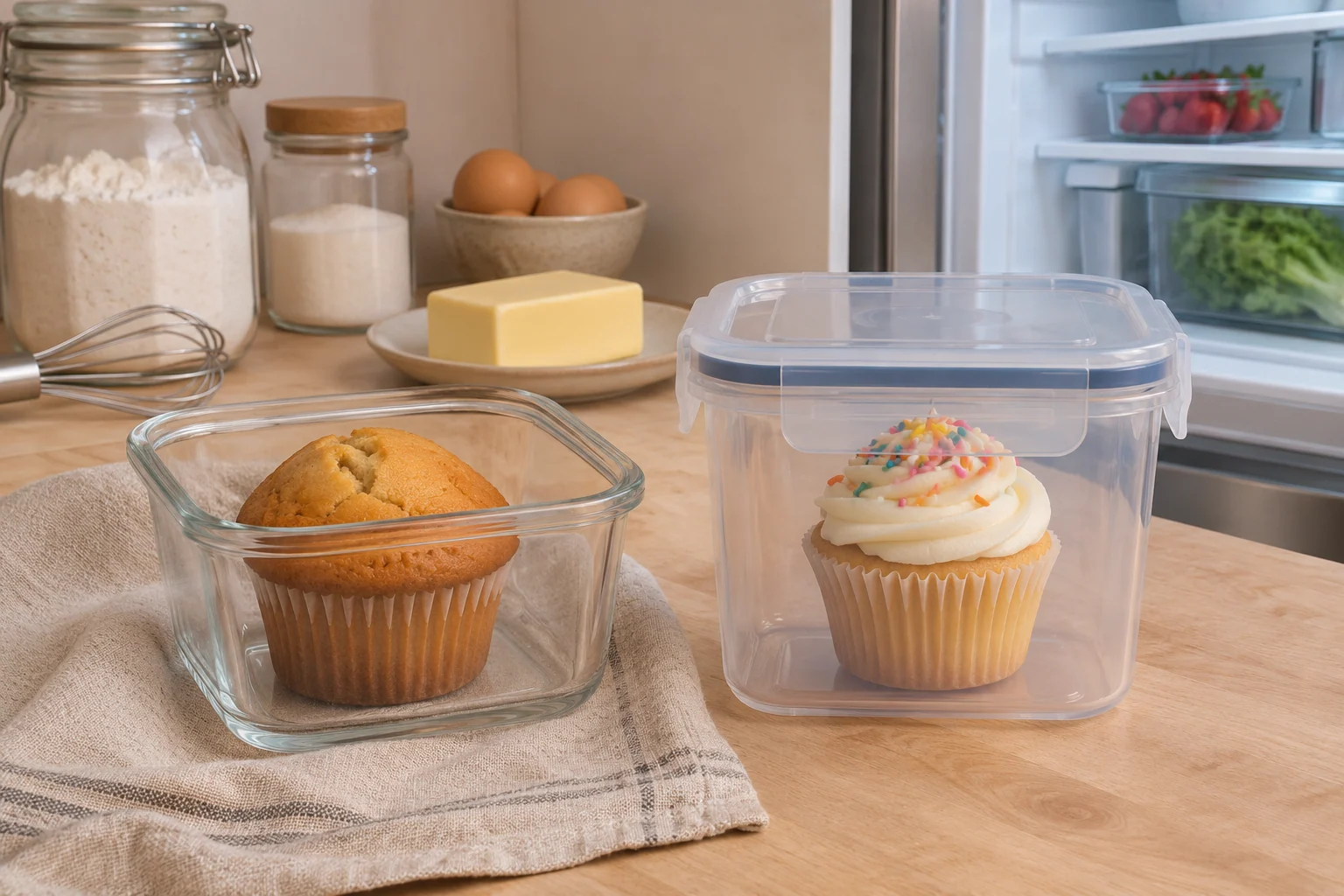
Storage depends on the actual ingredients, not the label muffin or cupcake. Plain muffins and some buttercream cupcakes may allow certain storage conditions according to their recipes. Cream cheese frosting, whipped cream, custard or other perishable fillings generally require refrigeration and safe serving practices.
Frequently asked questions
Is a cupcake just a muffin with frosting? No, though the distinction sometimes blurs. Are muffins always less sweet? No. Can you bake both in the same pan? Often yes, following each recipe's directions. Why do cupcake recipes mix longer? Some use creaming or cake-specific aeration; others don't. Which is better? Choose the texture and serving style you want.
A useful way to think about the difference
Read the first mixing step and picture the finished bite. For fruit pockets and a tender, irregular crumb, choose the muffin built for that fruit. For a smooth platform for buttercream, choose a cupcake that gives both the batter and the finish you want.
IN PICTURES
From the baking notebook
FROM THE RECIPE BOX


