On this page
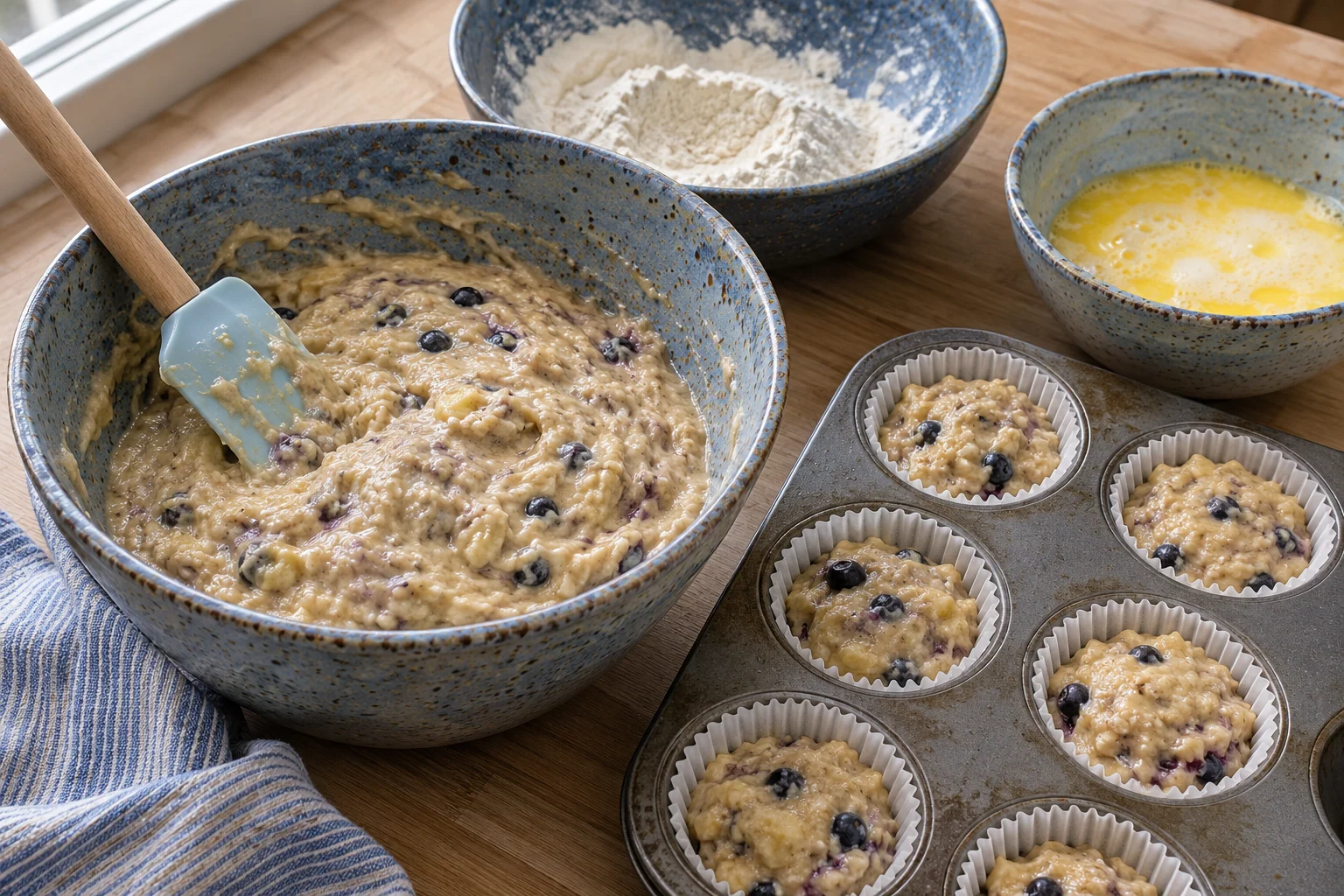
The most useful moment in muffin making is the last fold. Draw the spatula along the base of the bowl and turn the batter over. If the underside shows no loose flour and the fruit is reasonably distributed, set the spatula down. A few soft lumps rarely need chasing.
What is the muffin mixing method?
The muffin method is a mixing technique widely used for conventional muffins, some pancakes and certain quick breads. The dry ingredients are combined in one bowl, the liquid ingredients in another, then the mixtures are brought together with relatively brief mixing. Because the flour is hydrated only near the end, the method helps limit unnecessary gluten development while distributing leaveners and other ingredients.
Why it makes tender muffins
Wheat flour contains proteins that can form gluten when hydrated and worked. Some gluten provides structure, but prolonged mixing can produce a firmer or rubberier texture in many ordinary muffin formulas. The muffin method manages that process by mixing the flour with liquid only after the other ingredients are prepared, then stopping when the mixture is adequately combined.
The muffin method is not creaming
Creaming builds air by beating softened fat with sugar. The two-bowl muffin method distributes wet and dry ingredients separately, then joins them with a few folds. Some muffins use creaming deliberately. Start by reading the recipe’s first mixing instruction.
In Lemon Poppy Seed Muffins, softened butter and sugar are beaten together before the flour goes in. It is a muffin recipe that deliberately uses the creaming method.
What you need before mixing
Preheat the oven, prepare a correctly sized muffin pan and gather measuring tools, two bowls, a whisk or fork, and a flexible spatula. If using paper liners, choose ones that fit the wells. A scoop makes the batter distribution consistent. The method is quick once wet and dry ingredients combine, so have the baking pan ready first.
Step 1: measure dry ingredients accurately
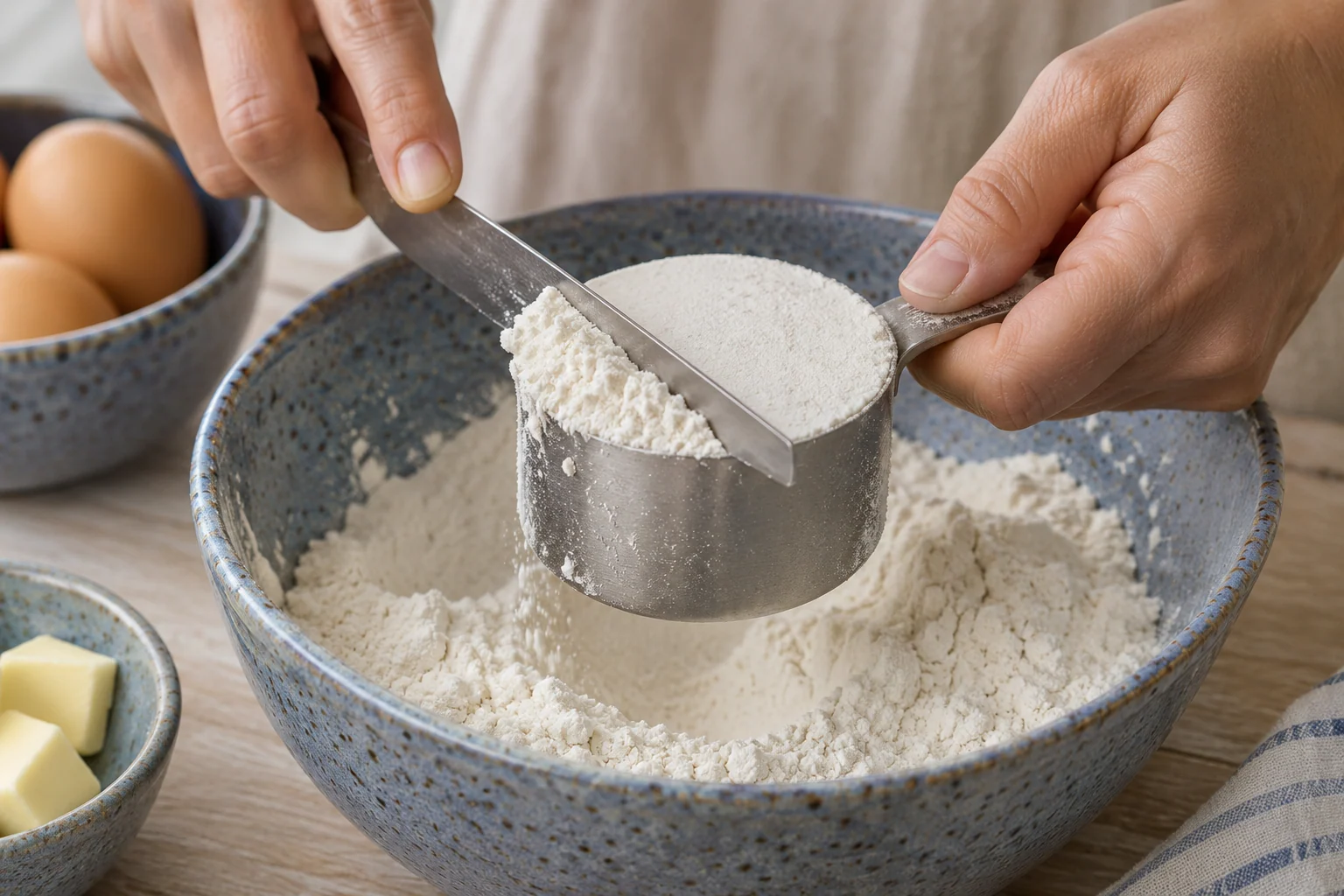
Weigh the flour when grams are supplied. Too much flour from a tightly packed cup can produce dry, heavy muffins. Measure sugar, baking powder, baking soda, salt and spices according to the formula. Do not substitute self-rising flour for ordinary flour without accounting for its built-in leavening and salt.
Measure the specific flour called for in Quinoa Flour Muffins rather than relying on the feel of a wheat-flour batter.
Step 2: whisk the dry ingredients together
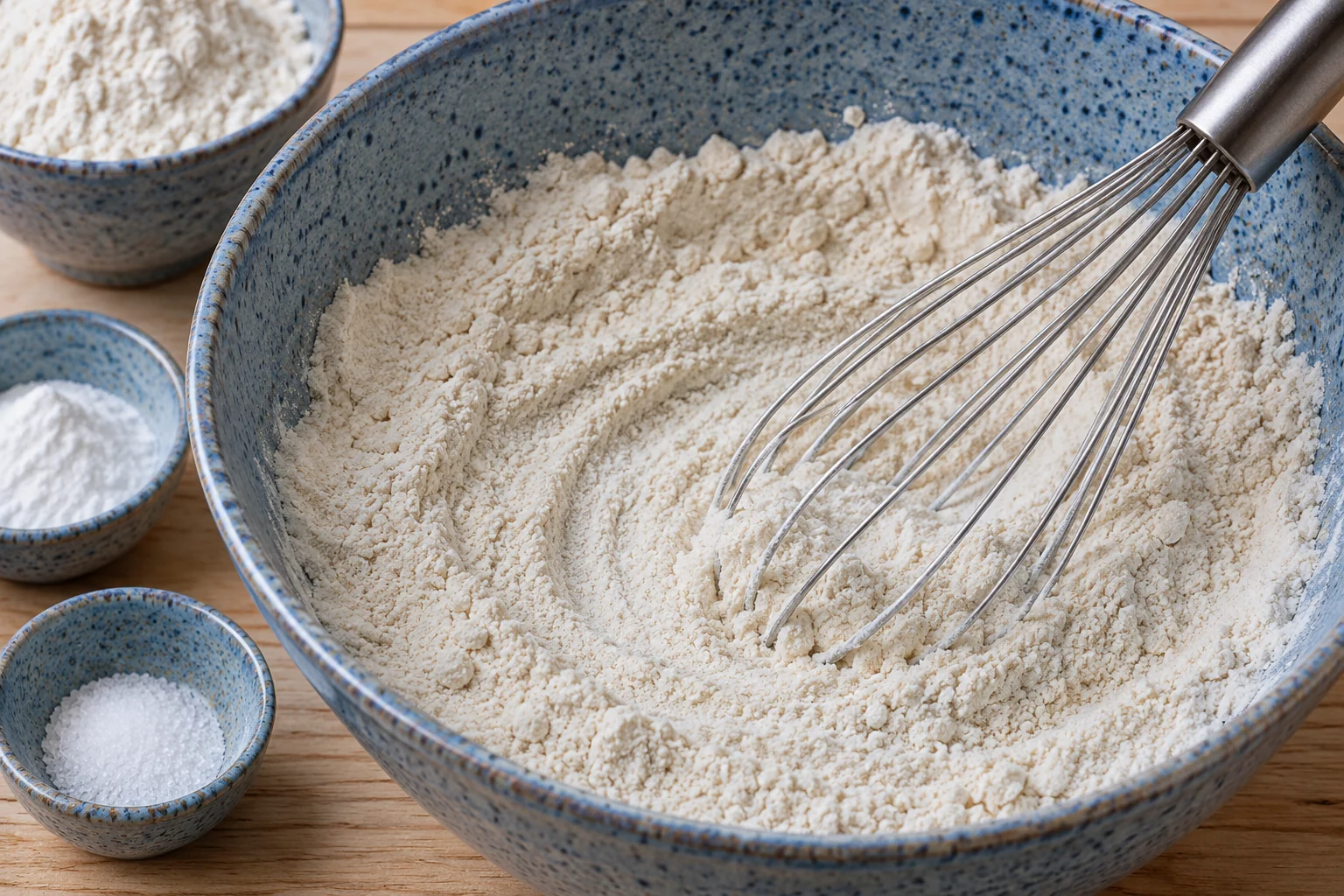
Whisk the leavener, salt and spices through the flour while the bowl is still dry. Break up compact lumps of cocoa or baking powder before the liquid arrives. This small step avoids having to beat a wet batter to reach a stubborn pocket.
Whisk the spices through the dry mix for Vegan Chai Muffins before the liquid goes in. Their even colour is a useful cue.
Step 3: combine the wet ingredients separately
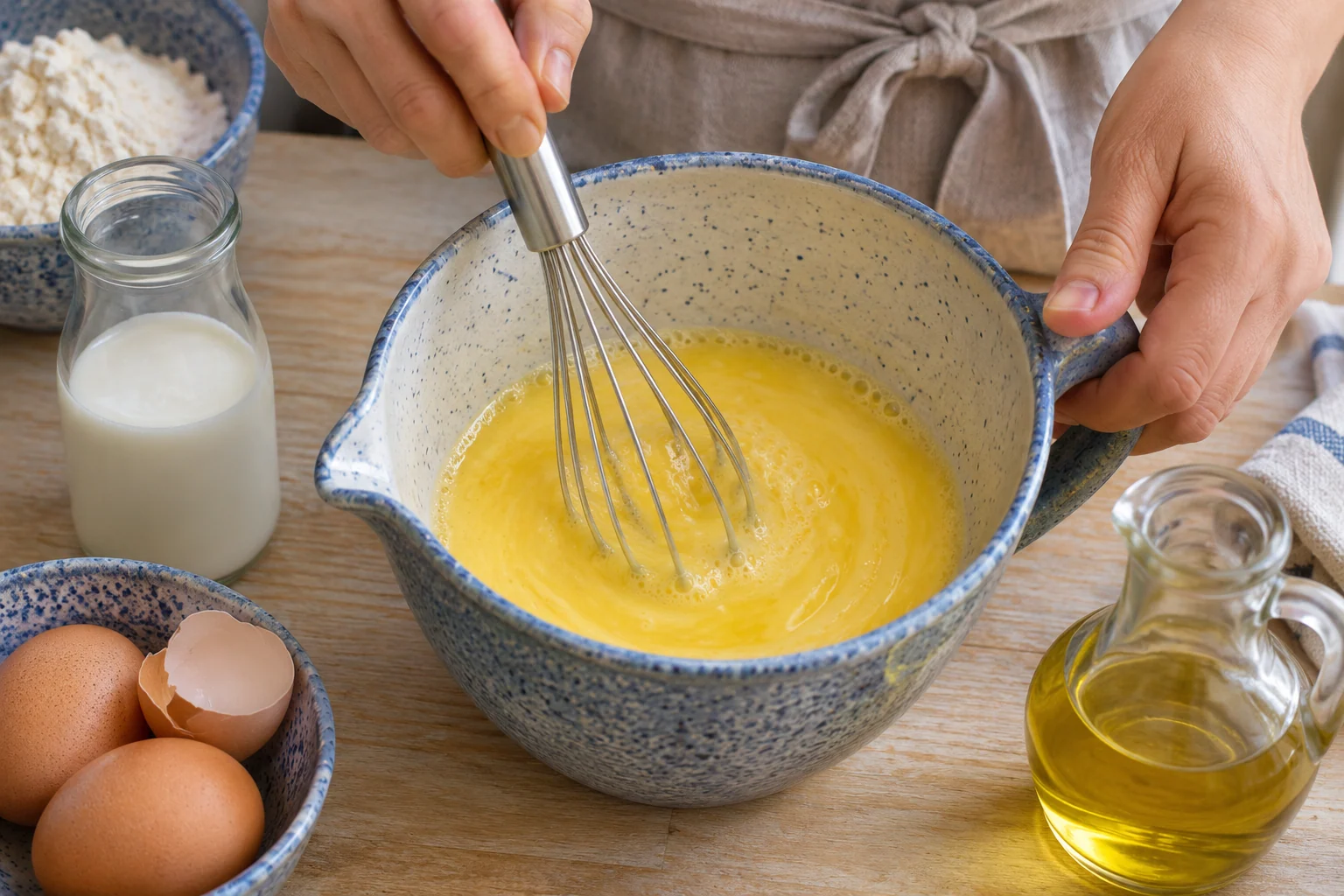
In another bowl, whisk together the milk or other prescribed liquid, eggs, oil or cooled melted butter, and any vanilla or other wet flavourings. Aim for a reasonably uniform mixture before it encounters the flour. If the recipe uses yogurt or sour cream, incorporate it as instructed so no large lumps remain.
Disperse the starter in the wet mixture for Sourdough Discard Muffins to prevent streaks of thick starter in individual muffins.
Why wet ingredient temperature can matter
Very hot butter may affect eggs, while cold dairy can cause melted butter to solidify into small pieces. Some recipes specify room-temperature ingredients for that reason. Others work with refrigerated ingredients. Use the temperature instructions given by the author instead of assuming every muffin needs warm milk and eggs.
Step 4: pour wet into dry
Make a shallow well, pour in the combined liquids and use a broad spatula to draw flour in from the sides. Follow each turn down to the bottom of the bowl. That is where a dry layer can hide under a smooth-looking surface.
Scrape around the bottom of the bowl for Double Chocolate Muffins, where dry cocoa is easy to miss against dark batter.
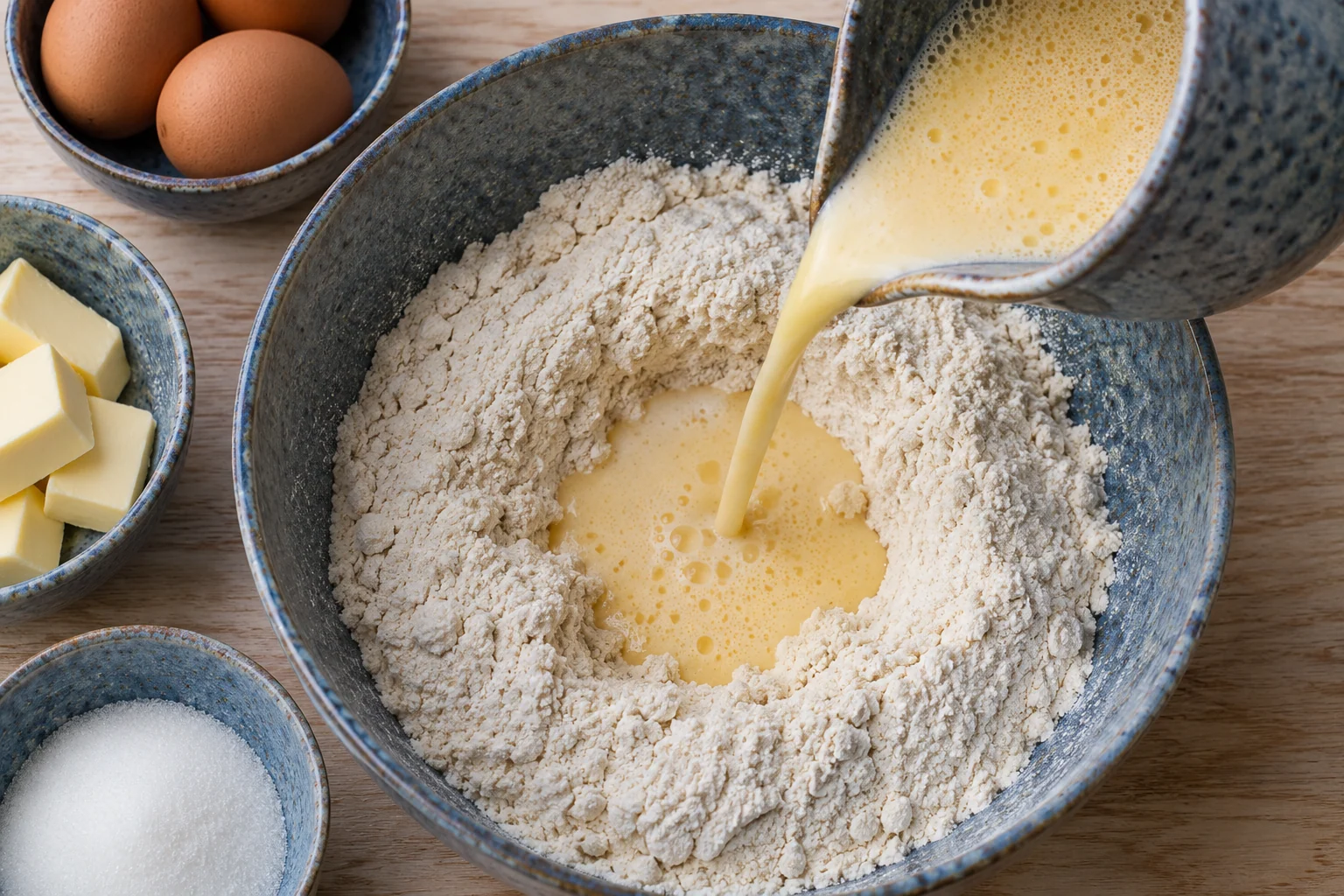
Step 5: stir only until properly combined
Use the utensil and mixing sequence specified in the recipe. Stir or fold until there are no substantial dry flour pockets; a few small lumps can remain in a muffin-method batter. Stop at the visual endpoint rather than trying to make it perfectly smooth or applying one mixing time to every formula.
Watch the flour as you fold Zucchini Muffins. Once the last dry pockets disappear, the grated vegetable needs little further stirring.
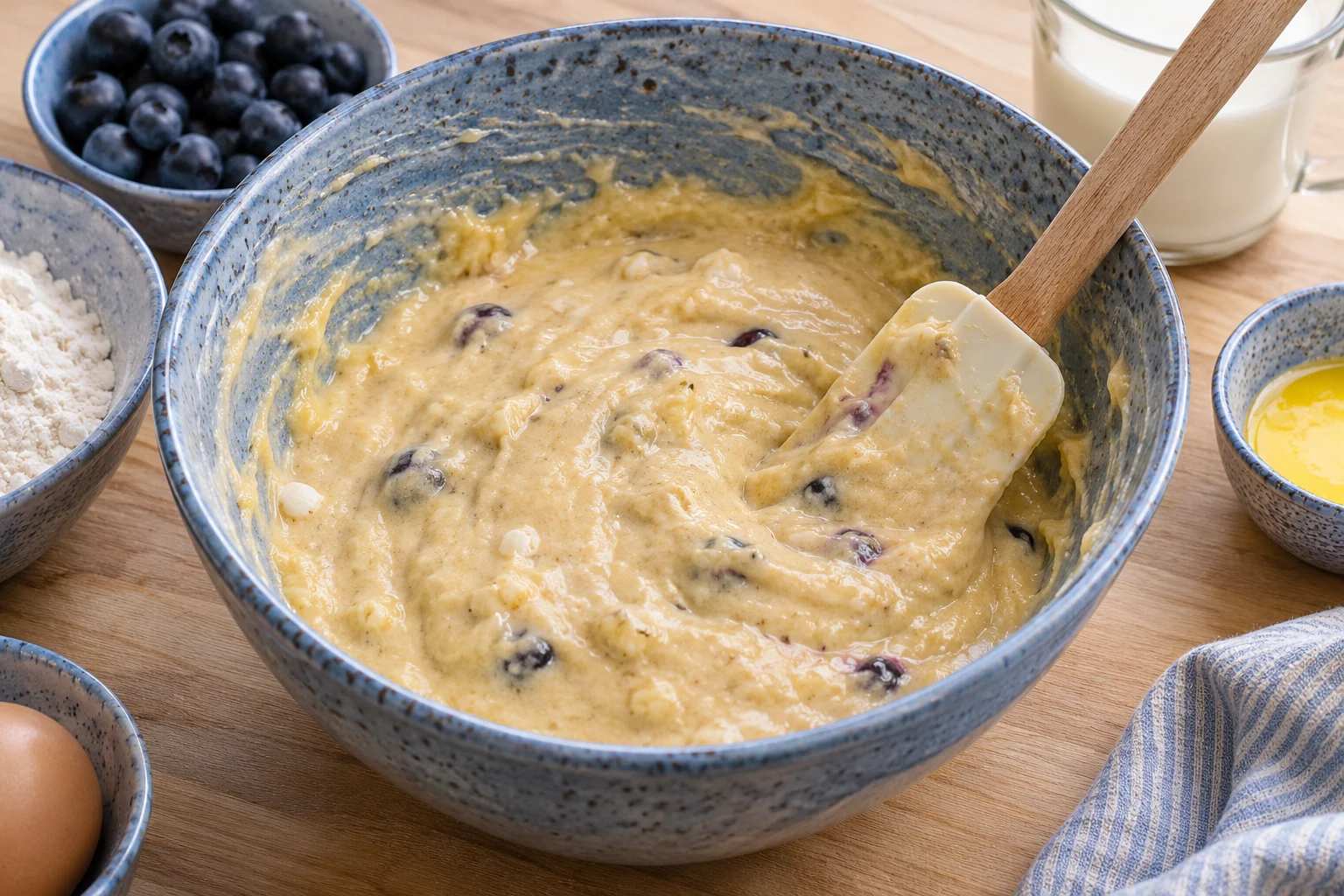
What does 'just combined' actually look like?
Lift a spoonful and examine the batter beneath it. Little soft bumps are normal. A chalky streak or a pocket of dry flour needs another gentle turn. Once that streak disappears, stop, even if a recipe made with a mixer would look smoother.
Why lumps are often fine
A few small lumps can hydrate and soften during baking. Beating them out aggressively may create excess gluten in some formulas. However, hard balls of dry flour or large pockets of baking powder aren't desirable. This distinction is important: minimally mixed does not mean carelessly mixed.
The purée in Vegan Sweet Potato Muffins lends a little texture of its own. A small soft lump is a different thing from a pocket of dry flour.

Why a whisk isn't always the best finishing tool
A whisk efficiently combines dry ingredients and wet ingredients separately. Once flour is hydrated, a flexible spatula or fork may be easier to use for broad, gentle movements without excessive beating. An electric mixer isn't usually necessary for the classic method and can overwork the batter if run too long.
How to fold properly
Cut the spatula down through the centre, sweep along the bottom, lift batter over the top and rotate the bowl. Repeat with an even pace until the ingredients are distributed. This movement is useful for thick muffin batter and for incorporating fruit or nuts without smashing them.
A broad spatula lets you lift the batter in Blackberry Cornmeal Muffins without bruising each blackberry on the side of the bowl.
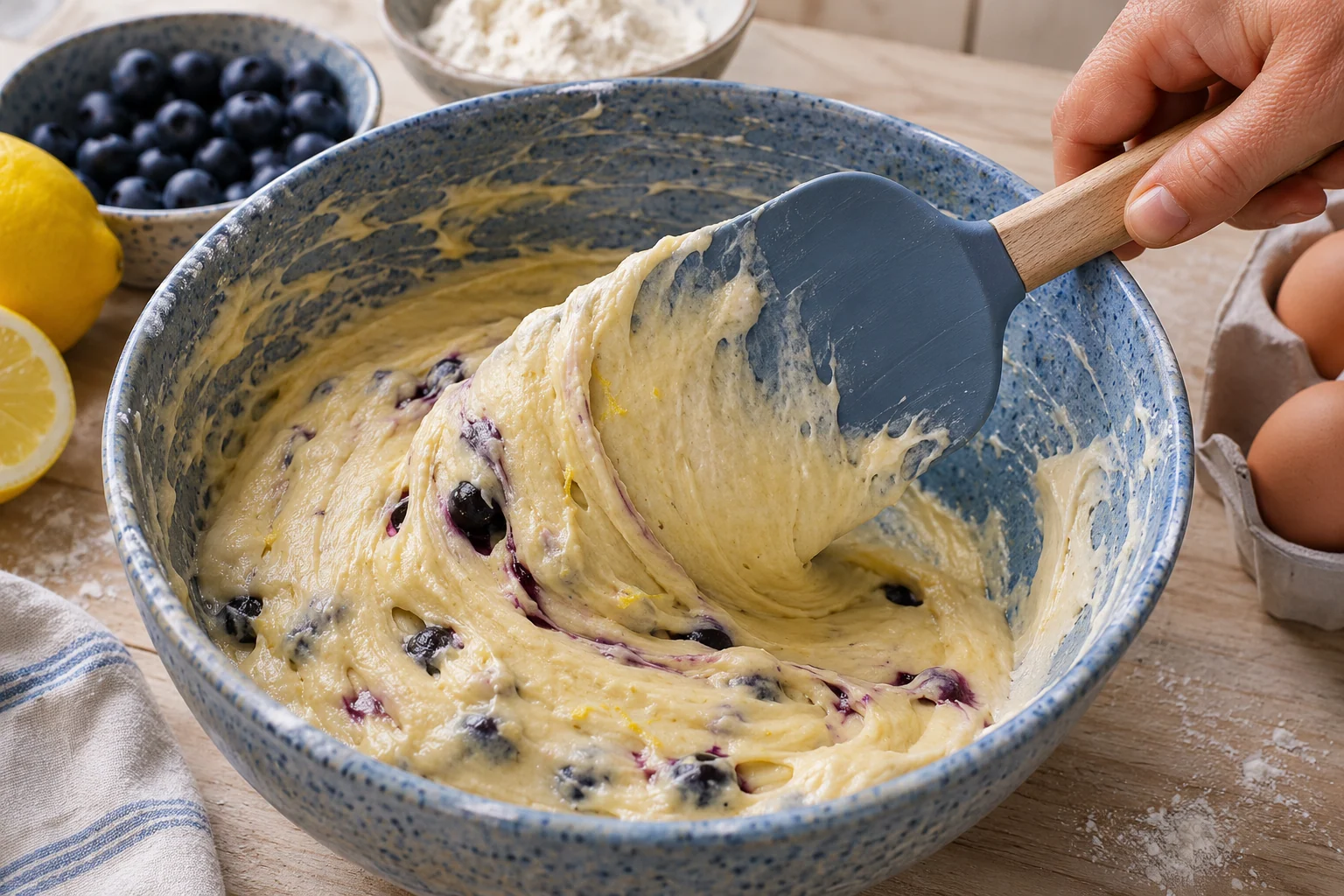
When to add blueberries
Have the berries ready before the bowls meet. Fold them in at the stage the recipe gives and stop when they are spread through the batter. A purple streak from a broken berry is harmless to the texture, but repeated mixing can break the remaining berries too.
Use the berry-folding step in Blueberry Muffins to judge the few turns needed to spread the fruit through the bowl.

When to add chocolate chips and nuts
Some recipes combine chips or nuts with the dry ingredients to promote even distribution; others fold them into the finished batter. Neither is automatically wrong. The important points are to use the stated weight, avoid clumps and not keep mixing long after the flour is hydrated.
In Chocolate Chip Muffins, distribute the chips as the last flour streaks disappear so they reach the bottom of the bowl too.
When to add streusel
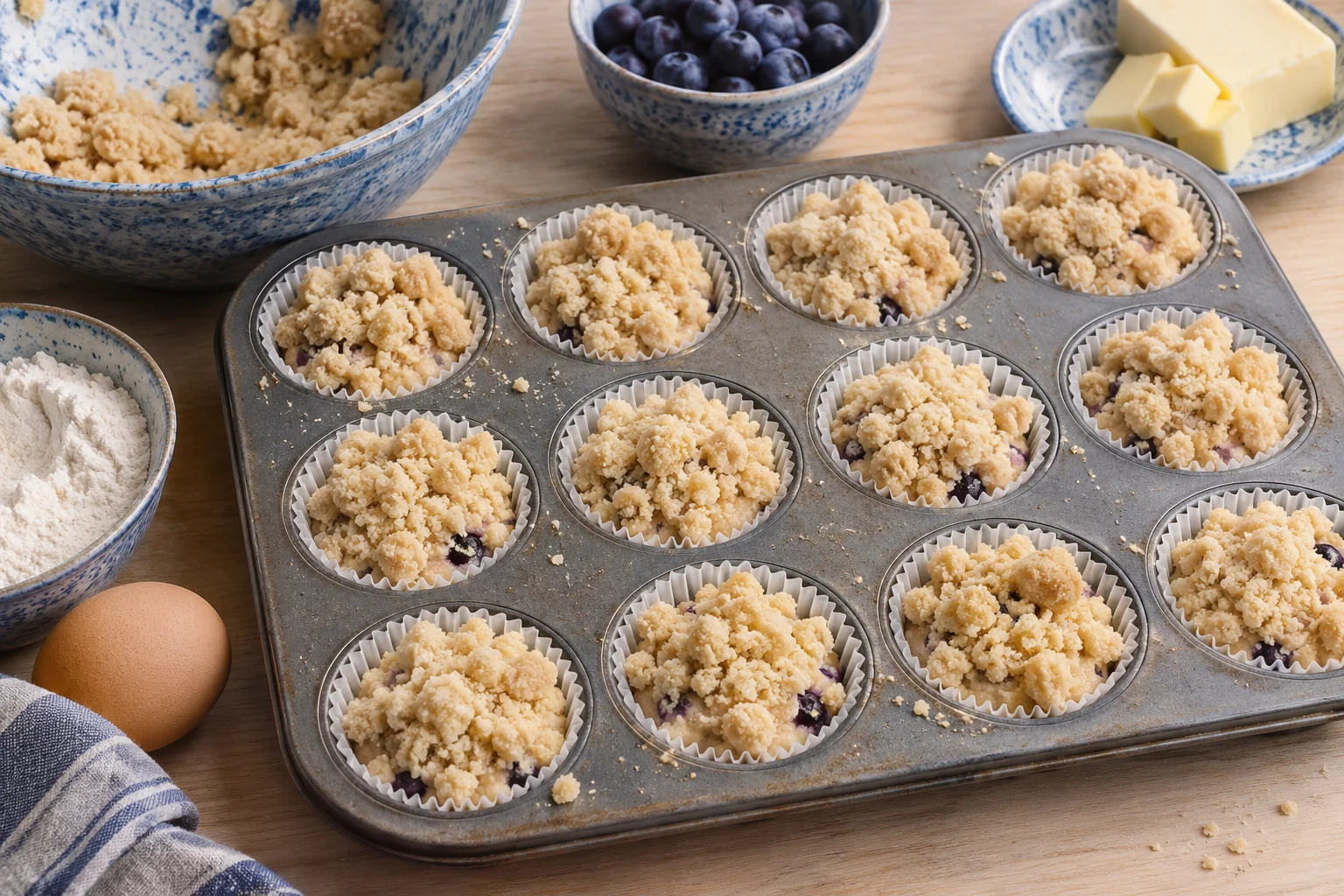
A crumb or streusel topping is usually prepared separately and scattered over the portioned muffins before baking. It should not be aggressively folded through the batter unless the recipe is specifically written for a swirl or internal crumb. Heavy wet topping can affect the centre and the crown.
Prepare the topping for Blueberry Streusel Muffins before mixing the batter, then scatter it over the portioned cups.
Do you need to rest muffin batter?
Rest a batter when its recipe calls for a rest. Some batters benefit from extra time for the flour to hydrate, while other formulas are meant to be portioned and baked promptly. Finish preparing the pan and preheating the oven before combining the bowls.
How to portion batter after mixing
Use a consistent scoop or measured spoon and fill wells to the recipe's level—often two-thirds to three-quarters, though specialty formulas differ. Unequal portions bake unevenly: small muffins can dry out while larger ones retain wet centres. Work reasonably promptly after mixing if the formula calls for immediate baking.
What oven temperature should you use?
There is no single oven temperature for every muffin. Some recipes use one setting and others use a staged bake. Follow the complete recipe’s temperature, rack position and doneness cues. Higher heat cannot correct too much mixing or an incorrect leavening ratio.
How to check doneness
Look for a set top and use a tester as directed, checking the crumb rather than a fruit or chocolate pocket. Some muffins release a clean tester; others may have a few appropriate moist cooked crumbs. Never serve muffins with raw batter in the middle, even if the surface appears golden.
What causes tunnels inside muffins?
Long vertical holes or channels in the crumb are often associated with excessive gluten development and how gases move through the batter. Overmixing is one common cause, but too much leavener or an unusual formula can also contribute. For a standard muffin method, mix more gently and measure accurately on the next batch.

What causes tough or rubbery muffins?
Prolonged mixing after flour hydration can produce more gluten than intended. Too much flour, overbaking or an untested substitution may also make muffins tough. Check whether the method called for a brief stir rather than beating, and confirm the ingredients were weighed accurately.
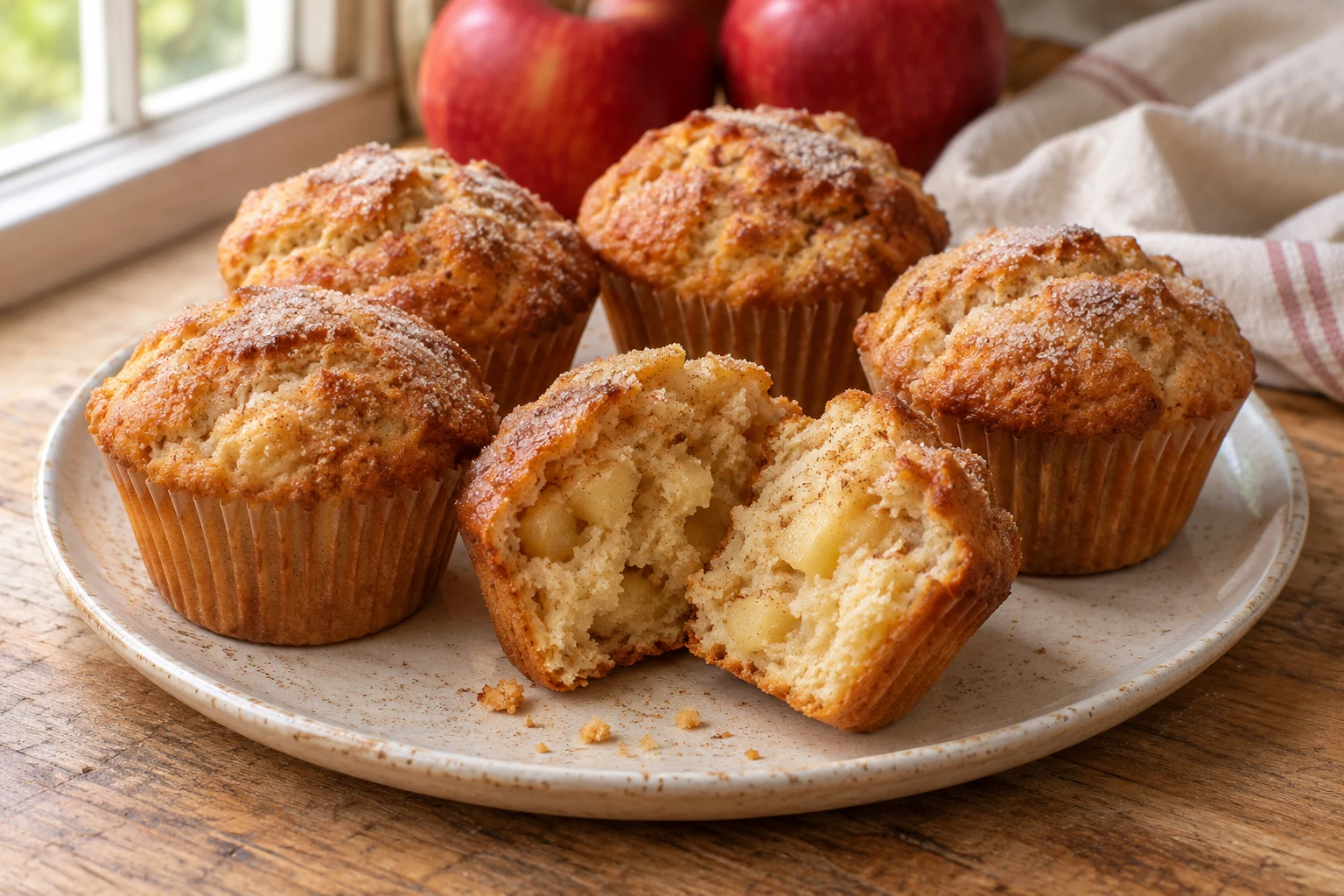
With Apple Cinnamon Muffins, fold until the dry streaks disappear and then stop. Overworking the batter after the apples are distributed can toughen the wheat crumb.
Why muffins may come out dense
Dense muffins can result from expired leavening, a low oven temperature, excessive fruit, underfilled cups or an unusual ingredient ratio. Mixing too little may leave unincorporated ingredients. Determine whether the batter actually rose before blaming the final few stirs.
Why muffins spread or overflow
Overfilling, excessive leavening or thin batter can contribute to spillover. The muffin method itself does not ensure domed tops if the formula's portions are wrong. Follow the recipe's expected yield and pan capacity rather than filling every liner to the rim.
Oil versus melted butter in the method
Both can work when the formula is written for them. Oil is already liquid; melted butter should be at the instructed temperature before combining with eggs or cold milk. Switching to softened butter and trying to cream it changes the technique into something else and may affect crumb structure.
Whole-wheat and oat flour considerations
Whole-grain flour can absorb liquid differently from white flour, and oat flour lacks wheat's gluten network. A specialized muffin recipe may specify a rest or a particular binder to balance these properties. Don't substitute the entire flour quantity without following an established variation.
How this method compares with quick-bread mixing
Banana bread, pumpkin loaf and zucchini bread often use a closely related wet-and-dry mixing approach. The larger pan and deeper centre require longer baking, but the principle of avoiding unnecessary mixing after flour hydration can remain similar. A butter-creamed quick bread, however, should follow its own formula.
The final folds in Classic Banana Bread give you the same stopping cue in a single deep loaf.
An easy troubleshooting experiment
Use a trusted basic muffin recipe twice. On the first batch, combine wet and dry just as instructed. On another batch, observe what happens when the flour is stirred more than recommended, if you're deliberately testing and willing to use the ingredients. Comparing texture and visible tunnels can teach why the method matters, but there's no need to waste food just to prove it.
Use Strawberry Coconut Muffins for a mixing trial. Portion a few cups as soon as the flour disappears, give the remaining batter a few more folds and compare the cooled crumb.

A reliable order of operations
Prepare pan and preheat oven, weigh and whisk dry ingredients, combine wet ingredients separately, stir the two together briefly, fold in add-ins if directed, portion evenly and bake promptly on the recipe's schedule. Cool in the pan only as long as specified before moving muffins to a rack.
Before you mix Morning Glory Muffins, grate and measure the additions and have the tin ready. Once the bowls meet, the batter can go straight into the oven.

Frequently asked questions
Should muffin batter be completely smooth? Not usually for the classic method; small lumps can remain. Can I use a stand mixer? Only when the recipe calls for one or gives suitable instructions. Why are my muffins rubbery? Excess mixing, flour or baking time may be responsible. Should I mix frozen berries into dry ingredients? Follow the individual recipe; many direct you to fold them in last.
The secret is knowing when to stop
Good muffin mixing has a visible endpoint. A final sweep under the batter finds no flour, the mix-ins reach several parts of the bowl and individual portions fall from the scoop without a long beating. Bake one batch with that endpoint in mind and compare the cooled crumb.
IN PICTURES
From the baking notebook
FROM THE RECIPE BOX


