On this page
When the first slice leaves a puddle, remember what the pie looked like in the oven. Was there bubbling near the centre or only at the edges? Was the pie still warm when you cut it? Those clues are more informative than immediately adding another spoonful of starch to the next filling.
First identify the fruit
Apples, peaches, blueberries, cherries and strawberries contain different amounts of free water and behave differently under heat. Firm apples may hold slices well, while strawberries collapse and produce substantial juice. Even two batches of the same fruit vary with ripeness and season. Choose a formula written for the fruit you own and use its weight, not a generic 'four cups fruit' instruction from another recipe.
Two fruits share the filling in Nectarine Blackberry Pie. Estimate neither one by how full the bowl looks.

Why fruit releases liquid
Heat softens fruit cell walls while dissolved sugar draws out some moisture. The liquid combines with the added sugar, natural fruit sugars and thickener to form the sauce around the fruit pieces. Frozen fruit can release water during thawing, so the pie may begin wetter than a fresh-fruit version. None of this is automatically a problem if the formula accounts for it and the filling bakes long enough to set.
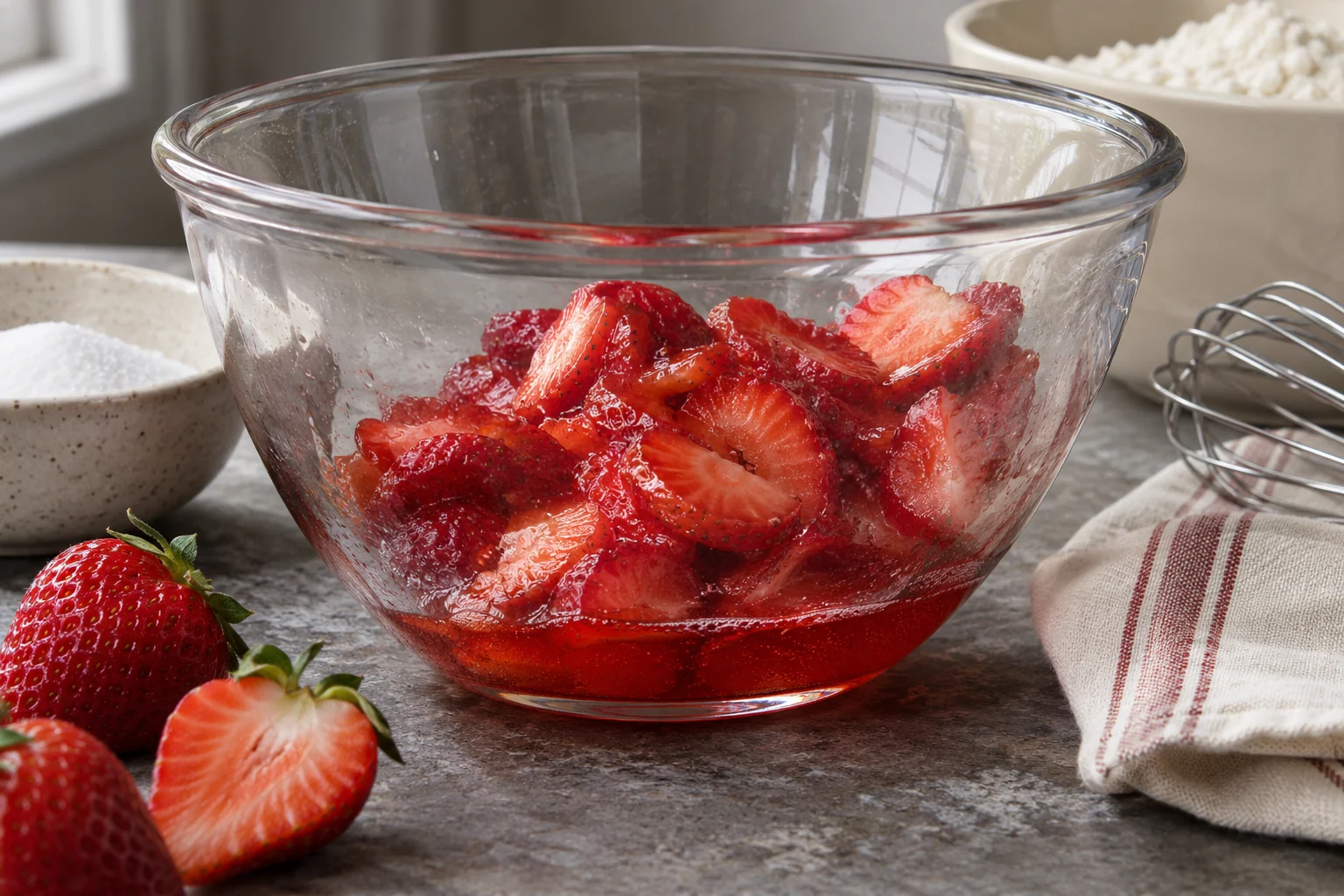
Watch how much juice collects as the cut fruit for Strawberry Peach Pie stands. It belongs in the plan for the filling.
What the thickener actually does
As the fruit heats, its juice moistens the starch and the mixture thickens. The starch must be dispersed and the filling must become hot enough through the middle. Thickened juice should cling to the fruit after cooling while still letting you taste distinct pieces.
Weigh fruit rather than packing cups
A cup of large apple slices contains more empty space than a cup of small diced apples, and frozen berries can settle densely. Weighing creates a reliable ratio between fruit and thickener. If the original recipe measures by volume only, follow its packing directions and slice dimensions as closely as possible. For consistent results, record the prepared fruit weight when making a successful pie.
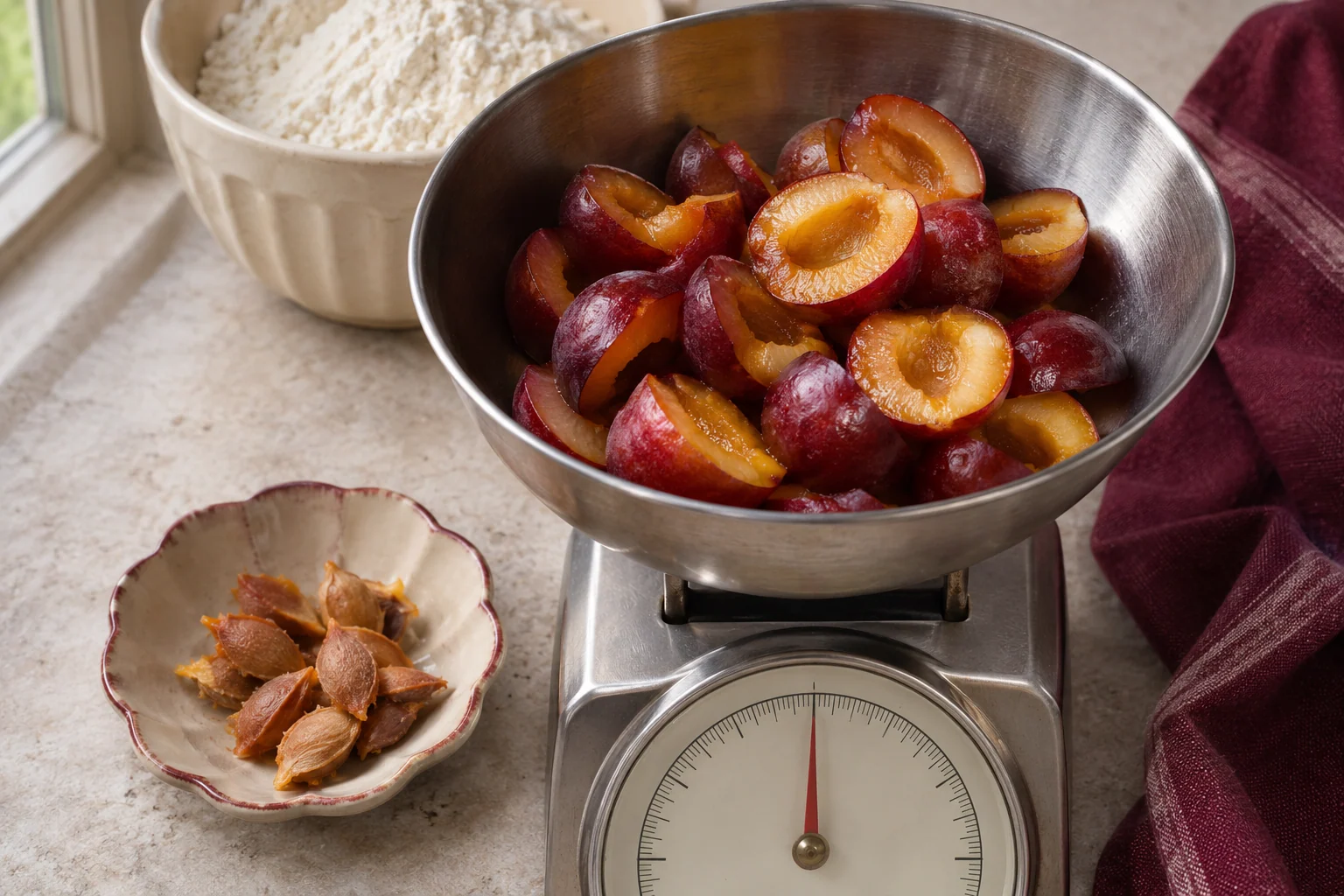
Measure both fruits for Peach Blueberry Pie before assessing whether the recipe needs more or less starch.
Use suitable apple varieties
Some apples remain firmer while baking, while others soften almost into sauce. An apple pie with multiple varieties may balance texture and flavour, but the liquid release can differ from the recipe's intended fruit. Don't solve soft watery apples with huge amounts of starch alone. Choose an appropriate baking apple, cut it consistently and follow any precooking or maceration method in the formula.
Berry pies need careful bubbling
Watch a central opening or vent. A small bubble at the outside may appear well before the filling in the middle is hot enough. Once bubbling reaches the centre, follow the recipe’s stated baking time from that point if it gives one.
Check the centre of Blueberry Pie through its top opening. Bubbling only at the edge tells you less about the middle.

The role of sugar
Sugar adds sweetness and draws liquid from fruit while influencing how starch thickens. Reducing it significantly changes the formula, and replacing dry sugar with honey or maple syrup adds water as well. Use a lower-sugar recipe when that is your goal rather than altering a conventional pie on the day you need clean slices. Taste appropriate cooked components and balance sweetness with acidity using the tested method.
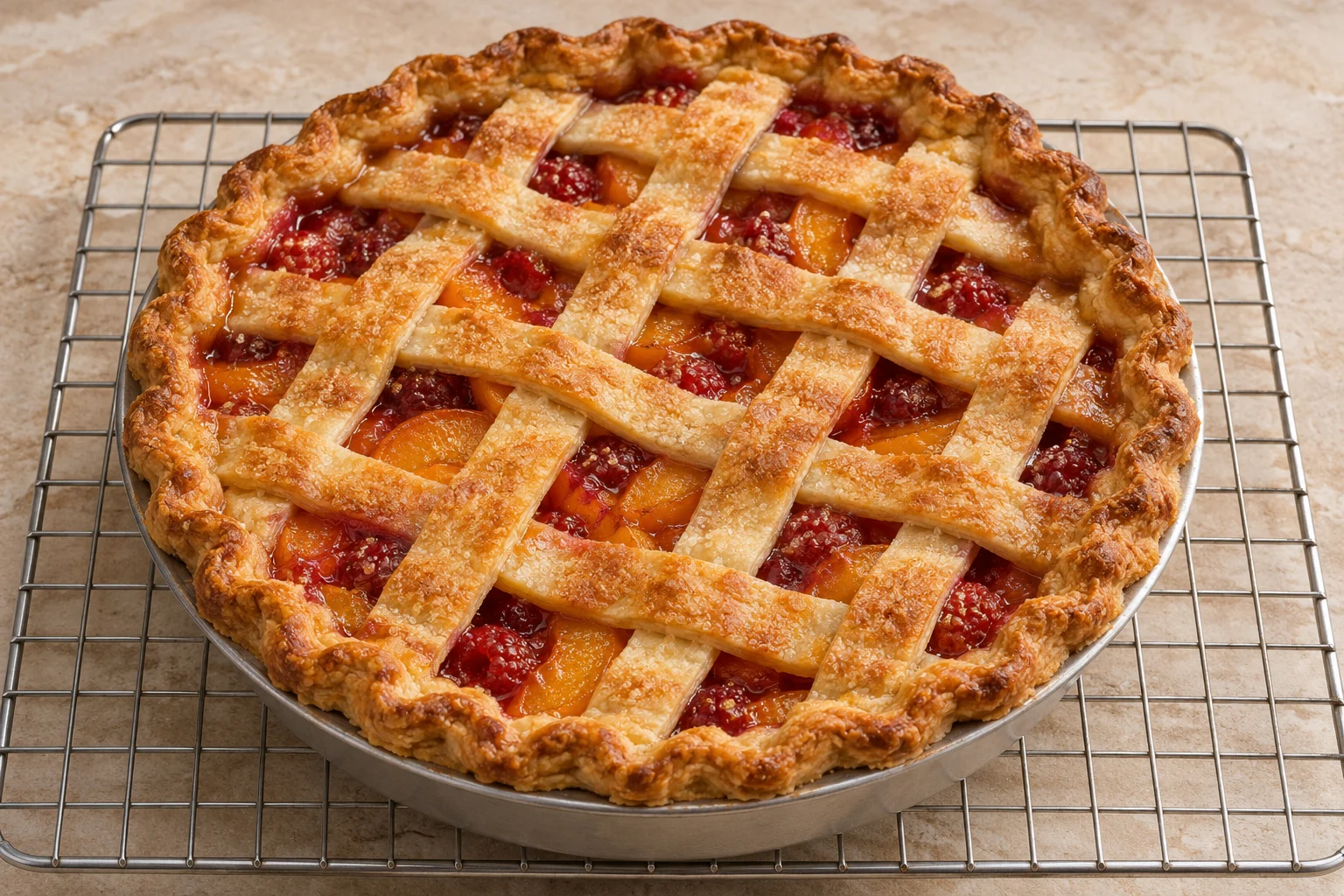
Keep the sugar in Apricot Raspberry Pie consistent when changing fruit ripeness between batches.
Precooking fruit: when it helps
Precooking is useful when the recipe asks you to soften firm fruit or control how much it will shrink under a lid. Prepare the filling to the specified stage and let it cool as directed before assembling. Adding hot fruit to cold pastry can start softening the butter before the pie reaches the oven.
Maceration and draining
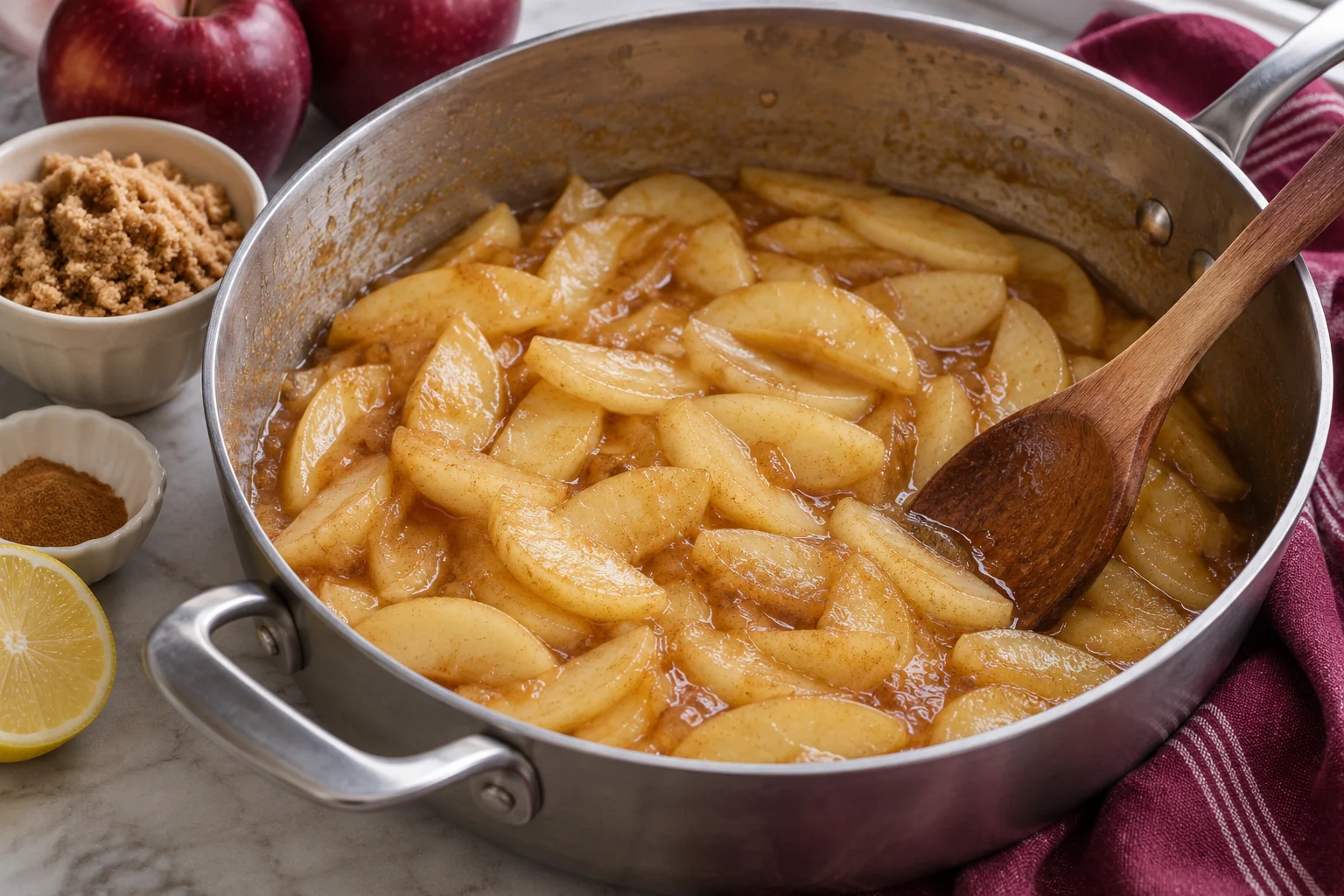
Sugar draws juice from cut fruit as it stands. Measure or save that juice if the recipe asks you to reduce or return it. Discarding it arbitrarily removes flavour, while pouring all of it into a formula written for drained fruit can overwhelm the thickener.
Read the full filling sequence for Blackberry Ginger Pie before deciding to discard the juice released by the berries.
How to use cornstarch
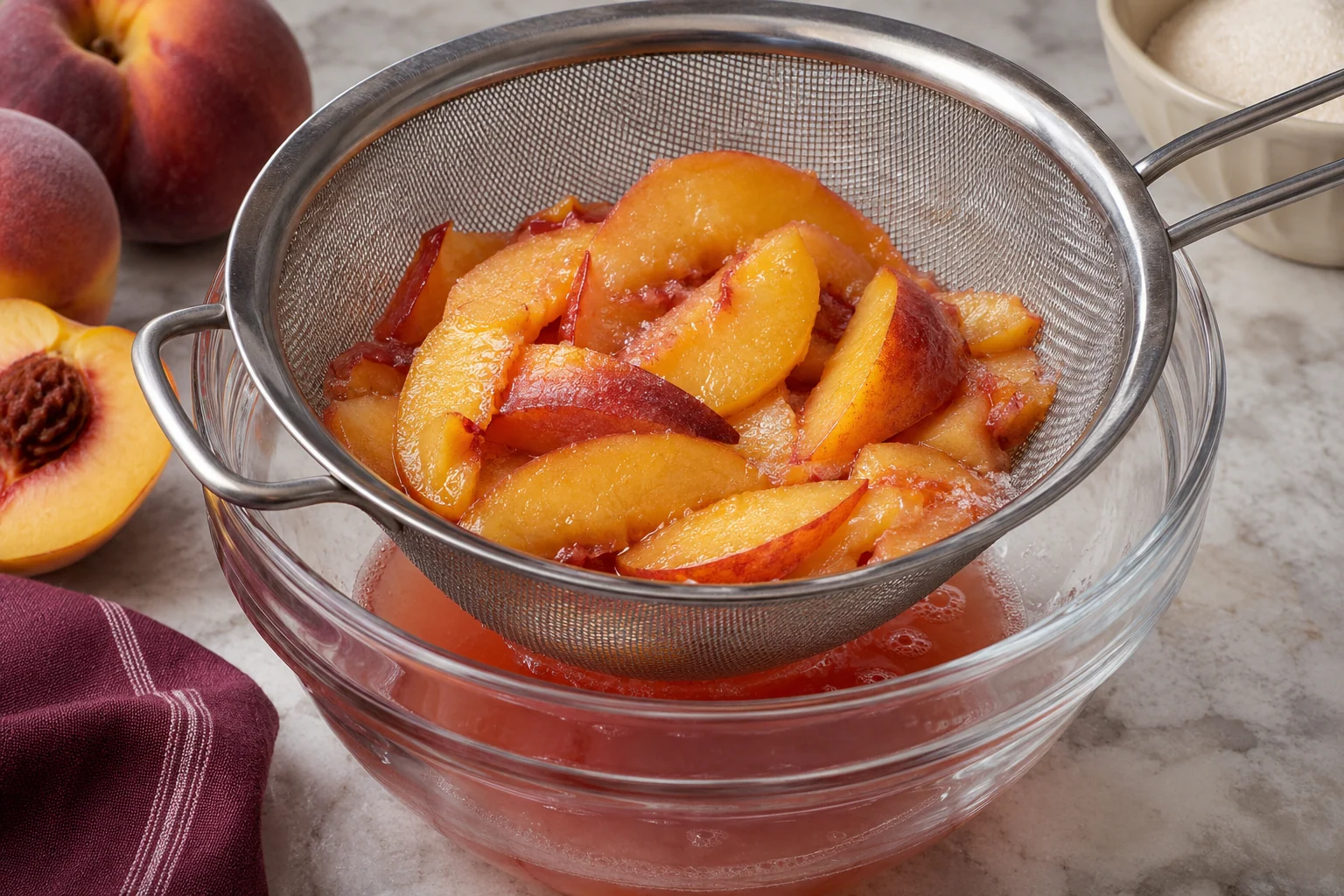
Cornstarch is a common fruit-pie thickener that can create a glossy filling. It needs proper heating and can become gummy in excess. Distribute it evenly through dry ingredients or a recipe-directed slurry. Avoid throwing dry cornstarch into already boiling fruit without mixing, which may produce lumps. A cornstarch filling may also respond differently to freezing than other starch systems.
For Peach Raspberry Pie, spread the cornstarch through the fruit as directed so a single spoonful of filling cannot capture a clump.
How to use tapioca
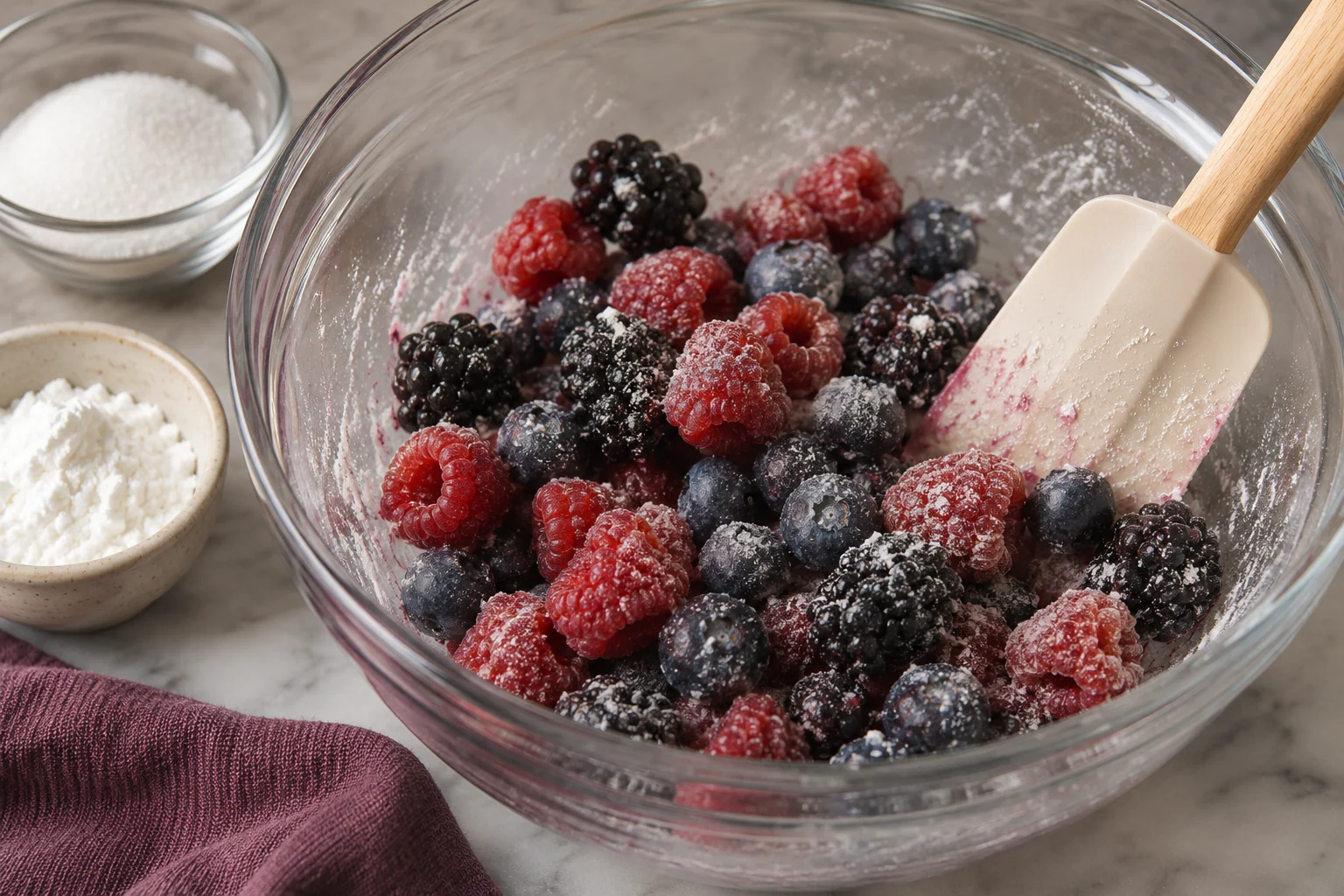
Tapioca starch is a fine powder. Quick-cooking tapioca is granular and may need time to soften with the fruit. Check which one the instructions name. They cannot be exchanged simply because both labels say tapioca.
The filling for Blueberry Crumble Pie uses quick-cooking tapioca or the recipe’s cornstarch alternative. Check the packet before substituting a fine tapioca powder.
How to use flour
All-purpose flour can thicken a fruit pie and provides a more opaque, home-style filling. It needs enough cooking time to remove raw flour flavour. Flour is not the strongest choice for every jewel-toned berry pie, but can work well in a traditional apple filling. A recipe that uses flour should generally be followed as written rather than swapping in an equal volume of cornstarch.
The filling in Classic Apple Pie combines 1 kg of cooking apples with two tablespoons of plain flour. Its pastry flour is measured separately.
Why acid matters
Lemon juice provides brightness and can balance very sweet fruit, but it changes liquid and acidity. Some starch systems can weaken after prolonged cooking in acidic conditions. A tablespoon more juice may be fine in some recipes but not others; several unplanned additions can change the set. Use zest to increase citrus aroma without adding much water when the recipe permits it.
The measured lime in Blackberry Lime Pie adds a sharp note. Add it according to the filling formula when you are testing the set.
Don't overfill the pan
Fruit filling can bubble vigorously as it cooks. Overfilling a shallow pie plate may cause juices to spill and prevent the centre from heating predictably. Use the pan capacity and fruit amount stated by the recipe. If you have extra fruit, bake a separate small crisp using its own tested method rather than mounding so high that the top crust cannot seal.

A properly baked filling has visual cues
In many fruit pies, you want to see thick juice bubbling through the centre of a lattice or vent, not merely sizzling at the edges. The entire filling needs adequate heat for the starch to function. Oven temperature, pie depth and whether fruit was frozen all affect timing. Follow a trusted recipe's cues rather than pulling the pie the moment the crust turns deep gold.
Look into a central opening of Plum Cinnamon Pie so you can see whether the juice around the plum pieces has begun to bubble.
Cooling is not an optional garnish
Allow a traditional baked fruit pie to cool long enough for the filling to set before slicing. If it also contains custard, cream cheese or another perishable component, begin refrigeration within two hours and finish chilling in the refrigerator. A loose hot slice is not a reliable thickener test.
Let the filling of Pear Ginger Pie settle before cutting. A hot spoonful and a cooled wedge are poor comparisons of thickener strength.
Why pie turns gummy
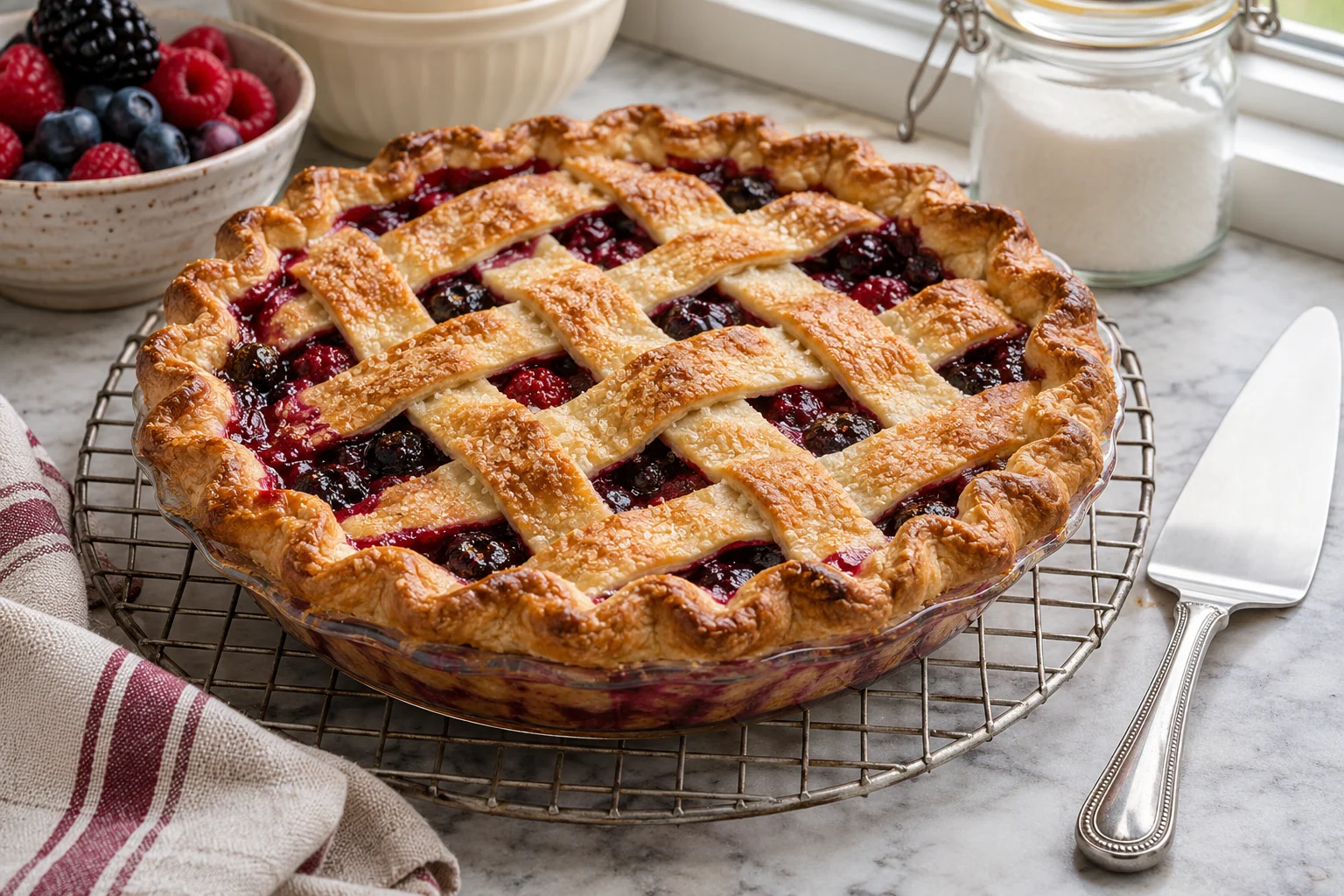
Excess thickener, overcooked concentrated syrup or an unbalanced gel can make the filling rubbery or sticky. A firm wedge should still feel like tender fruit in a light sauce. If the texture is pasty, review thickener weight before adding anything else next time. The answer to every runny pie isn't doubling the starch; that can create a different failure.
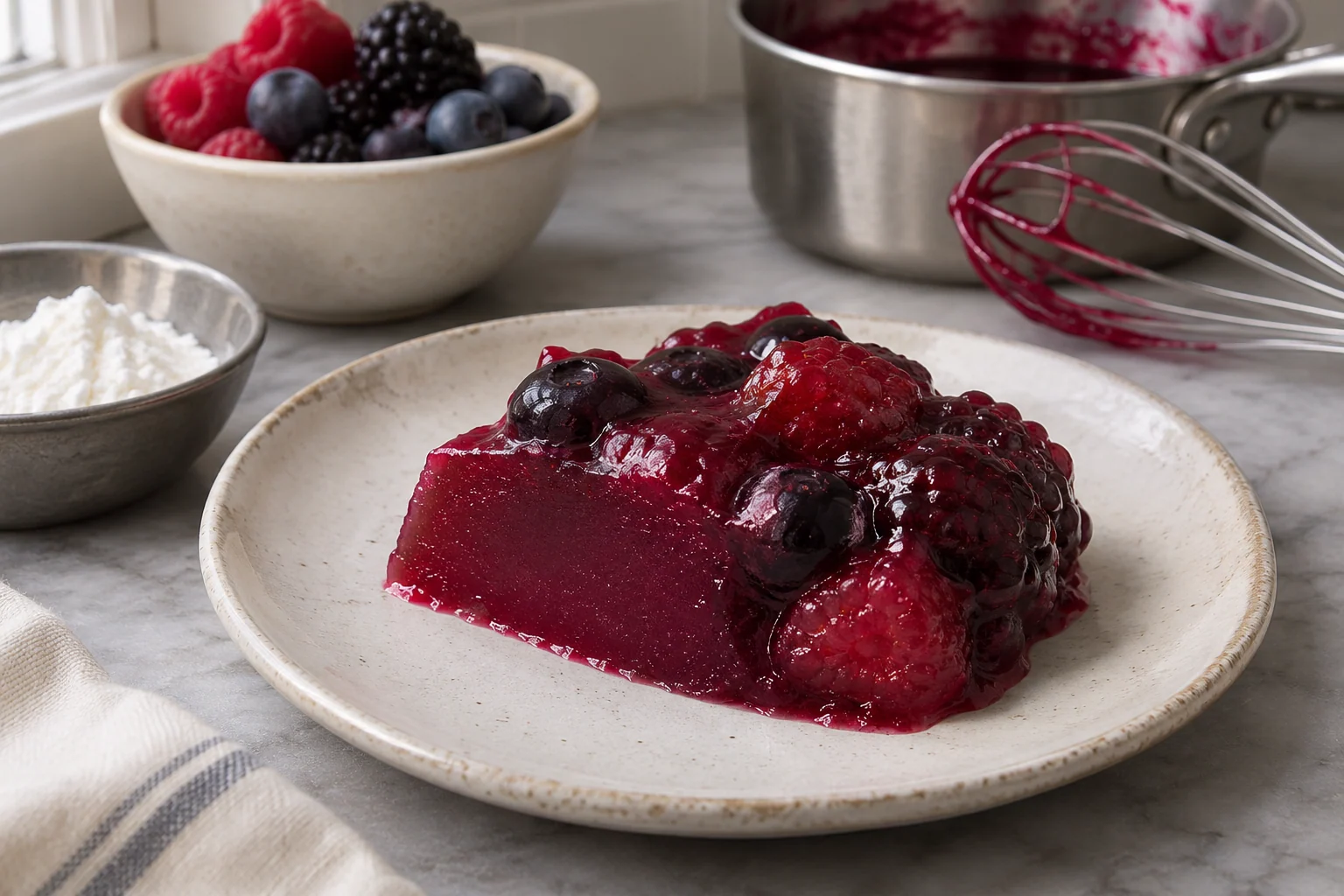
Why filling shrinks below the crust
Fruit loses volume as it cooks, especially if packed raw in a tall mound. A dramatic space may appear between a solid top crust and the filling. Precooking or maceration can help in recipes developed for that approach. A lattice top makes shrinkage less visually obvious, but the underlying problem is volume change, not lack of starch. Filling depth and fruit variety should guide your next adjustment.
Notice how the two fruits are cut for Apple Pear Pie when investigating an empty space under the lid.
Frozen pies need a tested plan
Unbaked frozen pies and pies assembled with frozen fruit can work, but their centres take longer to heat and their juices behave differently. Use a recipe that gives appropriate baking and thickening directions. Don't move frozen glassware into a hot oven without explicit manufacturer approval. If freezing an already baked pie, recognize that thawing may affect the filling's gel texture.
The filling for Apple Cranberry Pie specifies thawing and draining frozen cranberries. That small step changes how much free juice goes into the pie.
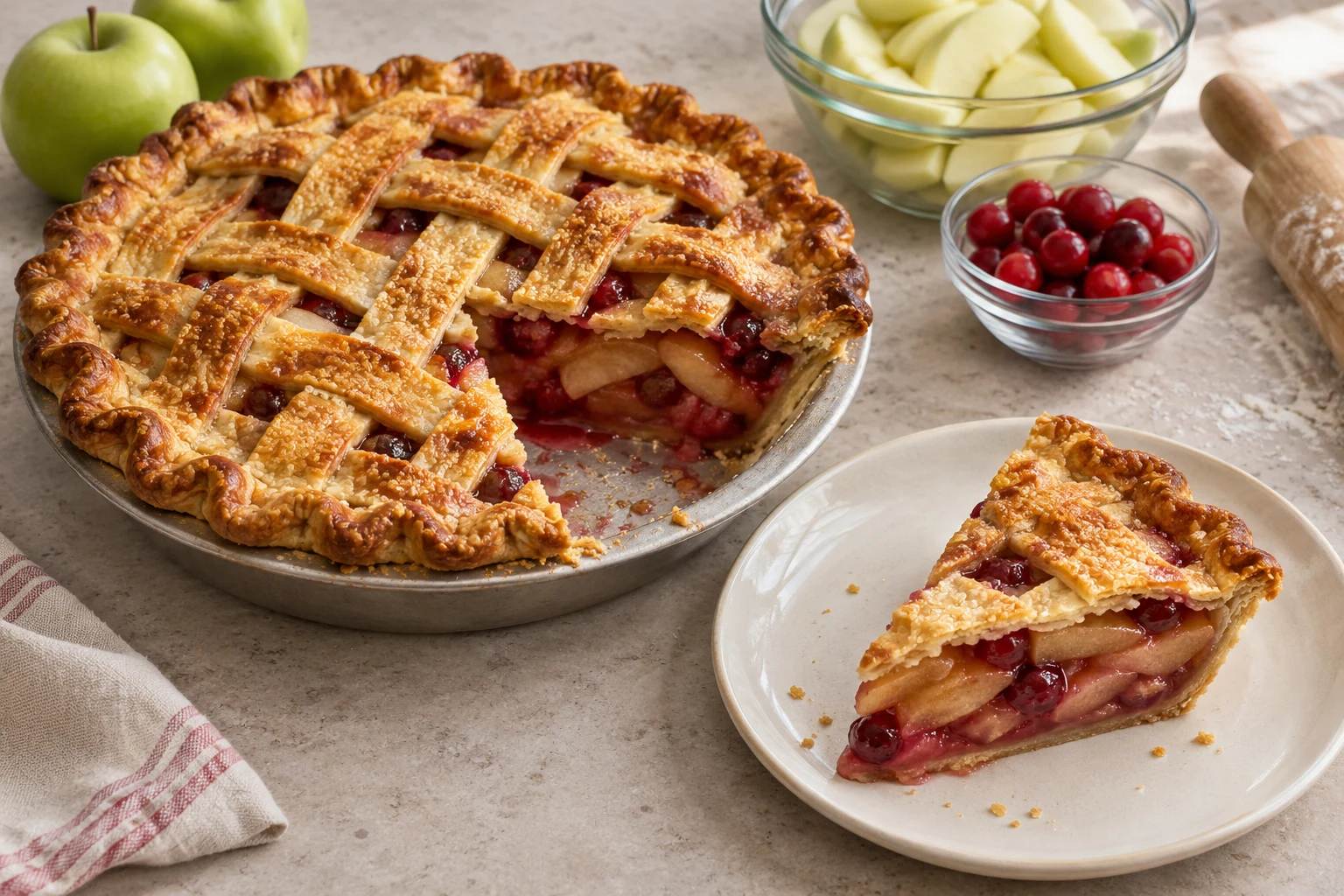
Troubleshooting before your next batch
For a runny pie, record fruit weight, thickener and form, how the fruit was handled, when the middle bubbled and when you cut it. If a well-cooled filling is gummy instead, check first for an incorrect measure or unusually dry fruit. Adjust one variable for the next bake.
If a slice of Cherry Crumble Pie runs, look below the crumble at the cherry juices. Note whether the middle bubbled and whether the pie was fully cool when cut.

Frequently asked questions
Can I thicken an already baked runny pie? Not easily without remaking the filling and compromising crust. Can flour replace tapioca by the spoon? Not reliably. Why did my berry pie set only after cooling? Starch gels firm as they cool. Should frozen berries always be drained? Follow the recipe. How much starch per cup? There is no universal amount for every fruit and thickener.
Keep the fruit at the centre
Choose a recipe with a suitable starch, measure fruit accurately, cook the filling to its intended endpoint and let the pie cool. A good fruit filling should slice neatly while still tasting and feeling like fruit, not a block of pudding.
IN PICTURES
From the baking notebook
FROM THE RECIPE BOX


