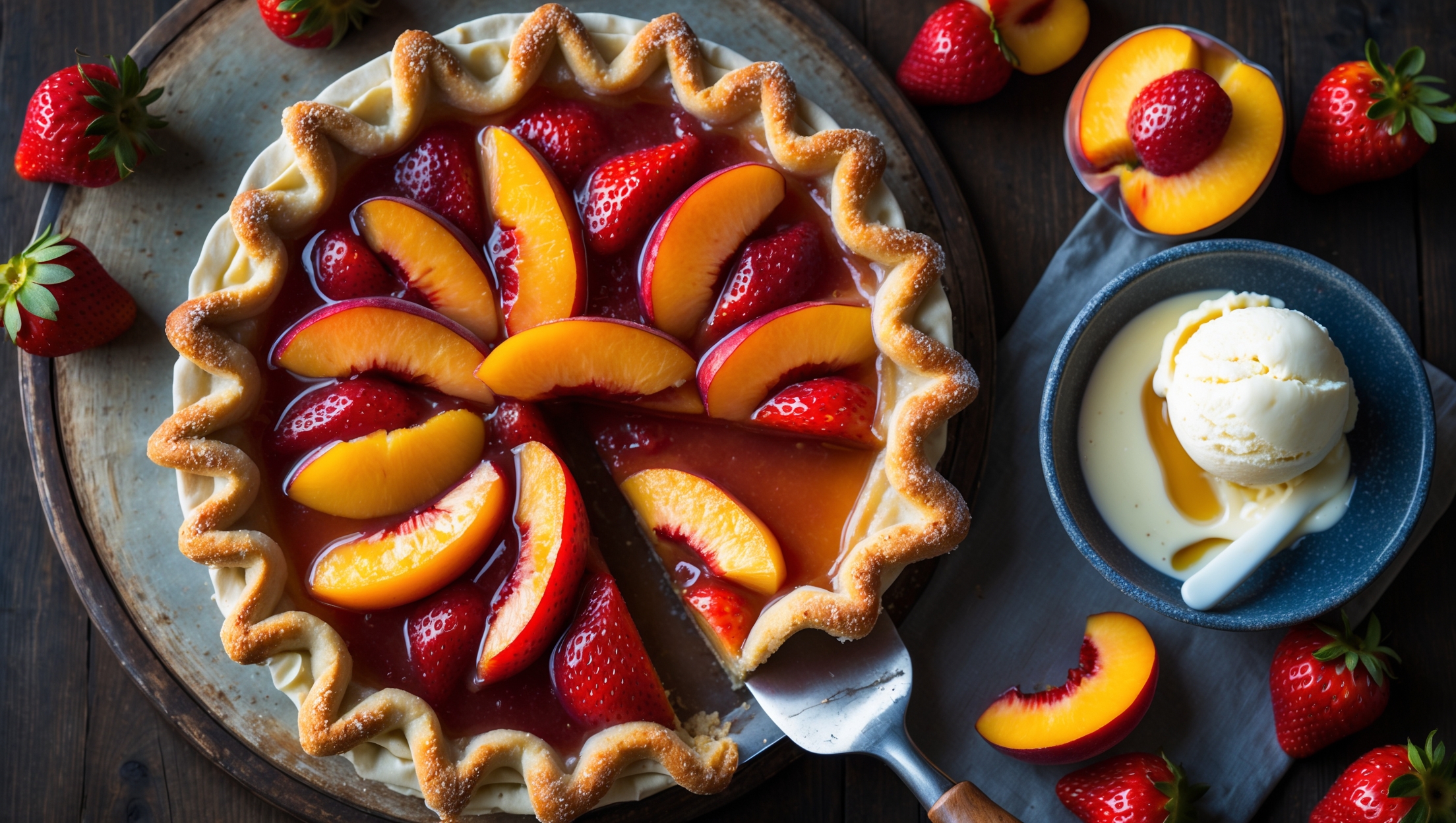
Directions
<ol class="no-list-style"><li class="MethodStepper"><h4 class="step-title">Step 1</h4>Begin by making the pie dough. In a large bowl or food processor, combine 300g flour, 1 tbsp sugar, and 1 tsp salt. Add the cold cubed butter and pulse or use your fingertips to work it into the flour until the mixture resembles coarse crumbs with some pea-sized pieces remaining. The cold butter creates steam pockets during baking, resulting in those prized flaky layers.</li><li class="MethodStepper"><h4 class="step-title">Step 2</h4>Gradually add the ice-cold water, 1 tablespoon at a time, mixing until the dough just comes together. You may not need all the water – stop when the dough holds together when pinched. Divide the dough into two portions, one slightly larger than the other. Form each into a disc, wrap in plastic wrap, and refrigerate for at least 1 hour or up to 2 days. This resting period allows the gluten to relax, preventing a tough crust.</li><li class="MethodStepper"><h4 class="step-title">Step 3</h4>When ready to bake, preheat your oven to 200°C (400°F) and place a baking sheet on the lowest rack to catch any bubbling juices. In a large bowl, combine the strawberries, peaches, sugar, cornstarch, lemon juice, vanilla, spices, and salt. Toss gently but thoroughly to coat all fruit pieces. Allow the mixture to sit for 15 minutes to draw out some juices – this helps prevent a soggy bottom crust.</li><li class="MethodStepper"><h4 class="step-title">Step 4</h4>Roll out the larger disc of dough on a lightly floured surface to about 3mm (1/8 inch) thickness and a diameter of about 30cm (12 inches). Carefully transfer to your pie dish, gently pressing it into the corners without stretching. Trim the edges, leaving about 2cm (3/4 inch) overhang. Refrigerate while preparing the lattice.</li><li class="MethodStepper"><h4 class="step-title">Step 5</h4>Roll out the second disc to the same thickness. Using a pastry wheel or knife, cut into 2.5cm (1-inch) strips for the lattice top. Pour the fruit filling into the chilled bottom crust, making sure to include all the accumulated juices. Dot the top of the filling with the small pieces of butter – this enriches the filling and adds a beautiful gloss.</li><li class="MethodStepper"><h4 class="step-title">Step 6</h4>Create the lattice top by laying half the strips across the pie in one direction. Fold back every other strip halfway, then place a new strip perpendicular to them. Unfold the strips over the new one. Continue this weaving pattern, alternating which strips you fold back, until the entire pie is covered with a lattice pattern. Trim the edges of the strips to match the overhang of the bottom crust.</li><li class="MethodStepper"><h4 class="step-title">Step 7</h4>Fold the overhang of the bottom crust over the edges of the lattice strips and crimp decoratively using your fingers or a fork. Brush the lattice and edges with beaten egg and sprinkle generously with coarse sugar for a beautiful sparkle and extra crunch.</li><li class="MethodStepper"><h4 class="step-title">Step 8</h4>Place the pie on the preheated baking sheet and bake at 200°C (400°F) for 20 minutes, then reduce the temperature to 175°C (350°F) and continue baking for 35-40 minutes more, until the crust is deeply golden and the filling is bubbling thickly through the lattice. If the edges brown too quickly, shield them with aluminum foil or a pie shield.</li><li class="MethodStepper"><h4 class="step-title">Step 9</h4>Allow the pie to cool completely on a wire rack for at least 3 hours before slicing. This cooling period is crucial for the filling to set properly; cutting too soon will result in a runny filling. The cornstarch needs time to fully activate and gel with the fruit juices. Serve at room temperature or slightly warmed, perhaps with a scoop of vanilla ice cream. The pie will keep, loosely covered at room temperature, for 2 days, or refrigerated for up to 5 days.</li></ol>