On this page
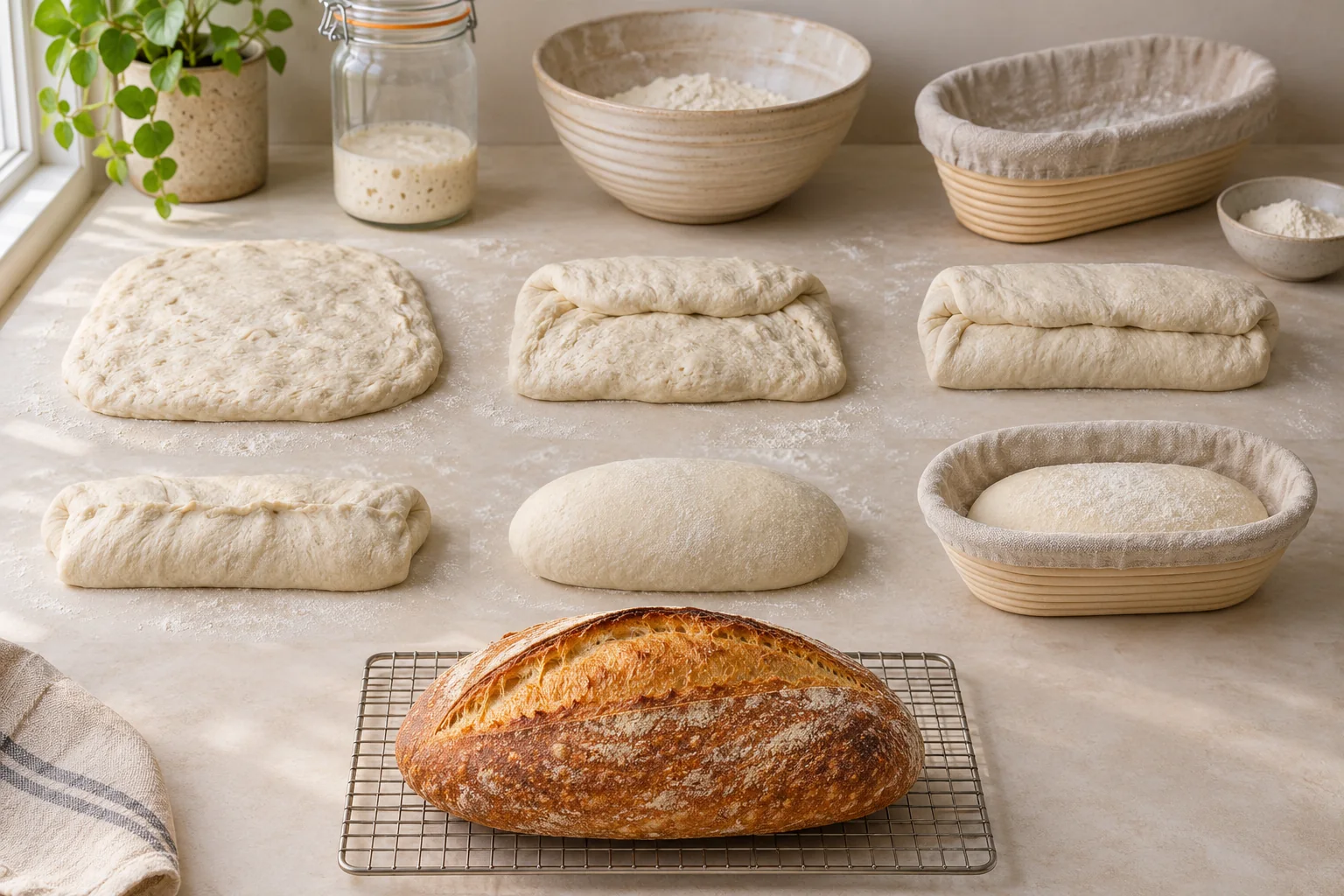
A batard is the elegant oval counterpart to a round sourdough boule. Its tapered ends and long scored opening make a beautiful loaf, but the shape also has practical advantages: it slices neatly and fits many sandwich boards. The aim of batard shaping is to organize fermented dough into a stable oval without crushing its internal gas. You'll build tension gradually, let the gluten relax when needed, and proof the finished loaf in a basket that supports its length.
What makes a batard different from a boule?
A boule is round and a batard is oval or slightly elongated. Both require adequate gluten strength and fermentation. The batard's shaping generally organizes the dough lengthwise and rolls or folds it into a tapered cylinder, while boule shaping gathers it into a round. The final shape affects scoring, proofing basket choice and how slices are cut.
Begin after proper bulk fermentation
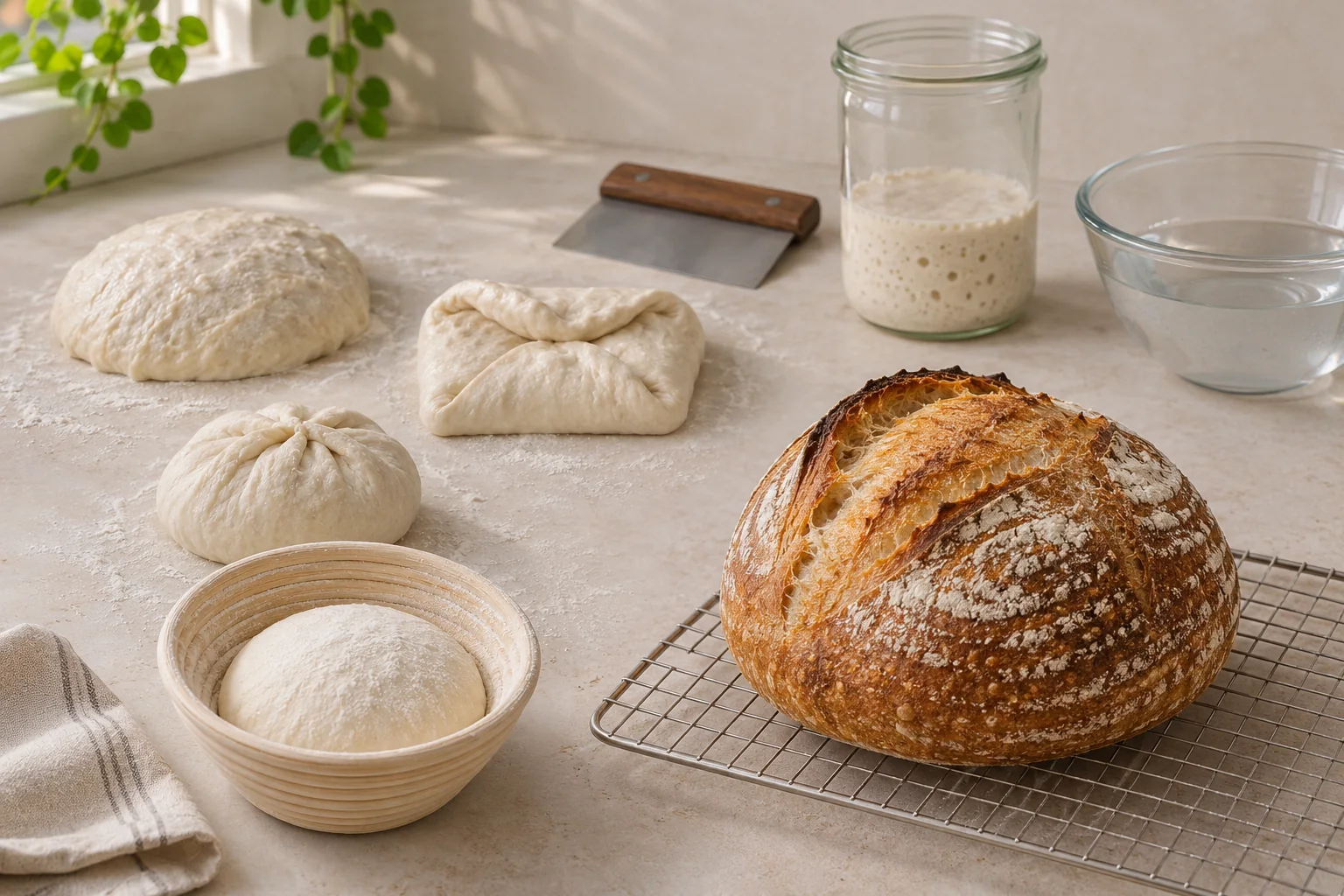
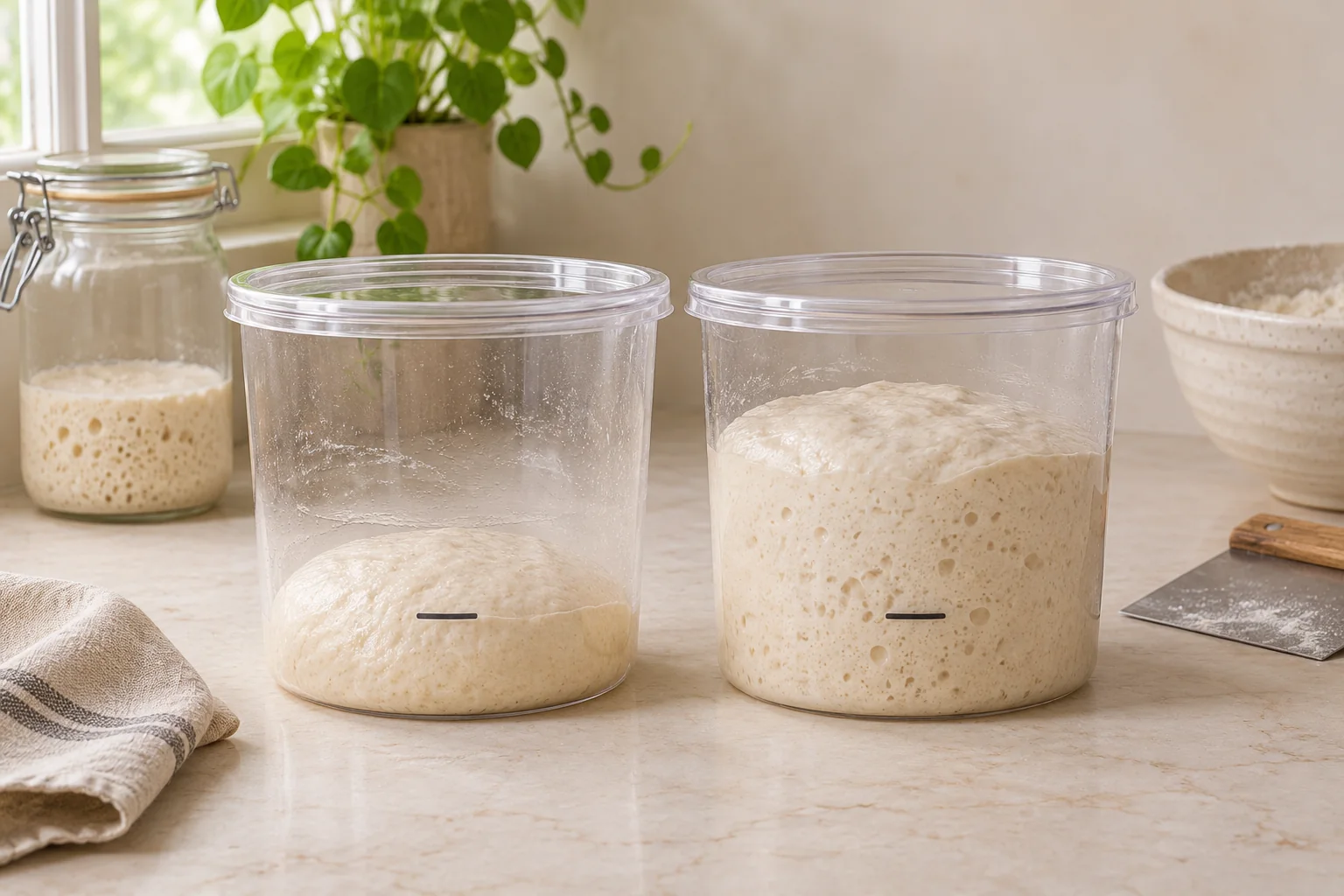
Check that the dough has reached the bulk endpoint prescribed by your recipe. It should usually be visibly aerated, smoother and more elastic than immediately after mixing. Under-fermented dough can be tight and hard to shape, while over-fermented dough may spread and resist holding tension. Neither can be corrected by adding a dramatic extra fold at the very end.
Set up the work area
Use a clean counter, a bench scraper, flour for judicious dusting and an oval banneton or similarly shaped proofing container. A little flour prevents sticking, but a thick coating can make the dough slide so much that you cannot build surface tension. Have the basket ready before manipulating the fermented dough.
Divide and preshape
If making more than one loaf, divide by weight with a scraper. Gently round or loosely organize each portion without crushing the entire gas network. A preshape gives the dough a manageable starting form and distributes tension before final shaping.
Why the bench rest matters
Allow the preshaped dough to relax for the interval in your formula. If you try final shaping while the gluten is still very tight, it can tear or spring back. If the dough spreads considerably during the rest, consider whether the structure is weak or bulk fermentation went too long.
Orient the dough correctly
After the preshape has relaxed, turn the dough onto a lightly floured surface so the seam faces upward. Gently ease it into a round or oval before folding. Preserve the smooth outer surface as you work and keep the closing seam accessible for sealing.
Fold the first side inward
Lift one side and fold it across toward or a little past the centre without pressing out all the gas. This creates a layered, supported structure. Use a controlled hand movement and avoid stretching so aggressively that the dough tears or becomes paper-thin.
Fold the second side across
Bring the other side toward the centre, slightly overlapping the first fold. The overlapping sections build a firmer central axis. If dough sticks to your fingers, flour them lightly rather than sprinkling large amounts between folded layers, which can prevent seams from adhering.
Roll the dough into an oval
Starting from the edge specified in your shaping guide, roll or fold the dough toward you in controlled movements, lightly sealing each turn. Aim for a relatively even cylinder with no enormous air pocket trapped in the seam. Some batard methods use several overlapping folds instead of a continuous roll; follow one system consistently.
Build lengthwise surface tension
A finished batard should have a smooth taut exterior and hold an oval form on the bench. The tension comes from gentle folding and controlled rolling, not from squeezing the entire loaf firmly. Pulling excessively may tear the skin and release gas.
Shape the ends without making them needle-thin
If the formula calls for tapered ends, make them gently and evenly. Excessively pointed tips can overbake before the centre is done. A moderate oval with similar thickness along most of its length is often easier for beginners to bake consistently.
Check the seam
The bottom seam should be coherent enough that the loaf doesn't open unexpectedly during proofing or baking. Pinch lightly where the method requires, but don't flatten the entire loaf. Different shaping techniques produce different seam patterns; use the one taught in the recipe.
Choose an appropriate oval basket
A batard proofing basket should support the loaf's length and give it room to expand. Line or dust the basket according to the recipe to avoid sticking.
Transfer for final proof
Many batard methods place the loaf seam-side-up in the basket so it emerges smooth-side-up when turned out for scoring. Follow the formula's covering, proofing temperature and refrigeration instructions. A basket supports shape but doesn't prevent over-proofing.
Scoring an oval loaf
One long off-centre score is common for batards. An angled blade can create an ear when dough condition, tension and steam are suitable. A beautifully scored surface can't compensate for poor fermentation; aim for controlled expansion before artistic decoration.
Recipe to try: Sourdough Baguette. These elongated loaves use active sourdough starter. Follow their own shaping and proofing method rather than a round-loaf schedule.

Why the batard goes flat
Weak gluten, excessive hydration for the flour, over-fermentation and inadequate surface tension can all cause spreading. Consider the dough's condition at preshape and before proofing. If it already felt shapeless, the problem likely started before final shaping.
Why the dough tears during rolling
Insufficient rest, aggressive pulling or gluten that's become too tight can cause tears. Back off, allow the recipe's bench rest and handle more gently. Dough that's badly weakened by over-fermentation can also tear, but it tends to feel slack and sticky rather than springy.
Why huge holes form near the top
Uneven fermentation or trapped gas during shaping can create large cavities above dense dough. The shape alone doesn't explain them. Learn to fold without trapping a massive pocket while preserving most of the smaller internal bubbles.
Baking and cooling
Transfer the proofed loaf carefully, score and bake using the vessel and steam method in your recipe. A properly preheated Dutch oven or baking stone can support oven spring. Cool on a rack before slicing so the crumb firms rather than becoming compressed by a warm knife.
Recipe to try: Sourdough Country Loaf. The loaf calls for active starter. Check its maturity and the dough’s fermentation cues before moving on to shaping.

Frequently asked questions
Is a batard easier than a boule? It depends on your hands and dough; both are learnable. Do you need an oval banneton? It helps, though a suitable supported container may work. Should it be very long? No; size should fit the basket and oven. Can you reshape after final proof? Usually that risks deflation and changes the fermentation plan.
Practice a repeatable sequence
Bulk, preshape, rest, fold, roll, tighten and proof. Work gently at each stage, note how the loaf holds its form and change one shaping detail at a time. A stable, lightly tapered batard is more useful than an exaggerated shape that collapses before baking.
Recipe to try: Sourdough Ciabatta. Ciabatta provides a different dough and loaf shape to practise with. Keep its hydration and handling instructions together.

IN PICTURES
From the baking notebook
FROM THE RECIPE BOX


