On this page
That long opening along the side of a sourdough loaf is more than decoration. Scoring is how a baker gives the dough a planned place to expand when the heat of the oven produces oven spring. Without a suitable cut, the loaf may tear at a weak seam or split unevenly. A good score can also make bread look beautiful, but it doesn't replace healthy fermentation or careful shaping. Here's how to make simple, confident cuts before baking.
Why sourdough needs scoring
As a loaf heats, gas expands and the dough's surface stretches. The taut outer layer created by shaping eventually has to give somewhere. A score creates a controlled weak point so expansion can occur in a more predictable direction. The cut helps shape the crust and can influence the resulting loaf profile, but it cannot rescue severely over- or under-fermented dough.
Is scoring always necessary?
Many artisan boules and batards are scored, especially when their surface has been shaped taut. Some breads are intentionally baked seam-side-up so the natural seams open without decorative cuts; others are baked in tins. Use the technique suited to your bread style. A scored loaf isn't intrinsically better than an unscored loaf when the recipe deliberately follows another approach.
The essential tool: a baker's lame
A lame is a handle designed to hold a thin sharp blade, usually a razor. It helps make clean, deliberate slashes in the dough's surface. Some handles hold the blade curved for an ear, while others hold it straight for vertical or decorative cuts. Choose a tool you can handle safely and that is compatible with its blade system.
Blade safety comes first
Razor blades are extremely sharp. Install and remove blades following the lame manufacturer's instructions, keep fingers away from exposed edges, and use a proper protective cover when storing. Dispose of used blades in an appropriate sharps container rather than loose household rubbish. Keep the tool completely out of children's reach.
Can you use a kitchen knife?
A very sharp thin knife may work for some loaves, but a thicker blade can drag or tear wet dough instead of cutting cleanly. A properly handled lame generally offers more control. If you're new to scoring, practice one simple slash rather than attempting elaborate patterns with an unfamiliar or unsafe implement.
When to score the dough
Most sourdough loaves are scored after final proof, shortly before they go into the hot baking environment. Prepare the oven and baking vessel first so the dough doesn't sit on the counter for an extended period after scoring. Dough that's heavily over-proofed may spread when cut; that is a fermentation issue as much as a scoring problem.
Cold dough is often easier
A loaf proofed in the refrigerator often has a firmer surface than a very warm, slack loaf. That can help a sharp blade make a clean cut. Still, use the dough temperature and timing the recipe specifies; chilling isn't an automatic correction for weak gluten.
Prepare the loaf's surface
A lightly floured surface can make the scoring line easier to see, and some bakers use rice flour to prevent sticking. Don't bury the loaf under a thick layer of flour. Brush or dust in the manner described by the recipe; decorative flour should not conceal the dough's shape or make the bread unpleasantly dusty to eat.
How deep should the score be?
The goal is to pass through the taut outer skin and create an opening, not carve a deep trench through the bread. A very shallow cut may seal over; an excessively deep one can destabilize the loaf.
Angle and the famous sourdough ear
For a pronounced ear, a curved blade is often held at an angle to the dough surface rather than straight down. A well-formed ear also depends on fermentation, shaping and steam, so don't judge success only by blade position.
Straight cuts for controlled expansion
A straight blade held more upright can make clean functional cuts, particularly across a round loaf. These openings spread more symmetrically and may not create a dramatic lifted ear. A loaf can have excellent volume and crumb without an exaggerated ear.
A simple score for a boule
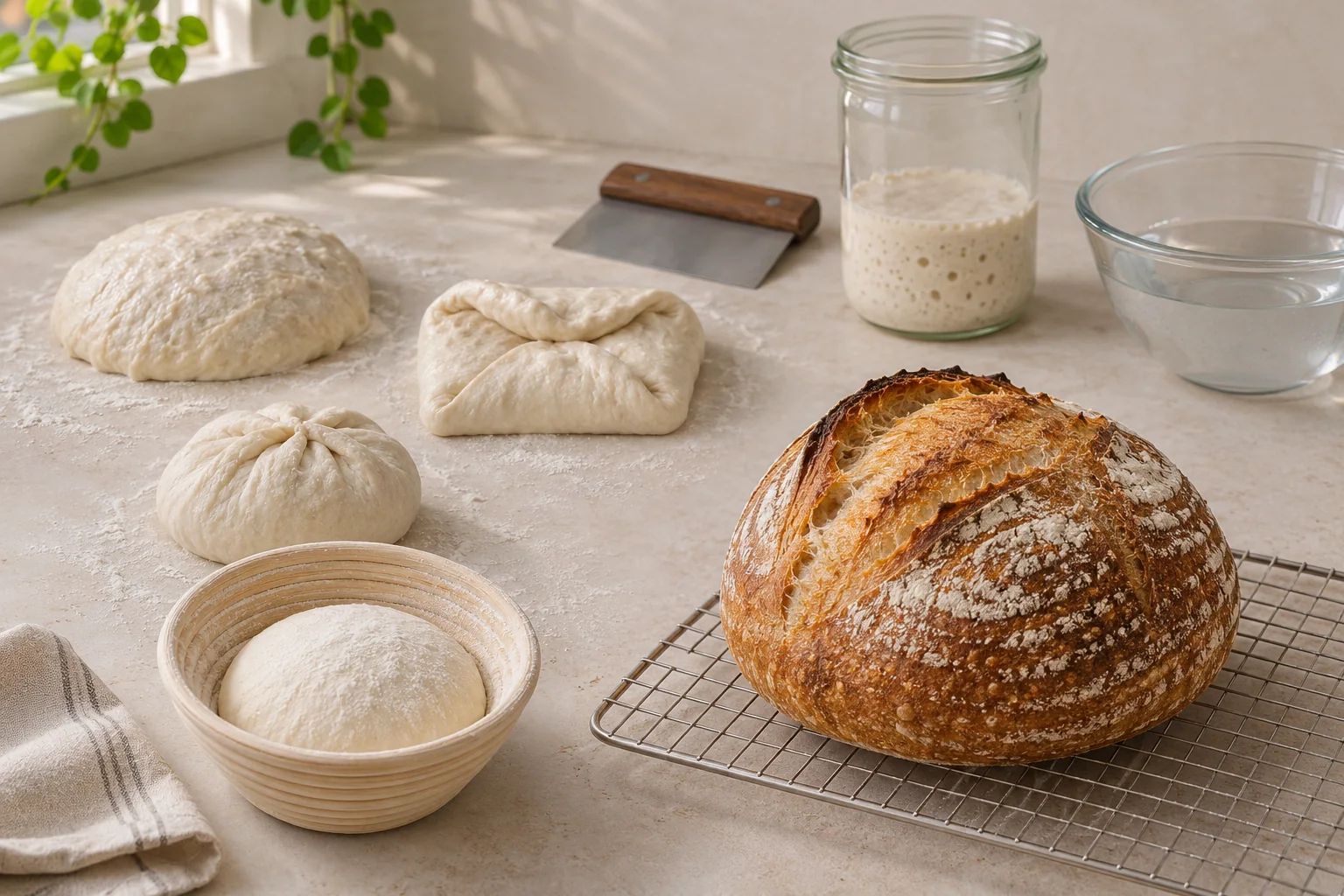
A round boule can be scored with one long slash, a cross, or another straightforward pattern suitable for its shaping and proof. Keep the motion confident and avoid stopping repeatedly in the middle of a cut. Place the cuts where the dough needs room to open rather than covering the entire top with small decorative scratches.
A simple score for a batard
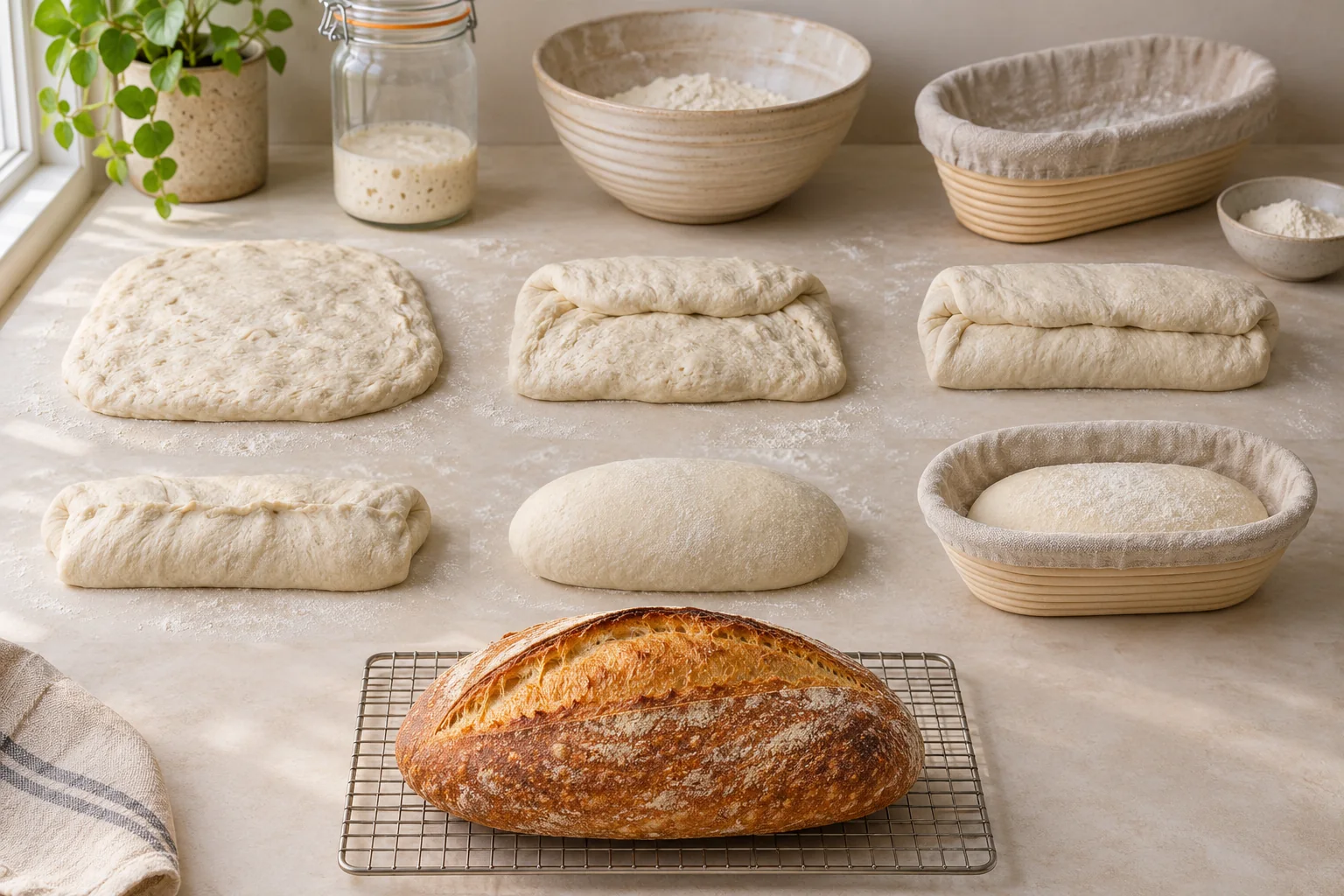
An oval batard often receives one long off-centre slash following its length. This can create an asymmetric opening and a characteristic ear. The precise angle and depth depend on the blade, loaf size and intended style. Start with one reliable line before attempting overlapping or branching cuts.
How to move the blade
Use a controlled, swift motion that slices the dough's outer skin. Avoid pressing the blade straight down slowly as though cutting cooked bread. If the cut doesn't reach through the surface in one section, a careful second pass may be appropriate, but repeated sawing can drag and deflate the dough.
Decorative scoring versus expansion scoring
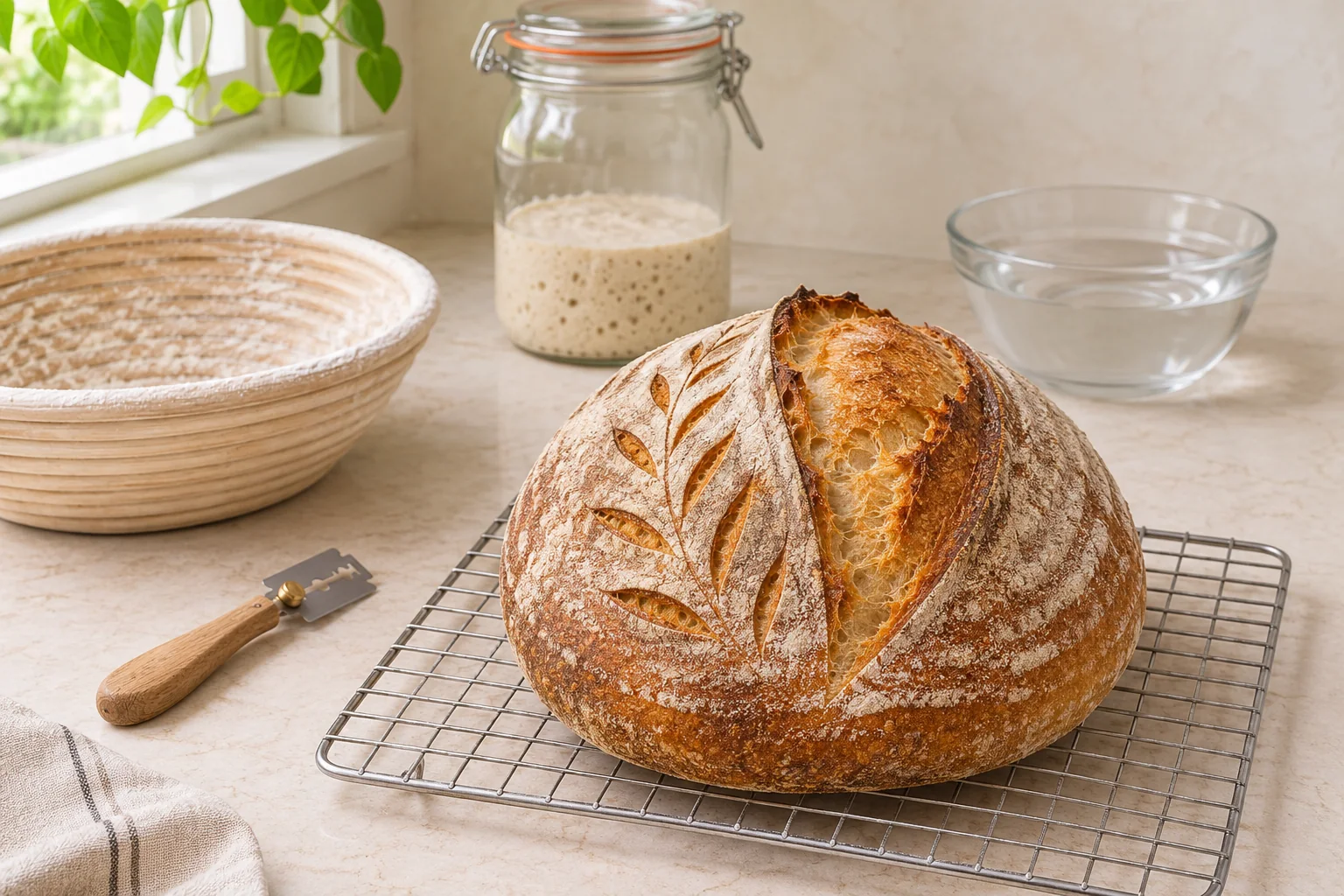
Functional cuts are usually deeper so the loaf can expand; decorative cuts tend to be shallower. Wheat stalks, leaves and geometric patterns can look beautiful, but a loaf covered only in tiny decorative marks may still need one main expansion score. Separate the practical opening from the surface embellishments.
How to make a wheat-stalk pattern
Begin with a main functional score where the bread needs to expand. For a decorative wheat pattern, use short shallow angled marks along a gently planned stem, keeping spacing reasonably consistent. Work efficiently before the dough warms too much. A lightly floured surface can accentuate the lines after baking.
Why a score sometimes drags
A dull blade, sticky warm dough, overly wet surface or slack loaf can make the cut snag. Replace worn blades safely and assess dough strength, proof and surface condition. Adding large amounts of flour isn't necessarily the fix, and scoring faster won't compensate for a dough that has collapsed structurally.
Why the score disappears
If a cut seals almost immediately, it may be too shallow, the dough surface may be too wet or the loaf may lack enough oven spring to open it. Over-proofing and weak dough strength can contribute. Observe whether the loaf expanded elsewhere before increasing the cut depth next time.
Why the ear doesn't open
An ear needs adequate tension, suitable proofing, proper angle, sufficient initial heat and useful steam. A lack of ear isn't proof the bread is bad.
Why the loaf bursts at the side
If the score doesn't offer sufficient expansion or the dough is under-proofed, the loaf may split along a seam or side. Increase attention to the timing of final proof and the location of the functional score. Deepening every cut indiscriminately is not necessarily the best answer.
Why a deep score makes the loaf flatten
A deep gash through weak or over-fermented dough can release too much surface tension. The loaf may open broadly and spread outward instead of springing upward. Make cuts appropriate to the dough's condition and avoid chasing a deep ear with repeated slashes.
Dutch oven scoring workflow
Preheat the oven and vessel according to the recipe and equipment manufacturer. Turn the proofed loaf onto appropriate parchment or a supported surface, score safely, then transfer carefully. Very hot lids and walls cause serious burns; use suitable oven mitts and keep hands clear. Follow the recipe's covered and uncovered stages.
Recipe to try: Sourdough Country Loaf. The loaf calls for active starter. Check its maturity and the dough’s fermentation cues before moving on to shaping.

Does steam improve scoring results?
Steam delays the rapid hardening of the crust early in baking, helping cuts open as the dough expands. A properly covered Dutch oven uses moisture from the bread itself. For open baking, follow a proven steam method appropriate for the oven; never throw water into hot glass, onto oven lights or against equipment that could shatter.
Practice a repeatable pattern
Score several loaves with the same simple functional cut before changing angle, depth and decoration. Record whether the loaf opened neatly, burst elsewhere or spread. Changes in starter, proofing and shaping are often more important than complicated designs when troubleshooting.
Recipe to try: Sourdough Baguette. These elongated loaves use active sourdough starter. Follow their own shaping and proofing method rather than a round-loaf schedule.

Frequently asked questions
How deep should I score? Often around ¼ to ½ inch for functional artisan cuts, following the recipe. Do I need a lame? It's helpful, though a suitable sharp knife can work. Can I score cold sourdough? Many bakers do, and it can be easier to cut. Does a big ear mean good fermentation? Not necessarily. Why did my loaf split on the bottom? Insufficient scoring, shaping seams or proofing may be involved.
Recipe to try: Sourdough Ciabatta. Ciabatta provides a different dough and loaf shape to practise with. Keep its hydration and handling instructions together.

A clean cut is enough
Begin with a well-fermented, properly shaped loaf and one purposeful score. Make a safe, confident cut of appropriate depth, then bake with sufficient heat and steam. As your results become consistent, decorative patterns can turn an ordinary sourdough loaf into a striking piece of edible craftsmanship.
IN PICTURES
From the baking notebook
FROM THE RECIPE BOX


