On this page
You open the refrigerator and find a jar of starter you haven't touched for several weeks. The top may be grey, the smell sharply sour and the mixture almost motionless. Is it still alive? A mature starter can sometimes recover from neglect, but the first step is distinguishing an exhausted yet viable culture from a contaminated one. Reviving starter is about careful inspection and patient feeding, not blindly stirring in a large quantity of flour.
First decide whether it is safe to save
Inspect the jar before stirring. Fuzzy growth, unusual pink or orange staining, clear signs of mold, or putrid odours are reasons to discard the culture entirely. Do not scrape off mold and try to revive the portion underneath. Sourdough fermentation doesn't reliably make a contaminated starter safe.
Hooch versus mold
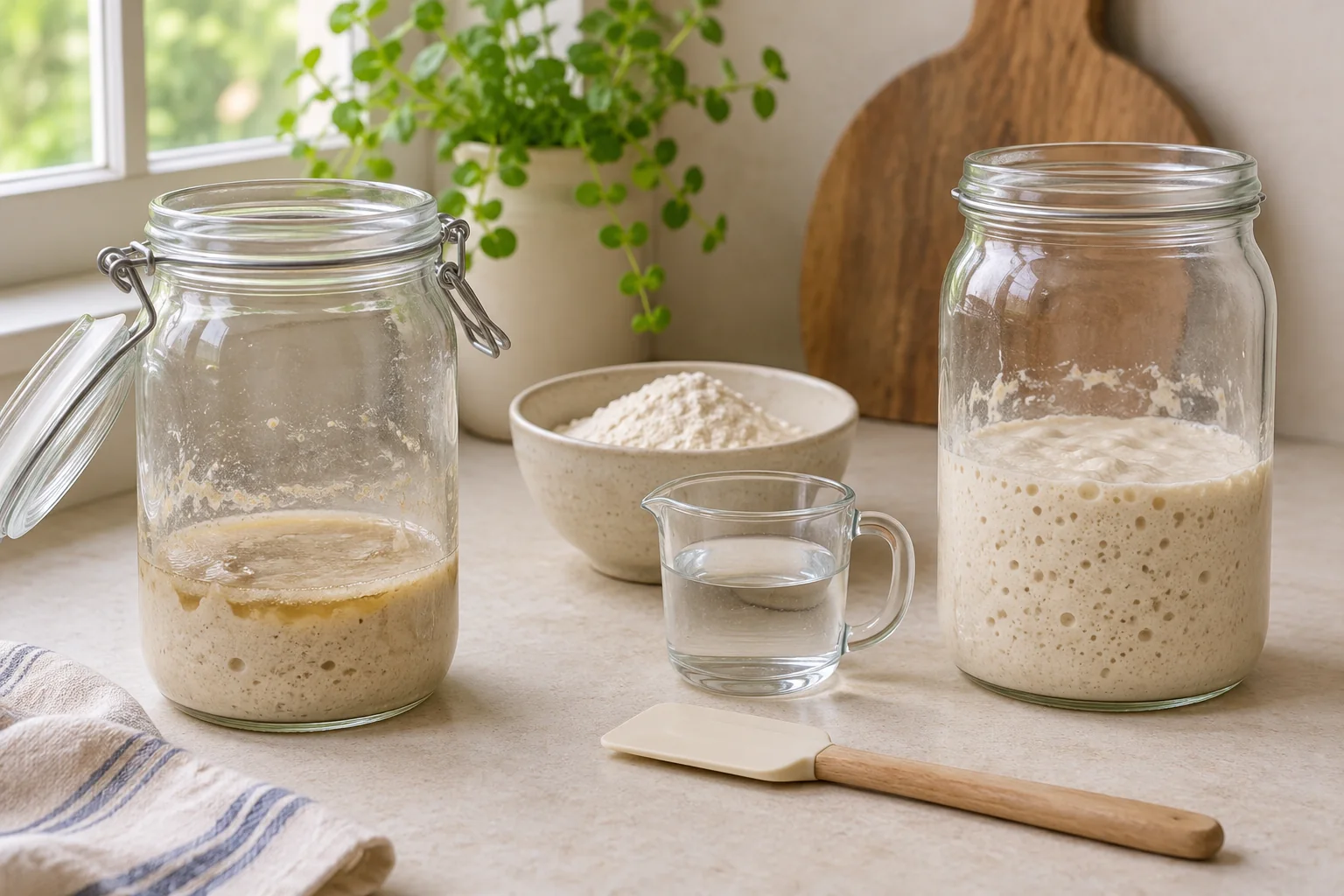
A thin greyish or brownish liquid layer on a long-neglected starter can be hooch, often associated with hunger and alcohol production. It isn't the same as fuzzy mold. However, colour alone cannot prove safety: unusual growth, suspicious patches or an off odour warrant discarding and starting over.
Why old starter becomes sluggish
Microorganisms continue consuming nutrients even when cold, although the pace slows. With little fresh food, acidity can increase and leavening activity declines. A culture may therefore appear inactive immediately after refrigeration but regain strength over multiple suitable room-temperature feedings.
Start with a clean jar and tools
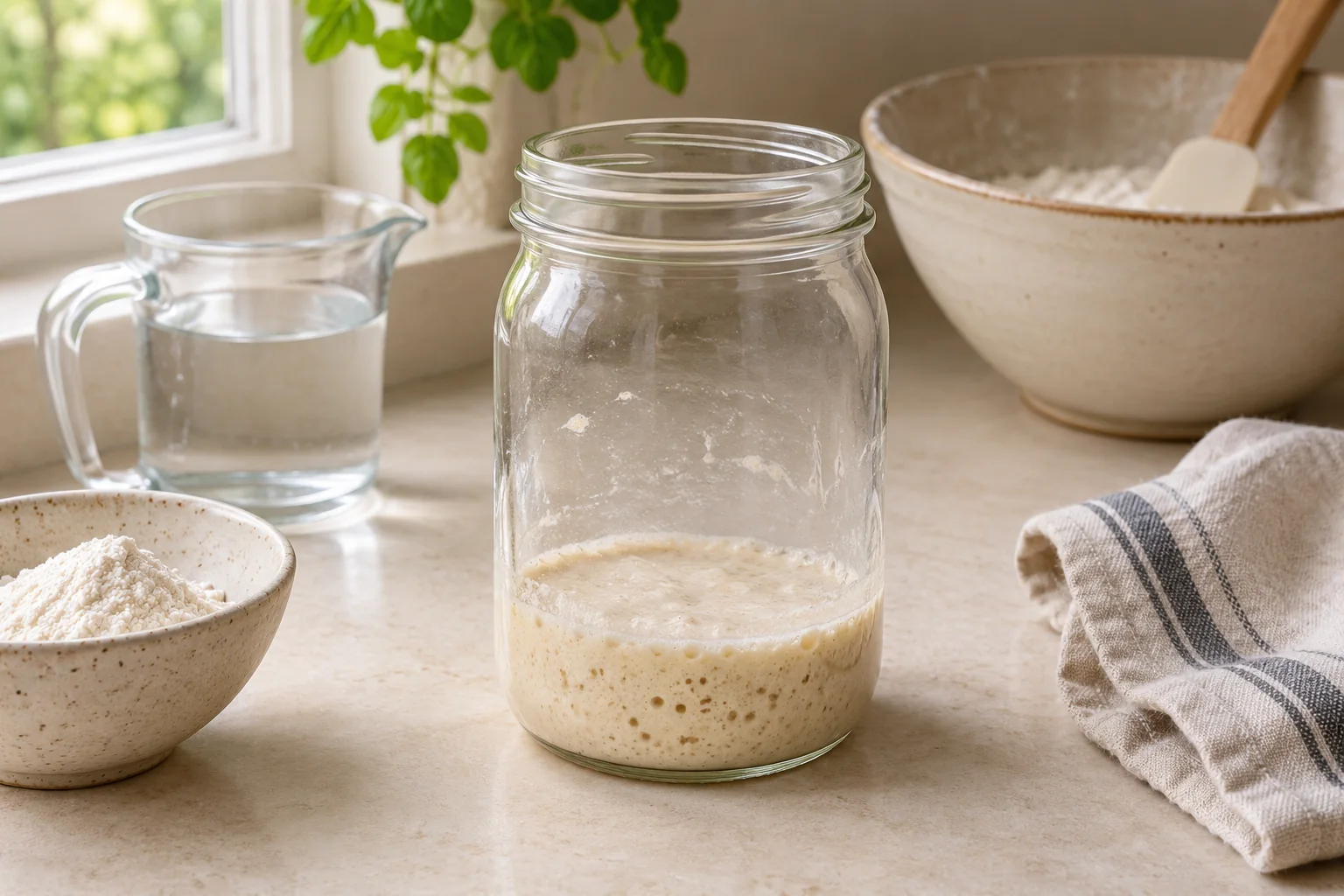
After confirming there are no warning signs, transfer a small measured portion to a clean food-safe jar using a clean utensil. Mark the new starting level and label the feeding time. This avoids dragging crusted residue into the refreshed culture and makes new activity easier to observe.
Begin with a modest refreshment
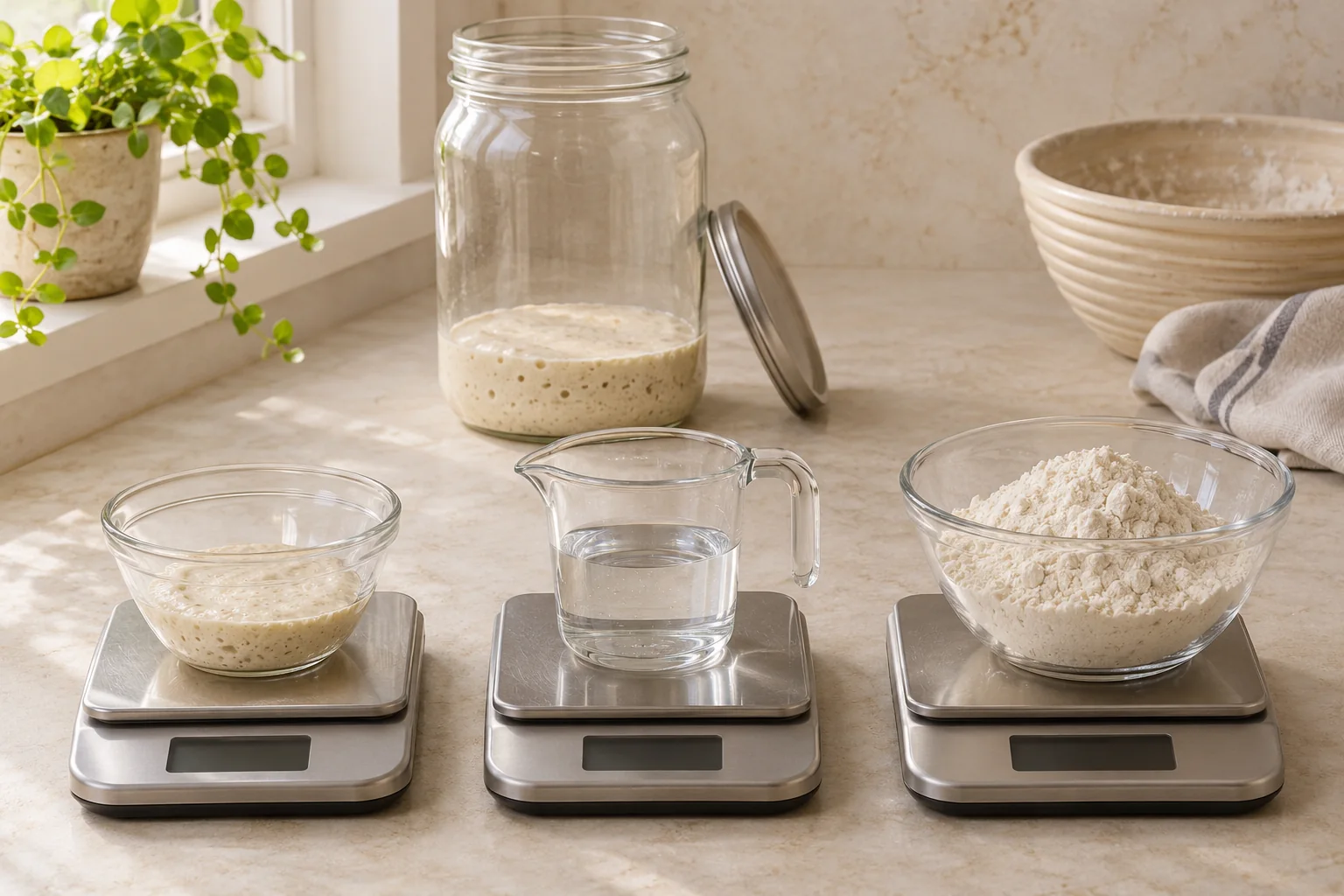
Use a tested maintenance method such as a measured 1:1:1 feeding of existing starter, flour and water by weight. For example, retain 20 g starter, add 20 g water and 20 g flour, then mix. A different trusted plan may use other ratios; don't keep increasing the quantity because the culture looks weak.
Keep the mixture at a suitable temperature
Moderate room temperature supports renewed fermentation. A cool kitchen may make recovery slower, while excessively hot water or direct heat can damage microorganisms. Follow your starter guide's temperature recommendations and avoid heating the jar on radiators or inside a hot oven.
Watch rather than guessing from the clock
Check for emerging bubbles, a gradual increase in height and a change toward a pleasantly fermented aroma. A starter may respond only modestly to the first feeding, especially after a long cold rest. Repeated activity is more informative than whether it doubled in exactly four hours.
When to feed again
Many room-temperature maintenance methods refresh at roughly twelve-hour intervals, but recovery speed varies. Follow the tested plan and observe whether the starter has consumed enough of its meal. Feeding a weak culture with a very large volume too frequently can make visible progress difficult to judge.
Why several feedings may be needed
One feed may dilute accumulated acid and provide nutrients without immediately creating vigorous gas production. Subsequent feeding cycles can restore a more predictable population of yeast and bacteria. The goal isn't simply seeing one bubble; it's establishing a repeatable rise-and-fall pattern.
Should you switch to whole-grain flour?
Some bakers use a portion of whole-wheat or rye flour during revival because it can change nutrient availability and fermentation behaviour. This isn't mandatory, and a starter can recover with the flour it was maintained on. If making a flour change, document it and allow several cycles before judging the result.
How to assess the smell during recovery
A healthy culture may smell tangy, fruity, mildly yeasty or alcoholic at different stages. That does not mean every intense smell is acceptable. An unmistakably rotten smell, visible mold or discoloured growth requires discard. Don't taste raw starter as a diagnostic tool.
How to know the starter is strong again
After repeated measured feedings, it should expand substantially on a predictable schedule, develop bubbles throughout and reach a recognizable peak.
Recipe to try: Sourdough Ciabatta. Ciabatta provides a different dough and loaf shape to practise with. Keep its hydration and handling instructions together.

Why the float test is not decisive
Gas-rich starter may float, but the test doesn't establish how consistently the microorganisms are working. A sample can sink because it was disturbed or is relatively liquid. Use repeatable jar growth and a healthy feeding cycle before trusting the revived starter with a sourdough loaf.
Avoid baking on the first weak rise
A small amount of gas after one refreshment doesn't necessarily mean the starter can leaven a full dough. For a reliable naturally leavened loaf, continue until the culture performs strongly over successive feeds. You can prepare other baking tasks while waiting rather than rushing an expensive batch of bread.
Recipe to try: Sourdough Country Loaf. The loaf calls for active starter. Check its maturity and the dough’s fermentation cues before moving on to shaping.

How to scale up after revival
Once the culture is behaving predictably, build the amount required by your recipe while reserving some for maintenance. Calculate seed, flour and water by weight. A strong small starter is a better base for a larger build than a huge quantity of neglected starter.
When recovery takes several days
Temperature, flour, initial starter health and the length of neglect can all affect the timeline. There is no promise that every starter recovers in twenty-four hours. If you're seeing steady improvement, keep a consistent routine; if there is no activity after repeated correct feedings, consider beginning a fresh starter.
What if the starter dried out?
A hard crust or thick top can develop with poor covering. Do not assume that every dried surface is safe to rehydrate, especially if it shows discolouration or mold. If the underlying culture is clearly wholesome and a reputable guide offers a method for recovery, follow it; otherwise replace the starter.
What if the starter freezes in the fridge?
Accidental freezing can change starter texture and microbial activity. A thawed culture may require repeated refreshments before it rises normally. Follow a reliable revival procedure and don't use it for naturally leavened bread until its performance has returned.
Preventing the same problem
Maintain a small culture, mark the feeding date on the jar and use a weekly reminder if your routine follows that schedule. Before going away, consider a suitably prepared dried starter backup. A little predictable maintenance is easier than repeated emergency revival.
Recipe to try: Sourdough Crackers. These crackers use sourdough discard. Use discard from a healthy established starter and bake it fully; this is not a raw-starter snack.

Frequently asked questions
Can old starter be saved? Sometimes, when it is not contaminated. Can I revive moldy starter? No. Does sharp sourness mean dead? Not necessarily. Should I add sugar or commercial yeast? That changes the culture and isn't a substitute for a normal maintenance method. How long does recovery take? Until rise becomes reliably vigorous.
Revive patiently, not recklessly
Safety inspection comes first. Then use small measured feeds, suitable warmth and a clear jar to follow progress. When the starter can repeat a strong rise at a predictable feeding ratio, it is ready to return to baking plans.
IN PICTURES
From the baking notebook
FROM THE RECIPE BOX


