On this page
Start with a rough puff formula that gives weights for flour, butter, water and salt. As you work through its quantities and rests, use these checkpoints to judge the butter shards, the first fold and the dough’s readiness for the next turn.
Rough puff versus classic puff
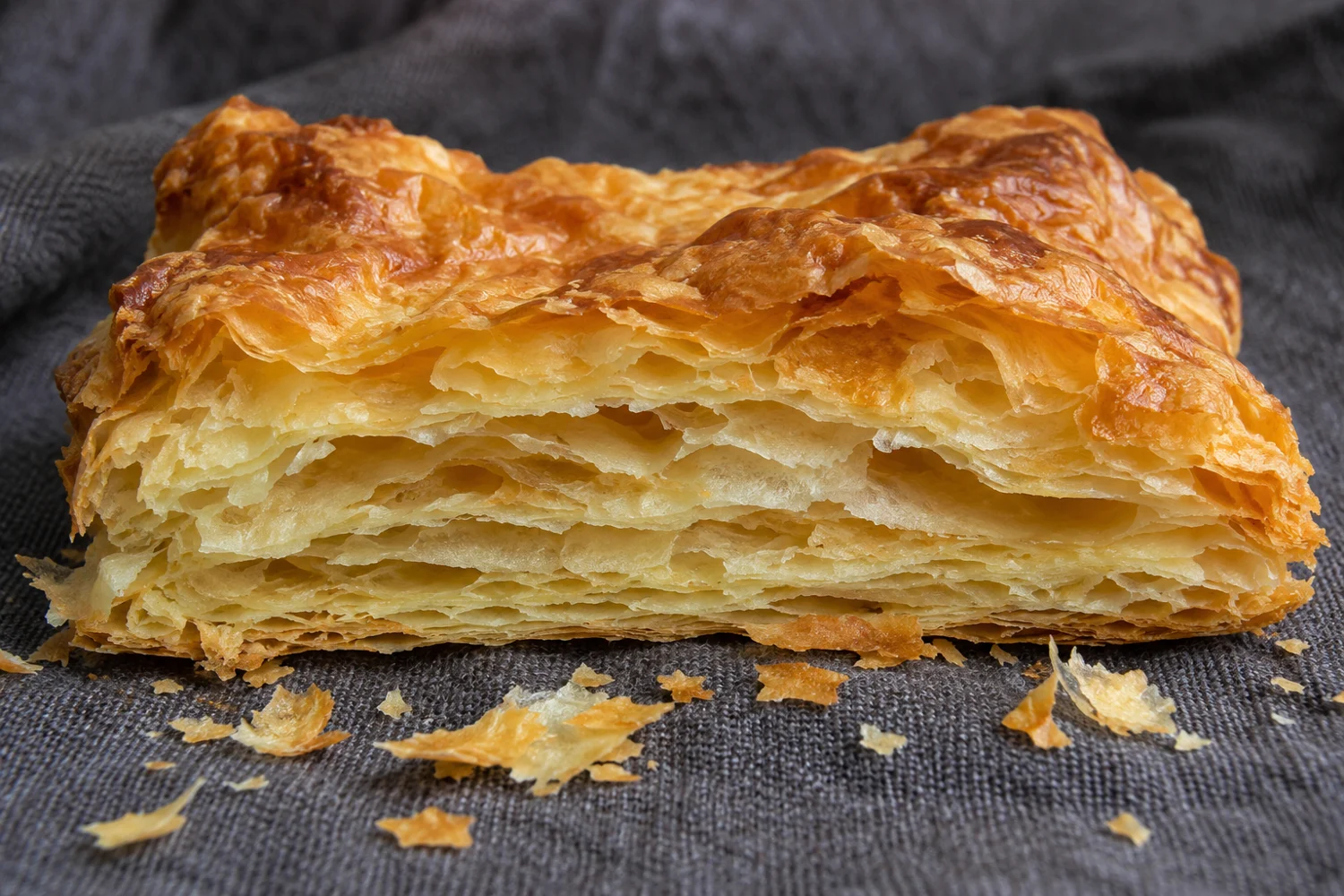
Classic puff pastry typically laminates a distinct butter block inside a dough with carefully controlled turns. Rough puff starts with butter chunks or flattened shards dispersed within the dough. Both create layers through rolling, folding and steam during baking. Rough puff is more rustic, usually faster, and may show visible irregular butter pieces. It is not the same as simply making a pie dough and rolling it thinner.
Compare rough puff with 81-Layer Reverse Puff Pastry with Cultured Butter to see how a different arrangement of fat and dough changes the folding method.
Use a tested formula
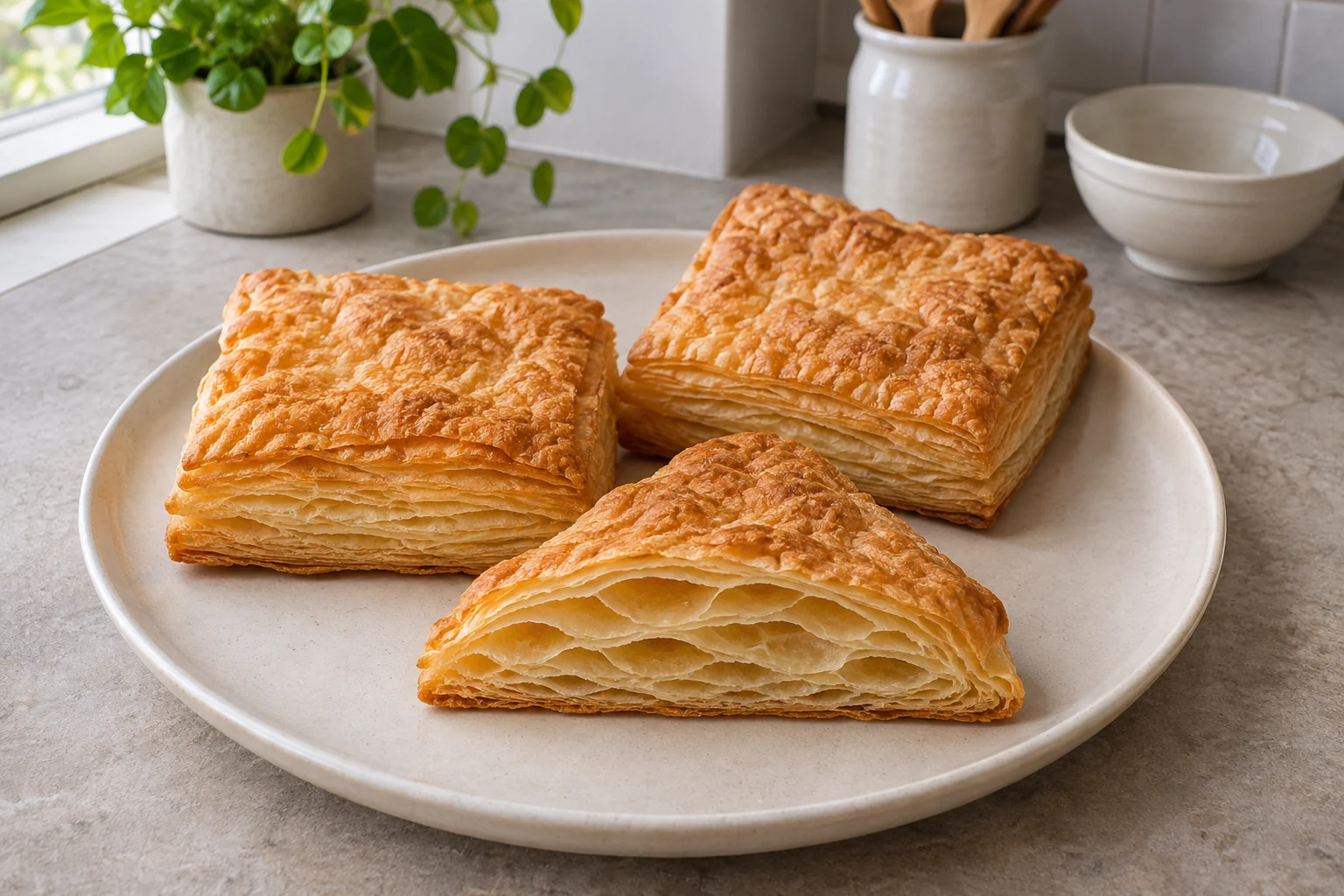
Start with a complete rough-puff formula and follow its exact flour, butter, water and salt quantities. Keep its specified folding sequence and chilling periods together: letter folds and book folds are not interchangeable counts. Extra folds can compress or blend the butter layers rather than improving the result.
For a savoury use for laminated pastry, try Sun-Dried Tomato and Olive Palmiers. Follow its own instructions for the dough and filling.
The role of butter
Butter provides separated fat sheets as the dough is rolled, and its moisture contributes steam in the oven. Start with cold pieces sized for the recipe. If the butter is too finely incorporated like sand, there may be fewer strong visible layers. If it is rock-hard, it can puncture the dough rather than flatten. Cool, workable butter is the goal during rolling.

Prepare flour and salt
Weigh the flour and distribute salt evenly. Use the flour type specified in the recipe, commonly all-purpose. Too much flour creates a dry dough that's hard to stretch, while very strong bread flour can produce a more elastic sheet. The dough needs enough structure to survive folds but not so much that it fights every rolling stroke.
Flatten butter into shards
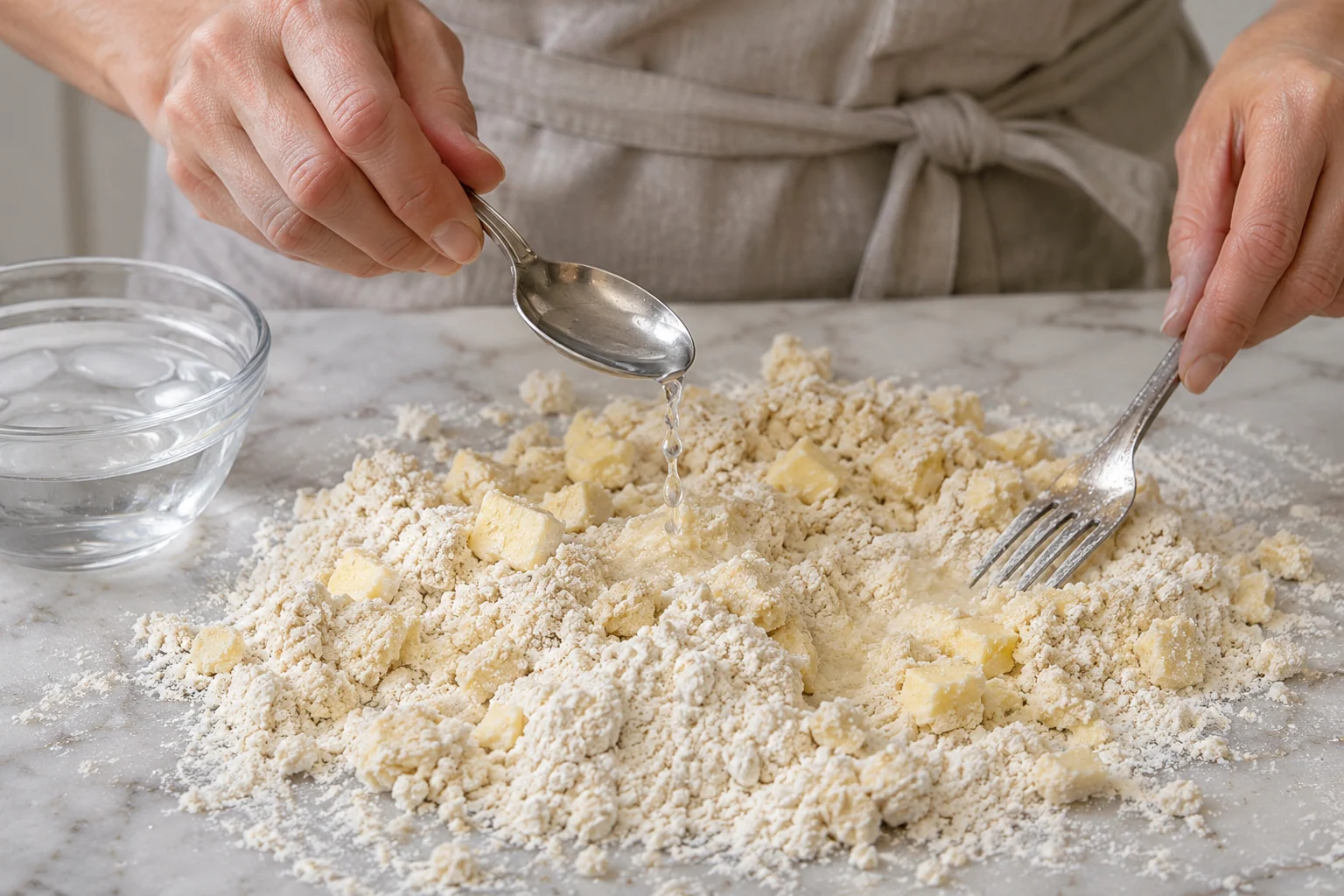
Many rough puff methods press cold butter cubes into flat pieces while tossing them in flour. These visible flakes later stretch into thin sheets when rolled. Work quickly with cool hands or an appropriate mixer paddle. Stop before butter becomes a uniform paste. Some chunks can remain relatively large in early mixing, provided the tested method accounts for them.

Add cold water gradually
Cold water hydrates flour enough for a rough shaggy dough. The mixture may look crumbly at first and doesn't need to become perfectly smooth. Add the prescribed amount using the recipe's instructions; too much water makes the dough sticky, while too little makes it fracture. Avoid intensive kneading because it may increase gluten and smear the butter.
Gather the dough into a rectangle
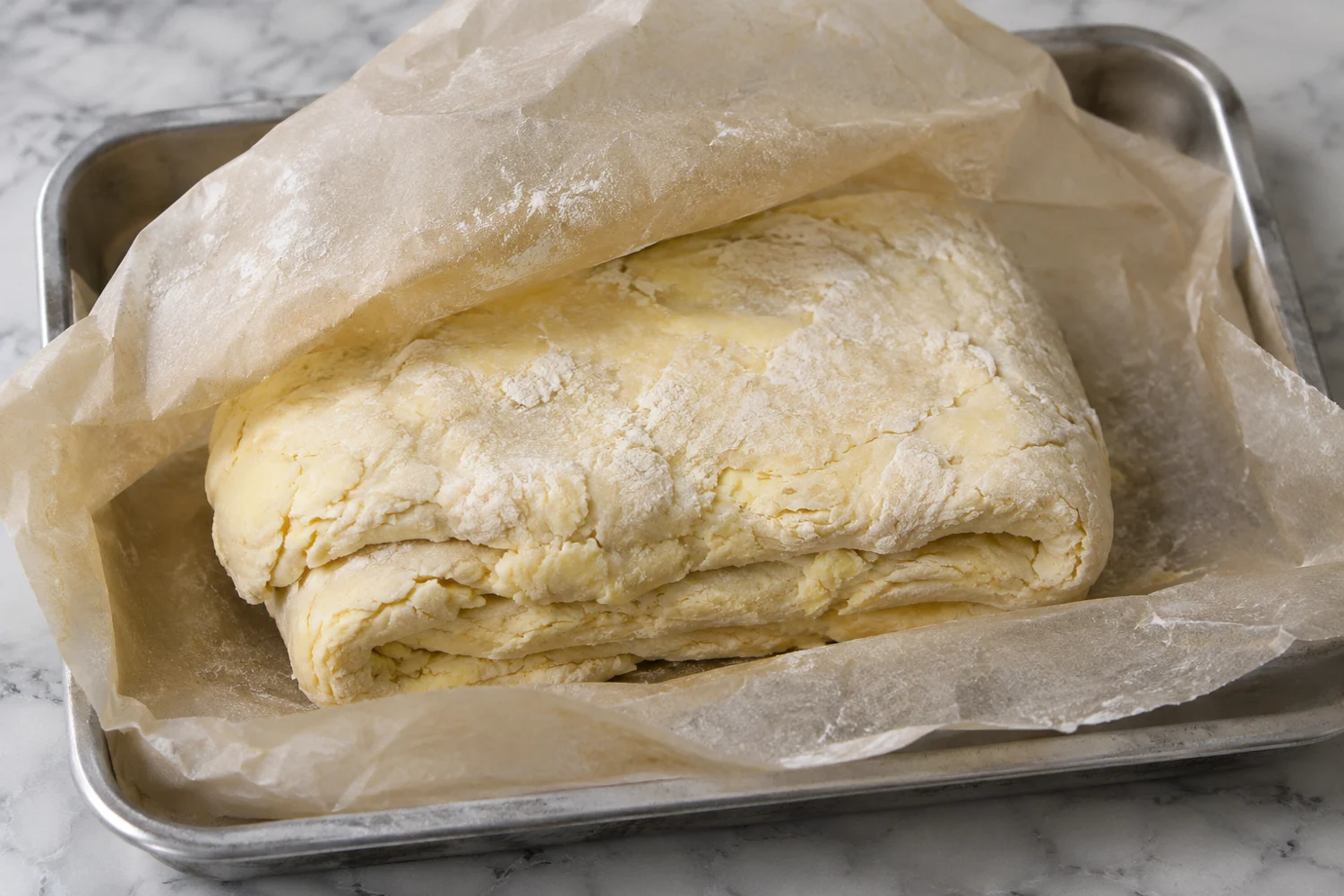
Gather the rough mixture gently and press it into a manageable rectangle or square before the first chill. A bench scraper helps bring loose areas together without warming dough excessively. Do not force a beautifully smooth ball; visible butter and irregular surfaces are normal. Wrap and rest according to the recipe so flour hydrates and butter firms.

Understand a letter fold
Roll the dough into a rectangle of the dimensions specified. Fold one short end toward the centre, then bring the opposite end over it, creating three stacked layers like a business letter. Turn as directed before the next roll. Keep the sheet reasonably even so the folds line up. Brush off excess bench flour to help layers adhere without creating dry powdery seams.

Understand a book fold
A book fold brings two short ends toward the centre without overlapping, then folds the dough in half along that central meeting line. The result stacks four layers in that turn. Not every rough puff recipe uses book folds; choose the sequence in your formula rather than adding them indiscriminately. More folding isn't automatically better if the fat warms and the dough becomes tight.

Why folds create lift
Each roll flattens butter pieces and spreads them through the dough. Folding stacks those sheets, building many regions where steam can separate pastry during baking. The layers are irregular in rough puff, which is part of its character. If butter becomes fully absorbed before baking, the pastry may be tender but lack dramatic lift. The objective is distinct alternating dough and fat, not an impossibly precise count.
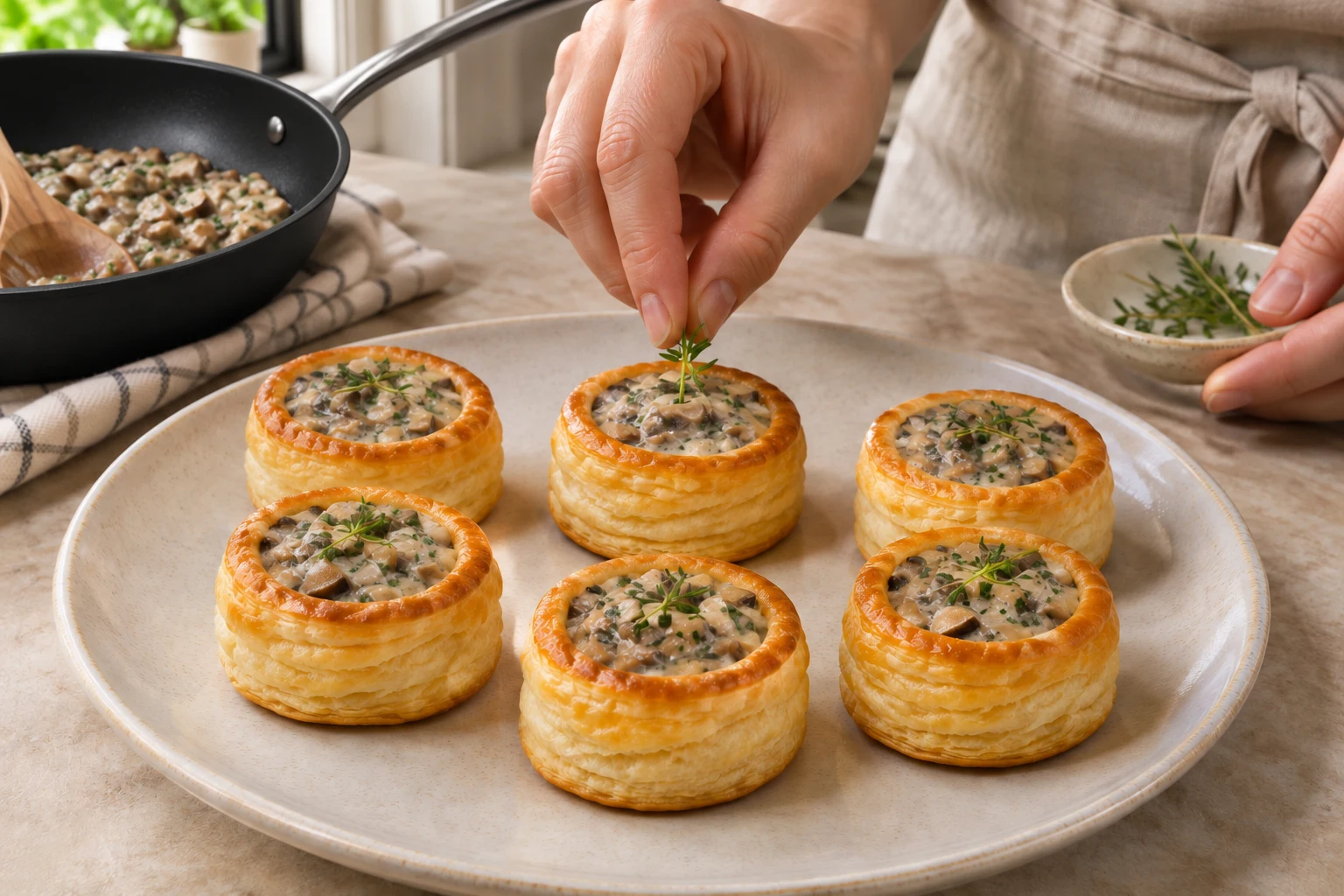
The raised sides of Mushroom Vol-au-Vents show what separated sheets can do in a hot oven.
Rest when dough resists
As rolling develops gluten, the rectangle may spring back or shrink. Stop, wrap and chill until it becomes easier to extend. Resting also keeps butter from becoming greasy. Forcing a resistant sheet can cause tears and exposed fat. A method with several well-timed pauses often produces better pastry than continuous rapid folding in a warm kitchen.
Control temperature during turns
Butter that is too warm smears; butter too cold and brittle can crack. Work in a cool kitchen and return dough to the refrigerator when it leaves greasy marks or becomes too elastic. If the butter has shattered, allow a small amount of recipe-approved pliability rather than striking the dough repeatedly with force. Temperature and texture are more useful cues than a rigid minute count in every kitchen.
Deal with exposed butter
A little butter showing at the surface is normal in rough puff. If a large hole forms, cover lightly with dough and a minimal dusting of flour where the method permits. Avoid soaking the hole with water, which can create gummy streaks. Chill before continuing. Serious tearing may signal that the dough and butter have very different firmness.
How much rolling is enough?
Use the dimensions and number of turns in the selected recipe. After the final fold, chill again before shaping. Continuing to fold indefinitely may create more gluten tension and warm the fat. The goal is a dough that rolls easily into a usable sheet, not the highest theoretical layer count. A recipe with fewer effective cold folds may outperform a batch overhandled for an extra turn.

Shaping turnovers
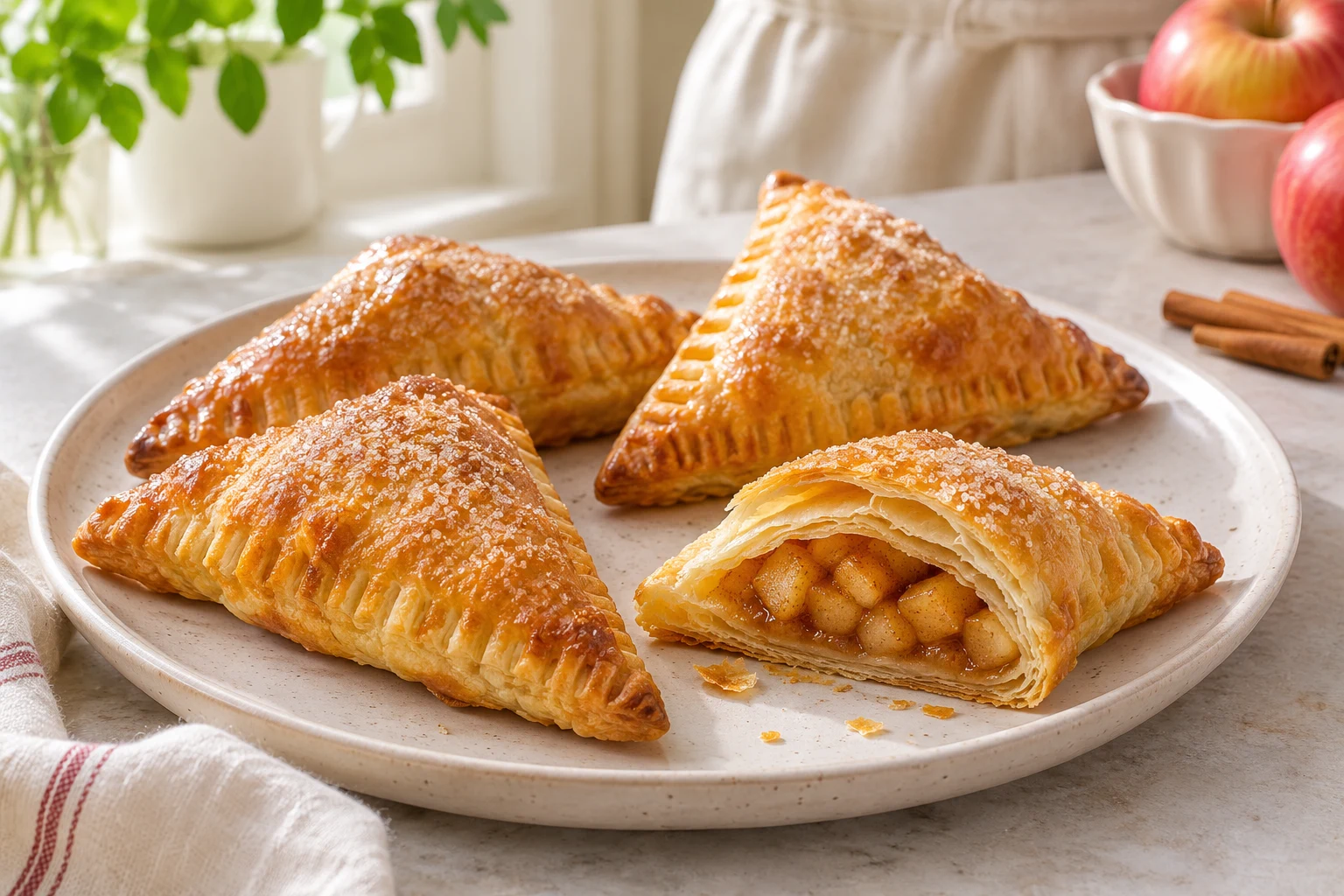
Roll rough puff to the thickness specified by the turnover recipe, cut clean squares and add an appropriately thick cooled filling. Leave borders for sealing and cut vents if directed. Keep cut edges free of heavy egg wash so the layers can rise. Bake from the intended temperature until pastry is crisp and the filling fully cooked.
For Apple Turnovers, cut the pastry with a sharp blade so the layered edges have room to lift.
Cheese straws and savoury twists
Rough puff works well for cheese straws and other savoury snacks. Roll to a consistent thickness, use suitable grated cheese or seasonings according to a tested formula, then cut and twist gently. Heavy wet toppings may impair rise. Spread pieces on a baking sheet with enough space for expansion and bake until layers are cooked through.
The puff pastry in Chorizo and Manchego Twists twists around the filling, exposing cut edges along each spiral.
Tarts and pastry lids
A sheet of rough puff can form a rustic fruit tart or the lid of a savoury pie. For a flat tart centre, docking may be appropriate while leaving the border undocked to puff. A pastry lid needs vents for steam and safe cooking of its filling. Don't assume rough puff is automatically suitable for a heavily soaked unbaked bottom crust.
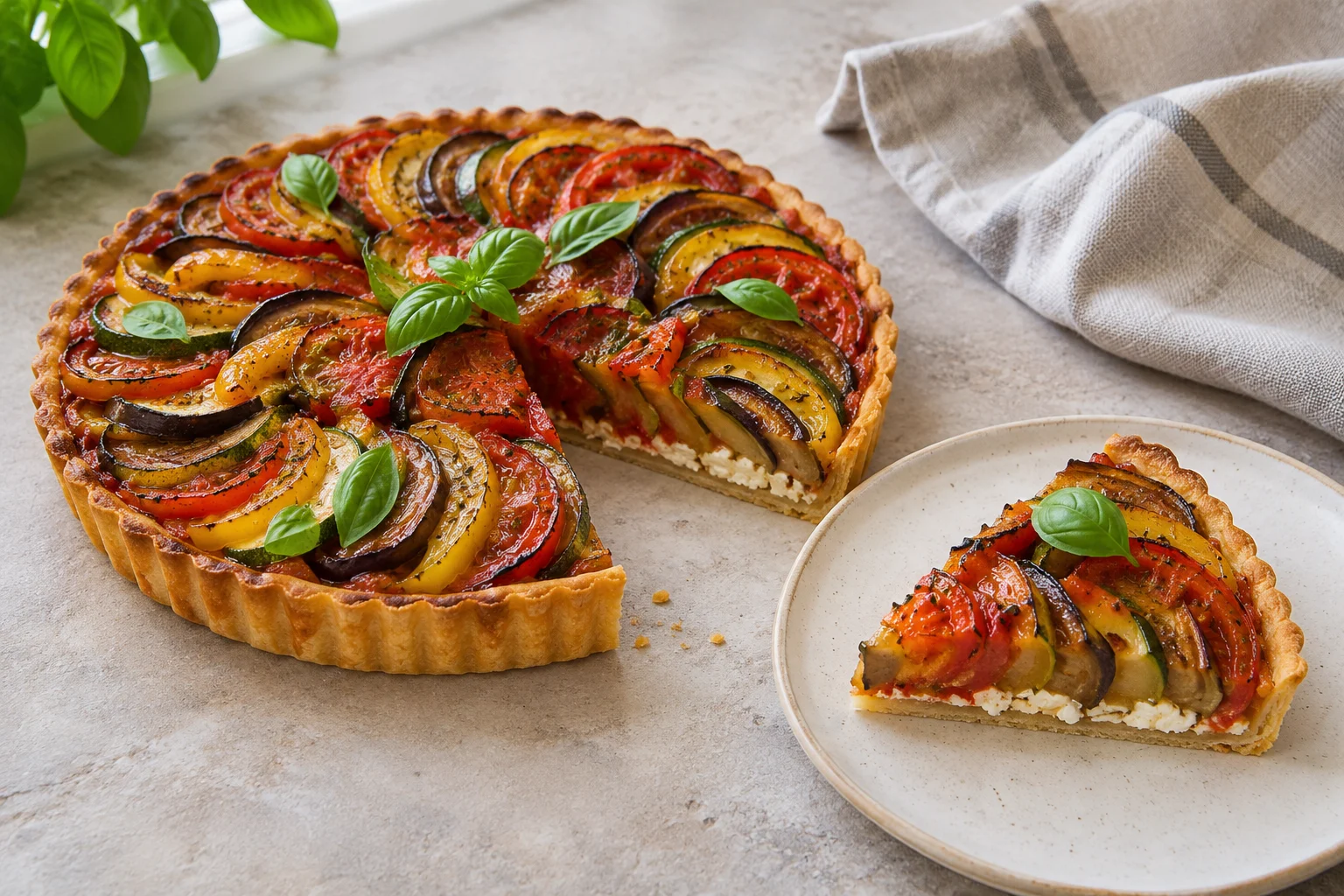
For comparison, Asparagus Tart uses shortcrust in a fluted tin. A flat rough-puff tart gets its raised edge from layers in the dough itself.
Baking temperature is crucial
Rough puff needs a properly preheated oven so steam develops and the layers set before much butter leaks away. Use the temperature and rack recommended in the actual recipe. A very cool oven can produce greasy flat pastry; excessively high heat may brown the outside while the interior stays underbaked. Golden colour and a light dry interior are both important.
With Cherry Turnovers, have the oven ready before the cold tray comes out so the pastry can bake promptly.
Why rough puff becomes flat
Common causes include butter melted into flour, excessive rolling, insufficient resting, compressed cut edges or baking in an inadequately heated oven. Check the dough's appearance before shaping: visible butter layers are a useful sign. If a batch didn't lift, record the number of turns and pastry temperature rather than simply increasing leavener; classic puff relies primarily on steam, not added baking powder.
Why rough puff leaks butter
A modest amount of melted fat can escape, but puddles may indicate warm dough, broken lamination or oven conditions that allow butter to melt before the pastry sets. Keep the prepared shapes appropriately chilled and bake promptly in a fully heated oven. A high-fat spread with unsuitable water content won't necessarily behave like the recipe's butter.
If fat pools beneath Sausage Rolls, check whether it came from the filling or from the pastry before changing the dough.
Freeze and store appropriately
Many tested rough puff recipes allow freezing the finished unbaked dough wrapped tightly. Label the date and thaw in the refrigerator according to the method before rolling. Some products can be frozen after shaping under their own instructions. Never assume that a filled puff pastry with meat or dairy can be held without safe refrigeration merely because the dough itself freezes well.
For a filled hand pie, follow the storage guidance for its filling. Cranberry Orange Hand Pies are a separate example with their own crust and assembly method.
A sensible first project
Prepare one trusted rough puff recipe, follow its exact fold sequence, chill as instructed, then make a simple batch of cheese straws or apple turnovers. Save photographs of the cross-section and record whether the layers baked distinctly. Once you understand the process, try a more delicate tart. A consistent simple bake teaches more than several complicated fillings.
Look at the crimp on Apple Hand Pies for an example of how to shape a small filled pastry. That recipe uses its own dough.

IN PICTURES
From the baking notebook
FROM THE RECIPE BOX


