
On this page
A well-made turnover is a crisp layered pastry wrapped around a filling that stays inside. Too much filling leaks; too little leaves an empty shell. Warm pastry loses definition; very dry pastry cracks when folded. Learning to balance filling moisture, cold butter layers and secure seams makes homemade turnovers much more predictable. Apples, cherries, mushrooms and cheese can all work when the filling method suits the dough and oven.
Rough puff versus store-bought puff
Rough puff creates flaky layers through visible butter shards and folds. Commercial puff pastry may be classic laminated or manufactured by another method; it is convenient and often consistent. Neither requires homemade dough to produce a good turnover. Read the package for thawing temperature and handling, and choose an appropriate recipe for the sheet thickness you're using.
Start with the size of the pastry square in Apple Turnovers. That dimension sets the practical limit for the filling.
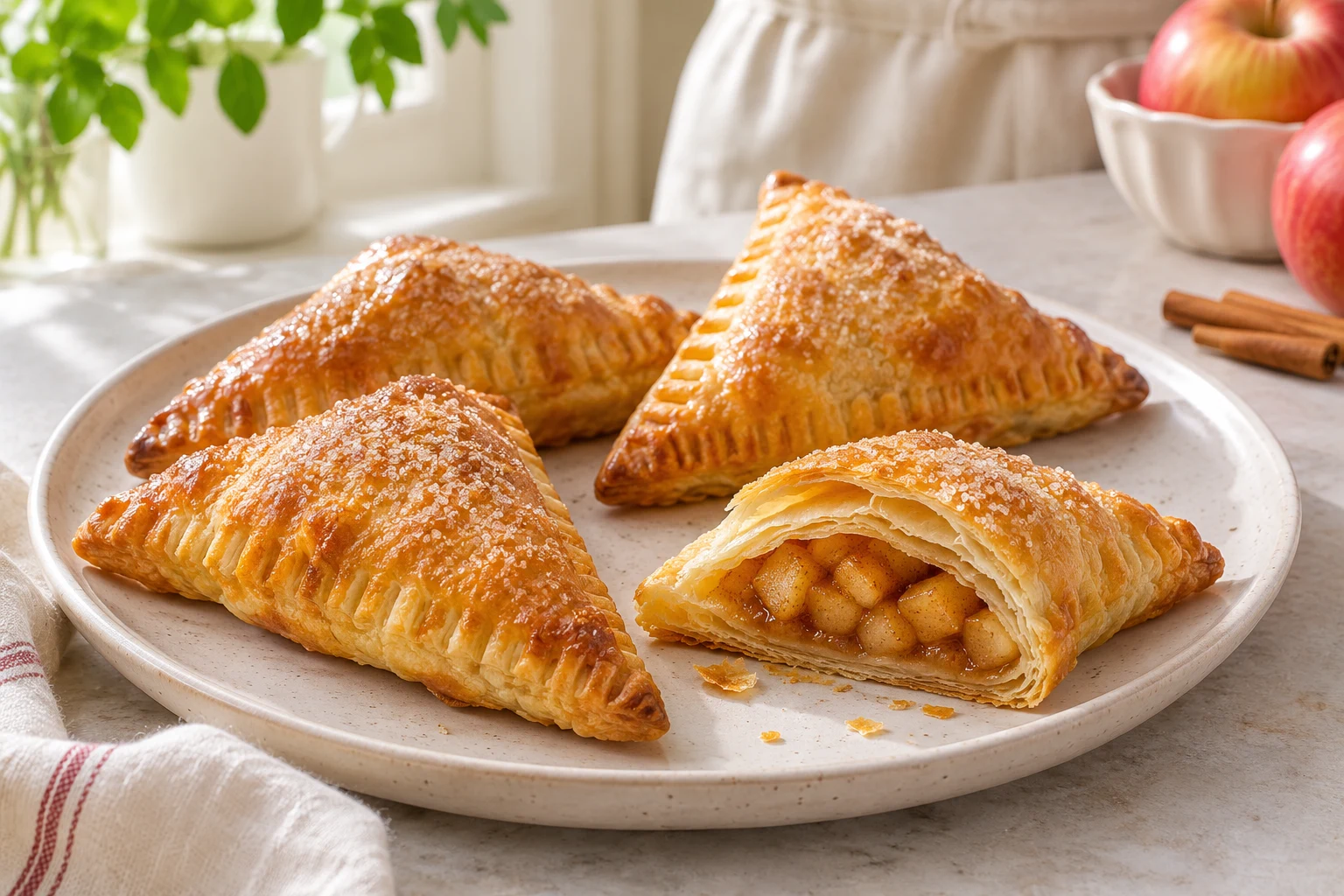
Choose fruit for manageable moisture
Apples retain their shape better than many very ripe berries, which may release abundant juice. Peaches and cherries can also be delicious but need filling-specific preparation. Use the fruit weight and thickener specified by a tested turnover recipe. Raw watery fruit dumped onto puff pastry often creates damp bottoms and burst seams.
The berries in Blueberry Lemon Hand Pies are a useful reminder that a filling can release more juice once it heats.
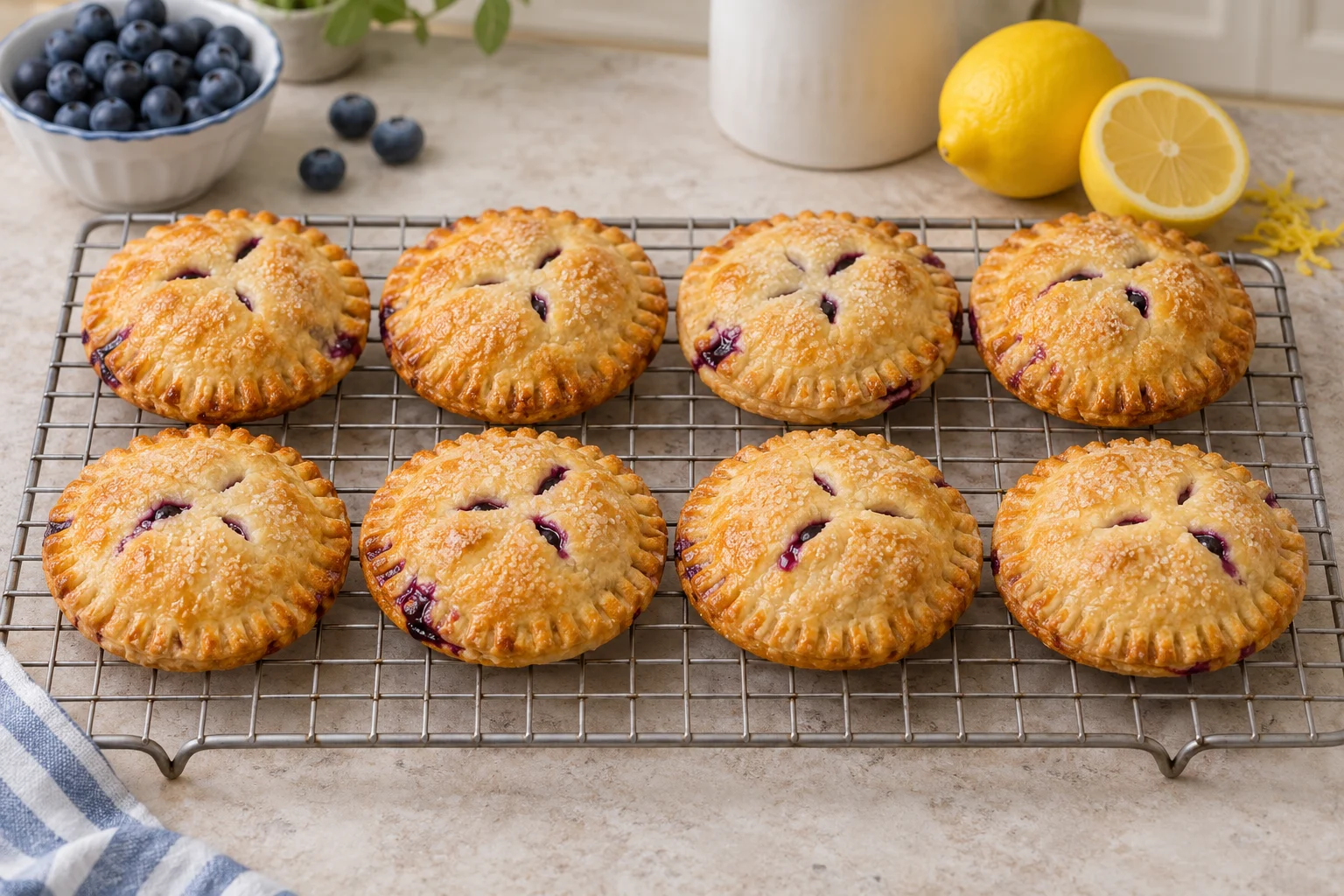
Precook only when the recipe says so
Some apple turnover recipes cook and cool the filling first, creating a thick mixture that's easier to portion. Other recipes bake raw small fruit pieces inside. Each approach has its own baking time and pastry temperature. A hot filling added to cold butter pastry can soften the layers, while a frozen filling can delay cooking. Follow one method coherently rather than combining unrelated instructions.

Thickener choice matters
Cornstarch, flour, tapioca and reduced fruit juice create different textures. Turnovers need a filling that holds a small mound and doesn't run to the edge. A thickened fruit pie mixture isn't necessarily suitable in a small pastry pocket unless the formula accounts for the shorter baking time. If the filling includes starch, ensure it cooks according to the recipe; avoid tasting raw starchy mixtures to judge the final texture.
Follow the filling directions for Cranberry Orange Hand Pies, since the fruit and its liquid need to be in balance.

Cool filling before assembly
Allow a precooked fruit or savoury filling to cool according to safe instructions before placing it on puff pastry. Warm filling melts butter and makes the dough sticky. Dairy or cooked-meat fillings also need prompt safe cooling and refrigeration rather than hours on the counter. Prepare them first and chill as directed, then take out only what you need for one tray.
Let the filling for Apricot Hand Pies reach the temperature called for in the recipe before it touches the pastry.

Prepare a light work surface
Dust the counter with just enough flour to prevent sticking. Excess flour can dry pastry and weaken seams. Roll the thawed dough gently to its specified thickness, avoiding a very thin centre. Keep an eye on temperature: soft greasy pastry should be briefly chilled, while brittle frozen pastry needs appropriate thawing before folding.
Cut pastry evenly
Use a sharp knife or pastry wheel to cut squares or rectangles in the sizes prescribed. Ragged compressed edges can restrict laminated rise. Turnovers can be triangles, rectangles or half-moons, but each shape needs enough border for filling and sealing. Avoid enormous pieces that are difficult to bake uniformly when the recipe was designed for small turnovers.

Measure the filling
Portion each turnover with a consistent scoop or spoon and leave a generous empty margin around it. Resist the urge to add another spoonful to every pastry. Overfilled turnovers are much more likely to leak and may remain wet in the centre. Extra filling can be served separately or used for another tested dessert rather than forced into the dough.
For Pear Ginger Hand Pies, put the first portion in place and fold the dough loosely over it before filling the rest.

Seal the edges before crimping
If the recipe calls for egg wash or water at the seam, use a thin layer only on the contact area. Fold without stretching and press gently around the filling, allowing major trapped air to escape. Then reinforce the join with fingers or a fork. A pretty fork pattern alone won't hold two flour-dusted slippery sheets together.
The same finger seal used for Apple Hand Pies helps hold a turnover together before you add decorative fork marks.

Vent the top
Make small clean slits in the top to let steam escape where the recipe directs. A completely sealed pocket of juicy filling may burst at the weakest edge. Don't cut so deep that you open the bottom. A few deliberate vents create a controlled release path and often help the top bake attractively.
In Cherry Turnovers, the opening in the top gives steam a shorter route than the sealed edge.
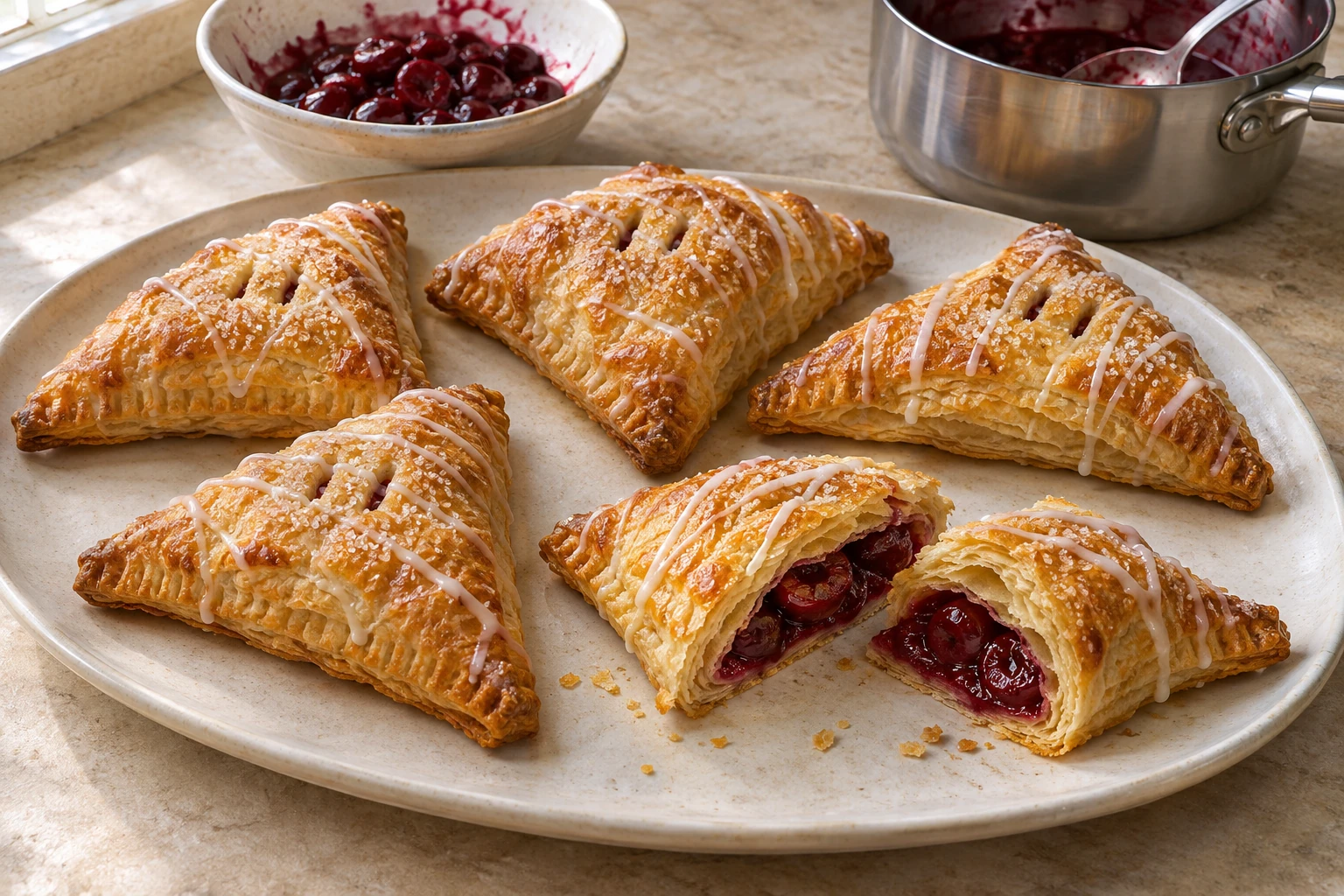
Keep cut edges free of egg wash
Egg wash provides sheen and golden colour, but it can glue laminated puff pastry layers together along exposed sides. Brush the top thinly and avoid dripping down the edges. For a shiny finish, use the type of wash the recipe specifies. More egg isn't always more colour: thick wash can pool and cook unevenly.
Chill shaped turnovers if directed
A brief refrigerator rest firms butter and can help pastry hold its shape in the initial oven heat. This can be particularly helpful in warm kitchens. But different puff pastry products have their own thawing and resting rules. Follow the recipe rather than placing warm assembled pastries directly into an inadequately preheated oven.

Why the oven must be ready
Puff pastry depends on rapid steam formation as butter and dough heat. A properly preheated oven supports lift before too much fat runs out. Opening the door frequently early in baking may reduce that lift. Use the recipe's temperature, rack position and baking sheet. A dark sheet may brown bottoms more quickly than a lighter one.
Bake until fully cooked
Turnovers should be deeply golden where the recipe specifies, with pastry layers cooked through rather than pale and doughy beneath the filling. The filling must also meet its safe cooking endpoint, particularly for meat, egg or dairy components. Don't use a beautiful glossy top as the only doneness test. Let hot fruit fillings cool enough before biting; syrupy centres can scald.
Why butter leaks onto the tray
A little fat leakage can occur, but large greasy puddles may indicate pastry that warmed excessively, a poorly preheated oven or compromised lamination. If the dough was heavily rolled or handled until butter smeared, some flakes may disappear. Check the product's intended handling and temperature next time rather than dusting finished turnovers with more sugar to hide a greasy bottom.

Why fruit leaks out
The most common causes are overfilling, runny filling, unclean borders and inadequate venting. Fruit expands and releases liquid as it bakes. If a turnover bursts at a corner, check that the fold reached the corner fully before crimping. A small leak is usually cosmetic, but sugary burnt syrup can spoil the underside and should be prevented where practical.
When Cherry Almond Hand Pies leave a trail of red juice, check where it starts. A leak at the seam calls for a different fix than a drip from a vent.
Savoury turnovers need a different balance
Mushroom, spinach and cheese fillings should be relatively dry and cooled. Cook mushrooms long enough to release excess moisture under the tested method, and drain spinach where directed. Meaty fillings need safe cooking and cold handling. A savoury turnover may require a different oven duration or internal temperature than a simple apple version; don't apply the fruit recipe blindly.
The filling in Spinach and Ricotta Puffs shows why managing water matters just as much in savoury pastry.
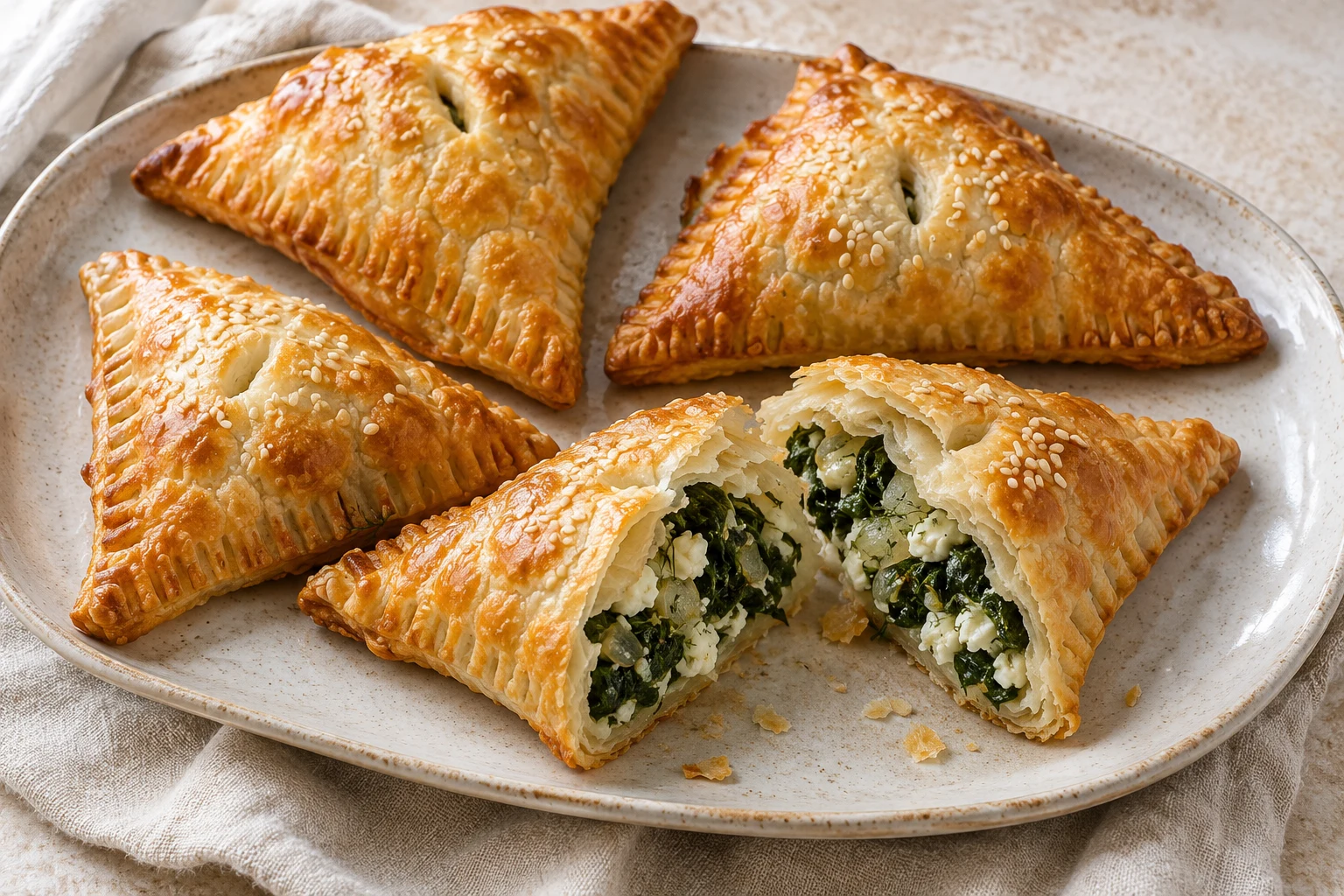
Make-ahead and freezing
Many puff pastry turnovers can be shaped and frozen unbaked when the specific recipe supports it. Freeze separately before packing together to protect shapes. Bake according to the frozen-pastry instructions, which may involve different timing. Avoid refreezing thawed commercial puff pastry against package directions, and keep perishable fillings under appropriate cold storage during preparation.
Serving and storing filled turnovers
Freshly baked turnovers are often crispest on the day they're made. Moist filling can migrate into pastry during storage, softening the base. Refrigerate pastries containing perishable dairy, egg or meat ingredients rather than leaving them out. Some fruit turnovers can be refreshed using a tested gentle oven reheating method; never place cream-filled pastries into an oven merely to recreate flakiness.
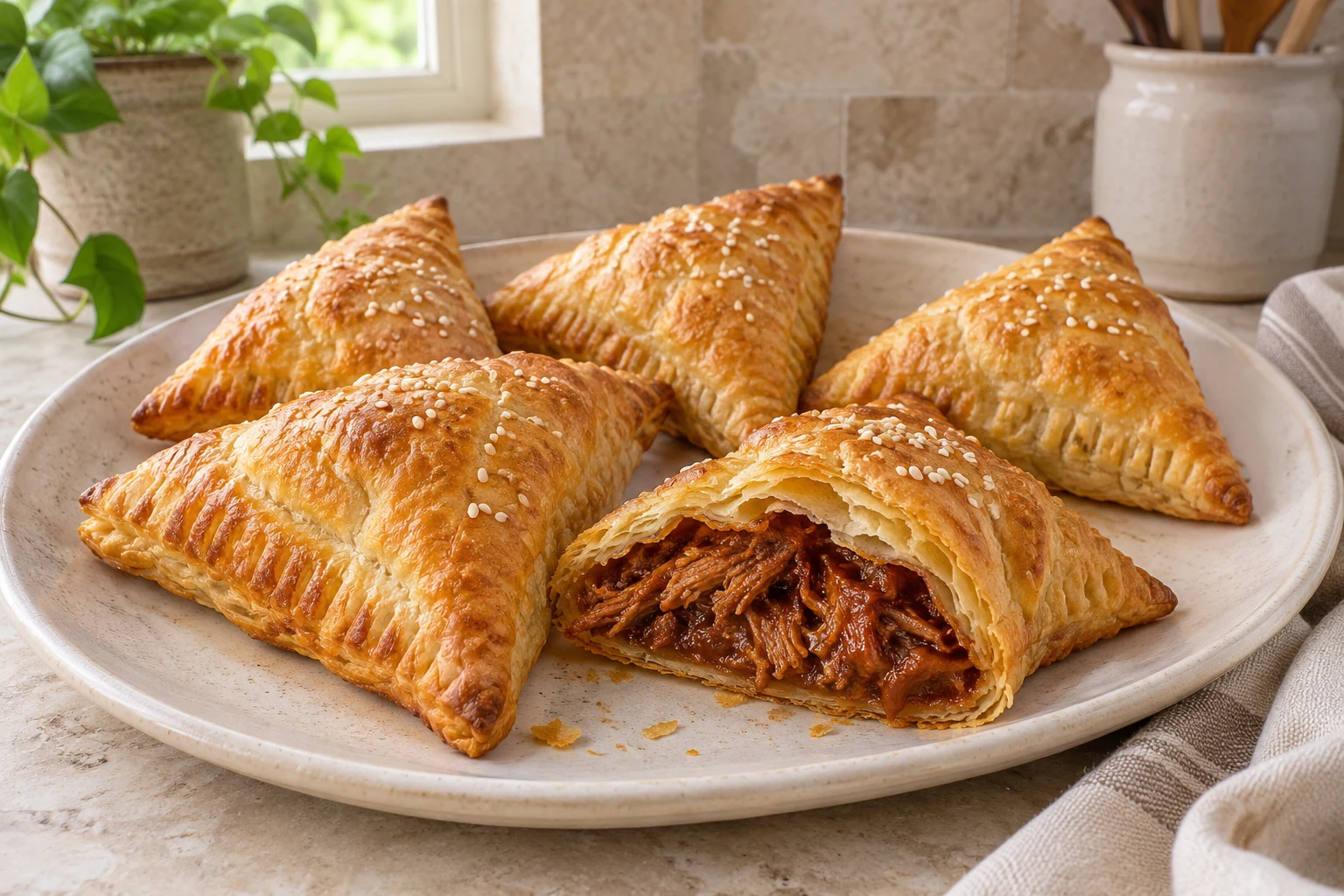
Handle leftovers from BBQ Pulled Pork Puffs as cooked meat, even when the outside of the pastry feels dry.
IN PICTURES
From the baking notebook
FROM THE RECIPE BOX


