
On this page
Weigh one scoop before filling the tray. Once you know what the target portion looks like, you can scoop the rest quickly and spot-check a few. For cutouts, the equivalent measurement is the thickness of the rolled sheet.
Start with the recipe's expected yield
If a dough recipe says it makes twenty-four cookies, that yield assumes a particular portion size. Changing from twenty-four to twelve dramatically increases the weight of each piece and alters the baking schedule. Read whether the author specifies tablespoons, a scoop diameter or grams. If the portion isn't stated, weigh the full dough batch and divide by the expected number as a useful estimate.
Start with the yield for Classic Chocolate Chip Cookies to calculate the target weight of one portion.

Why scoop numbers can be confusing
Disher or cookie scoop sizes may be labelled with numbers tied to how many level scoops fill a particular volume, but commercial and consumer numbering isn't always intuitive. A scoop marked with a larger number may actually be smaller. Product capacities also differ. Check the manufacturer's millilitre or tablespoon capacity and weigh a few portions of the actual dough.
Weight beats appearance
A scoop that looks heaped in one pass and flat in another may create noticeably different weights. A digital kitchen scale lets you verify portions in grams, especially for bakery-style cookies. Weigh five scoops, calculate the approximate average and adjust technique. You don't necessarily need to weigh every tiny cookie once your scoop technique is consistent.

Choose a scoop for the dough texture
A soft chocolate chip dough often works with a spring-loaded scoop. Stiff chilled shortbread may need to be portioned before resting, while dough with large nuts can jam a small mechanism. Use equipment suited to the mix-ins. A metal spoon and scale can be just as accurate as a specialized scoop when dough texture makes mechanical portioning difficult.
A scoop helps distribute the oats and chips in Oatmeal Chocolate Chip Cookies.

Level the scoop consistently
For a recipe requiring level scoops, scrape excess dough against the bowl rim or a suitable spatula to keep portions uniform. If the recipe wants generous rounded portions, be consistent rather than alternating flat and high mounds. Avoid compacting dough excessively simply to fit more in the scoop, because density and final spread may change.
How to portion a dough log
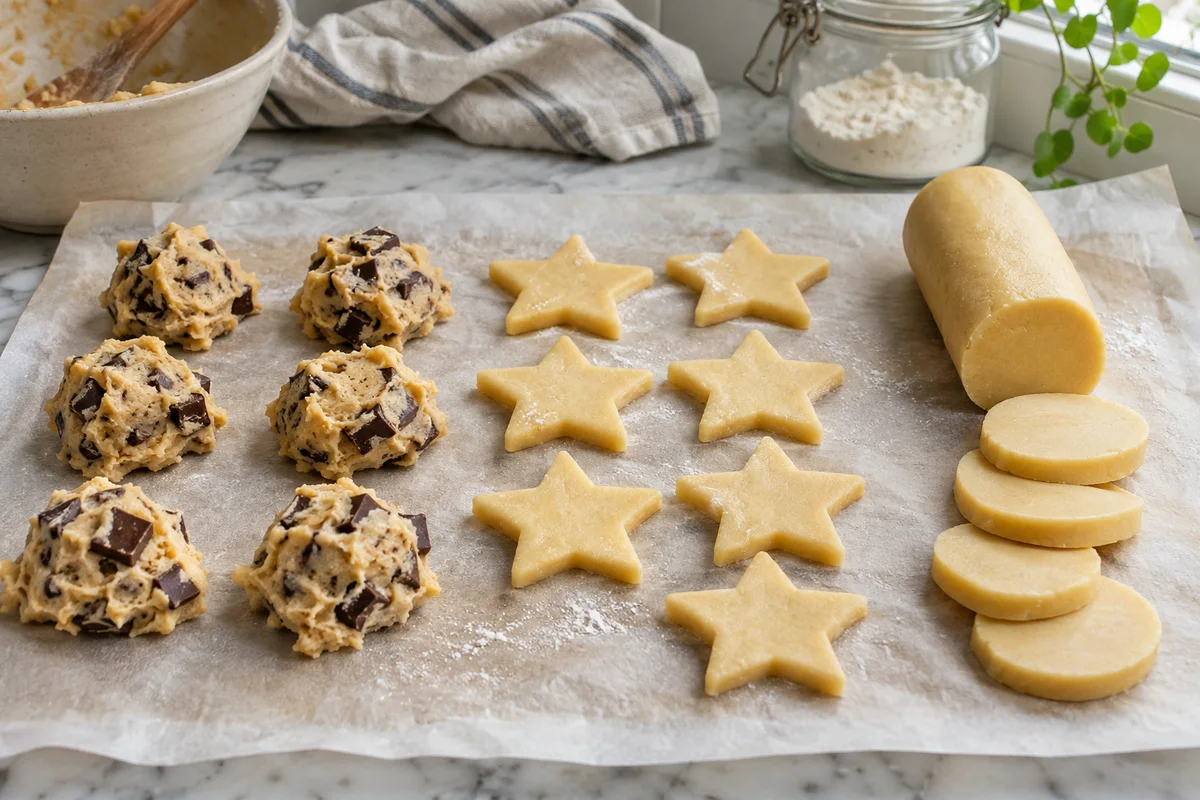
Slice-and-bake cookies need an even-diameter log and consistent slice thickness. Use a ruler to mark positions before cutting. A log flattened on one side may produce oval shapes, so rotate it during cutting and chill as directed. Large chocolate chunks can obstruct slicing and create irregular edges, which is why many log recipes use fine inclusions.
Use the recipe’s suggested thickness for Vegan Shortbread Cookies when dividing the dough.
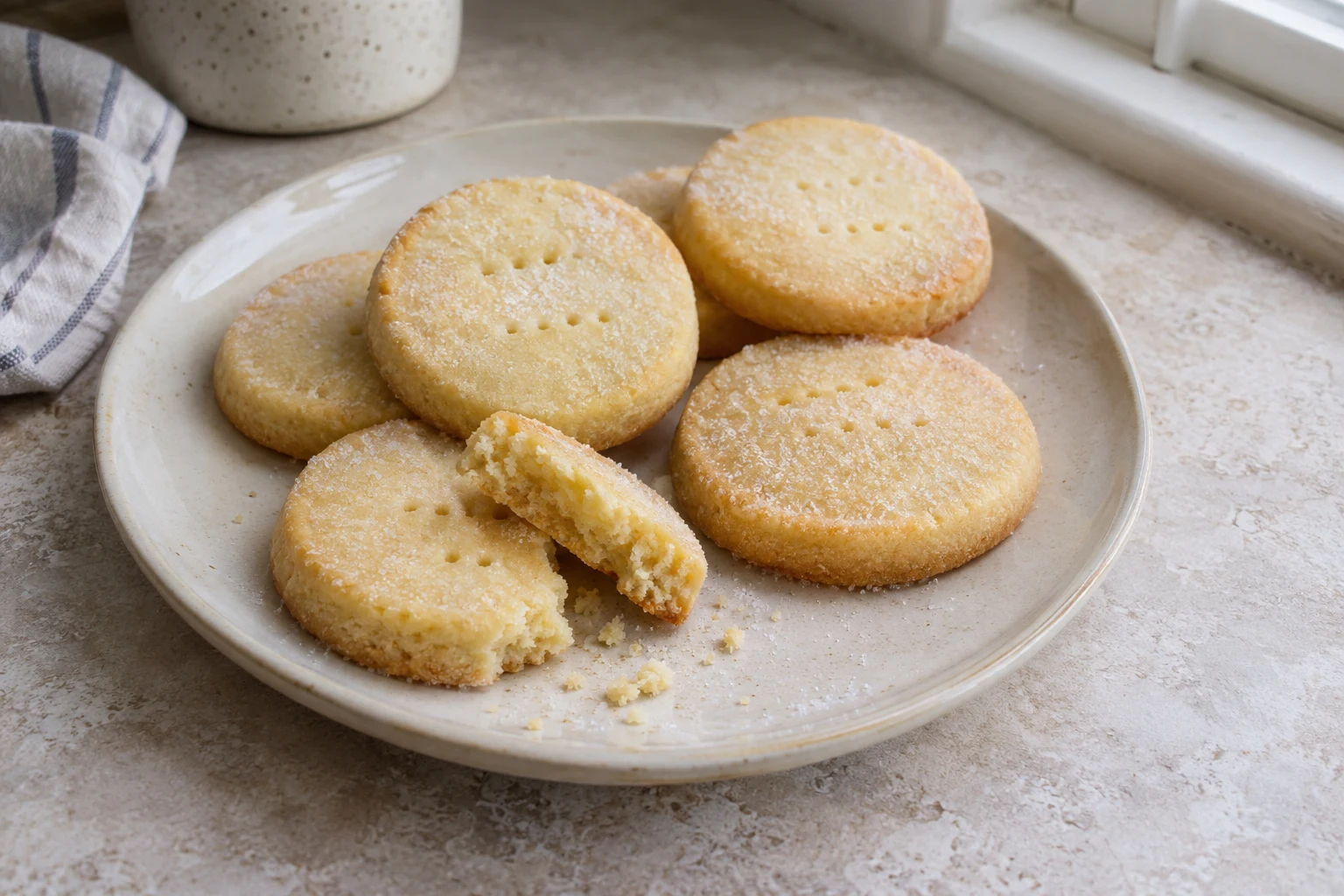
Rolled cookie thickness matters too
Even cutter shapes can bake differently when the dough sheet is thick at one end and thin at the other. Use rolling guides or measure with a ruler, then cut similar-sized shapes for each tray. Delicate small star tips may brown before the large centers. Group shapes by thickness and size rather than assuming matching recipe dough means identical baking time.
Thickness guides help cutouts such as Gingerbread Cookies bake evenly.

Shaping drop cookies
Some doughs benefit from gently rolling scooped pieces into round balls; others are best released from the scoop with little extra handling. A tall mound may spread differently from a flattened patty even at equal weight. Follow the author’s shaping cue and avoid warming butter dough repeatedly between your hands. Consistent shape supports consistent spread.
A dough ball isn't the finished diameter
A stiff chilled ball may bake thick, while a warm butter-and-sugar mixture can flatten widely. Dough weight, fat, flour, sugar and oven heat determine spread. Don't promise that a scoop of a particular diameter will always produce a cookie twice that width. Test the formula and record the final size after cooling.
Use a scale for bakery-style cookies
Large cookies need especially consistent weights because the centers take longer to bake. If one bakery cookie is thirty grams heavier than the others, its doneness may differ significantly. Weigh every large portion when precision matters. A scale also reveals whether the dough yield matches what the original recipe intended.
Weigh portions of Chocolate Chunk Cookies to catch scoops made extra heavy by a large chocolate piece.

Spacing on the tray
Uniform portions still need sufficient room to spread without merging. Follow the recipe's spacing and consider using fewer large cookies per sheet. A very crowded tray can affect airflow and edge set. If two cookies touch, their centers may remain soft where they meet, and separating them can break otherwise well-shaped rounds.
Why parchment helps consistency
Oven-rated parchment provides a familiar contact surface and helps release baked cookies. Use the same pan and lining across batches where possible. Switching between parchment, bare metal and silicone mats may change spread. Keeping equipment constant is part of making the portions behave alike.
Cool the baking sheet
Dough placed on a still-hot tray begins warming before it enters the oven. This changes spread and can create a larger second batch even with identical scoop weights. Rotate between clean cool sheets or rest the used tray on a safe rack. Avoid immersing very hot metal in cold water to speed cooling because it may warp.
Chilled dough portions
Scooping before chilling can be convenient for butter-rich doughs that later become firm. Arrange pieces so they don't stick together and cover for safe refrigerator storage. Bake from the temperature stated by the recipe. Mixing freshly scooped warm portions with chilled ones on the same tray can produce uneven spread despite equal weights.
Frozen portions for later baking
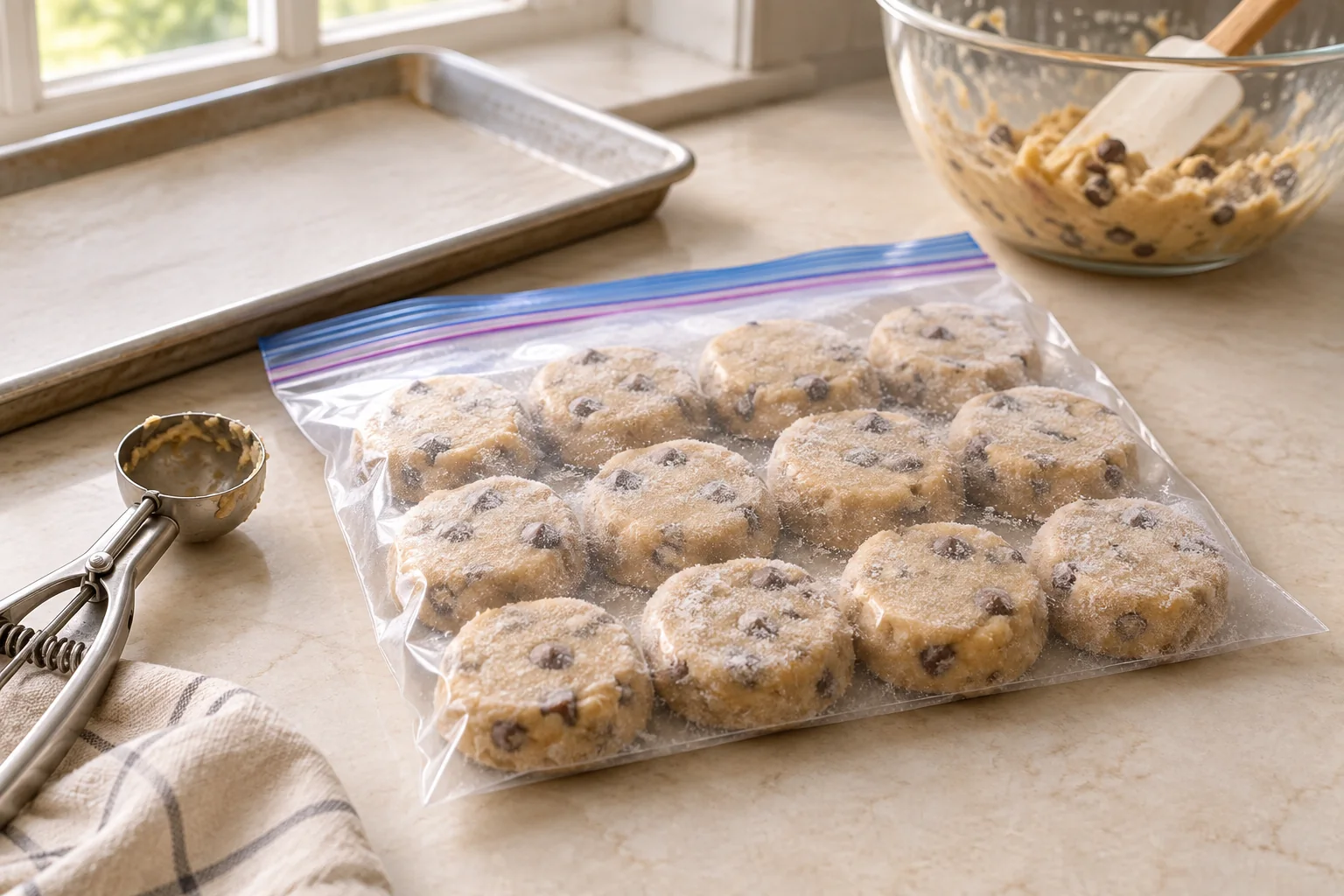
Many tested drop-cookie formulas can be frozen as individual pieces. Weigh and shape before freezing, then package in labelled food-safe containers. Baking from frozen may need a different time or method. Never assume a frozen large cookie will be safely baked just because its edges brown as fast as a fresh small one.
How to make finished cookies look rounder
Some bakers gently adjust warm cookie edges with an appropriate round cutter or utensil immediately after baking. This cosmetic step can improve symmetry when a cookie has spread unevenly. Be mindful of hot trays and soft centers, and use only a method suitable for the recipe. It doesn't replace correctly portioned dough or make an underbaked cookie safe.
Decoration and portion size
Matching weights help when pairing sandwich cookies or decorating sets for gifts. For filled cookie sandwiches, pair pieces of similar diameter and use a measured amount of frosting or jam. Wet and dairy-based fillings can alter storage requirements. Do not leave perishable sandwich cookies on a counter merely because the unfilled base is shelf-stable.
A consistent cutter keeps both halves of Christmas Sugar Cookie Sandwich Cookies aligned.

A simple production line
Place the mixing bowl on one side, scale and scoop in the middle, and a lined cool tray at the other end. Portion several dough pieces, verify their weights and repeat. This reduces handling time and inconsistent sizes. Keep leftover perishable dough cold between trays. With a large batch, label trays by portion weight so helpers don't mix different cookie styles.
Diagnosing uneven batches
If size differs after baking, first confirm raw dough weight and shape. Then inspect pan temperature, spacing, rack position and whether each tray began equally chilled. Differences between sheets may masquerade as portioning errors. Change one variable at a time so you can identify the true cause.
A quick math example
Suppose a finished dough batch weighs 960 g and the recipe makes 24 cookies. Dividing 960 by 24 gives a target of 40 g per portion, assuming no reserved toppings or losses. If you choose 60 g portions instead, you'll make roughly 16 cookies and need a properly tested large-cookie bake schedule. Basic arithmetic prevents surprise yield changes.
IN PICTURES
From the baking notebook
FROM THE RECIPE BOX


