
On this page
Flaky pastry begins with a physical arrangement: small sheets or pockets of butter distributed within dough. Heat in the oven melts fat and turns moisture into steam, helping separate the dough into delicate layers. If butter melts into the flour before the pastry goes into the oven, that structure is harder to achieve. The aim is not to keep butter rock-hard at every moment, however. For rolling and folding, it needs to stay cool yet flexible enough to flatten rather than shatter.
Cold and pliable are different from frozen
Butter straight from the freezer may crack into hard shards that puncture dough instead of stretching into layers. Butter that is warm and greasy smears and loses separation. The ideal state depends on the pastry: rough puff uses cold pieces that flatten as you roll, while classic lamination often requires a butter block and dough of similar workable firmness. Follow the method's texture cues rather than relying on a single refrigerator timer.
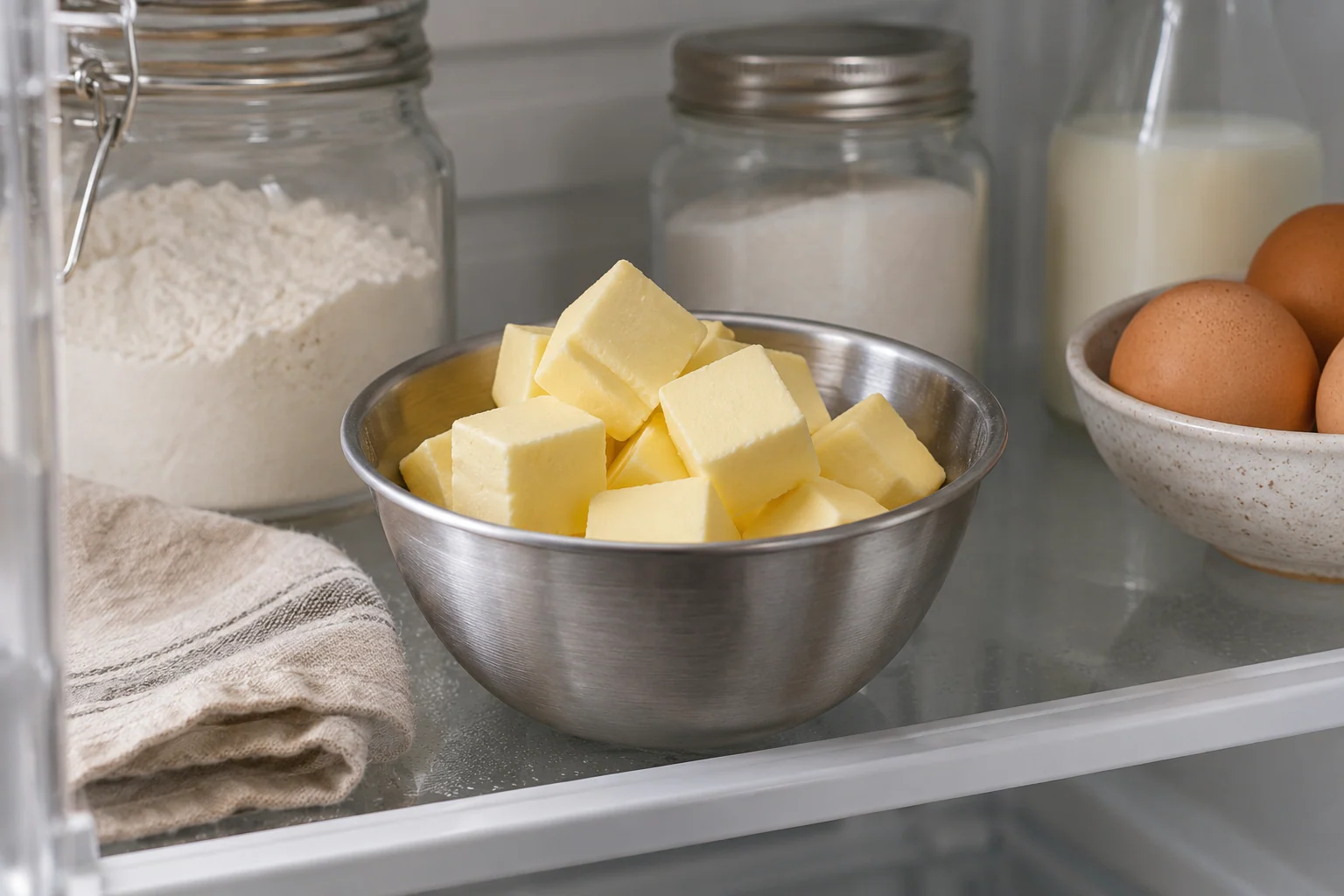
Understand the butter used
Ordinary butter contains fat, water and milk solids. The moisture contributes steam as pastry bakes, while fat keeps layers separate and adds flavour. European-style butter may have a higher fat percentage than some conventional butter, but the exact product and recipe matter. A different butter can affect firmness and rolling even when weight stays the same. Use unsalted butter when the formula specifies it so salt remains predictable.
For a different arrangement of butter and dough, look at 81-Layer Reverse Puff Pastry with Cultured Butter and follow its own sequence of rests.
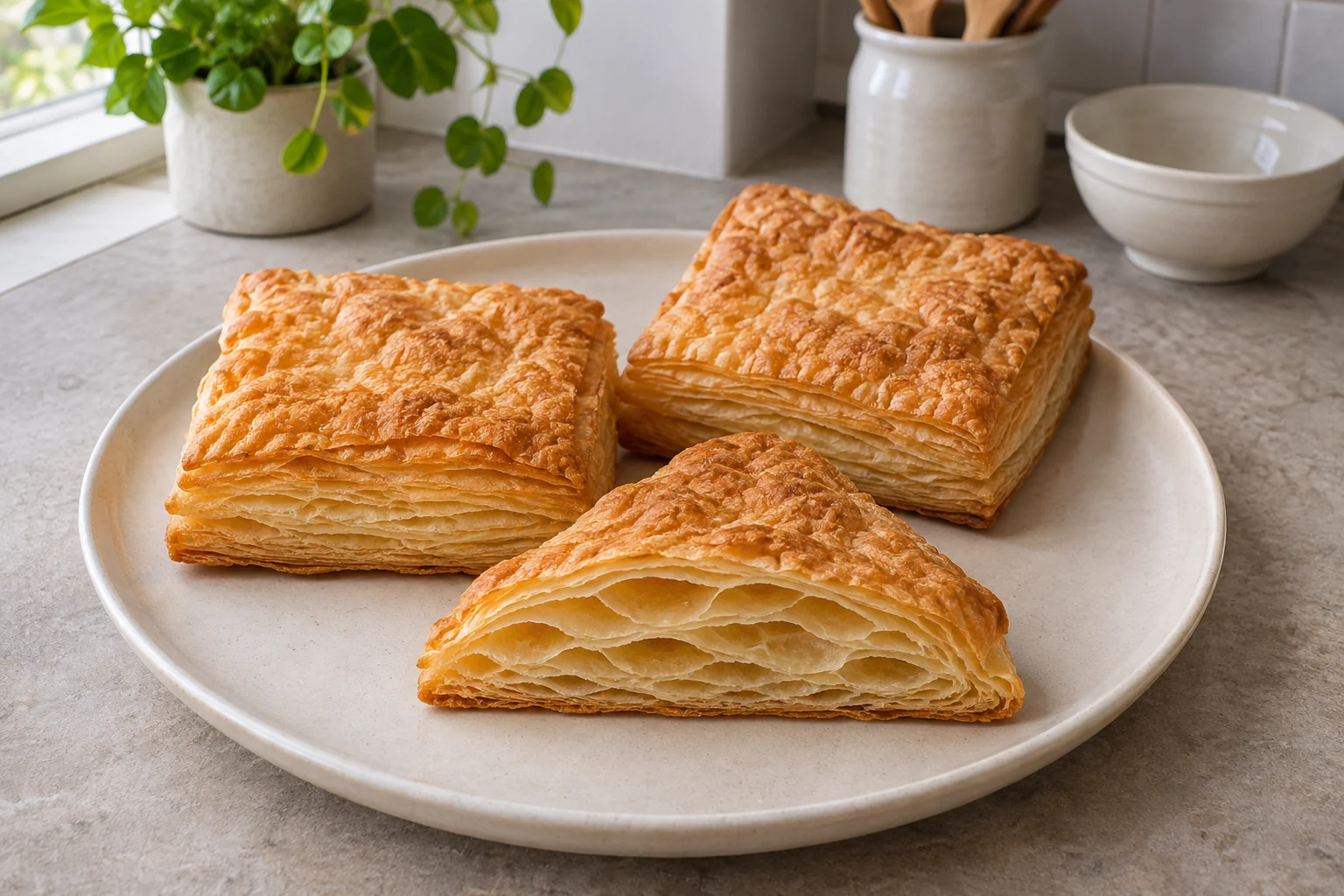
Start with a cool workspace
Clear the counter before beginning, prepare your rolling pin, flour, bench scraper and trays, and leave space in the refrigerator for the dough. A hot oven or sunny window can warm butter quickly. If your kitchen is very warm, work on smaller dough portions and chill tools when practical. Avoid repeated handling simply to rearrange equipment because every delay can soften pastry.

Cut butter to the required shape
For a flaky pie dough, butter may begin as small cubes, then become a mixture of flakes and pea-sized pieces. Rough puff often aims for larger flat butter shards. Classic puff pastry uses a prepared butter layer. These aren't interchangeable steps: fine crumbs won't make the same lamination as a distinct butter sheet. Read the recipe before cutting, and keep spare butter refrigerated until needed.
Compare the butter preparation in Copycat Starbucks Blueberry Scones with the flat block used for croissants.

Use quick controlled mixing
When rubbing butter into flour by hand, work briskly so finger warmth doesn't melt it. A pastry cutter or food processor can limit handling, though prolonged processing may break butter too finely. Stop at the intended texture, not when every piece disappears. A mixture that looks slightly uneven may be exactly what you need for a flaky dough.
In Basic Scones, stop mixing while the butter is still in small distinct pieces. That differs from beating softened butter for cake.
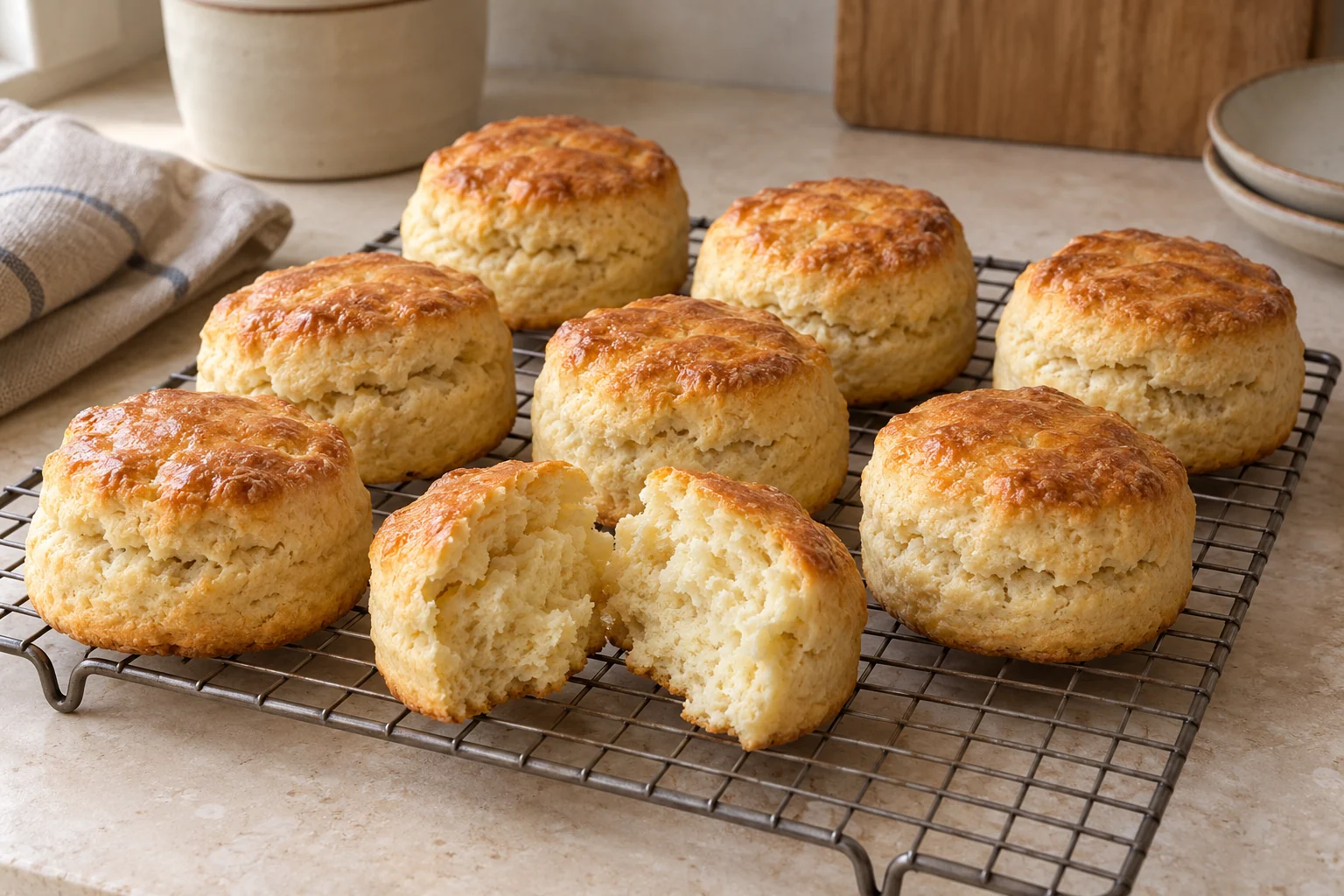
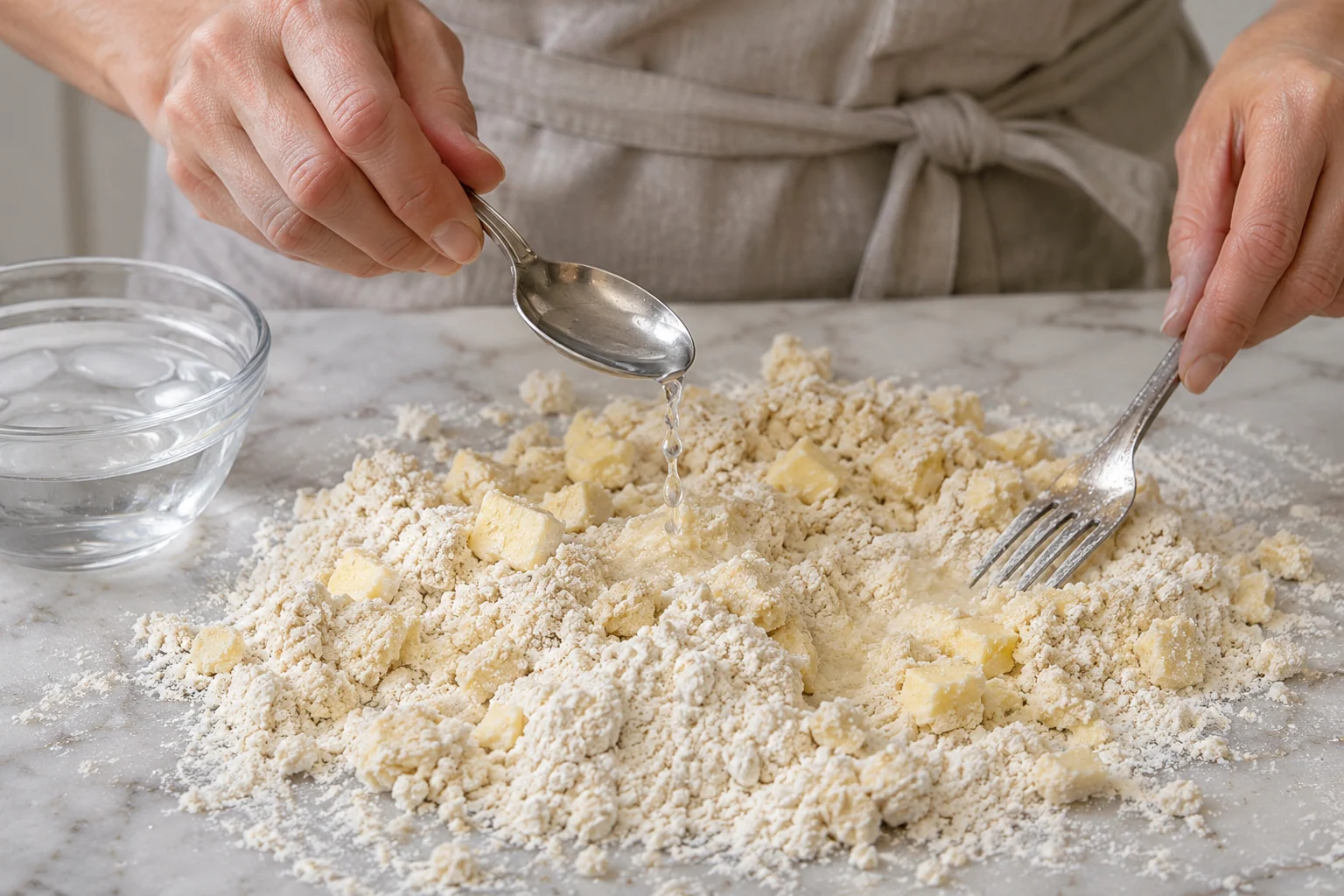
Add liquid without overworking
Cold water may help preserve butter firmness during mixing. Add it in the recipe's measured stages and toss rather than kneading like bread. Excess water and vigorous mixing can develop gluten, making pastry tough, while too little water creates a crumbly dough that tears. A small squeezed handful should generally hold together at the recipe's endpoint.
Rest dough before rolling
Chilling gives butter time to firm and allows flour to hydrate more evenly. Resting also relaxes gluten that formed during mixing. Shape dough into a manageable flat disk or rectangle before chilling so it doesn't take excessive pressure to roll later. The rest specified by a tested pastry recipe is part of building workable dough, not a decorative pause.
Resting dough for Strawberry Rhubarb Galette allows it to relax before you roll it wide enough for the fruit.

How to tell when the dough needs a rest
A chilled dough that cracks sharply under the first rolling stroke may be too cold and brittle. Let it become slightly more pliable according to the recipe. If the surface sticks, gleams or leaves greasy streaks, it may be too warm; refrigerate briefly. Don't try to correct a melting-butter problem by repeatedly adding large amounts of bench flour.
The dough for Cherry Almond Galette should bend over the filling without breaking into flakes while still raw.
How to use a rolling pin
Roll with even pressure from the centre outward, rotating or turning pastry as directed. Strong strokes over butter lumps can force fat through the dough, creating holes. Gentle tapping can help make very cold laminated dough pliable before longer rolls. Keep the thickness uniform and brush off excessive surface flour before folding.
Chill between folds
Rough puff and classic puff methods use repeated folds to align butter and dough. Friction from rolling warms the mixture; pauses allow the butter to firm and the gluten to relax. If the sheet fights back and shrinks while rolling, don't force it thinner. Wrap and chill for the time prescribed. A brief rest can prevent both torn layers and fat smearing.

Watch for exposed butter
A little visible butter in rough puff is often normal, but large torn areas with soft exposed butter may leak during baking. Dust lightly with flour if the method allows, patch small openings and chill. If large puddles of butter are forming on the counter, the dough has become too warm. Continuing to roll will usually make the damage worse.
When rolling Sourdough Croissants, a new patch of exposed butter is a good reason to pause before the next pass.
Keep dimensions realistic
Trying to roll a thick cold dough into an enormous perfect rectangle in one pass can force cracks and uneven layers. Follow the recipe's length, width and fold count. A slightly rustic edge is usually acceptable for rough puff, while classic puff requires tighter control. Trim only where necessary so you don't waste a large amount of well-laminated dough.
The oven is the next temperature stage
Cold dough meets a properly preheated oven, where butter moisture rapidly produces steam and layers separate. If the oven is too cool, butter may leak before the dough structure sets. If the oven is too hot for the pastry size, the surface may brown before the centre cooks. Bake at the intended temperature and use the full doneness cues, not colour alone.

Why butter leaks from puff pastry
Some fat loss is possible, but large greasy puddles can suggest warm dough, broken layers, insufficient resting or an inappropriate oven schedule. A low-fat spread substituted for butter changes water and fat balance and may leak differently. Review your chosen butter and how long the pastry sat on the counter rather than assuming a higher oven temperature alone will fix it.
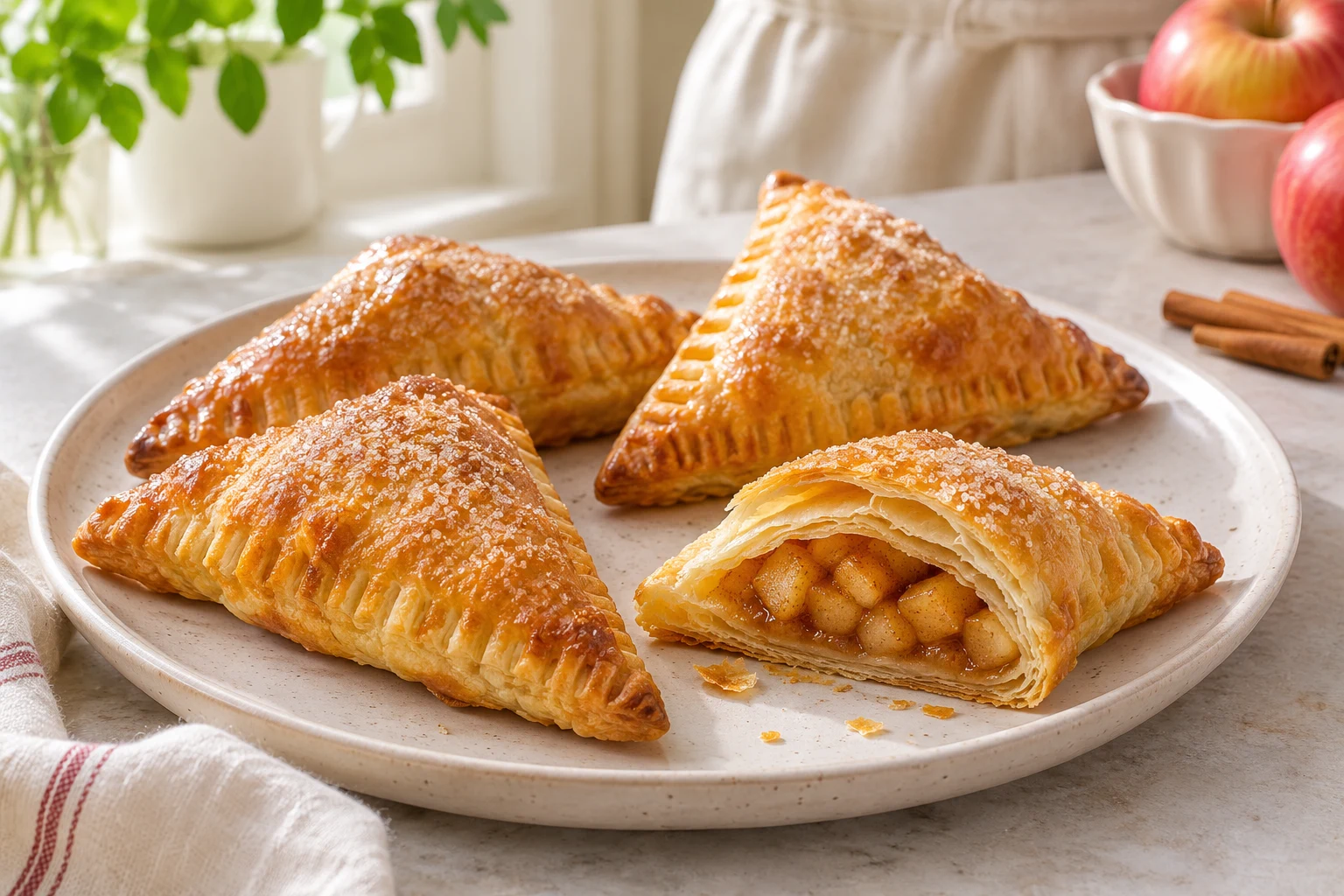
A greasy patch beneath Apple Turnovers is a cue to consider the pastry temperature and oven preheat as well as the seal.
Why pastry turns dense
If butter becomes fully blended into the flour, there may be fewer discrete layers to expand. Overworking the dough can also increase gluten toughness. Too much water, excessive rolling and underbaking may contribute. A beautiful browned top can hide a doughy interior, so inspect a cooled sample and record the actual oven conditions before changing the next batch.

Warm-kitchen strategy
Prepare filling ahead and chill it as directed. Work with one dough piece at a time, keeping the others covered in the refrigerator. Set a short pause between rolling stages rather than trying to finish everything continuously. For a large batch, refrigerate shaped pastries while the oven preheats. This is more reliable than dusting flour onto a greasy counter every minute.
When shaping a tray of Apple Cheddar Hand Pies in a warm kitchen, keep the unfilled portions cool while you work.
Butter for croissant dough
Croissants require a laminated yeast dough with an appropriately pliable butter sheet. The butter and dough should deform together during rolling; a rock-hard butter block cracks, while very soft butter leaks. Fermentation produces gas in addition to steam during baking, so proofing temperature must not melt the layers. Use a tested croissant formula rather than adapting rough puff temperature advice directly.
The separate butter layer in Classic Croissants needs to bend with the dough. A brittle slab can break into islands under the pin.

Butter for pie crust
A flaky pie crust may use a few larger flattened butter pieces but requires far fewer folds than puff pastry. Chilling the mixed dough and keeping it cool while rolling helps retain those pieces. If the dough cracks when very cold, let it soften just enough to roll. Butter handling is a balance between workable dough and preserved fat pockets, not an attempt to avoid all warmth indefinitely.
Look at the crust of Classic Apple Pie when choosing how to mix. Small pieces of butter suit a pie shell differently from one continuous butter sheet.

IN PICTURES
From the baking notebook
FROM THE RECIPE BOX


