On this page
A rustic baguette, ciabatta or focaccia can have a light interior with irregular holes, while a sandwich loaf is often better with a fine, even crumb. If you're trying to make a crusty artisan bread more open, high hydration alone won't do it. You need enough gas from fermentation, enough strength to hold that gas, gentle handling during shaping and baking conditions that allow the loaf to expand before the crust hardens.
What does open crumb mean outside sourdough?
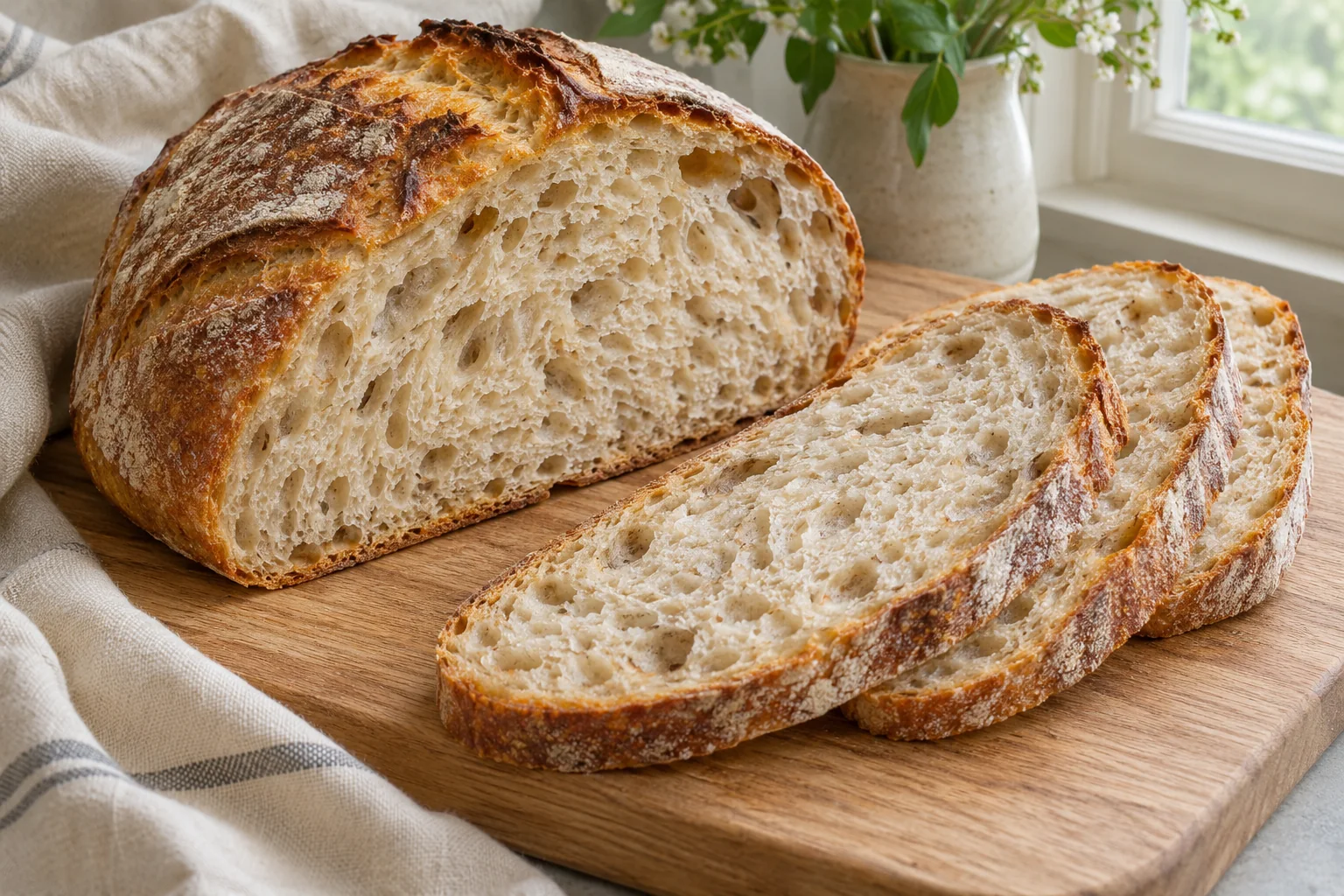
Open crumb refers to visible, appropriately distributed air spaces in a loaf's interior. It isn't exclusive to naturally leavened bread. Commercial-yeast baguettes, ciabatta and certain focaccias can have airy, irregular structures too. The exact target should match the bread style: huge cavities in sandwich bread aren't usually desirable.
Choose a recipe designed for the texture
A lean artisan formula typically contains flour, water, yeast and salt, sometimes with a preferment. A soft milk bread with butter, sugar and egg is intended for a different texture. Start with a well-tested baguette, ciabatta or focaccia recipe before trying to turn a fine-crumb sandwich loaf into a highly holey one.
Start with Ciabatta Bread if you want to learn how a wet dough behaves. Follow the formula as written and keep a photo of the first loaf’s cut surface before you experiment with hydration.

Understand hydration
Hydration is water weight divided by flour weight, expressed as a percentage. Higher hydration can make dough more extensible and support a relatively open crumb in an appropriate formula. But very wet dough can be difficult to shape and may collapse if gluten strength and fermentation aren't balanced.
Why more water isn't the whole answer
An under-fermented 80%-hydration dough may bake heavy or flat, while a well-fermented dough at a lower hydration can be light and pleasantly open. The optimal water amount depends on flour absorption, desired style and handling method. Increase hydration only after your basic process is repeatable.
Flour strength contributes support
Strong wheat flour can develop a gluten network able to stretch around gas. All-purpose flour can also work in some artisan formulas. Whole grains absorb water and change structure; high rye content won't behave like white bread flour. Choose flour suited to the recipe instead of changing several flour types at once.
Develop gluten without overworking
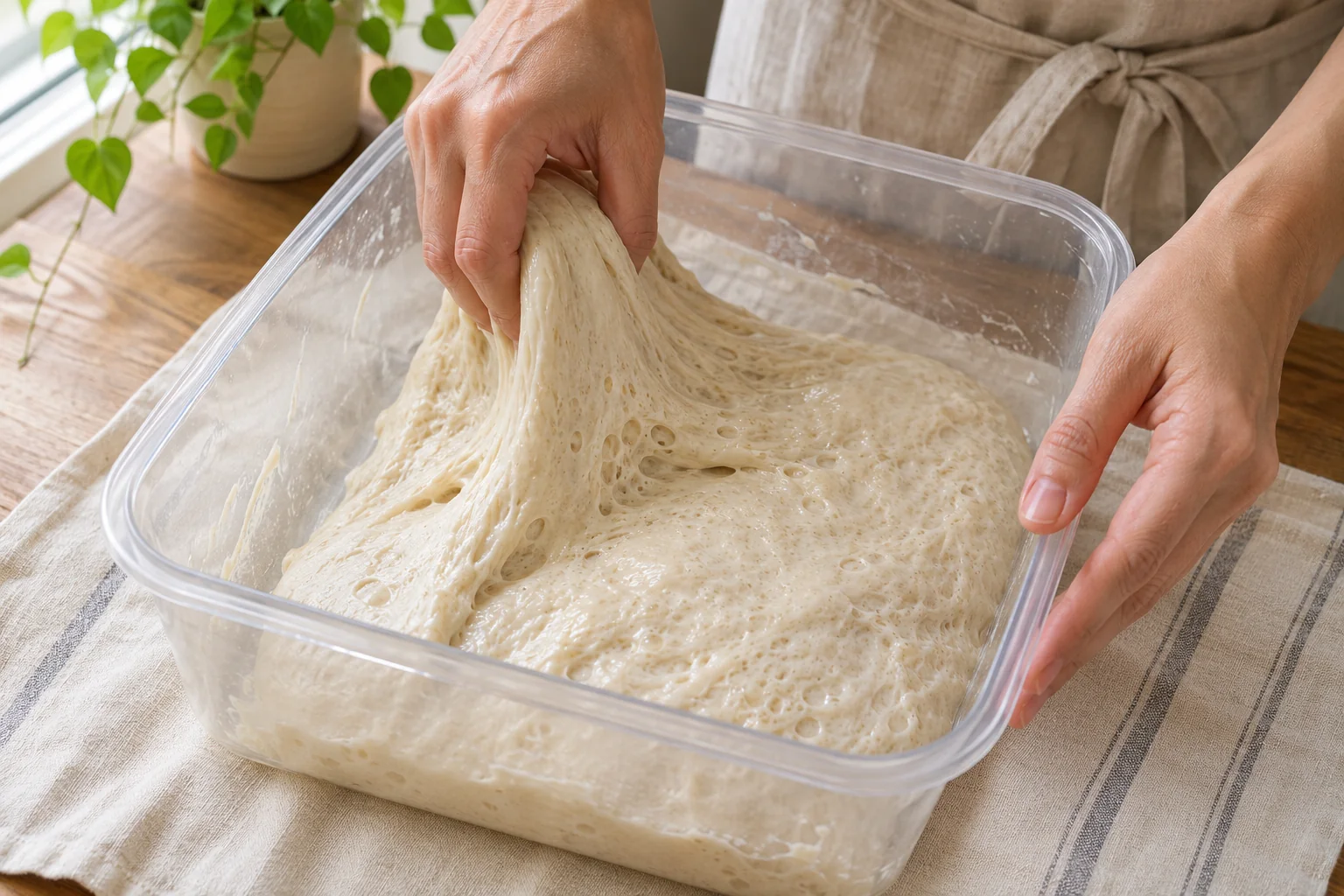
Mixing and folding organize flour proteins into a network that holds expanding gas. Some wet artisan doughs benefit from gentle folds during bulk rather than intensive kneading. If the dough stays shapeless, it may need more strength; if it is already cohesive and aerated, excessive late folding can degas it unnecessarily.
During a fold, lift only as far as the dough will stretch comfortably. If it resists or starts to tear, lower it and give the dough the next rest called for in the recipe. Compare how far it stretches on each round.
Fermentation is the main source of gas
Yeast produces carbon dioxide as it ferments available sugars. The dough needs enough time for that gas to accumulate and the structure to mature. Stopping bulk early often yields dense patches, while excessive fermentation may weaken dough and reduce its ability to spring in the oven.
A preferment can help flavour and handling
Poolish, biga and sponge methods ferment some flour in advance. They can contribute flavour and affect extensibility or dough strength. The preferment isn't automatically required for an open crumb, and the exact type should be chosen by the bread formula rather than added on top of its original ingredients.
Focaccia's open structure
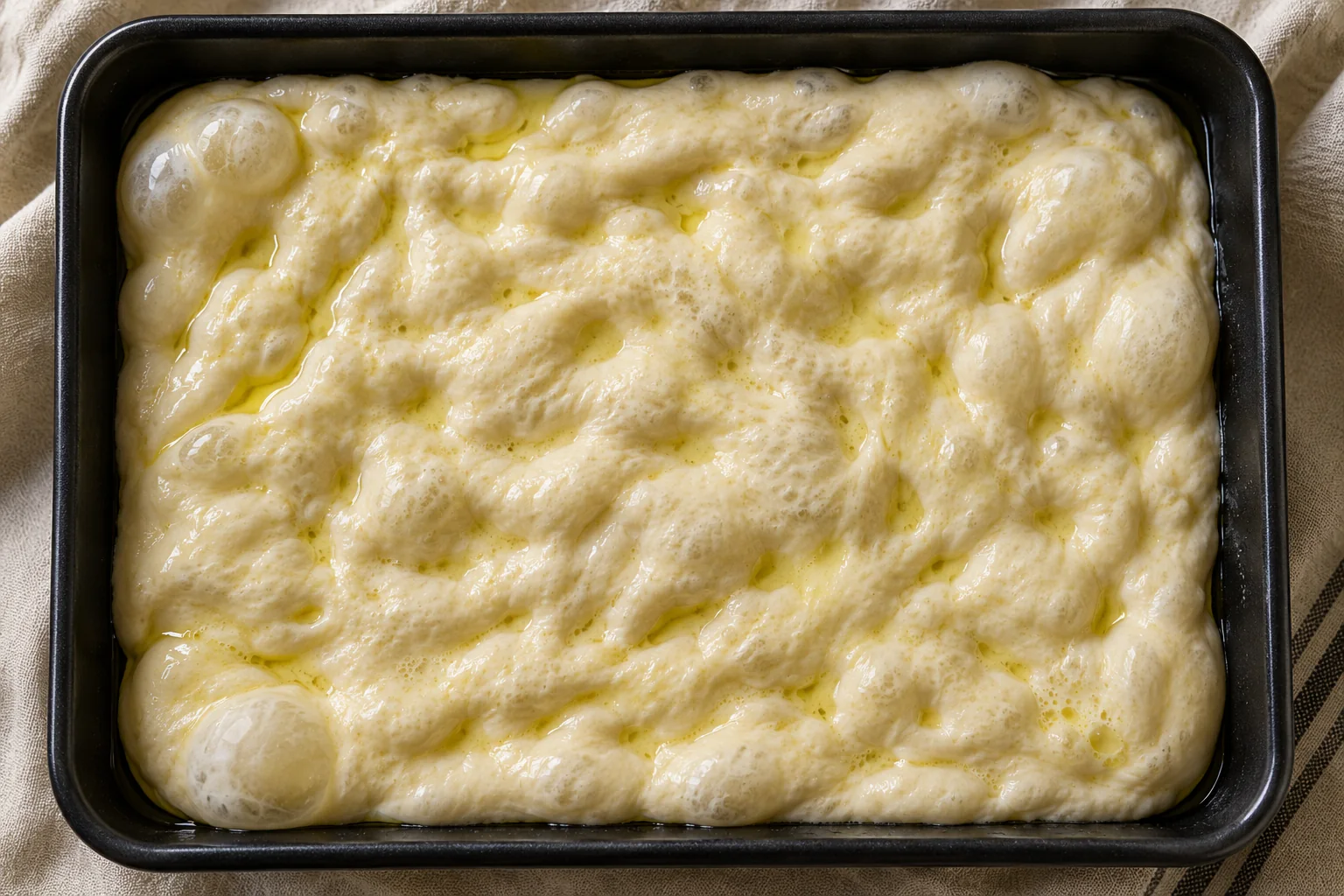
Focaccia is often relatively wet and spread across an oiled tray rather than shaped into a tight loaf. It can develop a light, irregular interior with a crisp bottom and an oily surface. Dimpling is part of some recipes, but aggressive pressing at the wrong stage may release too much gas.
Try Rosemary Focaccia for a pan bread that needs less final shaping. Look at the surface before and after dimpling. Some bubbles will deflate, while others should remain in the dough.
Ciabatta's open structure
Ciabatta commonly uses a wet, soft dough handled with care so internal bubbles remain distributed. Its flatter shape is not evidence of failure when the recipe intends it. Heavy flour additions during shaping can make the dough much stiffer and change the distinctive crumb.
Baguettes need controlled shaping
A baguette's long shape creates a relatively thin cross-section that can expand dramatically in the oven. Gentle but effective shaping and proper final proof matter. Rolling an under-fermented dough too tightly can create a dense interior even if the outside has attractive scores.
The Baguette gives you a more exacting shaping project. Work from the middle toward the ends and keep the pressure even so you avoid squeezing the centre flat.

Don't punch out every bubble
Traditional instructions sometimes describe punching dough down, but for an open artisan crumb, handling is often deliberately gentler. Controlled degassing can redistribute oversized pockets, yet flattening all the gas out just before proofing usually works against the intended texture.
Surface tension helps oven spring
A shaped loaf needs enough outer structure to hold its form and direct expansion upward. Too little tension causes spreading; too much force can tear the surface or remove gas. Follow shaping instructions suited to the bread type rather than imposing a sandwich-loaf roll on a high-hydration ciabatta.
Final proof should be sufficient
Under-proofed dough can spring erratically, rip at the sides and show large voids surrounded by tight crumb. Over-proofed dough may lack strength and flatten in the oven. Evaluate the recipe's rise, texture and poke-test cues rather than using time alone.
Heat and steam matter
Proper initial heat allows gas expansion before the crust becomes rigid. In a covered Dutch oven, steam released from dough keeps the surface flexible. Baguettes and tray breads often need another appropriate baking arrangement. Always use safe, recipe-approved steam methods and avoid adding water to unsuitable hot glass or oven surfaces.
Why one giant hole isn't success
A single cavity above a dense base can reflect uneven fermentation or handling. Look across the whole slice for evenly distributed pores and check the crumb in another part of the loaf before deciding what to adjust.
Cut across the middle, then check a second slice from farther along the loaf. Distributed pores can be easier to judge across two cuts. One large tunnel beside a dense area is a clue to review proofing and shaping.
Cooling makes the crumb easier to assess
A hot loaf's crumb is still soft and can become compressed or gummy when sliced too soon. Let bread cool according to the recipe, especially when the interior is very moist. Only then compare the slice with your target texture.
Why your loaf is still dense
Check yeast freshness, proofing temperature, fermentation progress, flour type, dough strength and baking conditions. If the dough never expanded much during bulk, more steam at baking won't fix the root cause. If it expanded beautifully but spread flat, look at strength and over-proofing.
A simple improvement experiment
Bake the same lean artisan recipe more than once, recording water percentage, dough temperature, bulk rise, folds, final proof and bake. Improve consistent fermentation first, then refine handling and hydration. Changing every variable at once can produce one lucky loaf without teaching you how to repeat it.
Frequently asked questions
Does open crumb require sourdough? No. Does more water guarantee larger holes? No. Can bread flour help? Often in appropriate formulas. Should you punch dough down? Follow the recipe's degassing method. Why is only the top holey? Uneven fermentation or handling may be responsible.
Make a loaf that eats well
Aim for a light, cohesive bread whose holes suit its purpose. With appropriate gluten development, complete fermentation and gentle shaping, an open crumb becomes the result of a balanced process rather than a contest for the largest cavity.
For a naturally leavened comparison, try the Sourdough Country Loaf. Record when you finished bulk fermentation and what the dough looked like. Keep those notes with your crumb photo so you can adjust one variable on the next bake.

IN PICTURES
From the baking notebook
FROM THE RECIPE BOX


