On this page
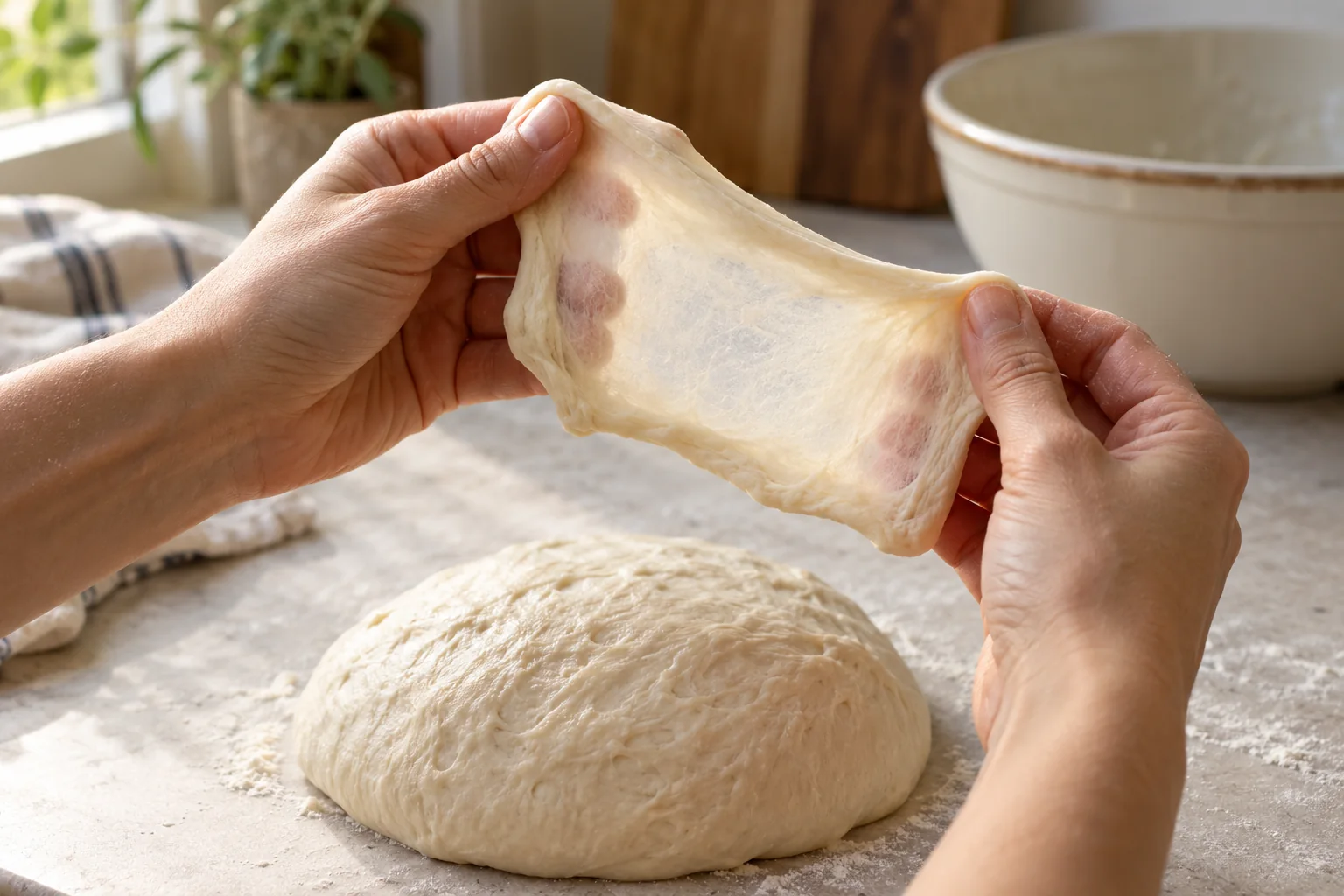
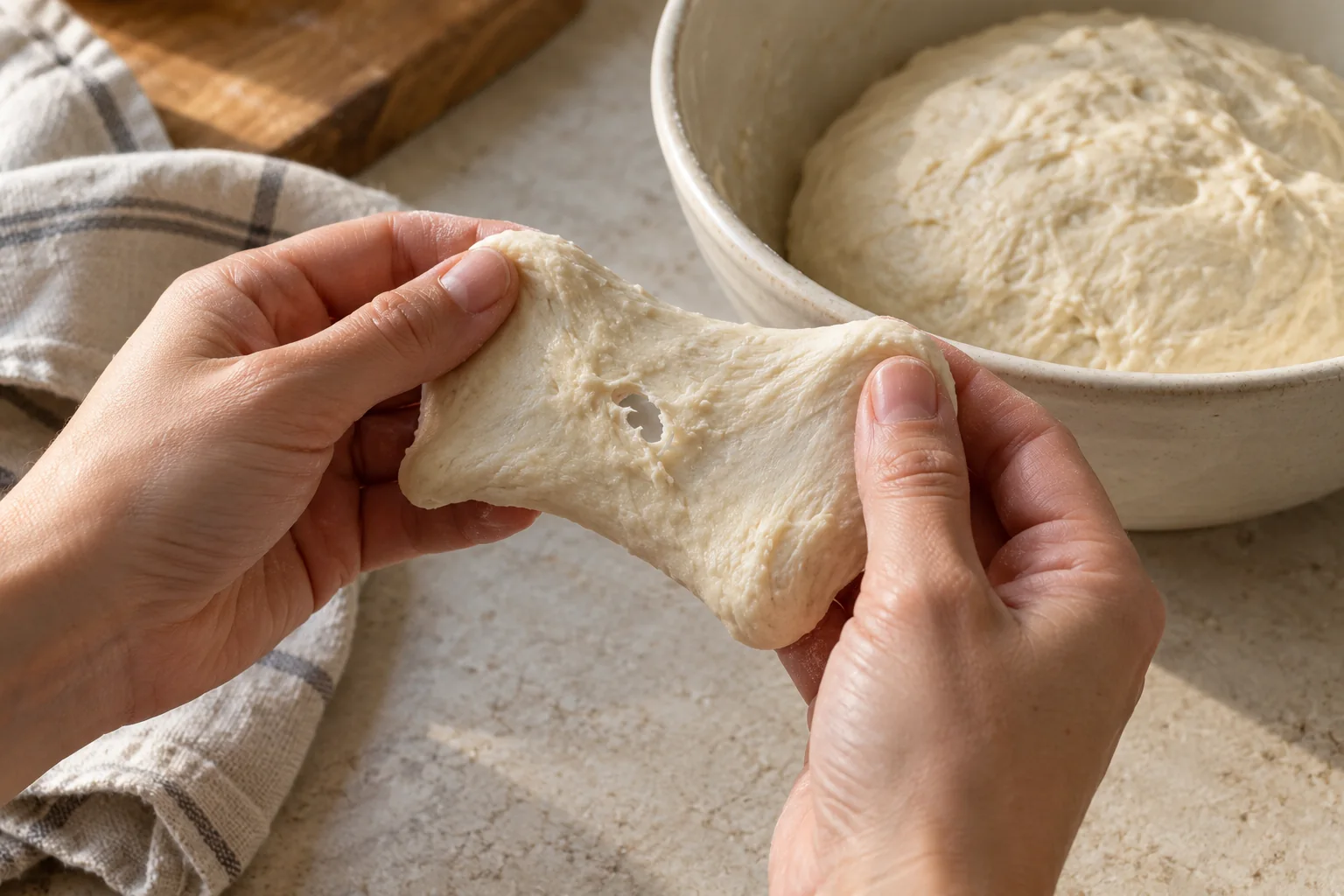
Stretch a small piece of wheat bread dough gently and it may form a thin almost translucent membrane before tearing. This is the windowpane test, a practical way to observe gluten development. It doesn't grade the baker or guarantee a beautiful loaf, and it isn't appropriate for every flour. Its value comes from comparing the test with the dough's intended method, hydration and final use.
What the test measures
Hydrated gluten-forming wheat proteins create a flexible network that stretches under pressure. Mixing and kneading organize that network, while rests influence extensibility. A well-developed dough often spreads into a thin film without instantly ripping. The film demonstrates some combination of elasticity and extensibility, not the yeast's health, proofing readiness or final bake completion.
When to test
For many kneaded white bread recipes, test toward the end of the initial mixing stage when the dough should have gained strength. In high-hydration fold-based breads, structure may continue improving during bulk fermentation, so early failure isn't necessarily a problem. Follow the original formula's development target and don't disrupt dough repeatedly throughout its final proof.
Take a small sample
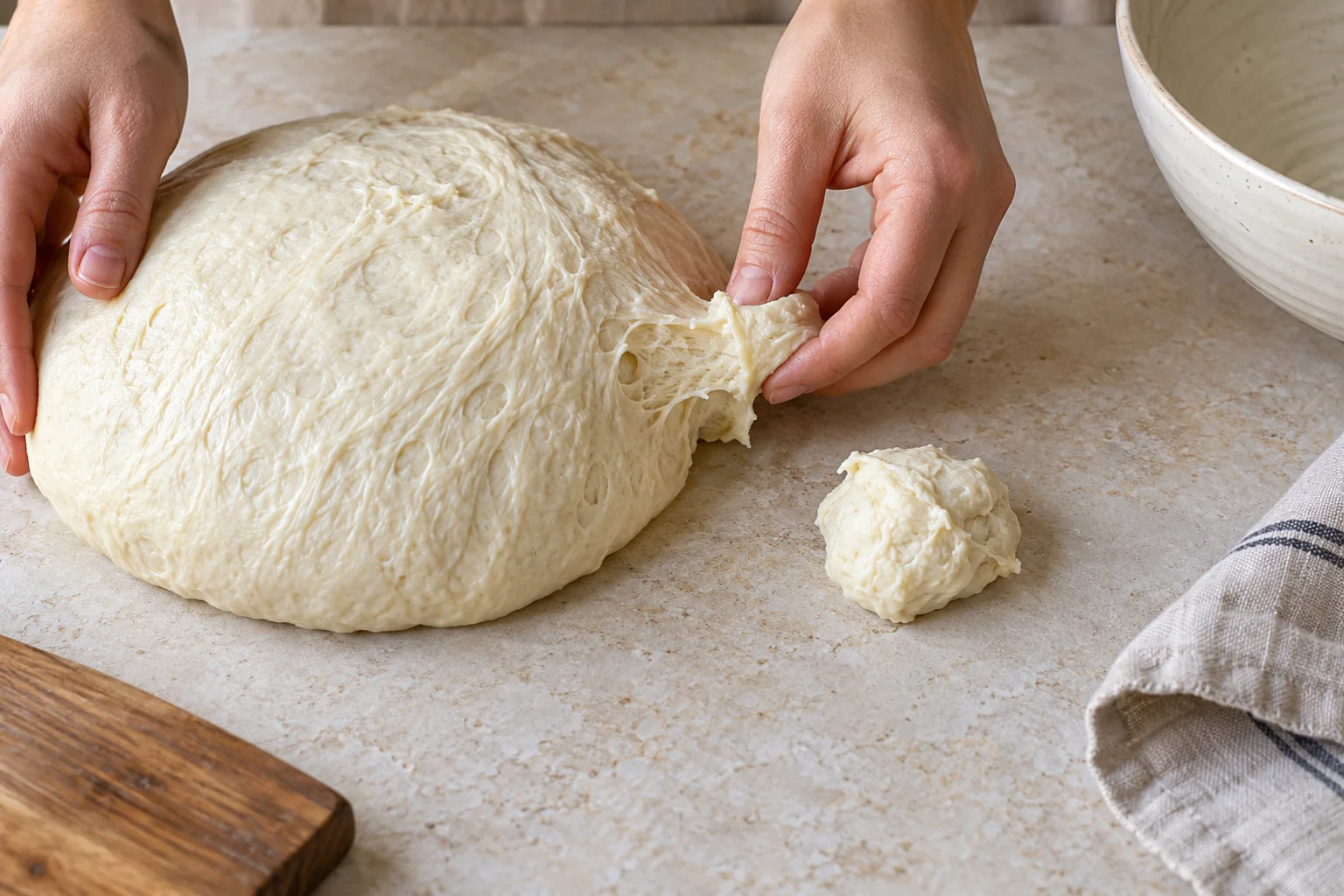
Pinch off a modest piece with clean hands and handle it gently. If the dough is sticky, lightly dampen or flour fingers according to the method. Don't wrench a large chunk from a mature proofed loaf because that can deflate it. For very cold or firm dough, a short rest may make the sample easier to stretch without changing gluten strength dramatically.
How to stretch correctly
Hold the piece between fingertips and gradually ease it outward into a small sheet, rotating as necessary. Move slowly rather than pulling hard from one side. Look for a thin film that transmits light, then notice whether the edge becomes smooth or jagged when it eventually tears. The goal isn't to stretch dough as wide as a window frame.
What a successful membrane looks like
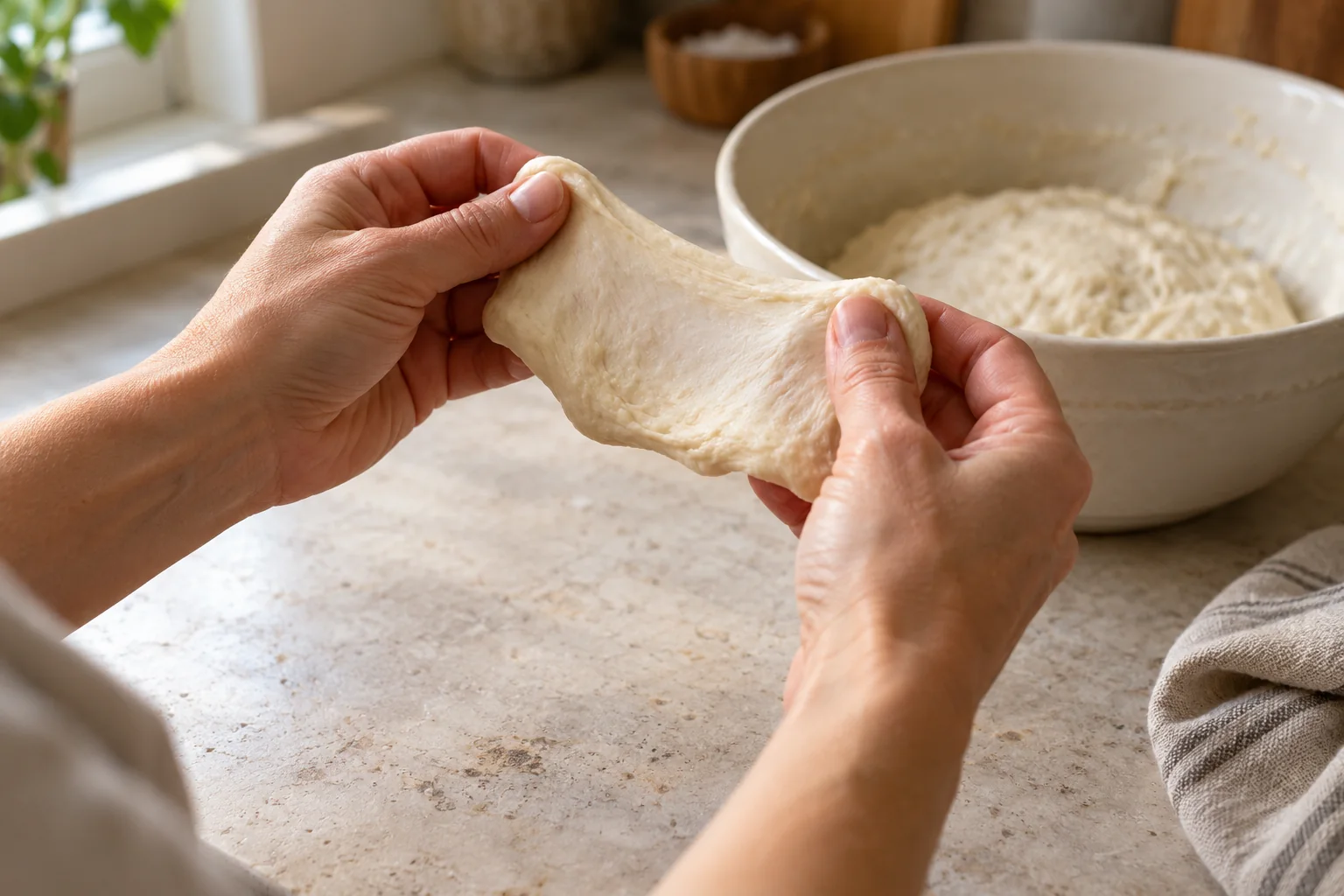
A good wheat dough may form a smooth thin film with a relatively even thickness before holes appear. Some formulations produce a long translucent sheet while others form only a small workable window. A high-protein flour can be elastic yet initially resistant to stretching, so a rest may help interpret it. Judge sufficiency against the chosen bread rather than a social-media photograph.
What immediate tearing suggests
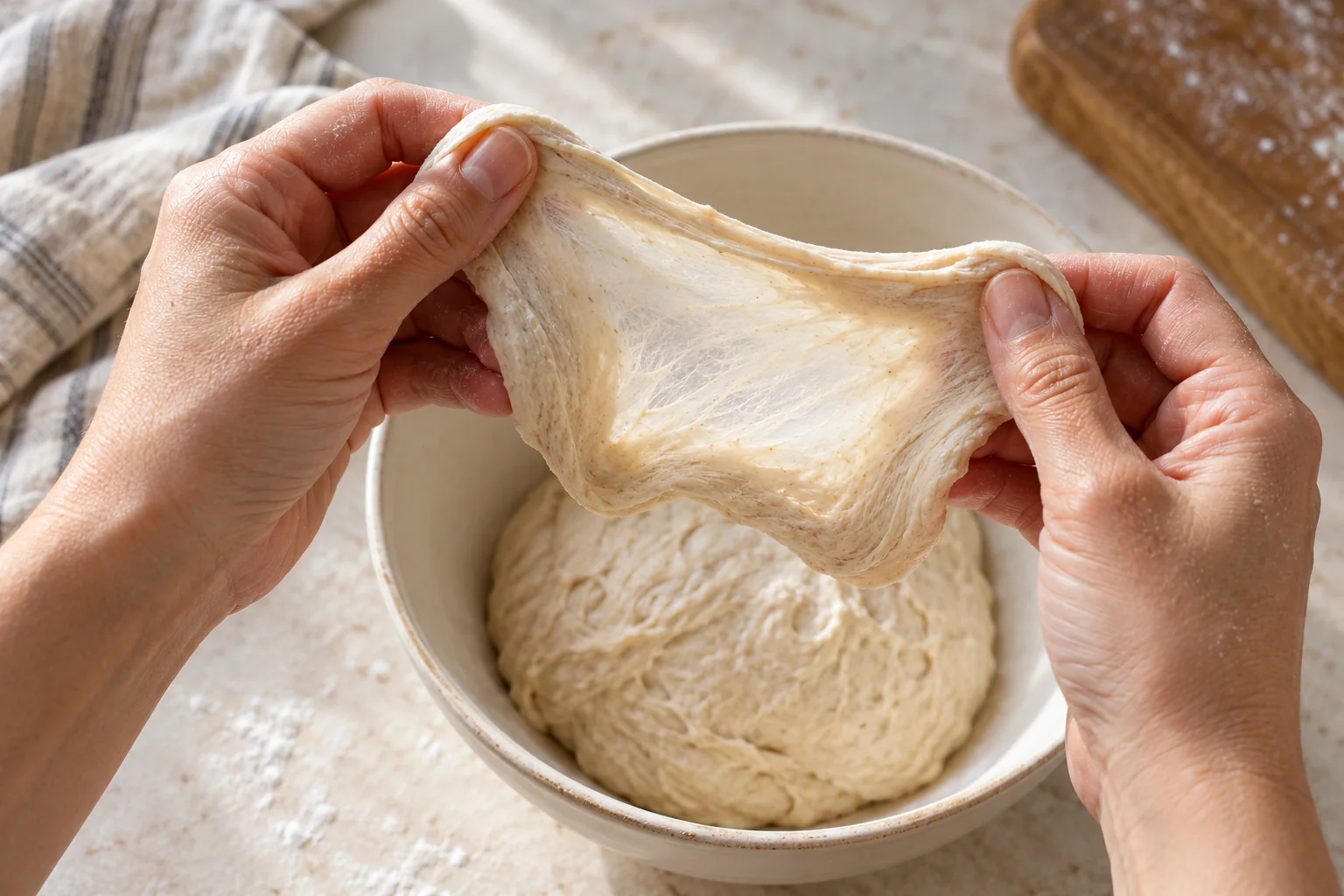
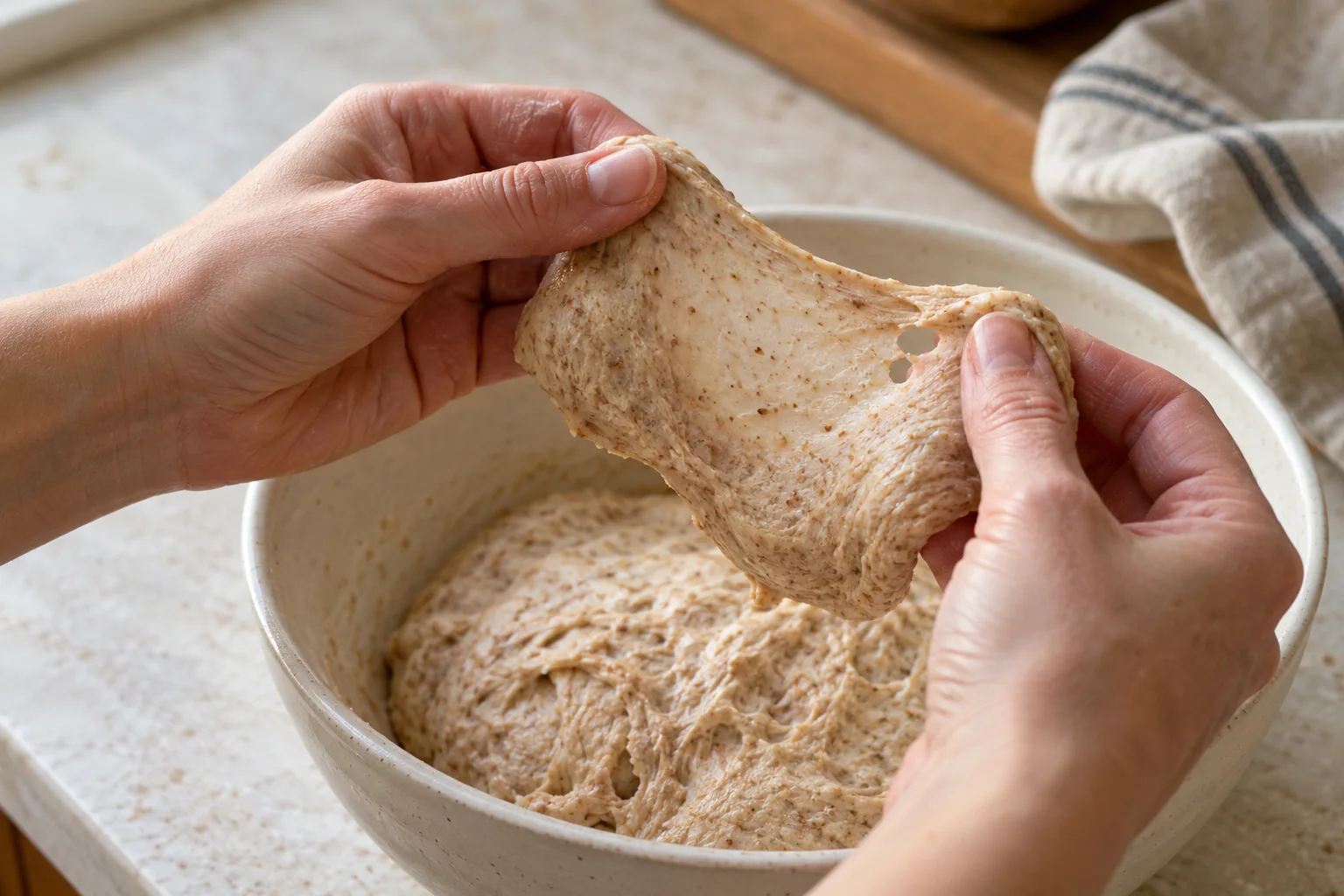
Dough that rips as soon as it stretches may be underdeveloped, overly stiff, insufficiently hydrated or not yet relaxed. Coarse bran can also puncture the film. Return to the formula and inspect how it felt during mixing. More kneading may help some white doughs, but it isn't always the answer to every tear.
Elasticity and extensibility differ
Elastic dough springs back, while extensible dough stretches without tearing. A strong but tight piece may resist your hands even if it has adequate gluten. Resting lets tension relax. A dough that's extremely extensible but unable to hold shape may be weak or overfermented. A useful windowpane balances strength and stretch, not maximum elasticity or maximum looseness.
Why rest can change the result
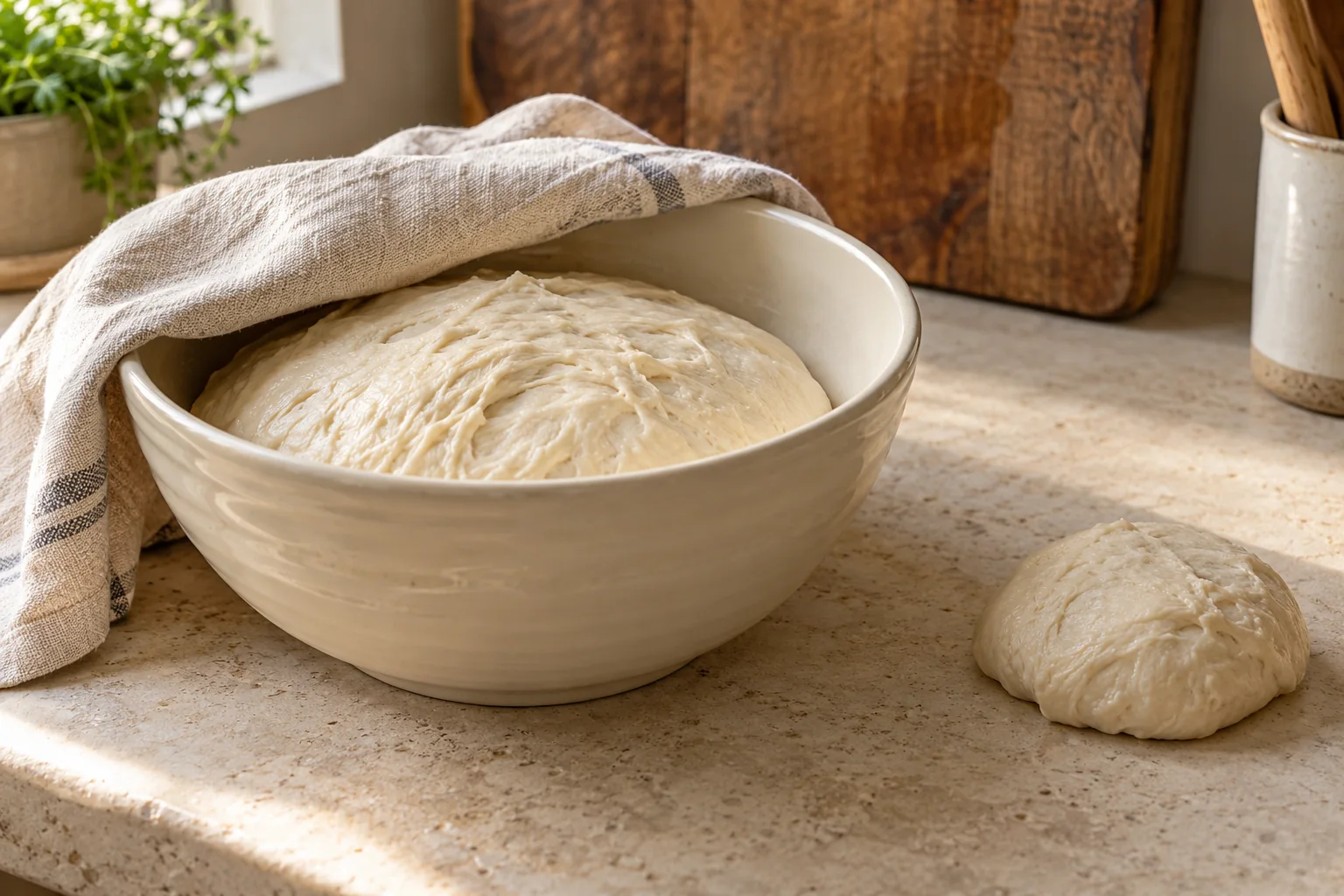
Flour continues hydrating and gluten relaxes when dough rests. A sample that tore during vigorous kneading may stretch more easily after a short covered pause. This doesn't mean all dough needs unlimited resting. Enzymatic and fermentation changes proceed with time, and a long warm rest may weaken the network. Follow the recipe's intervals.
Hand kneading and mixers
Hand mixing generally develops dough more gradually than a powerful stand mixer. A mixer can produce strong gluten quickly but also heat or damage dough if used excessively. Check development within manufacturer speed limits and stop when the intended endpoint is reached. Don't continue mixing at high speed simply to achieve a photogenic paper-thin film.
Whole wheat windowpanes
Bran and germ affect gluten-network continuity, so a 100% whole-wheat dough may tear sooner than white flour dough at similar development. Its hydration also differs. A failed white-flour standard isn't proof whole-wheat bread is poorly kneaded. Use a formula designed for whole grains and assess smoothness, shape retention and fermentation cues together. For a related recipe, see our Whole Wheat Focaccia.
Rye-rich dough exception
Rye relies on different structural components than wheat flour and often forms a paste-like dough instead of an elastic network. Expecting a high-rye loaf to pass the classic windowpane test is inappropriate. Follow rye-specific instructions for mixing, fermentation and panning. Adding endless kneading cannot make rye behave like strong bread flour.
Gluten-free dough exception
Gluten-free bread formulas often use binders, starches or gels for structure rather than wheat gluten. They may not produce any familiar stretchy windowpane. Use their specified hydration and visual mixing endpoints. A gluten-free loaf shouldn't be judged as underdeveloped solely because a conventional wheat test fails.
Enriched dough considerations
Brioche, milk bread and similar formulas add fat, sugar or eggs that modify mixing and texture. Some require gluten development before gradually incorporating butter. A temporary greasy or broken appearance during fat addition can recover with appropriate mixing. Test at the stage the enriched-dough recipe specifies instead of comparing an early butter mixture with lean baguette dough.
High-hydration dough
Wet artisan dough can feel sticky but still develop a strong network over several folds. The windowpane may improve after bulk fermentation begins. Avoid adding enough flour to make it knead like a stiff bagel simply because the sample clings to fingers. Use gentle handling and the recipe's strength-building schedule.
What about sourdough?
Sourdough acidity and long fermentation alter dough strength over time. Early windowpane development may be adequate, but later excessive fermentation can weaken the structure. The test isn't a proofing timer. Watch actual rise, bubbles and shape retention separately. A strong windowpane after initial mixing doesn't guarantee a loaf won't overproof overnight. For a related recipe, see our Sourdough Country Loaf.
Can dough be over-kneaded?
Yes, severe intensive machine mixing can damage gluten and make dough sticky and slack after it was initially strong. If the windowpane suddenly worsens during a prolonged mix, stop and assess dough temperature and texture. More mixing may compound the problem. Hand kneading makes such severe breakdown less common but not conceptually impossible.
The test versus a finished crumb
A translucent membrane doesn't guarantee open crumb, a decorative ear or tall oven spring. Fermentation, shaping, proofing and oven heat all influence the bake. A dough can pass development checks and still collapse if left too long. Treat the windowpane as one checkpoint within a broader bread-making process.
An example with sandwich bread
Mix a tested white sandwich dough according to the formula. After the specified kneading, pinch off a small sample and stretch gently. If it tears abruptly while the dough is otherwise rough, the method may call for more mixing or a brief rest. When the test and dough feel indicate sufficient development, stop and proceed to fermentation rather than chasing an ever thinner sheet. For a related recipe, see our Milk and Honey Sourdough Sandwich Bread.
An example with artisan sourdough
Use the recipe's initial mix and planned fold sets, assessing how the dough lifts and holds tension. A small test after one or two folds may show gradual improvement, but it need not equal a fully kneaded white sandwich dough. Continue the scheduled fermentation and observe volume separately. Don't tear samples from the shaped loaf during final proof.
Why temperature matters
Warm dough softens and may appear slack; cold dough can feel stiff and resist stretching. Record temperature when comparing two batches. The best test interpretation comes when the dough is at its intended working temperature. Repeated kneading solely to change the sample's flexibility may overheat it and alter fermentation.
Frequently asked questions
Must every bread pass? No. Does tearing always mean insufficient kneading? No. Can a rest help? Often. Does a windowpane test yeast activity? No. Can rye or gluten-free bread pass the same way? Usually not. Is an enormous film the goal? Not necessarily.
Use the test as a guide
Perform the windowpane gently at the correct development stage, compare the membrane with the recipe's expectations and consider hydration and flour type. Stop when the dough has sufficient strength; then focus on proper fermentation and shaping.
A simple stretch demonstration
Compare the same white wheat dough just after initial mixing and again after the planned development stage. Use equally sized pieces and stretch each gently rather than pulling hard. The later sample may form a more continuous membrane. Record the change in extensibility, not just whether a hole appears. This gives you a personal reference for what sufficient kneading looks like in your chosen recipe.
When the test may mislead
A windowpane performed on refrigerated dough may fail because the sample is too tight, while a warm sticky dough may stretch readily but lack enough shape retention. Bran and seeds can puncture the membrane independently of mixing. Combine the result with smoothness, elasticity and how the full dough holds itself; never treat one torn window as definitive evidence.
How to interpret small tears
A membrane may become thin and then open at a bran particle, an inclusion or a spot where your fingers applied extra force. That doesn't automatically mean the whole dough is underdeveloped. Repeat the test gently with another small piece and compare overall elasticity. If both stretch smoothly until thin, you've learned more than you would from one dramatic tear. The purpose is to find sufficient structure, not dough that is physically incapable of breaking.
Images are AI editorial illustrations of the baking technique.
IN PICTURES
From the baking notebook
FROM THE RECIPE BOX


