On this page
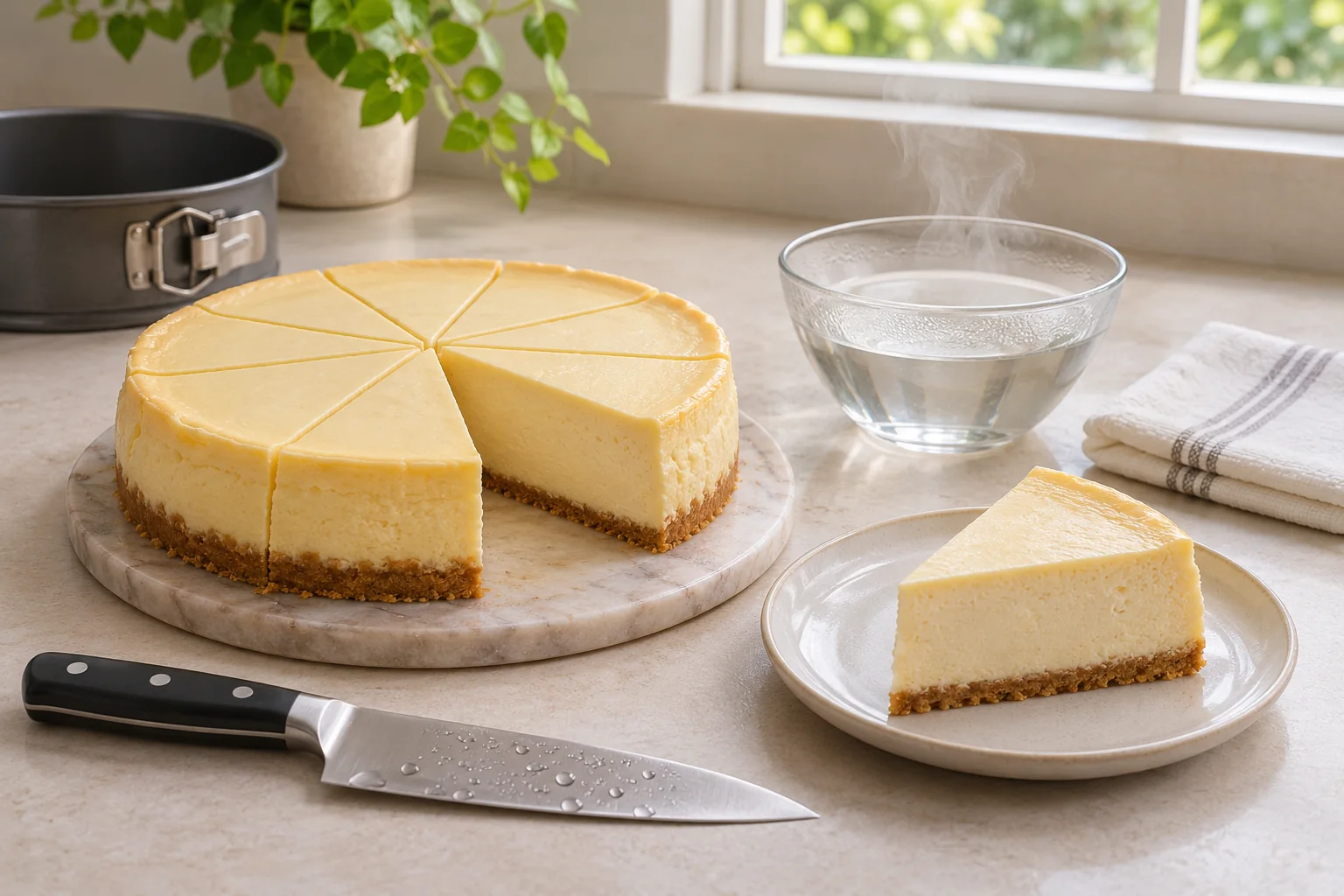
Cheesecake is a dessert that rewards careful cutting. Its smooth filling is rich and delicate, and even a perfectly baked cake can leave ragged wedges if the knife carries cream cheese from one cut into the next. You don't need a special restaurant tool. The best results come from thoroughly chilling the cake, releasing it properly, planning the portions and cleaning a sharp knife after every slice.
Start with a completely chilled cheesecake
A baked cheesecake may be soft as it finishes cooling, while its filling becomes firmer in the refrigerator. Cutting too soon can smear the centre, crumble the crust and cause wedges to bend when lifted. Follow the recipe's refrigeration time before slicing. A fridge-cold cake is usually the easiest starting point.
Recipe to try: Classic New York Cheesecake. Follow this cheesecake’s complete mixing, baking, cooling and chilling sequence. A slice is easiest to assess after the required chill.
Why cooling and chilling are not identical
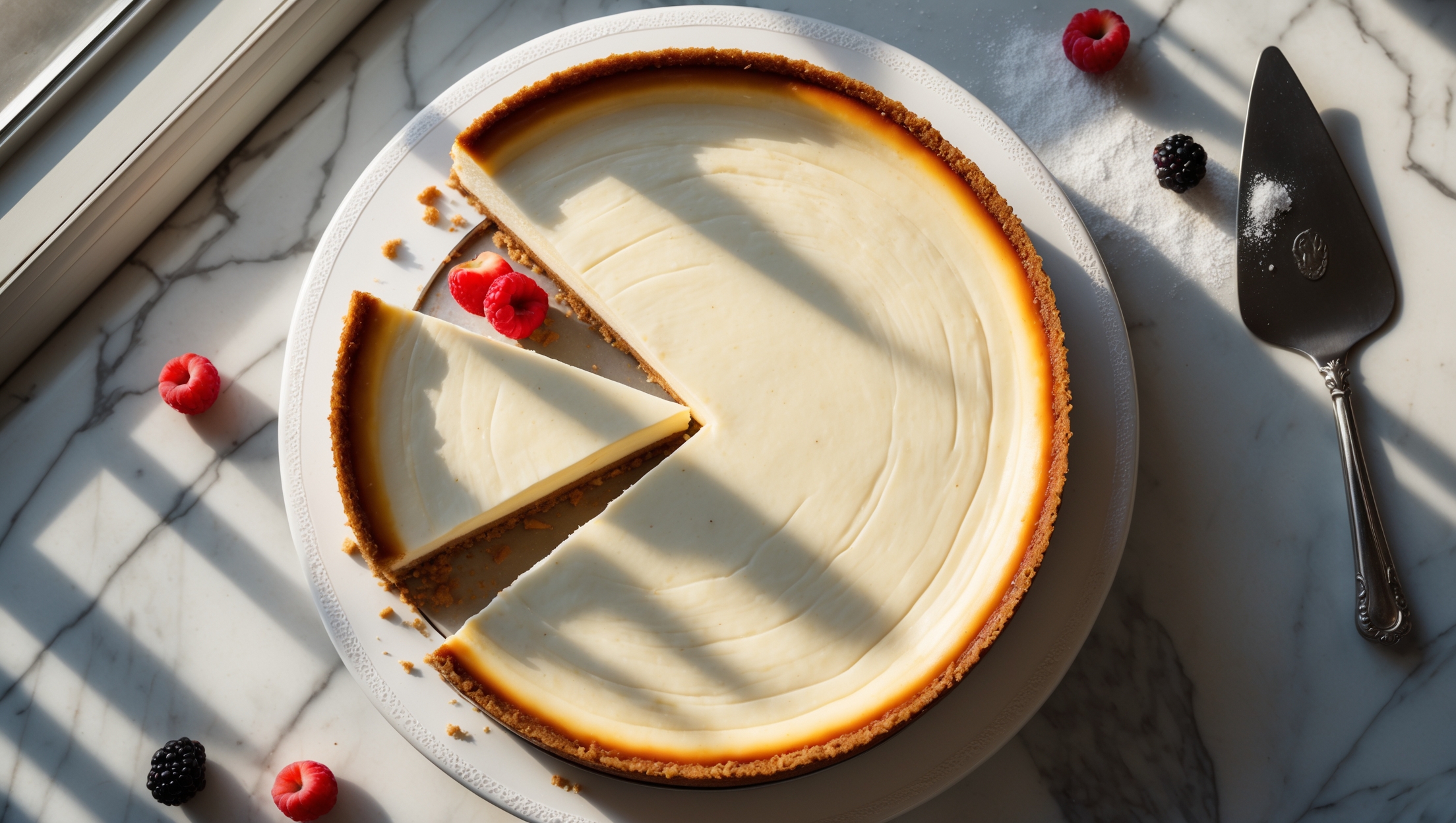
Cooling reduces temperature after baking and helps manage the custard's contraction. Chilling holds the cheesecake at a safe cold temperature and often finishes developing its serving texture. A cake may feel cool on its outer edge while its deep centre remains too soft for neat slices.
Understand the cheesecake style
Dense baked New York-style cheesecake often cuts differently from a light no-bake filling or Japanese soufflé cheesecake. A particularly delicate or mousse-like cake may require extra care. Use the method recommended by the recipe for the texture it produces rather than imposing one technique on every style.
Remove the springform ring correctly
Before slicing, release the pan only after the filling is sufficiently set. Some baked recipes recommend loosening the cake's edge with a thin spatula at a specified cooling stage to limit cracking; others wait until chilled. Follow the method so the sides don't tear when the springform collar opens.
Protect the crust during unmoulding
A graham cracker base can crumble if lifted without support. Leave the cheesecake on its pan base or transfer to an appropriate serving board using the recipe's method. Avoid sliding a narrow blade underneath a soft, tall cheesecake without supporting its weight.
Choose the right knife
A long, sharp thin-bladed knife is useful for clean cheesecake wedges. It should reach the centre of the cake without excessive sawing.
Why a warm knife can help
A slightly warm blade can pass through dense cream cheese more smoothly, reducing drag. Dip the blade into appropriately hot water, then dry it thoroughly before cutting. You want warmth, not dripping water or a dangerously hot metal handle.
Dry the knife every time
Water on the blade can mark the cheesecake or soften a crumb crust. Wipe with a clean towel after warming. The same rule applies when using a dry unheated knife: clean residue before each new cut so one wedge doesn't smear onto the next.
Cut down decisively
Position the knife where you want the wedge and make one controlled downward cut through the filling. Avoid dragging it back and forth through a very soft centre. The exact motion can differ if the cheesecake has a crisp chocolate crust or other firm topping, but the goal is a clean separation.
Withdraw without scraping the surface
Lifting a sticky blade sideways across the cake can smear cream cheese onto the top. Withdraw carefully and wipe it before cutting again. If the filling clings heavily, the cheesecake may need more chilling or the knife may be too dull.
Plan the portions before cutting
Imagine the cake as a clock face. Mark opposite sides for halves, then quarters and eighths, or use a cake-dividing guide. For a tall rich cheesecake, smaller wedges may be more appropriate than huge café-style slices. Consistent portions look intentional on a platter.
How many pieces from a round cake?
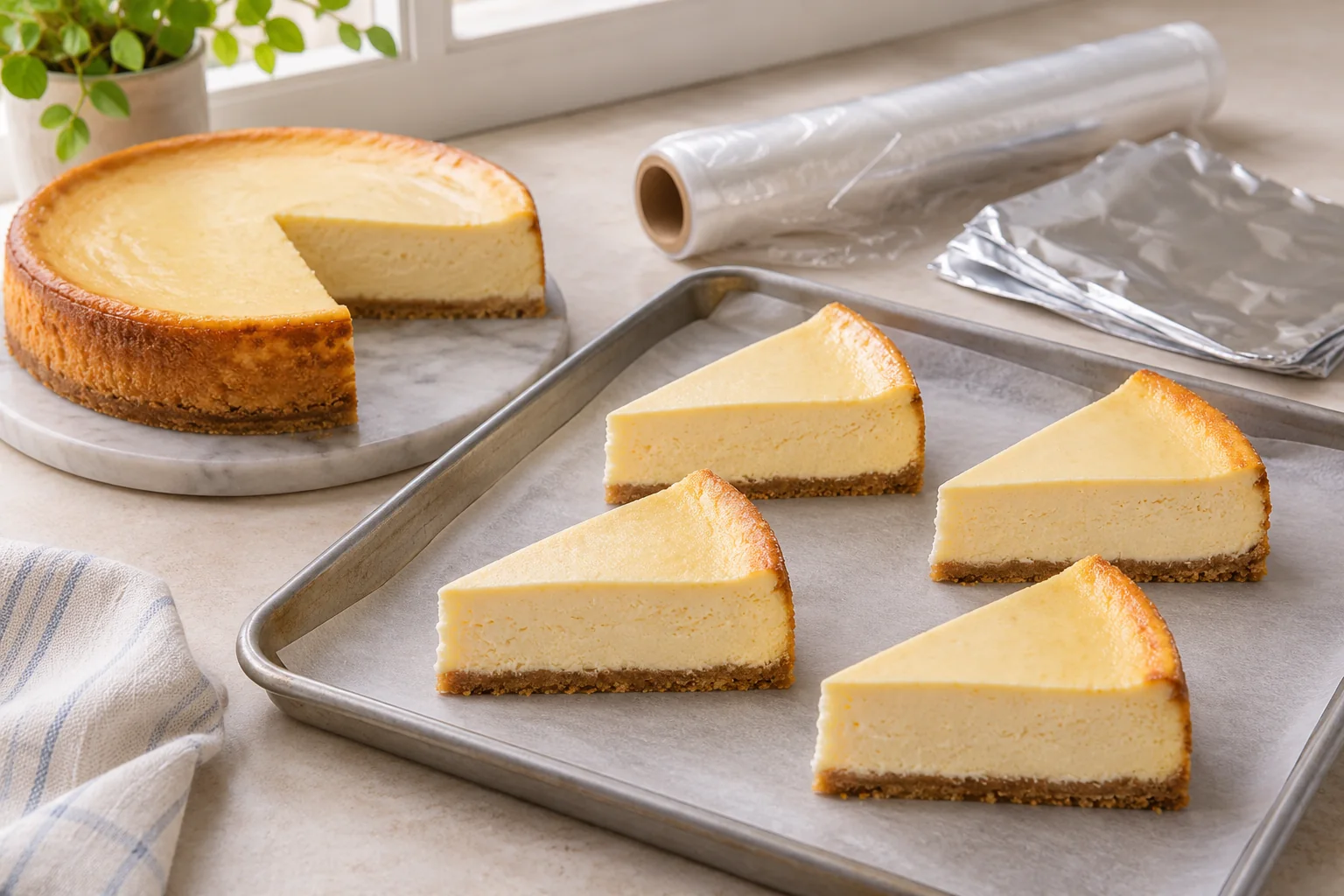
The ideal count depends on diameter, height, richness and occasion. An ordinary nine-inch cheesecake can be served in eight substantial wedges or more modest portions for an event. Don't choose a number solely because it divides evenly; consider how the filling holds and whether the crust supports each piece.
How to cut very small portions
A tall creamy wedge can tip over if its tip becomes needle-thin. For a buffet, you may prefer twelve reasonably sized slices or recipe-designed cheesecake squares. Use a sharp knife and transfer each small wedge while it remains well chilled.
Cutting mini cheesecakes
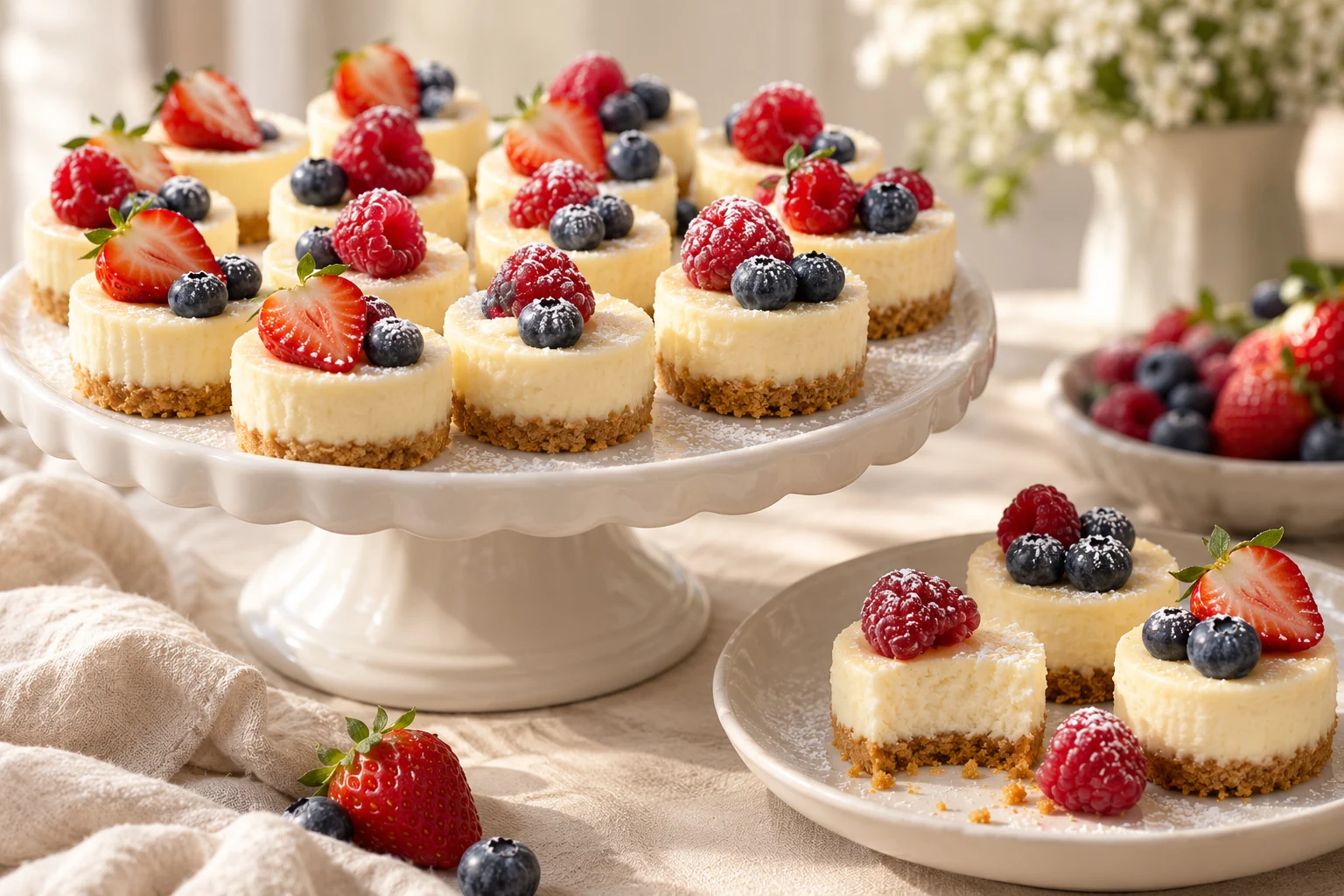
Individual mini cheesecakes usually don't require traditional wedges. Release them from liners or moulds according to the recipe and present each as a finished portion. A small offset spatula helps lift delicate bases without pressing on the surface.
Recipe to try: Mini Cheesecake Bites. Mini cheesecakes have their own portion size and baking schedule. Do not use a whole cheesecake’s bake time for these small cups.
Cheesecake squares for dessert trays
A baked cheesecake made in a rectangular pan can be chilled, lifted and cut into a measured grid if its recipe supports that pan. Use a parchment sling or removable base where specified. A very sharp blade and cleaning between cuts create the tidy straight edges associated with professional catering.
What about a thick fruit topping?
Cherry compote, berry sauce and fresh fruit can drag across the filling. Consider topping individual wedges after cutting when the recipe allows, particularly when a loose sauce would run into the knife. A set glaze may instead need a specialized clean cut.
How to handle chocolate ganache
A thick ganache layer can resist cutting when cold and smear when warm. Some formulas recommend briefly tempering the topping or using a properly warmed knife. Avoid heating the whole cheesecake just to make one layer easier; match the tool to the topping's state.
What about a baked sour-cream topping?
A delicate sour cream layer can tear if the knife is blunt or dirty. Chill thoroughly, use gentle controlled pressure and wipe away filling residue after every pass. Keep the blade dry so water does not mar the smooth surface.
Why the first slice is hardest
The first wedge creates the opening that lets a cake server slide beneath the next portion. Cut both sides fully to the bottom and lift with a broad thin server. A very narrow first wedge is difficult to remove intact; choose a sensible first portion.
Use a cake server for lifting
A thin, broad server supports the crust and creamy base as the wedge moves to the plate. Keep it level and avoid pushing from the top with your fingers. For tall cheesecakes, a flat serving board under the cake makes the motion easier.
How to clean a cheesecake plate
Use a plain chilled or room-temperature serving plate appropriate for the formula and wipe any stray crumbs or filling away with a clean cloth. Fresh berry sauce is easiest to control when added in a deliberate spoonful after the slice is in position.
Why the filling tears
Insufficient chilling, underbaking, a sticky knife or an unusually soft formula can all create torn edges. First check whether the cake followed its full setting schedule. Chilling raw batter may firm it temporarily but cannot compensate for an undercooked egg custard.
Why the crust crumbles
An underbound crumb crust, overly thin base or awkward transfer can leave crumbs on the plate. A clean single cut helps, but a bad crust formula cannot be fixed by a hotter knife. Follow the recipe's crust-baking, butter and cooling instructions for the next cake.
Photographing neat slices
A clean wedge shows the filling's smooth face, the contrast of the crust and any topping layers. Cut with a wiped blade, move it onto a simple plate and remove small stray crumbs. A single slice with a clear cross-section can communicate the dessert's texture better than a crowded cake stand.
Keep service food-safe
Cheesecake is perishable. Return unsliced cake and leftover portions to the refrigerator promptly, keeping cold storage at 4°C (40°F) or colder. Don't leave the cake on a warm buffet for hours because repeated warm-knife cutting is more convenient.
Frequently asked questions
Do I need to freeze cheesecake before cutting? No; thorough refrigeration is usually sufficient. Should I warm the knife? A briefly warmed blade, wiped dry, can help. Why are slices smearing? Check that the cake is chilled and wipe the blade between cuts. Can I cut the day before? Follow the recipe’s chilled-storage instructions and protect the cut surfaces.
The clean-cut routine
Chill the cake properly, release it gently, mark even portions, warm and dry a sharp blade where useful, and wipe after every incision. Lift each wedge with a broad server and keep the dessert safely cold. The technique is simple enough to repeat at home and polished enough for a bakery display.
Recipe to try: No-Bake Cheesecake. For a chilled alternative, choose this no-bake formula. Its setting method is separate from an egg-based baked cheesecake.

IN PICTURES
From the baking notebook
FROM THE RECIPE BOX


