On this page
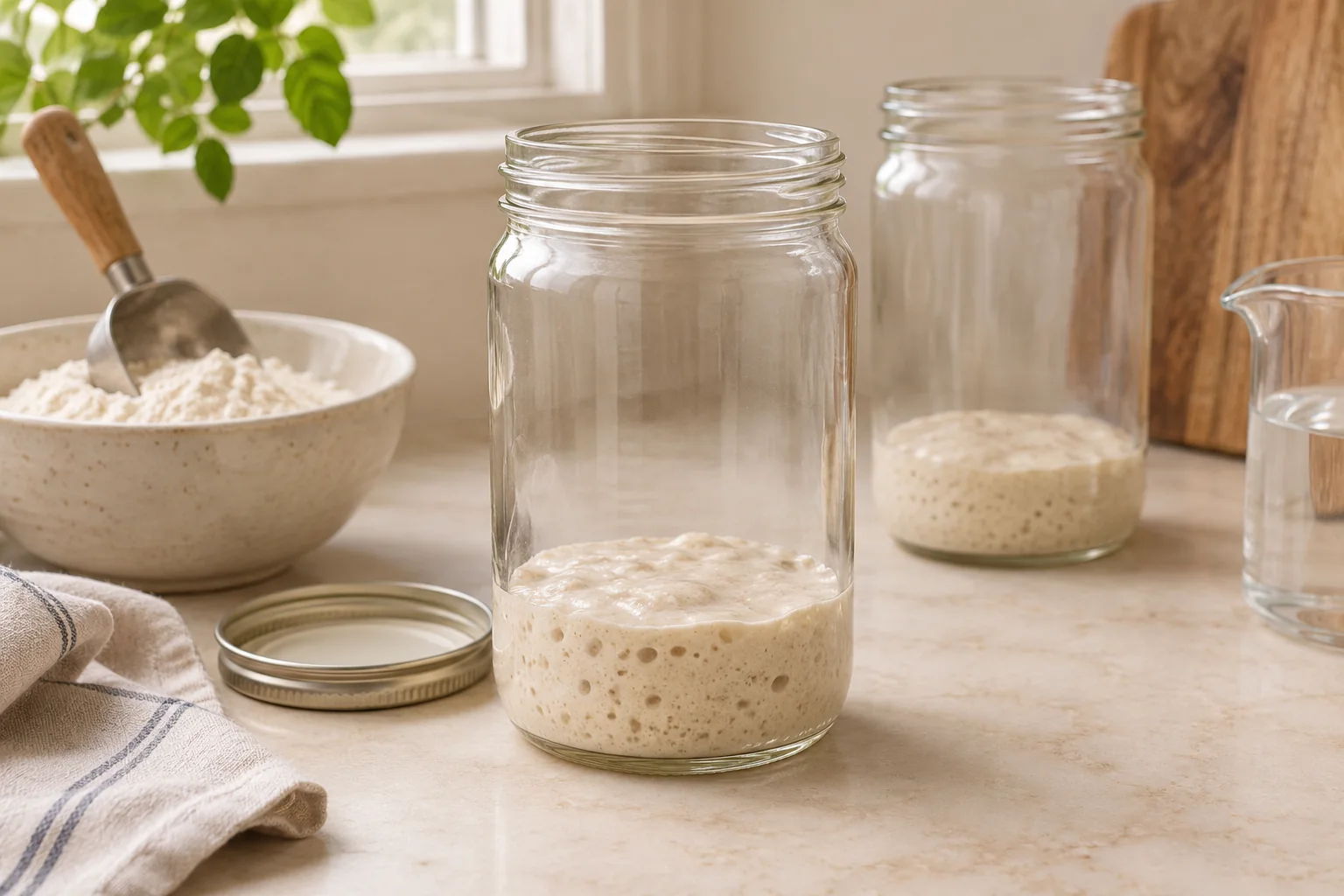
Keeping sourdough starter alive shouldn't feel like caring for a demanding houseplant. A healthy culture needs flour, water, a suitable temperature and a feeding routine that matches how often you bake. A jar kept at room temperature typically needs more frequent feeding than one stored in the refrigerator. With a few consistent observations, you can maintain a small starter without wasting large amounts of flour or waking up just to feed it.
The short answer
For many mature 100%-hydration starters, a common routine is feeding roughly twice daily at room temperature or about once a week when refrigerated.
Why starter needs feeding
Yeast and lactic-acid bacteria metabolize available nutrients in the flour and produce gas and acidic compounds. Refreshing with flour and water provides new food and dilutes accumulated acidity. If a warm starter repeatedly goes far past peak without refreshment, its activity can become less predictable.
Feeding at room temperature
In warmer conditions it can peak sooner, while a cooler kitchen slows it. Use your culture's rise-and-fall pattern to check whether the schedule is appropriate instead of applying twelve hours as an absolute rule.
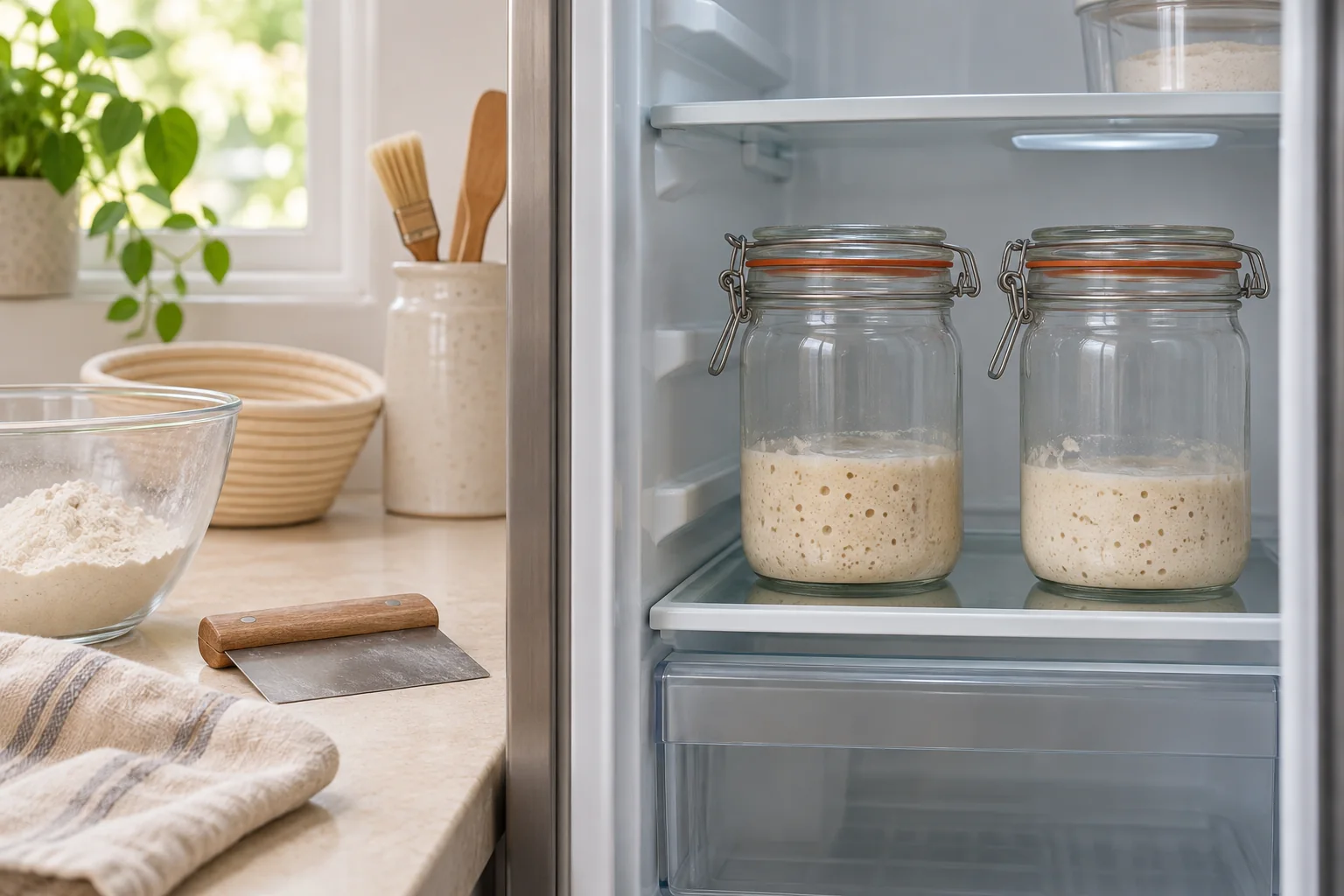
Feeding in the refrigerator
Refrigeration slows microbial activity and makes maintenance more convenient for occasional baking. Follow the method's specified rest and use a container with headroom.
Why ratio affects feeding frequency
At 1:1:1, the starter receives fresh flour and water equal in weight to the retained seed. A larger 1:2:2 or 1:4:4 feed provides more food relative to the seed and usually takes longer to peak. Ratio can help adapt your feeding schedule, but it doesn't eliminate the need to observe temperature and culture health.
Daily baking versus weekly baking
If you bake nearly every day, a small room-temperature starter can be convenient because it's regularly active. If you bake once a week or less, refrigeration may reduce flour use and the frequency of feedings. Neither method is inherently more authentic; the best choice is the one you can follow consistently.
Recipe to try: Sourdough Ciabatta. Ciabatta provides a different dough and loaf shape to practise with. Keep its hydration and handling instructions together.

An example small room-temperature feeding
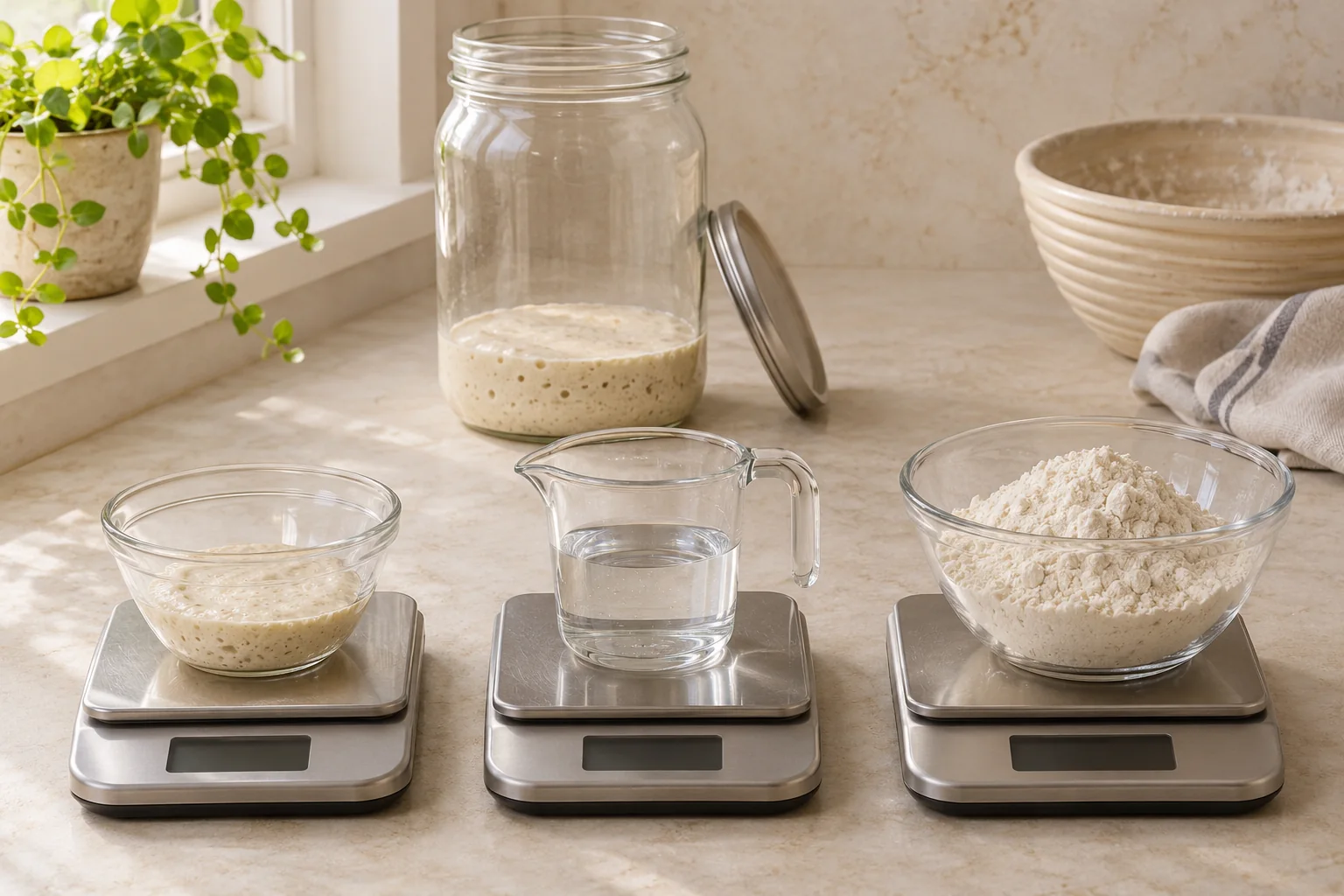
Retain 20 g starter and add 20 g flour and 20 g water for a 1:1:1 feed. That makes 60 g, an amount large enough to observe without becoming a huge jar. Follow your starter's needs and adjust the seed size or feeding ratio if it peaks well before the next planned refreshment.
Why you discard before feeding
If you never reduce the jar's contents, routine feeding can multiply the total quantity rapidly. Discarding to a measured seed amount keeps things manageable and establishes a consistent supply of new flour. When you need extra starter for a recipe, deliberately build a larger quantity rather than carrying it year-round.
Recipe to try: Sourdough Crackers. These crackers use sourdough discard. Use discard from a healthy established starter and bake it fully; this is not a raw-starter snack.

How to build enough for baking day
Calculate the recipe's requirement plus a reserve for future maintenance. A final feed or series of feeds can create the needed quantity. If a bread recipe calls for 200 g starter, for instance, build more than 200 g so you don't exhaust the mother culture. Weigh each component.
When to feed before mixing dough
Many sourdough bread formulas specify ripe starter near its peak. At a predictable temperature, some 1:1:1 cultures reach that stage after several hours, but larger feedings may take longer. Schedule by your own observations; don't assume the starter is ready immediately after receiving flour and water.
Recipe to try: Sourdough Country Loaf. The loaf calls for active starter. Check its maturity and the dough’s fermentation cues before moving on to shaping.

Can starter survive a missed feeding?
An established culture may survive a delayed feeding, especially if refrigerated, but it can become more acidic and sluggish. Resume an appropriate refreshment schedule and judge activity over several cycles before relying on it to leaven a large loaf. Missing one feed doesn't automatically mean the culture is ruined.
What if you're going on holiday?
A mature starter can often be fed and refrigerated for an absence within the maintenance guidance. Longer trips may require another reliable preservation method, such as professionally described drying or freezing, with the expectation that activity must be restored before baking. Don't leave an unsealed jar unattended at room temperature for weeks.
How to know a starter is hungry
A starter that's risen and fallen may have a high-tide line, stronger acidic aroma or a layer of greyish liquid. Those cues often indicate food is depleted. However, visible mold or unusual pink and orange discolouration is not a hunger symptom; discard a contaminated culture.
Temperature and seasons
A summer kitchen can shorten feeding intervals, while winter can lengthen them. If the starter is racing through its food in a warm room, a recipe-supported larger feed ratio or cooler location may help. If it's very slow, check the temperature before dramatically increasing the starter amount.
Should you change flour to improve feeding?
Some flour varieties, especially whole grain, can change fermentation behaviour. But constant experimentation makes it hard to recognize the culture's normal pattern. Use a consistent flour blend for several cycles, then make one considered adjustment at a time if needed.
When a refrigerated starter needs revival
After refrigeration, many starters benefit from one or more refreshments at room temperature before baking. A strong starter may recover quickly, but another may need several cycles. Look for repeatable rise rather than using the starter simply because it has spent a fixed number of hours outside the fridge.
What if it isn't rising after feeding?
Check the starter's age, flour and water weights, temperature and how long you've waited. A 1:4:4 feed may still be developing when a 1:1:1 feed would be near peak. If several consistent feedings show virtually no activity, use a troubleshooting plan rather than repeatedly doubling the feed volume.
Starter jars and cleanliness
Use a food-safe container with room for expansion and a cover that follows the starter method, allowing appropriate gas management without inviting contamination. Clean tools, label the feeding time and periodically change jars as needed. Do not tightly seal a gas-producing active starter in a container not designed to handle pressure.
Keeping a simple log
Write down the feeding ratio, flour, approximate temperature, feeding time and maximum height. Over a few days, those notes reveal whether the starter peaks before your next feeding or still has plenty of food. A predictable routine is more valuable than a complicated schedule you can't maintain.
New starter versus mature starter
A culture in its first week may require regular refreshments as the microorganisms establish themselves, and may show an early burst of gas followed by quiet days. Don't treat new starter maintenance as identical to storing a well-established culture in the fridge. Follow a proven creation schedule until activity is stable.
Frequently asked questions
Can I feed starter once daily? Some ratios and environments allow it, though a common room-temperature schedule is twice daily. Does refrigerated starter need feeding? Yes, periodically. Can I feed without discarding? When intentionally building quantity, yes. Is hooch always a problem? It often signals hunger, but contamination requires separate assessment.
Choose the routine you'll actually use
The best feeding plan is one that keeps your starter healthy and fits your baking frequency. Keep the seed small, weigh refreshments and let rise-and-fall behaviour tell you when the culture needs food. Once maintenance becomes predictable, baking day becomes easier too.
IN PICTURES
From the baking notebook
FROM THE RECIPE BOX


