
On this page
Two cookies can weigh the same and finish at different times. A flattened disc heats through faster than a tall mound. Start with the portion your recipe calls for, then use the first tray to judge how your pan and oven behave.
Why portion weight matters
Two scoops that look similar can hold different amounts of dough, particularly when one is heaped and another level. A kitchen scale gives consistent pieces that bake at roughly the same rate. For recipes listing grams per cookie, weigh a few samples and adjust your scoop technique. The scoop's number or diameter alone doesn't guarantee dough weight because cookie dough density varies.

Small cookies
Mini drop cookies may reach their intended endpoint in considerably less time than large cookies at the same oven temperature. Thin edges dry rapidly, so check earlier than you would for a standard scoop. A small cookie that's intended to be crisp may need a different colour cue from one meant to remain tender. Use a tested mini-cookie conversion rather than guessing a half-time rule.
Standard-size drop cookies
A medium chocolate chip cookie often shows set edges with a center that still looks slightly soft at removal, depending on the recipe. That center continues setting on the hot sheet during a brief rest. Avoid baking until every part looks equally dry if the formula is designed for chewy middles. The correct endpoint is described by the individual recipe, not by a universally fixed diameter.
The standard portion in Classic Chocolate Chip Cookies bakes for 10–12 minutes, then rests on the sheet for 5 minutes. Use that combination as your baseline.

Large bakery-style cookies
Thick large cookies have more distance from hot exterior to center. They may need a different bake temperature, greater spacing and longer time. A dark outside can form while the middle remains underbaked, especially if the dough is shaped unusually tall. Use a recipe developed for large portions and verify the fully baked center rather than simply doubling the timer for a standard cookie.
When increasing the scoop for Chocolate Chunk Cookies, test one larger cookie before filling the sheet.

Thin crisp cookies
Tuile-like and thin butter cookies may bake rapidly and continue browning after removal. Watch edge colour closely and follow any immediate shaping instructions, which sometimes must be completed while cookies remain warm and flexible. A high-sugar thin cookie can become brittle as it cools. Don't compare its target with a soft thick sugar cookie even if the ingredients sound similar.
Rolled sugar cookies
Rolled cookies should be cut to the recipe's thickness so shapes bake evenly. A thin star point can brown before a thick centre, so avoid mixing radically different sizes on the same tray. Chilling may help designs keep their outline. Bake using the author's edge, underside and center cues before decorating; icing cannot make an underbaked cookie safe.
Roll Gingerbread Cookies to an even thickness so fine edges and wider centres bake together.

Slice-and-bake shortbread
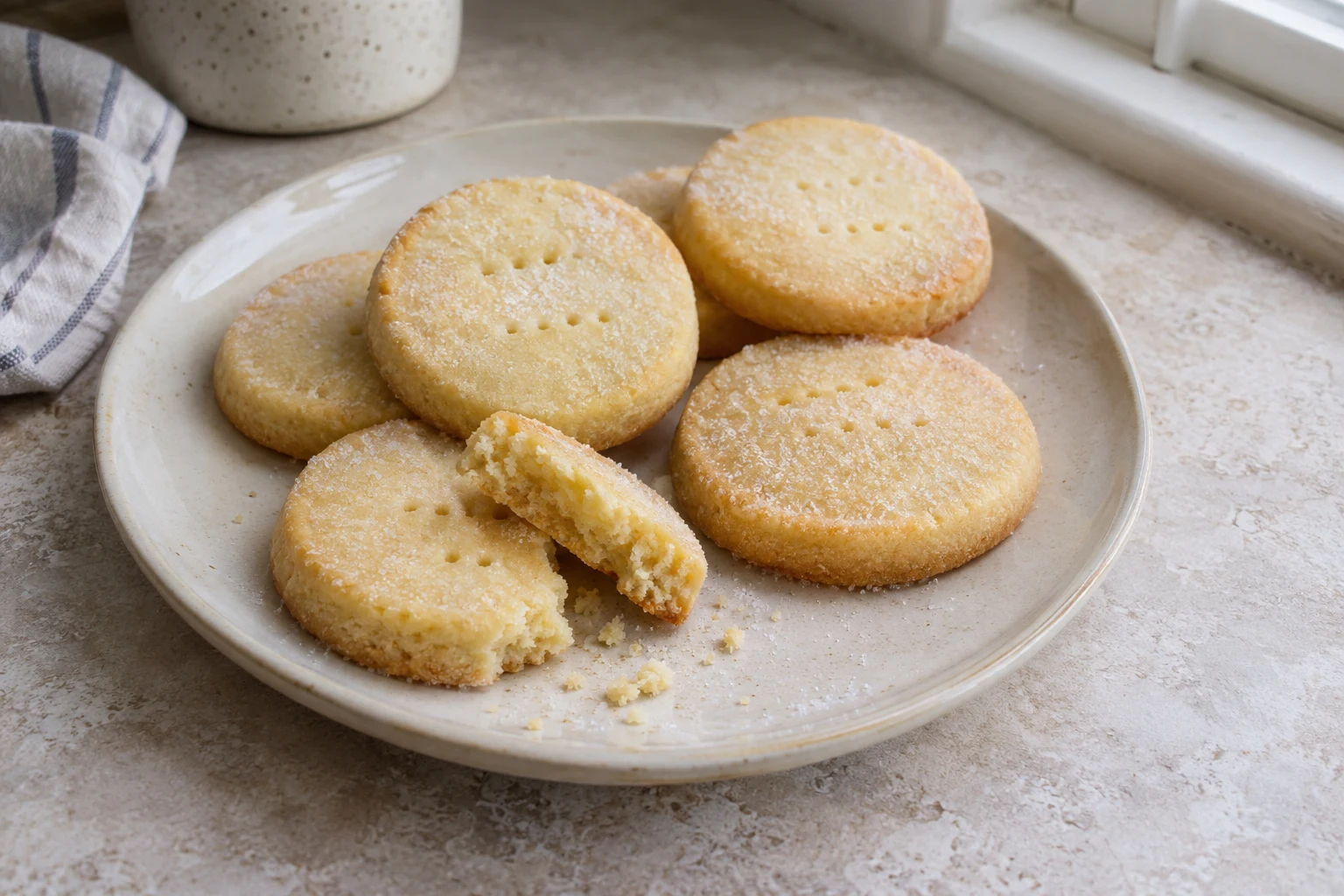
A chilled log is cut into slices of controlled thickness. Shortbread may look comparatively pale when properly baked, so heavy golden colour isn't always the right cue. The fat and flour balance create a sandy tender bite that firms after cooling. If one end of the log is thinner, it can burn before the thick center slices finish. Rotate as you slice to prevent flattening.
For a pale cookie such as Vegan Shortbread Cookies, check the underside as well as the top.
Why diameter isn't enough
One dough might spread thin while another holds a mound. Two cookies with the same diameter can have different center thickness and water content. A broad flat cookie can finish sooner than a tall thick one even if both began at equal weights. Watch the recipe's style, shape and portioning method in addition to diameter.
Starting with chilled dough
Butter dough taken from the refrigerator may spread more slowly than a freshly mixed room-temperature version. Some recipes account for that and specify baking directly from cold. Others require a brief softening period. Don't add several minutes automatically without checking, because the outer cookie may overbake. Compare final texture with the formula's intent.
Baking from frozen
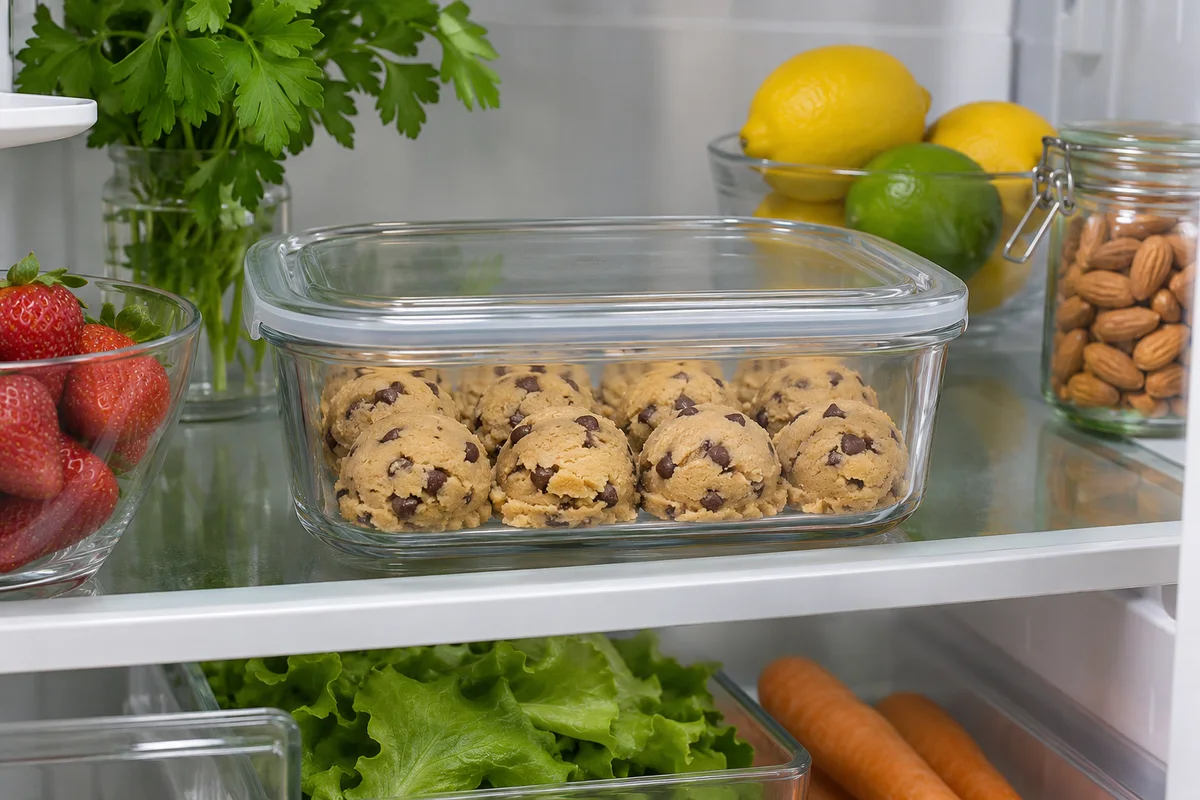
Frozen cookie dough can be a practical make-ahead option for certain recipes, but bake time may change. Some doughs require thawing while others can go directly into a preheated oven. Use the author's frozen-baking directions or an approved conversion. A large frozen lump may remain cold in the center while the edge browns, so don't use the same plan for every cookie size.
Dark versus light baking sheets
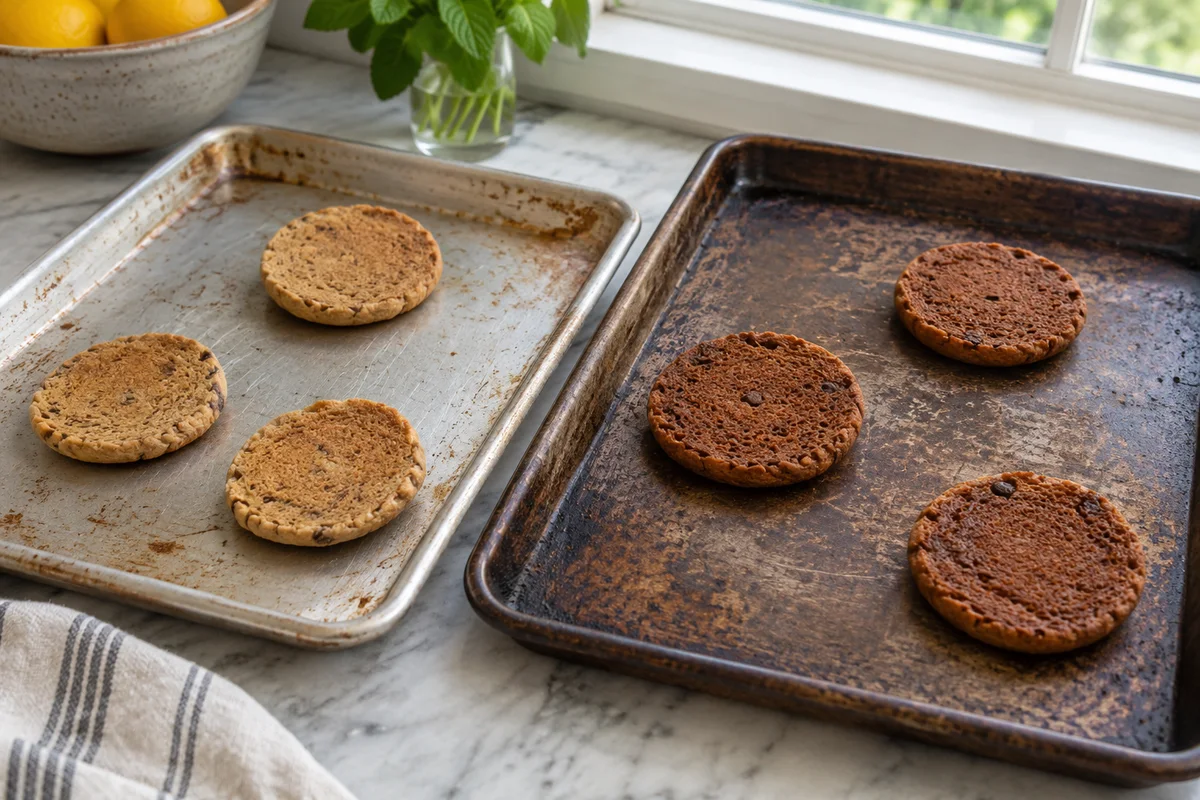
Dark metal tends to absorb radiant heat and may brown undersides faster than light reflective metal under similar conditions. This can change cookie spread, edge crispness and the point at which the base scorches. If bottoms burn before tops set, the pan is a useful first diagnostic. Follow recipe equipment notes rather than increasing temperature to solve pale tops on a very dark sheet.
Parchment and silicone mats
Parchment and silicone mats influence how cookies contact the hot pan, and results can differ by dough. Some bakers notice more spread on silicone than parchment in particular recipes, but the outcome isn't universal. Wax paper is not a substitute for oven-rated parchment. Use the lining and temperature range recommended and avoid overhanging material near heating elements.
Convection versus conventional ovens
A fan moves hot air and can accelerate browning, potentially requiring a recipe-specific temperature or time adjustment. Some ovens automatically adjust displayed temperature when convection is selected; others do not. Don't subtract an arbitrary number from every cookie recipe without checking your appliance and source. Test one tray and watch the underside as well as the top.
Preheat accurately
An oven that sounds an alert may not always have stabilized at the intended temperature. Use an oven thermometer where repeated inconsistencies suggest trouble. A cool start changes spread and fat melting; excessive heat can set edges early while leaving thick centers underdone. Keep the door closed as much as practical during active baking.
Spacing changes the bake
Crowded cookie sheets reduce air circulation and can encourage pieces to merge as they spread. Follow the recipe's spacing and bake fewer large cookies per tray. If cookies touch, their edges won't brown as evenly and they can tear during separation. Consistent spacing also makes it easier to rotate a tray safely when necessary.
Give portions of Oatmeal Chocolate Chip Cookies equal room to spread.

Why hot pans change the next batch
Fresh dough placed on a hot sheet begins warming before entering the oven. Butter can soften, changing spread and perhaps the eventual bake time. Use another cool tray or allow the pan to cool on a safe rack. Don't run a hot metal sheet under cold water without considering warping and safety.
Carryover cooking
Cookies retain heat when removed from the oven, and the hot sheet continues to cook their bottoms while they rest. Some recipes explicitly require a few minutes on the tray before transfer to a rack. A delicate cookie moved immediately may fall apart; one left too long on a dark sheet may become hard. Follow the stated carryover rest and monitor the first batch closely.
What set edges look like
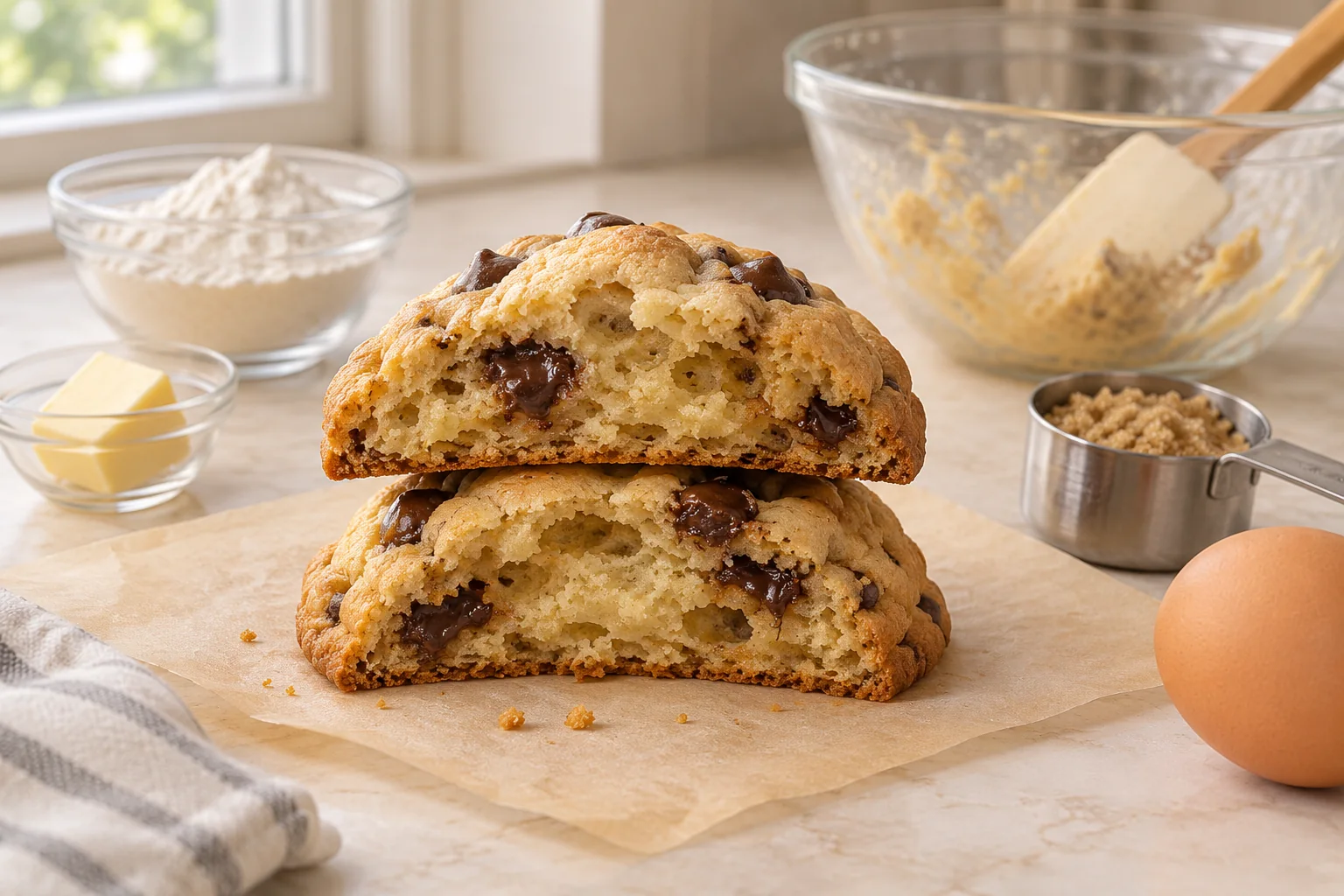
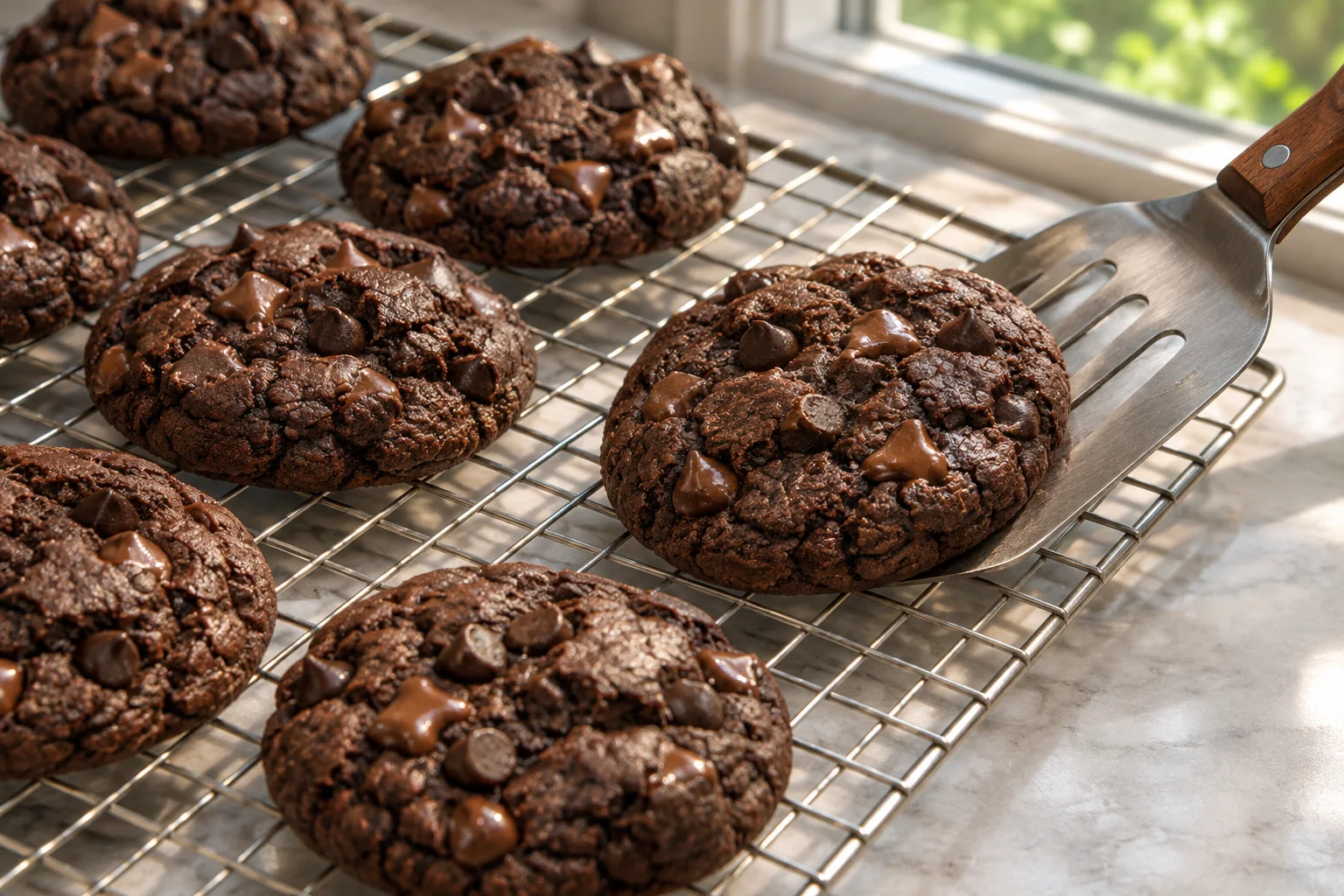
Many chewy drop cookies are ready when outer rims are defined and lightly coloured while centers remain somewhat softer. But chocolate cookies conceal browning, and shortbread often uses a different target. Touch tests should be gentle and only when safe; don't eat dough to assess doneness. Learn the formula's visual cues rather than treating 'golden edges' as universal.
On Double Chocolate Chip Cookies, a change in surface sheen can be easier to see than browning.
When the center is still raw
A cookie with liquid uncooked batter inside isn't ready simply because the edge looks brown. In a very thick cookie, use recipe-specific baking and cooling cues, or an appropriate food thermometer if the method calls for one. Raw flour and eggs make underbaked batter unsafe. Select a tested large-cookie recipe rather than trying to serve deliberately raw centers.
A size-by-size baking experiment
Use a dough with a trusted size-conversion guide and make a tray of equal mini pieces and a separate tray of equal standard portions. Measure weights and record the first signs of doneness, edge colour and texture after cooling. Do not mix sizes on one sheet and assume one removal time will suit all. This comparison helps you build a practical reference for your own oven.
IN PICTURES
From the baking notebook
FROM THE RECIPE BOX


