On this page
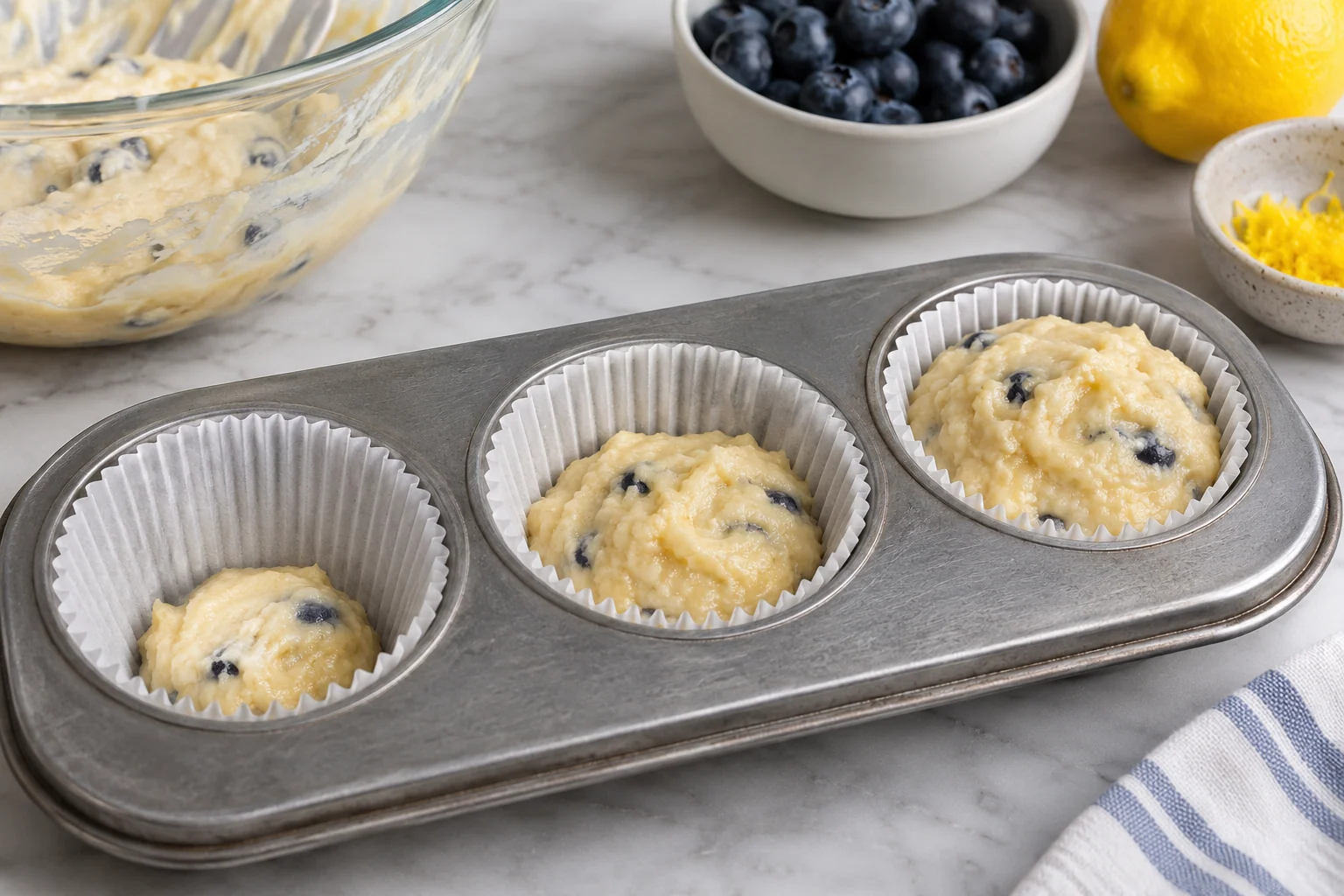
Set a lined tin on the counter and look at two heights: the rim of the metal well and the top of the paper. The metal supports the batter as it rises. A tall paper liner can make a well look half empty long after it has enough batter for the recipe.
The short answer for most standard muffins
For many standard muffins, a recipe will fill the well roughly two-thirds to three-quarters of its depth. Some bakery-style formulas deliberately call for more. Begin with the stated tin and yield, distribute the batter evenly and use the level in those first cups as your guide.
Start with the yield and filling directions in Blueberry Muffins, then compare the level across your own tin.
Why the fill line matters
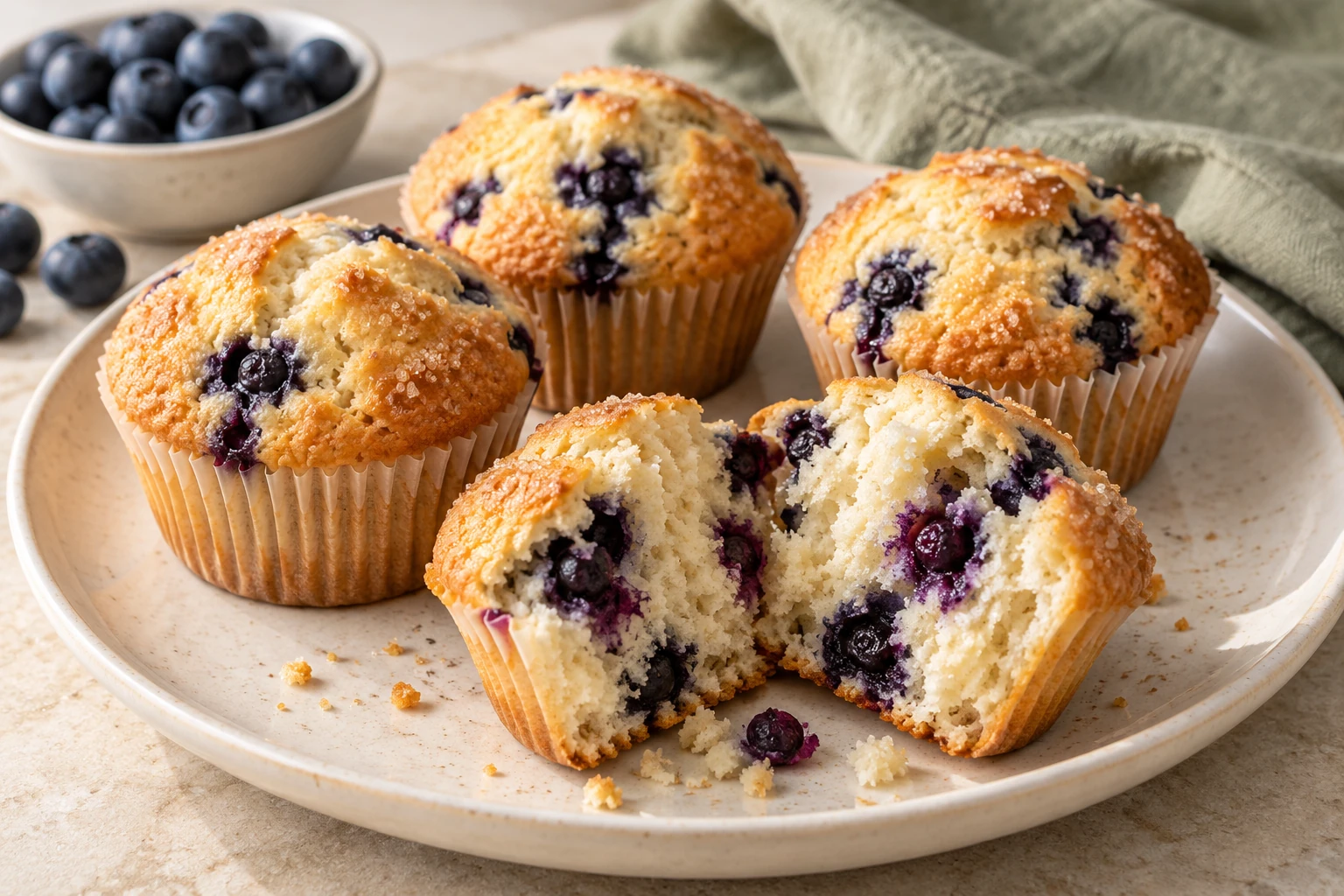
Muffin batter rises as gas expands, moisture turns to steam and its crumb structure sets. The pan walls support the batter while it rises. If the cup is almost empty, the muffin may finish short and dry; if overfilled, the batter may overflow, join neighbouring muffins or fail to bake evenly in the middle.
With Chocolate Chip Muffins, move a little batter from a visibly fuller well before baking so all the muffins finish close together.
A half-full cup
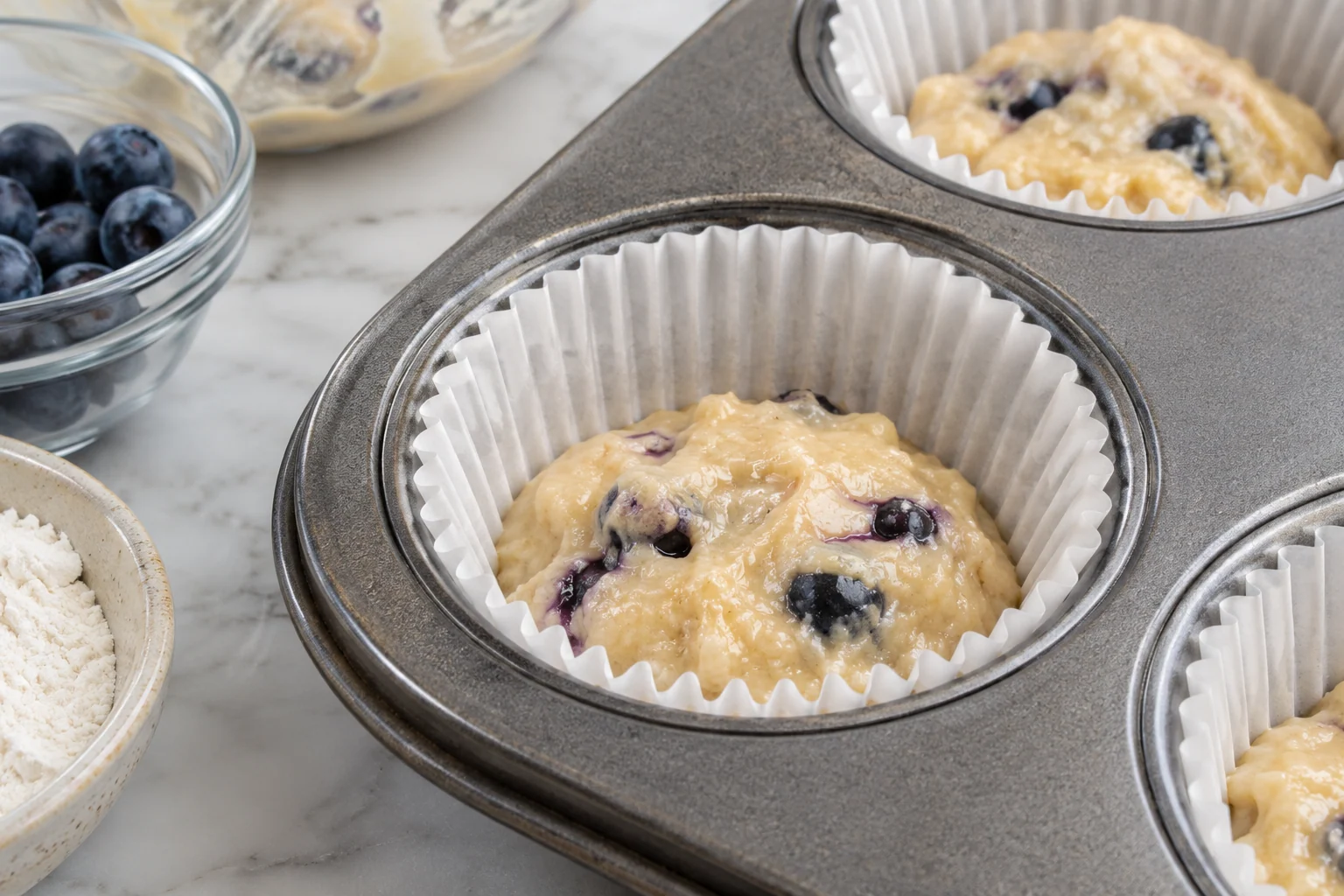
Some cupcake or specialty muffin recipes specify half-full liners because their batter rises dramatically or needs room for a filling. Half full isn't universally too little, though a typical breakfast muffin may look short at that level. Use it only when the formula or an initial test confirms the intended rise.
Two-thirds full
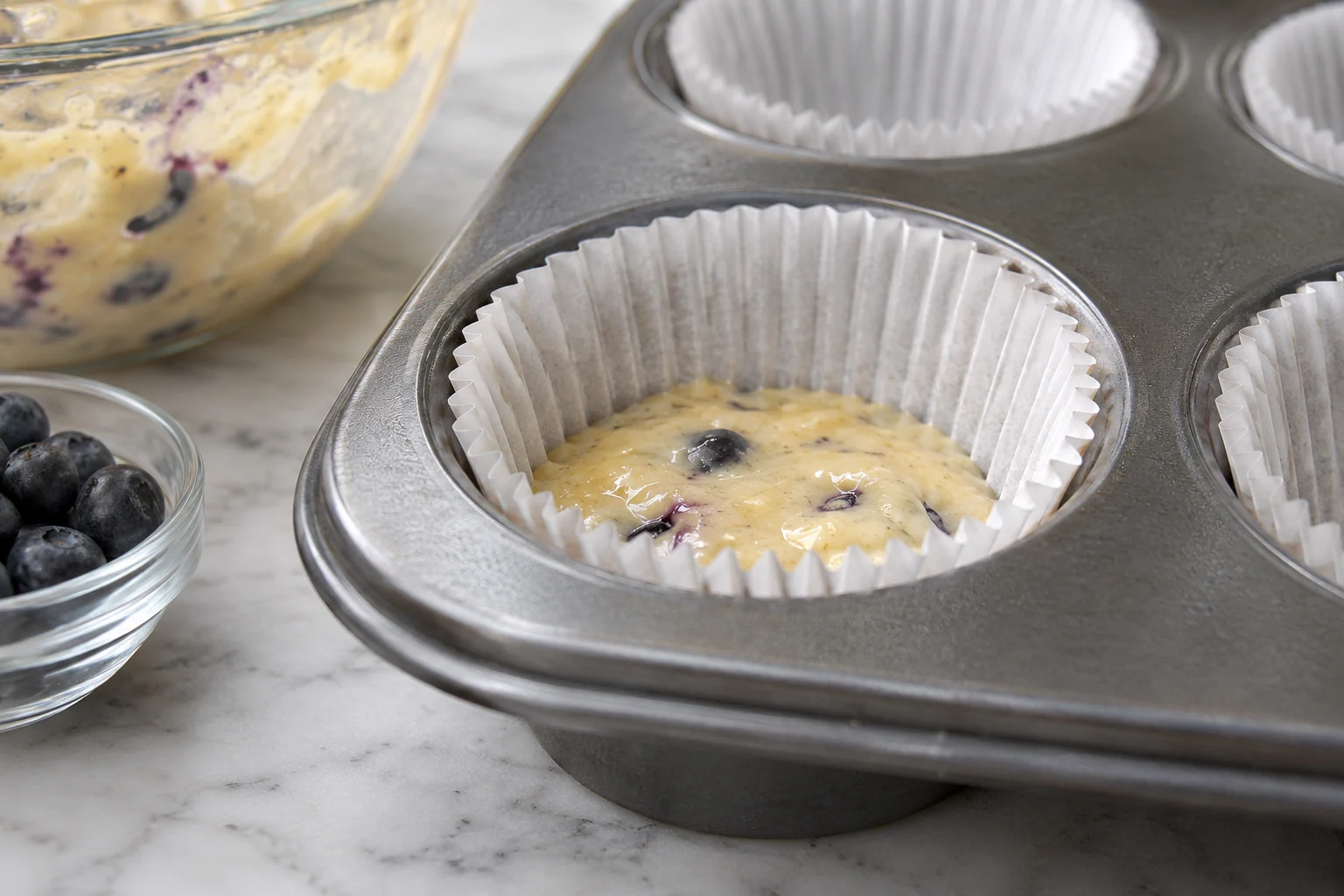
This amount leaves headroom for a batter that expands noticeably. A modest fill can still produce a rounded crown; do not add more batter simply to imitate the height of a muffin made with a different formula.
Spoon Vegan Raspberry Muffins gently into the cups to keep the berries intact as you check the batter level.

Three-quarters full
Some muffin formulas use a three-quarters fill for a generous top. A loose or strongly leavened batter may overflow at the same level. Follow the recipe’s portion guidance and keep the amounts consistent across the pan.
Use the fill given for Apple Cinnamon Muffins and distribute the apple pieces as evenly as the batter.
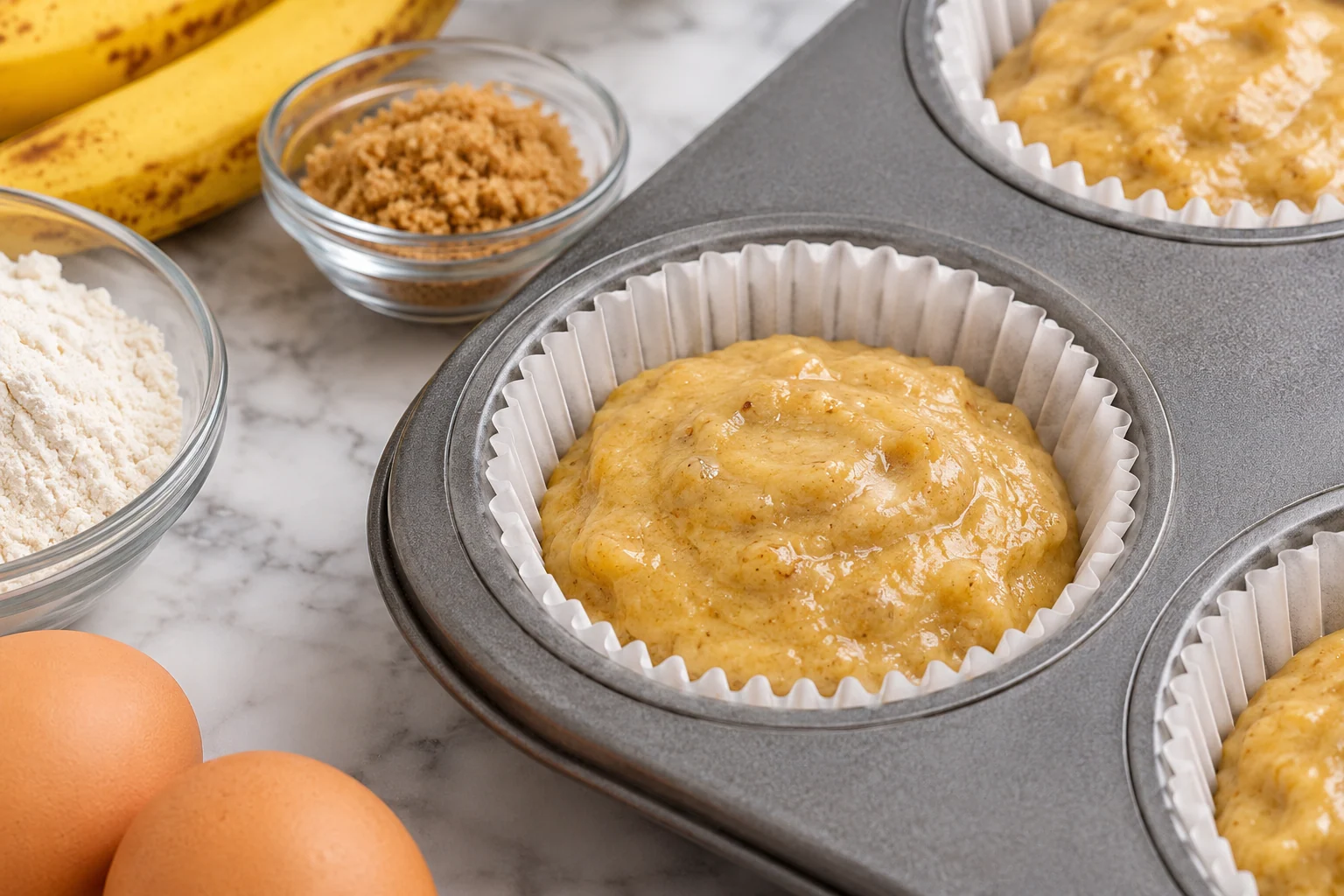
Filling almost to the rim
Some bakery-style muffin recipes are deliberately developed for high fills and pronounced domes. Their batter thickness, pan shape, oven temperature and leavening support that method. It isn't a shortcut that automatically improves ordinary muffin batter. Don't use a full-to-the-rim instruction from one recipe in another formula.
How pan capacity changes the number
Two tins sold as standard can have different volumes, especially where the sides are steep or the bases are narrow. If the recipe yields twelve and your tin takes ten full portions, resist topping them up. Bake the extra batter in another suitable cup.
Check the size of the cups for Air Fryer Muffins before expecting a countertop batch to match the yield of a full oven tin.
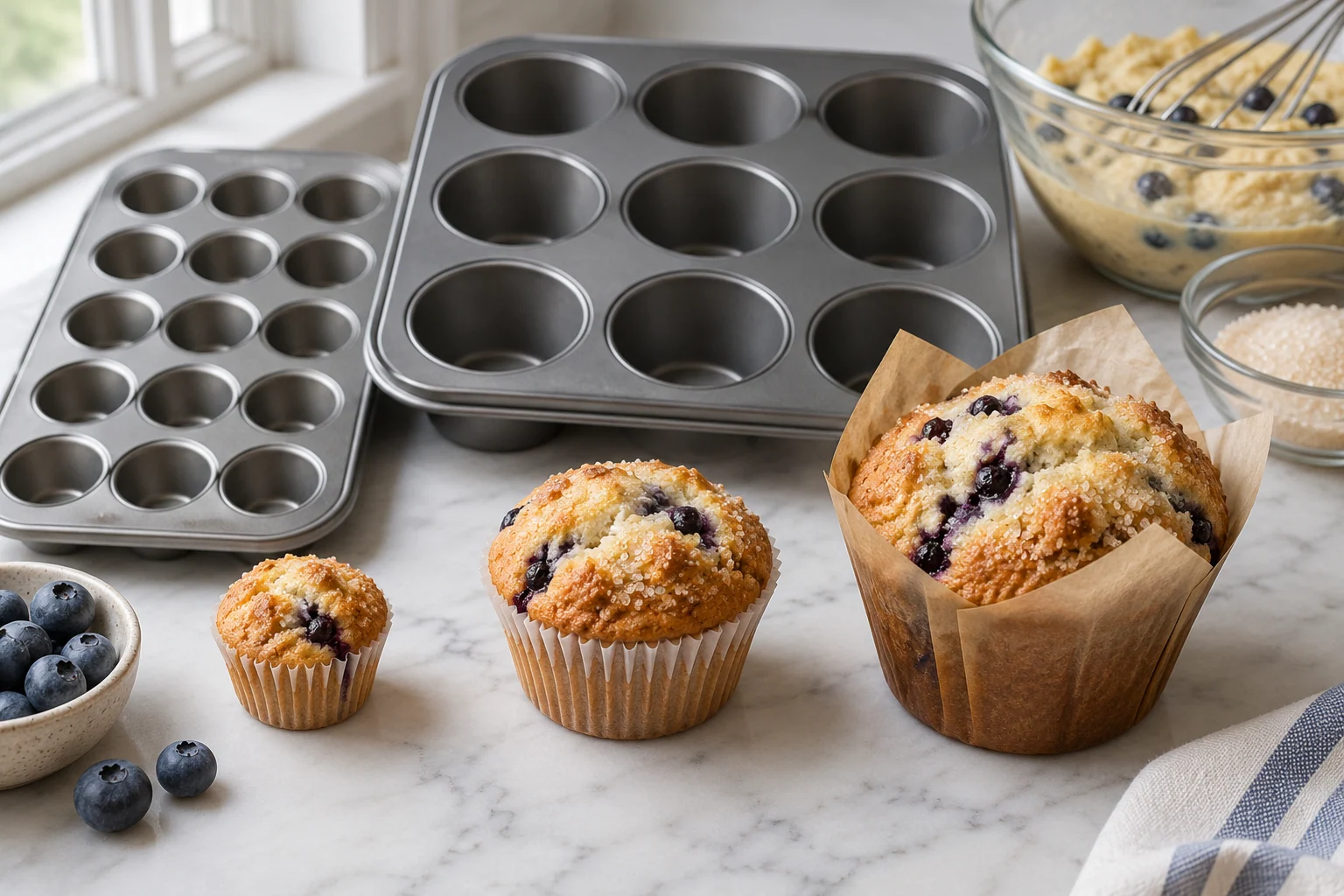
How to measure a muffin cup
Fill a clean, empty metal well with water to its rim. Pour into a measuring jug or weigh it in grams for an approximate capacity in millilitres. Dry the tin and line it before baking. The water measurement tells you the size of the cup, not the amount of batter to pour.

Why equal portions matter
Unevenly filled cups bake at different rates. The smaller portions may dry out while larger ones remain underbaked. A spring-release scoop or measuring jug can help distribute the batter consistently. Weighing a scoop or two during a test batch gives you a repeatable portion for future baking.
Choosing a muffin scoop
A scoop should fit the batter's thickness and the pan's size. Small scoops suit mini muffins; a larger scoop may work for standard or jumbo portions. Don't rely entirely on a tool's colour or marketing size, because scoop capacities differ among manufacturers. Measure once and use consistently.
A scoop helps distribute the batter in Strawberry Coconut Muffins, but check the fruit left at the bottom of the bowl before filling the final cup.
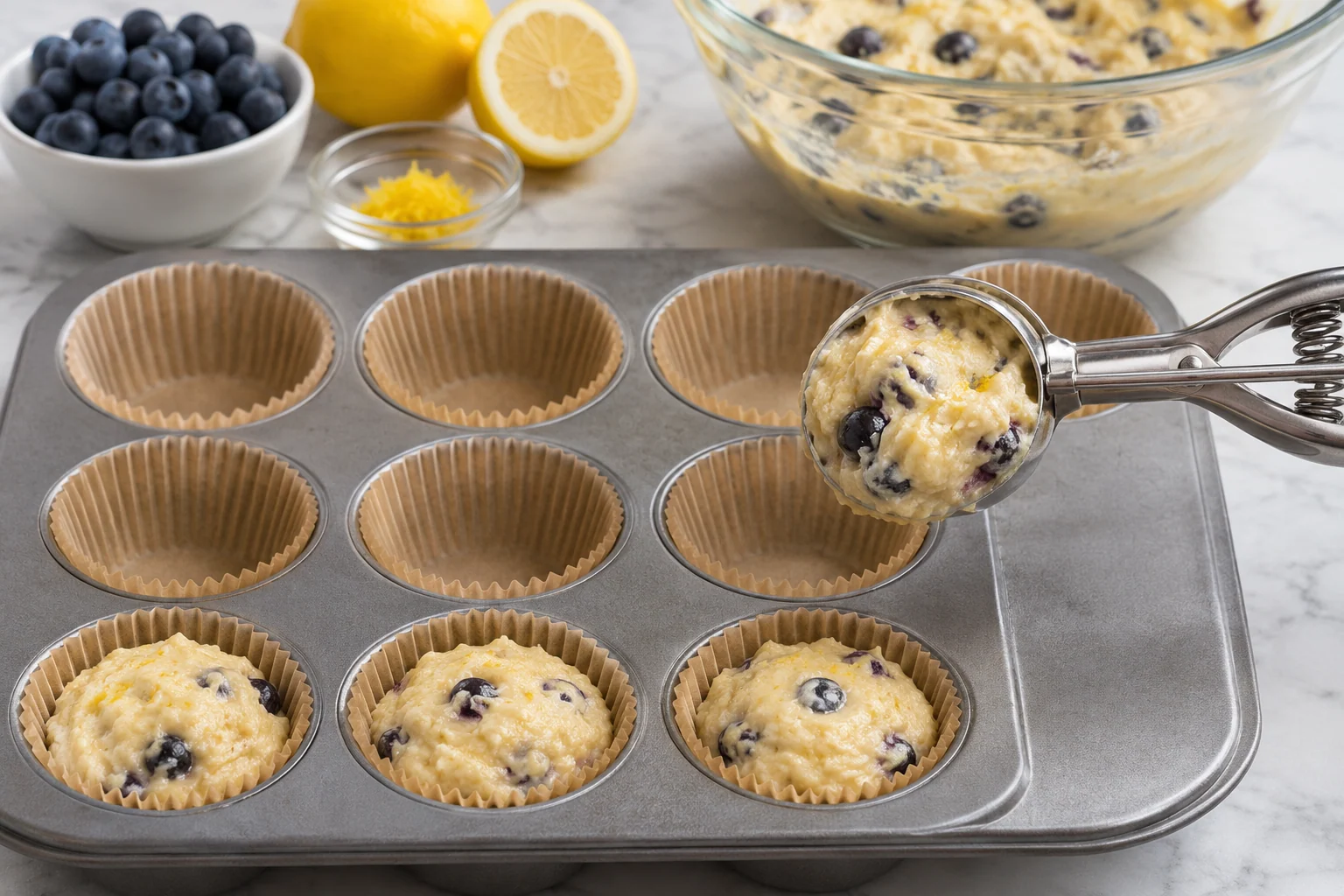
How full should mini muffin cups be?
Many mini muffin recipes follow a similar two-thirds to three-quarters principle, but the exact batter volume is much smaller. Mini portions bake quickly and overflow easily when overfilled. Follow a dedicated mini muffin recipe or a tested conversion that supplies its own portion and baking time.
For small wells, Mini Muffins (Banana, Zucchini, or Apple) pairs the smaller portions with a short baking window.
How full should jumbo muffin cups be?
Jumbo wells contain more batter, but their capacity varies. A tested jumbo recipe may fill quite generously to produce a high crown, yet the larger centre takes longer to cook. Avoid cramming all the batter from a standard recipe into too few oversized wells. Follow a published jumbo formula or a validated scaling approach.
The recipe for Bakery-Style Jumbo Muffins starts with six jumbo liners. Match the wells and follow its heat sequence when you want a similar dome.
Paper liners versus greased pans
The paper and pan determine the effective cavity size. A liner that folds inward can make the space smaller, while a tall tulip wrapper may extend above a standard well but not turn that well into a true jumbo pan. Use the type and size specified by the recipe and packaging.
See the pan preparation in Vegan Corn Muffins and compare how the sides release once the crumb is set.
Why tulip liners look taller
The points of a tulip liner can stand well above the metal. Look down at the line where the paper meets the rim of the tin. Portion in relation to that line unless the recipe specifically calls for a taller fill and the liners it uses can support it.

Batter thickness matters
A thick batter may pile up slightly above the scoop line and hold fruit or chocolate pieces in place; a thin batter spreads level. Both can produce good muffins with an appropriate formula. An unusually runny batter may need less filling than a very thick bakery-style recipe, but do not change the volume without checking its stated yield.
The purée in Sweet Potato Chocolate Chip Muffins gives you a thick batter whose peaks may need a gentle nudge into each cup.
Frozen berries and other add-ins
Fruit, nuts and chocolate chips add weight and sometimes liquid. A scoop of batter with a large frozen berry pocket can weigh differently from one without it. Fold additions evenly and fill to the prescribed level. Extra berries may make a normally correct portion too wet in the centre.
In Blackberry Cornmeal Muffins, place berries in several wells as you portion rather than leaving the largest ones for the last muffin.
Banana and pumpkin muffins
Fruit purées make a batter relatively moist and can influence how high the muffins rise and how quickly the centre sets. A banana muffin recipe should tell you its expected yield and fill level. Adding extra purée or overfilling to make a larger muffin may cause sinking rather than a taller dome.
The batter and topping in Pumpkin Muffins occupy different layers. Judge the batter level before sprinkling anything over it.
Why muffin tops spill onto the pan
A muffin with an overhanging cap may be intentional. A sheet of batter joining neighbouring wells usually means the portions were too large for this batter and tin. Note the yield, the scoop you used and whether the batter spread before it began to climb.

Why short muffins happen
Low fill level is one possibility, but a weak rise can also come from old baking powder, an inaccurately cool oven, overmixed batter or the wrong leavening balance. If the pan was properly filled and every muffin is flat, investigate the recipe and oven rather than adding more batter automatically.
How to get a tall dome
Choose a muffin recipe formulated for a high crown. Some use a thick batter and a particular oven temperature schedule. Consistent scooping, correct leavener and a fully preheated oven matter. Overfilling an ordinary recipe is not a substitute for a well-tested bakery-style formula.
Study portion size and oven instructions together in Olympic Chocolate Muffins before attempting the same high dome with another batter.

Should you fill unused wells with water?
Some bakers add water to empty muffin wells, but it is not a universal requirement and may create unnecessary handling or splash risks. Follow the pan manufacturer's directions and your particular recipe. Don't pour water into a hot pan or overfill it in an attempt to influence oven humidity.
Checking doneness after a larger fill
With a larger portion, a brown top can arrive before the centre has set. Check a middle muffin with a thin skewer in the plain crumb. If the skewer passes through a berry or a chocolate chip, test a nearby spot before you extend the bake.
Test Double Chocolate Muffins beside a chocolate piece. A dark top alone will not tell you when an extra-large portion is ready.
Cooling and liner release
After baking, rest muffins in the pan for the recipe's stated period, then transfer to a rack. Leaving them in a hot pan longer than needed can trap moisture near the paper and soften bottoms. Don't wrap them warm, and refrigerate perishable filled muffins as required.
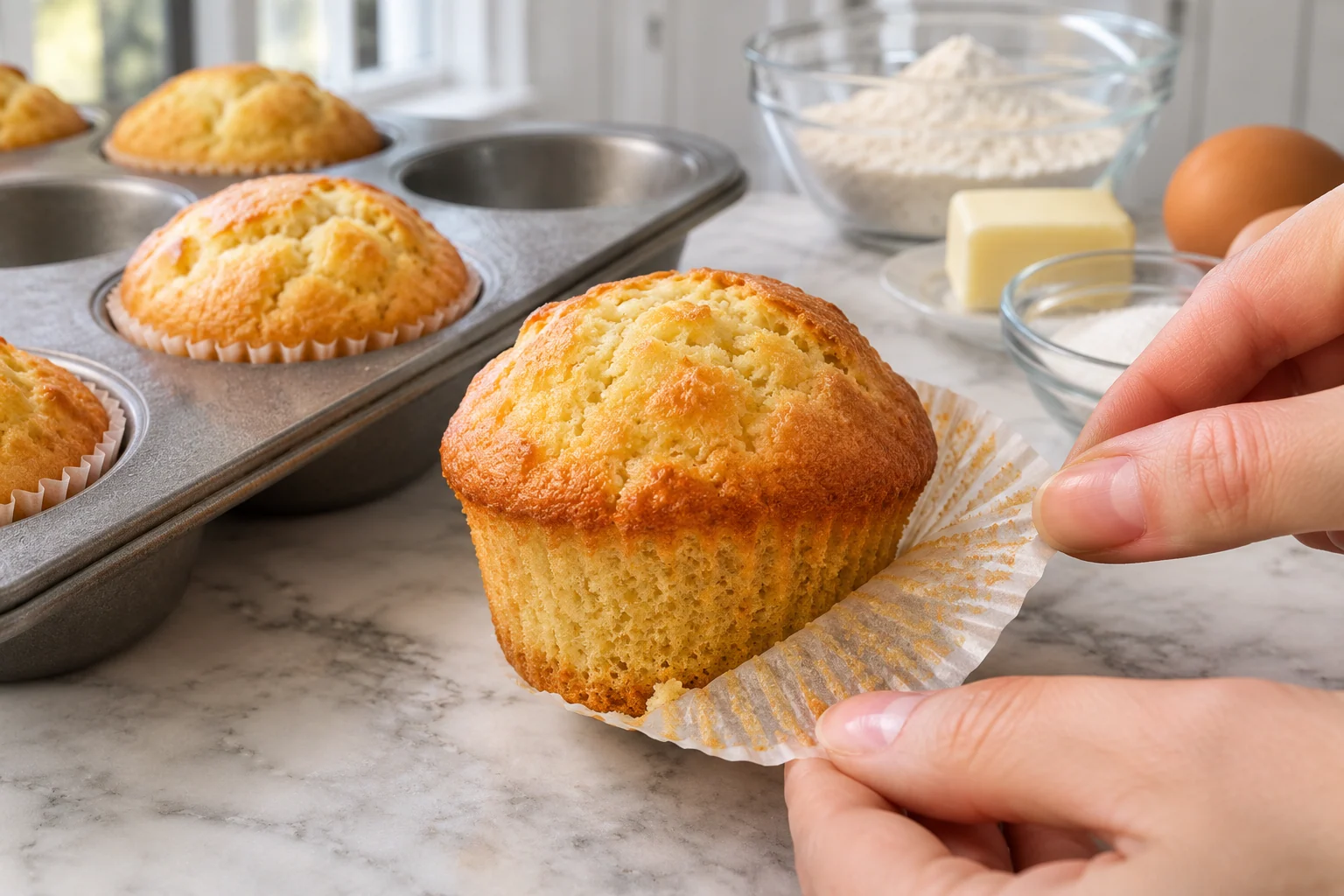
A simple controlled test
Use one batter and one pan. Put equal smaller portions into several wells and equal larger portions into a few others, marking the positions on paper. Compare both height and centre texture, and remove the smaller group first if it finishes early.
For a comparison using Tim Hortons Copycat Lemon-Cranberry Muffins, weigh the batter in each test cup before sharing out the topping, which can conceal the fill line.

Frequently asked questions
What is the best fill level? The one stated by a tested recipe; often two-thirds to three-quarters for standard muffins. Can I fill tulip liners higher? Only when the recipe supports it. Do jumbo muffins use the same scoop? Usually not; wells are larger. Why are my muffins flat? Insufficient batter is one possibility among several. Why did mine overflow? Start by checking batter weight and pan capacity.
Fill for consistency, not drama
An evenly portioned tray will bake more predictably than a tray of cups filled to different heights. Match the fill level to the recipe, use a consistent scoop and check the centres. Those habits are far more useful than trying to force a bakery dome by filling every liner to the edge.
IN PICTURES
From the baking notebook
FROM THE RECIPE BOX


