On this page
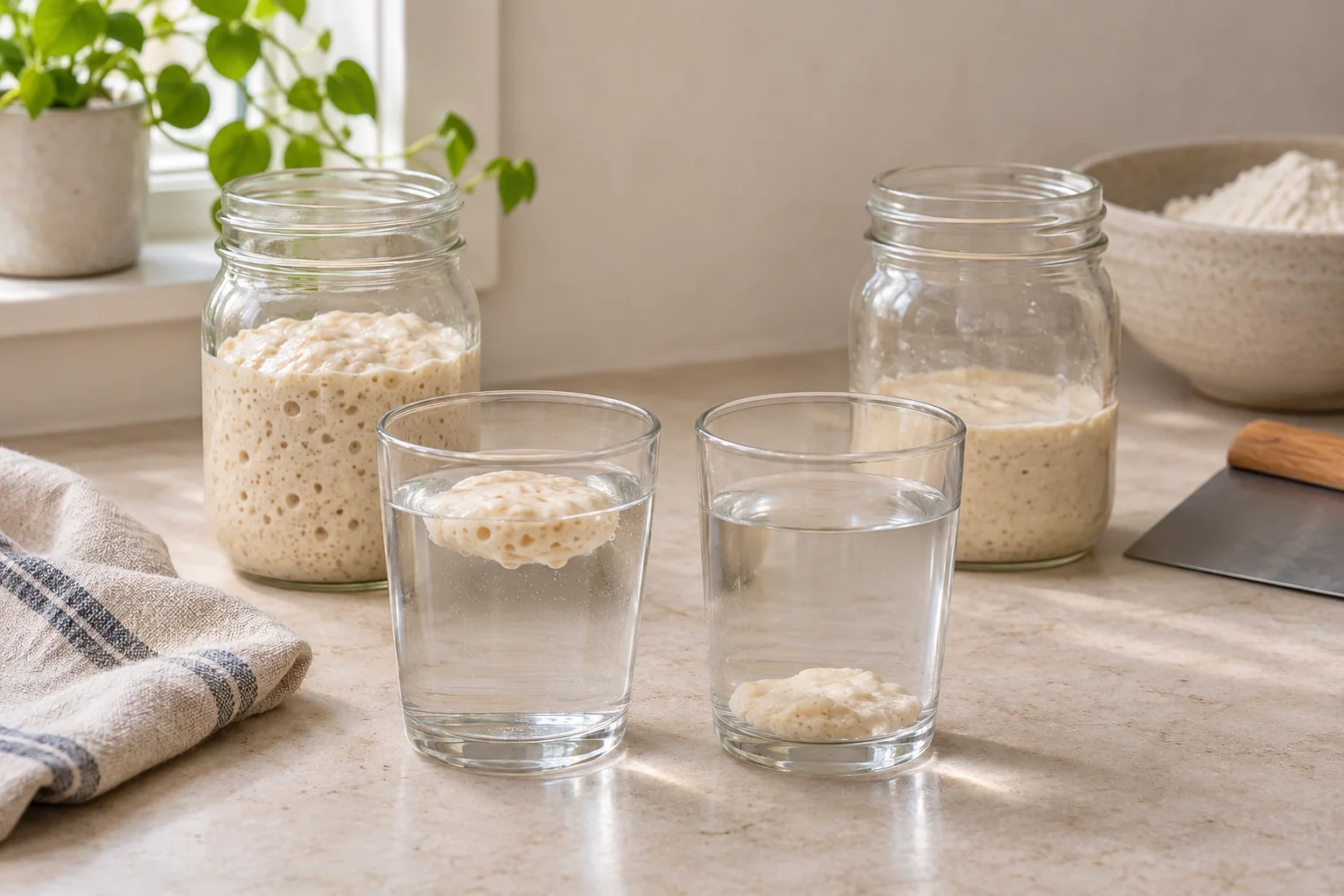
The sourdough float test is wonderfully simple: drop a spoonful of starter into water and see whether it floats. Many tutorials claim a floating sample is ready for bread and a sinking sample needs more time. It's appealing because it gives an immediate answer. The trouble is that floating measures buoyancy and trapped gas, not the whole fermentation system. A vigorous culture may sink after being stirred, and an immature culture may float after an early burst of bubbles.
What the float test actually measures
A sample floats if its effective density is lower than water, often because gas bubbles are trapped in the mixture. A sample sinks when that balance changes. The result is affected by hydration, how much gas remains, the size of the spoonful and how it's handled. It does not directly measure yeast population, microbial balance or the ability to leaven a full loaf.
Why the test became popular
Before clear straight-sided jars and kitchen scales became common in home sourdough discussions, a quick float test seemed like an easy check for an aerated starter. It can occasionally confirm that a sample contains a good amount of gas, but it was never a comprehensive laboratory test for leavening strength.
How a vigorous starter can sink
Stirring starter knocks out gas. Scooping from a very liquid mixture or pressing the spoon against the jar can collapse bubbles. Even near its peak, a disturbed sample may sink. That doesn't mean the microorganisms have stopped fermenting or the culture suddenly needs several new feedings.
How an immature starter can float
During early starter development, microbes may produce gas before the culture is stable enough for dependable bread fermentation. A sample from that short-lived burst may float, yet subsequent feedings may be inconsistent. A repeatable rise is stronger evidence of readiness than one buoyant spoonful.
How hydration changes buoyancy
A stiff starter may retain gas differently from a very wet starter. A more fluid culture may release bubbles easily and sink despite meaningful activity. Comparing float results from two starters with different hydrations doesn't provide a fair strength test.
Why sample technique changes the result
A gently lifted spoonful may preserve more bubbles than one stirred thoroughly before being dropped. Water temperature, sample size and the container can also affect the outcome. If a test gives different answers depending on how carefully you scoop, it isn't a dependable single gate for baking.
The better test: mark and watch the jar
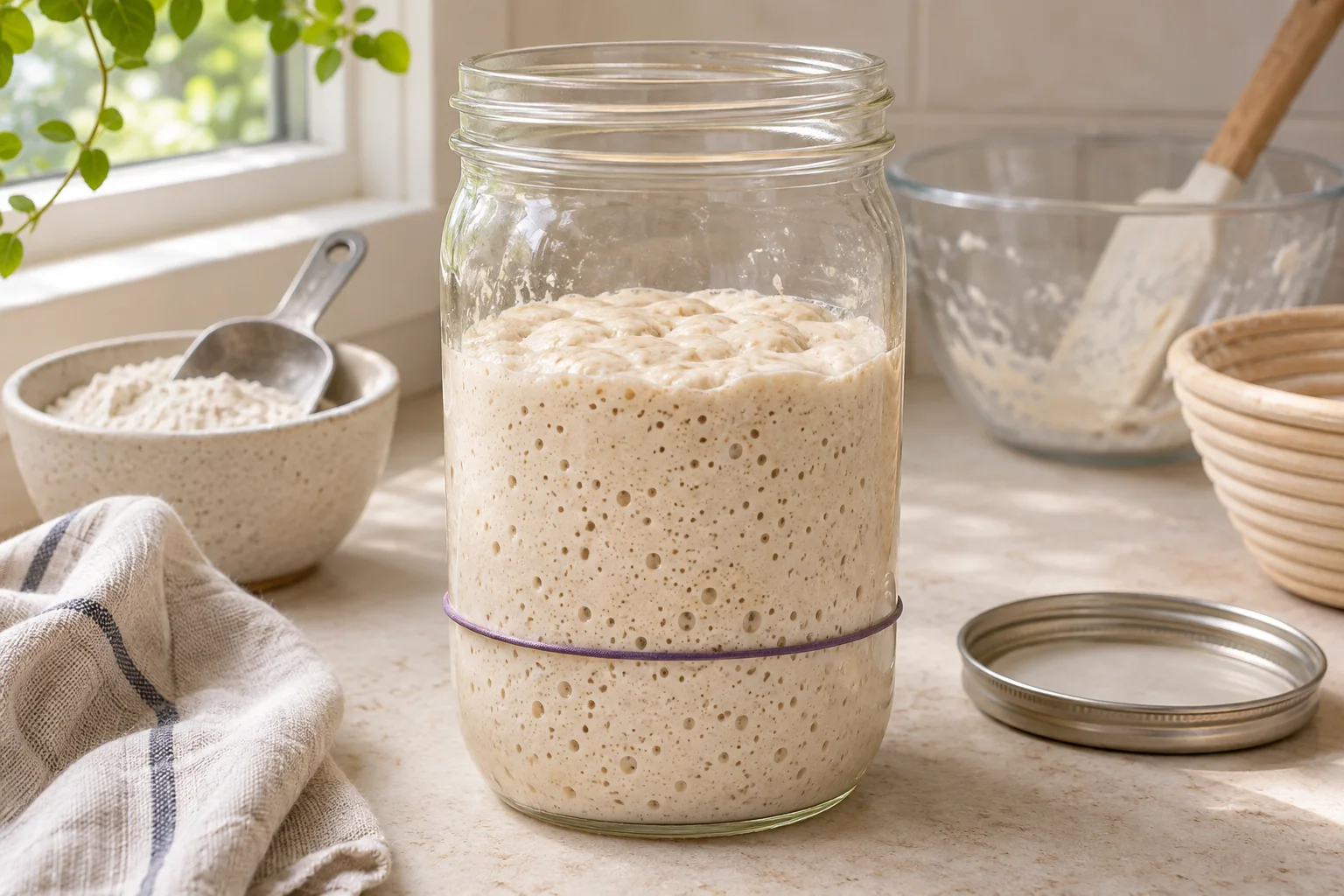
After feeding measured flour and water, mark the mixture's starting height and observe its expansion. A healthy established starter should develop bubbles and a reproducible rise-and-fall pattern. This directly shows that fermentation and gas retention are occurring under your normal maintenance conditions.
Why consistent peak timing matters
If your starter reaches a similar peak after repeated feedings at comparable temperature and ratio, you can confidently plan bread mixing around its mature stage. That consistency is more useful than an isolated floating sample, especially when the dough relies entirely on natural leavening.
What does a ripe starter look like?
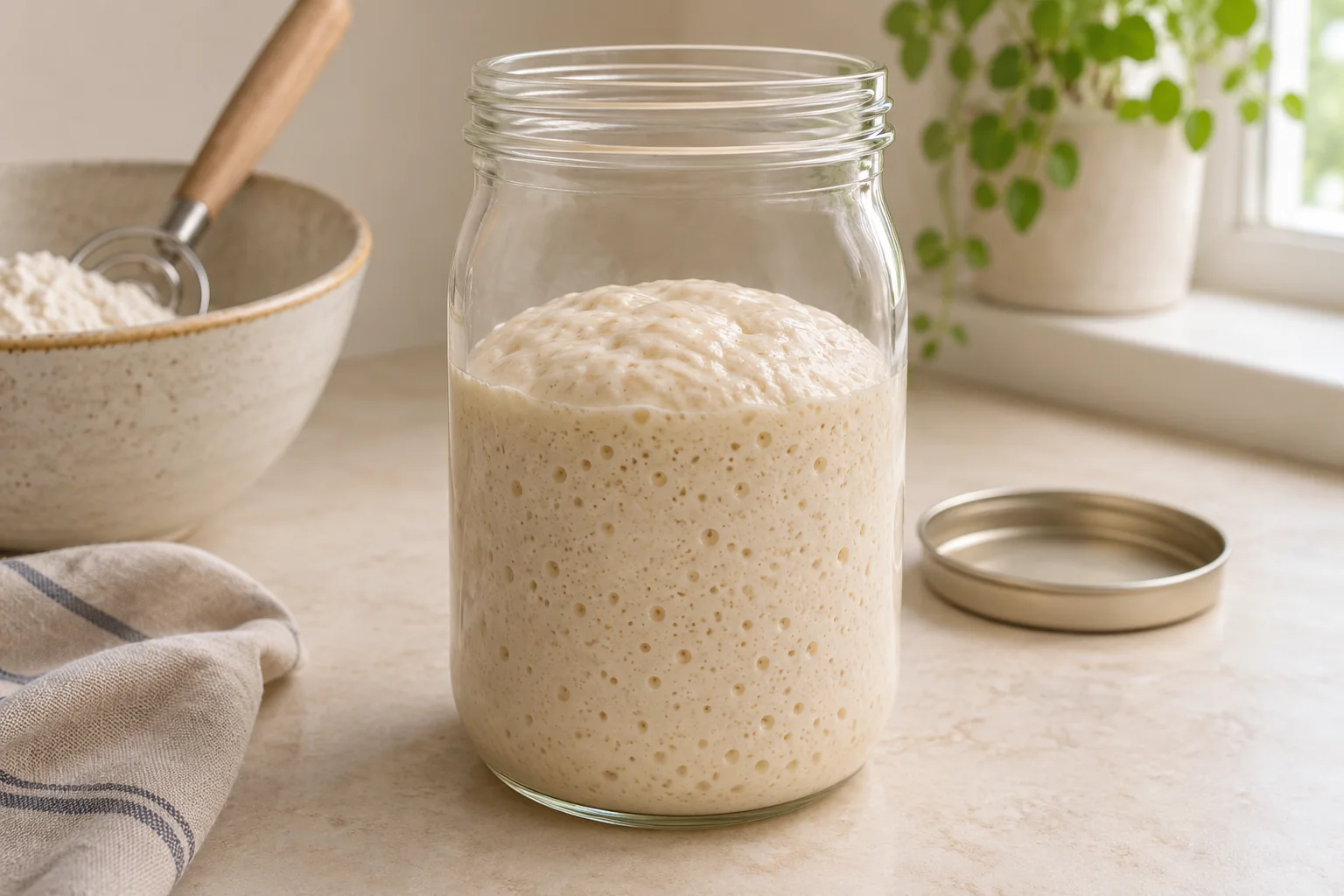
Many ripe starters are visibly aerated, have expanded significantly and show a gently rounded or leveling surface near peak. The exact rise depends on hydration, flour and temperature.
Can the float test work as an extra clue?
Yes, if you understand its limits. A floating sample can suggest the starter is aerated. It should not override clear evidence that the culture is new, sluggish or inconsistent. Conversely, a sinking sample should not automatically stop you from baking when the jar's growth pattern and recipe's other cues are excellent.
Should you test your levain instead of mother starter?
A levain is a measured starter build prepared for a specific dough. Its hydration and flour composition may differ from the mother culture, so the float test becomes even less comparable. Evaluate the levain's maturity according to its formula—often volume, bubbles and timing near peak.
Recipe to try: Sourdough Country Loaf. The loaf calls for active starter. Check its maturity and the dough’s fermentation cues before moving on to shaping.

Starter age matters
A mature starter with weeks or months of reliable performance offers more confidence than one built only a few days ago. New starters can behave unpredictably and benefit from the full feeding schedule recommended by a trusted guide. Don't let a float result replace the work of building a stable culture.
What if it floats but your bread is dense?
Look beyond the starter. Inadequate bulk fermentation, poor gluten development, shaping that removes too much gas, over-proofing or insufficient oven heat can all produce a dense loaf. The float test cannot diagnose any of those dough-stage problems.
Recipe to try: Sourdough Ciabatta. Ciabatta provides a different dough and loaf shape to practise with. Keep its hydration and handling instructions together.

What if it sinks but your bread rises beautifully?
That is entirely possible. Fermentation capability is not reducible to sample buoyancy. If a mature culture rises predictably after feeding and your bread has consistent oven spring and crumb, there is little reason to change a successful process because a spoonful sank.
How to check peak without touching starter
Use a transparent jar and observe the height and texture from outside. A slightly domed top near maximum rise and a later receding level often reveal the cycle. This preserves the gas and prevents repeated sampling from interfering with what you want to measure.
Why strong acidity isn't a readiness test either
A sharply sour starter may have been left hungry for a long time. Acidity contributes flavour and reflects fermentation, but it doesn't guarantee high gas-producing activity when you mix dough. Assess the starter's growth after fresh feedings rather than its strongest smell.
Can you measure readiness by hours?
Only approximately. At warm temperature, a 1:1:1 culture may mature much sooner than one fed at 1:4:4. A cool kitchen changes timing further.
A simple alternative readiness routine
Feed the starter by weight and label the time and temperature. Mark its height and observe bubbles, rise and the point when growth slows. Repeat over successive feedings. If the culture meets the recipe's maturity cues, use it near that stage. This routine requires no float test at all.
Recipe to try: Sourdough Crackers. These crackers use sourdough discard. Use discard from a healthy established starter and bake it fully; this is not a raw-starter snack.

Avoid tasting raw starter
Some people use taste as a maturity check, but starter contains raw flour and fermentation doesn't eliminate all food-safety hazards. You don't need to taste an uncooked culture to assess activity. Use visual and timing cues instead, then bake the dough thoroughly.
Frequently asked questions
Does floating guarantee ready starter? No. Does sinking mean it's dead? No. Is the float test useful for sourdough discard? It isn't a reliable determination of leavening potential. Can you bake without doing it? Absolutely. What's more dependable? Repeated growth after feeding and the correct maturity for the recipe.
Look for a living pattern, not a magic trick
A good starter's signature is how it responds to fresh food, not whether one spoonful floats. Watch it rise, peak and fall over repeated cycles. That approach gives you the information you actually need to make sourdough reliably.
IN PICTURES
From the baking notebook
FROM THE RECIPE BOX


