On this page
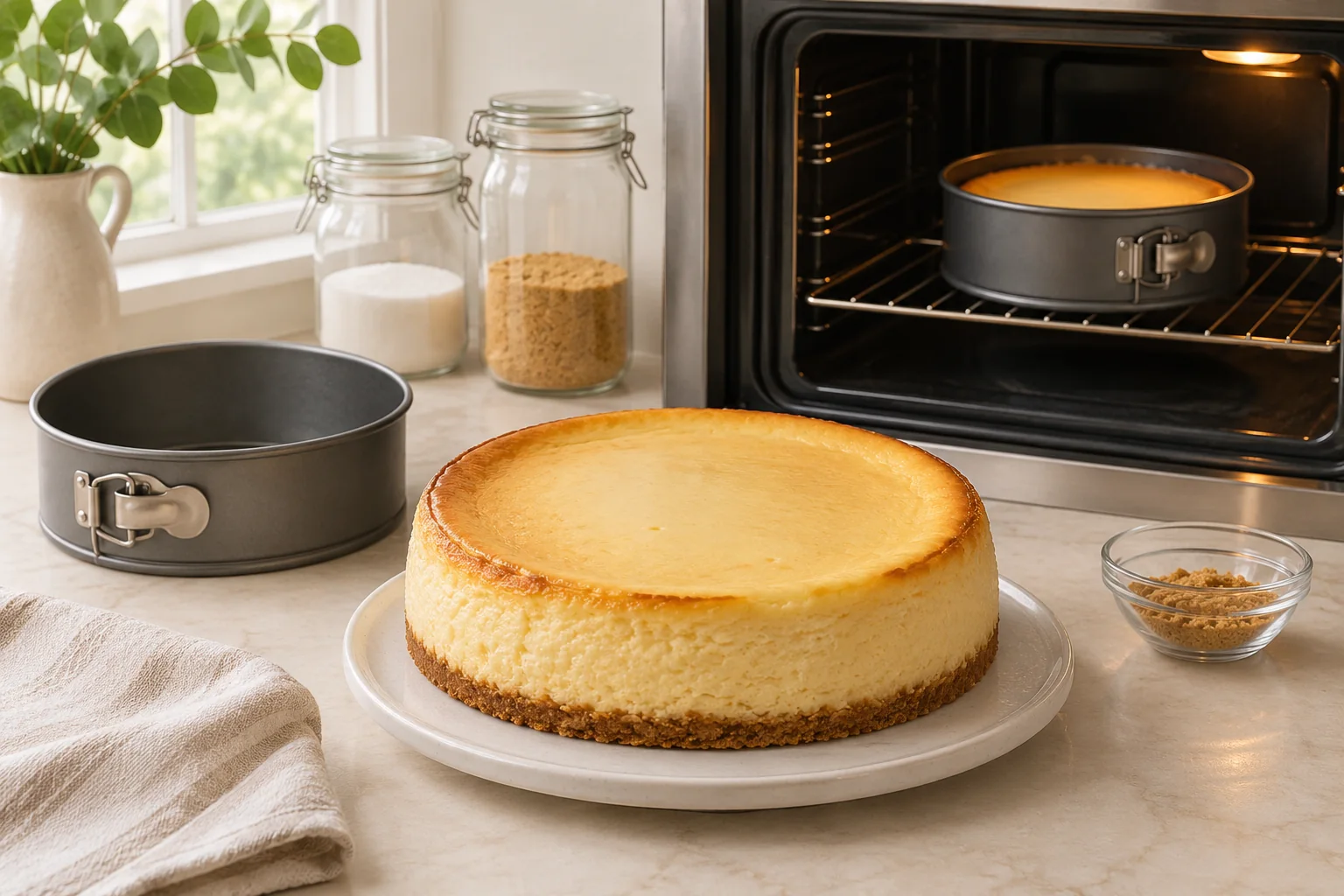
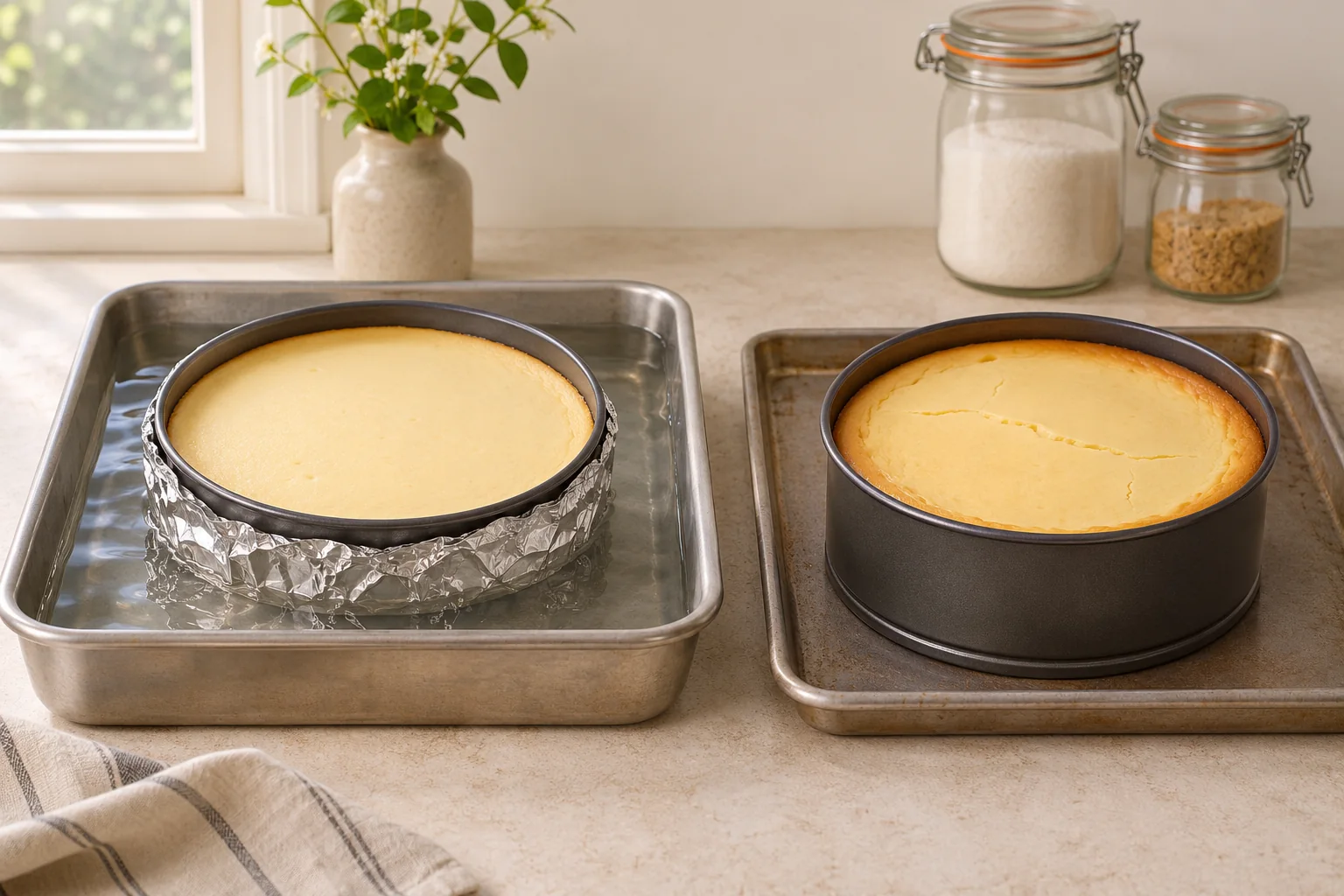
The thought of balancing a springform pan in a larger tray of very hot water makes some home bakers nervous. The good news is that cheesecake can be baked without a water bath when the recipe is designed for that method. What you lose is some temperature buffering around the sides; what you gain is simpler setup and no chance of bath water leaking into the crumb crust. Gentle mixing, appropriate oven heat and accurate doneness become especially important.
Yes, dry-oven cheesecake can work
Several established cheesecake recipes bake successfully without submerging the pan in water. They use their own oven temperatures, filling ratios and cooling schedules. The right approach isn't to delete the bath from a water-bath formula and hope the timing stays the same; choose a proven dry-oven recipe.
What the water bath normally does
Water around a springform limits the temperature of the pan's submerged sides and promotes gentler, more even heating. Without one, you need other ways to avoid excessive edge heat and overbaking.
Choose a suitable cheesecake formula
Some recipes use sour cream, heavy cream or other ingredients to help maintain a silky texture. A shallow cheesecake pie may cook more evenly than a very deep tall cake. Read the recipe carefully for pan size, dairy type and recommended oven temperature before starting.
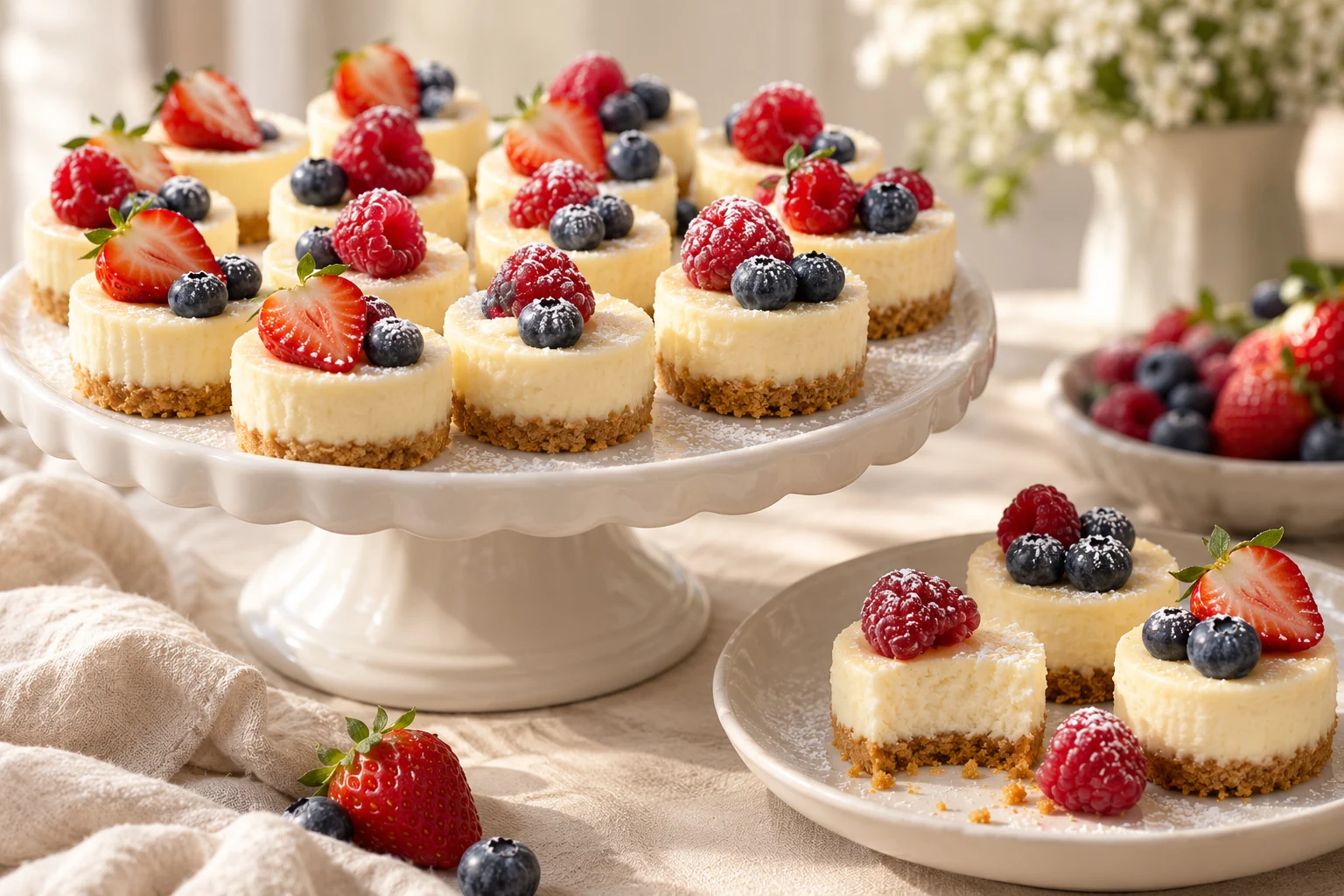
For comparison, our Classic New York Cheesecake uses a water bath. Keep that recipe’s bath in place if you make it. For a dry oven, start with a recipe written for that method, such as the miniature version below.
Use the pan specified
A nine-inch springform and a ten-inch springform hold different batter depths with the same filling quantity. A smaller pan creates a deeper centre that takes longer to bake. Use the stated size and make sure the sides are tall enough; an overflowing cheesecake is far harder to rescue than a small surface crack.
Light-coloured pans can help
Dark metal tends to absorb radiant heat more efficiently and can make the edges cook more aggressively in some ovens. The formula may be tested in a particular pan, so follow its setup rather than assuming all metals behave alike.
Begin with compatible ingredient temperatures
Cream cheese must be soft enough to blend into a uniform filling without long aggressive beating. Cold eggs or sour cream can make mixing uneven. Prepare ingredients as the recipe specifies, using safe limited time out of refrigeration rather than leaving dairy on the counter for hours.
Mix at low speed
Excessively whipped cheesecake batter traps air, which expands in the oven and can encourage cracking as the cake settles. Beat just enough to remove cream cheese lumps and incorporate eggs thoroughly. Scrape the bottom and sides of the bowl so no dense patches remain.
Prepare the crust correctly
Some cheesecake recipes prebake a graham cracker crust, while others bake the base along with the filling. Follow the formula. A crust that is still loose or oily may crumble on slicing even if the cheesecake itself is silky.
Preheat accurately
A thermostat display is not always the oven's true temperature. When repeated dry-oven cheesecakes crack or become brown at the edges, use a suitable independent thermometer to check oven heat. A very hot oven isn't compensated for by simply cooling the cake more slowly afterward.
Rack placement matters
Follow the recipe's rack position, often near the middle or lower-middle of the oven. A pan close to an intense top element can brown or puff unevenly. Don't improvise a baking stone or inverted sheet beneath the springform unless the recipe supports that method.
Don't open the door constantly
Frequent opening causes temperature swings and may make judging progress harder. Use the oven light and inspect at the scheduled stages. When you do check the cake, move the pan gently so you can see the centre without splashing batter or disturbing the crust.
Use the right doneness cue
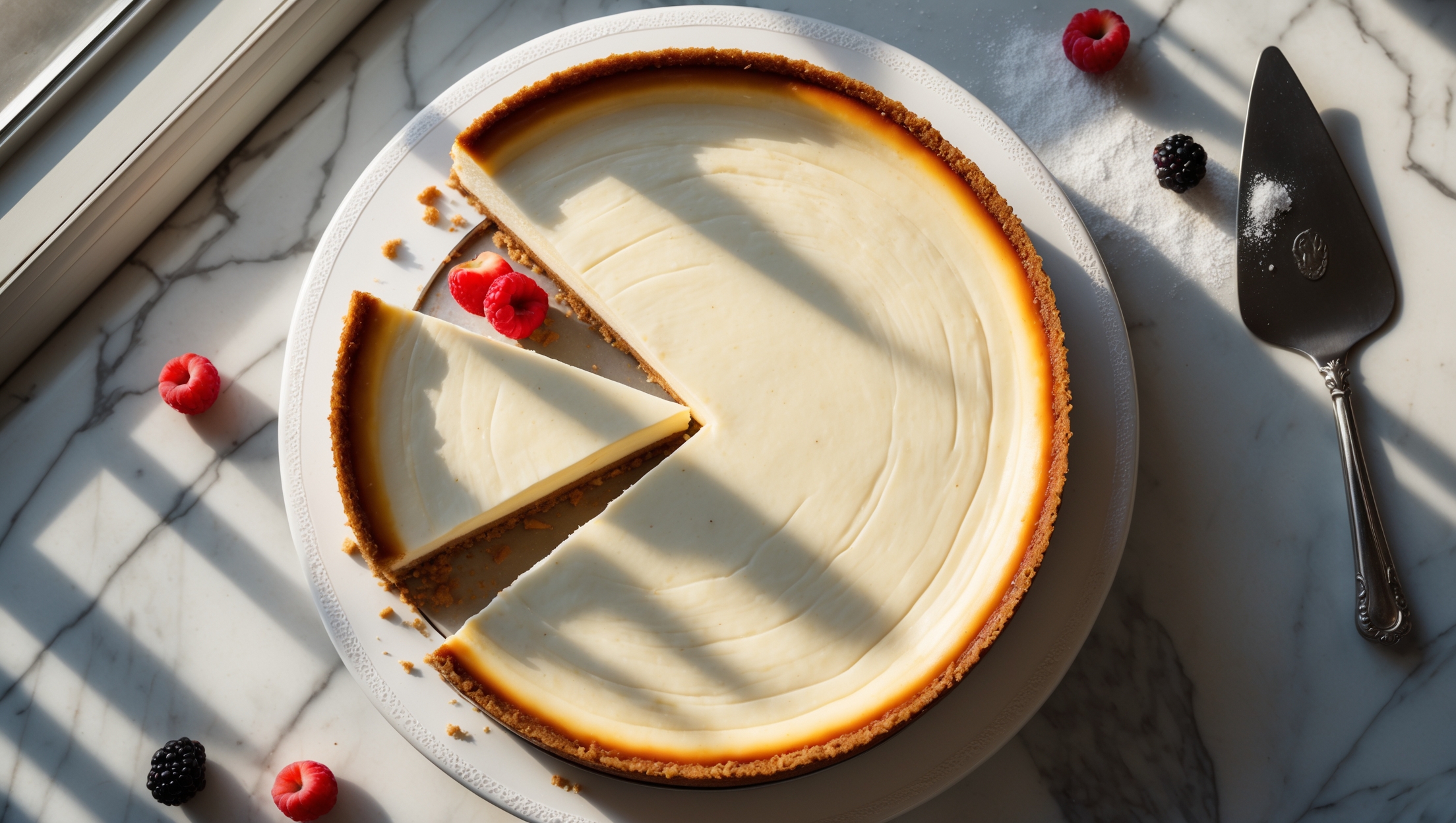
A baked cheesecake commonly has set edges and a small centre region that wobbles like gelatin. A thermometer can help for formulas that provide an internal target and probe location. Do not bake until the centre is completely rigid unless the recipe calls for that texture.
Our Mini Cheesecake Bites bake in a muffin tin in a dry oven. Their size changes how quickly the centre sets. Follow the portion size and oven schedule, then refrigerate promptly at 4°C (40°F) or colder.
Do not raise heat to speed up the bake
A higher temperature can overcook the perimeter before the middle sets, increasing the risk of graininess and cracking. If the centre is still very loose near the end, continue using the recipe's controlled method instead of turning up the heat sharply.
Cool according to the dry-oven method
Some recipes use a switched-off oven rest with a slightly open door; others transfer the cake to a rack. The goal is to allow the custard to contract gently as it finishes setting. Follow the original method and then refrigerate safely.
What if your cheesecake cracks?
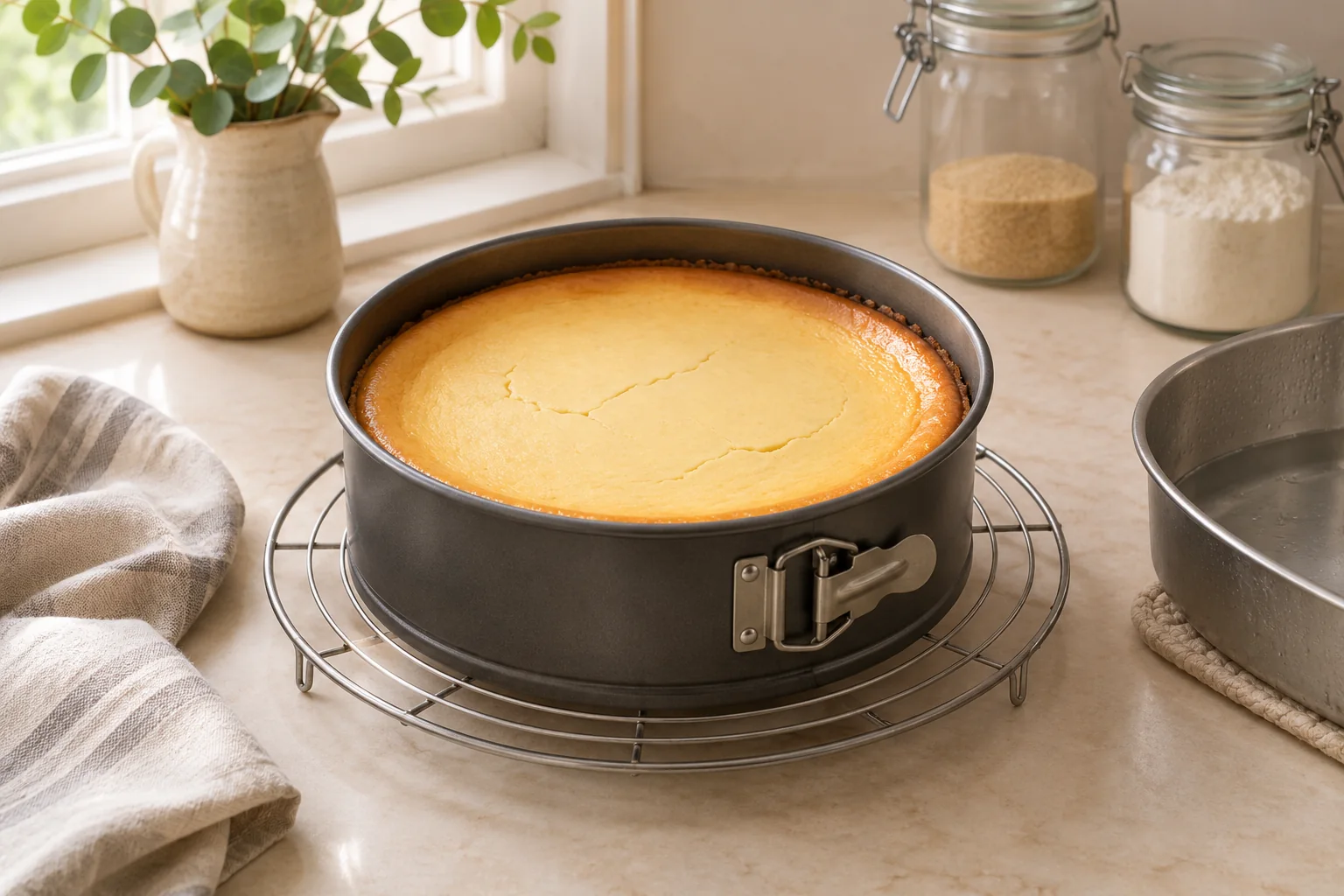
A cracked cheesecake can still taste excellent when fully baked and handled safely. Fruit compote or a recipe-approved sour-cream topping can make it attractive for serving. A crack isn't proof that your no-bath method was wrong, but consider overbaking, mixing and abrupt cooling for the next attempt.
When a water bath remains worthwhile
If you want a very pale, crack-free surface on a tall cheesecake, the added temperature protection can be valuable. A no-bath cake is a deliberate trade-off, not always an equivalent substitute.
Avoid dangerous steam tricks
Do not pour water onto hot oven glass, heating elements or other unsuitable surfaces to simulate humidity. A random pan of water is not the same as a proper bath around the cheesecake and can create scalding hazards. Follow a tested oven method and equipment instructions.
Chilling completes the cheesecake
A baked filling that jiggles correctly when hot typically requires more time to cool and refrigerate before clean slicing. Many recipes specify several hours or overnight. Do not attempt to compensate for underbaking by leaving the cake in the refrigerator for an extra day.
Recipe to try: No-Bake Cheesecake. For a chilled alternative, choose this no-bake formula. Its setting method is separate from an egg-based baked cheesecake.

Frequently asked questions
Can I skip the water bath in any recipe? Not without accepting a changed result; choose a dry-oven formula. Is cracking inevitable without it? No. Is a steam tray equivalent? No. Should the centre wobble? Many formulas say yes. Can I put the hot pan into cold water? No.
Bake with confidence, not guesswork
Use a dry-oven cheesecake recipe intentionally designed for a controlled bake. Proper pan size, gentle mixing, oven accuracy, correct doneness and a full chill do most of the work. Water baths are useful, but they are not the only route to delicious cheesecake.
IN PICTURES
From the baking notebook
FROM THE RECIPE BOX


