On this page
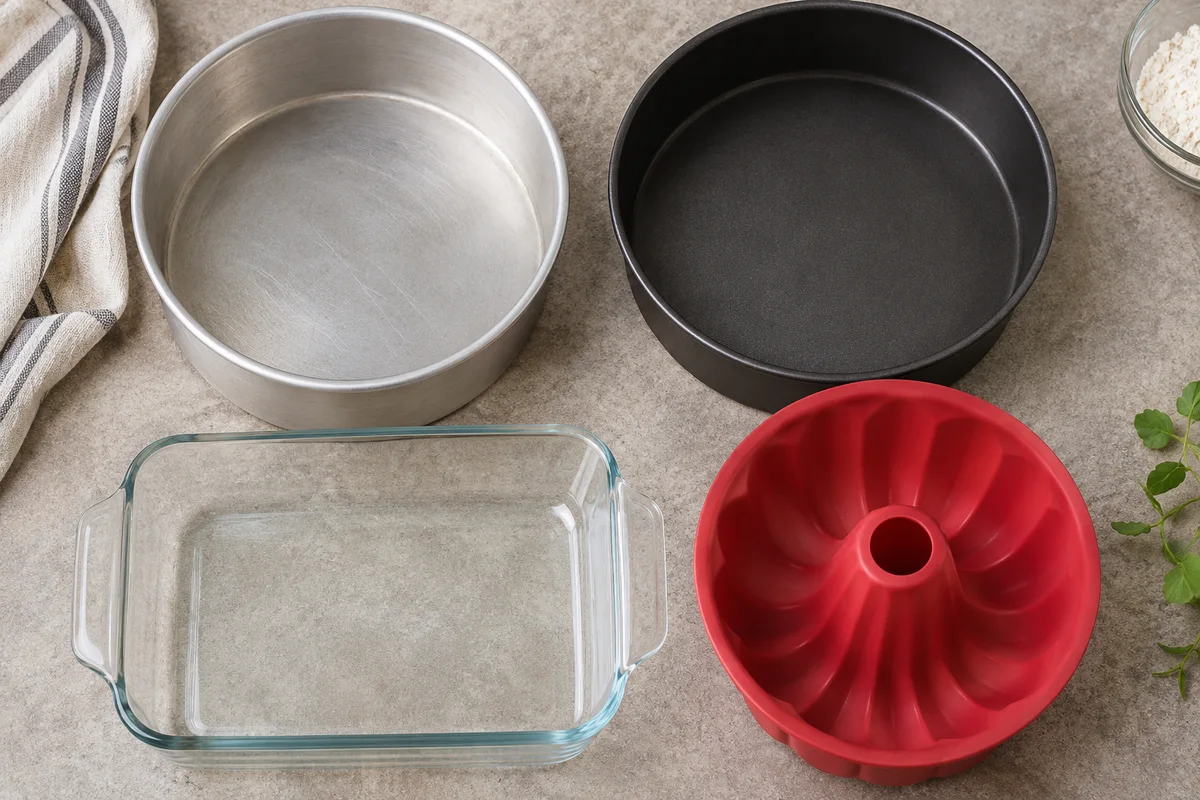
A dark round pan and a clear glass dish can hold the same volume and still give different edges. Start with the pan your recipe specifies. When you substitute, pay attention to batter depth, how quickly the edge sets and whether the cooled cake releases cleanly.
Light aluminum: a versatile starting point
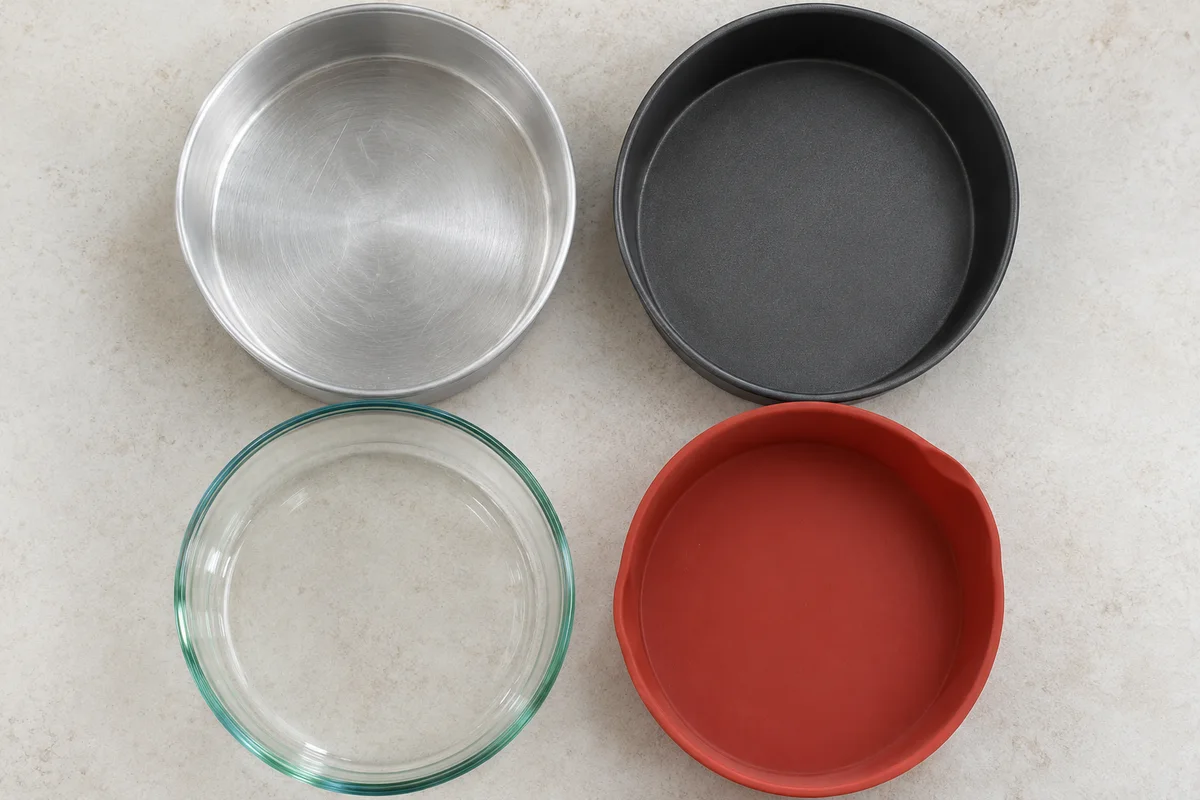
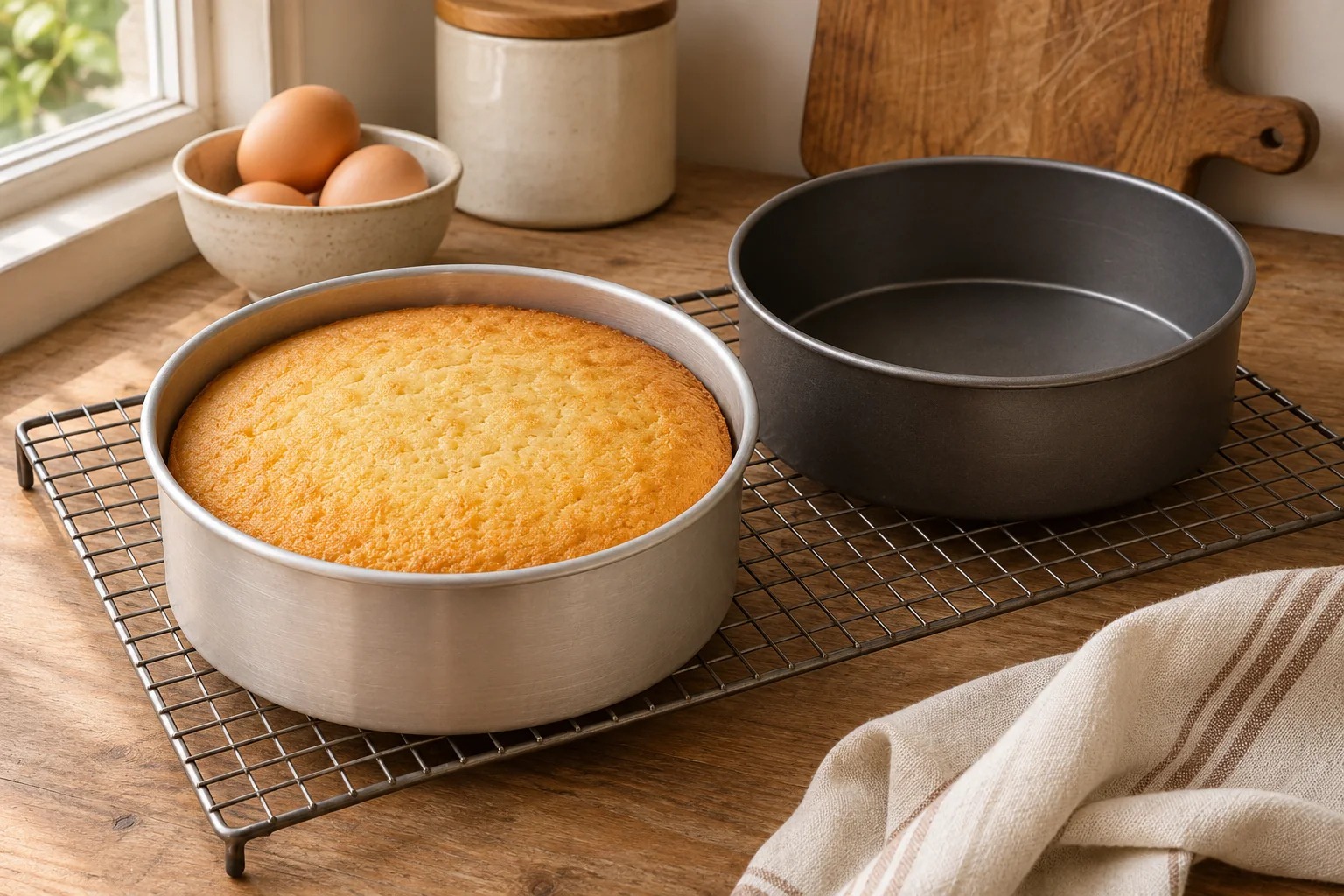
Plain light-coloured aluminum is widely used for cake layers because it transfers heat efficiently and can produce even results in tested formulas. Many professional round cake pans use this material. It is relatively lightweight and available in straight-sided shapes. But actual pan performance depends on thickness, finish and oven conditions; a very thin flimsy aluminum pan is not identical to a heavy professional one.
Use Classic Vanilla Layer Cake to compare the results from two same-size round pans.

Dark metal and nonstick coatings
Dark coated metal often absorbs more radiant heat, which may brown the cake sides and bottom faster than light reflective aluminum. Some nonstick pans release well, but their coatings have manufacturer-specific temperature and utensil limits. If a cake overbrowns at the edges before the center sets, consider whether a dark pan differs from the one intended by the recipe. Avoid making an arbitrary universal temperature reduction without guidance.
Because colour is hard to read on Chocolate Layer Cake, check the recipe’s doneness cues as well as the edge.

Steel pans
Steel pans can be sturdy and may carry dark or light finishes. Steel's conductivity differs from aluminum, but color, thickness and geometry also influence baking. A dark heavy steel pan may not behave like a light thin steel tray. Evaluate the whole pan rather than assuming one material automatically causes burning. Follow the author's equipment recommendation when possible.
Glass bakeware
Glass heats and cools differently from thin metal and lets you see sides of the bake. It is popular for some baking dishes, but many layer-cake recipes are developed for metal pans. A glass dish can produce differently browned edges or a different center timing. Always respect glass cookware thermal-shock limits, and never transfer frozen glass directly to intense heat unless the manufacturer explicitly permits it.
Ceramic bakeware
Ceramic dishes may be attractive for serving baked desserts and often retain heat for some time. Thick walls can alter how quickly heat reaches cake edges and center. Ceramic is often used for home-style snack cakes, puddings and cobblers rather than precision stacked layer cakes, though compatible recipes exist. Check capacity and manufacturer guidance before substituting a decorative ceramic dish for a thin metal layer pan.
Silicone molds
Silicone molds are flexible and can simplify release of some shapes, but they often need support on a rigid oven-safe tray. Their heat transfer differs from metal, and the walls may flex during moving or cooling. Use oven-rated silicone within manufacturer temperature limits. A recipe developed for a metal round pan won't automatically bake identically in a decorative silicone mold.
Pan thickness
Heavy-gauge metal generally resists warping and may distribute heat more evenly in a reliable design. A very thick pan can also heat differently from a thinner one. Thickness interacts with conductivity and color; it can't be judged in isolation. Choose sturdy cookware with flat bottoms rather than a flimsy pan that twists when moved into the oven.
Straight-sided versus sloped pans
Straight-sided cake pans produce layers that stack neatly without excessive trimming. Sloped pans may create tapered sides more appropriate for certain snack cakes or serving dishes. Measure the actual internal dimensions because a nominal eight-inch diameter could describe the top rim rather than the base. A tapered pan holds less batter at the same height than a true cylinder.
Round pan diameter
Area changes with the square of the radius. An eight-inch round has approximately 50 square inches of base area, while a nine-inch round has about 64—roughly 27% more. This is a substantial change in batter depth if you pour in the same quantity. Comparing diameters by one inch alone underestimates how differently the cake may bake.
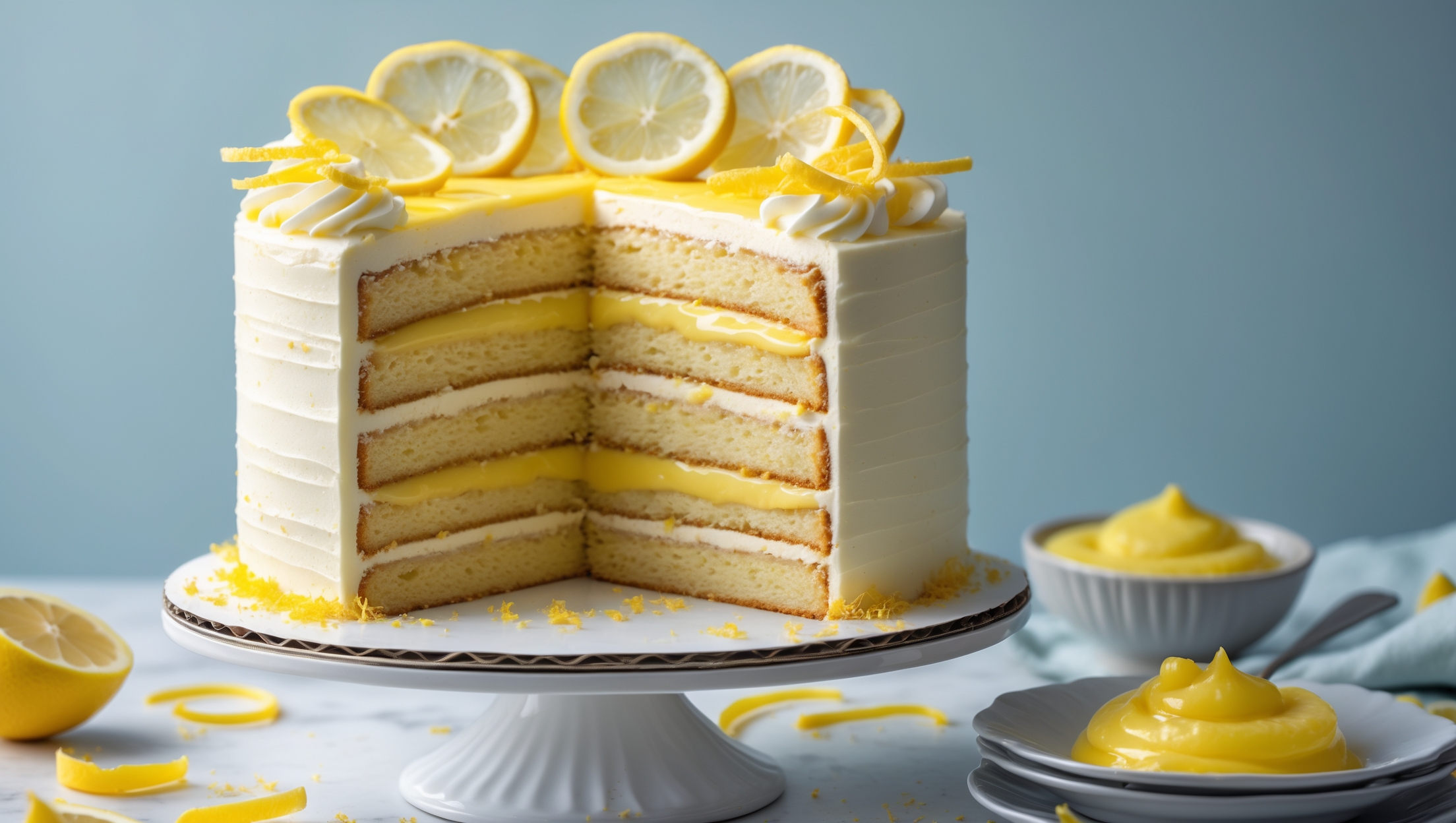
Check the diameter and depth specified for Lemon Layer Cake before dividing the batter.
Square and rectangular pans
A nine-by-thirteen-inch pan has 117 square inches of base area before accounting for sloping walls and usable fill height. It can produce a shallow cake when given the batter for smaller round layers. Use a tested pan conversion and monitor baking time. Square corners may receive heat differently from the center, especially in heavy dark bakeware.
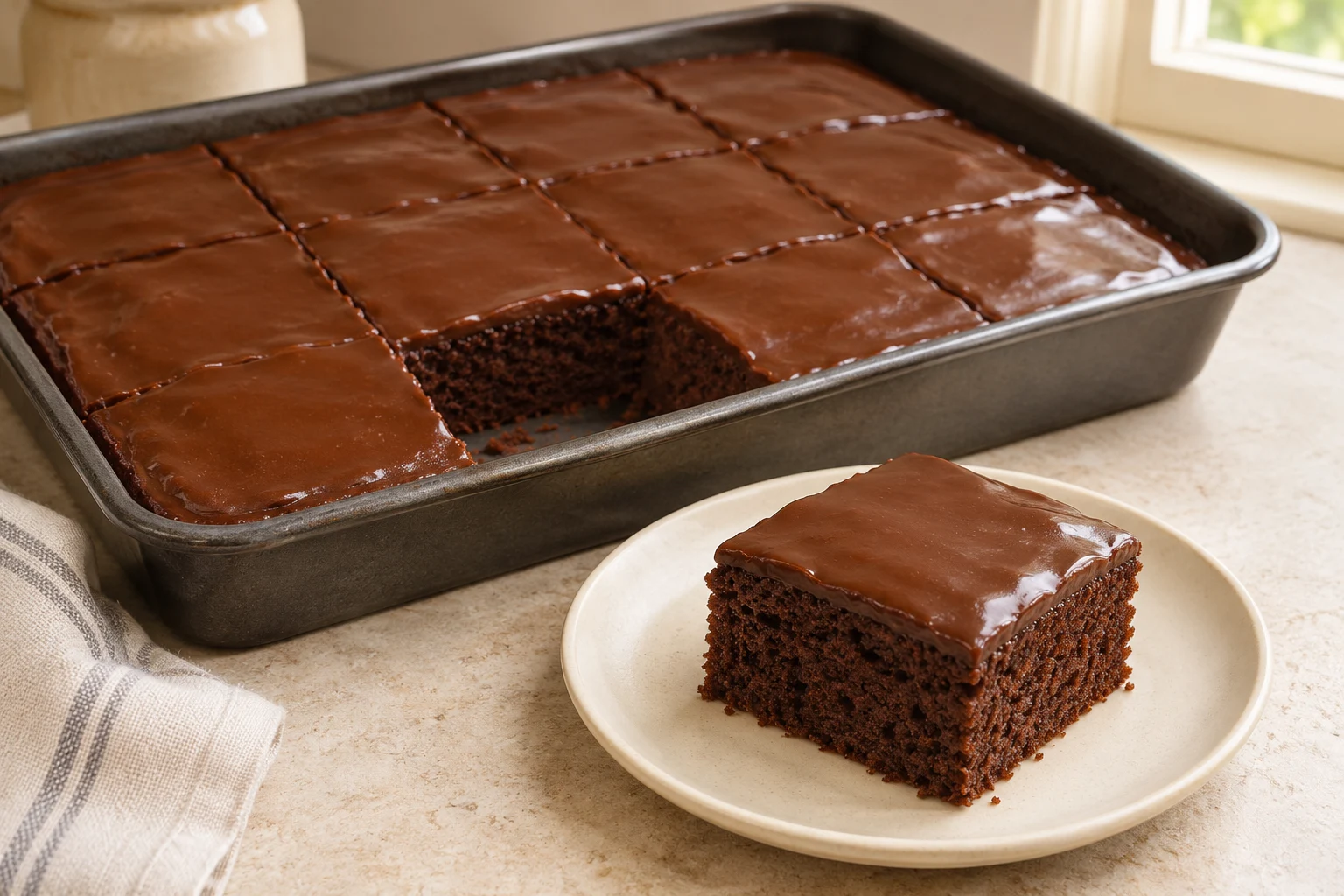
The rectangle used for Chocolate Sheet Cake is a useful reference when comparing sheet-pan dimensions.
Bundt pans
Decorative fluted Bundt-style pans have complex surfaces and often a central tube that helps heat reach thick batter. They require careful greasing and a recipe designed for their capacity. Many are cast metal with nonstick coatings, but exact construction varies. An ordinary layer-cake batter may not hold the desired design or quantity when poured into a large Bundt without adaptation.
The ridges of Classic Vanilla Bundt Cake show why every groove in a fluted pan needs preparation.

Tube pans for foam cakes
Angel food and chiffon recipes may require an ungreased tube pan so whipped batter can cling to the sides and rise. A nonstick cake pan may be unsuitable for such methods. Some foam cakes also cool inverted to protect the structure. Follow the specific formula and pan instruction rather than treating all round pans with holes as interchangeable.
Springform pans
A springform pan has a detachable side ring, making it useful for cheesecakes and delicate desserts that are difficult to invert. The seam can leak thin batter or water when not properly handled. A springform isn't the same as a solid round cake pan for every recipe. Follow safe water-bath and wrapping instructions where needed, without assuming foil creates a perfect leakproof seal.
For a cake that is delicate to unmould, follow the pan and cooling method in Classic New York Cheesecake.

Removable-bottom cake pans
Some straight-sided metal pans have separate bases for easy release. They can help with delicate layers but may leak very thin batter depending on design. Support the base when lifting and avoid handling hot pans by the loose bottom alone. Use the liner and baking sheet recommended by the manufacturer.

Colour versus conductivity
A black nonstick pan may brown strongly because its dark surface absorbs radiant heat, even if its underlying metal conducts differently. A light aluminum pan often behaves more gently. A shiny steel pan and a dark aluminum pan may not match either one. The full surface system matters more than a single material label.
How to grease and line
Some cake pans benefit from a thin coat of fat plus a parchment base, while certain foam cakes need ungreased walls. Nonstick coatings still may require recipe-specified preparation. Avoid spraying large amounts of oil onto a pan as an assumed cure for sticking; pooling grease can affect edges. Use the release method appropriate to the cake type and pan finish.
Cake strips and insulation
Oven-rated insulating strips around compatible metal round pans can slow edge heating and help reduce domes. Use only in accordance with product and oven instructions. Don't apply wet cloth bands indiscriminately to glass, ceramic or unusually shaped cookware. Insulation changes baking dynamics and isn't a substitute for correct batter quantity.
Why dark edges happen
If a cake's sides set and brown before the center finishes, check pan material, oven temperature, fill depth and rack position. A larger or deeper pan needs different heat penetration from a shallow round. Covering every cake with foil at the start may interfere with rise and isn't a universal solution. Diagnose the physical heat path before changing the ingredient ratio.
Pan care matters
Avoid metal utensils on coatings that prohibit them, and dry cleaned pans according to material instructions. Aluminum may discolor from some dishwasher detergents, while ceramic can chip and glass can crack from thermal shock. Silicone molds should be cleaned so grease doesn't accumulate in crevices. Consistent release requires both correct preparation and a well-maintained surface.
A pan test for your kitchen
Bake a tested cake in the recommended pan, recording its material, size, color and time. If testing an alternative, use an approved conversion and examine final height, edge color and center texture. Avoid interpreting one failed substitution as proof a material is always inferior. Your oven and batter influence the result.
IN PICTURES
From the baking notebook
FROM THE RECIPE BOX


