On this page
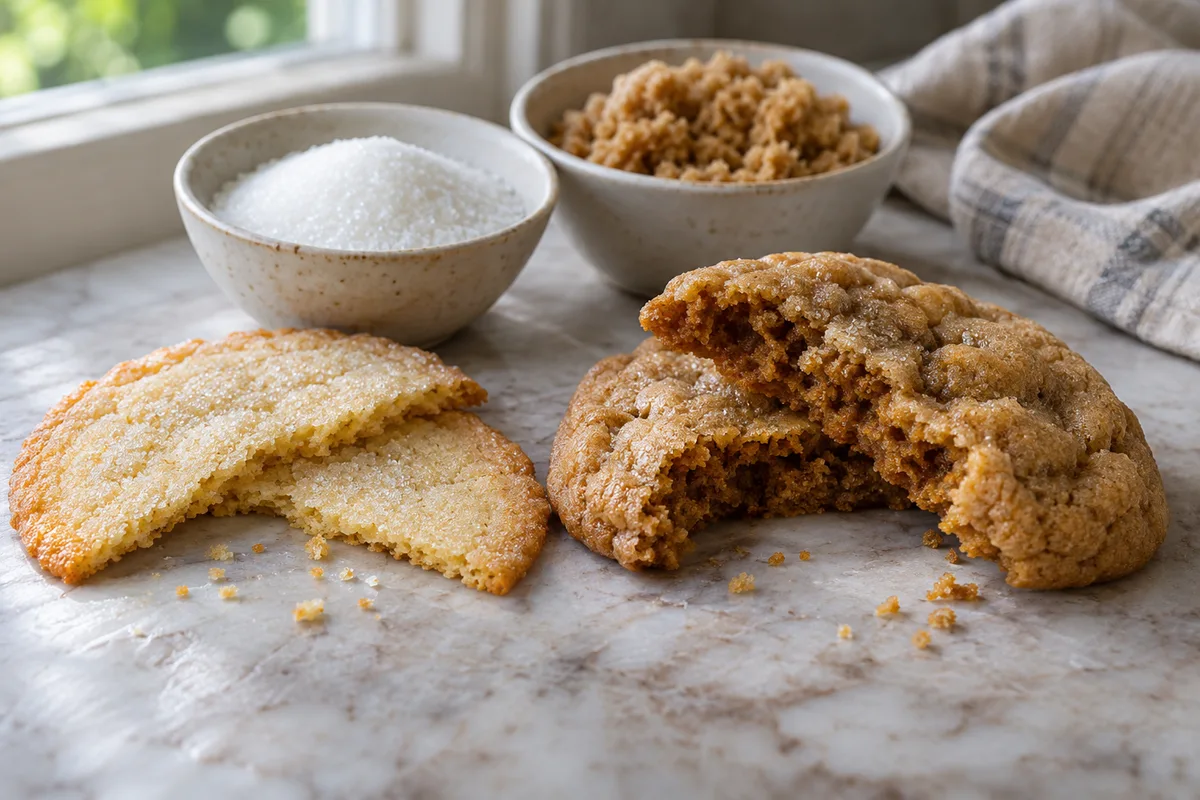
Break one cookie while it is still warm and another after it has cooled. Then save a third for tomorrow. The sugar choice can show up at different times: in a crisp rim, a centre that bends before it breaks, or a molasses note that lingers after the butter flavour fades.
What white sugar brings
Standard granulated white sugar is primarily crystalline sucrose. In baking, it dissolves into available moisture, sweetens and influences how proteins and starches set. Crystals also help aerate softened butter during creaming. The finished texture depends on oven conditions and total water, so a cookie with only white sugar can be crisp or soft depending on formulation.

What brown sugar brings
Brown sugar commonly contains sucrose with molasses, contributing additional water, acidity and darker aromatic flavors. Light and dark varieties differ in molasses intensity, and specialty unrefined sugars vary widely. These differences can influence browning and the cooled cookie's perceived chew. Read the ingredient label and weigh the sugar for precision rather than assuming every brown sugar packet has the same properties.
Moisture retention
Molasses-containing sugars can contribute to moisture retention, which may help cookies stay softer or chewier under certain conditions. A high-brown-sugar cookie may feel flexible after cooling, while an otherwise similar high-white-sugar cookie can become crisper. But baking time, fat, flour and size also matter. A thin overbaked brown-sugar biscuit can still be crunchy.
Break a cooled batch of Chewy Ginger Cookies and compare the centre with a cookie from the same tin the next day.

Why sugar affects spread
As fat melts and sugars dissolve, cookie dough flows before its structure sets. Different crystalline sugars and molasses contents may alter that flow, but the direction is not universal. A recipe with melted butter and more brown sugar can spread differently from a creamed-butter recipe. Compare controlled versions rather than using one ingredient as the sole explanation for diameter.

Acidity and baking soda
Molasses can affect batter pH, and baking soda may react with acidic ingredients. Changing the balance of brown and white sugar can therefore influence leavening and browning in a soda-based formula. A very alkaline dough may taste unpleasant. Do not increase baking soda arbitrarily because the cookie spread seems insufficient.
Crisp edges and chewy centers
Many chocolate chip cookies combine sugars to balance clean sweetness, deeper caramel notes and moisture-related texture. A crisp rim develops through surface drying and browning, while the center can remain softer depending on size and bake. The sugar split contributes but doesn't determine everything. Pan color, scoop weight and dough temperature often make a comparable difference.
Use the sugar proportions in Classic Chocolate Chip Cookies as your starting point for a crisp edge and a softer middle.

Dark brown sugar flavor
Dark brown sugar usually has stronger molasses notes than light brown sugar. It can complement ginger, cinnamon, pecans, oatmeal and chocolate. In a delicate lemon butter cookie, too much dark sugar may overshadow bright citrus. Choose intensity based on the desired dominant flavor. Replacing light with dark may be tolerated by some formulas, but not all produce the same color and spread.
Compare the deeper flavour of Molasses Ginger Cookies before adding stronger molasses notes to a delicate vanilla dough.

Muscovado and specialty sugars
Muscovado and other minimally refined sugars can contain varying molasses levels, particle sizes and moisture. Their flavor may be intense and they can clump. A recipe designed for standard packed brown sugar may behave differently with a specialty product. Use published adaptations rather than assuming equal cups always equal the same sweetness or mass.
How packed brown sugar is measured
Recipes using volume often specify packed brown sugar because its moist crystals leave air spaces unless pressed. The amount of pressure varies between bakers. A digital scale provides more predictable grams, which is particularly valuable for subtle texture comparisons. White sugar is usually measured level and loose by volume, so one packed cup of brown and one cup of white need not weigh the same.
Creaming butter with sugar
Granulated sugar crystals can help create small air pockets in pliable butter, supporting certain cake and cookie textures. Brown sugar can also be creamed, but its moisture and color change visual cues. The mixture won't necessarily turn pale ivory. Melted butter cannot produce the same solid-fat aeration, so mixing method must be considered alongside sugar type.

Melted-butter cookie formulas
Some chewy cookie recipes combine melted butter with a substantial brown-sugar percentage. They may call for chilling to balance spread and hydration. Those decisions are part of a complete system. Changing only the sugar while preserving all other steps may alter cookie diameter and center set. Follow the recipe or use a matched tested comparison.
White sugar in sugar cookies
Classic roll-out sugar cookies may use white sugar for clean vanilla or citrus flavor and controlled appearance. Dark brown sugar changes color, moisture and sometimes shape retention. If sharp cutter outlines are important, use a dough designed for that decoration. Do not add extra flour simply to make a transformed brown-sugar dough hold its shape.
Taste one unfilled half of Sugar Cookie with Buttercream Sandwich Cookies to judge the sugar cookie separately from its frosting.

Brown sugar in oatmeal cookies
Oatmeal dough often benefits from brown sugar's caramel flavor and moisture, but oats also absorb considerable liquid. A chewy cookie requires a suitable total ratio, not brown sugar alone. Add raisins or toasted nuts according to the tested formula, since these change texture. A dense dry oatmeal cookie may reflect overbaking or incorrect oat type rather than a lack of molasses.
Keep the oat weight in Oatmeal Chocolate Chip Cookies constant while testing a different sugar ratio.

Sugar in cake batter
Sugar helps cake tenderness and moisture as well as sweetness. Replacing white sugar with a large amount of brown may darken the crumb and change aeration, pH or the way the cake sets. A spice cake can welcome those effects, while a delicate white cake may not. Choose an appropriate formula instead of treating the sugars as purely flavor-neutral sweeteners.

Sugar in muffins and quick breads
Banana bread, pumpkin loaves and bran muffins often use brown sugar for flavor and soft texture. White sugar may keep a lighter taste and appearance. Moist fruit and additional dairy influence the outcome, so a substitution can behave differently across recipes. Reduce sweetness through a tested method; simply removing sugar may dry the crumb or reduce browning.
Streusel toppings
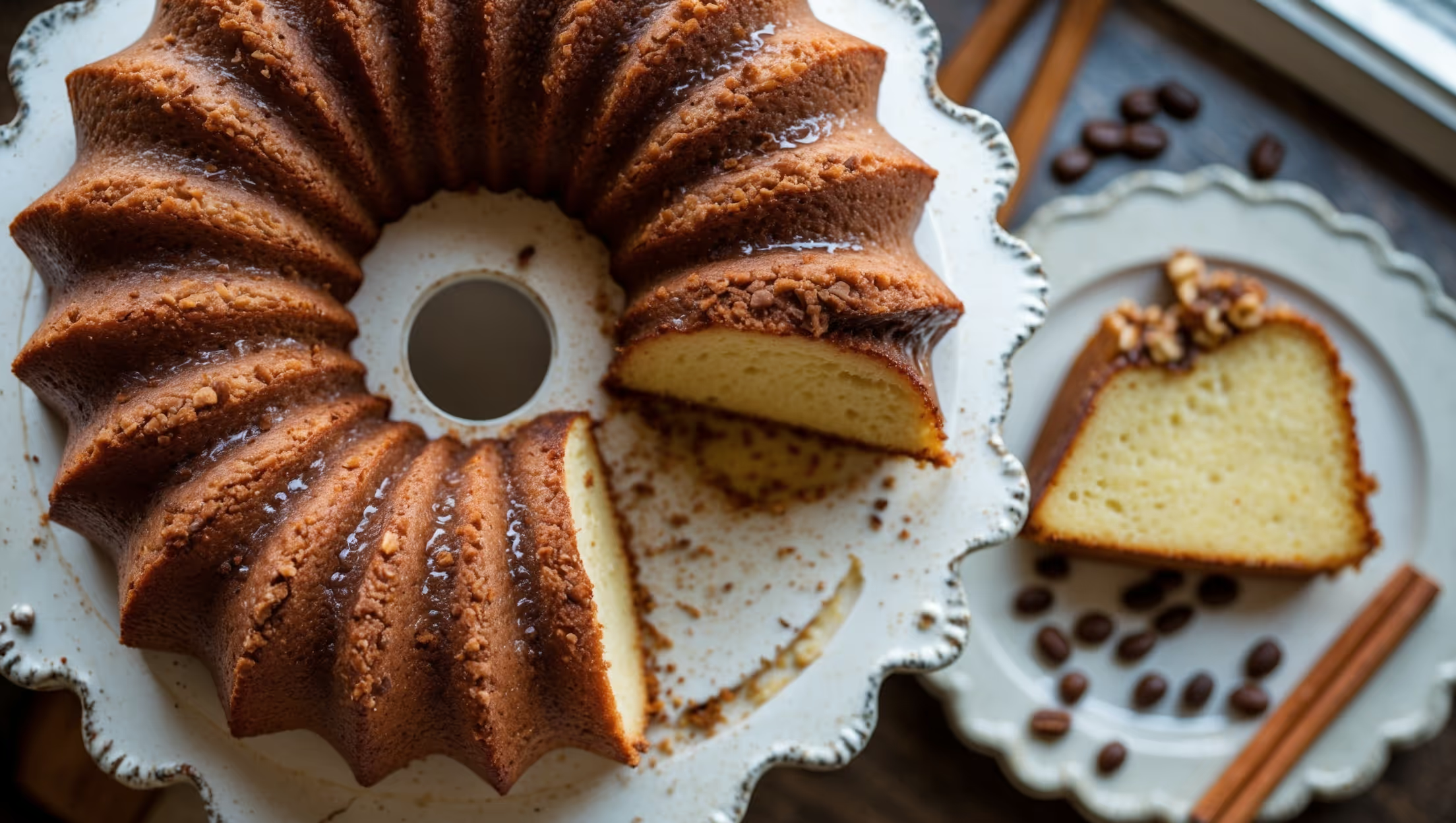
A crumb topping needs a particular balance of flour, sugar and cold or melted butter, depending on the recipe. Brown sugar can add molasses flavor and create clusters, while white sugar may produce a different sandy crunch. If the topping melts into a flat sheet, the fat ratio and handling may be more responsible than sugar choice.
The topping in Sour Cream Coffee Cake Bundt gives you a second place to taste brown sugar outside a cookie.
Homemade brown sugar
Some bakers mix white sugar with a measured quantity of molasses to approximate commercial brown sugar. The intensity and moisture depend on the molasses used. Strong blackstrap molasses isn't equivalent to standard baking molasses in every substitution. Follow a tested quantity and weigh the result where possible; don't pour molasses by eye into a delicate cookie formula.
Liquid sweeteners aren't equivalent
Honey, maple syrup and agave differ in water content and sugar composition from crystalline sucrose. They may change spread, browning and batter consistency. An equal-volume swap is often unreliable, particularly in crisp cookies. Use a recipe developed for the liquid sweetener rather than assuming it acts like brown sugar merely because both have caramel notes.
A controlled sugar experiment
For a side-by-side trial, make two half batches from the same cookie formula. Weigh all ingredients separately and use butter at the same temperature in each. Change only the split between white and brown sugar. The photographs illustrate possible textures; your own measurements establish what changed in this dough.
Try two small doughs with equal total sugar by weight. For example, compare 50 g white plus 50 g brown with 25 g white plus 75 g brown. Keep the scoop weight, pan and oven shelf the same. Compare diameter after cooling and chew again the next day.
IN PICTURES
From the baking notebook
FROM THE RECIPE BOX


