On this page
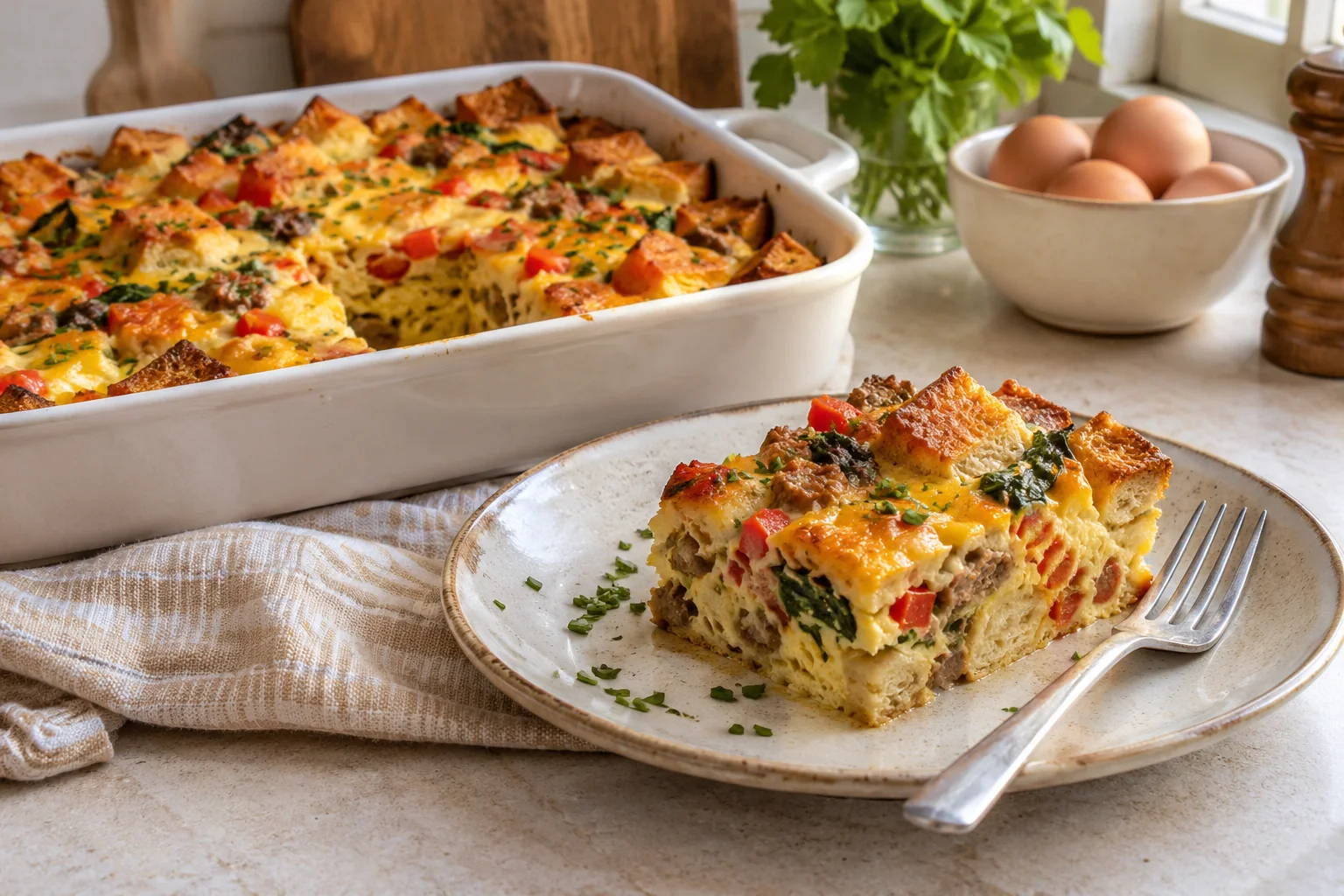
A breakfast casserole can be the calmest dish on a busy brunch table: assembled ahead, baked in one pan and sliced into generous portions. Yet the line between custardy and soggy is surprisingly narrow. Too much liquid creates wet pockets; too much bread makes a dry block; undercooked vegetables release water as the eggs set. Building a balanced breakfast casserole starts by deciding which style you want, then matching the ingredients, pan and bake method.
Choose between strata and egg bake
A strata uses bread to absorb an egg-and-dairy custard, while a crustless egg bake leans more heavily on eggs and fillings. A potato casserole forms another category with different hydration needs. The styles shouldn't be treated as identical. Choose a trusted base formula before changing mix-ins. A strata that calls for a substantial rest may not bake correctly when rushed immediately after mixing.
Start with Breakfast Casserole to see one complete ingredient list, pan size and baking method together.

What bread does in a strata
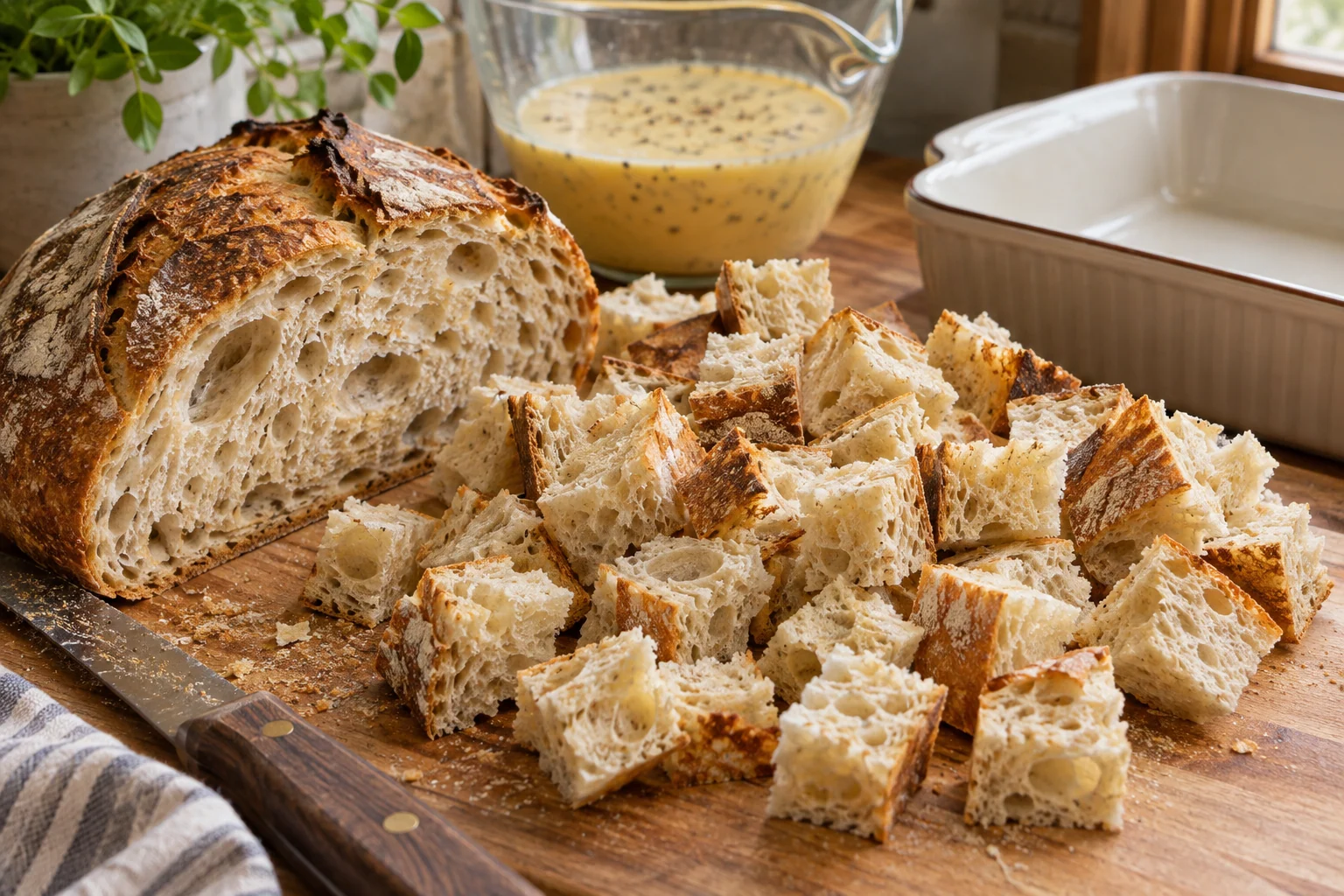
Bread provides a framework that absorbs custard and helps hold individual portions together. Sturdy day-old bread often works well because it retains enough structure while absorbing liquid. Extremely delicate sweet bread may collapse into paste, while dense rustic cubes may require a longer soak. Match the bread to the recipe and cut it into reasonably equal pieces so some don't remain dry while others become saturated.
Croissant Breakfast Casserole shows what happens when the bread component is already rich and flaky. Use its own custard quantities.
Eggs are the binding structure
Egg proteins set during cooking, transforming the liquid custard into a sliceable casserole. More eggs can increase firmness, but adding them at random changes the balance with bread and milk. Use a tested egg-to-dairy ratio designed for the pan size. A casserole that's golden on top can still have uncooked egg in the center, so appearance alone isn't proof of readiness.
For a slice built around eggs without a layer of bread, compare the proportions in Crustless Quiche.
What milk and cream change
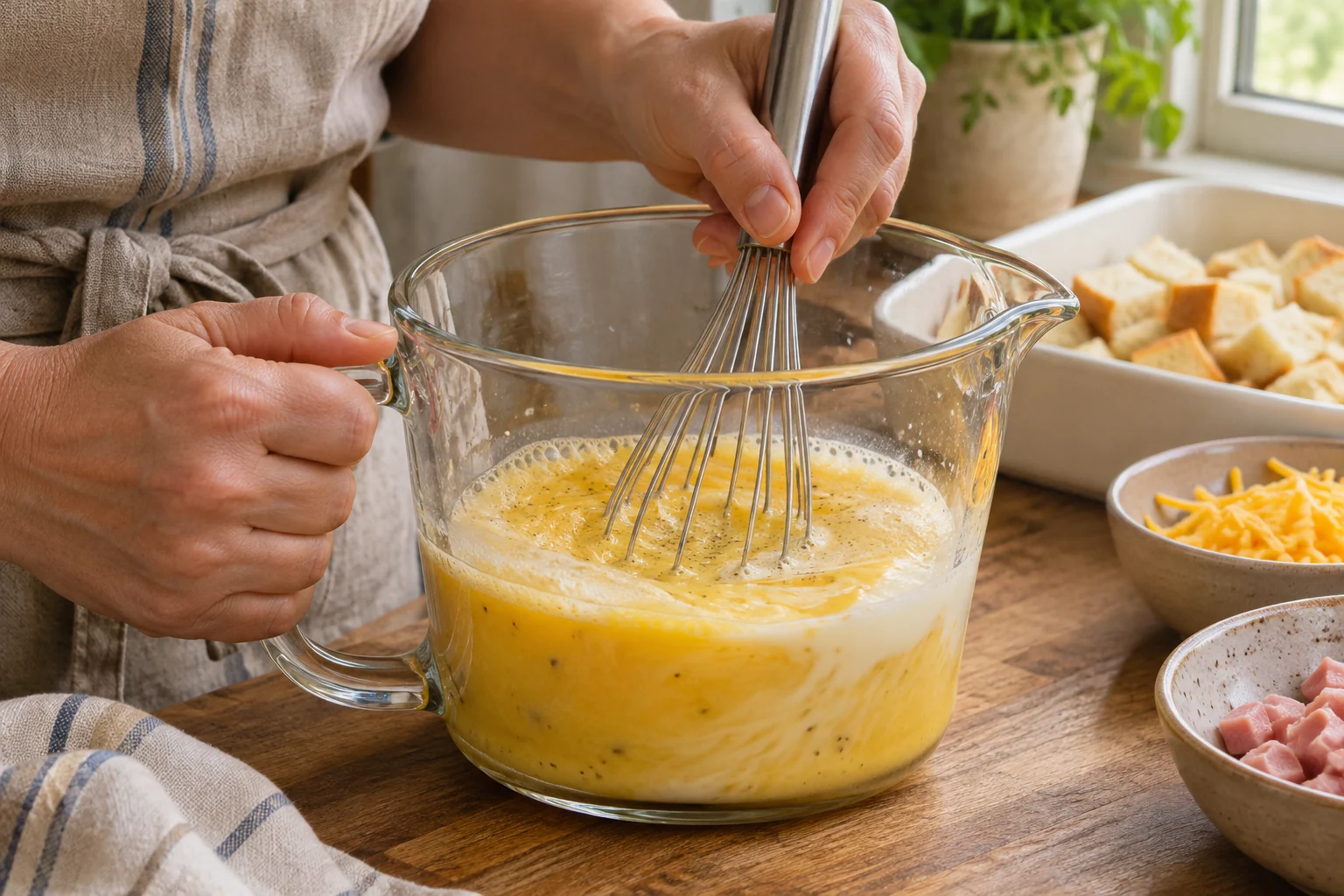
Milk supplies water and dairy solids, while cream adds more fat. A mixture with a higher cream content can taste richer, but it won't necessarily compensate for too much wet filling. Buttermilk adds acidity and another flavor dimension, requiring a formula designed for it. Choose the dairy from the original recipe and measure rather than pouring until the bread looks sufficiently wet.
A useful baseline for building
For a concrete starting point, the breakfast casserole linked above uses 450 g of thawed hash browns, eight large eggs and 240 mL of milk in a 23 × 33 cm dish. The potato base goes into the oven before the filling is added. A croissant or bread strata needs its own measured custard and soaking time. Keep a note of the pan and the quantities you used so you can repeat a result you like.
Cheesy Amish Breakfast Casserole is another complete formula to choose when you want a hearty, cheese-forward pan.
Select one main flavor direction
A spinach, feta and herb bake has a different profile from sausage, cheddar and roasted pepper. Choosing a clear direction keeps a casserole balanced. Two or three complementary add-ins usually create more coherence than emptying every vegetable and cheese from the refrigerator. Plan a little acidity or freshness on the side when the casserole is especially rich.
Like the pairing in Spinach and Feta Quiche, a leafy vegetable and one salty cheese can give an egg dish a clear flavour of its own.
Vegetables can release hidden water
Mushrooms, zucchini, spinach and tomatoes contain significant moisture. Some need sautéing, roasting, squeezing or draining before assembly, depending on the recipe. A wet handful of raw spinach is not equivalent to a measured quantity of cooked drained spinach. If the custard never sets around vegetables, review moisture preparation before increasing the egg count.

Cook sausage and other meat safely
If your casserole calls for cooked sausage, brown it separately and check its centre with a clean thermometer. Ground pork or beef sausage should reach 71°C (160°F) and ground poultry sausage should reach 74°C (165°F). Move the cooked meat to a clean dish. If you’re assembling the casserole later, refrigerate the sausage promptly in a shallow container. Wash the pan tools and hands that touched raw meat before handling ready-to-eat ingredients.

Cheese adds flavor and structure
Cheddar, Gruyère, feta and goat cheese behave differently. Aged cheddar melts and brings salt, while feta maintains more visible pieces and a tangy flavor. Excess soft cheese or high-moisture mozzarella can alter the texture. Choose one primary cheese, account for its salt content and don't assume that an extra cup will simply make the casserole more delicious without changing the set.
Mushroom and Gruyère Quiche offers a useful flavour comparison when you’re deciding between an earthy mushroom filling and a sharper cheddar one.
Herbs and seasonings
Salt, pepper, mustard, paprika, scallions and herbs can give a neutral egg base character. Dried herbs are more concentrated than fresh in many applications, so measure thoughtfully. A cured meat or salty cheese may reduce the amount of extra salt needed. Season the measured egg mixture rather than sprinkling a little seasoning randomly between dozens of bread cubes.
For an example of a simple cheese-and-herb pairing, look at Cheddar and Chive Quiche.
Pan dimensions matter
A deep eight-inch square pan and a shallow nine-by-thirteen-inch dish heat differently. Filling the smaller pan with the larger recipe can brown edges before the center sets. A wide pan may produce thin dry pieces. Follow the documented depth and dimensions, and avoid substituting glass for metal without considering recipe or manufacturer guidance.

Layering versus mixing
Some strata recipes layer bread, fillings and cheese before pouring custard over the top. Others mix components gently so everything is evenly coated. The method changes whether certain ingredients settle or create pockets. Follow the chosen formula and distribute heavy meat or vegetable pieces throughout instead of piling them all in one corner.

The overnight rest
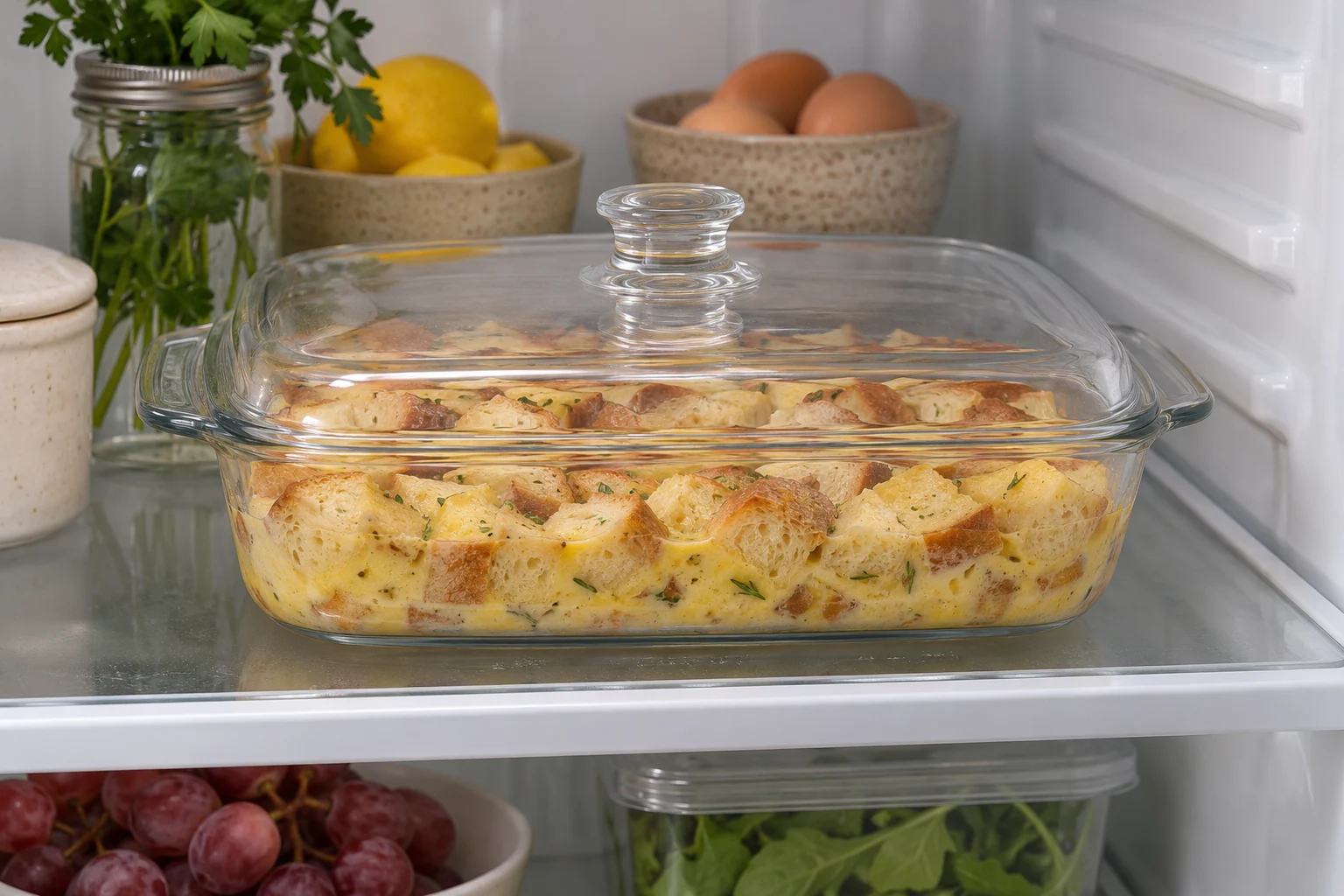
Many bread-based stratas benefit from several hours of refrigerated soaking so the custard reaches the interior of the bread. Cover and refrigerate at or below 4°C (40°F) rather than leaving an egg-and-dairy pan on the counter. The ideal rest depends on the bread and formula. A very soft croissant casserole may require a different schedule from a sturdy sourdough strata.
What about assembling without resting?
Some breakfast bakes are designed for immediate cooking, particularly egg-heavy versions with less bread. If you've chosen a recipe that expects overnight soaking, skipping that step may leave dry bread patches and wet custard. Use a same-day recipe when plans change. Adding more milk just before baking is unlikely to create the same even absorption.
If you’ve missed the soaking window and want a different kind of egg main, turn to Veggie Frittata.
Bake according to the actual center
Cook the egg casserole throughout to 74°C (165°F), checking the centre with a clean food thermometer as well as the recipe’s texture cues. Avoid touching the pan with the probe. A browned top alone does not establish that the centre is cooked.
Avoid a scorched top and raw middle
A top that browns too quickly may result from an overly high oven temperature or a deep pan. Some recipes call for covering the casserole during part of baking, then uncovering for browning. Follow that schedule, using foil safely and avoiding contact with oven elements. Don't assume extra cheese across the top guarantees that the custard beneath is fully set.
Rest before slicing
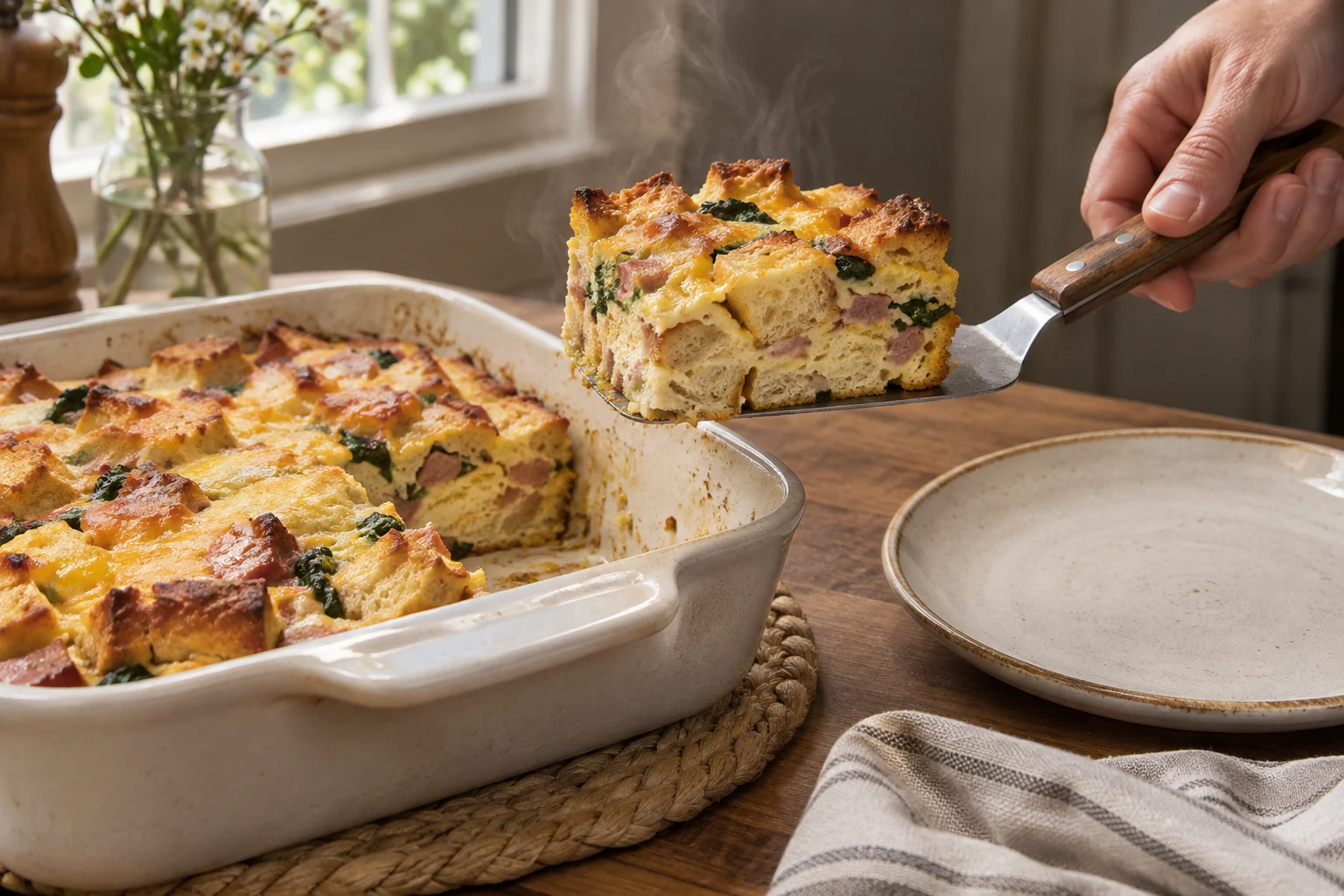
A fully baked casserole may firm further during a short recipe-directed rest. Cutting immediately can cause moisture to run across the plate and break the slices. A moderate rest also reduces scalding risk from very hot cheese. But don't leave an egg-rich casserole indefinitely on the table; serve within appropriate hot-holding or refrigeration limits.
Use the resting time to bring out a chilled bowl of Fruit Yogurt Salad and put the serving spoon in place.
A make-ahead timetable
The day before, cook and chill meat and vegetables, cube the bread and prepare a suitable baking dish. Assemble according to the recipe, cover and refrigerate safely. On serving day, preheat the oven and bake with enough time for the center to reach its safe endpoint, then allow the directed rest. Prepare fruit and coffee while it cooks so the casserole becomes the main event rather than a competing task.
A small plate of Cranberry Orange Scones can round out the menu while the casserole occupies the oven on serving day.
Feeding six versus twenty
A single moderate casserole may feed six alongside fruit and pastries, but a crowd of twenty is usually better served with multiple recipe-sized pans rather than one dangerously deep dish. Bake on adequate oven racks with room for circulation and use the documented pan guidance. A vegetarian version can be kept separate from a meat version when guest preferences require it.
For guests who prefer individual portions, Breakfast Egg Muffins give you a muffin-pan option alongside a larger casserole.
What to serve alongside
Pair a rich sausage and cheese strata with crisp fruit, tomatoes or a simple dressed salad. A lighter vegetable egg bake can accompany warm scones and a sweet pastry. Avoid making every side equally rich and egg-heavy. A balanced menu lets guests enjoy satisfying portions without overwhelming the table or the cook.
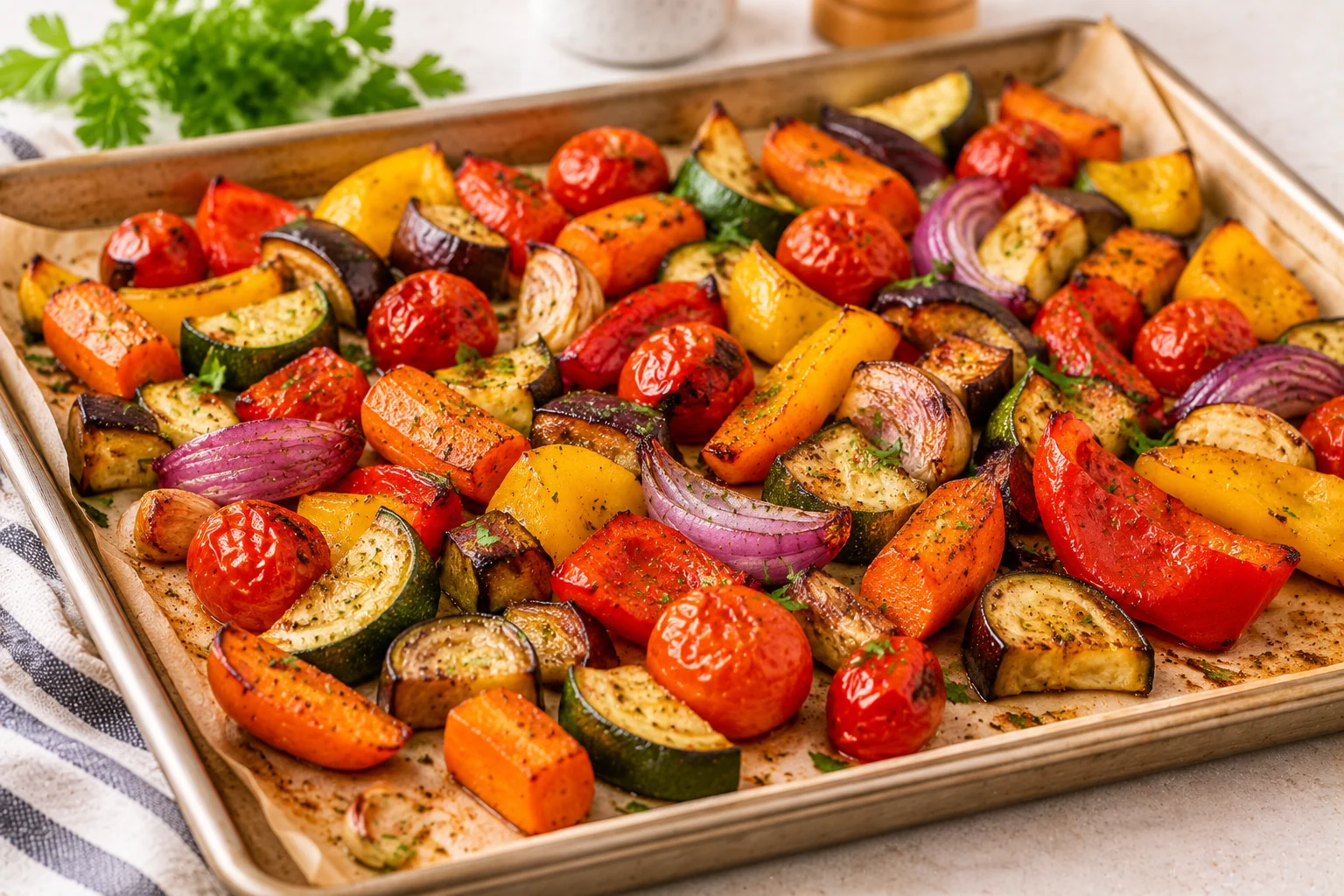
Serve Roasted Veggies as a separate side. Their quantities make sense for that tray and don’t need to be folded into the egg mixture.
Why the casserole is watery
Excess vegetable moisture, a large liquid substitution or an undercooked center can create puddles. Inspect whether the liquid collects around specific additions or throughout the custard. Drain vegetables as instructed, use the right bread quantity and confirm safe doneness. Do not simply add dry bread cubes to an already cooked wet casserole and expect the texture to recover.
Why the casserole is rubbery
An overly firm egg base, too many eggs for the liquid or excessive cooking can create a tough texture. A deep dish held in the oven after the center is set may become rubbery at the edges. Follow the formula's intended doneness and rest. A firmer slice is not necessarily a better slice if guests expect custardy bread and tender vegetables.
Cooling and leftovers
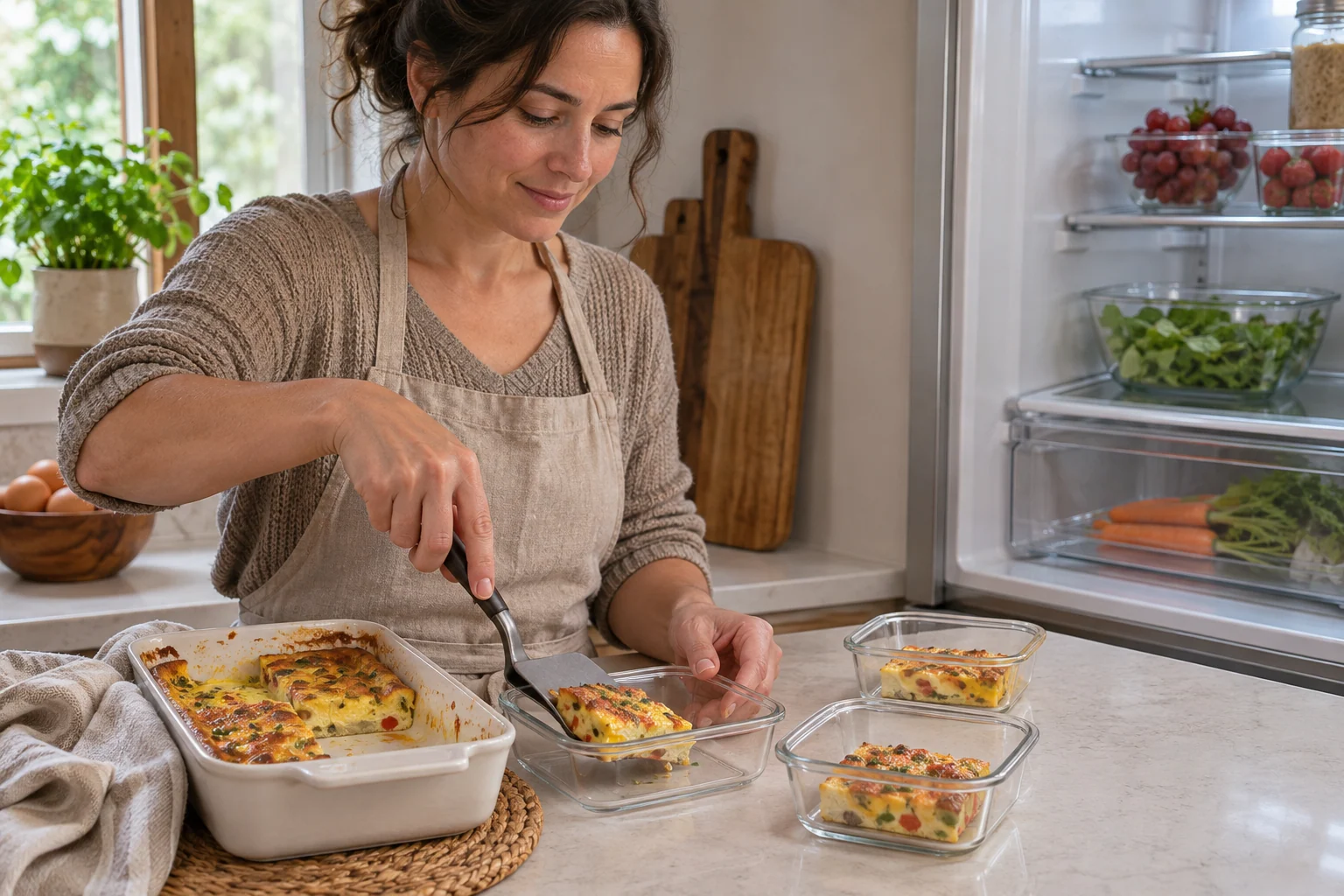
Divide leftover casserole into shallow containers and refrigerate promptly, within two hours of serving if it has been sitting at room temperature. Keep the refrigerator at or below 4°C (40°F). Take out the portions you plan to eat and reheat them throughout to 74°C (165°F). A fresh herb or a spoonful of salsa at the table can brighten a reheated square.
Frequently asked questions
Can strata be assembled the night before? Many recipes recommend it with refrigeration. Can raw mushrooms go straight in? Follow the moisture plan. Do I need cream? Not necessarily. Is browned cheese proof the eggs are cooked? No. Can I use frozen vegetables? Only with recipe-appropriate thawing or draining. Does any bread work? Different breads absorb differently.
The practical casserole formula
Choose a dependable base, balance bread or potato against the egg custard, manage add-in moisture, and bake in the correct pan to a safe center temperature. With preparation finished the night before, a casserole can make a crowded brunch feel surprisingly easy.
IN PICTURES
From the baking notebook
FROM THE RECIPE BOX


