On this page
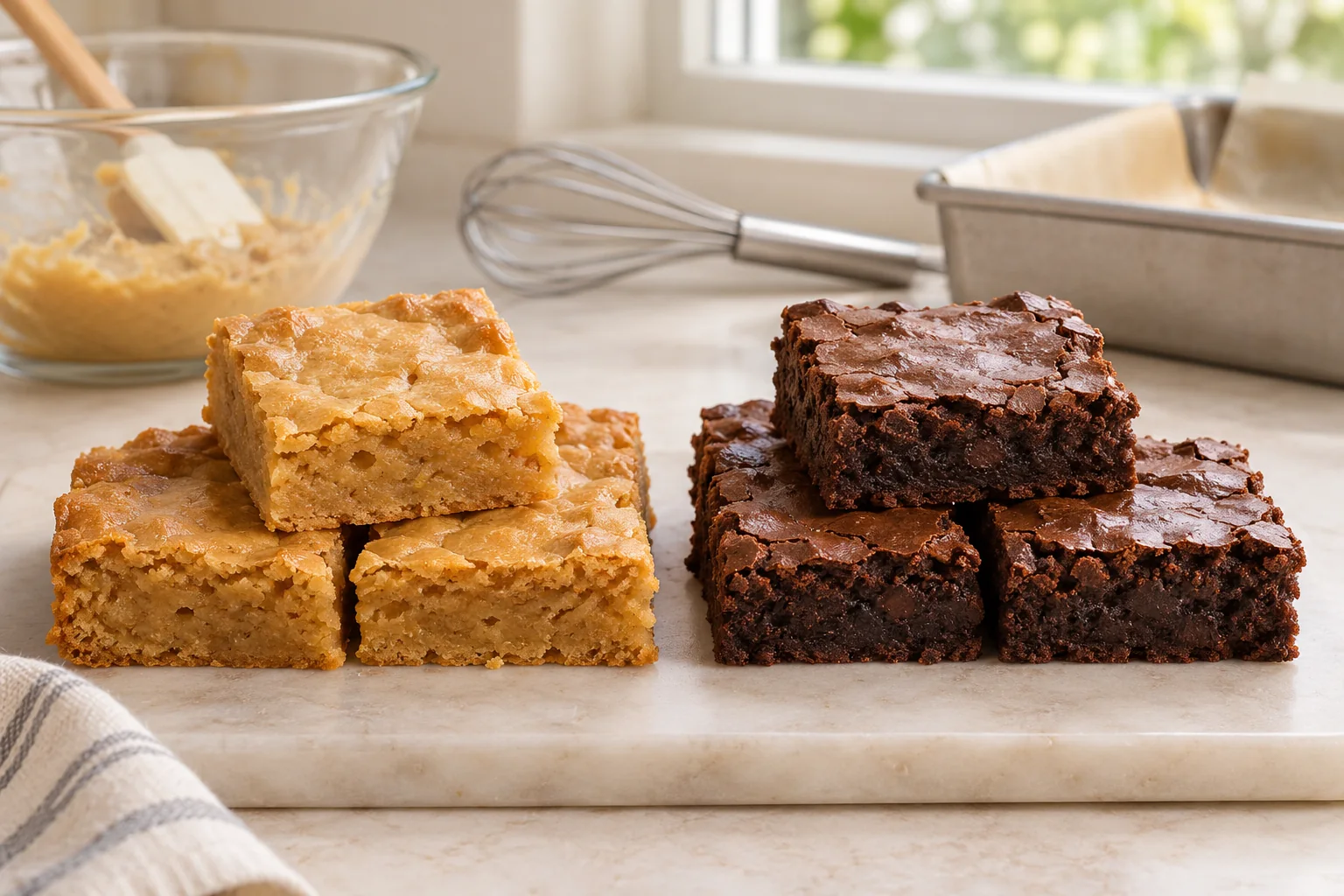
Blondies and brownies share the same satisfying square shape and often the same baking pan, but their flavour foundations differ. Brownies are generally chocolate-forward, made with cocoa powder, melted chocolate or both. Blondies emphasize butter, sugar and often vanilla or brown-sugar notes. The distinction sounds simple until you meet a chocolate-chip blondie or a brownie made without chocolate chunks. Understanding the base helps you choose the dessert you actually want.
The basic difference: chocolate versus butter and sugar
A classic brownie gets its main flavour from cocoa or chocolate in the batter. A classic blondie gets its central character from butter and sugar, often with vanilla and molasses-like brown-sugar notes. A handful of chocolate chips in a blondie doesn't necessarily transform the whole batter into a brownie.
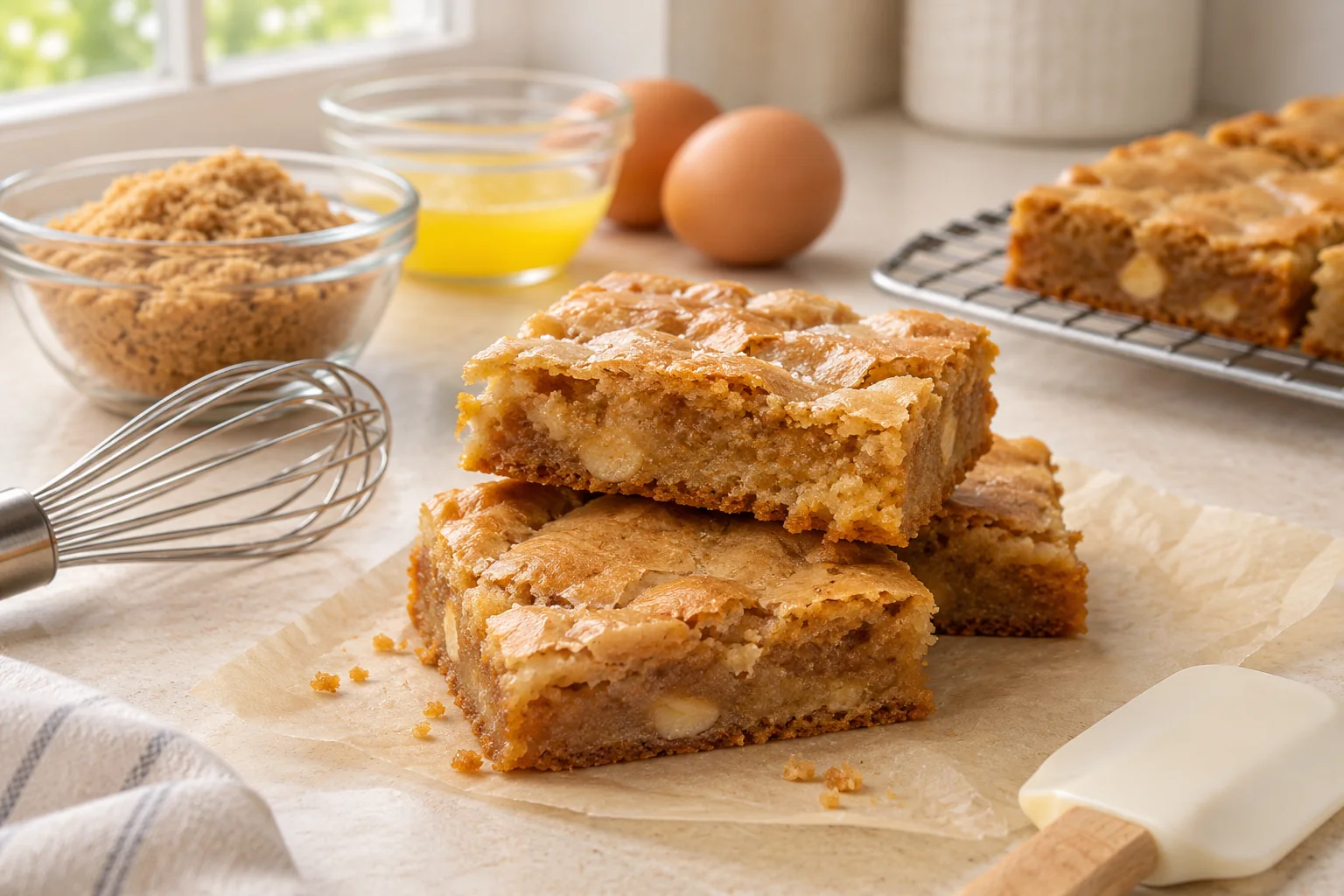
The colour is usually golden or caramel-brown rather than the dark shade of cocoa brownies. Brown sugar, butter browning and baking conditions influence its appearance. Blondies are sometimes called blonde brownies, but their taste deserves recognition as more than simply chocolate-free brownies.
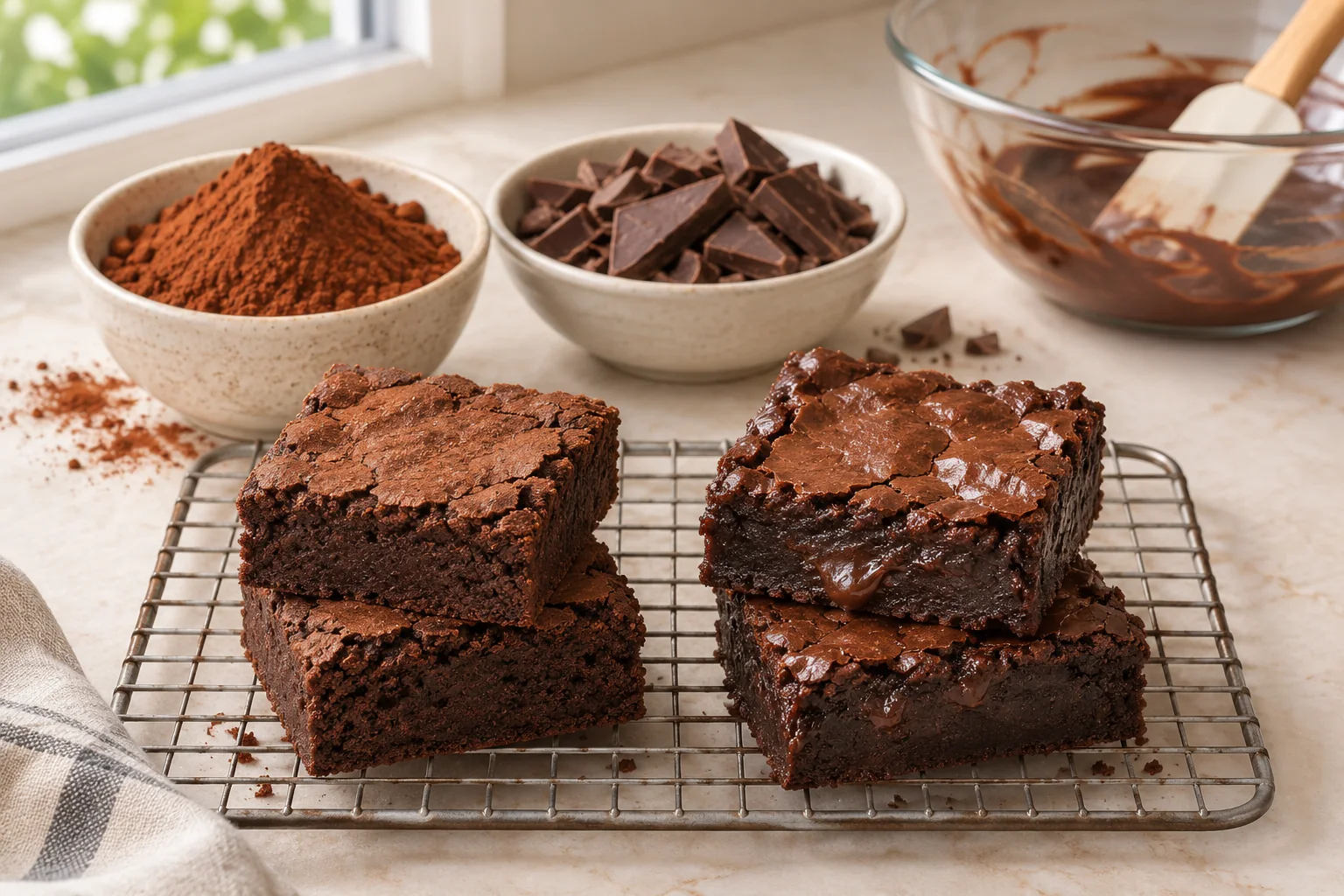
Cocoa powder, baking chocolate or melted chocolate can create a deep chocolate taste. Sugar balances bitterness, and vanilla or salt often rounds the flavour. The precise style depends on chocolate percentage and whether the cocoa is natural or Dutch-process within a recipe designed for it.
Brown sugar and butter create flavours reminiscent of caramel, toffee and vanilla. Chocolate chips or nuts can add contrast without overpowering the base. Browned butter can add nutty notes in recipes developed for the moisture loss from browning.
Cocoa powder adds dry solids and absorbs moisture, while melted chocolate contributes fat, sugar and cocoa solids. Replacing either with nothing in a brownie changes the formula, so a blondie isn't simply a brownie recipe with the cocoa omitted.
A cocoa brownie and a melted-chocolate brownie can look similar after baking, but their batters behave differently. Cocoa powder introduces cocoa solids without the cocoa butter present in chocolate bars. When a recipe adds cocoa powder, it must account for that dry ingredient alongside its other liquids and fats. Melted chocolate contributes cocoa solids plus varying amounts of cocoa butter and, depending on the chocolate, sugar. This is one reason you should not replace a large quantity of melted chocolate with an equal weight of cocoa powder.
Blondies usually begin from a different balance, with butter and sugar contributing much of the flavour and moisture perception. Removing cocoa from a brownie batter without recalculating the remaining ingredients can leave an unbalanced mixture rather than a true blondie. Likewise, adding an arbitrary amount of cocoa to a blondie is not a reliable shortcut to a brownie. If you want to experiment, use a tested cocoa-to-chocolate substitution developed for the particular recipe, or begin with a well-formulated base of the style you want.
How sugar, butter, eggs and flour shape the bars
Blondies frequently use a high proportion of brown sugar to build a rich, moist chewy character. Brownies may use white sugar, brown sugar or both. The sugar type isn't an absolute definition; compare the complete formula.
Both desserts can be made with butter or oil. Butter supplies flavour and can contribute a rich bite, while oil can support softness at room temperature. The method, especially whether fat is melted or creamed, also changes how much air enters the batter.
Egg proteins help both bars set, while flour supplies structure. A very high flour proportion can make either dessert dry or cake-like. An insufficiently baked egg-and-flour mixture should never be treated as acceptable fudginess.
Some recipes use small amounts of leavener; others do not. A cakey style may use different ratios and aeration than a dense style. Adding a large amount of baking powder to a favourite brownie won't reliably turn it into a good chocolate cake.
Sugar has jobs beyond sweetness. It competes for water, influences the way a batter sets, and contributes to browning and crust formation. Brown sugar contains molasses and is often associated with a moist, chewy blondie texture, though a recipe's total water, fat, egg and flour matter as well. White sugar can support a different surface texture and sweetness profile. Many successful brownie recipes combine both.
It is tempting to swap all the sugar in a recipe with a different type because the ingredients seem interchangeable. The bars may still taste good, but the change can affect density, moisture and the look of the crust. If you are testing a substitution, begin with part of the sugar rather than changing the whole quantity. Note whether your result becomes softer, firmer or more sticky after cooling. The goal is to discover what your particular formula does, not to assume one sugar always produces a universal texture.
For people who prefer a less sweet dessert, reducing sugar substantially is more complicated than removing a sweetener from coffee. Sugar contributes physical properties to bar cookies. A recipe written to be less sweet from the start is usually a more dependable choice than a very large reduction made without other adjustments.
Fudgy, chewy or cakey: the texture question
Both desserts can be chewy, dense or more cake-like. Brownies are often described as fudgy when fat and chocolate dominate a low-flour crumb. Blondies can be equally dense and chewy, even though their flavour and colour differ.
“Fudgy” usually refers to a dense, soft, rich interior that feels particularly common in chocolate brownies. “Chewy” describes resistance when you bite, often with a slightly elastic, caramel-like quality. “Cakey” suggests a more open, aerated crumb with a structure closer to a small slice of cake. Those terms overlap: a brownie may have chewy edges and a fudgy centre, while a blondie may be chewy yet tender.
Eggs, flour, fat, sugar, aeration and baking endpoint work together to produce the final texture. Vigorous beating can introduce more air in some methods, while gently mixing a melted-butter batter may produce a denser bar. Too much added flour can make a recipe tougher or drier, especially if it is overmixed. However, mixing less is not an absolute rule; follow the method written for the formula and observe how the finished bars behave.
A centre that is visibly raw or wet with uncooked batter is not the same as desirable fudginess. The correct doneness depends on the recipe, pan and ingredient safety. Look for the specific testing cues given by the recipe, such as set edges and a centre that is no longer liquid, rather than relying on a toothpick that must always come out completely clean.
Baking, browning and getting clean slices
Blondies show visible caramel-gold colour changes, while a dark brownie makes crust colour harder to judge. Use the recipe's specific doneness cues rather than a generic instruction to bake until golden.
Both often bake in square or rectangular metal pans, with a parchment overhang for lifting. Pan dimensions change batter depth and baking time. Glass can overcook the edges before the centre finishes, especially in high-sugar batters.
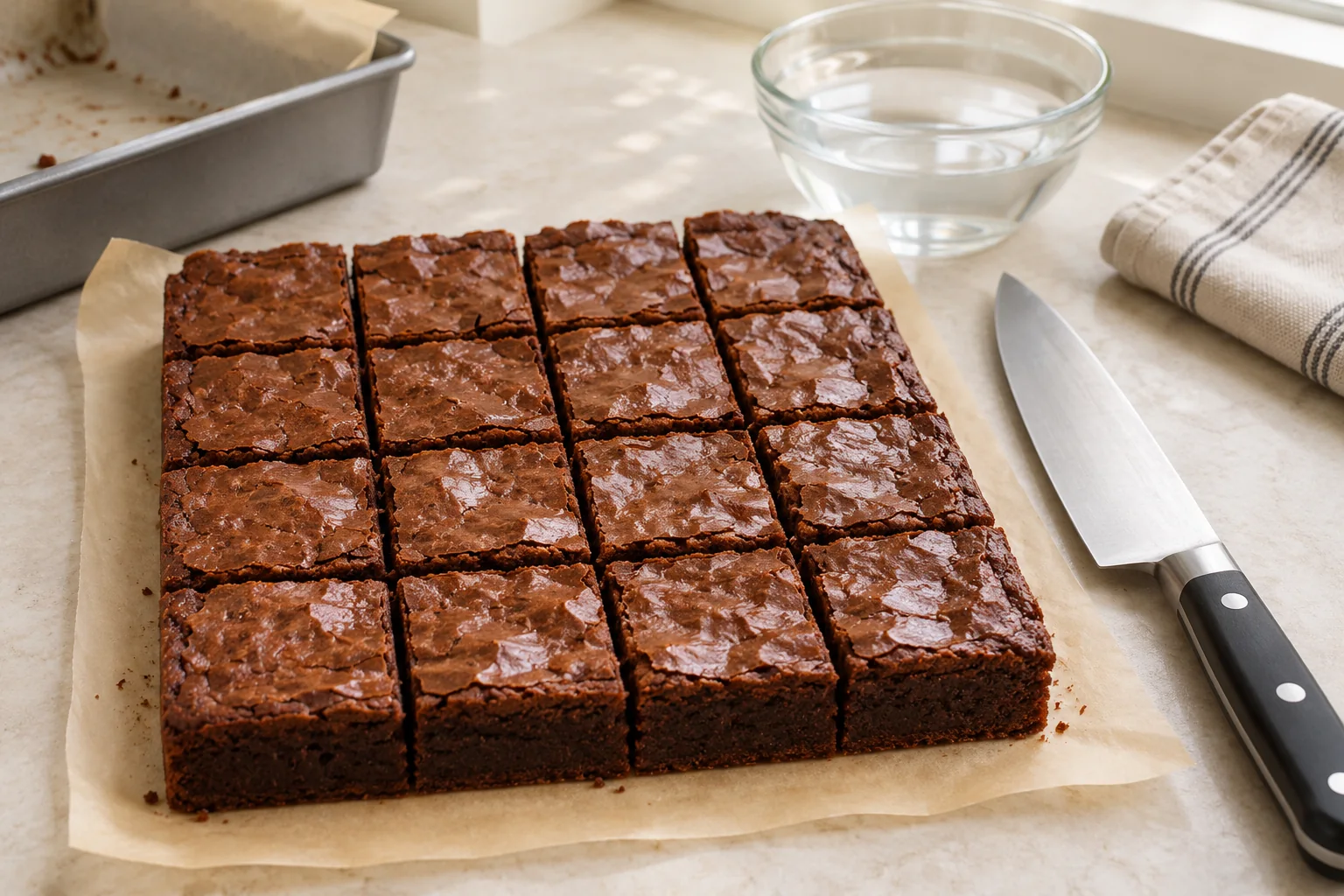
Brownies and blondies are both tempting warm, but clean squares usually require cooling. Some very fudgy brownies slice best after a short chill; dense blondies also firm as they cool. Rewarm a portion after cutting if the recipe permits.
A simple one-bowl blondie may require no chocolate melting, while a cocoa brownie can also be straightforward. A melted-chocolate brownie introduces another temperature-sensitive step. Choose a recipe matching your tools and desired texture.
Mix-ins, serving ideas and party platters
Blondies commonly feature nuts, butterscotch or chocolate chips. Brownies can feature the same additions plus ganache, chocolate chunks or swirls. A thick wet filling needs a tested formula so the centre cooks and stores safely.
Chocolate brownies provide bitter-sweet intensity alongside vanilla ice cream. Blondies offer buttery caramel contrast and suit coffee or salted caramel toppings. Both can be excellent; choose flavours to balance sweetness rather than piling on unrelated syrups.
A mixed platter is visually appealing: dark brownie squares beside pale blondies. Cut portions to similar sizes, label nuts and other allergens, and include a simple balance of flavours rather than making every piece heavily topped.
Common blondie problems and what to check
A dry blondie may have been baked too long, measured with too much flour or made in a shallower pan than the recipe specified. A greasy blondie may reflect the recipe's proportions, poorly combined ingredients or a substitution that changed the emulsion. A blondie that falls apart when hot may simply require proper cooling, while one that crumbles even when fully cooled may need a different balance of structure and moisture.
If the centre sinks after baking, check whether it was properly set and whether the batter was aerated or leavened as the recipe instructed. If the edges become hard before the centre is ready, consider the pan material, oven calibration and whether the pan is too small. If the top appears much darker than you expected, remember that brown sugar itself deepens colour, and some styles are intentionally more deeply browned.
Resist responding to every issue by adding flour. Extra flour may make a sticky dough easier to handle in the moment, but it can also produce bars that taste more like bread or cake than a chewy dessert. Compare the batter with reliable step photos or descriptions and make one evidence-based correction at a time.
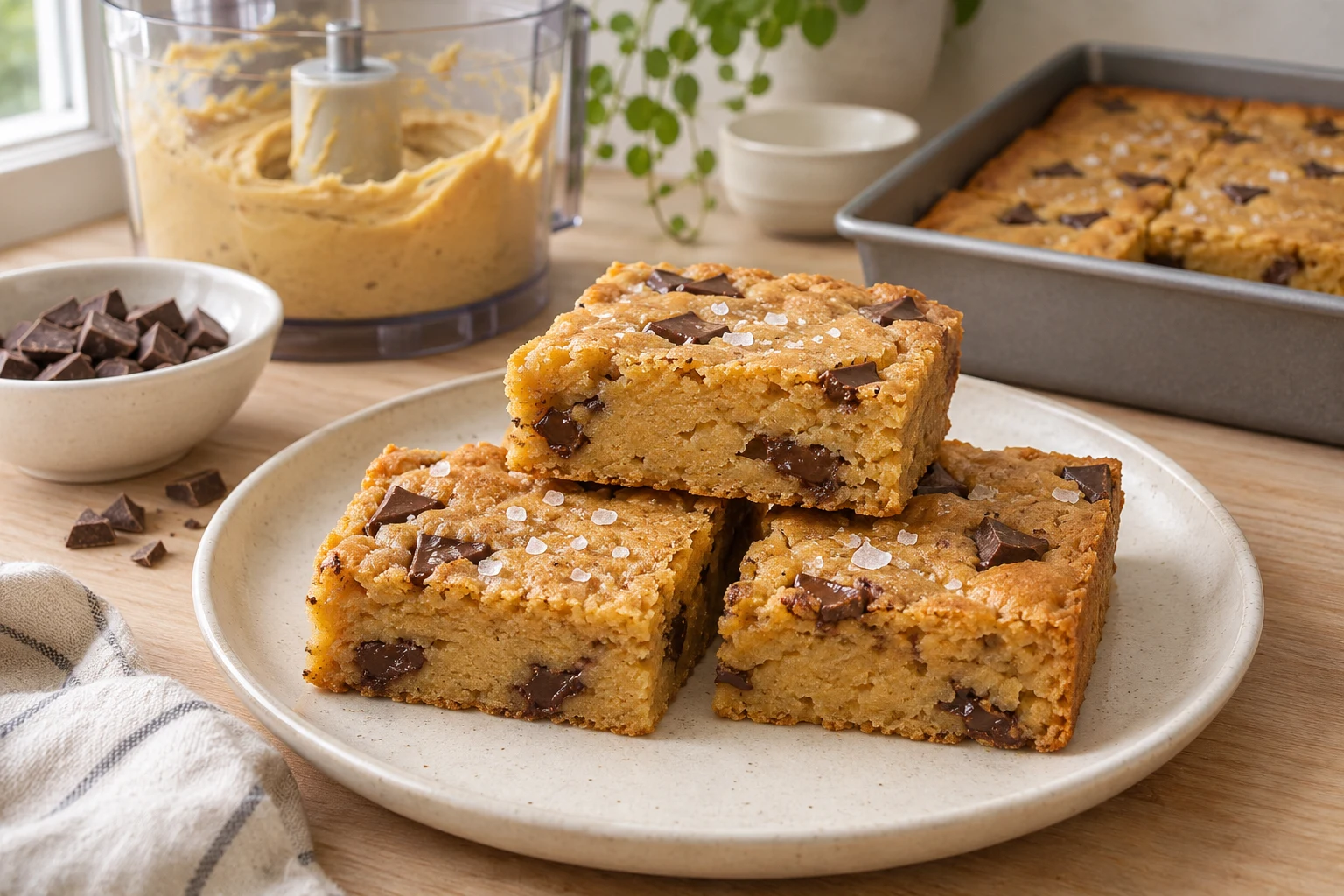
Recipe to try: Chickpea Blondies. Chickpeas and nut butter give these bars a different structure. Follow the complete ingredient list rather than treating them as a flour swap.
Substitutions that deserve care
Replacing all-purpose flour with a gluten-free blend may change water absorption and structure, and different blends behave differently. Choose a recipe designed for the particular flour or a tested substitution recommendation. Replacing eggs with a flax mixture or another alternative likewise changes binding, aeration and moisture. A vegan blondie can be excellent, but it is better developed as its own formula than assembled through several simultaneous guesses.
Swapping butter for oil changes flavour and sometimes texture; replacing dark chocolate with white chocolate changes sugar and cocoa-solids balance. Even different brands of brown sugar can have slightly different moisture levels. These are not reasons to avoid experimenting. They are reminders that the familiar shape of a bar cookie does not make its formulation interchangeable.
If you are trying to satisfy a dietary requirement, check ingredient labels and cross-contact information instead of assuming “brownie” or “blondie” signals a safe food. Especially for people with allergies or coeliac disease, recipe selection and safe preparation matter as much as the final appearance.
Recipe to try: Gluten-Free Blondies. These blondies use their own gluten-free flour combination. Avoid substituting ordinary flour by volume without a suitable conversion.

Storing and freezing
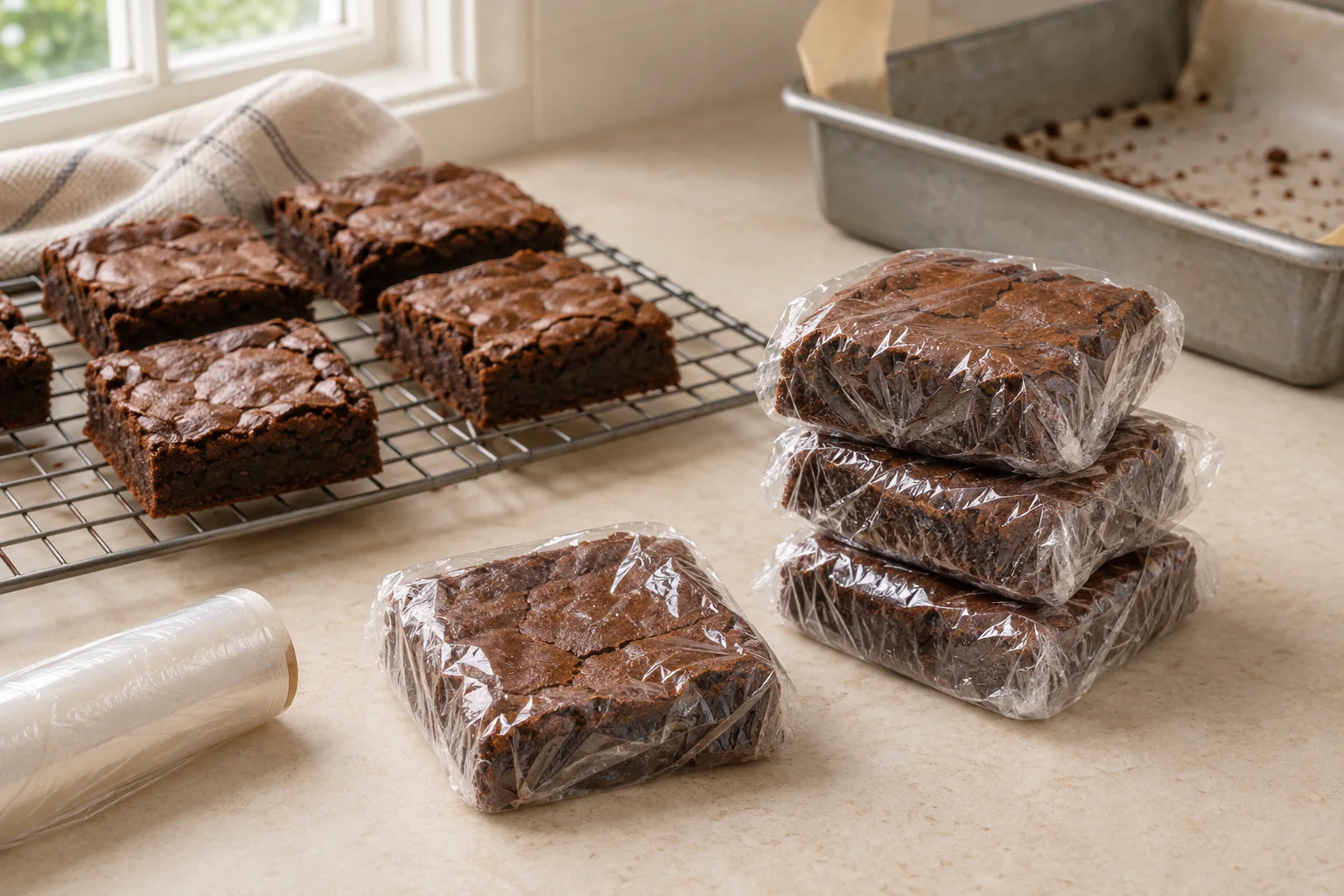
Both can keep well when fully cooled and protected from air, according to their recipes. Bars with custard, cream cheese or fresh dairy toppings may require refrigeration. Freezing properly wrapped plain portions is possible in many formulas.
Try a side-by-side baking experiment
One useful way to understand the distinction is to bake a tested simple brownie recipe and a tested simple blondie recipe on the same weekend. Use the specified pans and ingredients for each rather than forcing both into the same formula. While the bars cool, write down batter appearance, mixing method, aroma, and how each centre looks when cut. Taste at similar serving temperatures.
Pay attention to the source of the dominant flavour. Does the brownie taste of cocoa, melted chocolate or both? Does the blondie taste of butter, vanilla, caramel-like sugar or an added mix-in? Notice the surface: perhaps the brownie has a shiny crust while the blondie shows visible edge caramelization. Compare the centre with the edges. Which parts are chewy, fudgy, or more cake-like?
On the next bake, repeat only the recipe you most want to improve and change a single variable that the recipe can reasonably tolerate. Try a different approved chocolate for inclusions, or vary serving temperature rather than rewriting the base. This small experiment teaches more than assuming that every bar with chocolate chunks belongs in the same category. It also helps you discover your own favourite texture.
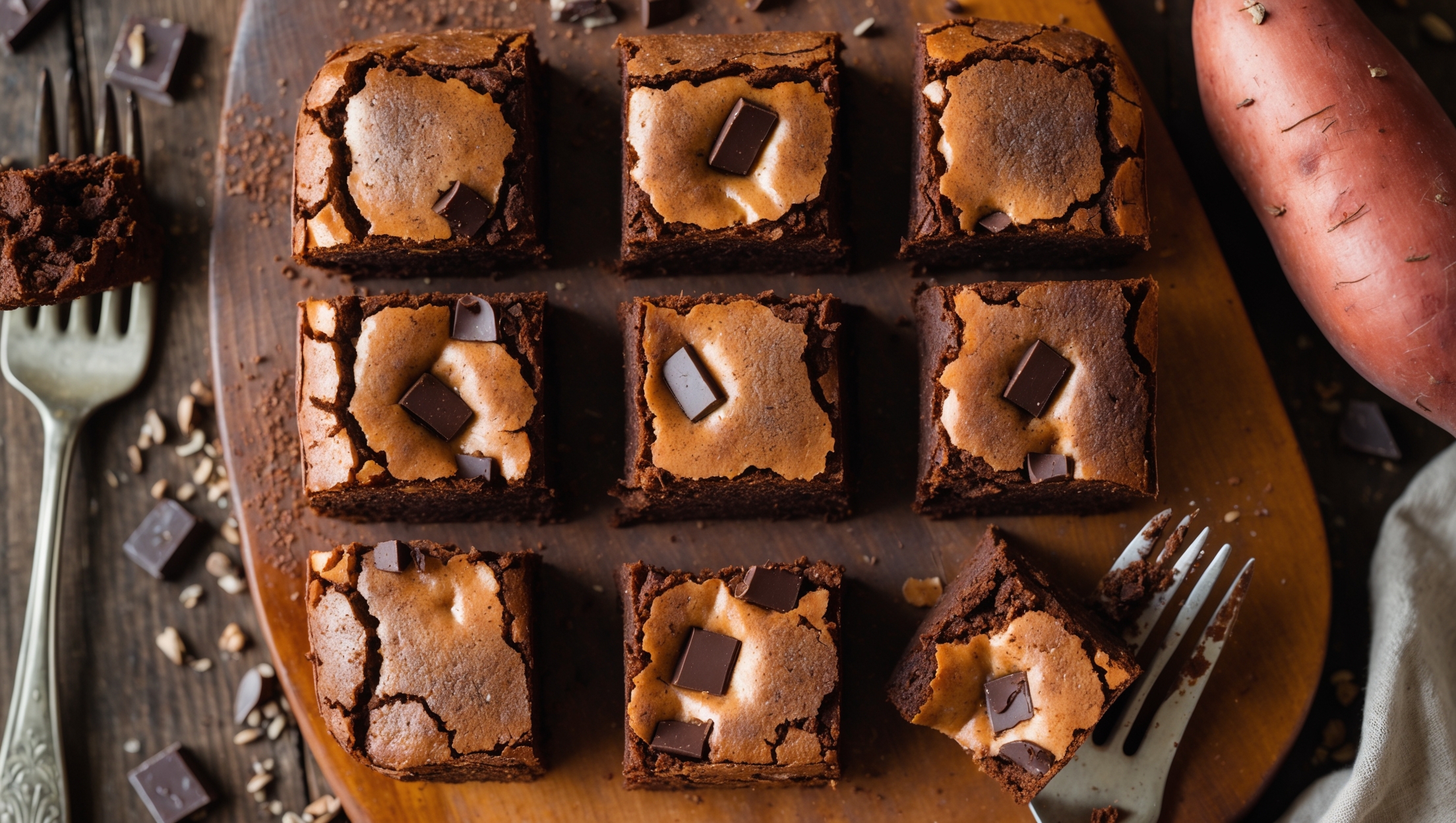
Recipe to try: Sweet Potato Brownies. These brownies use sweet potato in their own formula. Treat them as a separate option, not a direct conversion of a conventional brownie batter.
Frequently asked questions
Is a blondie just a brownie without cocoa? Not when made well; the formula is balanced differently. Can blondies contain chocolate? Yes. Are blondies always chewy? No. Can brownies have brown sugar? Absolutely. Are both bar cookies? In some baking classifications, yes, though their styles remain distinct.
For two different takes on these bar cookies, explore our gluten-free blondies recipe and sweet potato brownies recipe. Each is a distinct formulation, so treat them as inspiration rather than a one-to-one ingredient comparison.
Which should you choose?
Bake brownies when you want a pronounced chocolate dessert; bake blondies when butter, caramel and vanilla should lead. Their shared shape makes them easy companions, but their strongest identities come from the ingredients and textures each recipe celebrates.
IN PICTURES
From the baking notebook
FROM THE RECIPE BOX


