On this page
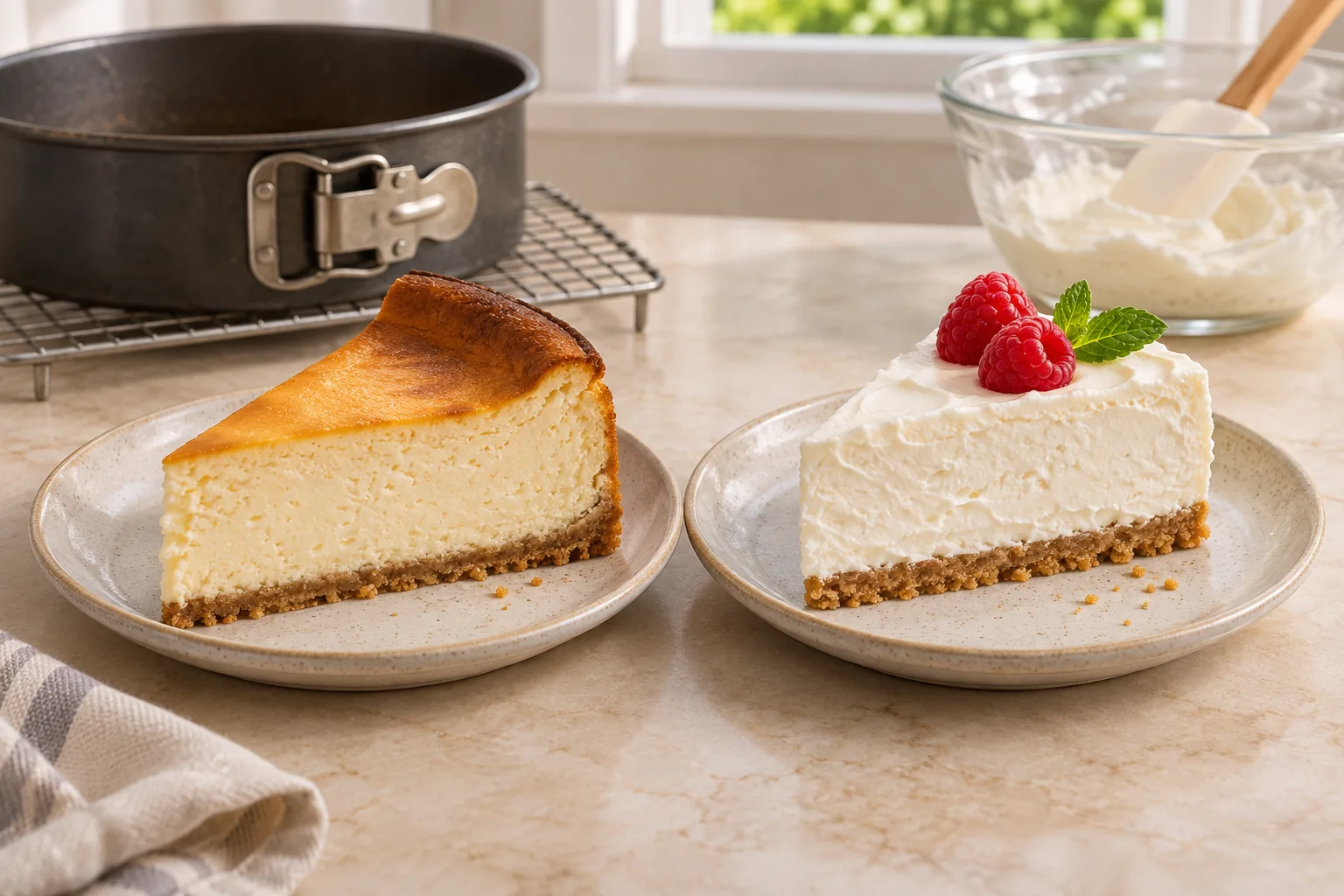
Baked and no-bake cheesecakes may share a crumb crust, cream cheese and a beautiful fruit topping, but they set in fundamentally different ways. A baked cheesecake becomes cohesive because its eggs and dairy are heated carefully in the oven. A no-bake cheesecake generally relies on chilled fats, whipped cream, gelatin or another setting method. Neither is automatically easier or better; the choice depends on whether you want a dense custard slice or a lighter, chilled dessert.
The main difference
Baked cheesecake is a cooked custard-like filling, often combining cream cheese, sugar, eggs and sometimes sour cream or heavy cream. No-bake cheesecake usually omits the baking stage for the filling and uses a structure designed to firm in the refrigerator. The recipes are not interchangeable simply by skipping or adding oven time.
What holds a baked cheesecake together?
Egg proteins coagulate as the filling heats, creating a set structure around the dairy and sugar. Too much heat can make that structure tight, dry or grainy; too little leaves it undercooked. A tested baked recipe supplies an oven schedule and centre-doneness guidance for its particular ratio.
Recipe to try: Classic New York Cheesecake. Follow this cheesecake’s complete mixing, baking, cooling and chilling sequence. A slice is easiest to assess after the required chill.
What holds a no-bake cheesecake together?
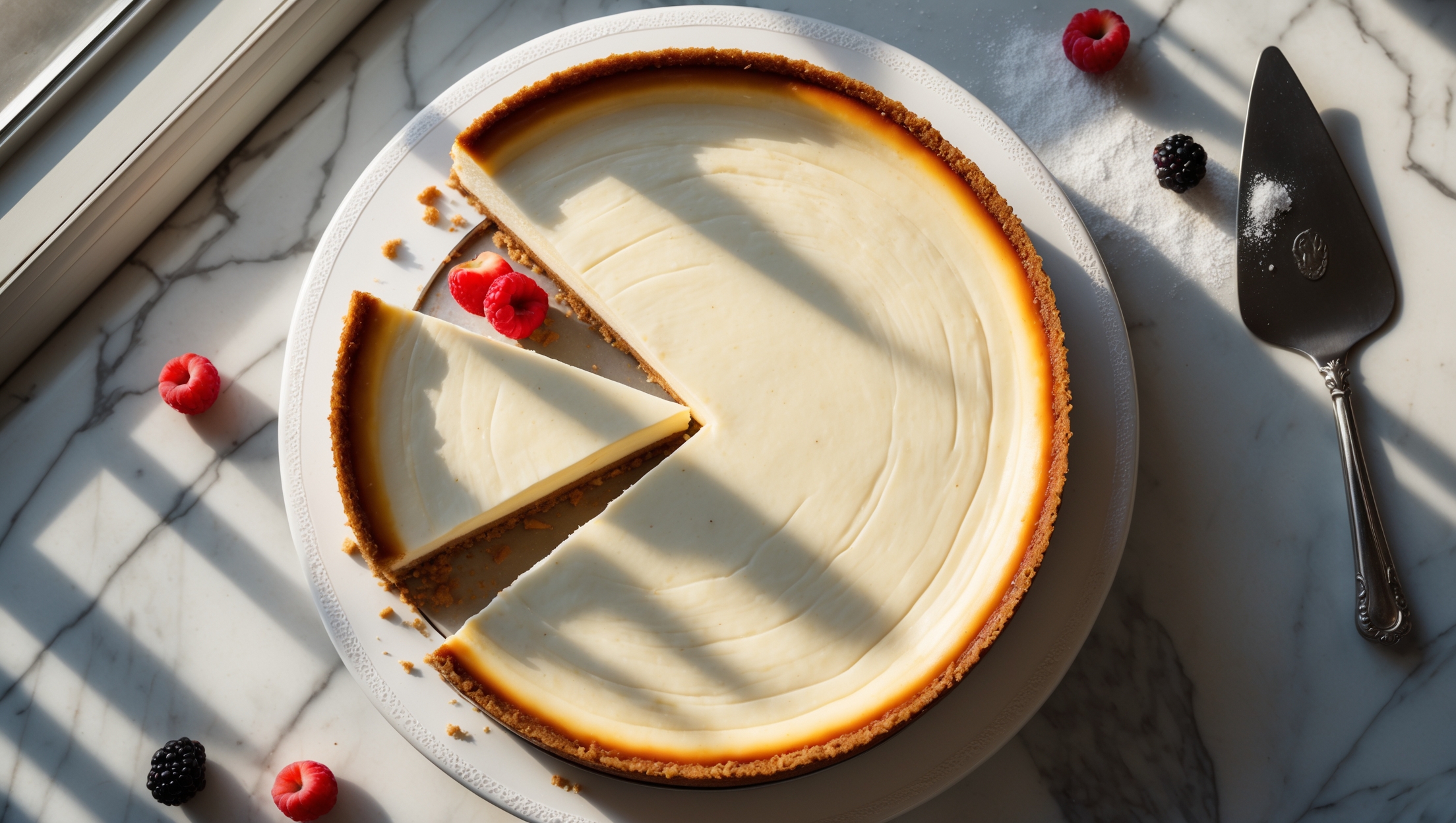
No-bake recipes may use softened cream cheese with whipped cream, powdered sugar, gelatin or other ingredients to create a chilled, sliceable filling. The balance of fat, moisture and air matters. Some refrigerator-set cheesecakes are deliberately soft and mousse-like, while others are firm enough for neatly cut wedges.
Recipe to try: No-Bake Cheesecake. For a chilled alternative, choose this no-bake formula. Its setting method is separate from an egg-based baked cheesecake.

Does no-bake mean raw eggs?
No. A safe no-bake cheesecake recipe should not rely on uncooked ordinary eggs that were meant to be baked. Choose a tested formula without raw eggs, or one specifically developed using pasteurized ingredients and safe handling methods. Similarly, do not add raw flour to a chilled filling without an approved treatment and recipe.
Texture comparison
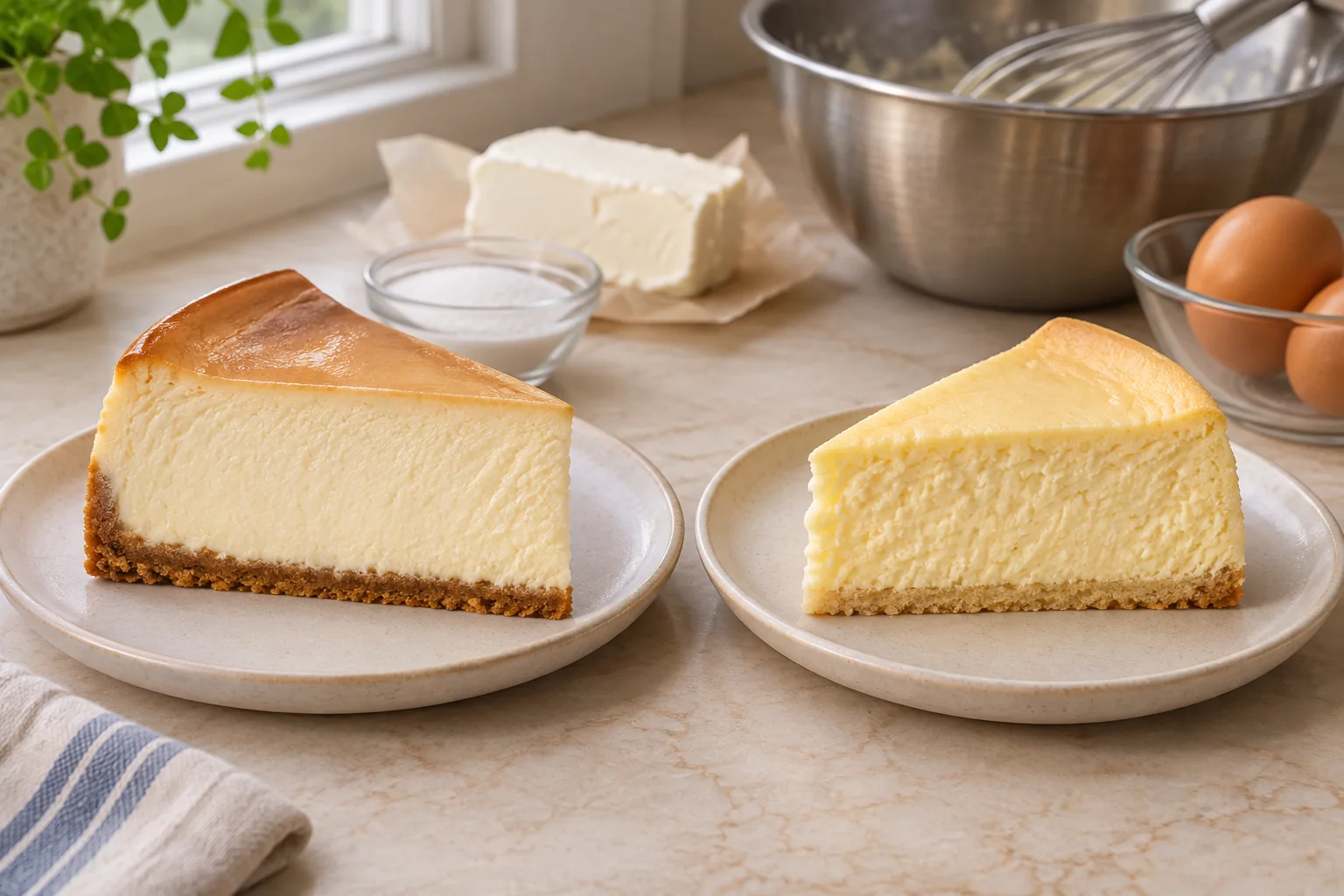
A baked cheesecake can be creamy, dense and smooth, sometimes with a delicately firm edge. A no-bake cheesecake often feels cooler, softer and more aerated, particularly when whipped cream is folded in. A gelatin-rich no-bake version may feel distinctly firmer than a loose whipped-cream formula.
Flavour differences
Both styles can have strong cream cheese tang. Baking develops different aromas and can mellow certain dairy notes, while a no-bake version tastes fresher and closer to sweetened cream cheese. Vanilla, lemon juice, sour cream and fruit can alter either profile considerably.
The role of eggs
Eggs are common in baked cheesecakes because they set during cooking. They aren't inherently required for all cream-cheese desserts, and a no-bake cheesecake formula usually omits them. Removing the eggs from a baked cheesecake recipe without adding an alternative setting system generally won't produce the intended cake.
The role of whipped cream
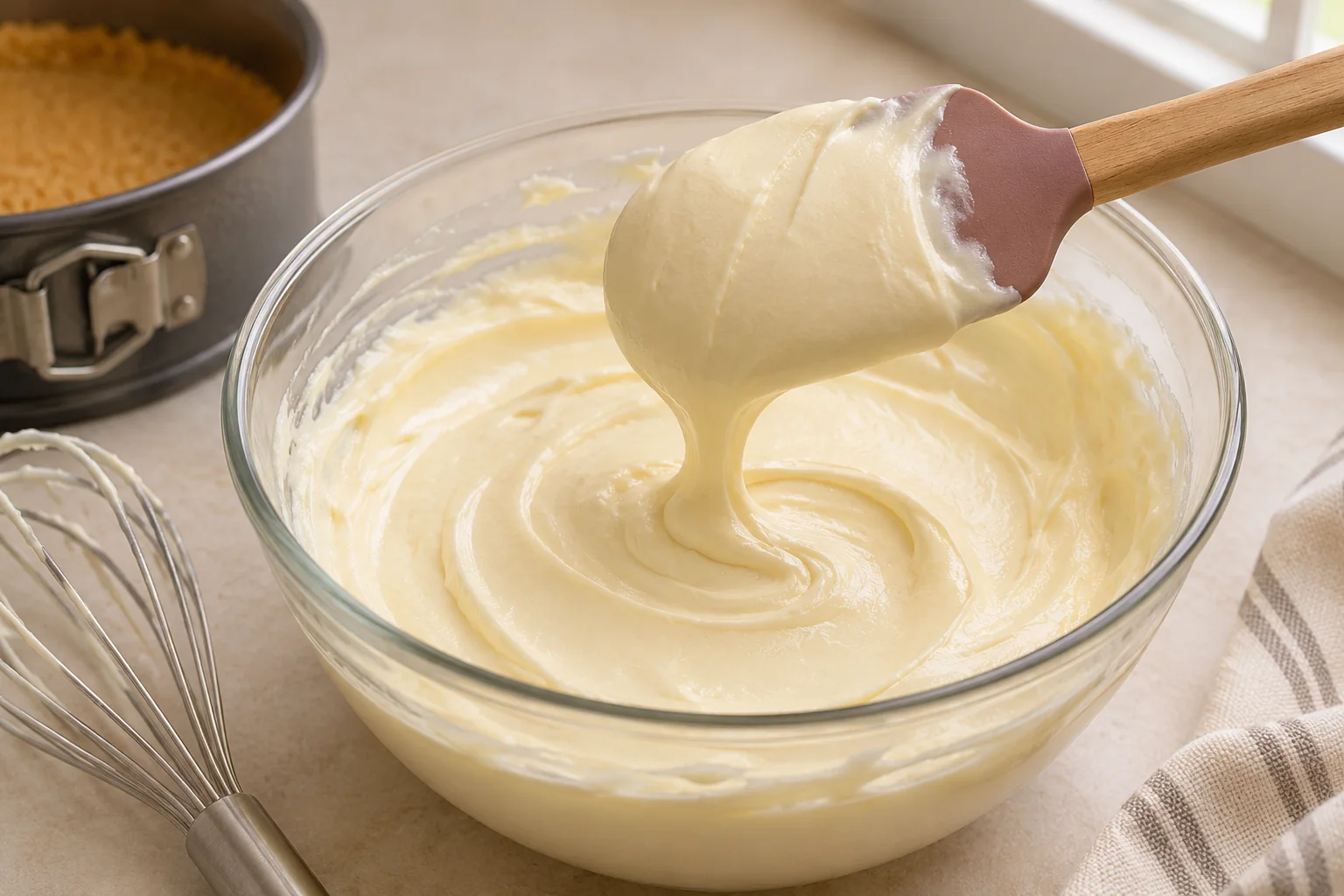
Whipped cream can lighten a no-bake filling by adding air. Its stability depends on the cream's fat content, how it is whipped and whether the recipe uses a stabilizer. Overwhipping may create graininess; underwhipping can give a looser result. Follow the specified soft, medium or firm peak stage.
When gelatin is useful
Gelatin can give a refrigerator-set cheesecake additional structure, especially in warm weather or for tall slices. It must be bloomed, dissolved and combined at suitable temperatures according to the formula. Too much can produce a rubbery dessert; an improperly dissolved mixture may form lumps.
Vegetarian setting options
Gelatin is animal-derived. Some specialized recipes use agar or other setting agents, but they have different temperatures, strengths and textures. A direct teaspoon-for-teaspoon substitution isn't reliable. Choose a tested vegetarian no-bake cheesecake instead of improvising a swap.
Crusts for baked cakes
Baked cheesecakes often use graham cracker or cookie crumb crusts, sometimes pre-baked to improve texture. Others use a pastry or sponge base. The oven method must account for a baked filling and a crust that won't overbrown during the longer cooking period.
Crusts for no-bake cakes
A crumb crust can firm in the refrigerator through its butter or other binder, although some recipes prebake the crust even when the filling isn't baked. Follow that sequence. Skipping a prescribed crust bake can affect crispness and structure even if the filling itself needs no oven.
Time versus hands-on work
A no-bake cheesecake saves oven time but can still require hours of chilling, especially for a tall ring mould. A baked cheesecake involves mixing, baking, controlled cooling and often overnight refrigeration. Neither should be rushed when clean slices matter.
Why baked cheesecake needs gradual cooling
The hot custard contracts as temperature drops. A method that manages this change can reduce cracks and maintain a smoother texture. Some recipes cool gradually in a switched-off oven, while others use a rack and refrigeration schedule. Follow the specific recipe.
Why no-bake cheesecake needs sufficient chilling
Whipped fats and gelling agents need time to establish the intended structure in a cold environment. A no-bake filling placed on the table immediately after mixing may be too soft to hold a wedge. Chilling is a setting requirement, not merely a preference for cold dessert.
Can no-bake cheesecake be frozen to set faster?
Freezing may make it firm temporarily, but it isn't an automatic replacement for a refrigerator-setting process. Whipped cream and gelatin can behave differently after freezing and thawing. Use a frozen-dessert formula if you want to serve a cheesecake directly from the freezer.
Why baked cheesecake cracks
Possible causes include overbaking, excessive beating that incorporates air and abrupt cooling. A water bath can provide gentler heating for some recipes but isn't obligatory for all. A small crack affects appearance more than flavour when the filling is cooked safely.
Why no-bake cheesecake won't set
Possible causes include insufficient cream cheese or stabilizer, overly warm ingredients, underwhipped cream or not enough refrigeration time. The fix depends on the setting system. Baking the loose mixture in an oven won't automatically turn it into a safe, well-made baked cheesecake.
Which is best for fruit topping?
Both work. A baked cheesecake may support a glossy cherry compote or berry sauce; a no-bake cake can pair with fresh berries and citrus. Consider whether the topping is wet, whether it should be chilled, and whether it might soften a delicate crumb crust.
Which travels better?
A dense chilled baked cheesecake may hold its shape well, while a lightly set no-bake version can soften more quickly if left warm. Yet a well-stabilized no-bake recipe can travel successfully in a cooled carrier. Maintain safe refrigeration for either style throughout transport.
How to choose for a celebration
For a classic rich centrepiece with deep cream-cheese flavour, a baked cheesecake is a dependable choice. For a lighter dessert when you want to avoid turning on the oven, a tested no-bake cheesecake may suit better. The key is allowing the appropriate cooking or chilling time before the event.
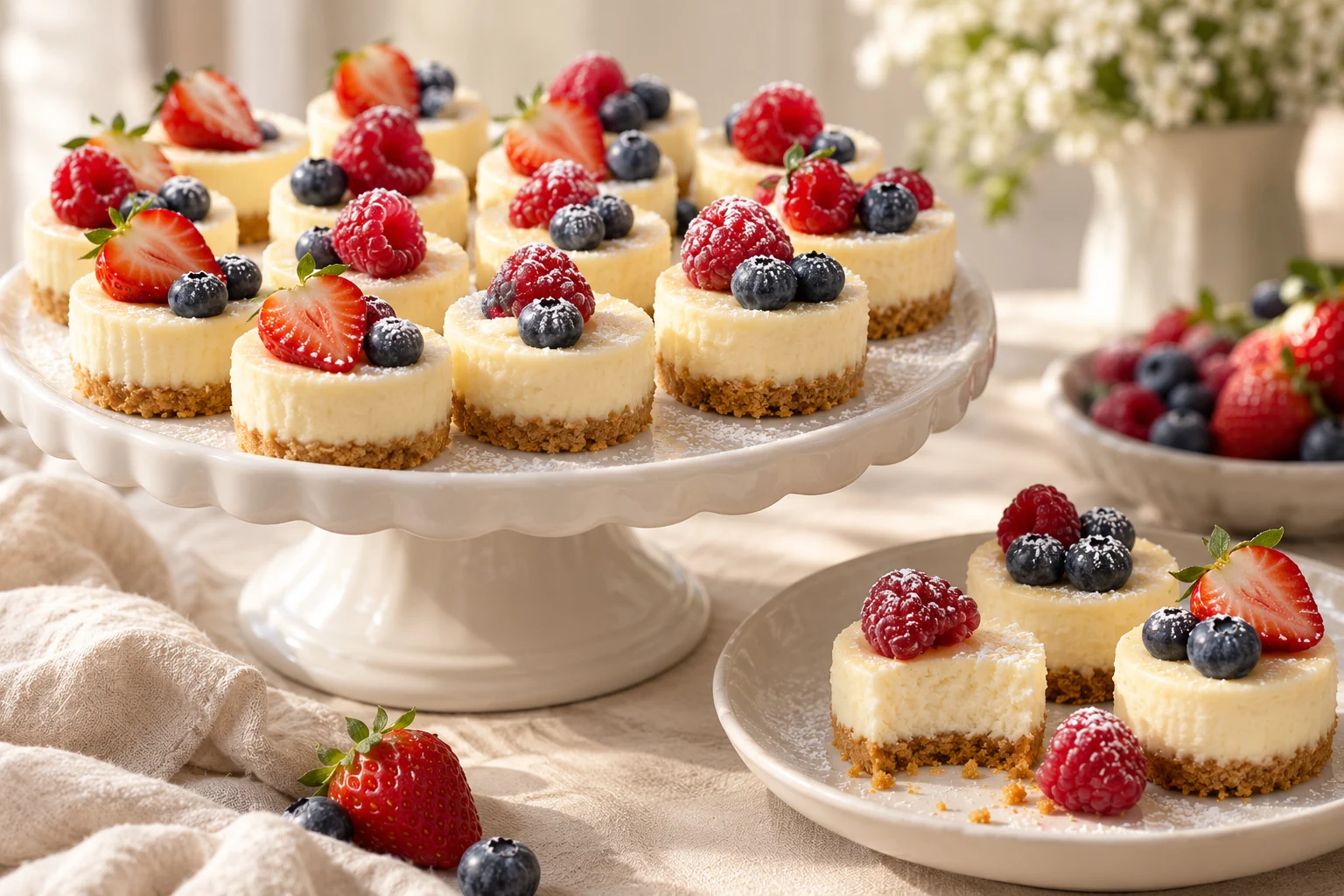
Recipe to try: Mini Cheesecake Bites. Mini cheesecakes have their own portion size and baking schedule. Do not use a whole cheesecake’s bake time for these small cups.
How long can either stay out?
Both are perishable dairy-based desserts. Keep refrigerated at 4°C (40°F) or colder and limit room-temperature exposure under safe-food-handling guidance; a commonly used limit is two hours total, or one hour above 32°C (90°F). Setting firmness doesn't determine microbiological safety.
Frequently asked questions
Is no-bake cheesecake the same as chilled baked cheesecake? No. Does baked cheesecake always use a water bath? No. Is gelatin required in no-bake? Not always. Can I bake a no-bake filling instead? Use a tested baked recipe rather than improvising. Which keeps a firmer slice? It depends on the formula and serving temperature.
Let the setting method guide you
Choose a baked formula when you want a carefully cooked custard texture, or a no-bake formula when you want a cold-set creamy dessert. Follow the complete method, including safe chilling, and both can become beautiful make-ahead cheesecakes.
IN PICTURES
From the baking notebook
FROM THE RECIPE BOX


