On this page
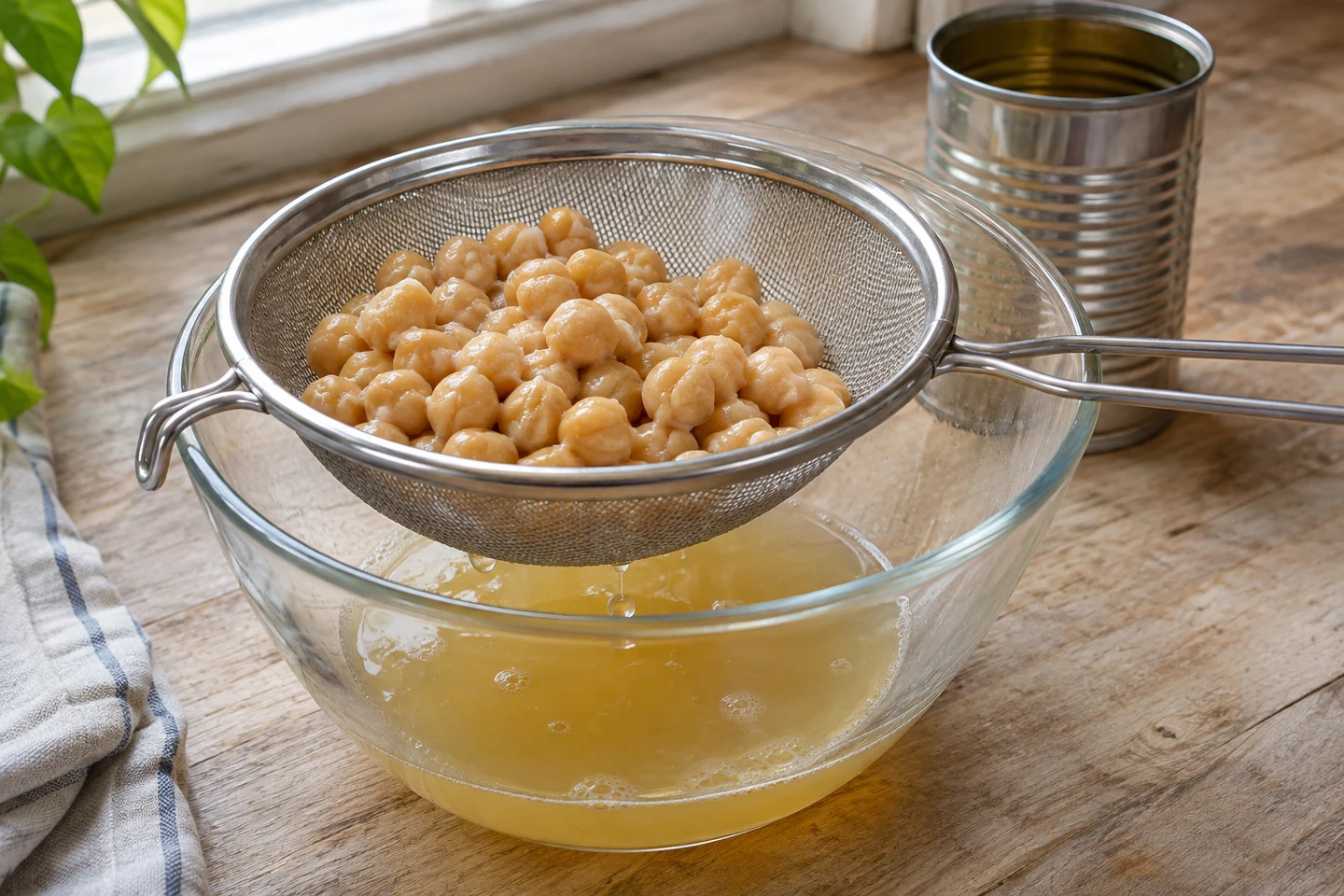
Aquafaba is the liquid you drain from a can of chickpeas. In baking, you can use it as a liquid binder or whip it into a foam for vegan meringues and coconut macaroons. Measure it before whipping and check what your recipe needs:
- For binding: Add the measured liquid directly to the batter or dough when the recipe calls for it.
- For lift: Whip it to the stage the recipe specifies before folding it into a batter.
- For meringue: Use a recipe written for aquafaba and follow its directions for adding sugar and drying the meringues.
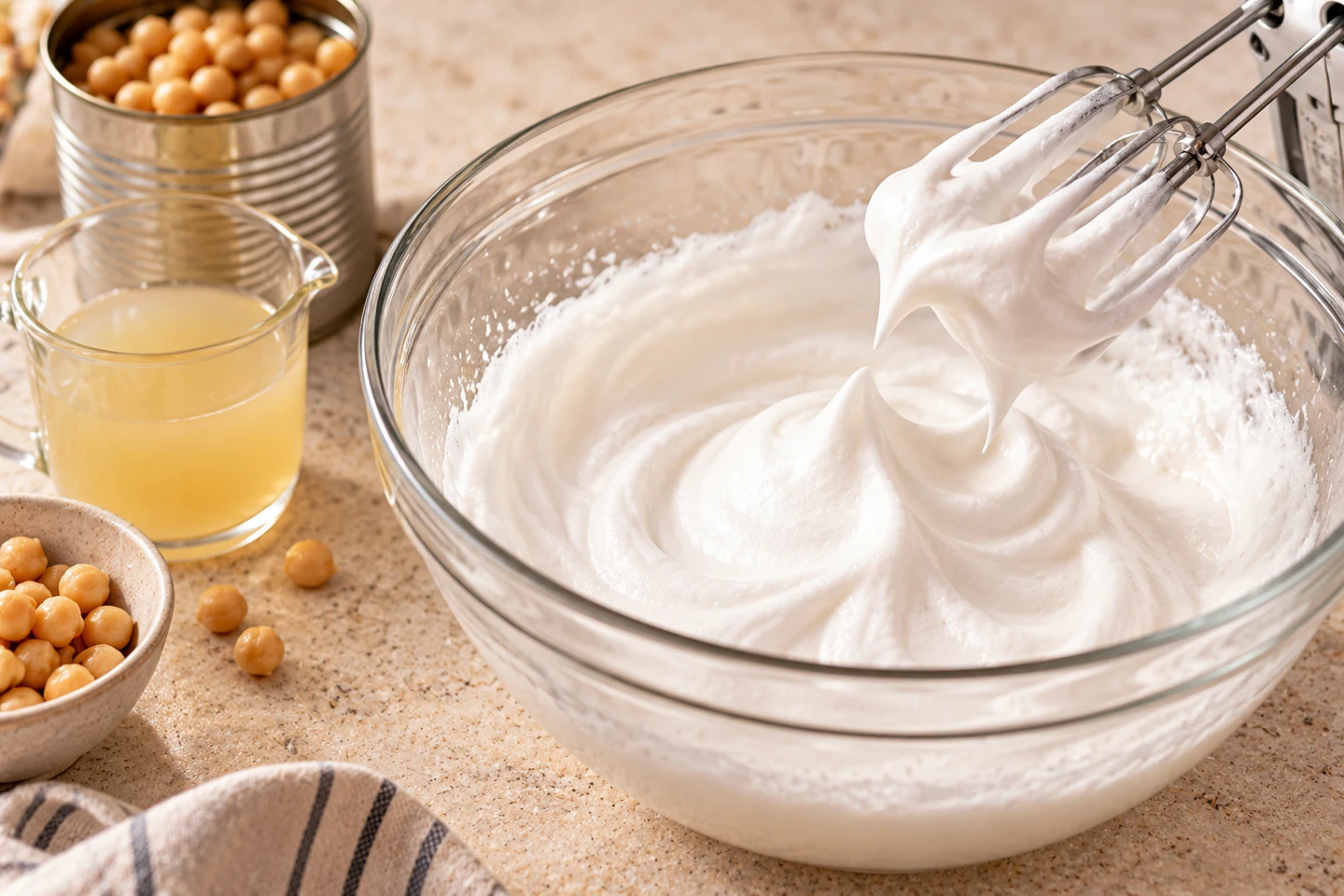
The technique images are editorial illustrations. The coconut macaroon images are from the recipe page.
What aquafaba actually is
Aquafaba is the cooking liquid from legumes, most commonly canned chickpeas. Some starches, proteins and other soluble substances move from the chickpeas into the water during cooking. Together they give the liquid viscosity and foaming properties. Commercial cans vary, so an unusually watery or salty product may behave differently in a delicate dessert.
Why canned chickpea liquid is common
King Arthur Baking's aquafaba guide recommends using the liquid from canned chickpeas for predictable results. Homemade chickpea cooking liquid can also work but may vary considerably in concentration. If the liquid is very thin, follow the recipe’s instructions for reducing it and let it cool before whipping.
Save the liquid before rinsing the chickpeas. You can use the drained chickpeas in a chickpea salad sandwich, which starts with drained, rinsed chickpeas.
Aquafaba is not the same as egg white
Egg whites contain proteins that firm up when heated. Aquafaba can make a foam for vegan meringues, but it responds differently to heat. Angel food cake and traditional macarons need a formula developed for the structure their whipped eggs provide.
For aquafaba meringue, follow one recipe’s measurements for the liquid, sugar and cream of tartar. Budget time for whipping, drying and cooling.
How much aquafaba replaces an egg?
King Arthur Baking’s egg-free baking guidance suggests about 2 tablespoons (28 g) aquafaba for one egg white and approximately ¼ cup (57 g) for a whole egg in compatible applications. Those are useful starting points, not guaranteed one-for-one replacements in every formula. Eggs also contribute fat and emulsifiers when the yolk is included.
Measure by weight if possible
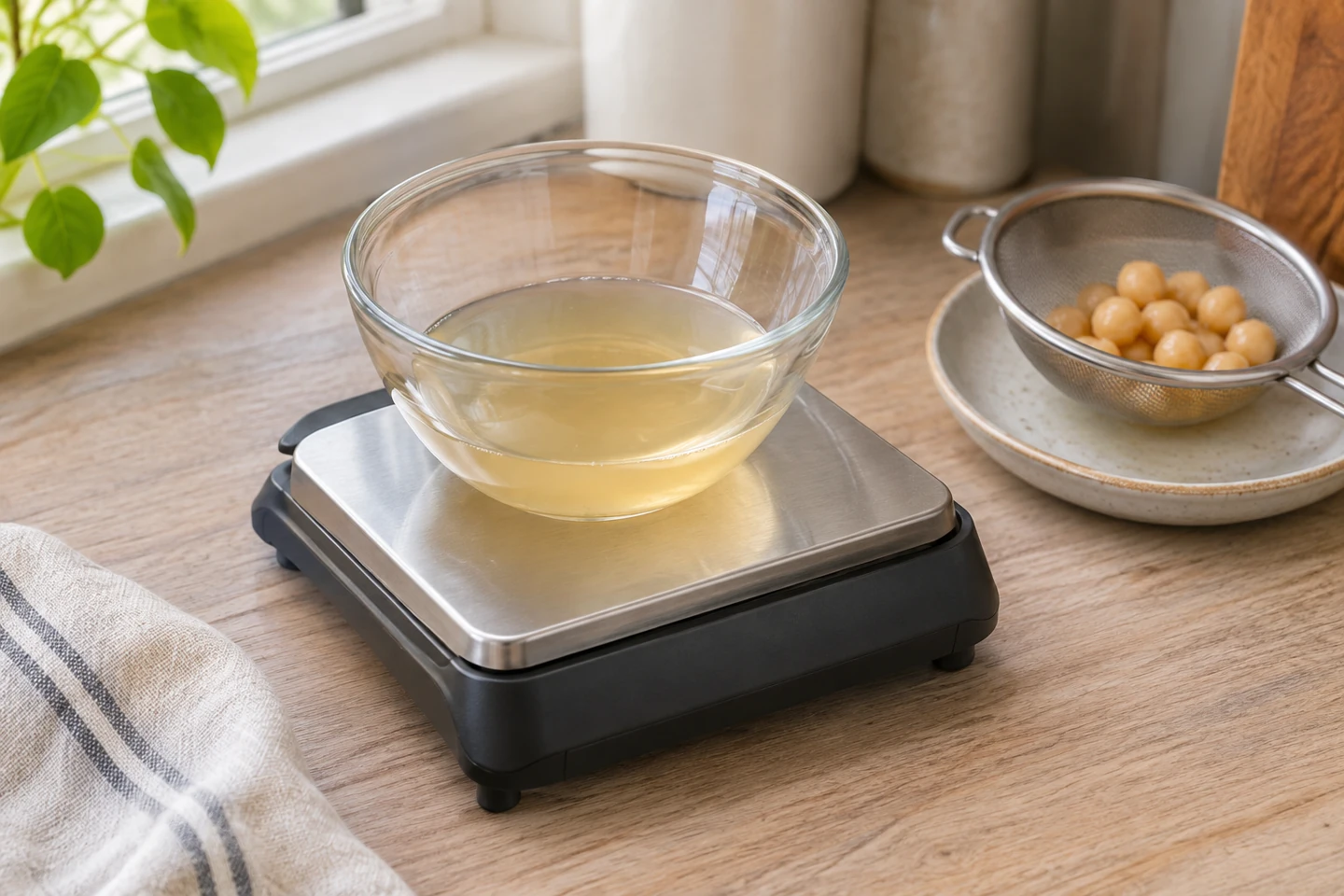
Canned liquid can be foamy or viscous and isn't always easy to measure precisely with a tablespoon. A scale improves consistency, especially in small-batch cakes. Use the specified amount and avoid adding extra water without considering batter hydration.
Measure the liquid before whipping unless your recipe says otherwise. Whipping changes its volume, and a spoonful of foam is not the same measurement as a spoonful of liquid. Do not assume millilitres and grams are interchangeable for every batch or concentration.
Binding in cookies and quick breads
In some recipes, liquid aquafaba helps bring ingredients together and contributes moisture where a whole egg would otherwise act as a binder. It is particularly worth trying in formulas developed for egg-free cookies and pancakes. Very egg-rich pound cakes may need a different structural system.

How to whip aquafaba
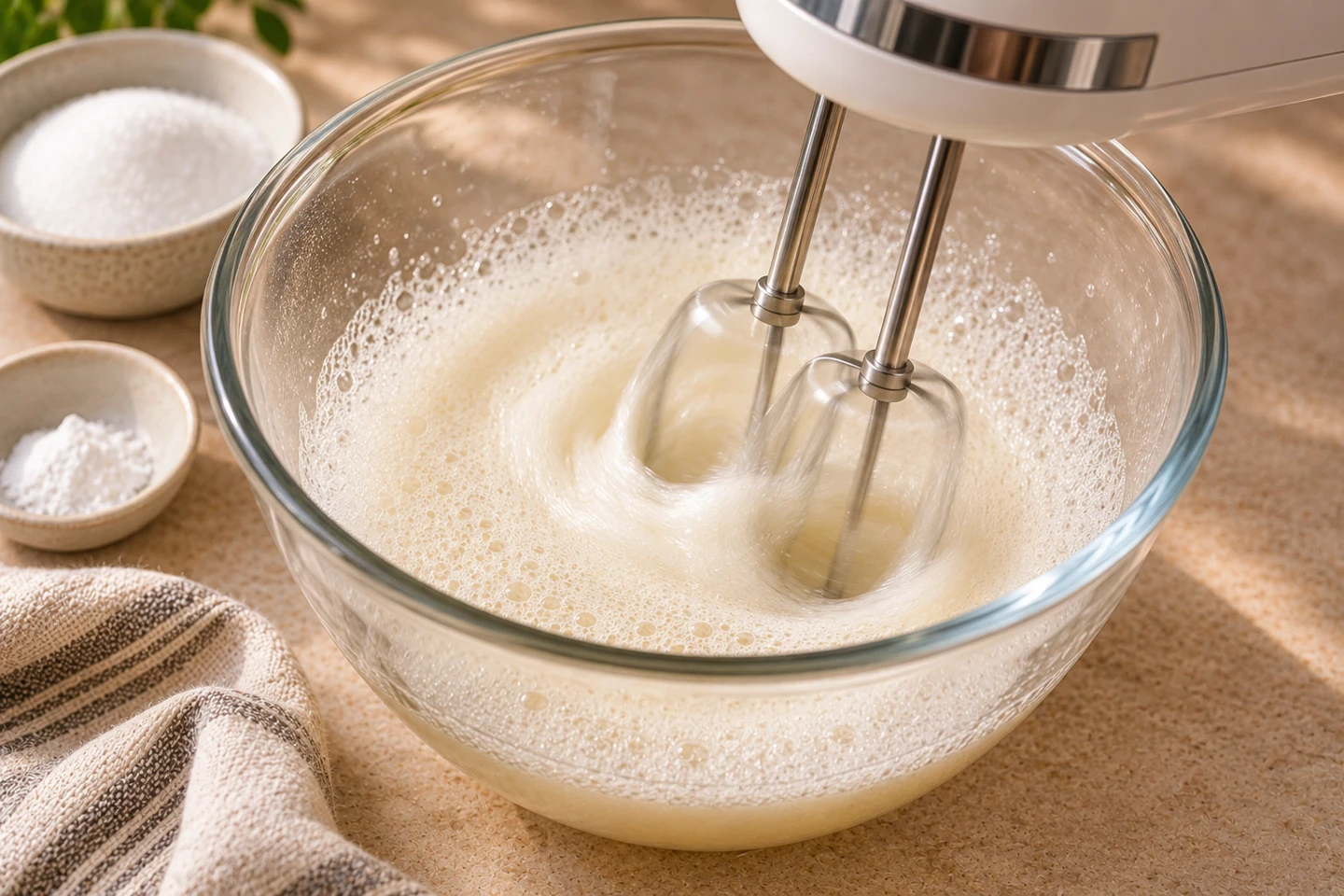
Use an electric mixer and a clean, grease-free bowl. When you lift the whisk, a soft peak bends at the tip. A stiff peak holds upright. Check the peak shape as you go and follow the recipe’s instructions for mixer speed, sugar and stabilizers. Aquafaba can take longer to whip than egg whites.
For a cake example, our vegan Victoria sponge cake folds aquafaba whipped to soft peaks into the batter. Our vegan lemon lavender muffins also start with whipped aquafaba before the remaining wet ingredients go in.
Sugar is important for meringue
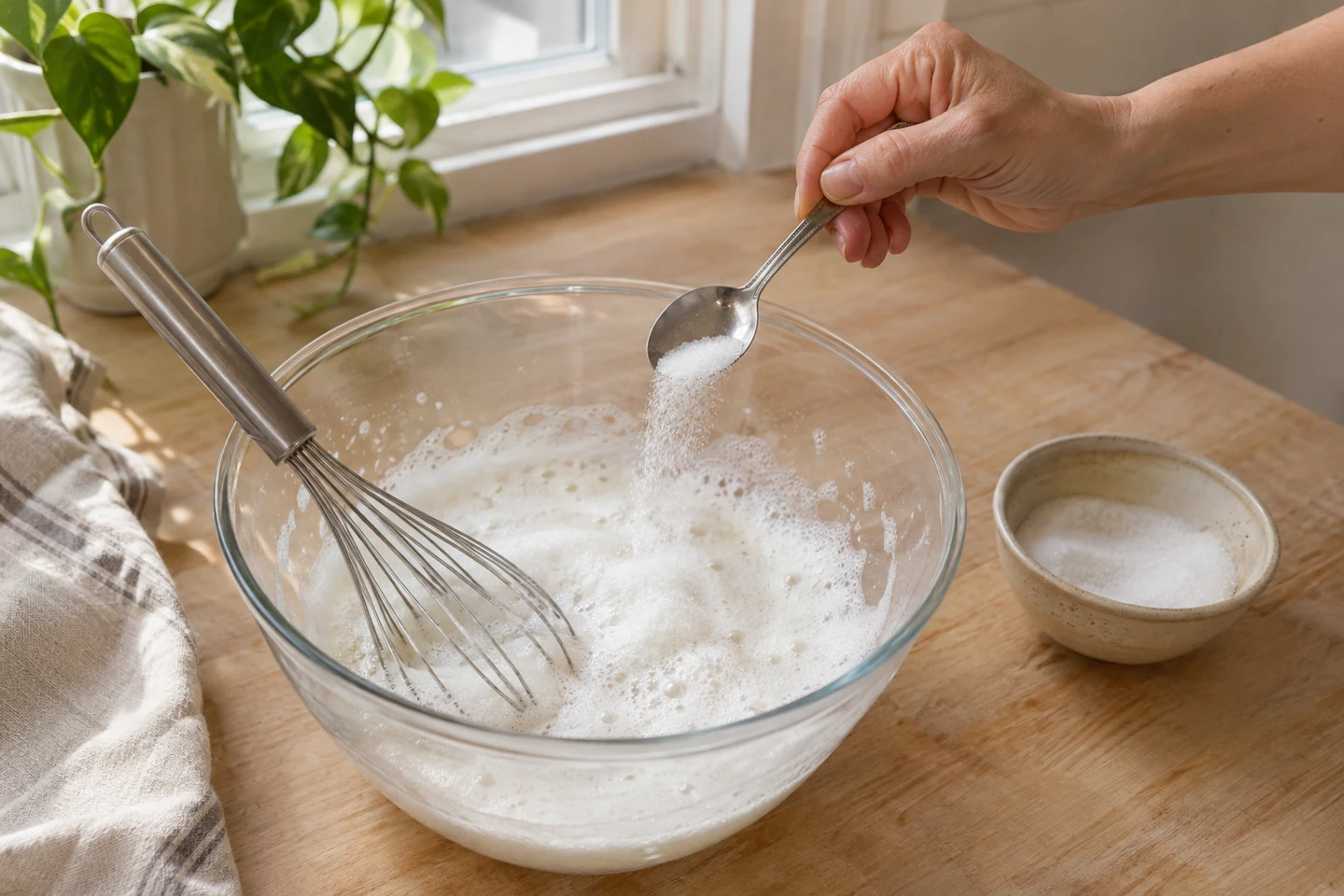
Vegan meringue often combines aquafaba with sugar to create a more stable structure. Add sugar according to the tested method, usually gradually after the foam begins developing. Under-dissolved sugar can produce graininess, while too little structural support can cause the meringue to collapse.
For a recipe built around the foam, try our Vegan Aquafaba Meringues. The method adds sugar to whipped chickpea liquid and dries the piped meringues at low heat.
Cream of tartar and acid
Some aquafaba recipes include cream of tartar or another food-grade acid to help stabilize foam. Do not add arbitrary amounts of lemon juice or vinegar to every formula. The correct acid level depends on liquid concentration, sugar and the dessert being made.

Macarons and coconut macaroons
Macarons are especially sensitive to meringue strength and heat-setting. King Arthur Baking does not recommend directly swapping aquafaba into traditional macaron or angel food formulas that rely heavily on whipped eggs. Vegan macarons require their own tested recipe and baking schedule.
For a different bake using whipped chickpea liquid, try our Vegan Coconut Macaroons. This recipe folds desiccated coconut into sweetened aquafaba foam and portions it into mounds. A coconut macaroon is a different cookie from an almond macaron.


What about vegan marshmallow frosting?
Certain aquafaba frostings and marshmallow-like toppings can be excellent when combined with carefully measured sugar and stabilizers. Their stability and storage are specific to the formula. Do not assume a raw whipped aquafaba foam will remain stable for an entire warm afternoon on a cake.
Liquid aquafaba, a moist whipped topping and fully dried meringue cookies have different storage needs. Keep an uncooked aquafaba topping refrigerated at 4°C (40°F) or colder until serving and follow the shortest applicable ingredient storage directions. Glossy peaks tell you about texture. They do not establish a safe holding time.
Using aquafaba in buttercream
Some vegan Swiss-meringue-style buttercreams use aquafaba and plant butter instead of egg whites and dairy butter. The emulsion depends on temperature and fat composition. Follow a complete vegan frosting method rather than replacing only the eggs in an unrelated Swiss buttercream recipe.
How salt affects flavour
Canned chickpea liquid may contain added salt. In a sweet dessert, an already salty liquid can change flavour and the overall sodium level. Unsalted chickpeas can simplify testing, but if a recipe uses salted aquafaba, follow its balancing instructions.
How to minimize bean flavour
Vanilla, chocolate and citrus can complement aquafaba desserts. Properly baked meringues may have a milder chickpea note than the raw liquid. Don't compensate for a strongly flavoured product by pouring in extra liquid extract, which can destabilize the foam.
Why concentration matters
A thin diluted aquafaba may struggle to whip, while a concentrated liquid can behave differently under sugar and heat. Some recipes specify reducing or selecting a particular product. Keep the liquid at the recipe's intended strength rather than simmering random amounts until syrupy.
Can you freeze aquafaba?
Freeze measured portions at −18°C (0°F) or colder and label the quantity and date. Thaw in the refrigerator at 4°C (40°F) or colder. If texture matters for an occasion, try whipping a thawed portion first.
Storage after opening
Transfer unused liquid to a clean covered container and refrigerate it promptly at 4°C (40°F) or colder. Follow the chickpea label’s after-opening directions when provided. If you cannot verify how it was stored, discard it. Freezing will not make mishandled liquid safe.
For general cooling, refrigeration and handling precautions, see Health Canada’s food safety tips for leftovers. Use product-specific guidance for the reserved chickpea liquid rather than assuming an unopened can’s shelf life still applies.
What if aquafaba won't whip?
Check whether the liquid is too diluted, whether there is fat in the bowl and whether the recipe needs an acid stabilizer. A particular can may behave differently. Don't assume another twenty minutes of mixing will turn a very watery product into perfect stiff peaks.
What if the foam collapses?
Possible causes include underwhipping, excessive folding, heat, incorrect sugar addition or a formulation too weak for the intended dessert. Compare with a tested aquafaba meringue before modifying the liquid. A successful foam in the bowl still needs suitable cooking or chilling to hold its final shape.
Frequently asked questions
Can aquafaba replace every egg?
It works for some baking jobs, especially when a recipe needs a foam or a little binding. Egg-rich cakes depend on more structure.
Do I whip aquafaba before measuring it?
Measure the liquid first unless your recipe specifies a different method. Whip it only when the recipe asks for foam.
Can I use homemade chickpea liquid?
Yes, though its concentration varies. Use the recipe’s guidance for the consistency it needs.
Use it for the job it does well
Aquafaba is a clever way to bind some batters and create certain vegan foams. Measure it, choose a tested method and don't overlook the roles played by egg yolks or heat-setting proteins in other desserts. That gives the ingredient room to shine without unrealistic expectations.
Further reading: King Arthur Baking’s guide to aquafaba.
IN PICTURES
From the baking notebook
FROM THE RECIPE BOX


