On this page
Almond flour gives bakes richness and tenderness. Coconut flour absorbs much more liquid, so recipes tend to use smaller amounts and build the batter around it. A cup-for-cup swap can make a batter too dry or too loose. Start with a recipe written for the flour you have.
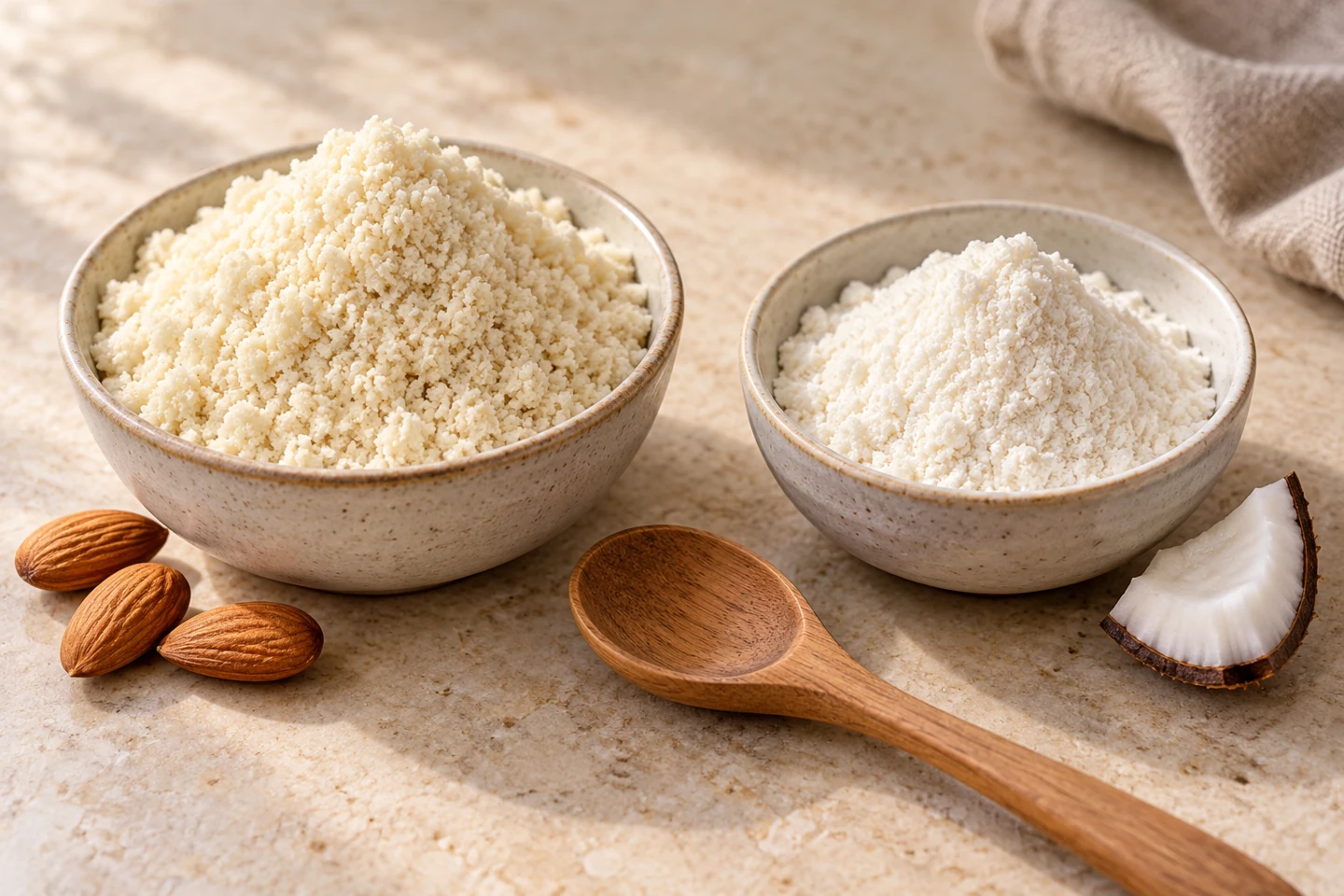
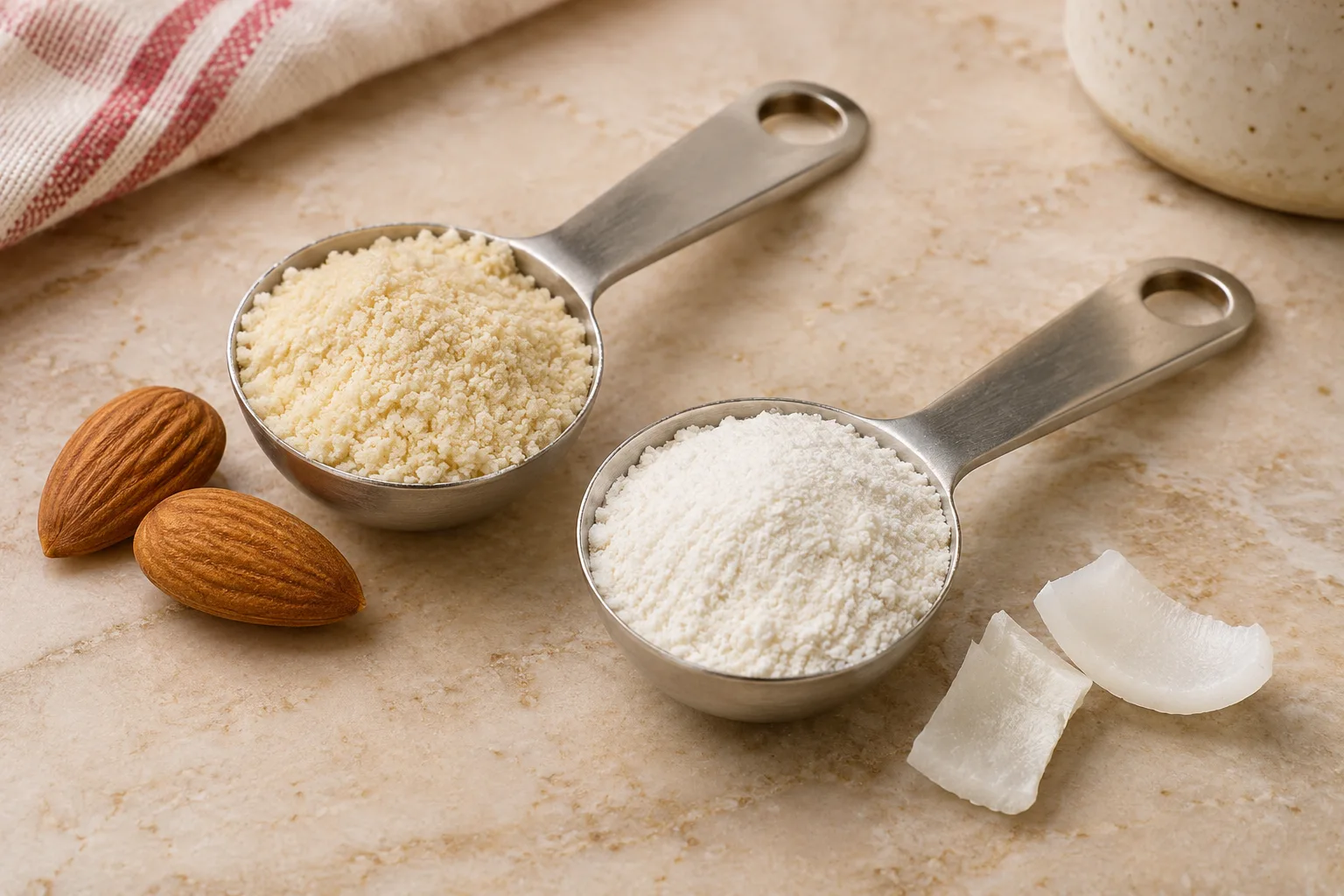
The flour, weighing and storage images are editorial illustrations, some generated with AI. The baking images come from the linked recipe pages.
Almond flour and coconut flour at a glance
Almond flour supplies nut solids and fat, while coconut flour is unusually absorbent and can thicken a batter dramatically. Neither contains wheat gluten, so both rely on eggs, starches, other binders or carefully designed formulations for structure. Their moisture needs are different enough that a direct one-for-one substitution is rarely successful.
If you’re baking a tender almond cake or a chewy cookie, look for a recipe that already uses almond flour. Choose a coconut-flour recipe if you want to use coconut flour as the main dry ingredient. When a recipe calls for one flour in a small amount alongside another, each ingredient may have a particular job. Identifying that job is more useful than memorizing a substitution ratio.
What is almond flour?
Almond flour is finely ground almonds, often made from blanched nuts with the skins removed. Some products labelled almond meal include skins or a coarser grind. Almond flour contributes mild nutty flavour and fat, producing rich, tender textures in recipes created for it.
The label matters: when a recipe specifies blanched almond flour, choose a finely ground product labelled that way. Save coarser almond meal for recipes that call for it.
What is coconut flour?
Coconut flour is made from dried coconut material, typically remaining after part of the coconut fat has been extracted. It is fine, high in fibre and strongly absorbent. A relatively small amount can take up much of the liquid in a batter. For that reason, coconut-flour recipes may use more eggs or other binding ingredients than expected.
Why liquid absorption matters
Flour affects how much free moisture remains in a recipe. Coconut flour can absorb dramatically more liquid than almond flour; replacing a full cup of almond flour with coconut flour can turn the batter extremely thick or dry. Adding extra liquid alone may not be enough, because structure and binding also change.
Can you substitute coconut flour for almond flour?
Not on a straightforward one-to-one basis. Ratios suggested online are only rough starting points and can fail badly because ingredient brands, eggs, sugar and other flour components vary.
Can you substitute almond flour for coconut flour?
Also not directly. Replacing a small amount of coconut flour with the same quantity of almond flour removes a major source of absorption and may produce a runny batter. Some individual tested recipes offer a specific conversion, but it shouldn't be extrapolated to every cake, muffin or pancake.
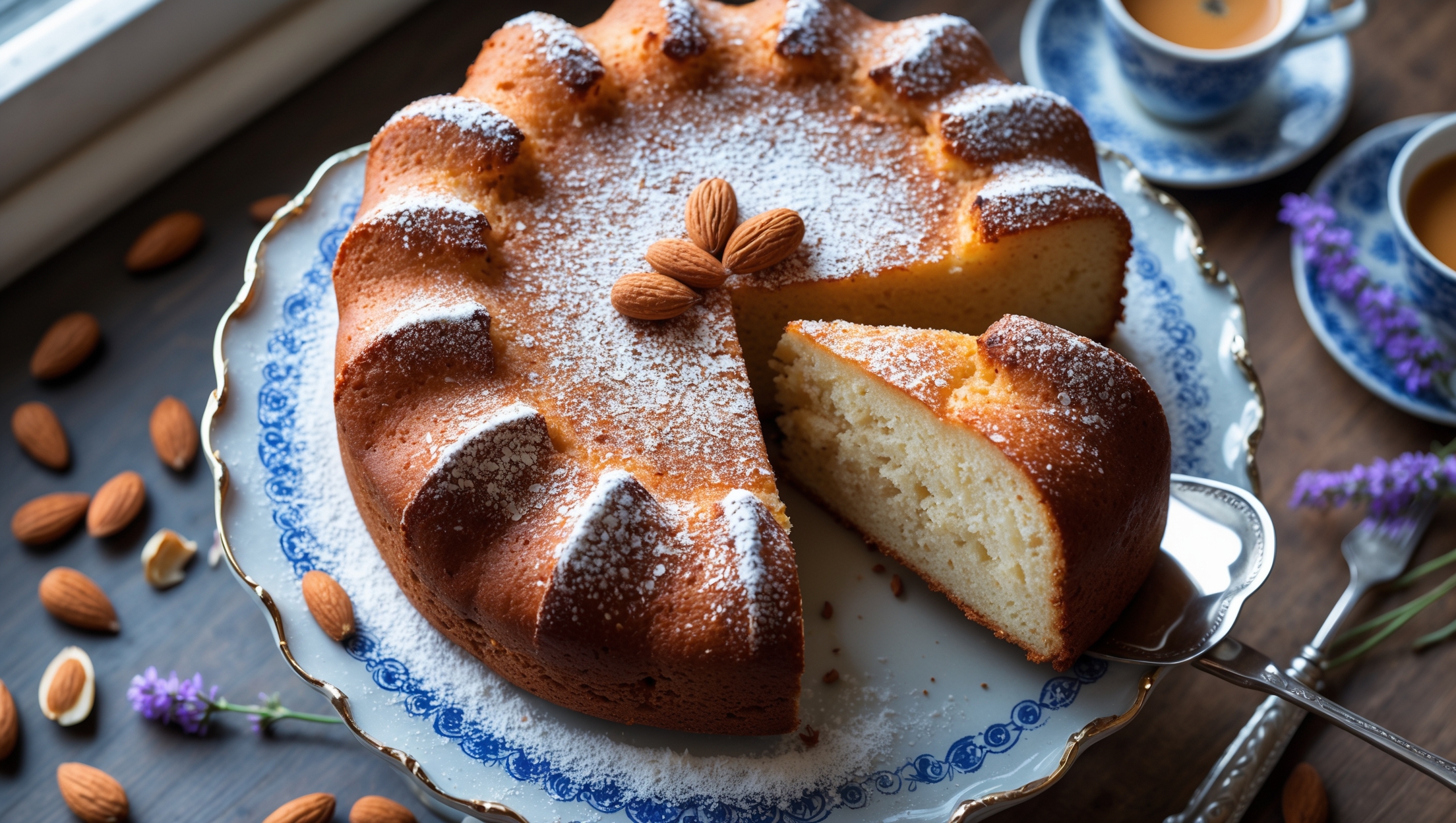
Some recipes use almond flour alongside wheat flour. In our French almond cake, ground almonds supply flavour while all-purpose flour contributes structure. The recipe contains wheat. The separate Almond Flour Cake below shows how eggs can help provide structure in a cake that uses almond flour on its own.
An example showing the difference
That is four times the volume in this particular recipe, not a weight conversion or a universal absorption ratio. Keep the full formula and its separated-egg method together; do not apply the swap to unrelated cakes, muffins or pancakes.
Which makes a more tender cake?
Almond flour often makes tender, rich cakes because of its fat content and absence of gluten. Coconut flour can make a pleasant, light-textured cake too, but only when enough liquid and structure are supplied. A poorly balanced coconut-flour batter can dry out or become crumbly.
For an almond-based example, see our Almond Flour Cake. Its method beats eggs and sugar before gently folding in the almond flour and cooled melted butter. Follow that complete formula rather than replacing its almond flour with coconut flour.

In step 3 of the almond flour cake, the beaten eggs and sugar should fall from the beaters in a ribbon. Once you add the dry ingredients, use a spatula to fold until combined. Gentle folding helps preserve the air you just whipped in. The recipe folds in the cooled melted butter separately.
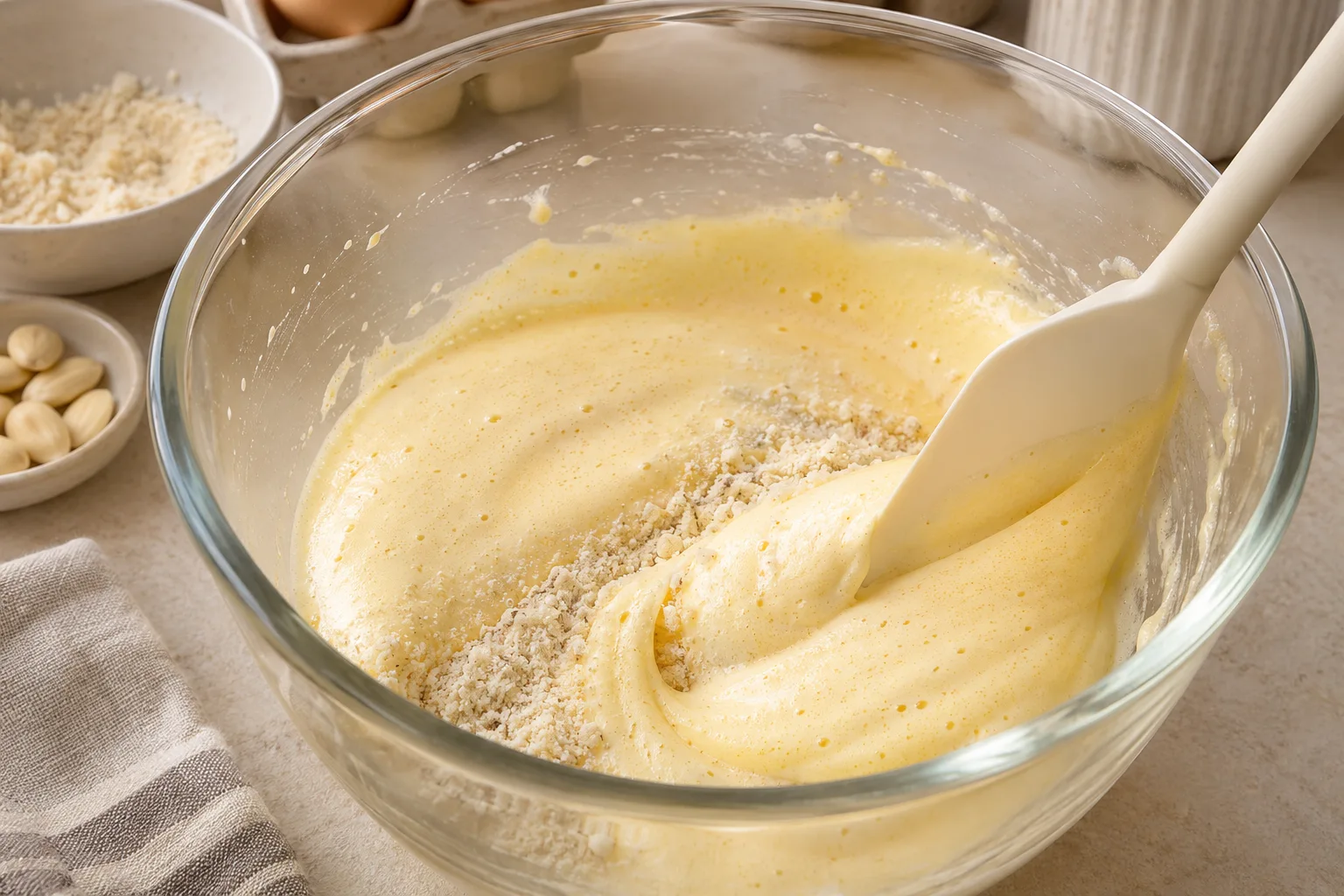
Let the cake cool as directed before slicing so you can see the crumb without compressing it.

Which tastes more like coconut?
Coconut flour can add a detectable coconut flavour, though strong ingredients like cocoa, ginger and pumpkin may mask it. Almond flour has a mild nutty taste that works especially well with berries, citrus and chocolate. Tasting the flour type in a cake also depends on how much the formula uses.
Almond flour for cookies
Almond flour can make tender, sometimes fragile cookies. Because it doesn't form wheat gluten, the recipe needs enough binding from egg, sugar or other ingredients to hold together. Chilling may be helpful in specific formulas. Do not automatically substitute it for all-purpose flour in a conventional cookie dough.
Our Almond Flour Chocolate Chip Cookies use fine blanched almond flour and an egg to bind the dough.

Coconut flour for cookies
Coconut flour's absorption changes dough texture rapidly. A cookie recipe developed for it may contain a surprising amount of eggs or other liquid relative to the flour. Attempting to use ordinary wheat-cookie proportions can create dry, crumbly dough or an uneven bake.
Pancakes with almond flour
Almond flour pancakes can be pleasantly tender and nutty, but the batter may be less elastic and require a suitable binder. Gentle flipping and correct pan heat matter because fragile pancakes can break. Use a recipe created specifically for almond flour.
Pancakes with coconut flour
Coconut flour pancakes often need a different ratio of eggs to dry ingredients and may thicken as the batter rests. If it becomes very thick, add liquid only as the formula allows. A wheat-pancake recipe cannot simply exchange flour types and retain the same texture.
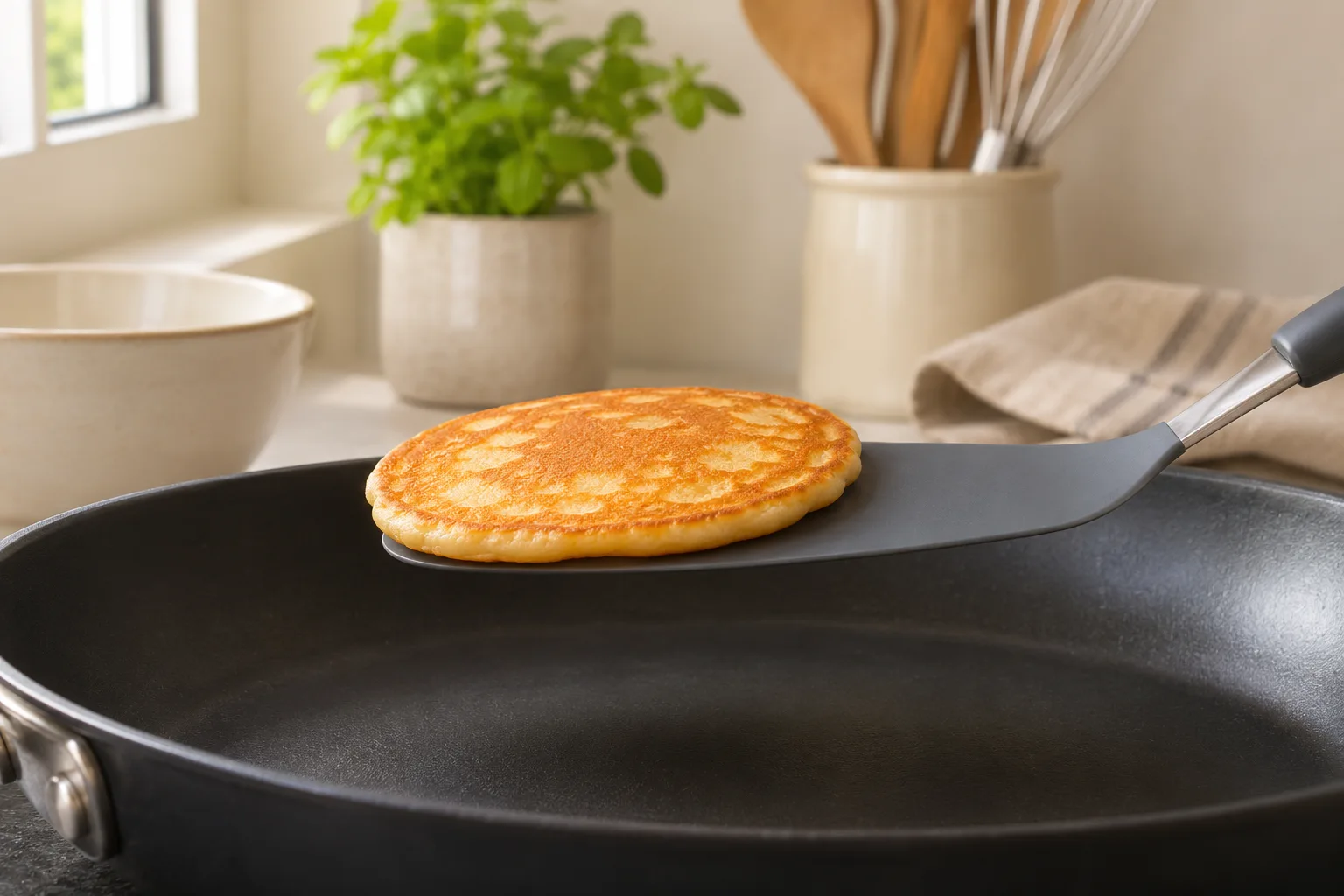
Our almond or coconut flour pancakes show how one recipe can provide separate quantities for each flour. The recipe lists 120 g almond flour or 60 g coconut flour for that specific batter. It also lists almond milk, so changing the flour alone leaves an almond ingredient in the recipe. Follow the rest of the formulation, including the four eggs.
Use the short rest in the recipe and start with one small pancake. When the edges begin to set and the underside is golden, slide a thin spatula all the way under it before turning. Finish cooking the second side through before checking the texture. Adjust the heat if the outside darkens too quickly.
Does either flour contain gluten?
Pure almond and coconut flours do not naturally contain gluten. For someone with celiac disease, choose ingredients labelled gluten-free and use clean tools and surfaces to prevent cross-contact. For a wheat allergy, check for wheat separately. A gluten-free claim does not establish that a product is safe for everyone with a wheat allergy.
What about nut allergies?
Almonds are tree nuts and can cause serious allergic reactions. Coconut is botanically different from almonds, but allergy labelling and personal sensitivities still matter. Do not treat coconut flour as universally allergy-safe, and never substitute a nut-based flour for a guest without checking their needs.
Which flour is lower in carbohydrates?
Both are commonly used in reduced-carbohydrate recipes, but specific carbohydrate, fibre and fat amounts vary across brands and serving sizes. Coconut flour is often high in fibre, while almond flour contains substantial fat. Compare nutrition labels rather than relying on broad claims that one is always healthier.
Why baked goods crumble
Without gluten, the structure depends on the complete formula. Too little egg or binder, insufficient hydration, overbaking or cutting the cake while hot can cause crumbling. Adding more almond flour or coconut flour by guesswork may worsen the result; use the prescribed proportions and cooling time.
Our Almond Flour Brownies use eggs in the batter. Bake them fully before cooling and slicing. A fudgy texture is the goal, and any batter that is still wet or raw needs more baking.

Why coconut flour bakes turn dry
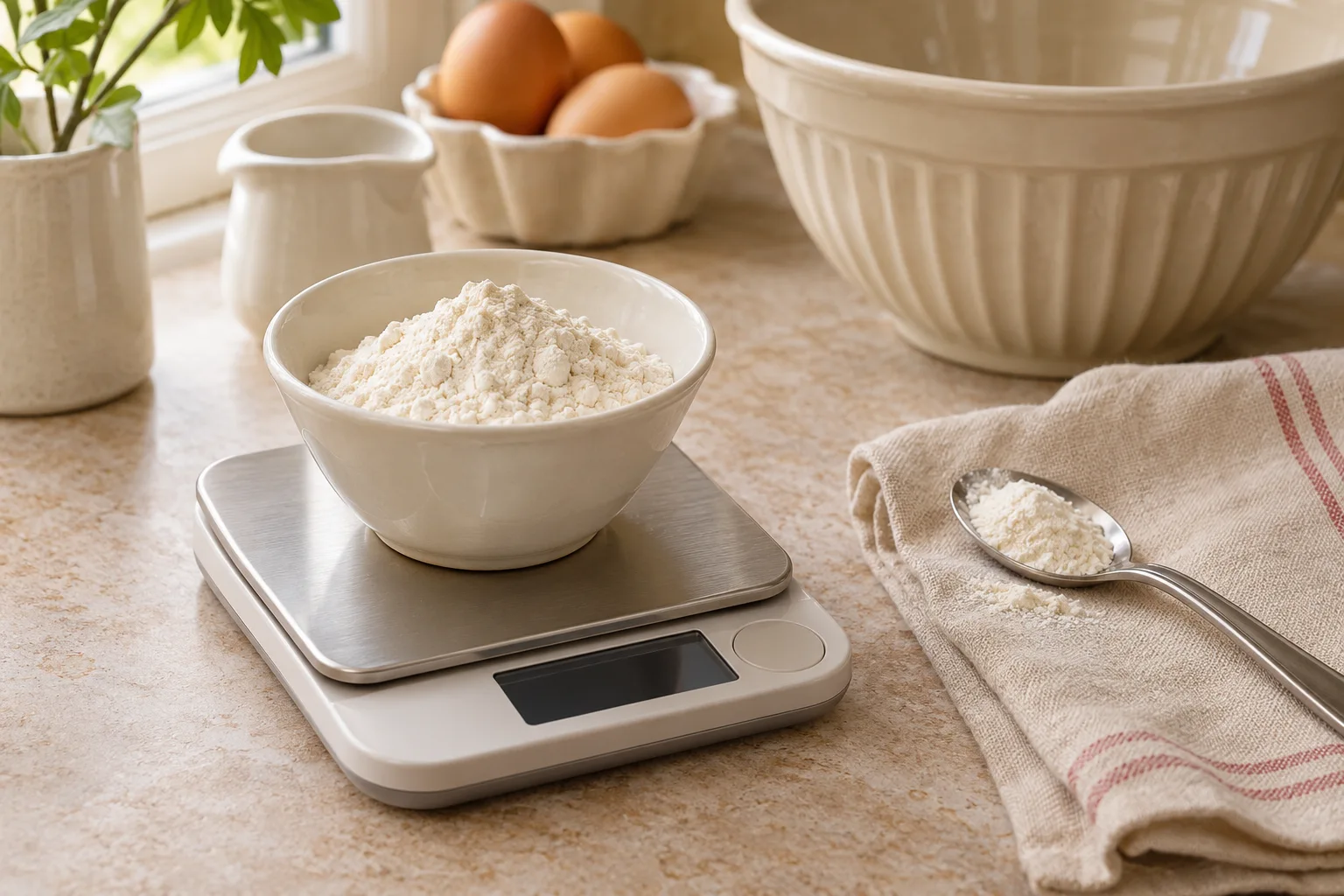
The flour absorbs liquid strongly. Measuring too much, reducing eggs or liquid, or baking too long can make the result dry and dense. Weigh coconut flour if the recipe provides grams, and allow the batter to hydrate for the time explicitly stated.
Our Coconut Flour Cupcakes illustrate a different formulation: the published method includes eggs, coconut milk and a five-minute batter rest. Keep those instructions together; they are not a conversion guide for the almond cake.


Check the batter before changing the recipe
If a coconut-flour batter looks thicker than expected, finish any rest the recipe calls for before judging it. Then compare it with the recipe’s description or step photo. Thick cupcake batter may be exactly right, while pancake batter should still be portionable into the pan. If the texture is far off, check whether you weighed the flour, used the right product and included all the eggs and other liquids. Fix a missed ingredient before improvising with more liquid.
With almond flour, a coarse grind can feel more textured even when the rest of the formula is correct. If cookies crack when you move them, let them cool as directed before judging the binder. If a sponge is dense, check whether you followed the recipe’s egg-whipping and folding steps before trying a flour change.
Storage considerations
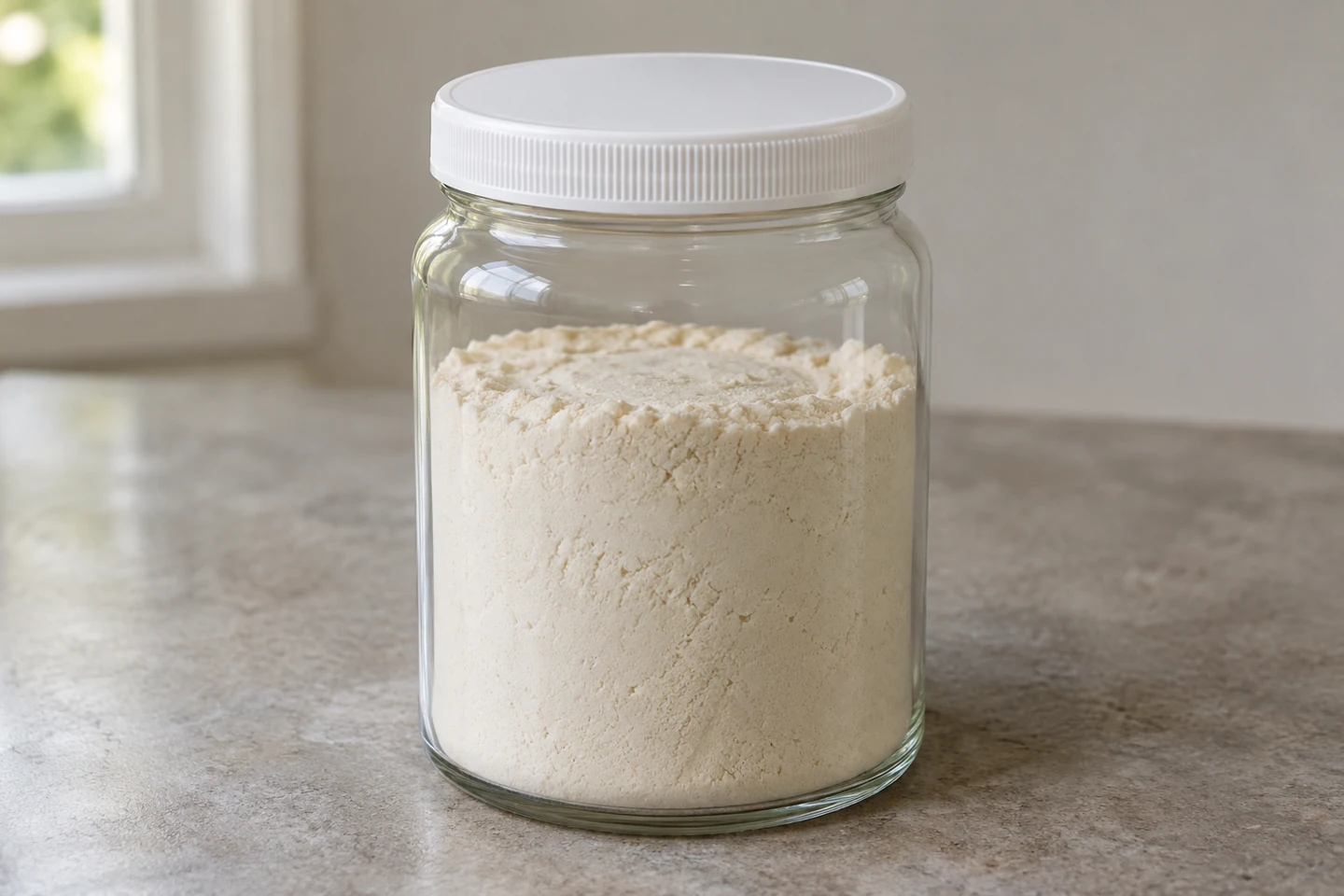
Almond flour can become rancid, and coconut flour should be protected from moisture and odours. Follow the package’s storage instructions. Treat uncooked flour and batter as raw ingredients: keep them away from ready-to-eat food and clean hands, utensils and surfaces after handling.
A practical substitution checklist
- Identify the flour’s job. Check whether it is the main dry ingredient, a small addition or part of a blend with another flour.
- Compare whole recipes. Look at eggs, liquid, binders, leaveners and pan size together. A conversion that works in one batter may fail in another.
- Measure the product specified. Use a scale when a recipe gives grams. A finely ground flour and a coarse meal do not necessarily fill a measuring cup the same way.
- Change one thing at a time. For a useful comparison, make the recipe as written first and note the brand, batter thickness and cooled crumb. If the author offers a swap, use the specified quantities for the next bake.
When choosing a loaf, look at the binder as well as the flour. Our Almond Flour Sandwich Bread uses psyllium and separated eggs.

For comparison, the Almond Flour and Whole Grain Blend Bread combines almond flour with whole wheat flour, oats and ground flaxseed. It contains wheat and uses a different method from the sandwich loaf.

Frequently asked questions
Can I use coconut flour instead of almond flour?
Use a recipe that gives quantities for coconut flour. A direct swap can leave the batter too thick or dry.
Is almond flour the same as almond meal?
Almond meal may be coarser and can contain skins. Use finely ground blanched almond flour when the recipe calls for it.
Why do some coconut flour recipes use more eggs?
Eggs add moisture and help the batter hold together. The amount depends on the other ingredients and the texture the recipe is designed to produce.
Which flour should you bake with?
Almond flour and coconut flour are useful in very different ways. Almond flour brings fat and a tender nutty character; coconut flour brings powerful absorption and requires a formula built around it. The most dependable baking choice is to use a recipe developed for the flour on your shelf, not an untested substitution chart.
IN PICTURES
From the baking notebook
FROM THE RECIPE BOX




