
On this page
Look at the part left in the tin. A round patch on the base suggests you need more reliable lining. A tear along just one Bundt ridge points to a missed groove. If the whole cake broke while still warm, the release timing deserves a closer look.
Know which cakes require greasing
Most ordinary layer cakes need a prepared pan, commonly greased and sometimes lined with parchment. Angel food and certain chiffon cakes, however, rely on ungreased sides so the egg foam can climb as it bakes. Greasing those pans can impair rise. Read the actual method before applying one release routine to every cake.
Parchment under layer cakes
A parchment circle fitted to the bottom of a round cake pan provides a helpful release barrier. Follow the recipe on whether the sides need grease or flour. Cut the circle to fit flat without tall folds or curled edges. Wax paper isn't an oven-rated substitute. Remove the paper gently after the cake reaches the appropriate handling temperature.
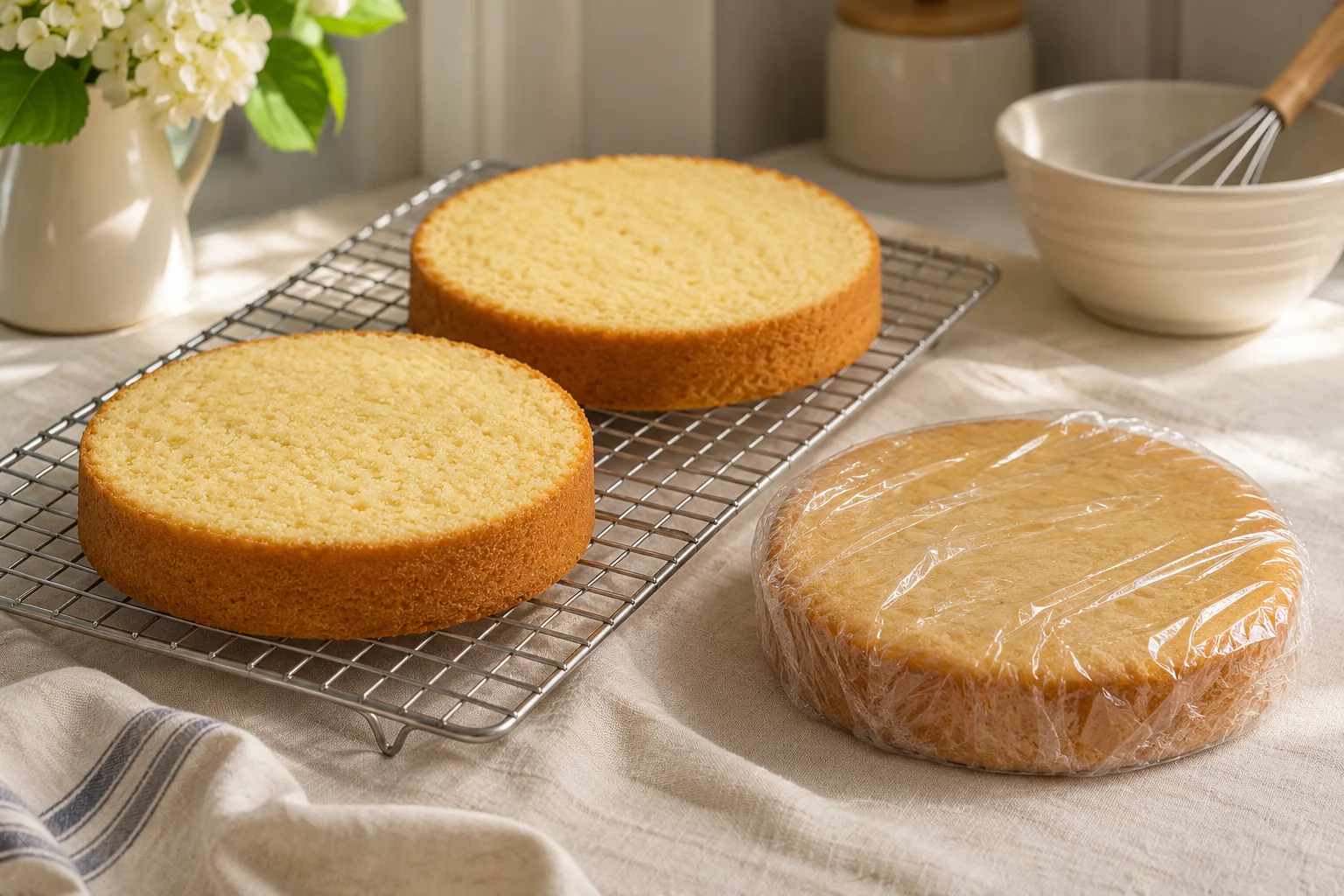
For Classic Vanilla Layer Cake, cut a parchment circle that lies flat against the base of each round pan.

Greasing with butter or oil
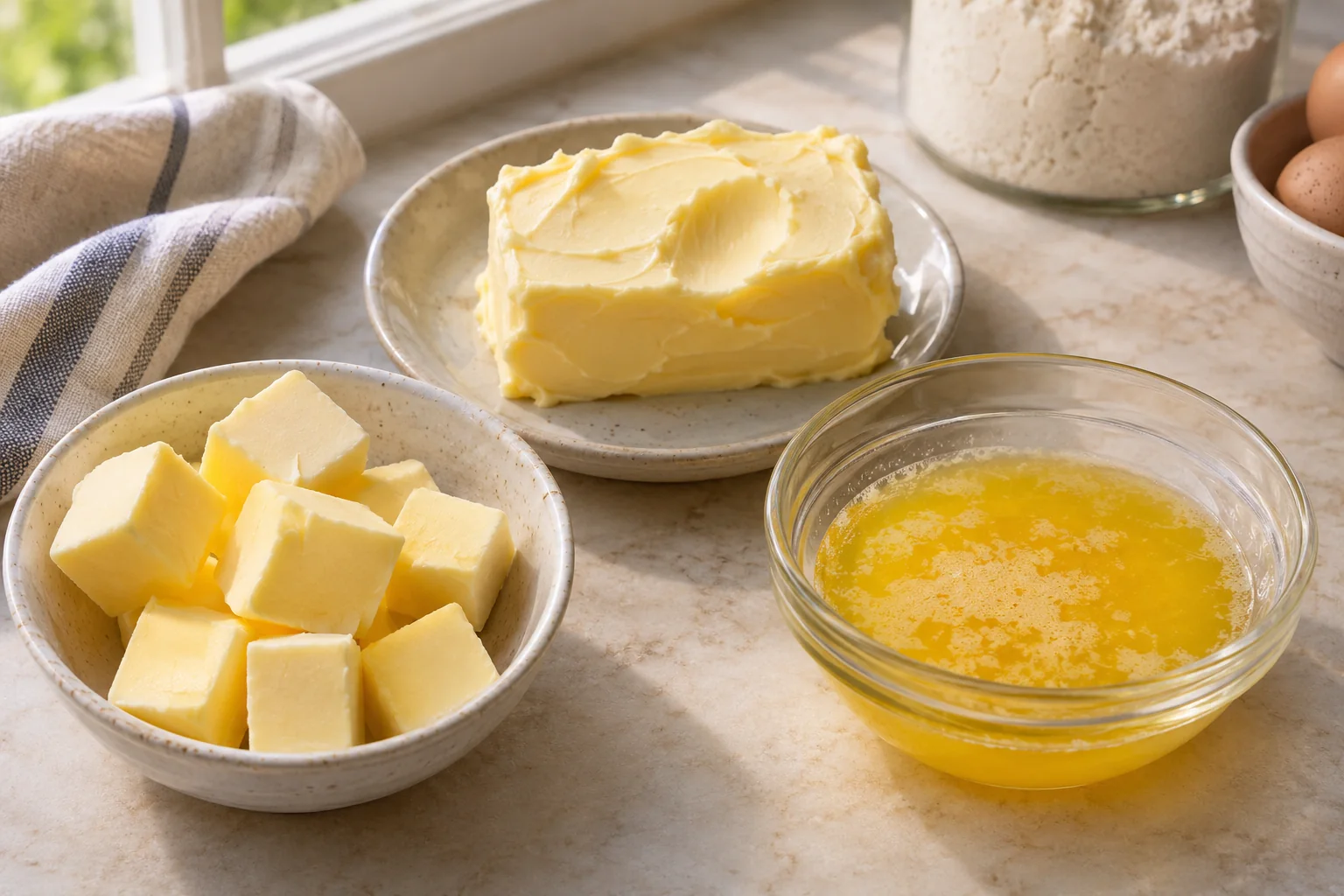
A thin even coating of suitable fat can reduce sticking in many cakes. Thick puddles may change edge texture or create greasy areas. Use a brush or paper towel to reach corners and seams. Some recipes specify butter and flour; others use nonstick spray or release paste. Don't assume the same coating is ideal for a delicate foam and a dense Bundt.
Flouring the greased pan
Dusting some greased pans with flour creates a thin barrier between batter and metal. Tap out excess so it doesn't become a thick raw flour crust. For chocolate cakes, some recipes use cocoa powder to avoid a pale exterior, though this affects taste and appearance. Follow the recipe's preparation and check whether it was designed for a nonstick surface.
Check the lining directions for Chocolate Layer Cake before dusting a dark cake pan with flour.

Bundt pans need extra attention
Intricate fluted molds have crevices where batter can grip. Thorough pan preparation, including detailed grooves, is essential when the recipe calls for it. Some nonstick Bundt manufacturers recommend specific release products and prohibit others. A very thick or damaged coating may behave differently. Use a tested Bundt recipe and follow the pan maker's instructions.
The ridges of Classic Vanilla Bundt Cake show why even a small missed groove can tear the surface.

Baking spray versus cooking spray
Not all sprays contain flour or work equally well on intricate cake molds. A product marketed for baking may have different ingredients from a plain neutral oil spray. Check the label and the recipe's intended method. Applying an excessive layer can pool in small details. Use consistent even coverage rather than spraying repeatedly in the hope that more is always safer.
Pan material makes a difference
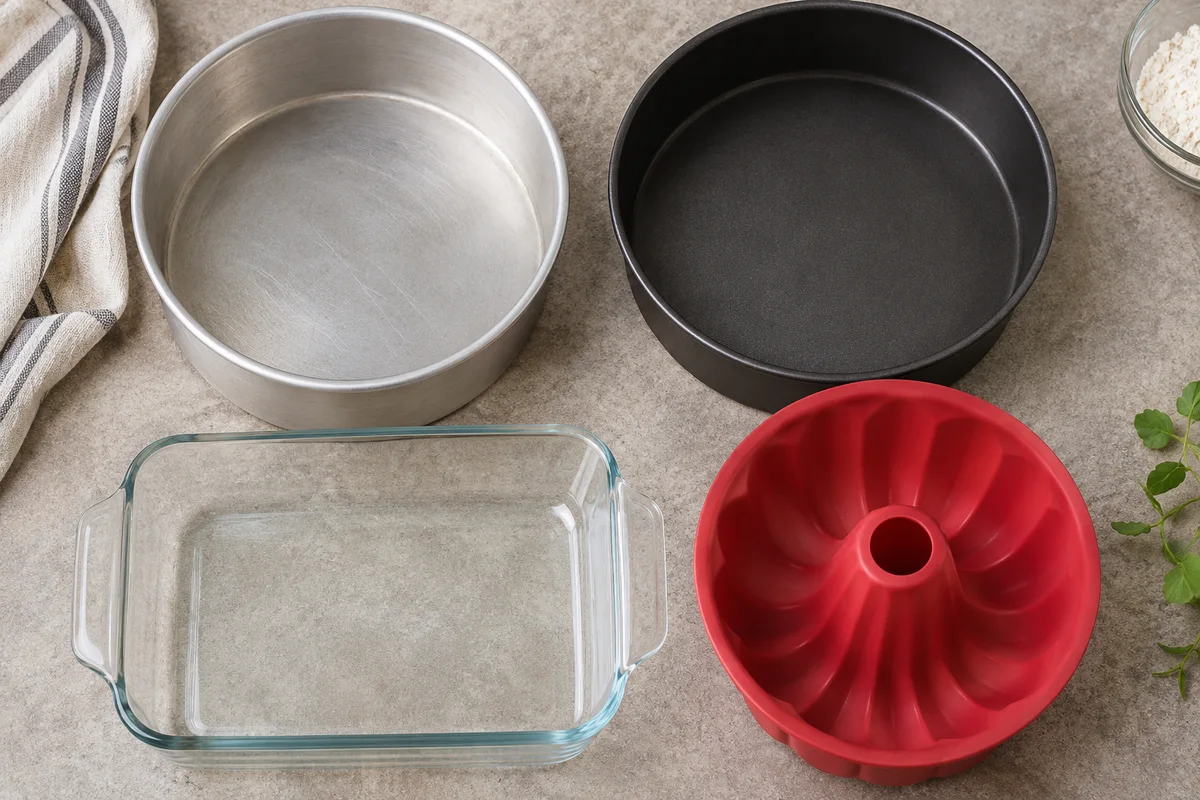
Bare aluminum, dark coated metal, ceramic, glass and silicone have different surface and heat properties. A cake that releases easily from a well-prepared metal pan may cling in a different mold or bake unevenly. Pan dimensions affect the center's doneness too. Evaluate both release preparation and actual baking before concluding that the batter is defective.
An underbaked cake is fragile
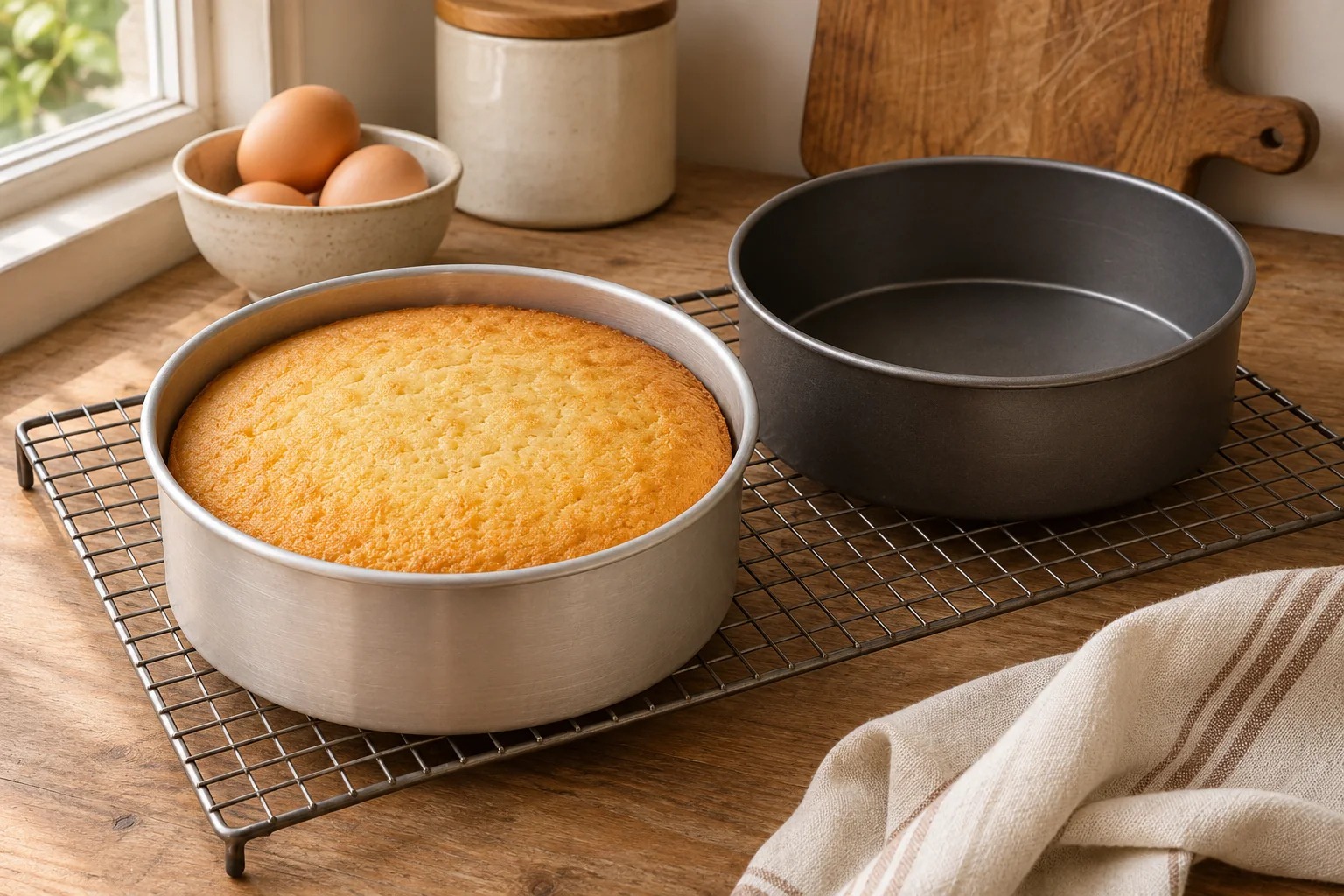
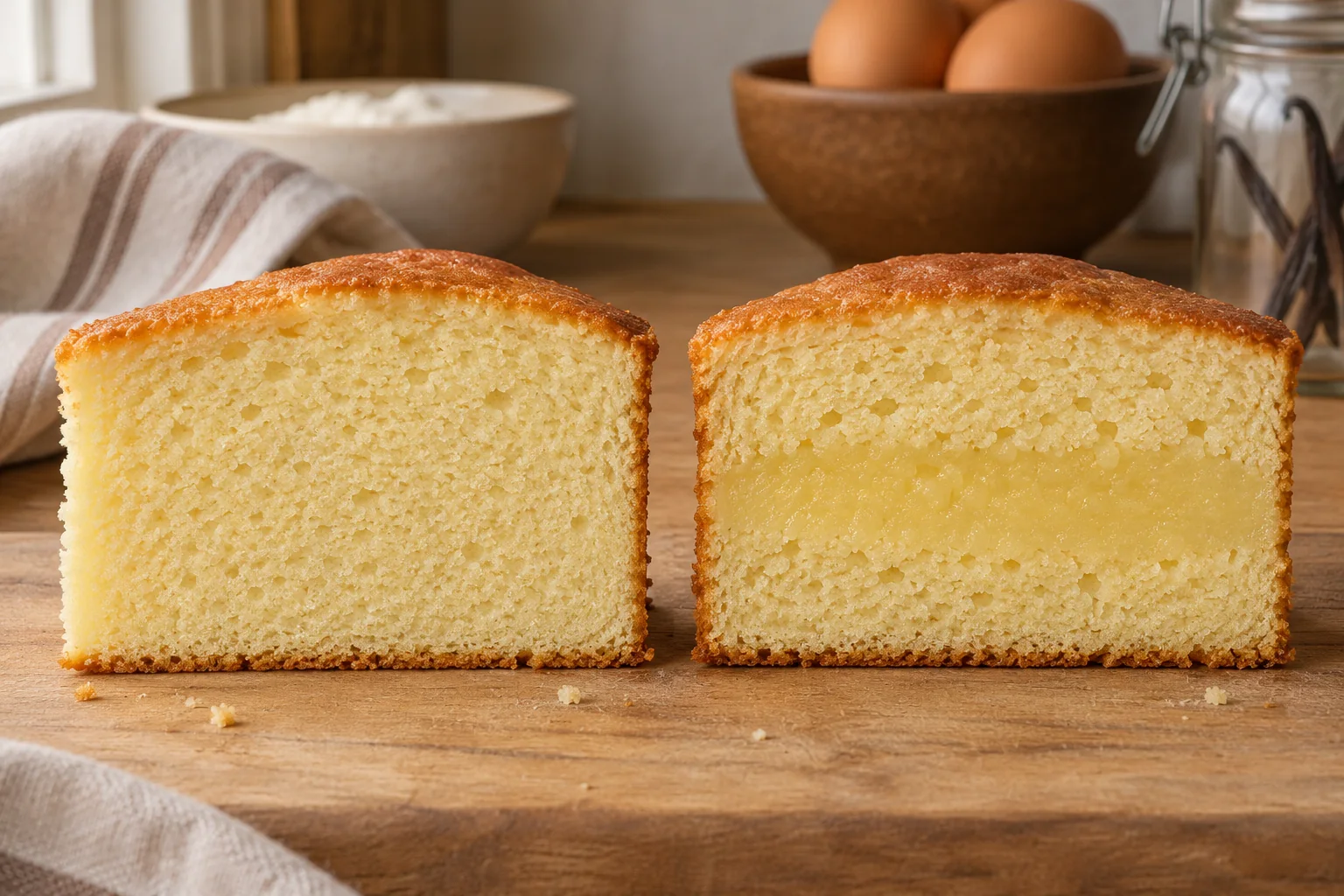
A cake that's still wet in the center may tear when inverted even from a well-greased pan. The structure needs sufficient heat to set. Follow the recipe's doneness cues and avoid trusting surface browning alone. Don't solve an underbaked middle by greasing more aggressively next time; the baking time or pan depth may be the actual issue.
Cooling before unmolding
Some cakes need a short rest in the pan so they become sturdy enough to lift, while others should be released promptly after a specified interval to prevent sticking as sugar sets. There isn't one universal ten-minute rule for every recipe. Follow the source's method and consider the pan material, cake density and temperature. A hot cake can break; a fully cold sticky caramelized surface may also resist release.
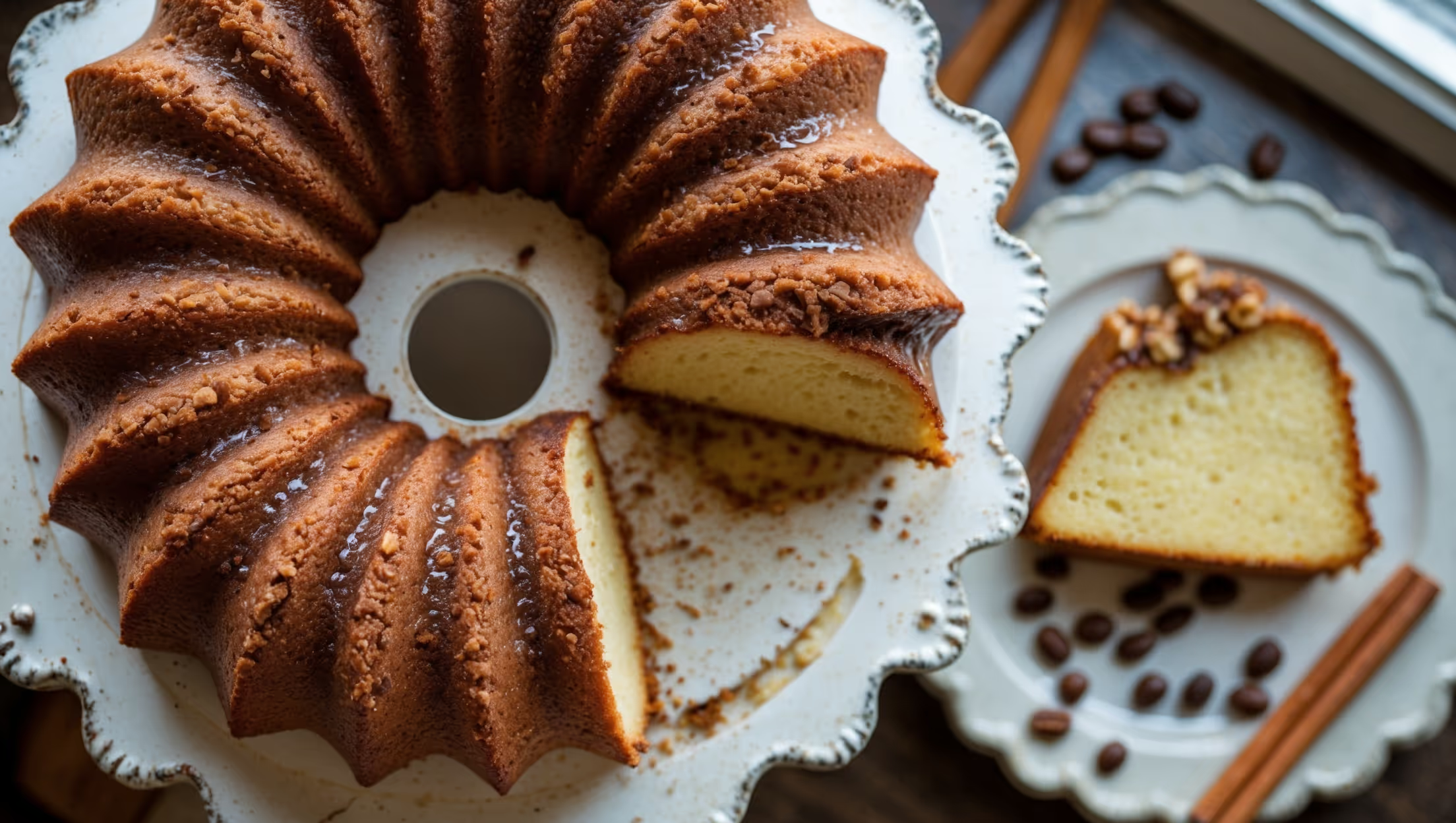
Use the cooling and turn-out sequence in Sour Cream Coffee Cake Bundt when releasing a ring cake.
Use a thin tool carefully
Where the recipe allows, a thin offset spatula or appropriate plastic tool can loosen edges before inversion. Avoid gouging into a nonstick coating with a metal knife if the manufacturer prohibits it. Work gradually around the perimeter instead of prying aggressively at one spot. A cake may already be loose at the sides while the base remains attached, so don't force it out prematurely.
Inverting onto a support
Place a suitable rack or board over the cooled-enough pan, support both with oven mitts where necessary and invert together in one controlled motion. Keep the landing surface clear and stable. A delicate high cake may require another method. Don't attempt to catch a falling cake with bare hands when pan or cake remains hot.
Springform and removable bottoms
Cheesecakes and delicate tarts may be baked in pans with removable rings or bottoms. Their release sequence differs from flipping a layer cake upside down. Run a suitable tool around edges only when the method calls for it. Support the loose bottom when lifting so the cake doesn't drop. A removable base can also leak thin batter, so use the equipment correctly.
Follow Classic New York Cheesecake for a cake served upright after the sides of the pan are released.

Chiffon and angel food exceptions
Many foam cakes need to cool upside down in an ungreased tube pan to preserve their airy structure. Their removal usually uses a careful loosening technique after the required cooling period. Greasing or lining everything indiscriminately can cause collapse. Always prioritize the specific foam cake method over generic greased-pan advice.
Why cakes stick to parchment
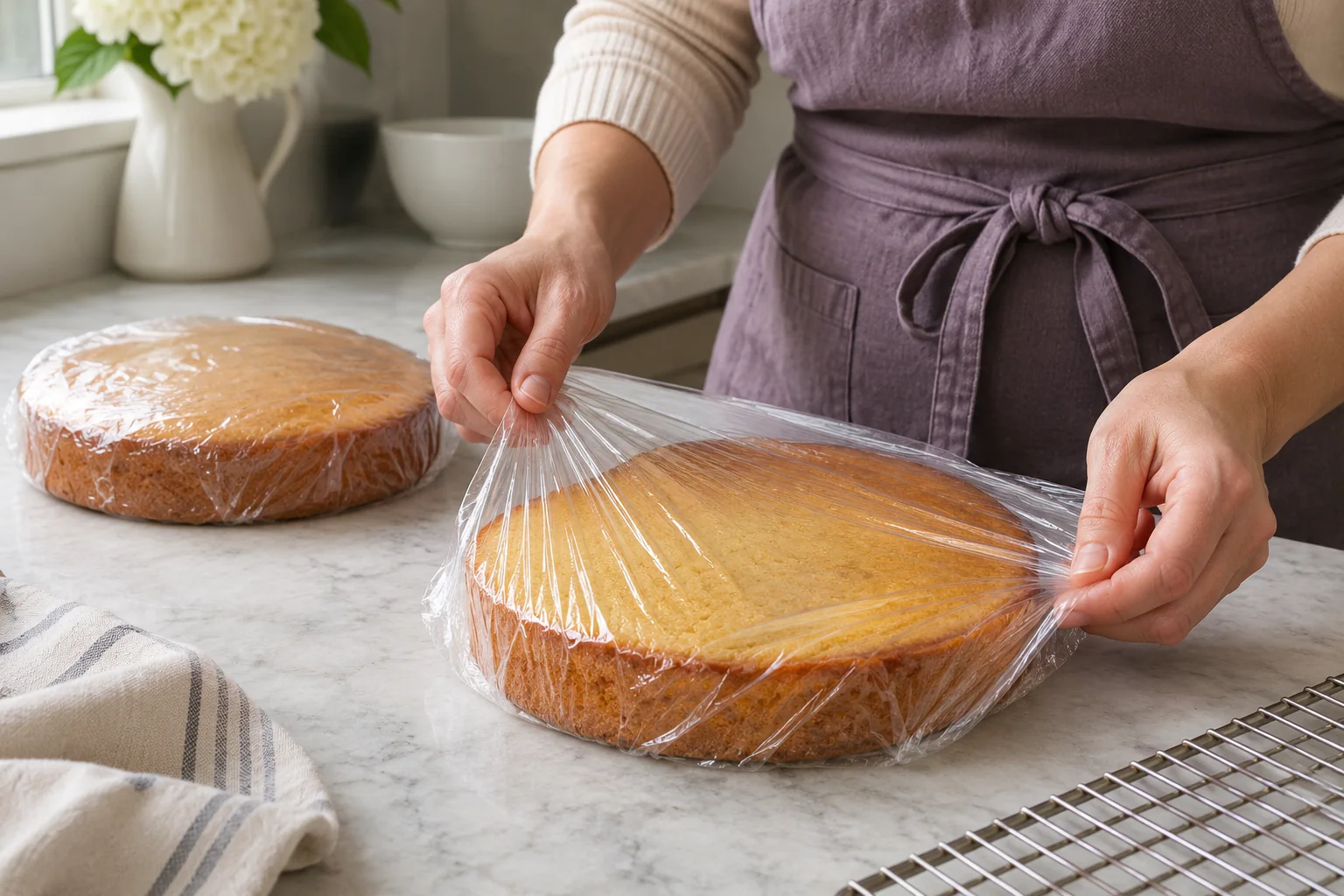
Parchment may adhere when the cake is very wet or hasn't cooled enough, or when batter seeps beneath a badly fitted sheet. Use oven-safe parchment of suitable quality and follow removal timing. Peel it back slowly while supporting the cake surface. If a very delicate sponge tears, consider whether the original recipe needed a different lining arrangement.
Sticky caramel or fruit cakes
Upside-down cakes and sugar-rich batters create a syrup that may set against the pan as it cools. Many have precise inversion timing so the topping releases before it hardens. Follow that window and use appropriate protection from hot syrup, which can cause burns. Don't apply the same cooling rule as a simple vanilla layer cake.
Check the recipe’s glaze and release sequence for Caramel Apple Bundt Cake before inverting it.

Why the bottom breaks away
A sticky base may result from inadequate lining, underbaking or an uneven greasing layer. A cake that is still hot and soft may tear under its own weight. Use a flat parchment base where intended and release only when the structure can handle the move. The right solution is often a combination of pan preparation and cooling time.
How to handle a stuck cake
First let it reach the recipe's appropriate release state; don't immediately pry or shake a hot pan. If edges can be loosened safely, do so gently with a compatible tool. Some trusted methods suggest brief controlled warming for specific stuck cakes, but apply such techniques only when cookware and recipe permit. If the cake breaks, preserve pieces for trifle or cake pops if safely cooked.
Preventing damage to coatings
Scratched nonstick pans may release less reliably and can be damaged further by sharp utensils. Follow manufacturer guidance for cleaning and replacement. Don't use abrasives on delicate coatings that prohibit them. Dry pans properly before storage and inspect intricate grooves for residue from earlier batches.
Checking batter quantity
An overfilled cake pan may spill and create baked-on edges, while an excessively deep batter layer may remain underbaked and difficult to release. Use the specified volume and dimensions. A pan one inch smaller in diameter can hold less batter at the same depth. Choosing the correct vessel can prevent sticking that is really an overfilling or underbaking problem.
A practice release test
Bake a trusted simple layer cake in the manufacturer's recommended pan preparation method. Record greasing product, parchment, oven time and cooling interval. If it sticks, examine where the cake separated before changing your whole cake recipe. A consistent pan routine is more reliable than switching sprays and cooling methods on every attempt.
IN PICTURES
From the baking notebook
FROM THE RECIPE BOX


