On this page
Start with the last thing that happened. Did steam rise around the bowl, a washed berry drip into it, or the microwave run longer than planned? A spoonful that goes sandy immediately after a splash points to seizing. A smooth mixture that thickens while it sits may just be cooling. The repair depends on knowing which bowl you have.
What is inside melted chocolate?
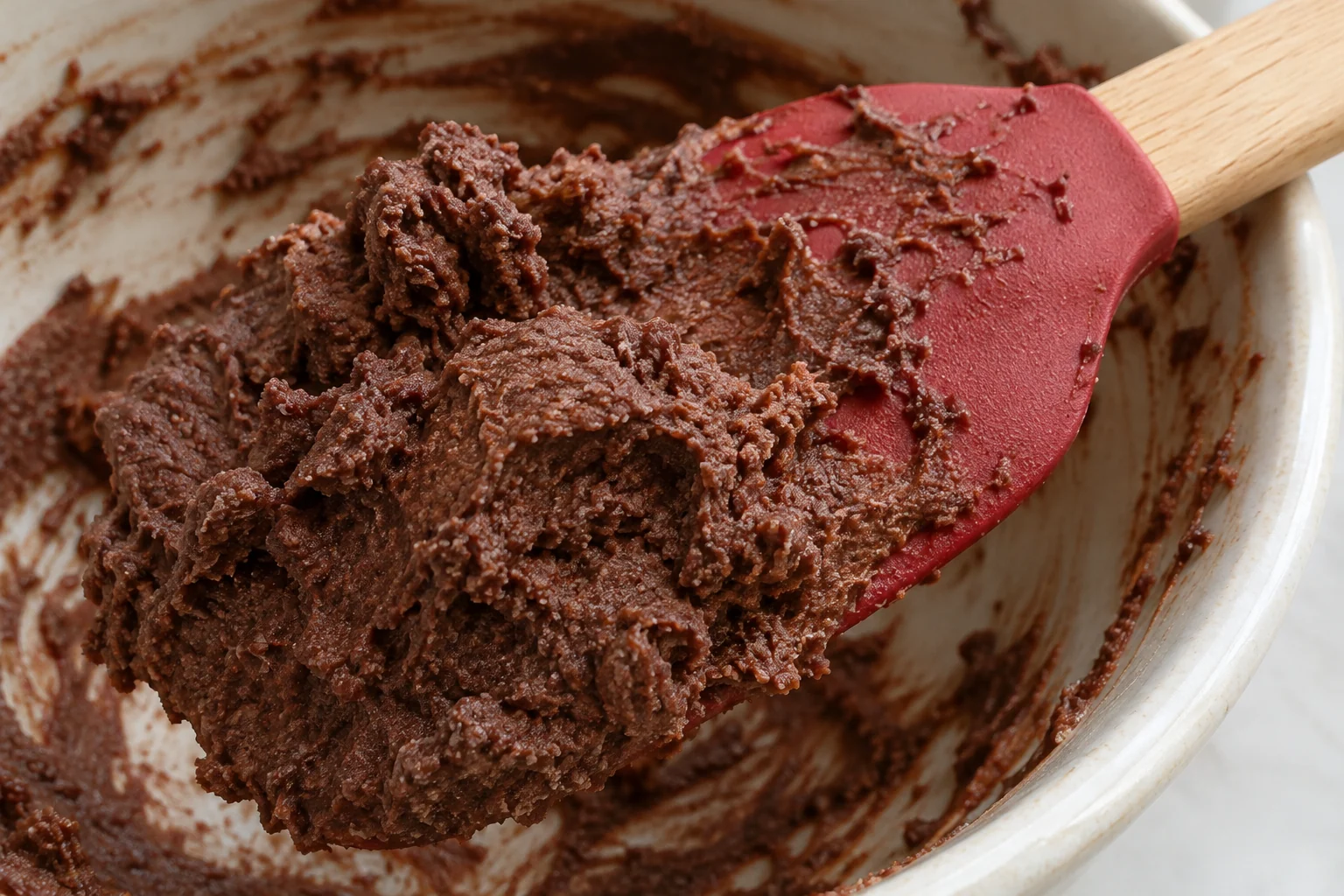
Dark chocolate contains cocoa butter, cocoa solids and sugar. Milk and white chocolate contain different proportions of cocoa butter, sugar and milk ingredients. These solids are dispersed in fat, not dissolved in much water. When a tiny amount of moisture arrives, sugar particles begin to dissolve locally and then pull neighbouring solids together into clumps. The result can behave like thick wet sand rather than a smooth coating. This is different from normal ganache, where enough liquid is deliberately combined through a suitable emulsion process.
Take a piece from the bar for Chocolate Chunk Cookies and look at the fresh cut. The solids that look almost uniform there can gather into gritty clumps when the melted bar meets a little water.
A drop of water makes a big difference
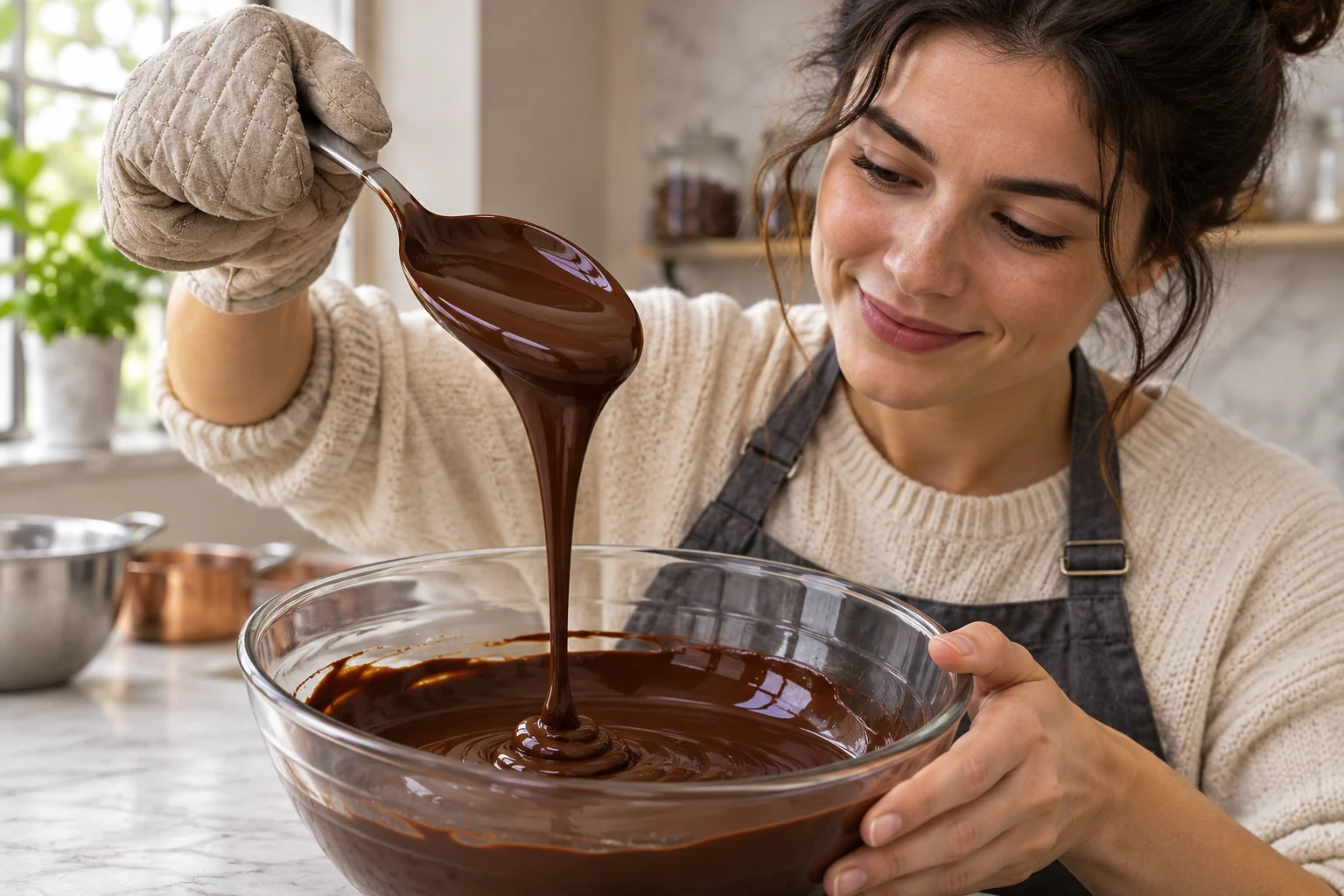
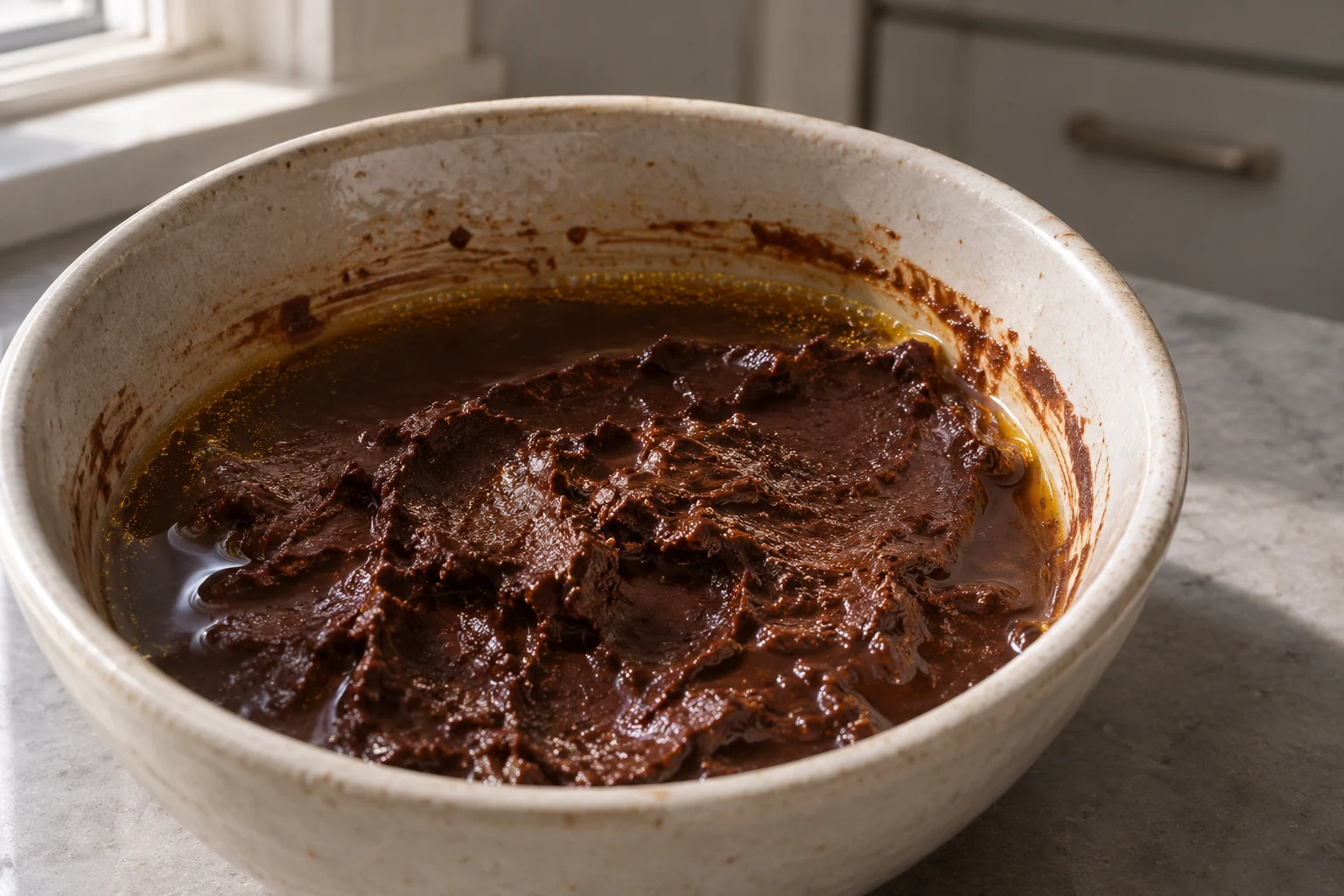
Melted chocolate carries fine sugar and cocoa particles in fat. A small intrusion of water can wet those particles only in patches, making them cling to one another. The result feels much thicker and often gritty. Take the bowl off the heat as soon as you see it happen. More heat alone cannot undo the clumping.
Keep the cookie rack for White Chocolate Dipped Ginger Cookies on the dry side of the counter. A damp spatula from the washing-up can spoil more chocolate than one damp biscuit.

Why cream doesn't automatically seize chocolate
Cream brings both water and fat. In a ganache recipe it arrives in a measured amount, enough for the chocolate and liquid to form a new mixture. A few drops of steam are enough to dampen some particles but rarely enough to make a flowing sauce. The amount of liquid and when it enters the bowl both matter.
The measured cream in Chocolate Orange Pastries goes in deliberately. It brings enough liquid for a filling, unlike a stray drop of water in pure melted chocolate.

Seizing versus overheating
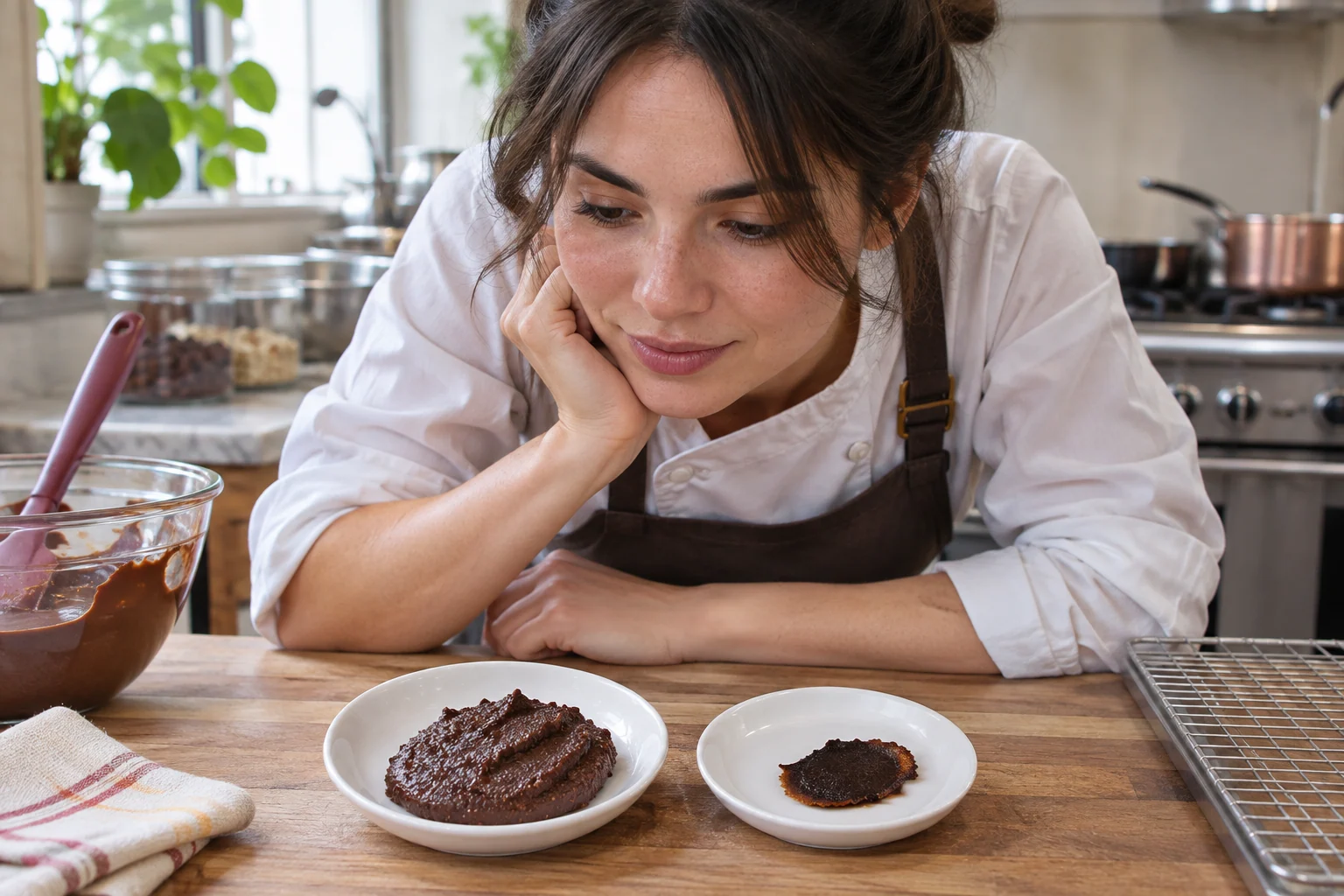
Smear a little of the mixture on the side of the bowl with a dry spatula. Chocolate that cools normally thickens smoothly. Seized chocolate often pulls into rough clumps after moisture enters. A scorched batch may smell burnt or have dark streaks, especially with pale chocolate. Remove heat first and discard any burnt batch.
The butter and chocolate for Air Fryer Brownies melt together. If a chocolate mixture smells scorched, make a fresh one before adding the eggs or flour.
Seizing versus cocoa butter bloom
Bloom usually appears after chocolate has set, showing pale streaks or a grey surface caused by fat movement or moisture-related sugar crystals. Seizing happens while chocolate is being melted or mixed, changing its fluid texture. A bloomed but otherwise sound plain chocolate may still be usable in baking. A seized bowl intended for molded bars has lost the fluid properties needed for a clean tempered shell unless it can be reformulated and processed appropriately.
A pale mark on a solid piece set aside for White Chocolate Chip Cookies is different from the sudden stiffening of a warm bowl. Check when the change appeared.
The water bath danger
A double boiler can be gentle, but steam is a hidden source of moisture. If the bowl sits over violently boiling water, condensation may collect on its underside or near the rim. Lifting the bowl carelessly can let droplets reach the chocolate. Use a method that controls water heat and keeps the bowl dry. Never let the chocolate contact the water itself, and wipe equipment before changing from heating to stirring.
When melting chocolate for Dark Chocolate Orange Cheesecake over a water bath, wipe the base of the bowl before moving it over the cream cheese.

The microwave can reduce some risks
Short microwave bursts in a completely dry microwave-safe bowl avoid the steam from a saucepan. Use reduced power if recommended, stir between intervals and stop when a few pieces remain to melt from residual heat. Microwaves can still scorch chocolate through hot spots, so they are not foolproof. The method you can control best is more important than whether a chef prefers a water bath or microwave.
Portion the dark chocolate for Vegan Chocolate Lava Muffins before heating. With no steam from a saucepan, a dry, microwave-safe bowl removes one common source of droplets.

Damp fruit and dipped treats
Wash strawberries before you set up the melting station. Dry each one thoroughly and check the hollow beside the leaves. Set them on a clean dry towel until ready to dip. A berry may still release juice after it is cut, so use whole, dry berries for dipping when the recipe calls for them.
For Air Fryer Chocolate Covered Strawberry S'mores, let washed strawberries dry completely, including the area around the leaves, before dipping.

Liquid flavouring mistakes
Vanilla extract, coffee and other flavourings may introduce water or alcohol. A few drops added directly to molten pure chocolate can cause unexpected thickening. Oil-based or specially formulated chocolate flavourings may behave differently, but product directions matter. If you want coffee or fruit flavour in ganache, choose a complete recipe with the liquid calculated into the emulsion, rather than improvising after the chocolate has already melted.
The whiskey in Smoked Chocolate Cream Pie with Barrel-Aged Whiskey Ganache is part of a measured ganache formula. Pouring the same splash into plain dipping chocolate gives a different result.
Can seized chocolate be saved?
Decide on the new use first. For a shell that should snap, start again with dry chocolate and dry equipment. For a spoonable sauce, try a small portion of clean, unscorched seized chocolate in a separate bowl. Leave the rest untouched until you know the test portion will make something you want to serve.
The cream-based filling of Hazelnut Chocolate Tart illustrates the change of destination when seized chocolate is turned into a sauce. A dipping shell requires a fresh, dry batch.
When to stop trying to rescue it
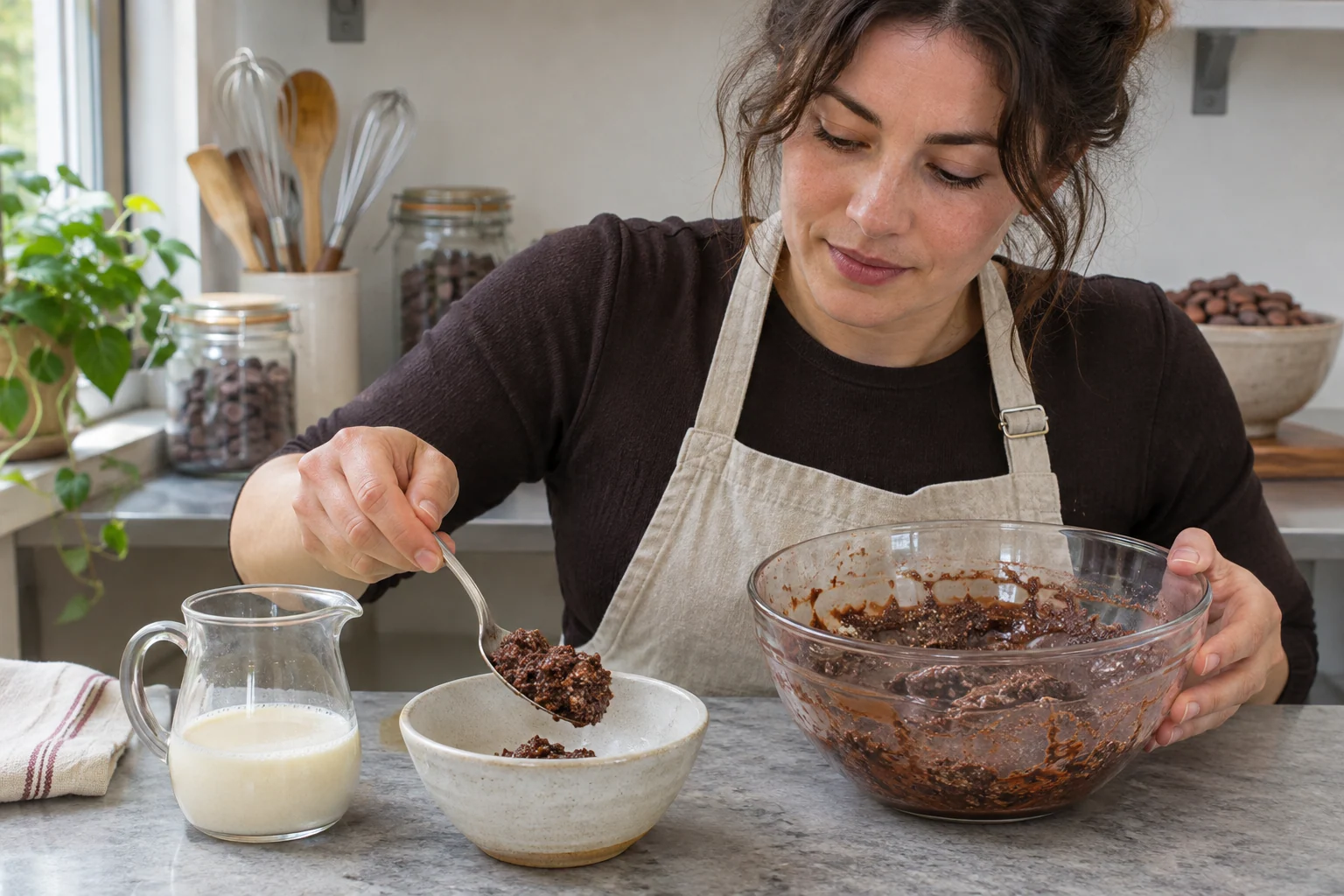
Discard chocolate that smells burned, contains contaminated raw-food ingredients or has been handled unsafely. Adding milk or cream cannot eliminate a scorched flavour. If the planned project depends on a shiny, snappy tempered shell, it's often better to start again with fresh dry chocolate. The seized batch may have a place in a tested sauce recipe, but it should not be forced into an application where the altered moisture balance makes the result unstable.
How to make a rescue sauce
For that small test, warm the liquid specified by your sauce recipe, take the chocolate off direct heat and stir in a measured addition. Continue as the sauce formula directs, allowing enough liquid for the mixture to become smooth. Cool a spoonful to judge its consistency. Refrigerate a sauce containing milk or cream promptly and keep it at 4°C (40°F) or colder.
For a poured finish like the one on Chocolate Fudge Bundt Cake, test a cooled spoonful of sauce first. A batch loosened for serving may run straight off a cake.

Preventing seizing when working in batches
Prepare one completely dry bowl, one dry spatula and a clean tray before opening the chocolate. If using a water bath, keep a dry towel nearby for the bowl's exterior but away from flames and heating elements. Prepare dipped foods first so you aren't washing fruit beside the melted chocolate. Work in quantities you can handle before the chocolate cools. This simple workflow prevents many problems more reliably than an emergency rescue technique.
Keep the white chips for Raspberry White Chocolate Hand Pies in a dry bowl while you prepare the fruit. The two ingredients meet later, inside the pastry.
Does the cocoa percentage matter?
Higher-percentage dark chocolate and milk or white chocolate contain different fat, sugar and cocoa or milk solids balances, changing fluidity and heat sensitivity. But all can seize under unsuitable moisture conditions. Chocolate chips may seem thick from their formulation even when they have not seized. Compare how the product behaved before a wet utensil touched it, and use the chocolate recommended in the recipe rather than diagnosing solely by percentage.
The dark chocolate percentage in Black Manhattan Cocktail Brownies identifies the bar, but it cannot make that melted bar tolerant of a wet spoon.
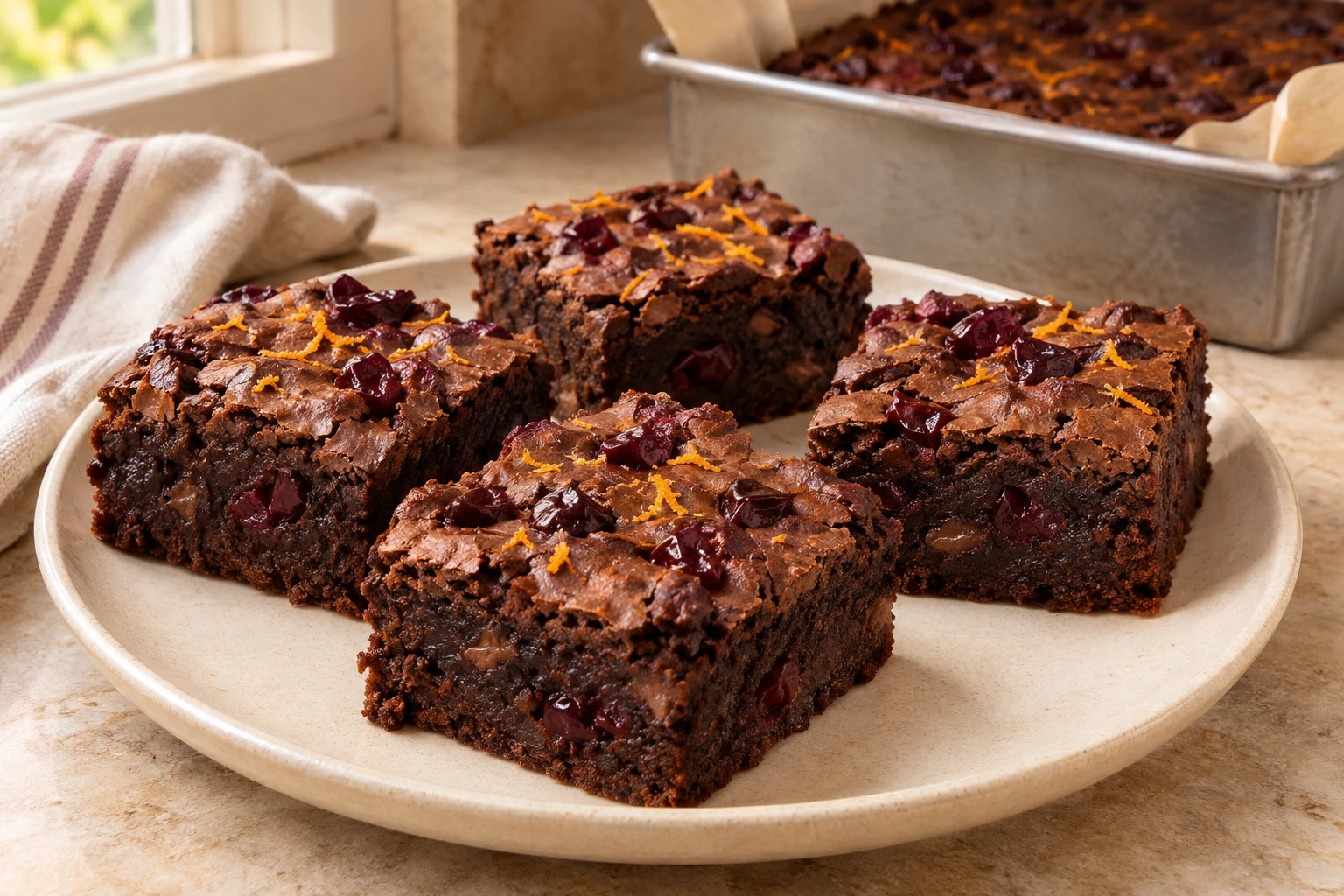
Chocolate that turns thick but stays smooth
A bowl that remains glossy and lump-free may simply have cooled below its working range. Give it a brief moment of gentle warmth, stir and reassess. A chocolate formulated to hold its shape as chips can also melt fairly thick. Choose a more fluid chocolate next time if a thin coating is essential.

Ganache can break for another reason
A finished chocolate-and-cream ganache sometimes separates into greasy streaks or coarse particles even without stray water. That is an emulsion stability issue, not necessarily seized pure chocolate. Gentle controlled emulsification or adjustments specified by the original formula may help. Don't treat all chocolate problems with one fix. The first question is whether the bowl contains only melted chocolate or a measured water-and-fat mixture.
The dark chocolate and coconut cream in Vegan Chocolate Layer Cake form an intentional frosting. Oil separating from that mixture calls for an emulsion check.
Troubleshooting checklist
Was the bowl fully dry? Did steam enter? Was the dipped fruit wet? Did a watery extract go in? Did the mixture thicken while still smooth or become abruptly sandy? Does it smell burned? These observations separate temperature, moisture and formulation problems. Record what happened rather than adding several ingredients at once. A small practice bowl is easier and less expensive to diagnose than a kilogram of chocolate intended for wedding favours.
A safer first chocolate project
Start by melting a small amount of plain dark chocolate in short microwave bursts in a dry bowl. Stir thoroughly and use it in a recipe that doesn't demand tempering, such as a fully baked brownie. Once you can melt it smoothly, practise a tested ganache and then a tempered coating method. Building skills in this sequence helps distinguish melting, emulsification and crystallization rather than learning all three during one delicate project.
For a first dry-chocolate project, the chunks in Double Chocolate Muffins go straight into the batter. There is no bowl of pure melted chocolate to keep fluid.

Frequently asked questions
Does a wet spoon ruin a full bowl? It can, depending on the quantity and chocolate. Is adding a little oil a reliable rescue? Not for water-seized chocolate. Can I use seized chocolate in cake? Possibly, as part of a tested rebalanced formula. Should I add hot cream to every seized mixture? Only under a suitable sauce or ganache method. Why did chocolate chips turn thick? Their formulation, cooling, overheating or moisture could be involved.
The takeaway
Keep pure melted chocolate dry, heat it gently and distinguish seizing from overheating or cooling. If moisture has changed it into a stiff clumpy mixture, think of an intentional sauce conversion rather than a quick fix for tempered candy. The best rescue is usually preventing the stray water drop in the first place.
IN PICTURES
From the baking notebook
FROM THE RECIPE BOX


