
On this page
A tray that settles slightly as it cools can still make excellent brownies. What matters is the centre under the crust. Look at batter depth, how sharply the edges rose, and whether a cooled square holds together when you lift it.
Normal settling versus collapse
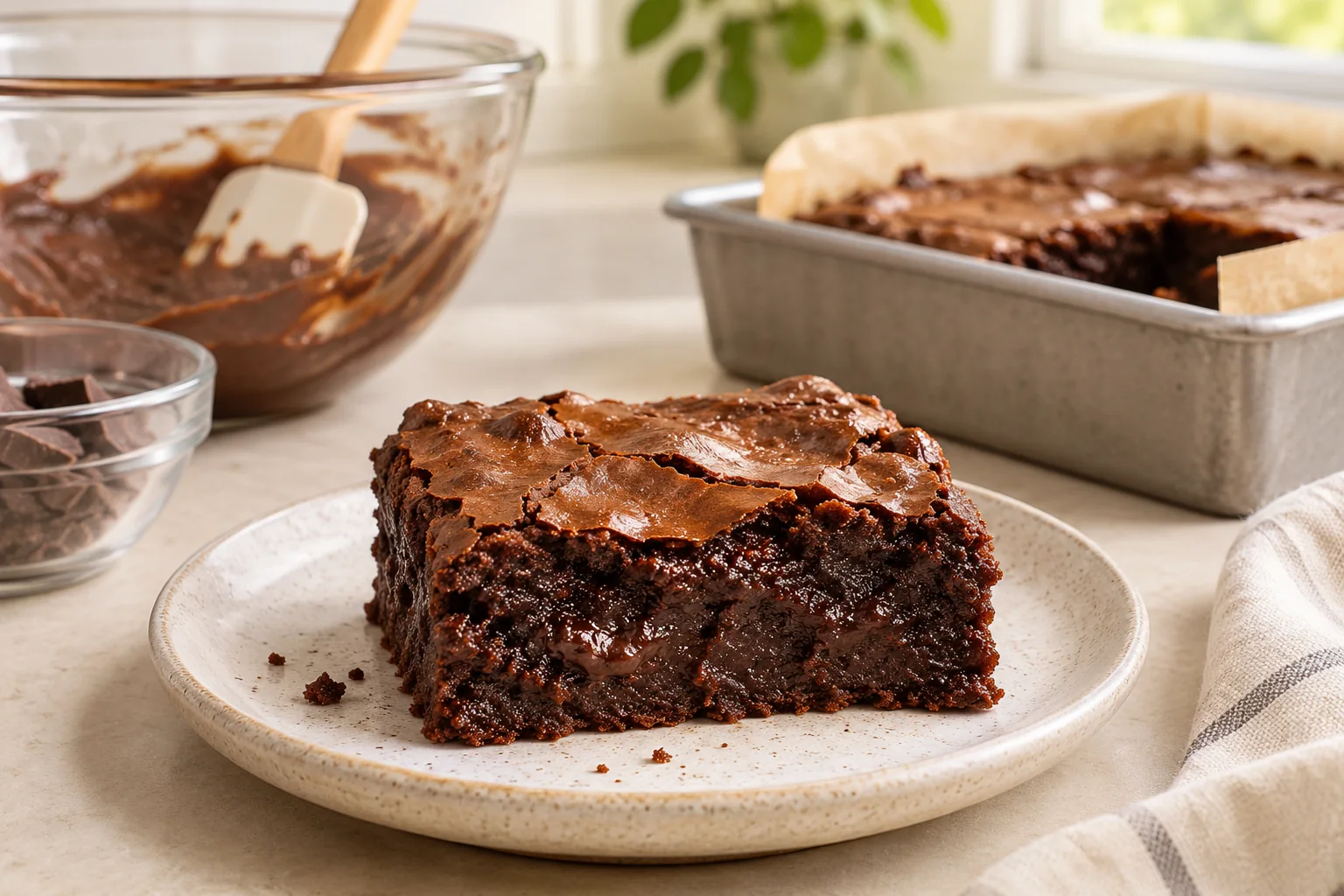
A fudgy brownie may appear higher while hot and become somewhat level as its fat and sugar structure cools. This is expected in certain formulas. A large crater with an undercooked liquid center is different. Compare the result with the recipe's photographs and intended texture after complete cooling. Don't treat every slight center dip as a baking failure requiring another five minutes in the oven.
How brownies set
Brownie structure comes from egg proteins, flour starch and, in some formulas, limited gluten development. Chocolate and fat change texture as they cool, while sugar influences moisture and setting. Some recipes contain very little leavening. If the center hasn't set sufficiently when removed, its weight may pull the top downward. But overbaking just to prevent a dip may destroy the intended fudgy bite.
Use Almond Flour Brownies for a comparison with a formula that builds structure without wheat flour.

Underbaking is a common cause
A thick brownie may develop a dry-looking surface while its center remains liquid. Removing the pan based only on top color can leave too little structure for the slab to hold its shape. Follow the exact recipe's doneness cues and baking window. A moist crumb on a tester may be appropriate for fudgy brownies, but glossy raw batter isn't the same thing.
Pan depth changes heat flow
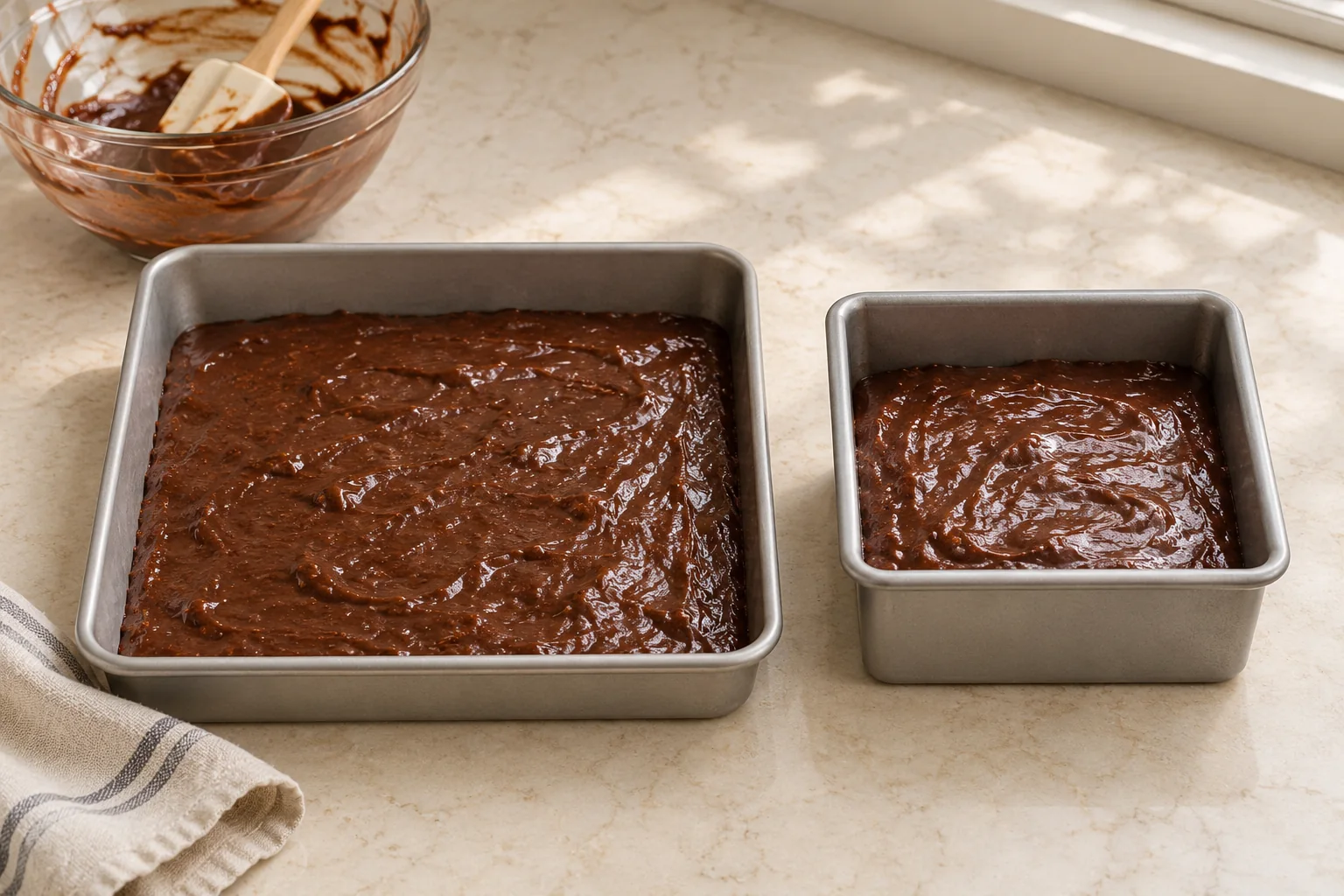
An eight-inch pan and a nine-by-thirteen-inch pan don't produce the same batter depth from one recipe. A deeper pan requires a different heat path to the center, while a wide shallow pan may dry too quickly. Use the specified dimensions and consider wall taper. Simply changing pan size without adjusting the tested method can create an apparently set edge and a collapsed center.
Measure your pan before making Air Fryer Brownies so the middle is no deeper than intended.

Too much baking powder or soda
Some cakey brownie recipes use leavener for lift, but excess gas can produce a dramatic rise unsupported by the batter structure. The center may then fall as it cools. Many fudgy recipes use minimal or no chemical leavener. Don't add baking powder to make a brownie more impressive in the oven; the desired final height comes from a balanced recipe.
Whipping eggs too much
Some brownie methods whip eggs and sugar extensively to help create a shiny papery top. Others use restrained mixing to maintain a denser crumb. Unnecessary extra aeration may produce a large temporary oven rise followed by settling. Follow the intended mixing method rather than importing sponge-cake whipping instructions into an unrelated brownie recipe.
Egg quantity affects structure
Egg proteins help the slab set, while yolks also add fat and emulsifiers. Too few eggs or an untested replacement can weaken the center. Too many may make brownies firmer or cakier. Use the stated egg size and weights. A fudgy recipe shouldn't be altered with extra eggs only because you want a higher surface.
Sugar and chocolate balance
Sugar delays some structural setting and helps create a moist texture, while melted chocolate contributes fat and cocoa solids. Altering either dramatically can change how the center behaves. Very high-sugar brownies may have a different surface and cooling texture from more flour-rich versions. Choose a tested reduced-sugar or higher-chocolate formula rather than making several substitutions at once.
Keep the specified sweetener in Keto Brownies while testing the effect of baking time.
Butter and oil
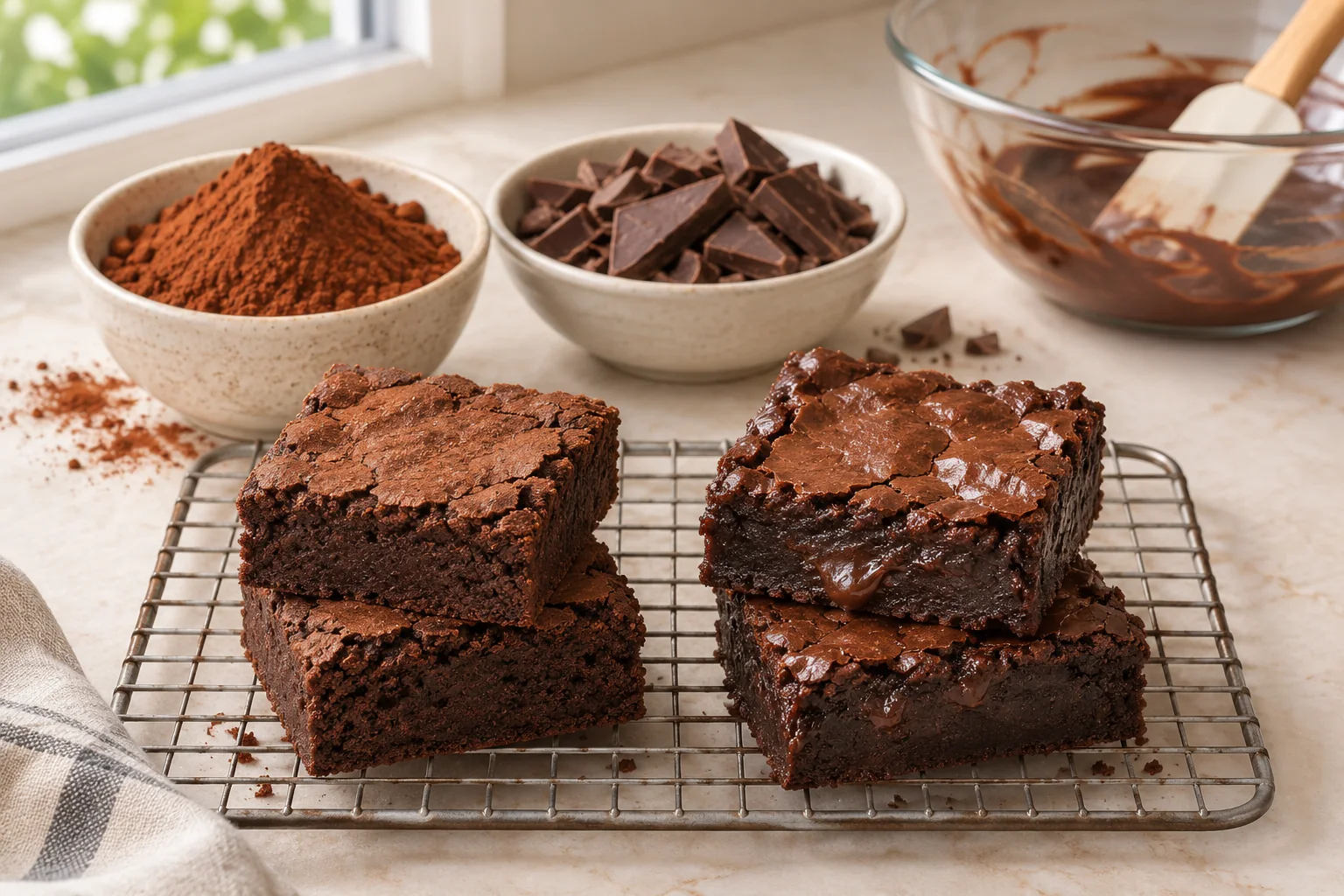
Butter includes water and milk solids, while oil is almost pure fat. Replacing butter with oil by equal weight can change the ratio and set. A greasier or softer center may result from a formula that no longer balances fat against eggs and flour. Use a published oil-brownie variation rather than assuming all fats are directly exchangeable.
The cocoa-versus-chocolate issue
Unsweetened cocoa powder provides dry cocoa solids without the same cocoa butter as solid chocolate. Exchanging melted chocolate for cocoa without adjusting fat and sugar changes the mixture. A sunken or dry result may arise from that imbalance rather than oven handling. Use a formulation specifically designed for cocoa powder if that's what you have.
Oven temperature verification
An oven that runs too hot can set outer edges rapidly while the center lags, creating a pronounced dome or a crack that later sinks. An oven running too cool may fail to cook the middle in the expected time. Check actual temperature if repeated batches differ from the recipe. Convection settings and rack position can also affect the heat pattern.
Opening the door repeatedly
Frequent early door opening reduces oven temperature and may disrupt a delicate, aerated brownie structure. Brownies are often more forgiving than sponge cakes, but a large heavily whipped batch may still respond. Observe through the oven window when possible and check near the intended endpoint. Avoid slamming the oven door or moving an unset slab roughly.
A shiny top isn't proof of doneness
Brownies can develop a crackled glossy crust when sugar and eggs behave in a particular way, while the center is still underbaked. Don't rely solely on the attractive surface. A proper tester cue, center appearance or validated temperature method is more dependable. Chocolate color also hides browning differences that would be obvious in vanilla cake.
Why edges become tall
The pan sides heat batter earlier than the center. If the outer mixture sets while the middle continues expanding, the shape may become uneven. Heavy dark metal can accentuate edge heating in some ovens. That alone doesn't always indicate an ingredient problem. Compare the center texture with the edge before changing the formula.
Cooling firms the center
As brownies cool, fat and chocolate set further and the slab becomes easier to cut. A hot brownie may look softer and higher than it will at room temperature. Follow the formula's cooling period before assessing the final crater and crumb. For especially fudgy brownies, some recipes recommend refrigeration before neat slicing, but chilling isn't a replacement for appropriate baking.
Cut Black Bean Brownies only after the recipe’s cooling stage so the comparison is fair.

What a gummy center means
Gummy texture may result from underbaking, too much liquid or an imbalanced recipe. A densely fudgy brownie can have a moist cohesive crumb without being raw. If the center is visibly wet liquid batter after the full cooling period, treat the batch as inadequately baked rather than simply calling it extra fudgy. Raw flour and eggs can pose food-safety risks.
Can a sunken brownie be rescued?
A slight cosmetic depression can be covered with an appropriate sauce or topping if the brownie is otherwise fully baked and safely stored. A severely undercooked center should not be disguised under ice cream. Continued baking may be possible only while the batch is still in the appropriate cooking process under trusted guidance. Reheating after unsafe room-temperature storage doesn't make contaminated food safe.
Pan lining and release
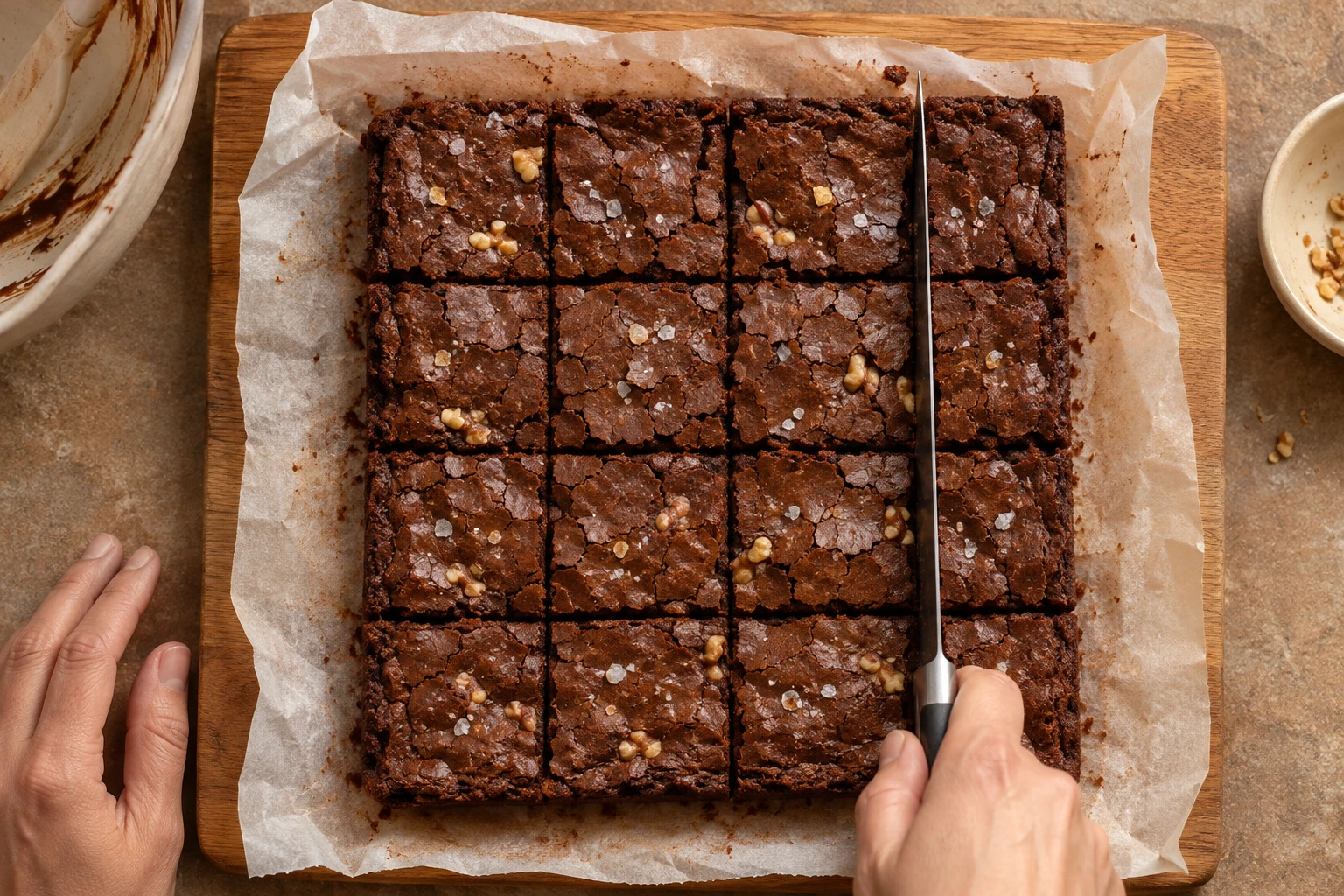
Parchment can help lift cooled brownies without tearing, making the center easier to inspect. Silicone liners may change contact heat, and heavy grease can influence edge texture. Follow the recipe's pan preparation. Removing a still-warm fragile slab from the pan can cause bending and make a normal brownie look as though it collapsed.
A small controlled experiment
Bake a trusted brownie recipe twice using the intended pan and identical ingredient weights. Record oven temperature, mixing time and the exact endpoint. If the first sinks significantly, investigate one variable the method allows adjusting in the second batch. Compare after full cooling, not while the chocolate remains melted and the surface is still moving.
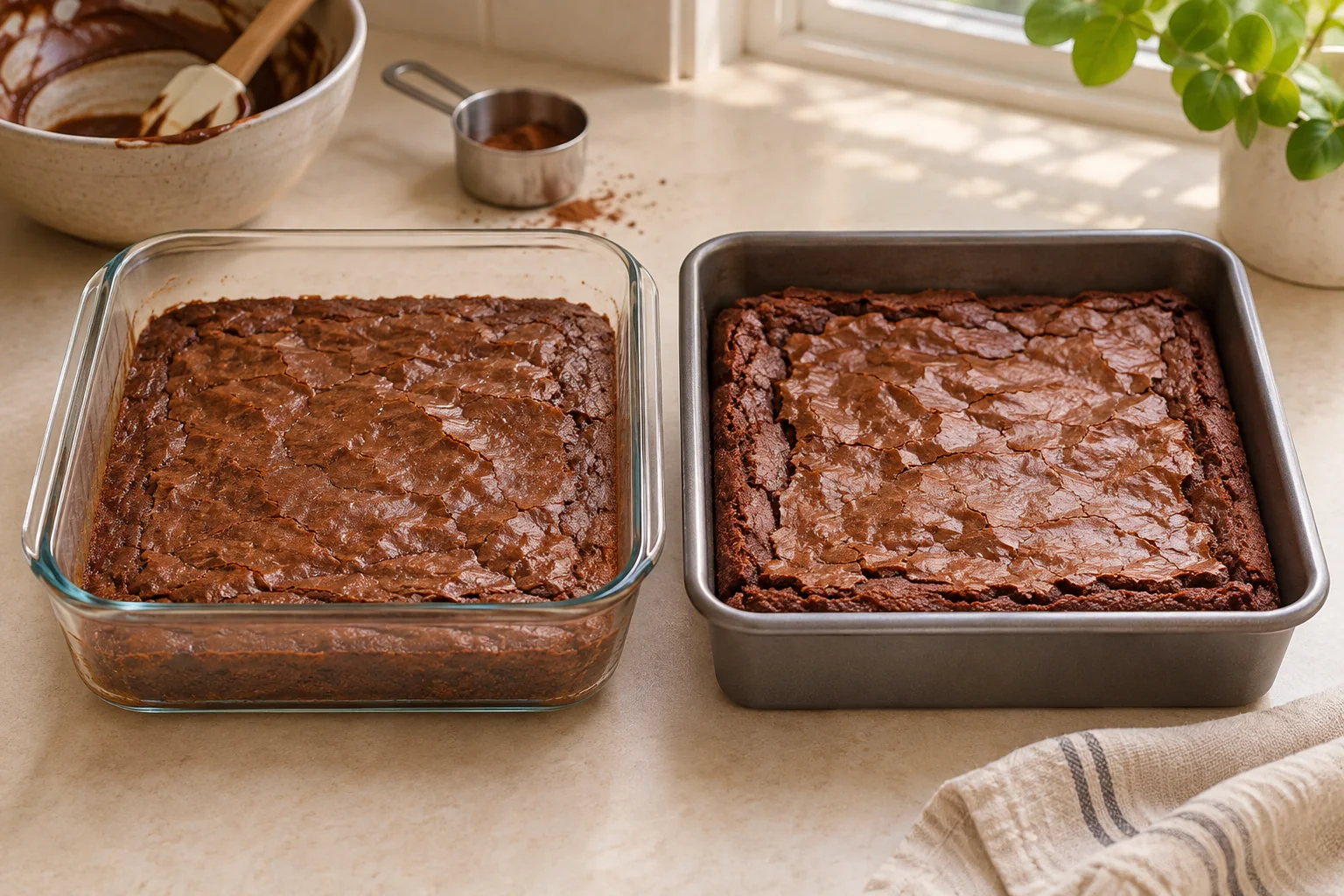
Why cakey and fudgy recipes differ
Cakey brownies may need more structural aeration and a different flour balance, while fudgy brownies are deliberately dense. A slight sink in a fudgy brownie isn't the same as the failure of a cake-like brownie to hold its rise. Decide which result you want and choose a recipe developed for that endpoint. Troubleshooting should respect the style.
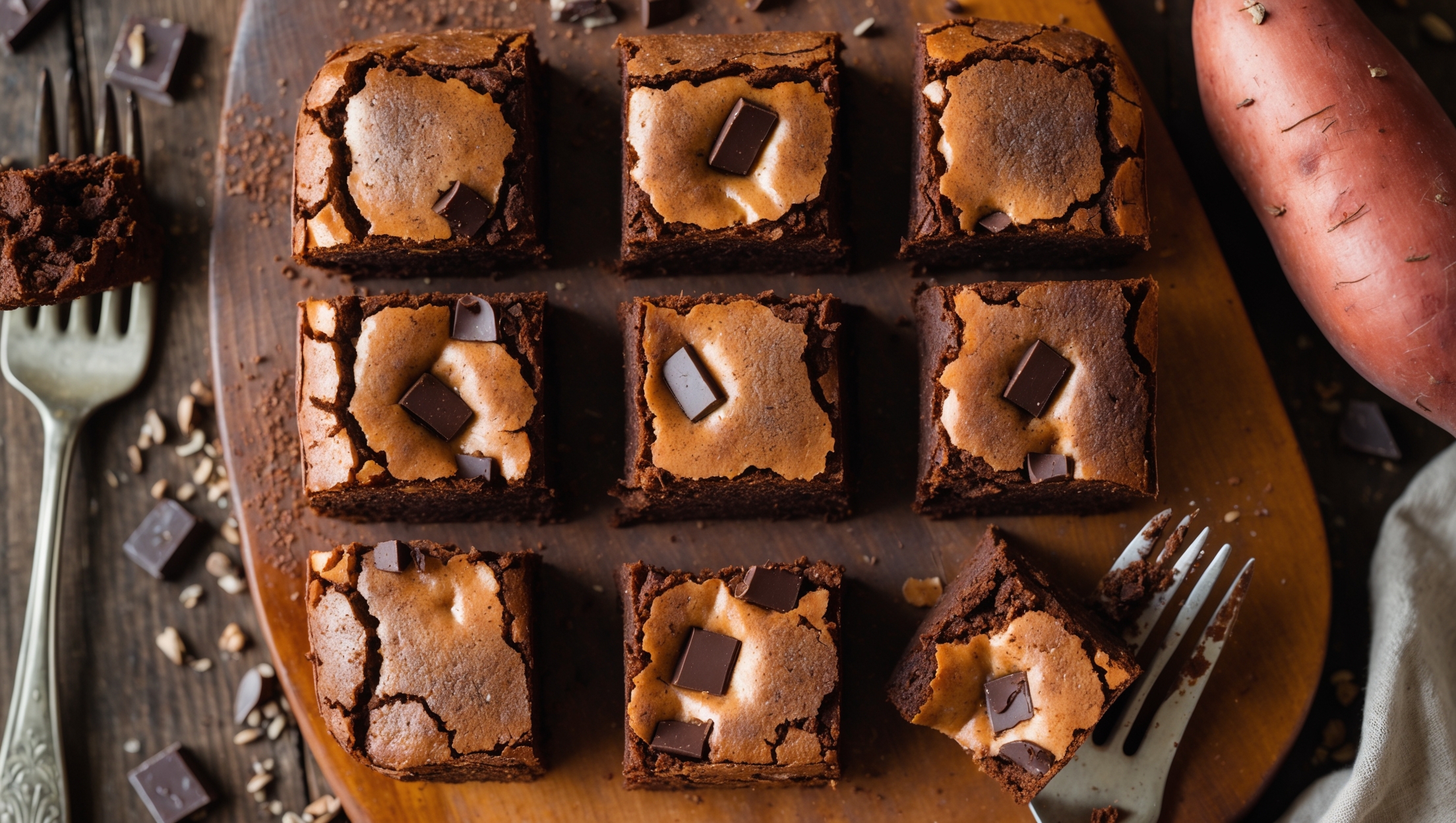
Compare the finished crumb of Sweet Potato Brownies with the texture you expected from your own batch.
IN PICTURES
From the baking notebook
FROM THE RECIPE BOX


