On this page
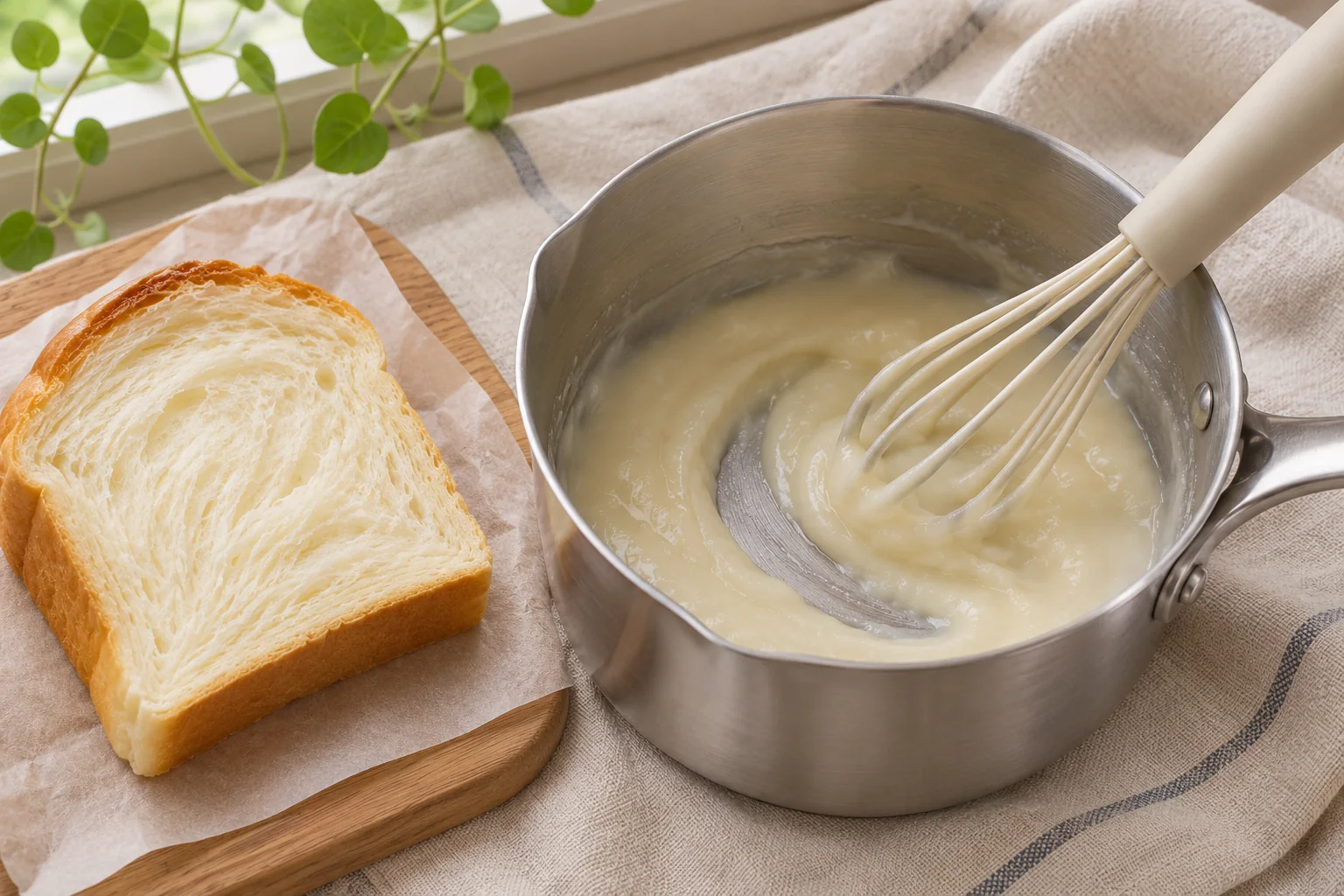
A loaf of milk bread can be fluffy and springy on baking day yet remain tender well after it cools. One technique associated with that texture is tangzhong: a small portion of a bread's flour is heated with liquid until it forms a smooth paste, then cooled and mixed into the dough. It sounds like an extra cooking project, but the step is simple and useful when the recipe is built around it.
Tangzhong in plain language
Tangzhong is a cooked flour-and-liquid paste used as part of yeast bread dough. Heating hydrates and gelatinizes starches, allowing the paste to hold water differently than untreated flour. When incorporated into the final dough, it can help create a soft texture and improve the loaf's keeping quality.
Where the technique is used
Tangzhong is familiar from Japanese-style and Asian-style soft breads, including some milk breads and rolls. It is also used in sweet buns and certain sandwich loaves. The method is associated with particularly tender crumbs but isn't limited to one national bread tradition or product shape.
Try Japanese Milk Bread Rolls to see how a cooked flour paste fits into a roll recipe. Let the finished rolls cool enough to tear one open and look at the strands inside.

What ingredients make the paste?
Typically a measured portion of the formula's wheat flour and water, milk or a combination. The precise ratio depends on the tested recipe. A common approach heats a small flour portion with several times its weight in liquid until the mixture thickens.
Why cooking flour changes water absorption
When starch granules absorb water and are heated appropriately, they swell and gelatinize. This changes how the mixture holds moisture. In bread, that can support a supple dough and a soft finished crumb. It doesn't mean you can add unlimited water; the complete formula still needs the right balance.
A simple tangzhong example
For a recipe-specific example, our Tangzhong Sandwich Bread cooks 30 g bread flour with 150 mL whole milk. The flour and liquid are already accounted for in the dough. Follow the measurements in the bread recipe you choose.
Why it is cooked gently
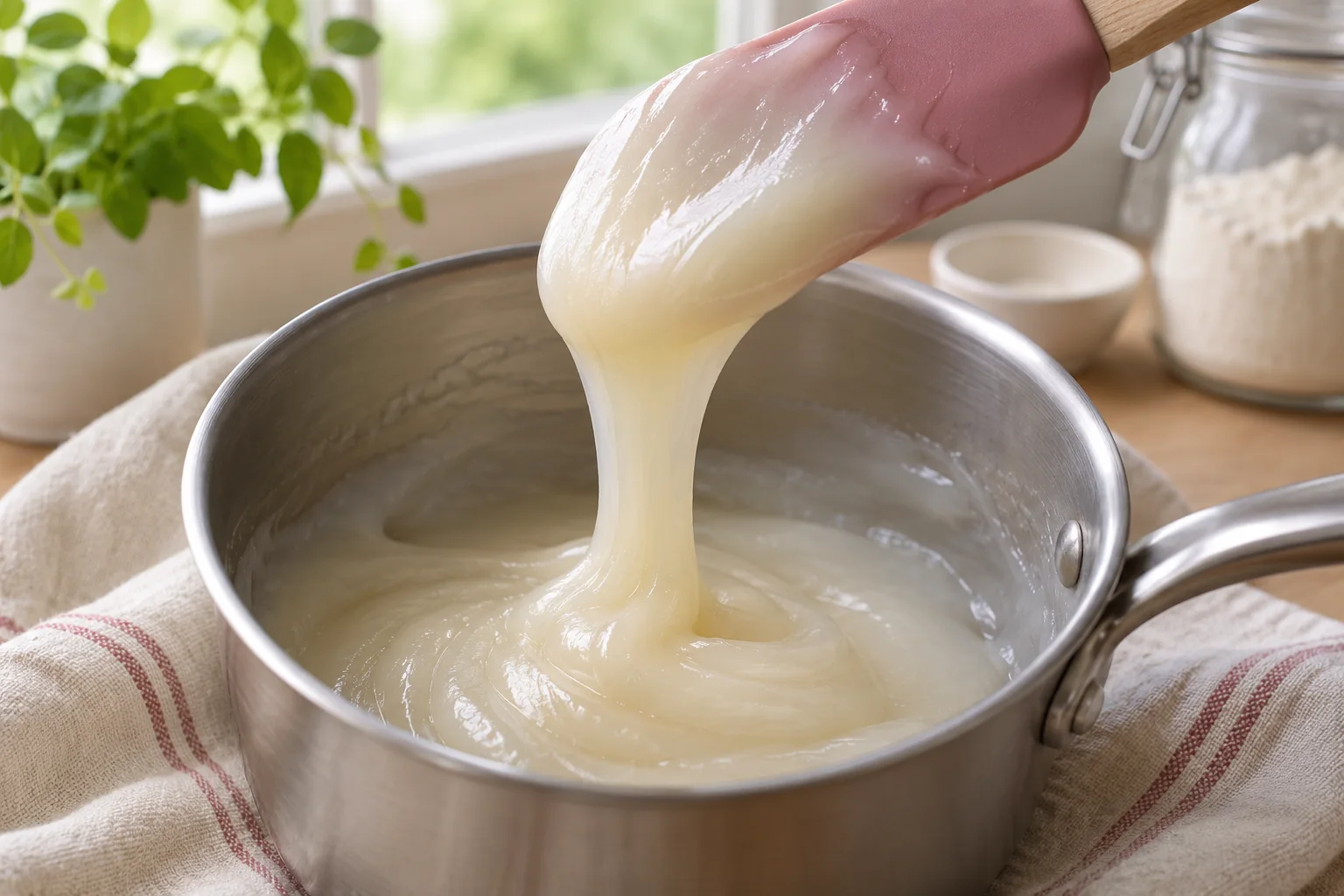
A whisked paste is usually heated over controlled medium or low heat, with frequent stirring, until it thickens to the recipe's target. High heat can cause lumps or scorching before the starch hydrates evenly. A smooth paste is easier to distribute through dough than a dry clump.
Whisk the flour and liquid while they are still cold, then stir along the bottom and into the corners as the mixture heats. Once the paste thickens and the whisk leaves visible trails, take the pan off the heat as directed by the recipe.
Does tangzhong need to boil?
Many recipes specify a temperature or a visible thickening point. For example, the tangzhong for our Tangzhong Sandwich Bread is ready when the blend has thickened with steady whisking. Follow the cues in your recipe.
Why you cool tangzhong before mixing
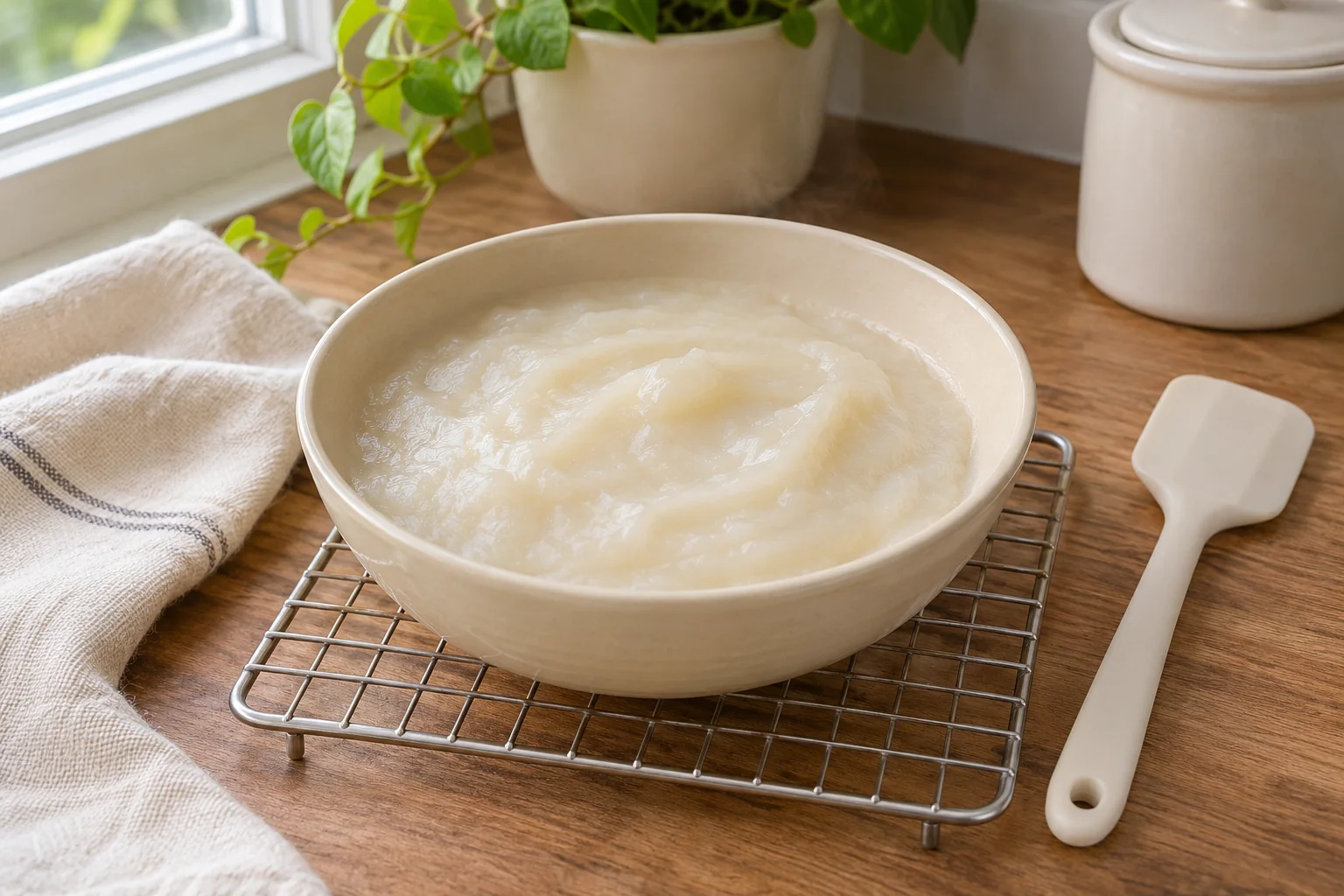
Very hot paste can affect yeast, eggs and other ingredients. Most methods require cooling it to an appropriate temperature before combining with the dough. Spread it or transfer to a bowl as directed and handle safely; don't place a scalding pot directly onto a delicate work surface.
A shallow dish can help the paste cool evenly. Test the centre as well as the edge before adding it to the dough. Use the paste at the temperature your recipe calls for.
Does tangzhong replace part of the flour?
Yes, in a correctly designed formula the cooked flour is counted as part of the recipe's total flour. The liquid used to make the paste is also included in total hydration. Don't add an extra cup of flour paste to an existing dough without adjusting the original flour and water.
How much of the flour is cooked?
Some tangzhong formulas cook a relatively small fraction of the total flour, often around 5% to 10%, though approaches vary. The proportion influences hydration, dough handling and finished texture. Use a formula whose cooked-flour quantity has been tested for the desired bread.
What does the final dough feel like?
A tangzhong dough can feel supple, soft and sometimes slightly tacky rather than dry. Many milk bread formulas also include egg, milk, sugar and butter, each contributing to texture. The paste is one technique within a larger system, not the only source of softness.
Why the bread may stay soft longer
Cooked starch can retain moisture and influence how the crumb firms after cooling. Tangzhong is commonly used to make breads with an appealing longer-lasting soft texture compared with otherwise similar formulas. Storage, fat content and proper baking still affect how quickly bread becomes stale.
Tangzhong and enriched dough
Many soft breads combine tangzhong with milk, eggs, sugar and butter. That doesn't make tangzhong itself an enriched dough ingredient; it is a flour-and-liquid preparation. The enrichment contributes its own tenderness and flavour, while the paste modifies water handling.
Tangzhong in plain sandwich bread
The technique can also be used in a sandwich bread formula designed around it. Some bakers use it for a softer sandwich loaf without making the bread particularly sweet. Follow recipe-specific proportions and mixing instructions rather than converting a crusty baguette recipe automatically.
Use Tangzhong Sandwich Bread for a sliceable loaf with the paste already accounted for. Let it cool before cutting and compare the feel of the crumb on the day you bake it and the following day.

Can you use whole-wheat flour?
Some formulas use whole-wheat flour in or alongside the paste, but bran and flour composition change water absorption. A tested whole-grain tangzhong recipe is more reliable than replacing all bread flour with whole wheat on the first attempt.
Why the paste becomes lumpy
Adding flour to very hot liquid without whisking can form lumps. Combine the ingredients as directed and heat gently while stirring. If the mixture is badly scorched, start again rather than incorporating burnt flavours into the dough.
Why the dough seems too sticky
The total flour and liquid may have been mismeasured, the paste may not have been cooked as specified or the dough may need its prescribed kneading time. Resist repeatedly dusting in extra flour before the dough has developed strength; doing so can turn soft bread dry.
Tangzhong versus yudane
Both use heated flour and water to change starch hydration. Tangzhong commonly cooks the mixture together over heat, while yudane typically pours boiling water over flour and rests the mixture. They aren't automatically interchangeable cup for cup because proportions and dough timing vary.
How to store the paste before use
Follow the particular recipe if preparing it ahead. A dairy-containing paste is perishable and should not be held on the counter for an extended period. Make sure it is safely cooled and refrigerated according to its formula, then incorporated at the specified temperature.
Frequently asked questions
Does tangzhong require special flour? Not always; follow the bread recipe. Can I add it to any dough? Not without reformulation. Does it make bread sweet? No, the paste itself isn't sweet. Does it replace kneading? No. Why is my paste thick? That is the intended starch-gelatinization effect.
Start with a tested soft loaf
Try the method in a well-developed milk bread or sandwich bread formula rather than improvising a conversion. Once you know how the paste should look and how the dough feels, the extra saucepan step becomes a practical tool for beautifully soft bread.
Related recipe: Soft Milk Bread.
Try Tangzhong Milk Bread with Laminated Herb Butter Layers for a savoury application. The flour paste goes into the bread dough before you shape it with the herb butter.

IN PICTURES
From the baking notebook
FROM THE RECIPE BOX


