On this page
A baguette and a cinnamon roll are both made from yeast dough, yet they feel completely different. The baguette is chewy with a lean, crisp crust; the cinnamon roll is soft, buttery and rich. That contrast comes largely from enrichment—ingredients such as butter, eggs, milk and sugar added beyond the basic flour-water-yeast-salt structure. Enriched dough creates beautiful breads, but its mixing, fermentation and baking need a little more attention than an ordinary lean loaf.
What is enriched dough?
Enriched dough is bread dough containing ingredients that add richness, tenderness, flavour or sweetness beyond the basic lean mixture. Common enrichments include butter, oil, eggs, milk, cream and sugar. A lightly enriched sandwich bread and a heavily enriched brioche both belong to the family, but their handling differs.
What counts as enrichment?
Fat, dairy, eggs and sweeteners are common additions. Some ingredients contribute more than one function: milk supplies water, protein and sugar; eggs provide water, fat and proteins; butter contributes fat, water and milk solids. No single percentage defines every enriched bread tradition.
Brioche as a rich example
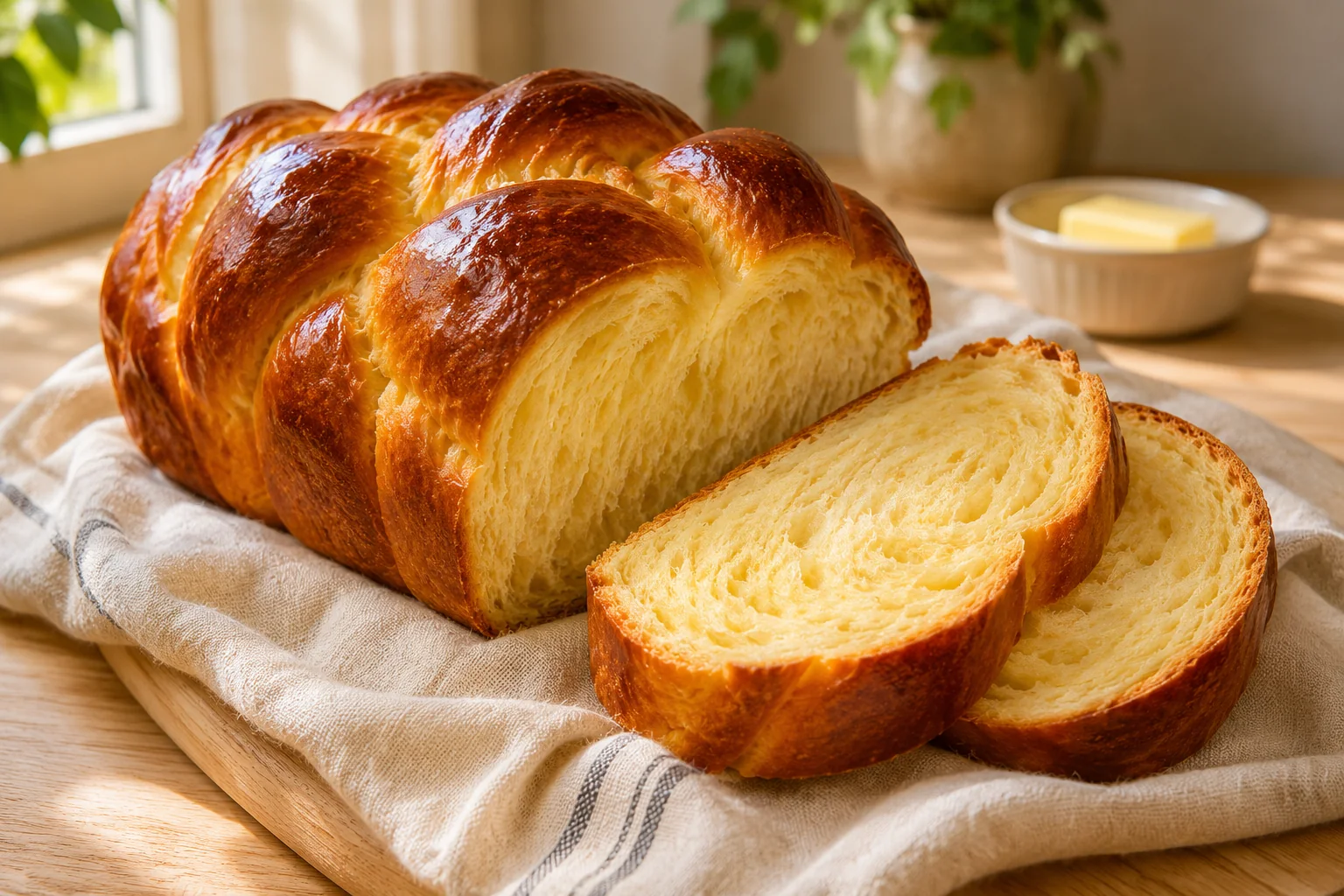
Brioche often contains a substantial amount of butter and eggs, giving it a rich, tender crumb and distinctive flavour. Many formulas incorporate butter gradually after gluten has developed. The dough may require chilling because its fat content makes warm handling difficult.
Try the Brioche Sandwich Loaf if you want a rich dough in a familiar pan. Watch how the texture changes as the butter goes in. The dough may look slippery at first, then draw together as you continue mixing.

Challah as another example
Challah is often enriched with eggs and oil and may include sugar, producing a tender, golden loaf suited to braiding. Specific challah traditions vary, including whether dairy is used. Follow a tested recipe rather than assuming every enriched bread contains butter or milk.
For a smaller shaping project, try Challah Rolls. They let you practise handling an egg-enriched dough without needing to keep a full loaf braid even from end to end.
Cinnamon-roll dough
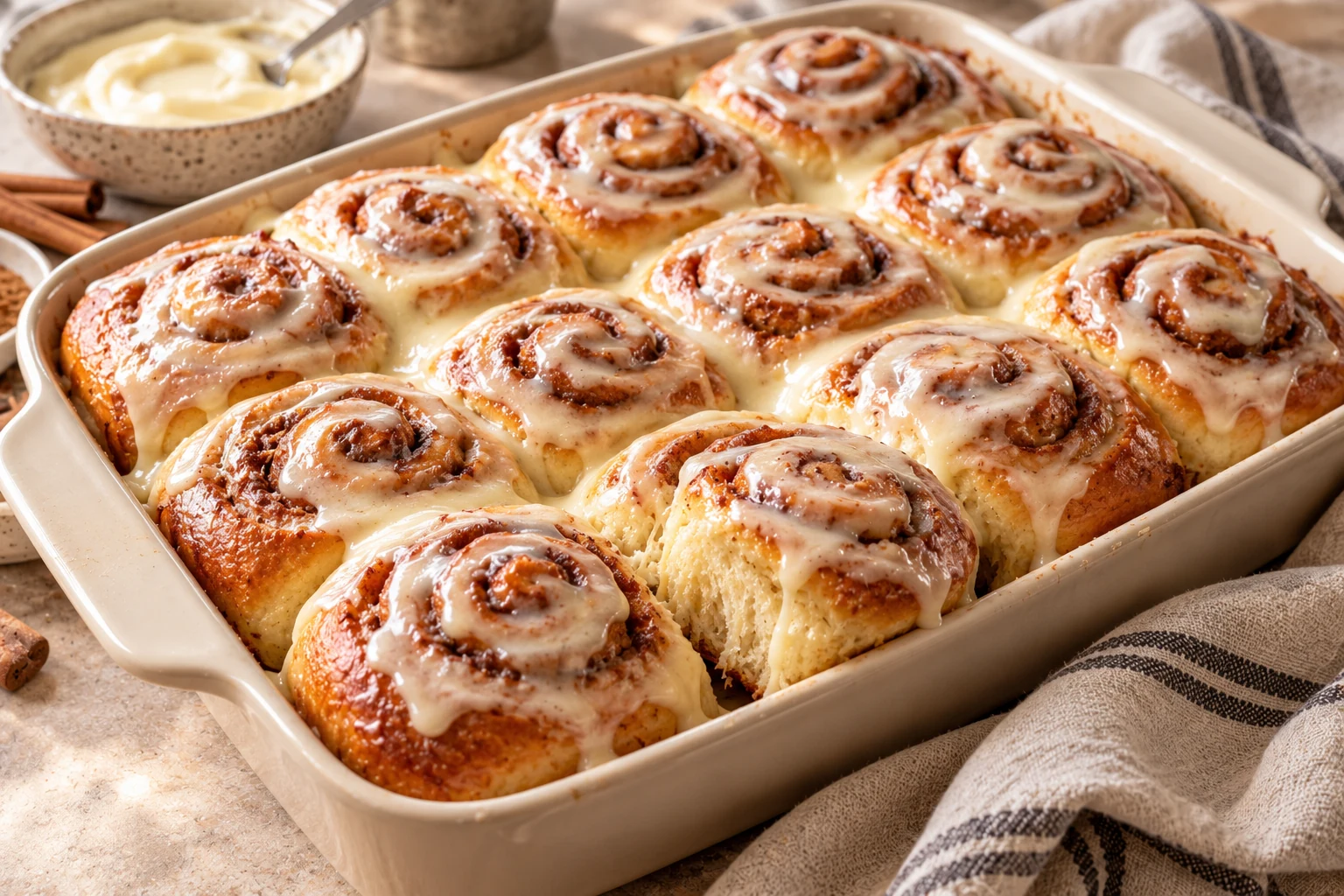
Many cinnamon rolls use milk, butter, eggs or sugar to create a soft crumb. The added ingredients influence fermentation and how the dough rolls around filling. A dough that's too warm or overworked may be difficult to shape cleanly, while inadequate proofing can produce dense spirals.
The Cinnamon Rolls give you a useful side-by-side check: the same dough has to roll into an even sheet before proofing and stay tender around the filling after baking.
Soft dinner rolls
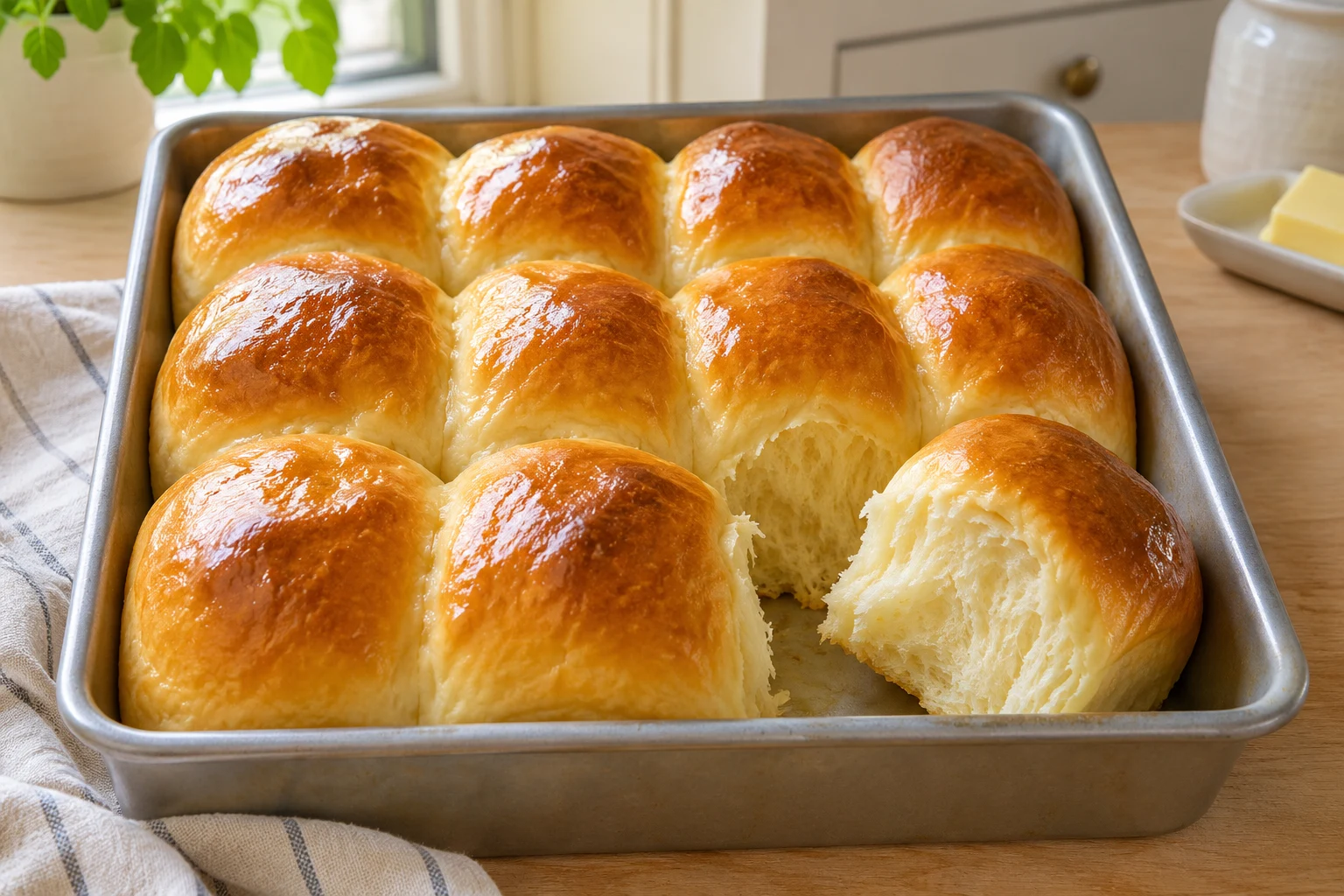
Dinner rolls often use moderate enrichment for a pillowy bite and appealing crust. A recipe may add butter, milk, egg or honey. Because they are individual portions, they bake faster than a large enriched loaf. Follow the specified proofing and bake time rather than transferring a bread-loaf schedule.
Use Classic Dinner Rolls to practise making pieces of similar weight. An even batch makes it easier to tell whether the entire pan has proofed enough.
What butter contributes
Butter adds flavour and fat that can contribute to a tender crumb. In heavily enriched dough, large quantities may interfere with early gluten formation if incorporated at the wrong stage. That is why many brioche recipes develop the dough before gradually adding softened butter.
What oil contributes
Oil can soften bread without the dairy flavour of butter. Different oils bring their own flavours, and some remain liquid at room temperature. An oil-enriched dough is not automatically interchangeable with a butter-rich one; the complete formula accounts for differences in water and fat.
What eggs contribute
Eggs supply proteins, fat and water, as well as colour and flavour. Yolks can contribute richness while the proteins support structure as they cook. Their proportion changes dough handling and final texture. Don't add extra eggs just to make a recipe more luxurious unless the formula is designed for them.
What milk contributes
Milk adds liquid plus dairy proteins and sugars. It can help create a tender crumb and attractive browning. Whole milk and skim milk differ in fat content, while cream is richer still. Use the specified type or a tested substitution to avoid inadvertently changing hydration.
What sugar contributes
Sugar adds sweetness and influences browning, moisture and fermentation. In high quantities, it can slow yeast activity by changing the dough environment. The solution isn't necessarily to add more yeast; follow a formula developed for sweet bread, including the type and amount of yeast specified.
Why enriched dough often rises slowly
Fat and sugar can affect gluten development and fermentation, and a very rich dough may take longer than a lean dough under the same conditions. Temperature, yeast quantity and mixing also matter. Use rise and texture cues from the particular recipe rather than assuming a baguette timeline.
Gluten development before fat
Some enriched dough methods mix flour, liquid, yeast and other ingredients first to establish strength, then add butter in small portions. This helps the dough build a network despite significant fat. Other recipes incorporate fat earlier and are tested for that method. Follow the exact sequence.
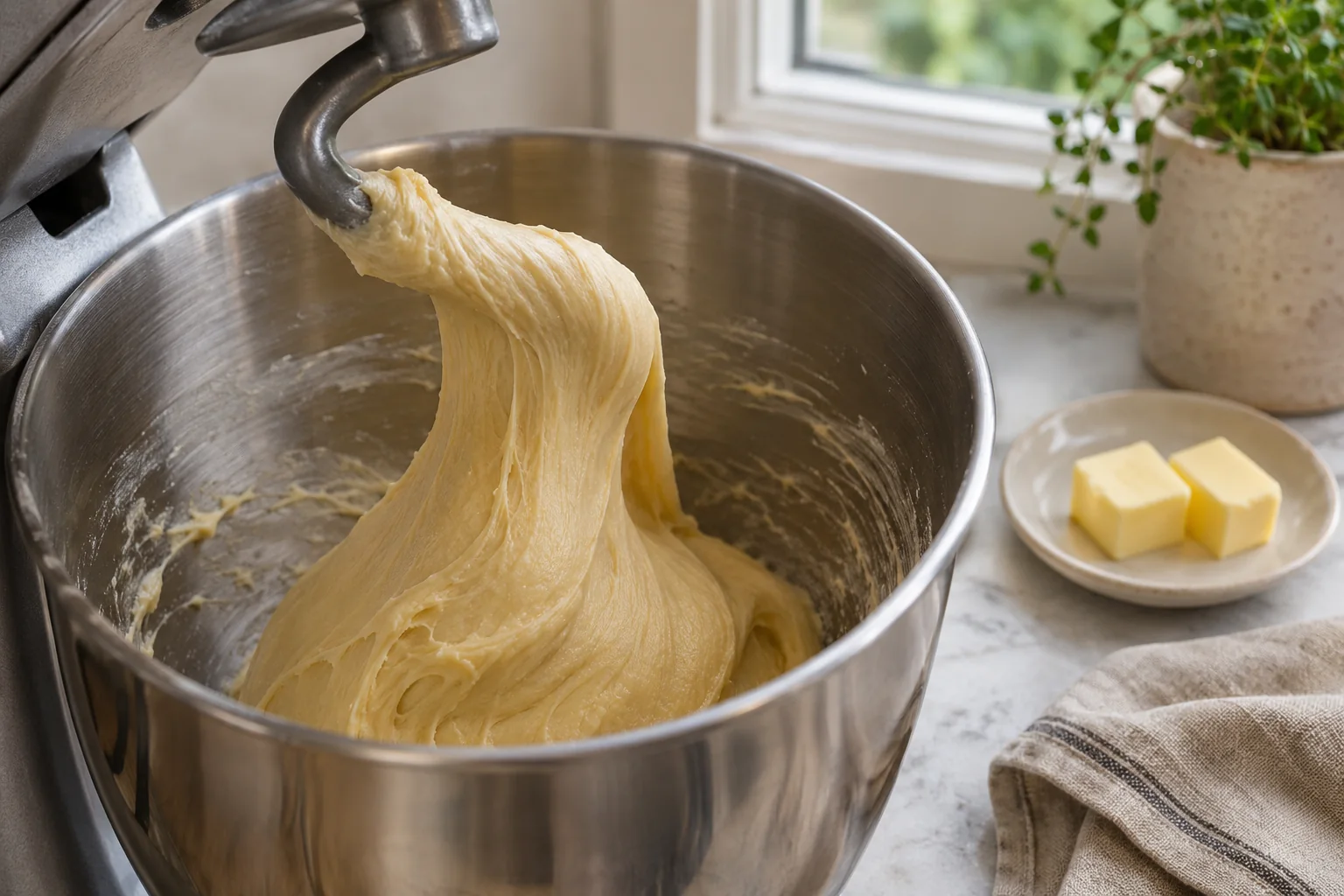
Add butter in stages when your recipe calls for it. If the dough is sliding around the bowl in a greasy layer, give the current addition time to incorporate before adding the next piece. Pause to scrape the bowl with the mixer off when needed.
Why enriched dough can be sticky
A rich dough may initially cling to the bowl even when its ingredients are correct. As mixing progresses, it can become smoother and more elastic. Adding large quantities of extra flour to eliminate all stickiness risks turning a soft loaf dry and heavy. Allow the recipe's prescribed mixing time.
Temperature management
Butter-rich dough softens as the kitchen warms, making shaping more difficult. A brief recipe-approved chill can help firm the fat and relax the dough. Very cold enriched dough may require a different proofing window, however, so don't use the refrigerator as an unlimited pause.
Proofing enriched dough
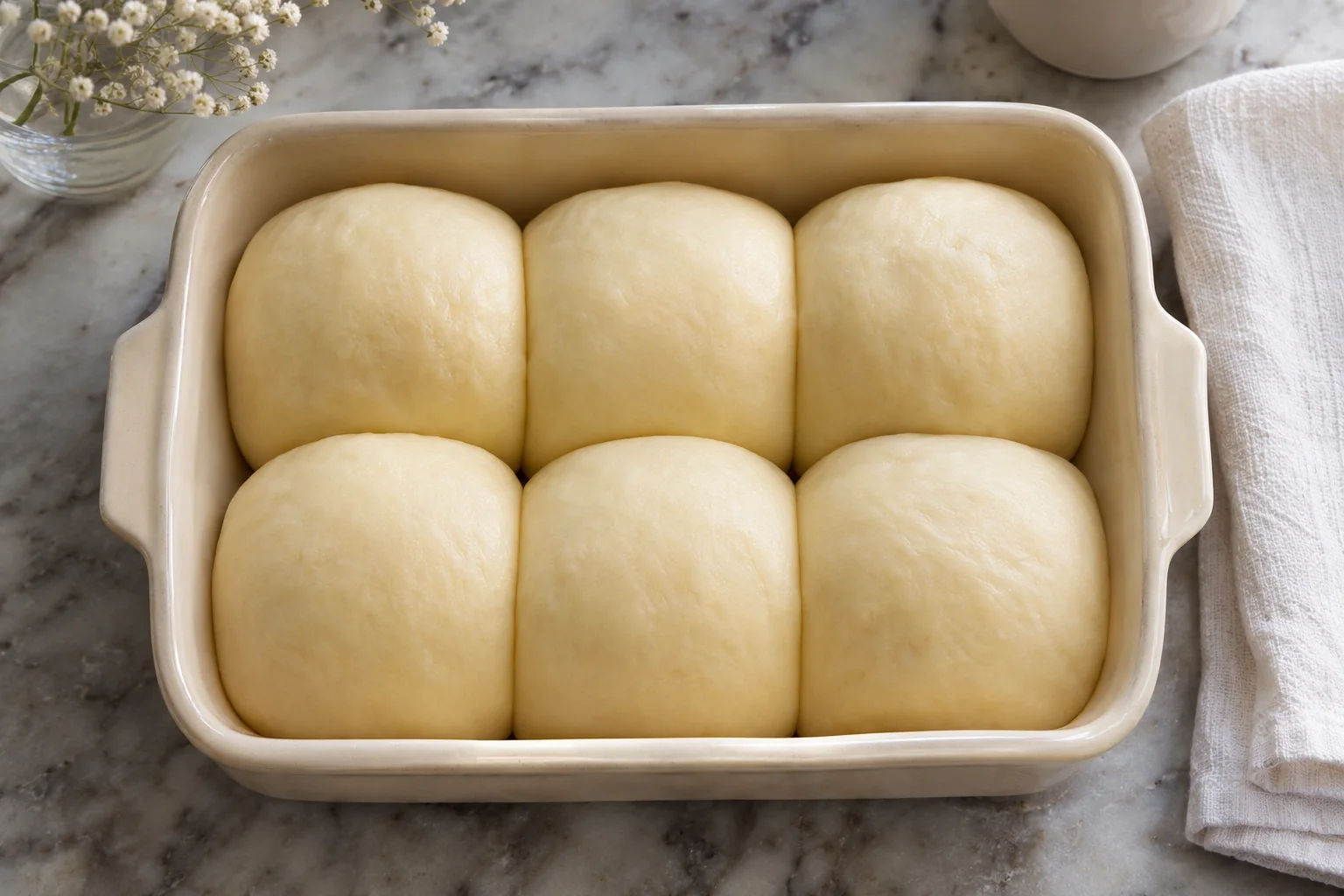
An enriched dough may rise at a different rate from a lean loaf. Some recipes call for a particular dough volume increase, while others use a gentle poke test. Under-proofing produces dense buns, and over-proofing can weaken their structure. A clock alone is not a reliable final proof test.
Compare a dough piece as soon as you shape it with the same piece near the end of proofing. The outline should look fuller and the seams between rolls will move closer together. Judge those changes alongside the cues in the recipe, since a cool dough will take longer.
Shaping soft enriched bread
Work gently to prevent tearing and excess flour incorporation. Rolls need reasonably even portions; cinnamon dough should be rolled to a consistent thickness before filling. For brioche, chilling may help create clean shapes. Use a properly prepared pan and observe the recipe's proofing directions.
Browning and baking
Eggs, dairy and sugar can promote a darker crust, sometimes before the centre finishes baking. Some recipes use an egg wash for gloss. Follow the specified oven temperature and internal doneness checks where provided, and don't assume an enriched bread needs the same high heat as a lean crusty loaf.
Storage and keeping quality
Many enriched breads remain appealingly soft for longer than an equivalent lean crusty loaf, but proper wrapping after cooling still matters. Cream cheese fillings, pastry cream and other perishable additions require refrigeration. A plain brioche and a custard-filled roll have different safe storage needs.
Frequently asked questions
Is enriched dough always sweet? No; some soft sandwich breads are only mildly enriched. Does it contain butter? Not necessarily; oil or eggs may be used. Why does brioche need so much mixing? The dough must develop sufficient structure around a high fat content. Can you use sourdough? Yes, in recipes designed for naturally leavened enriched dough.
Start with a bread that fits your skill
Dinner rolls are an approachable enriched dough, while high-butter brioche demands more control over mixing and temperature. Learn what each enrichment contributes, follow the tested sequence and allow enough proofing time. You'll get the rich, tender bread you intended without battling the dough.
For a loaf to slice for toast, start with Soft Milk Bread. Once you know how a soft dough feels, move on to a richer brioche and compare how it behaves during mixing.
IN PICTURES
From the baking notebook
FROM THE RECIPE BOX


