On this page
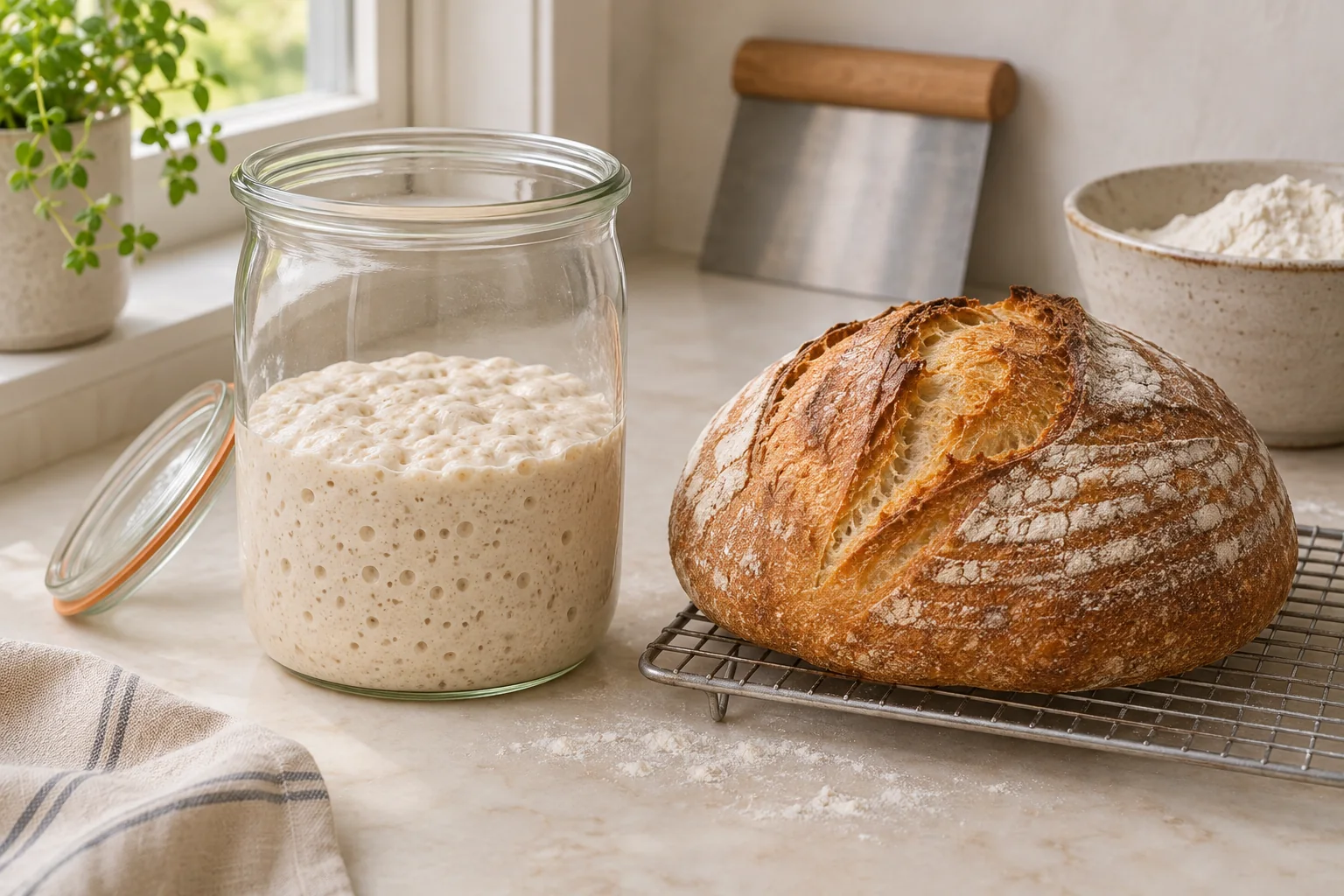
A bread recipe that begins the night before may ask you to mix flour, water and a tiny amount of yeast in a separate bowl. This early mixture is a preferment. It is part of the dough allowed to ferment ahead of the main mix, which can improve aroma and influence dough development. Once you understand the concept, terms such as poolish, biga, levain and sponge become variations on the same planning idea rather than mysterious professional jargon.
The basic definition
A preferment is a portion of bread ingredients mixed and fermented before the final dough is assembled. Some are loose and bubbly, others firm and dough-like. They can use commercial yeast or a maintained sourdough culture. The purpose is to give part of the flour a head start on fermentation.
What fermentation does
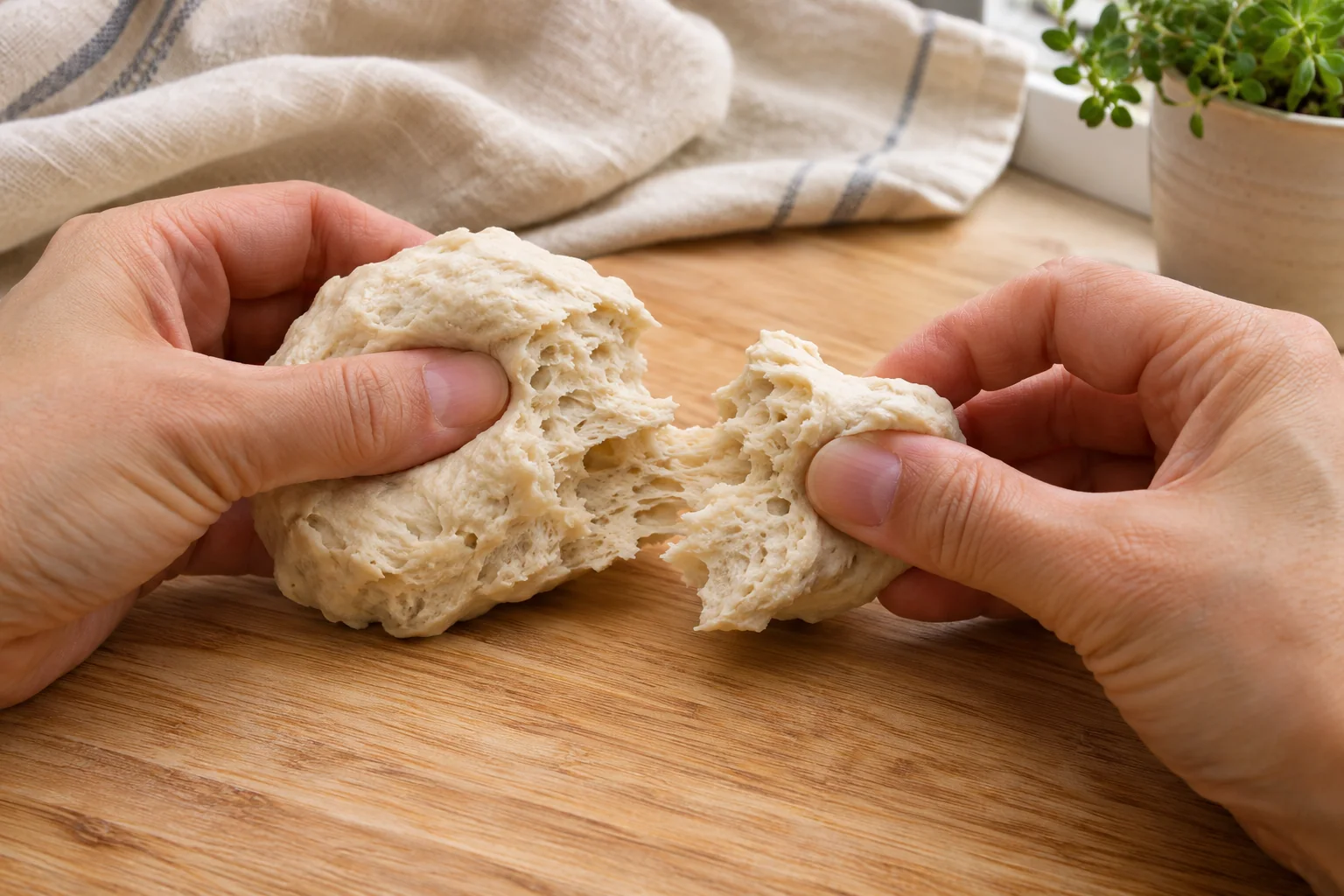
Yeasts consume available sugars and produce carbon dioxide and flavour compounds. In naturally leavened preparations, bacteria contribute acids and other fermentation products too. The result changes as time and temperature progress; a ripe preferment is not simply a mixture that's been left on the counter overnight without observation.
Recipe to try: Baguette. This baguette is a direct-yeast bread example. Follow its published mixing sequence; it is not a poolish formula simply because it is a baguette.

Poolish is the liquid example
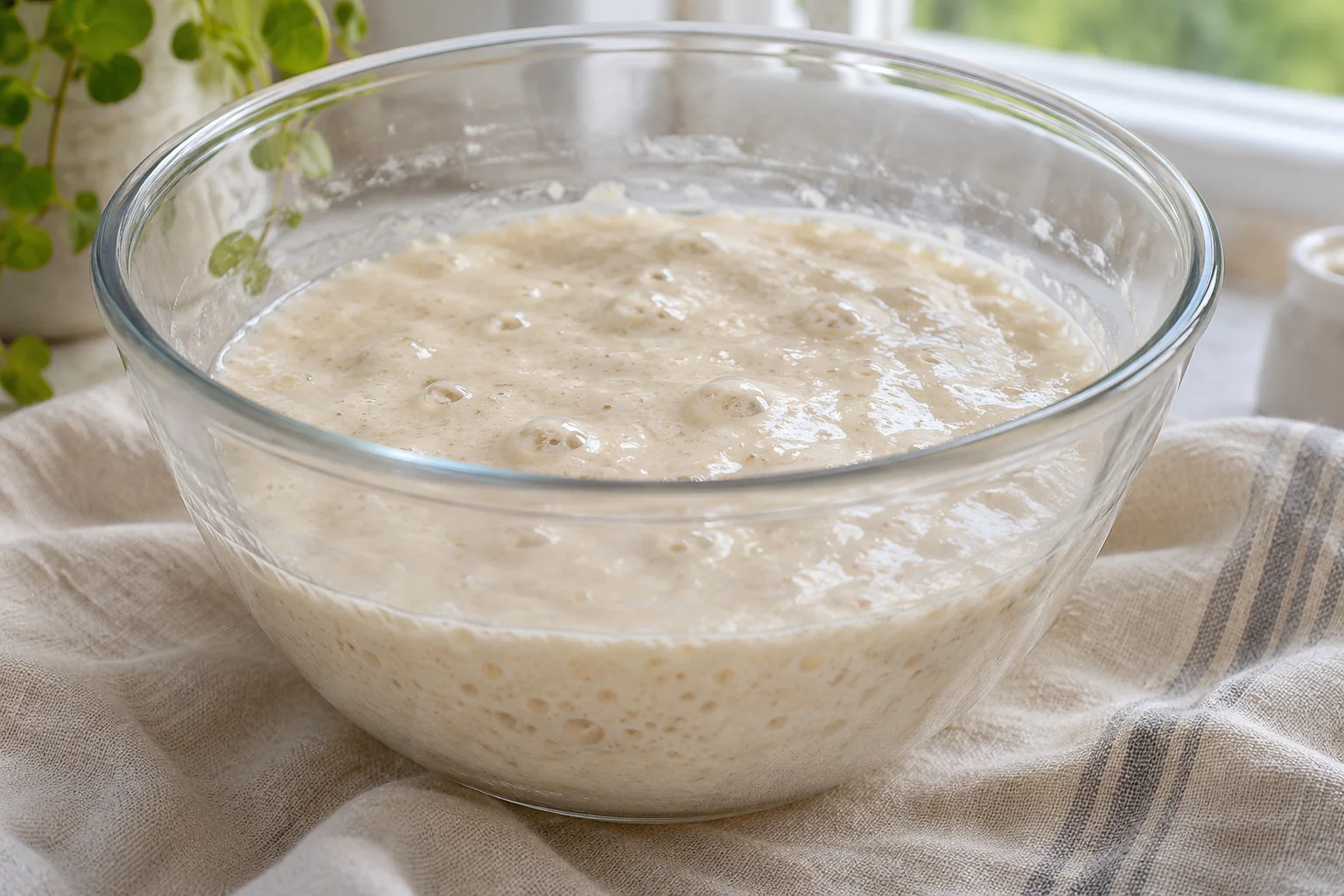
Poolish typically contains equal weights of flour and water plus a small amount of baker's yeast. Its 100% hydration gives it a batter-like consistency. When mature, it is visibly bubbly and aromatic. It usually contributes both flour and liquid already accounted for in the final dough formula.
Biga is often stiffer
Biga is an Italian term for a yeasted preferment, frequently a relatively low-hydration mixture. Its dough-like pieces can be less visually foamy than poolish. Different Italian formulas use different hydrations, so make the precise consistency written in the recipe.
Recipe to try: Triple-Fermented Durum Wheat Bread with Biga. This is a separate multi-stage bread project. Follow its exact preferment proportions and timing; the word biga alone does not specify hydration.
Sponge is a broad category
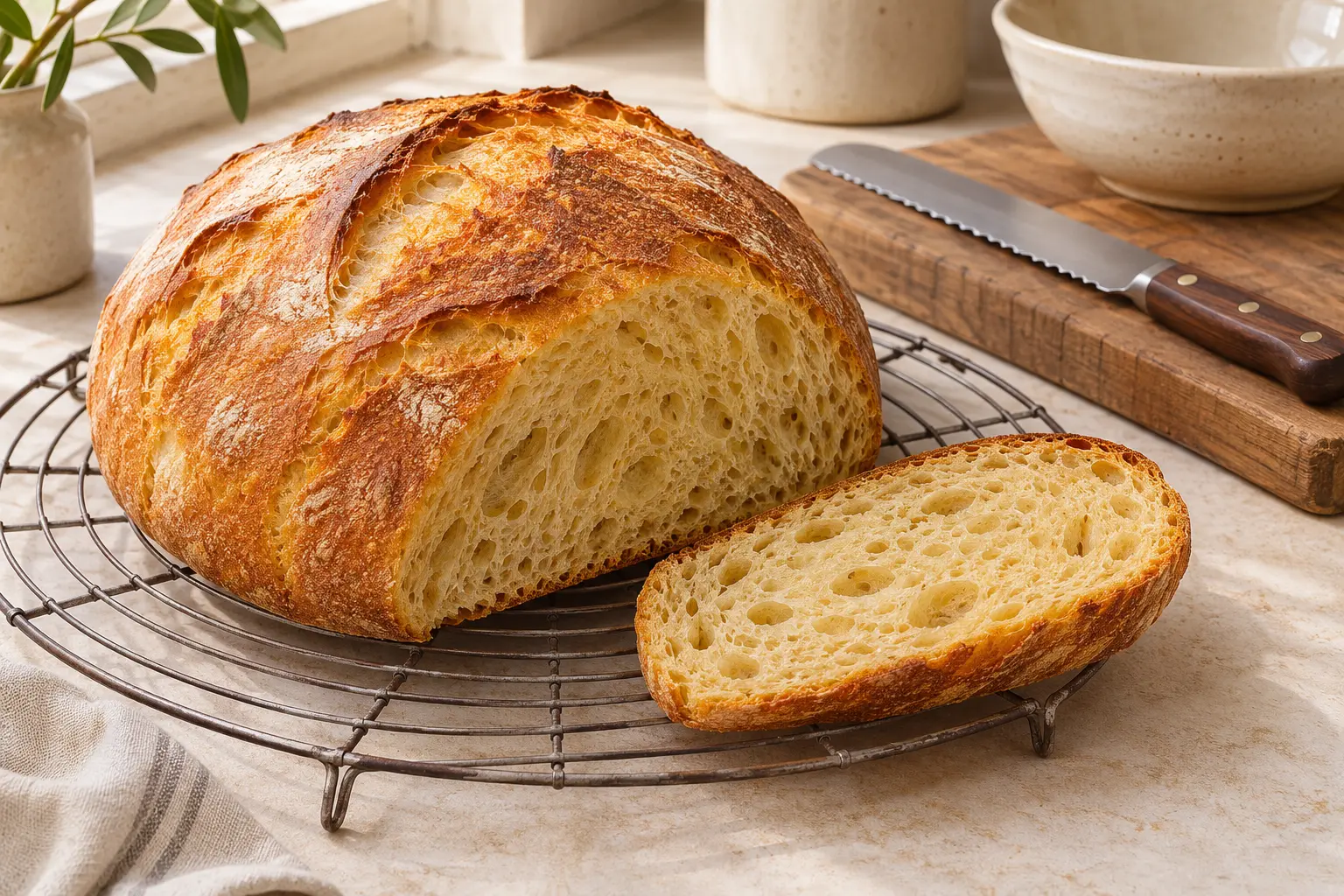
A sponge may refer to a soft pre-fermented mixture used in lean or enriched breads. Some bakery traditions use it for sandwich loaves and sweet doughs. There is no single sponge hydration that applies everywhere. Follow the formula's flour, water, yeast and ripeness cues.
Levain uses a sourdough culture
A levain is a preferment built from sourdough starter and fresh flour and water. It contains wild yeasts and acid-producing bacteria supplied by the existing culture. It can be liquid or stiff, depending on the recipe. Levain isn't automatically sourer than every yeasted preferment in a finished loaf.
Recipe to try: Sourdough Country Loaf. The loaf calls for active starter. Check its maturity and the dough’s fermentation cues before moving on to shaping.

Pâte fermentée is old dough
Pâte fermentée refers to dough held over from an earlier mix, often already containing salt along with flour, water and yeast. Incorporating it into the next batch introduces mature fermented material. This differs from a poolish normally prepared without salt.
What a preferment is not
Tangzhong and yudane are cooked flour preparations, not ordinary fermentation-based preferments. An autolyse is a resting stage for flour and water before full mixing, not usually a leavened preferment. These methods can coexist in one bread formula, but their purposes are distinct.
Why it can improve flavour
More fermentation time allows aromatic compounds to develop before the final dough rises. A prefermented baguette may taste more complex than a quick dough of the same basic ingredients. Flavour depends on maturity and recipe balance rather than merely adding an overnight stage.
Can it improve dough handling?
Fermentation affects gluten and dough chemistry, sometimes changing extensibility and shaping. A preferment that has gone far past its ideal point may weaken the dough instead of helping it. Good fermentation timing matters more than making the preferment as large or sour as possible.
What baker's percentage means
In baker's percentages, the total flour weighs 100%, with water, salt and yeast expressed as percentages of that flour weight. Preferment flour is included in the total. For example, a bread with 500 g total flour may put 100 g into a poolish and 400 g into the final mix.
How much flour should be prefermented?
There is no universal percentage. Baguettes, sandwich loaves and artisan sourdough formulas use different portions. A beginner should follow the recipe's prefermented flour quantity rather than allocating half the flour by intuition.
How to make a simple poolish
Using a tested recipe, weigh its designated flour and equal weight of water, add the tiny amount of yeast specified and mix until hydrated. Cover appropriately and leave it at the stated temperature until ripe. The final dough receives the remaining flour, water, salt and other ingredients.
Read maturity, not only the timer
A poolish may be domed and very bubbly before it begins to sink. A stiff biga may show expansion and bubbles inside. Temperature and inoculation affect how quickly either reaches peak readiness. If it collapses dramatically long before mixing, it may be overripe.
Room temperature changes the schedule
A summer kitchen can make a preferment ripen faster than a cool winter room. Recipes sometimes adjust yeast quantity or use refrigerated fermentation to match a schedule. Avoid changing yeast arbitrarily if the result must be ready for a specific morning; select a recipe with suitable time and temperature.
Safety of enriched preferments
A mixture containing dairy, eggs or other perishable ingredients may have more restrictive fermentation and holding requirements than a lean flour-and-water preferment. Follow the tested formula's temperature and storage instructions. Do not leave homemade milk-and-egg dough warm overnight just because a plain poolish does.
Why final proof is still needed
An active preferment contributes leavening and flavour, but the final dough must still mix, develop and rise. Skipping bulk fermentation or final proof can yield a dense loaf with dramatic crust bursting. The preferment isn't a shortcut past the rest of bread making.
Common beginner mistakes
Forgetting to subtract preferment flour from the final mix, using too much yeast, judging only by hours, and letting a ripe preferment sit for half a day too long are frequent issues. A scale and a simple baking timeline solve many of them.
Frequently asked questions
Is sourdough starter a preferment? It can be used to build one. Is poolish the same as levain? No, their leavening cultures differ. Does a preferment replace kneading? No. Can you use one in sweet bread? Yes with a suitable formula. Does longer always mean better? No.
Think ahead with purpose
A preferment moves a portion of fermentation into an earlier stage. When its flour, hydration, yeast and maturity are measured carefully, it offers more control over flavour and dough character. Choose a tested schedule and let time work for you.
IN PICTURES
From the baking notebook
FROM THE RECIPE BOX


