On this page
When a bread formula calls for tangzhong or yudane, the heated flour and any added water or milk still count as ingredients in the final loaf. Add up the whole recipe before trying to judge its dough by how much liquid goes directly into the mixer.
Set up a simple water example
Start with a bread formula containing 500 g flour and 330 g water, or 66% water-based hydration. Imagine assigning 25 g of flour to the cooked portion. The final mix will have 475 g of fresh flour either way. The amount of remaining water depends on how the cooked portion was prepared.
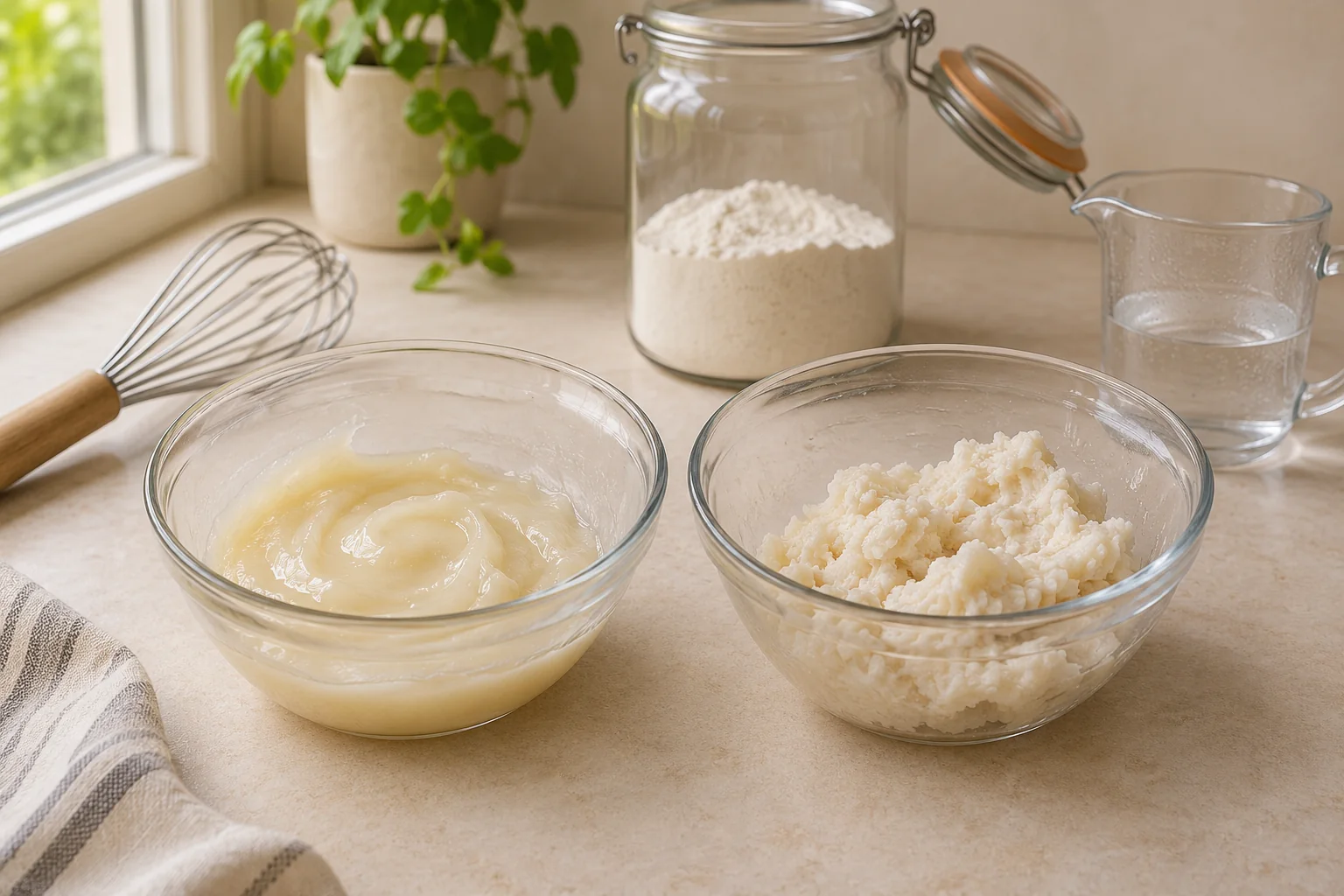
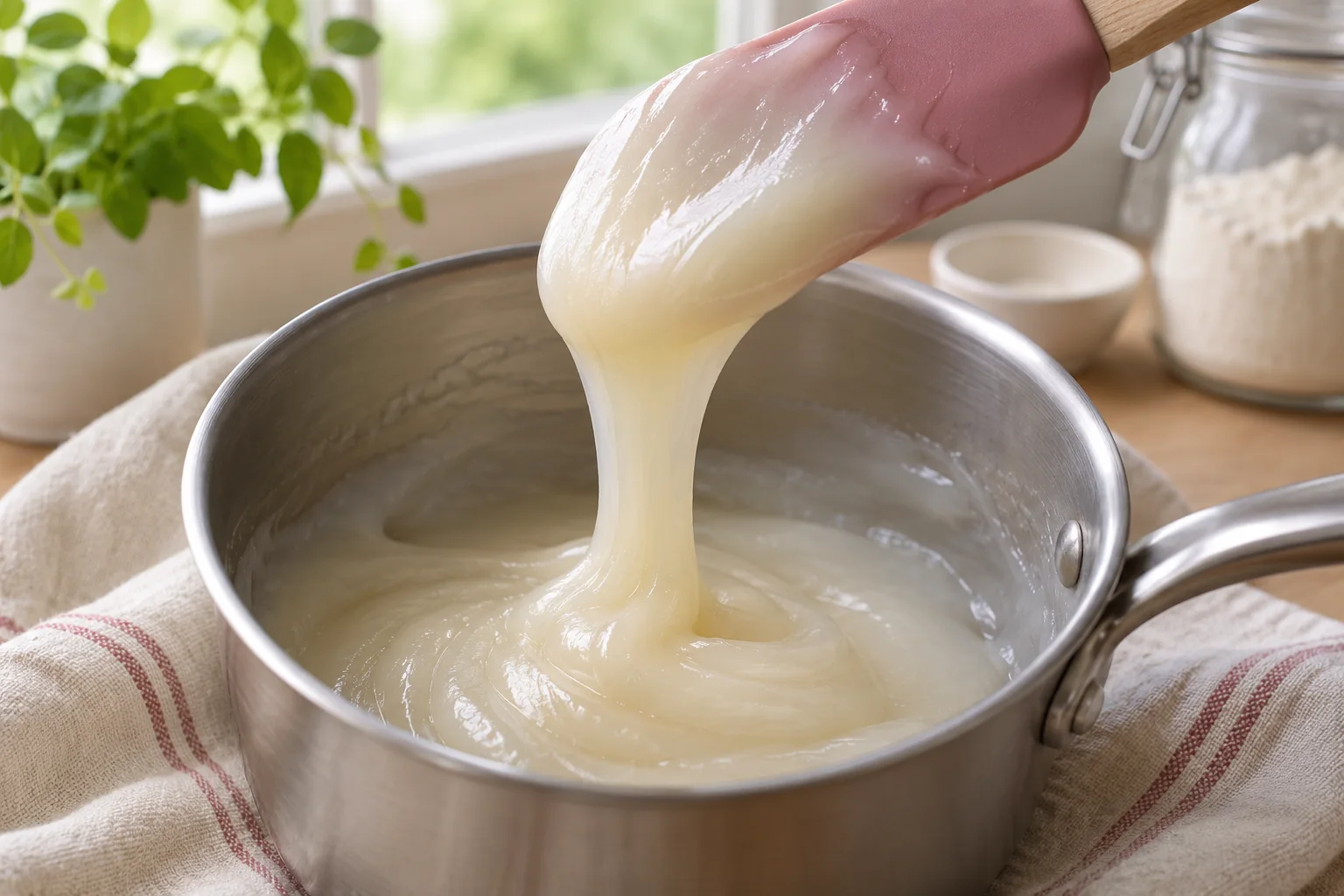
A tangzhong at one part flour to five parts water
For this example, 25 g flour and 125 g water go into the saucepan. The remaining 205 g water and 475 g flour go into the main mix. These are starting weights. Cooking can evaporate some water, and recipes may specify how to account for that. Scrape the measured paste into the dough after it cools as directed. See how to incorporate a paste in Tangzhong Sandwich Bread.

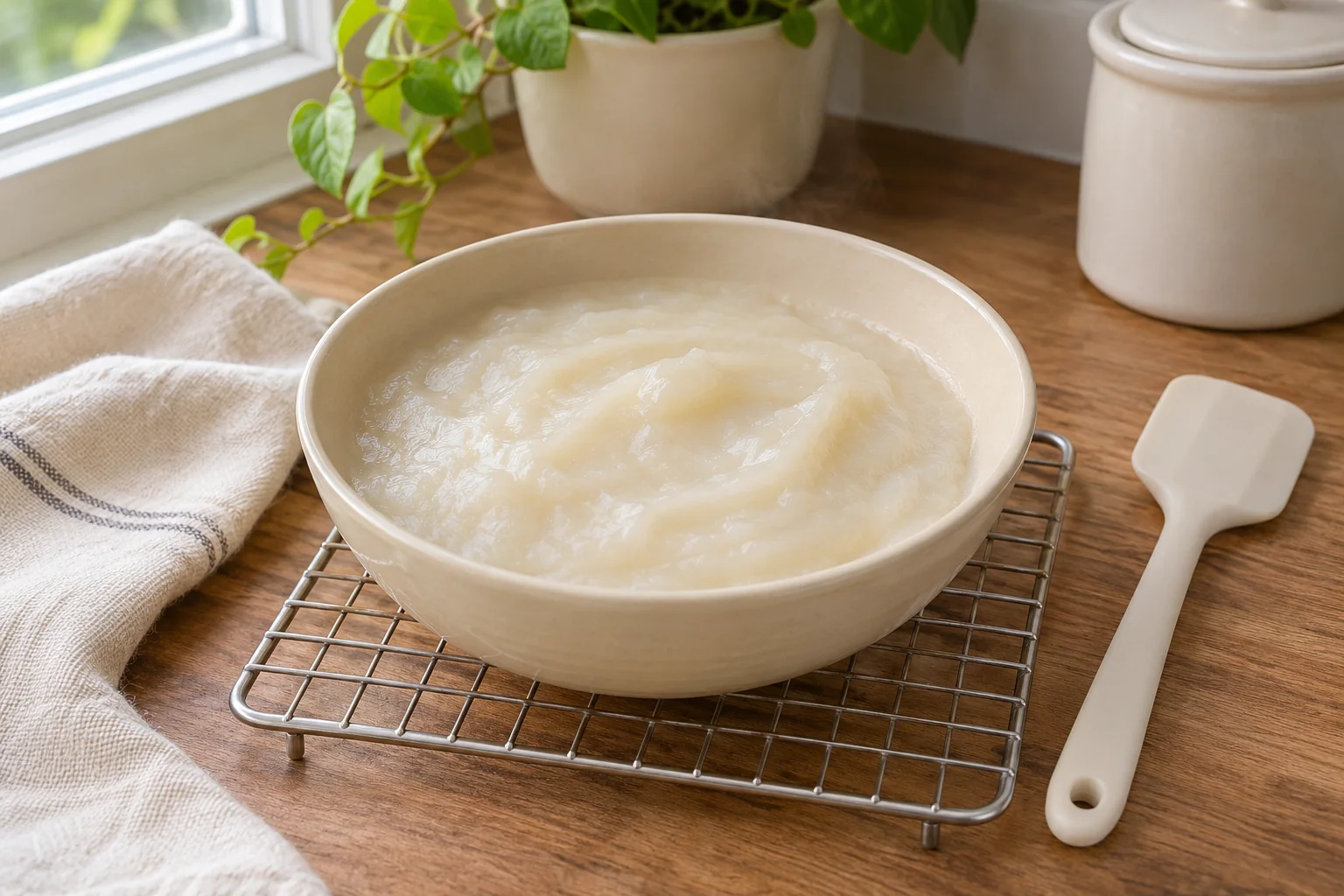
A yudane at equal weights of flour and water
In the example at equal weights, 25 g flour gets 25 g freshly boiled water. The remaining 305 g water and 475 g flour belong to the main mix. Leave the scald to cool and follow the resting or refrigerated storage instructions in the specific recipe. Use heatproof equipment and pour the boiling water carefully.
How two doughs can feel different with the same written hydration
Both examples assign 25 g of the flour to the heated portion. The first binds much more of the water into a cooked paste before mixing. The second leaves more water free to mix with the fresh flour. Dough feel, kneading time and crumb may differ even when the ingredient totals are the same. The examples are arithmetic, so choose a complete recipe to bake.
Milk changes the calculation
Milk has fat, proteins and sugars along with water. A formula may list its milk as liquid by weight for kitchen bookkeeping. That number is different from a precise water-only hydration figure. Use one convention throughout your notes and keep the specified milk when first making Soft Milk Bread or Japanese Milk Bread Rolls.

Keep one record for each bake
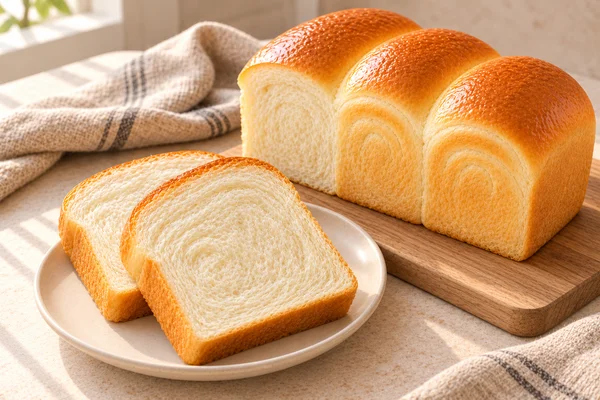
Write down the total flour, the liquid in the cooked portion and the liquid used in the main mix. Also note the cooking loss if the recipe has you reweigh the paste. Compare loaf height and next-day crumb after baking with unchanged ingredients and a measured proof. This gives you a better basis for a later adjustment than adding liquid until the raw dough looks like another loaf’s.
IN PICTURES
From the baking notebook
FROM THE RECIPE BOX


