On this page
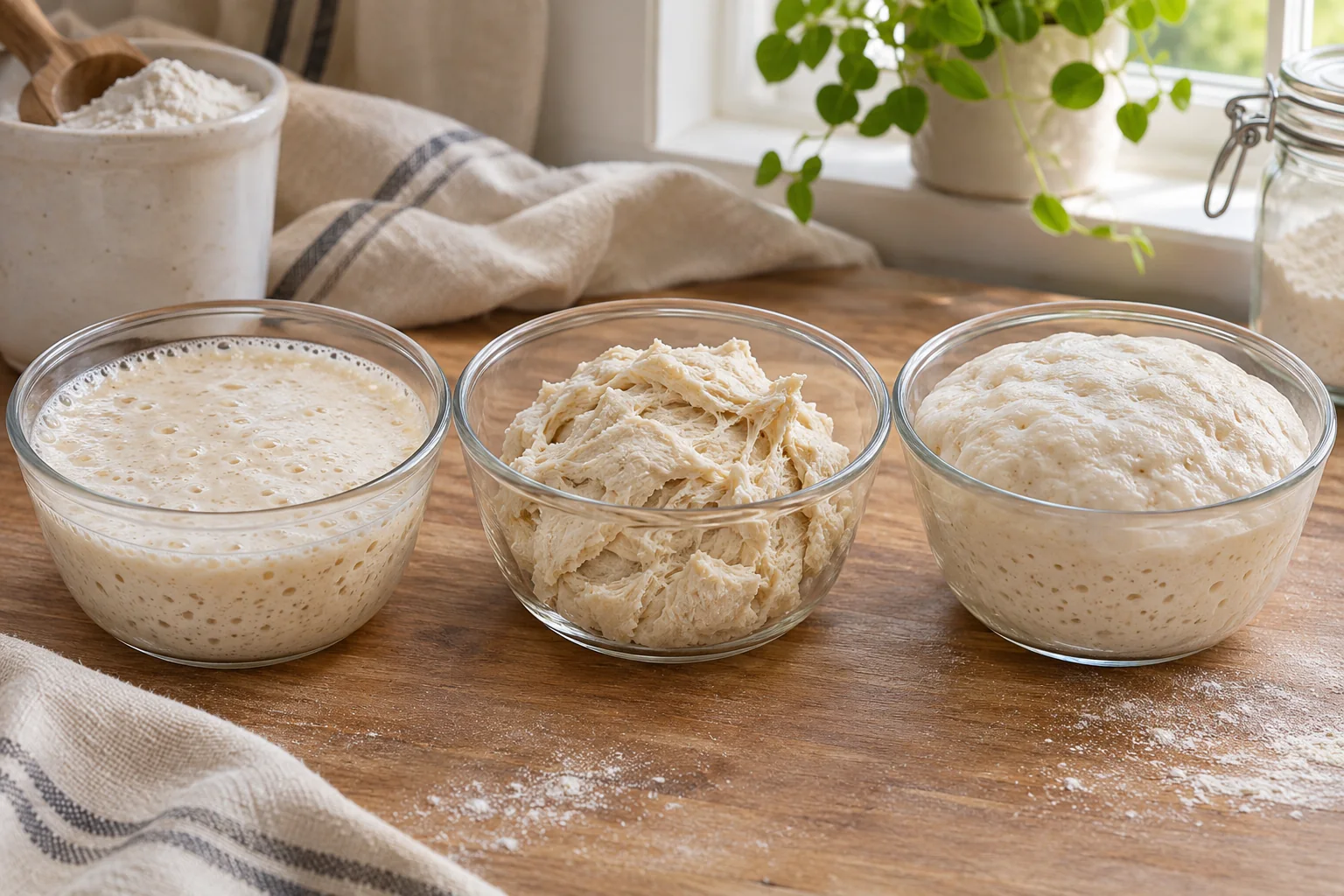
To read a bread formula with a preferment, put the flour and water from every stage in a single total. A poolish, biga or sponge goes into the final mix with the flour and water it already contains. Tracking both weights helps you scale the dough and spot why a substitution feels unexpectedly loose or stiff.
Start with a total flour and water target
Suppose a formula uses 500 g flour and 350 g water across all stages. Its hydration is 70%. If you want 20% of the flour prefermented, assign 100 g of the flour to that stage. Count the amount of salt and yeast separately.
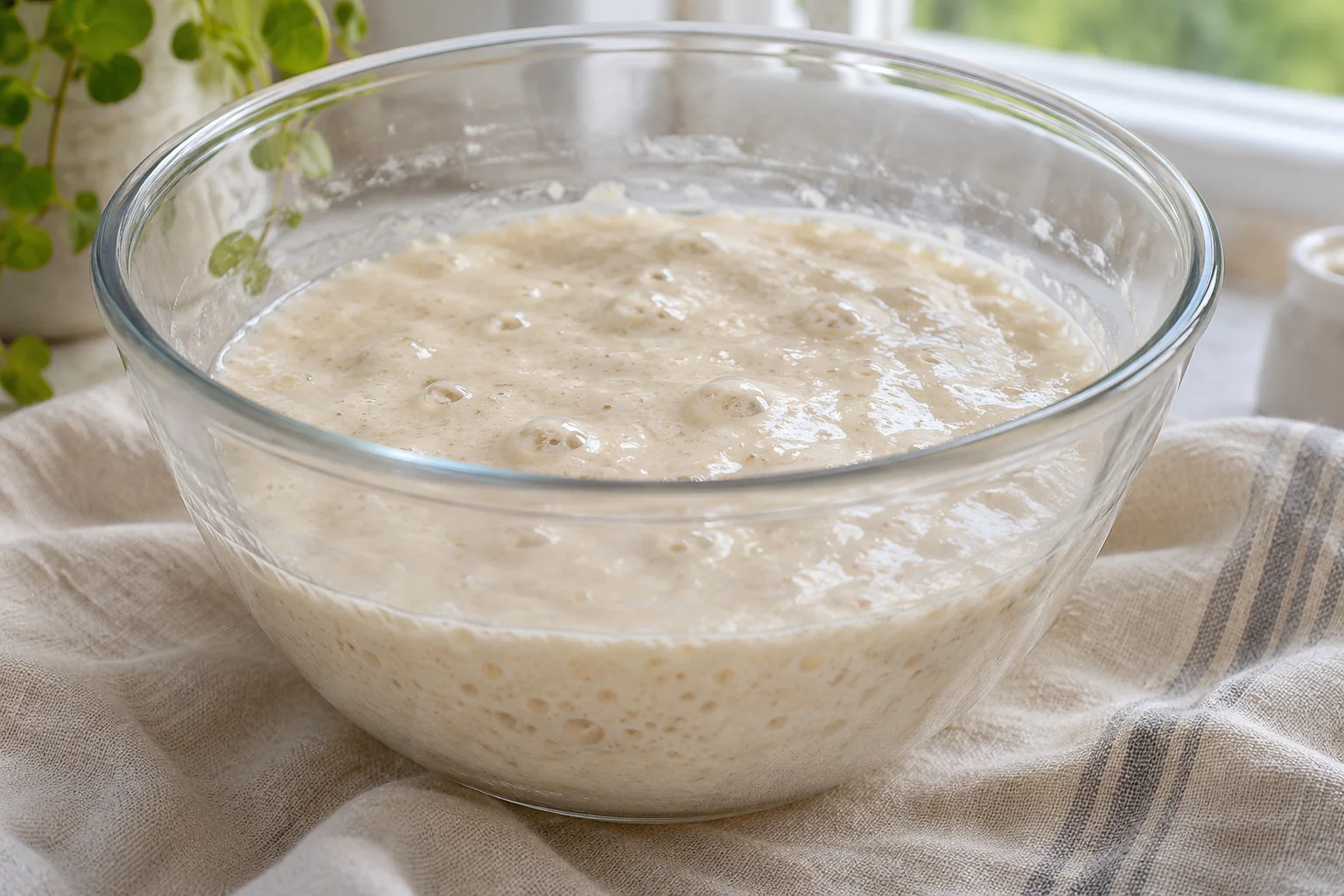
A 100% hydration poolish
Mixing 100 g flour with 100 g water puts 200 g of flour and water in the poolish before yeast. The final mix needs 400 g flour and 250 g water to reach the original totals. The formula’s yeast amount and ripening schedule still apply. Compare the handling of your chosen recipe with this Baguette method.
A stiff biga changes the split
If the biga contains 100 g flour and 55 g water, subtract those exact weights. The final mix gets 400 g flour and 295 g water. Overall hydration remains 70%, but the stiffer preferment will mix and ferment differently. Use Durum Wheat Bread with Biga to see how a separate fermentation stage fits into a complete formula.
A sponge needs its actual formula
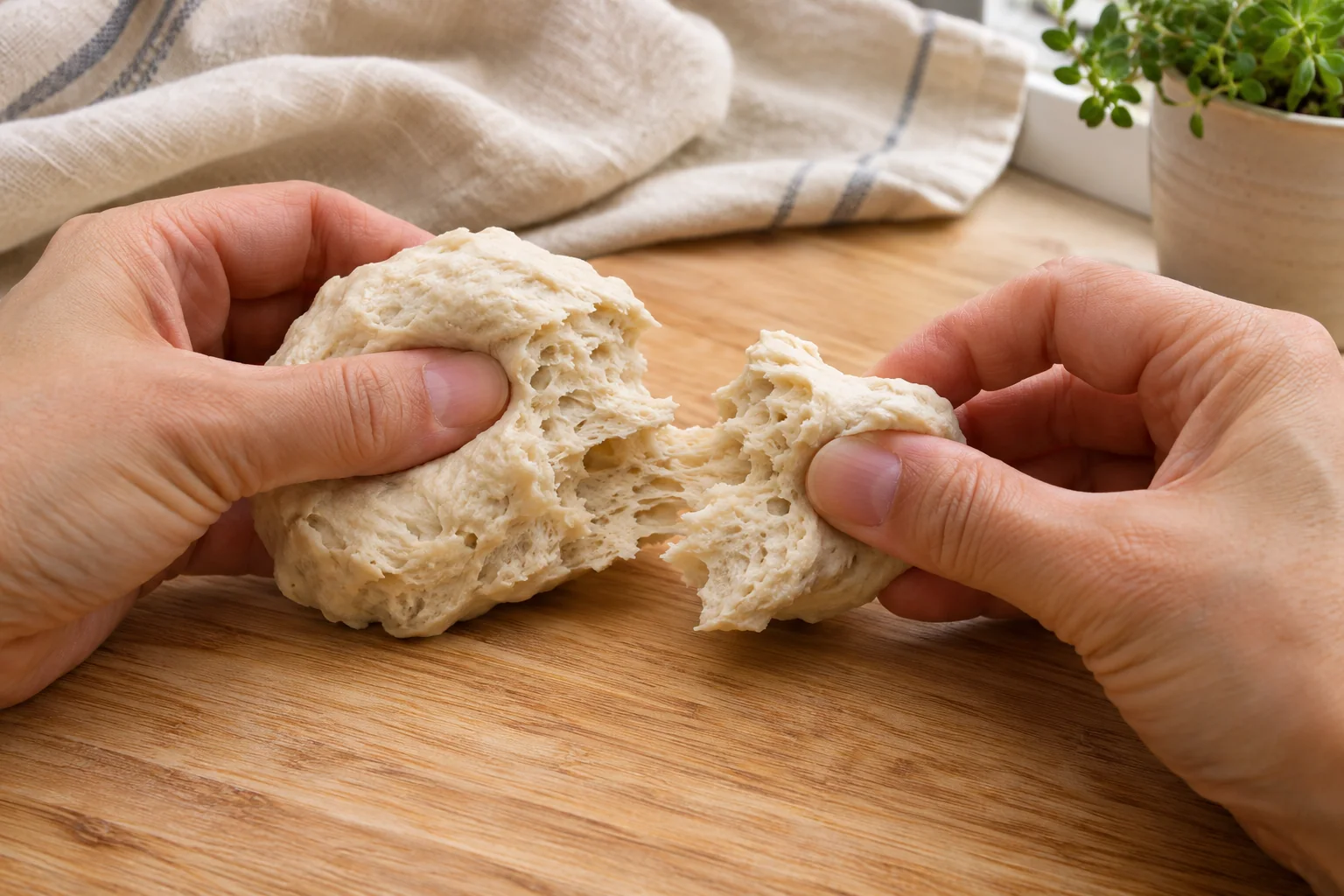
The word sponge does not tell you the ratio. If a recipe says 100 g flour and 80 g water, subtract 100 g flour and 80 g water. If it uses milk or includes sugar and eggs, read each ingredient line and preserve the original formula’s totals. Liquid ingredients can behave differently from the same weight of water.
Scale the whole recipe together
For a batch 1.5 times the original size, multiply each ingredient in both stages by 1.5. The 100 g flour and 100 g water in the poolish become 150 g each. The 400 g flour and 250 g water in the final mix become 600 g flour and 375 g water. The combined batch still has 70% hydration. A doubled dough may ferment at a different pace, so use the recipe’s readiness cues alongside the clock.
Measure a finished preferment carefully
If you know only the total weight of a mature starter, you can estimate its flour and water only when you know its original ratio and ingredients. For a plain 100% hydration mixture, half its weight is approximately flour and half water. For a 55% hydration mixture, divide its weight by 1.55 for the flour estimate. The rest is water, assuming no significant extra ingredients or evaporation. A process such as Sourdough Country Loaf shows why an established starter has its own schedule.

Use the math to read a formula before changing it
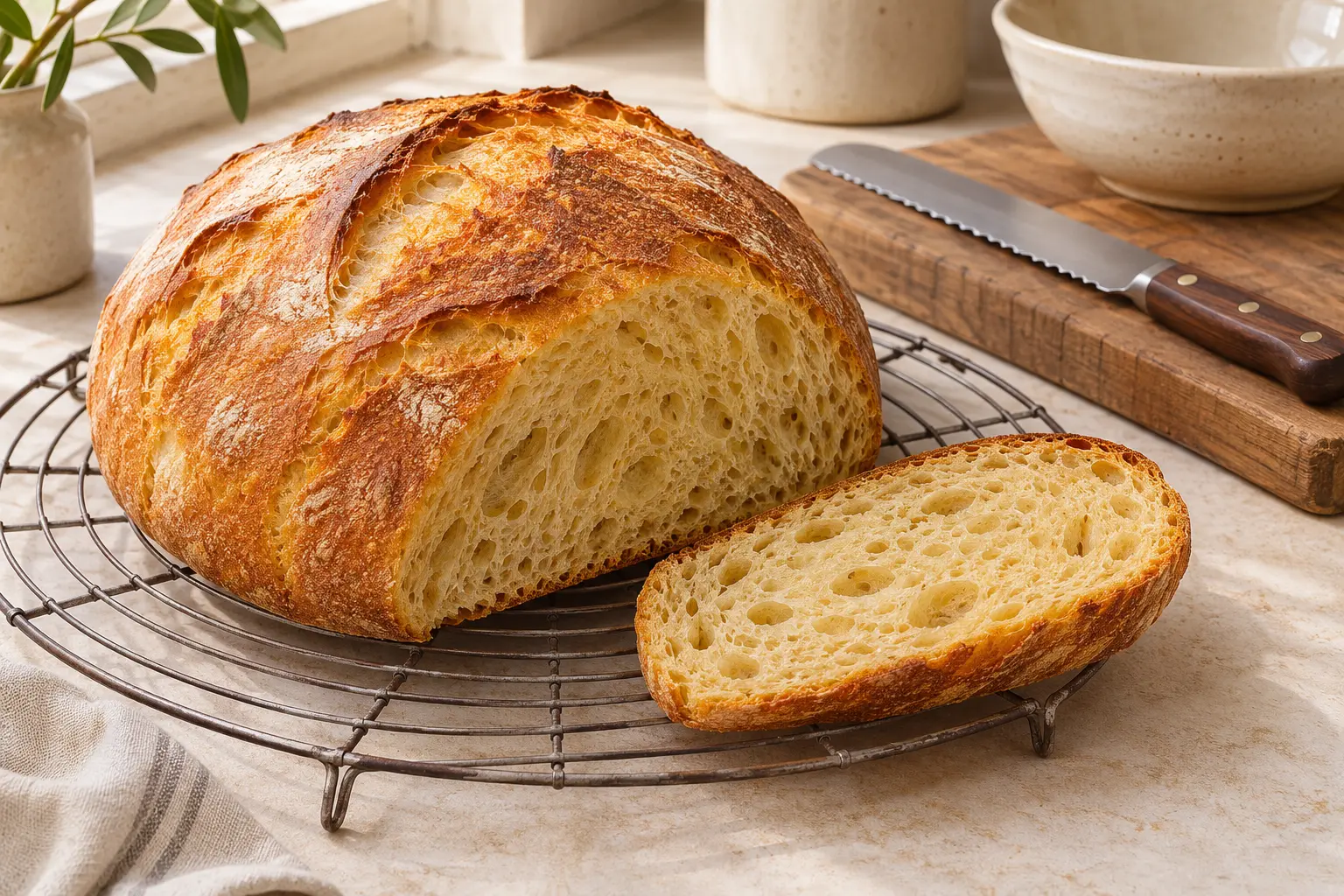
The examples teach the calculation. To bake a loaf, choose a full recipe with measured flour, water, salt and yeast and a ripening schedule. For Ciabatta Bread, follow its formula on the first bake. Record how much flour and water came from each stage so you can interpret the dough on the next bake.

IN PICTURES
From the baking notebook
FROM THE RECIPE BOX


