
On this page
Comfort food is not defined by meat, cheese, or butter. It is the food that makes a difficult day feel a little easier: a bubbling casserole, a bowl of creamy pasta, something crisp to dip into a savoury sauce, or a warm biscuit with dinner. Vegan comfort food can deliver those familiar textures and flavours, but success depends on more than swapping one ingredient and hoping for the best. A satisfying plant-based dish needs thoughtful seasoning, enough richness, contrasting textures, and ingredients that suit the cooking method.
This guide brings together ten recipes from What’s Baking? that can form the heart of a comforting plant-based menu. The recipes include familiar favourites such as shepherd’s pie and macaroni, satisfying lentil dishes, savoury biscuits, hearty vegetables, and a few sweet endings. We have checked the published ingredient lists rather than assuming that a vegetarian-sounding title is vegan. Where a recipe includes optional toppings, choose plant-based versions and read packaging carefully.
You will also learn the techniques behind better meatless comfort food: how to brown mushrooms instead of steaming them, keep creamy sauces smooth, improve the texture of lentil fillings, build flavour without relying on cheese, and prepare leftovers that remain worth eating. Whether you are vegan, cooking for a mixed household, or simply planning a meatless night, start with one familiar dish and make it well.
What makes comfort food satisfying without animal products?
The most successful comforting dishes balance body, savoury depth, fat, acidity, and texture. Think about a conventional shepherd’s pie: its appeal comes from the rich filling, soft potato topping, golden edges, and warm herbs—not solely from the type of protein underneath. Lentils and mushrooms can provide substance, while vegetable stock, tomato paste, onions, and aromatics add depth. A small amount of acidity at the end can keep the dish from tasting flat.
Likewise, macaroni and cheese is as much about a glossy sauce that clings to pasta as it is about a dairy flavour. A plant-based version can use blended vegetables, cashews, nutritional yeast, miso, and seasonings to create creaminess and a savoury finish. It will have its own flavour rather than reproduce conventional cheddar exactly, and that is fine. A convincing result is one that tastes good on its own terms.
It helps to think in layers. Start with something substantial: lentils, beans, tofu, mushrooms, potatoes, pasta, or grains. Add aromatic foundations such as onion and garlic. Cook ingredients to develop flavour instead of simply warming them. Finish with a contrast—crunchy breadcrumbs over soft pasta, a crisp biscuit beside a stew, fresh herbs over potatoes, or a sharp squeeze of lemon beside a rich sauce.
Ten comforting recipes to make from What’s Baking?
The links below lead to published recipes whose listed core ingredients are plant-based. As always, check labels on packaged foods, including chocolate, bread, stock, miso, breadcrumbs, and Worcestershire sauce. Different brands can contain ingredients that are not vegan.
1. Vegan shepherd’s pie for a hearty family dinner
A generous shepherd’s-style pie is an excellent place to begin because it combines several comforting elements in one baking dish. The What’s Baking? version pairs lentils, mushrooms, carrots, celery, onion, peas, tomato paste, herbs, and vegetable stock with a mashed potato topping enriched with olive oil and plant milk. It is filling and familiar without depending on a meat analogue.

For a better filling, cook the onions and mushrooms until moisture has evaporated and their aroma turns savoury. Tomato paste tastes rounder when warmed briefly with the aromatics before liquid goes in. Lentils should be tender but not completely dissolved; some shape gives the filling a pleasant bite. The filling also needs to be thick enough to support the potato topping. If it is watery, continue simmering rather than rushing the assembly.
For the potatoes, use an unsweetened plant milk and mash until smooth without overworking them into a gluey paste. Spread the topping evenly and rough up the surface with a fork so it develops attractive ridges. This is a useful make-ahead dinner: prepare the components, cool safely, assemble, and bake when needed. When reheating, heat the centre thoroughly rather than relying on the browned edges as proof that the filling is hot.
2. Vegan macaroni and cheese with a creamy vegetable sauce
This published version uses macaroni and a sauce built from cashews, squash or sweet potato, carrots, nutritional yeast, plant milk, seasonings, and other flavour builders. The cashews need the soaking or boiling preparation described in the recipe; skipping that step can leave an otherwise rich sauce gritty. Blending fully is important, particularly if you want a sauce that coats each noodle smoothly.

Cook the pasta to the degree recommended in the recipe, taking into account whether it will be baked again. Pasta continues absorbing liquid as it sits, so a leftover portion may need a splash of unsweetened plant milk to restore its creamy consistency. Avoid repeatedly blasting it over high heat: gentle, even reheating is kinder to both pasta and sauce.
A crispy breadcrumb topping makes this dish more exciting. Contrast is key: creamy pasta underneath, toasty edges above. Add steamed broccoli or peas on the side if you want more vegetables, but do not describe the sauce as nutritionally complete on its own. For a mixed household, offer pepper, chilli flakes, herbs, or extra savoury seasoning at the table.
3. Lentil and mushroom vegan meatballs
These meatballs use brown lentils, mushrooms, onion, garlic, oats, breadcrumbs, tomato paste, flaxseed, and herbs. Rather than trying to make legumes taste exactly like meat, this approach uses their natural qualities: lentils hold their shape, mushrooms contribute savouriness, and grains help bind the mixture. The result can be delicious with tomato sauce and pasta or tucked into a sandwich.
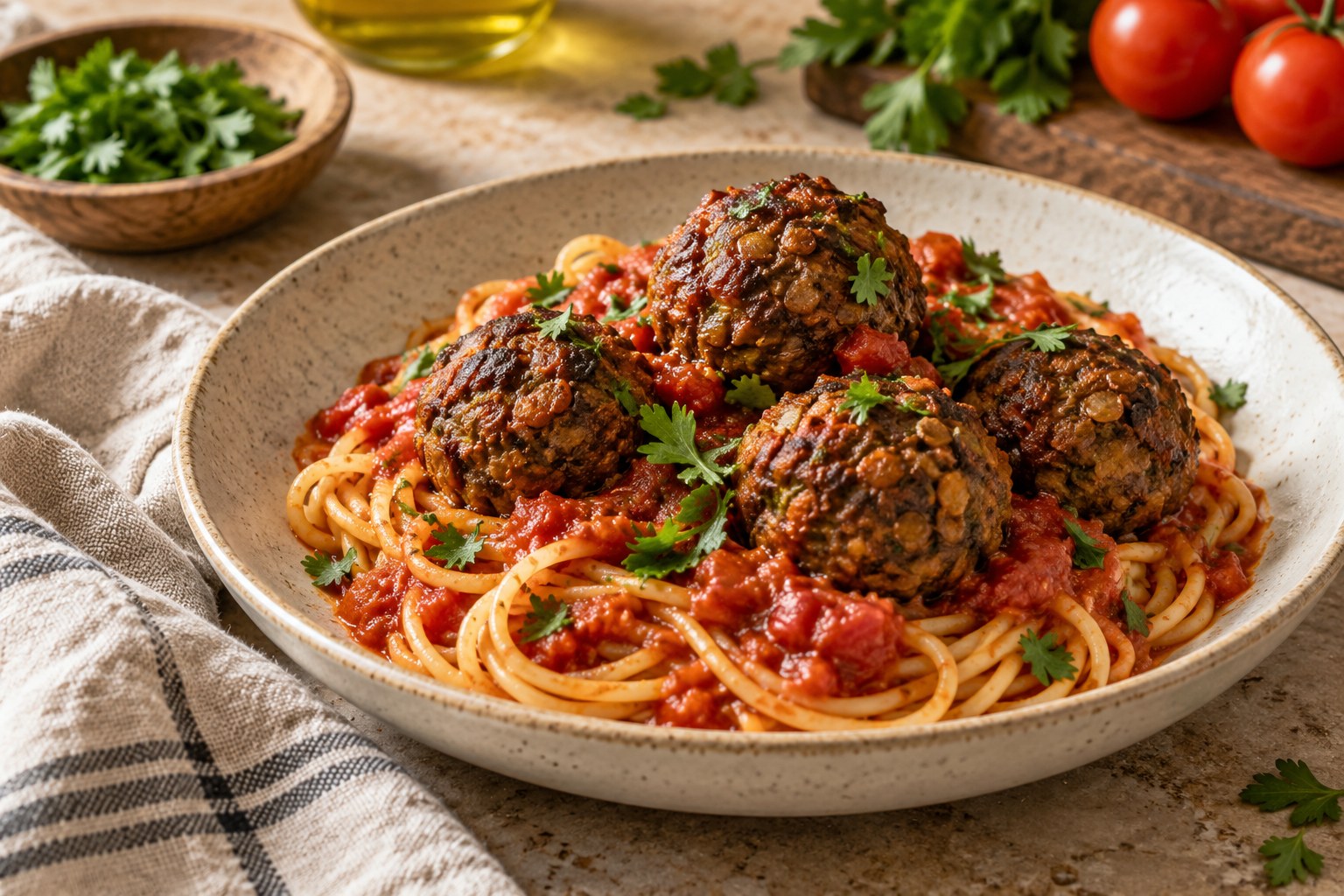
Moisture management determines the texture. Mushrooms release a surprising amount of water when heated. Cook them until their excess moisture has reduced before combining them with the other ingredients. The lentils should be cooked but well drained. If the mixture feels wet, allow it to rest so the oats and breadcrumbs can absorb some moisture before shaping. If too dry, add liquid cautiously, a little at a time.
Avoid processing everything into an entirely smooth paste; retaining small pieces can make the meatballs more appealing. Bake until set and browned according to the recipe, then serve with warm sauce. For a comfort-food plate, combine them with spaghetti, a leafy side salad, and a few pieces of garlic bread made without dairy butter.
4. Vegan cheesy garlic biscuits beside soup or casserole
Make Vegan Cheesy Garlic Biscuits.
Warm biscuits are comfort food in their simplest form. The recipe uses flour, baking powder, cold vegan butter, vegan cheddar-style cheese, unsweetened plant milk, herbs, garlic, and a lemon or vinegar addition. Keeping the fat cold helps preserve a tender, flaky character. Handle the dough gently; enthusiastic kneading develops gluten and can make the biscuits tougher than intended.

The plant-based cheese is one ingredient to choose carefully. Some brands melt and brown well while others stay in distinct shreds. The recipe’s baking time and the specific product you use will influence the outcome, so watch for golden tops and cooked centres instead of focusing only on the clock. Brush with the recipe’s garlic topping while warm for extra aroma.
Serve biscuits with shepherd’s pie, bean soup, a vegetable stew, or a bowl of chilli. For a weekday meal, measure dry ingredients in advance and keep cold ingredients refrigerated until mixing. Biscuits are particularly enjoyable fresh, but leftover portions can be warmed gently and served beside another meal.
5. Crispy chilli mushrooms for a bold savoury treat
Make Copycat Wagamama Crispy Chilli Mushrooms.
Mushrooms develop a satisfying bite when treated carefully. This recipe coats them with cornflour and seasoning, then uses a sweet-chilli, soy, vinegar, garlic, ginger, and sesame-based sauce. Its published ingredient list is plant-based, though the sauces should be checked for your dietary requirements.

Dry the mushrooms before coating so that the starch can adhere and crisp rather than turn pasty. Cook them in manageable batches. If the pan is crowded, the mushrooms release moisture and steam one another. Add the sauce close to serving time because any crisp coating gradually softens once wet. That trade-off does not mean the dish has failed; it simply changes from crisp bites to saucy mushrooms.
These are excellent with steamed rice, cucumber, and scallions for a balanced plate. Keep the chillies modest if serving people who are sensitive to heat. The dish is best eaten promptly, so prepare the aromatics and sauce ahead but finish frying or crisping near dinner time.
6. Air fryer sweet potato cubes with golden edges
Make Air Fryer Sweet Potato Cubes.
Sweet potatoes are naturally comforting: tender inside, subtly sweet, and adaptable to savoury seasonings. This recipe uses olive oil, paprika, garlic, herbs, and a little heat if desired. The key is cutting the potatoes into even pieces so the centres finish cooking at roughly the same time.

Crowded air fryer baskets produce softer results because hot air cannot reach every surface. Cook in batches as needed and shake the basket partway through. Aim for browned edges and tender centres; exact minutes vary with air fryer design and the size of the cubes. The listed recipe uses oil, so do not label it oil-free simply because it uses an air fryer.
Serve these cubes beside vegan meatballs or add them to a grain bowl with beans and green vegetables. They can be made ahead for convenience, although their exterior will soften in the refrigerator. Reheat in an air fryer or oven until thoroughly hot when you want to bring back some of the browned texture.
7. Air fryer cauliflower with a warm spice crust
Cauliflower becomes much more interesting when its edges develop colour. The published recipe combines florets with olive oil, cornflour, paprika, cumin, and other seasonings before air frying. The starch helps form a delicate crust. Dry florets and space between the pieces matter more than trying to add huge amounts of coating.

Cauliflower can be a centrepiece for a casual plate when paired with hummus, warm flatbread, cooked grains, and a substantial protein such as tofu or beans. Alternatively, serve it beside macaroni and cheese to bring spice and texture to the table. Add fresh herbs after cooking for a bright contrast to the roasted flavour.
For leftovers, store the cauliflower separately from wet dips. Refrigeration softens the crust; a short spell of reheating helps refresh it. Use appliance-safe temperatures and monitor pieces closely, since smaller florets can brown faster than large ones.
8. Air fryer tofu with a crisp coating
Tofu is especially useful in plant-based comfort food because it accepts seasoning and can become wonderfully crisp outside while remaining tender within. The linked recipe uses extra-firm tofu, cornflour, a little olive oil, garlic, onion powder, paprika, salt, and pepper. Pressing out excess moisture makes a noticeable difference to the result.

Cut the tofu into roughly equal cubes, coat evenly, and resist overfilling the basket. Shake carefully partway through cooking so pieces brown on more than one side. When ready, add them to rice bowls, tuck into wraps, or serve over pasta with a savoury sauce. Keep sauce separate until just before eating if crispness matters.
A useful weeknight shortcut is to press and season tofu ahead, then air fry it shortly before dinner. This reduces active preparation while preserving the freshly cooked texture. A soy-free household will need a different main protein; tofu itself is not suitable for people avoiding soy.
9. Crispy smashed potatoes with garlic and rosemary
Make 15-Minute Crispy Smashed Potatoes.
The published recipe lists baby potatoes, olive oil, garlic, rosemary, salt, pepper, and parsley—no butter or dairy in its ingredient list. A crispy potato side is one of the easiest ways to give a plant-based meal a special-occasion feeling. Tender potatoes need to be cooked sufficiently before smashing, then browned so the flattened edges become crisp.

The title mentions fifteen minutes, but preparation such as boiling potatoes may take additional time depending on the method used. Treat the recipe instructions and doneness cues as more useful than a promise that every kitchen will finish in exactly that number of minutes.
Pair the potatoes with chilli mushrooms or lentil meatballs, and add something fresh and acidic: a lemony salad, pickled vegetables, or a tangy plant-based dip. These potatoes are most satisfying fresh. If making them ahead, keep the toppings separate and re-crisp before serving.
10. A sweet finish: Vegan chocolate avocado mousse
Make Vegan Chocolate Avocado Mousse.
Comfort food includes dessert. The published mousse uses ripe avocado, cocoa, maple syrup, coconut milk, vanilla, salt, and coconut oil to make a rich plant-based chocolate dessert. Its texture comes from blending thoroughly; insufficiently blended avocado leaves small pieces and can make the result feel less like a mousse.
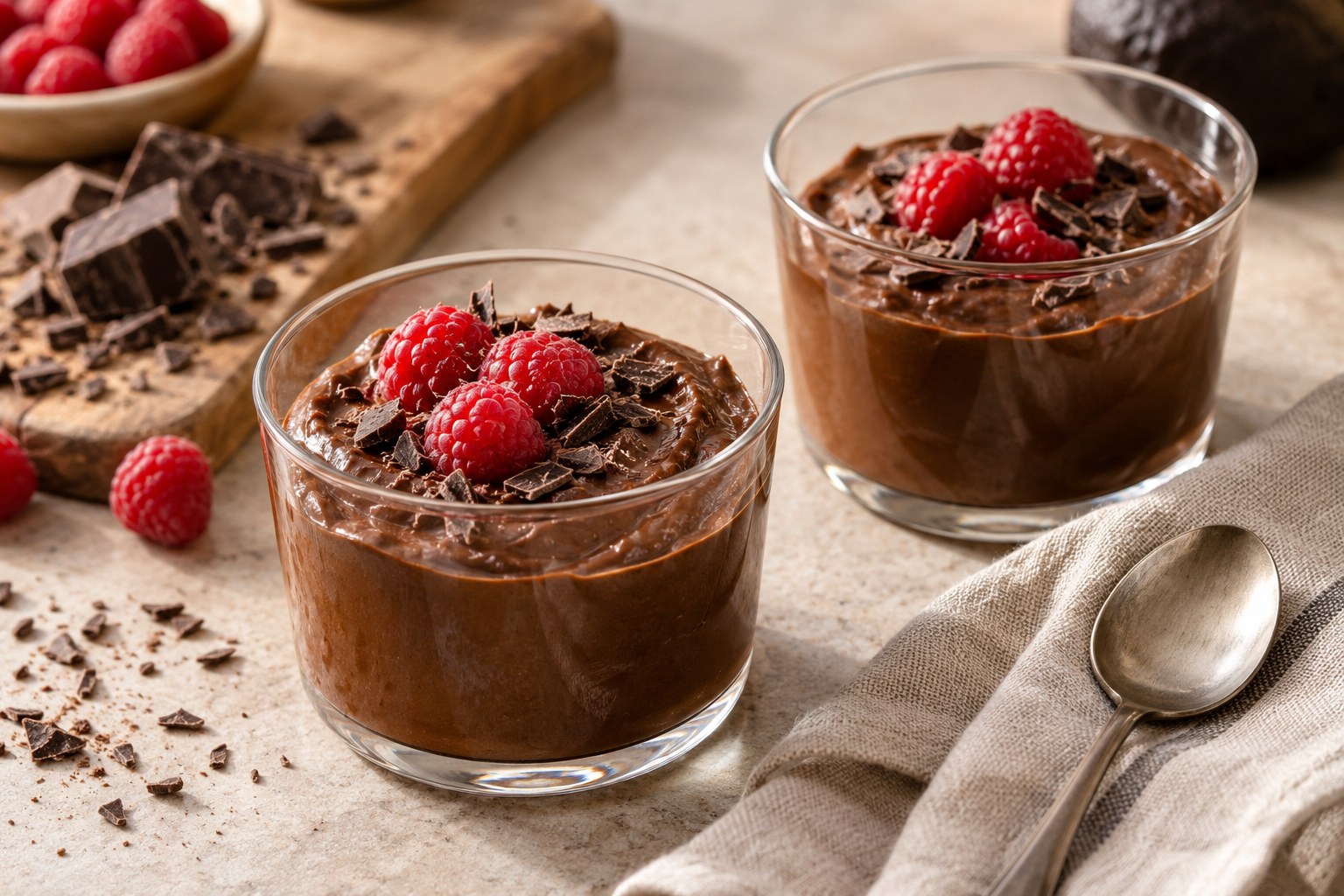
Use avocado that is ripe but not spoiled, and adjust the balance of cocoa and sweetness in line with the recipe. Chill the mousse if you prefer a firmer spoonable consistency. Fresh berries or a few chocolate shavings make a simple finish without turning dessert into a long project. Check chocolate labels when topping to keep the entire bowl dairy-free.
Do not call this a five-minute recipe without qualification: the published recipe lists preparation time, and chilling may add additional time before serving. Make it ahead for a relaxed dinner party, cover it well, and keep refrigerated until serving.
How to build a complete vegan comfort-food plate
Comfort food can be rich and satisfying while still including balance. An easy pattern is one substantial protein or legume, one starch or grain, one or more vegetables, and a sauce or finishing element. For example, serve lentil meatballs over pasta with roasted cauliflower and a simple tomato sauce. Another option is shepherd’s pie with a crisp green salad. Crispy tofu can join rice, sweet potatoes, and sautéed greens with a lemony dressing.
You do not have to force every dish into one plate. A bowl of pasta may be enough for a smaller meal; a larger dinner could include vegetable sides or fruit afterward. Aim for variety over the course of the day or week, and account for individual nutrition needs rather than describing a single dish as perfectly balanced.
If serving people who are not vegan, put optional additions on the side rather than changing the base meal. Extra hot sauce, fresh herbs, toasted seeds, and citrus wedges can help everyone adjust flavours. Keep the shared dish genuinely plant-based and use separate utensils for any non-vegan toppings that other diners choose.
The science of savouriness: Five ways to build deep flavour
Brown mushrooms and onions properly
Water is the enemy of deep browning. When a pan is overloaded, ingredients release moisture and simmer instead of developing colour. Give onions time to soften and become golden. Spread mushrooms out in batches and cook until their liquid reduces and their surfaces darken. Those browned bits are a foundation for gravies, sauces, and hearty fillings.

Concentrate tomato paste
Tomato paste can taste raw and sharp when simply stirred into a sauce at the end. Cook it briefly with oil and aromatics before adding broth. It will deepen in colour and contribute richness. This technique is particularly useful for lentil fillings, stews, and tomato-based sauces.
Use savoury ingredients in moderation
Miso, soy sauce, nutritional yeast, roasted mushrooms, and tomato products can add layers of umami. They also bring salt and distinctive flavours. Introduce them gradually, taste, and consider allergies such as soy or wheat. More of a savoury ingredient is not always better; strong amounts can overwhelm subtler vegetables.
Balance richness with brightness
Comfort food can feel heavy when every part is creamy or fatty. A little lemon juice, vinegar, tomato acidity, or fresh herb dressing brings contrast. Add acid near the end, taste, and adjust as needed. The goal is not to make the food sour, but to clarify flavours already present.
Give soft dishes a crisp finishing touch
A casserole with a soft filling becomes more interesting with a lightly browned top. Toasted breadcrumbs, pumpkin seeds, chopped herbs, or crisp edges create variety in every bite. Keep crunchy elements separate until serving whenever possible so they stay crisp rather than absorbing steam.
Texture troubleshooting: Why plant-based comfort food sometimes disappoints
The lentil filling tastes watery
First check whether the lentils were properly drained and whether the vegetables released excess moisture. Continue simmering uncovered to reduce the filling. If it needs more body, a small amount of a suitable thickener may help, but add it gradually. The flavour will also become concentrated as the mixture reduces, so taste before adding salt.
Vegan mac and cheese becomes grainy
Cashews may need longer soaking or more thorough blending, depending on the appliance. Use the preparation method the recipe specifies. Some plant milks separate or taste unusually sweet in savoury sauces; choose an unsweetened product. Keep heat moderate when reheating and loosen thick sauce with small splashes of liquid.
Vegan meatballs crumble
A mixture that is too dry or lacks sufficient binding is difficult to shape. Lentils should be cooked properly, the flaxseed mixture given time to hydrate, and the oats or crumbs allowed to absorb moisture. Do not over-process until everything loses texture. If the mixture remains loose, chill briefly before forming pieces and handle carefully during cooking.
Tofu turns soggy
Pressing tofu reduces excess liquid. A coating of starch can help crisp the surface, but crowded air fryer baskets and immediate contact with a wet sauce soften it. Keep a little space between pieces and add sauce after air frying. Expect leftovers to be softer and reheat them separately from their sauce when practical.
Biscuits are tough or heavy
Overworking the dough can develop too much gluten, while warm fat may compromise flakiness. Keep the vegan butter chilled, mix only until the dough comes together, and check that baking powder is fresh. Use the thickness and oven instructions of the particular recipe rather than trying to rescue a heavy biscuit with excessive additional baking time.
Vegetables never become crisp
If vegetables are wet or tightly packed, they steam. Dry them thoroughly, cut even pieces, and cook in batches when necessary. Some vegetables naturally remain softer than others. A little oil can aid browning, but it should be used according to the recipe and your preferences, not assumed to be absent because an air fryer is involved.
A practical three-day comfort-food meal plan
This plan shows how a few intentional components can make several satisfying meals without serving exactly the same plate every evening. Follow individual recipes for quantities and cooking methods, and adjust portions to the number of diners.
Day one: A classic family dinner
Make the vegan shepherd’s pie and serve with a simple green salad. Prepare the filling and potato topping earlier in the day if that reduces dinner-time stress. Bake until thoroughly hot, let the pie settle briefly, then serve. Refrigerate leftovers promptly in shallow containers for efficient cooling rather than leaving the baking dish on the counter for hours.
Day two: A comforting pasta night
Cook the vegan macaroni and cheese. Serve with air fryer cauliflower and fresh herbs. The cauliflower can cook while the pasta sauce is prepared, provided your equipment and schedule make that safe and practical. If there are leftovers, store pasta and crisp vegetables separately so the cauliflower does not absorb extra moisture.
Day three: A flexible bowl or plate
Make air fryer tofu and sweet potato cubes, then combine them with cooked rice, greens, and a bright lemon or tahini-based dressing. Keep the dressing in a separate container for packed lunches. For people who prefer milder food, put the dressing on the side. Finish with the chocolate avocado mousse if you want an easy make-ahead dessert.
How to prep ahead without sacrificing quality
Batch preparation is useful when it reduces work rather than creating days of tired leftovers. You might wash and chop vegetables, cook a pot of lentils, mix a savoury dressing, and prepare the parts of a casserole in advance. Store different textures in separate containers. Soft foods like lentil filling can be assembled ahead; crisp foods are usually best finished near serving time.
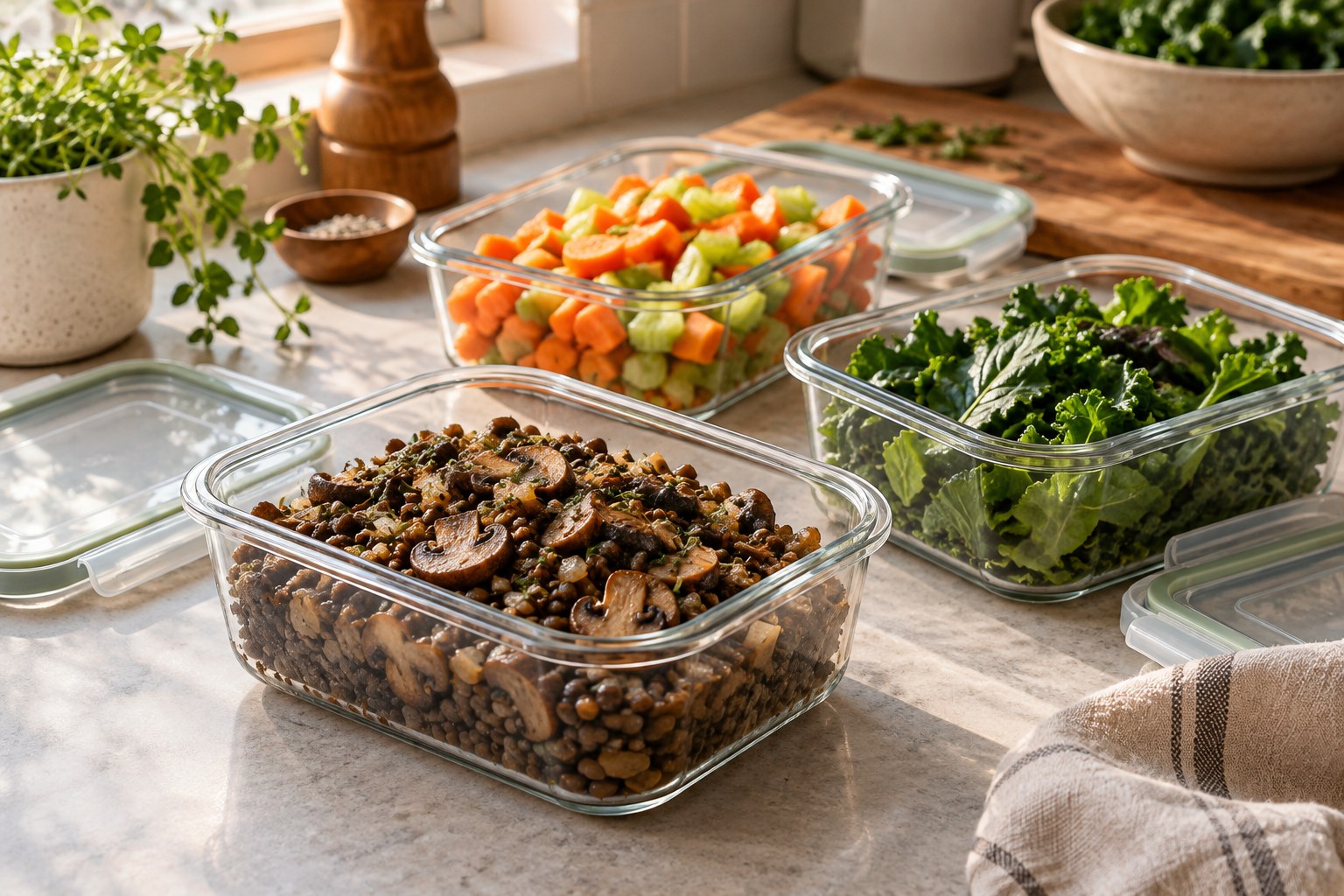
Label containers with their contents and preparation date. Keep cooked foods chilled promptly, and do not leave perishable ingredients out for extended periods. The temperature and timing of storage matter more than how good the food looks or smells. Follow local food-safety guidance and use a food thermometer when reheating dishes for which temperature is important.
A helpful habit is to make one freezer-friendly main and one fresh side rather than five fully assembled meals. Shepherd’s pie filling can be a strong starting point for this approach, while raw salad greens and crunchy garnishes are better added later. If you freeze a complete dish, cool it appropriately, package it in a freezer-suitable container, and thaw and reheat using safe methods.
Shopping list for a comforting plant-based week
A well-chosen pantry makes these meals easier. Keep dry lentils, canned beans, pasta, rice, oats, breadcrumbs, nutritional yeast, vegetable stock, and the spices your household enjoys. Refrigerated staples may include tofu, plant milk, and vegan butter; choose unsweetened versions for savoury cooking unless the recipe specifies otherwise.
Fresh ingredients can be adjusted to the season and local prices. Potatoes, carrots, onions, mushrooms, garlic, cauliflower, leafy greens, lemons, and herbs appear in many comforting plant-based meals. Frozen peas or spinach are convenient when produce is expensive or unavailable. You do not need exotic ingredients to make a hearty dinner.
Check labels carefully when shopping for plant-based cheese, puff pastry, stock, sauces, and chocolate. A vegetarian product may contain dairy or eggs. Similarly, a food labelled dairy-free may not be free of other allergens. If preparing meals for someone with allergies, use the product’s allergen statement and follow their medical guidance.
Serving comforting vegan meals to mixed households
A vegan dinner can be welcoming without asking everyone to share identical preferences. Choose a recognisable format—pasta, pie, a grain bowl, or biscuits with soup—and offer flexible finishing options. Children or adults who prefer separate foods can have components placed side by side. Diners who enjoy stronger seasoning can add chilli or pepper at the table.
Avoid promising that meat-eaters will never notice a difference. Plant-based foods have their own flavours and textures, and a fair invitation is simply to try something well prepared. Describe the dish accurately: lentil and mushroom meatballs, creamy vegetable-based macaroni, or crispy chilli mushrooms. Honesty about ingredients helps people make safe and informed choices.
If an occasion feels formal, use small details to make the plate special. Put warm biscuits in a lined basket, garnish shepherd’s pie with herbs, serve crunchy sides in shallow bowls, and offer dessert in individual glasses. Good presentation does not require expensive equipment or complicated recipes.
Frequently asked questions about vegan comfort food
Can vegan food really be filling?
Yes. Beans, lentils, tofu, grains, potatoes, nuts, and seeds can all contribute substance, while different cooking techniques create satisfying textures. A bowl of vegetables alone may be less filling than a meal that also includes protein-rich foods and an appropriate source of carbohydrate and fat. Needs vary by person, so build a meal that suits the diners.
Are all vegetarian recipes vegan?
No. Vegetarian dishes often contain eggs, dairy, honey, or other animal-derived ingredients. This distinction matters especially with pastries, cheese-filled snacks, pizza, and sauces. Several recipes once linked from the shorter version of this article contained butter, eggs, meat, or cheese; the updated list prioritises published plant-based options instead.
Is vegan mac and cheese the same as dairy mac and cheese?
Not exactly. Vegetable- and cashew-based sauces can be creamy and savoury, but their flavour depends on the ingredients used. Rather than comparing each spoonful to a particular cheddar recipe, judge whether the sauce is smooth, balanced, and delicious. Different vegan cheeses and nutritional yeast also produce different results.
What is the easiest vegan comfort-food recipe for beginners?
Start with a familiar technique. Air fryer sweet potatoes or cauliflower are straightforward if you already use an air fryer. For a meal with more components, try lentil meatballs with pasta. Shepherd’s pie takes more preparation but is forgiving when the filling and topping are cooked carefully.
Can I make comfort food without soy or nuts?
Many options do not require either ingredient, but the answer depends on the specific recipe and packaged products. Shepherd’s pie may be made with a suitable soy-free stock and seasoning, while the listed vegan macaroni sauce contains cashews. Check every recipe and label rather than assuming a swap is automatically safe or equivalent.
How can I stop a casserole from tasting bland?
Develop flavour in stages: sauté onions, brown mushrooms, cook tomato paste briefly, season the filling, and taste before assembling. Herbs and vegetable stock add depth; a touch of acidity can brighten the finished dish. Salt to taste, accounting for the sodium already in sauces, stock, and packaged ingredients.
Is air-fried food always oil-free?
No. An air fryer circulates hot air, but many recipes still use olive oil or cooking spray to improve browning or texture. The linked tofu, sweet potato, and cauliflower recipes all include oil. Use the individual ingredients list to make dietary decisions.
What reheats best?
Moist dishes such as lentil filling and casseroles often reheat better than previously crisp vegetables or fried coatings. Store sauces separately where possible. Reheat food thoroughly and follow safe storage limits; do not keep cooked foods indefinitely because they look or smell acceptable.
Can I freeze vegan comfort food?
Some dishes freeze better than others. Lentil fillings, certain cooked sauces, and well-packaged casseroles are practical candidates. Fresh lettuce, crisp toppings, and delicate fried coatings often change texture after freezing. Use suitable packaging, label dates, and thaw foods safely before reheating.
How do I make a vegan dinner feel special for guests?
Focus on an inviting centrepiece and two complementary textures. A shepherd’s pie with bright salad and warm biscuits feels complete. Finish with chocolate avocado mousse served in individual glasses. The thoughtful combination matters more than a long list of complicated dishes.
Final thoughts: Familiar comfort, thoughtfully made
Vegan comfort food does not need to imitate every detail of a meat-and-dairy dinner. What makes it memorable is careful cooking: deeply browned mushrooms, tender lentils, creamy pasta, crisp potatoes, freshly baked biscuits, and sauces with enough seasoning and brightness. Those elements create the warmth people are looking for when they ask for comfort food.
Start with one dish that sounds genuinely appealing. Follow the verified Vegan Shepherd’s Pie, try Vegan Mac and Cheese, or build a meal around Vegan Meatballs. Add a vegetable side, taste carefully, and enjoy the result for what it is: a satisfying plant-based meal made with care.
IN PICTURES
From the baking notebook
FROM THE RECIPE BOX


