On this page
When family or friends stay overnight, breakfast can feel like a second round of hosting before anyone has had coffee. You want something welcoming and homemade, but you probably don't want to wake up early to mix three batters, peel potatoes and hunt for a serving tray. A little preparation the previous afternoon can turn the morning into a relaxed occasion.
This make-ahead brunch plan for overnight guests focuses on the realities of a shared house: different wake-up times, limited kitchen space, children or early risers, and the need for food that doesn't demand constant attention. Choose one of the menus below and build the rest around what your guests enjoy.
Ask Two Useful Questions Before Shopping
First, when will everyone realistically eat? A leisurely 10 a.m. brunch needs a different plan from breakfast for guests leaving at 7 a.m. Second, are there dietary restrictions or foods the guests don't eat? Confirm allergies and preferences rather than guessing.
Then count the number of people and how many servings each dish yields. Avoid doubling a casserole without checking pan and baking requirements; a deeper dish may take longer and cook less evenly.
Menu One: Cozy Sweet Brunch
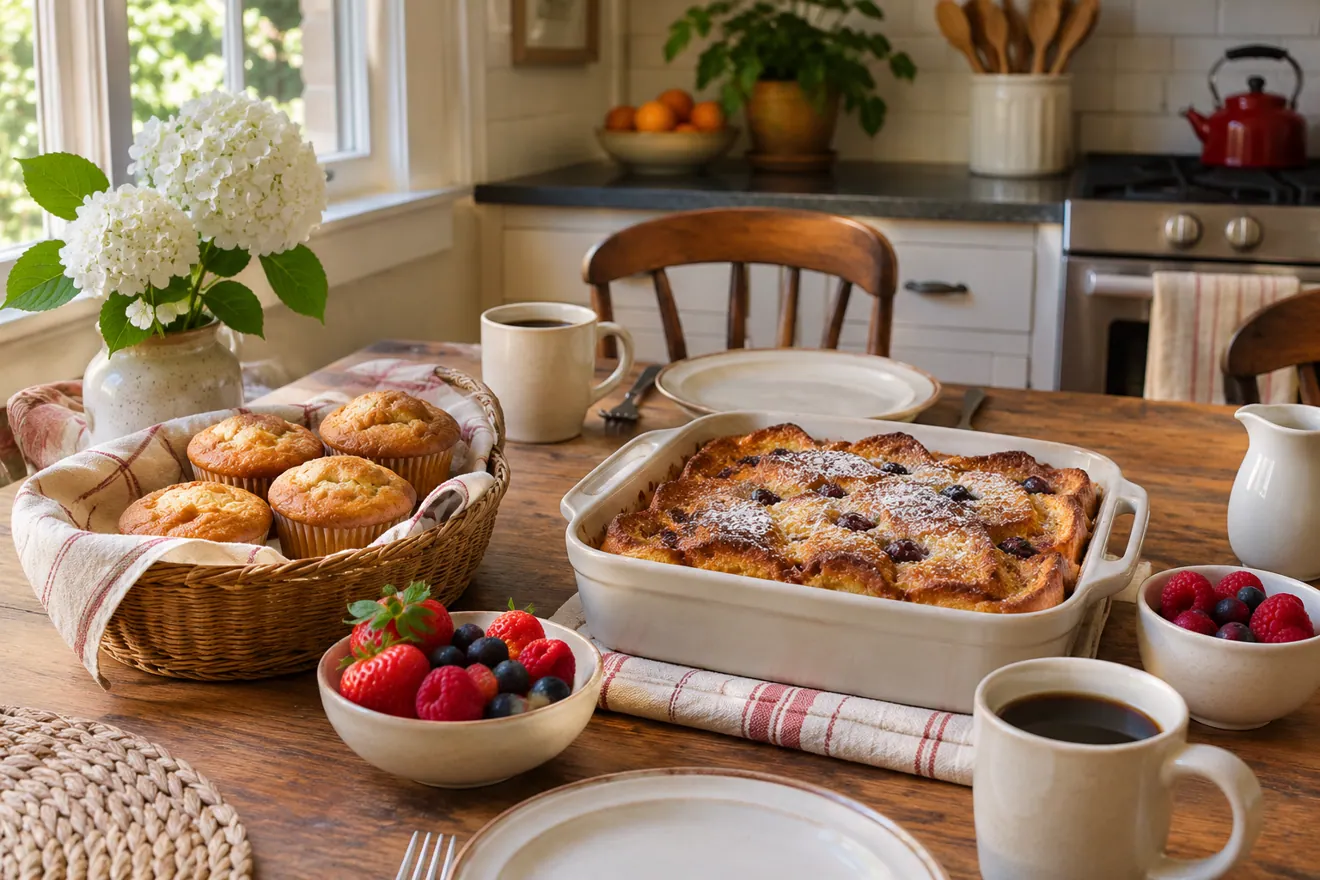
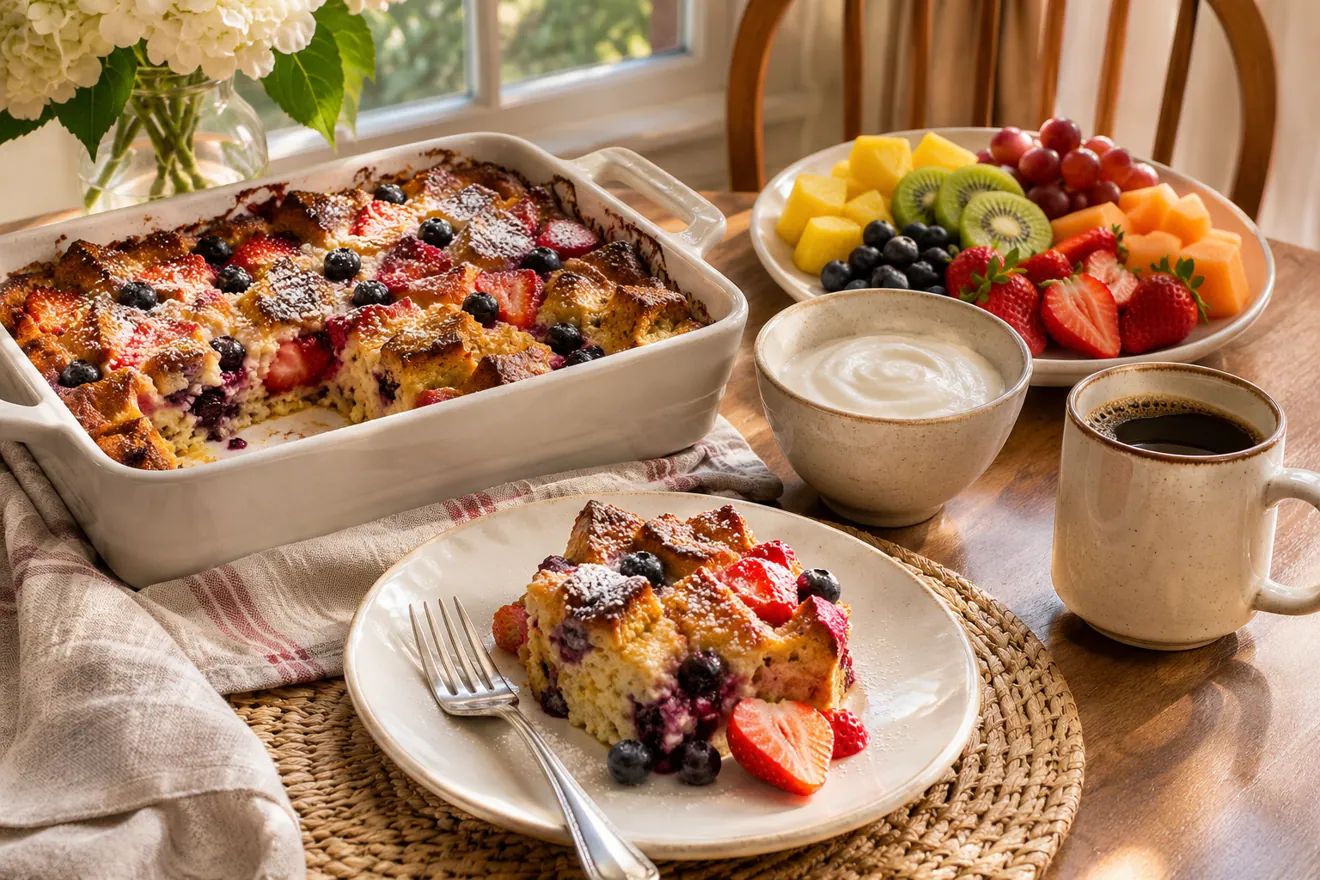
Make an overnight French toast casserole using a recipe specifically written for that method. Pair it with a large fruit platter, plain yogurt and coffee or tea. Guests can add maple syrup or another topping as they wish.
Prepare the casserole the evening before, refrigerate properly and bake as instructed in the morning. Fruit can be partly prepared ahead, but save fruits that brown or soften rapidly for the final stage.
The Vegan French Toast Casserole supports a covered overnight rest in the refrigerator. Choose an egg-free bread if the menu needs to be vegan, and start the bake early enough for its full cook and rest time.
Menu Two: Savoury and Satisfying
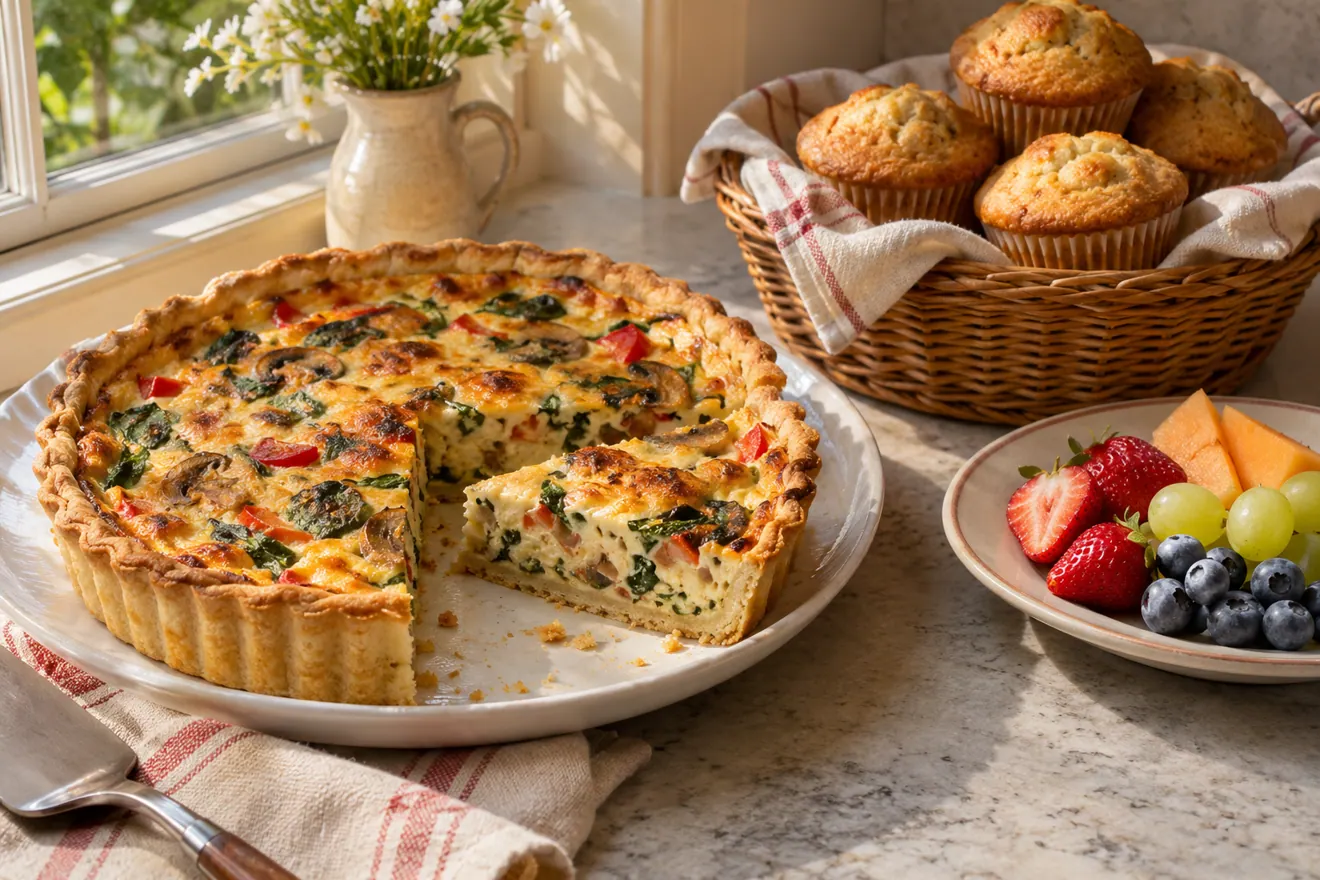
Choose a breakfast casserole or quiche with vegetables and cheese, plus a simple loaf or a basket of muffins. Add fruit to keep the table fresh. This works well when guests prefer a substantial savoury meal rather than something sweet.
For recipes containing eggs, dairy or cooked meats, handle and refrigerate ingredients correctly. Don't assemble a casserole ahead unless the recipe supports that storage and baking schedule.
If you want individual portions rather than one pie, Breakfast Egg Muffins are an alternative with directions for cooking, chilling and reheating.
Menu Three: A Low-Effort Self-Serve Breakfast
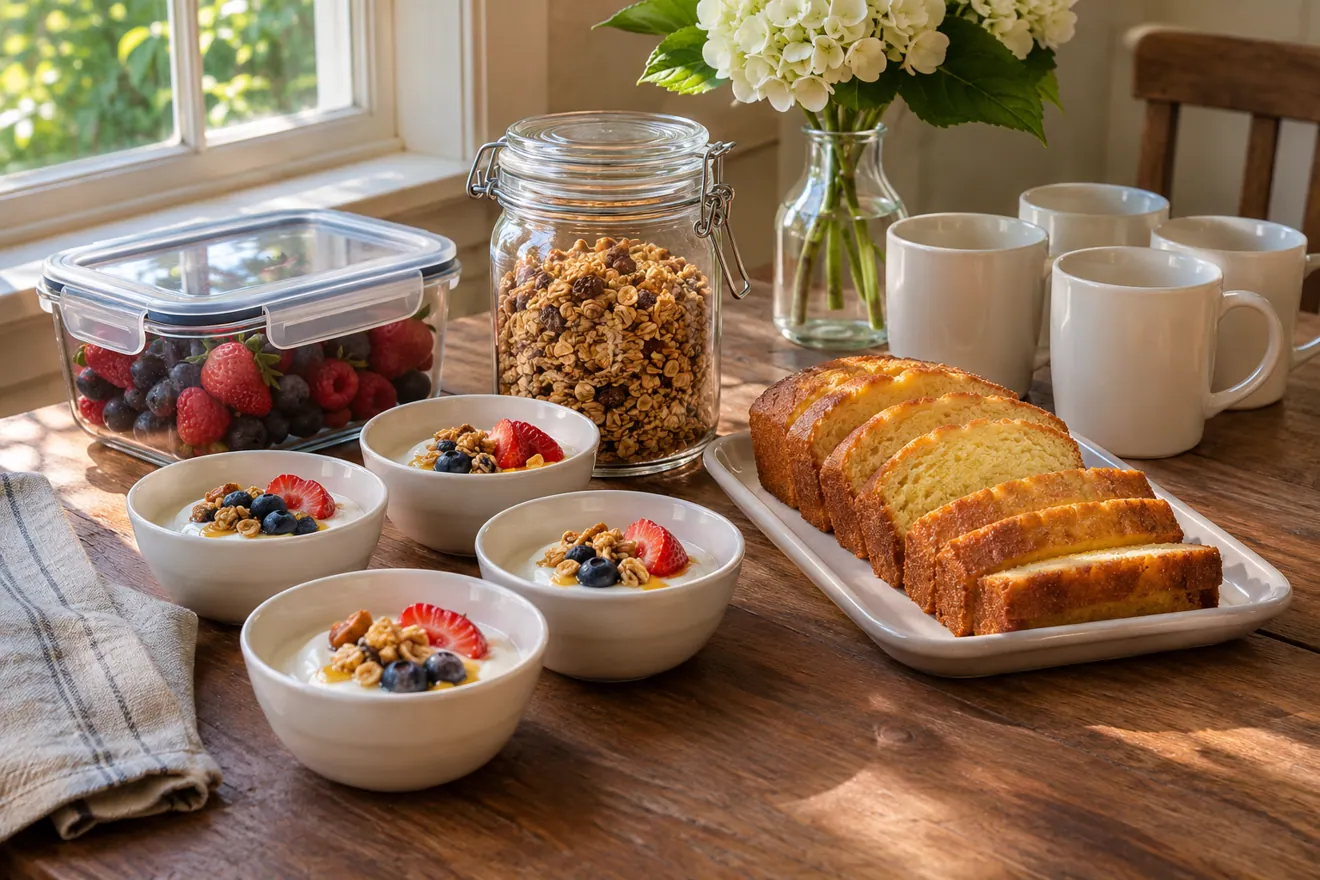
For guests who wake at different times, set up a yogurt and granola station with fruit, a sliced loaf and hot drinks. Store yogurt cold and put out manageable amounts so perishables don't sit for hours. Keep backup portions in the refrigerator.
This is particularly useful when you don't want everyone waiting for a single oven dish. You can still offer toasted bread or warmed muffins for anyone who wants something hot.
Set up the components from this Greek Yogurt Parfait and add the crunchy topping when people serve themselves.
Make Air Fryer Granola ahead if its nut and seed ingredients suit the group. Cool it fully and store it separately from yogurt.
Menu Four: Fresh Pastries, Prepared Ahead
For a freshly baked pastry option, try our basic scones. Their timing can help you organize the morning; do not assume the unbaked dough should be stored overnight unless the particular recipe supports it.
Use a scone or cinnamon-roll recipe that explicitly supports overnight chilling or freezing shaped dough. That allows you to mix and shape the dough earlier, then bake close to serving.
Choose only one pastry project so you can enjoy the morning. Follow any required proofing or thawing schedule; overnight yeast dough is not a universal substitution for same-day dough.
For basic scones that are mixed and baked the same day, prep the dry ingredients and serving dishes the night before. Keep dairy in the refrigerator and finish mixing in the morning.

Menu Five: A Kid-Friendly Family Brunch
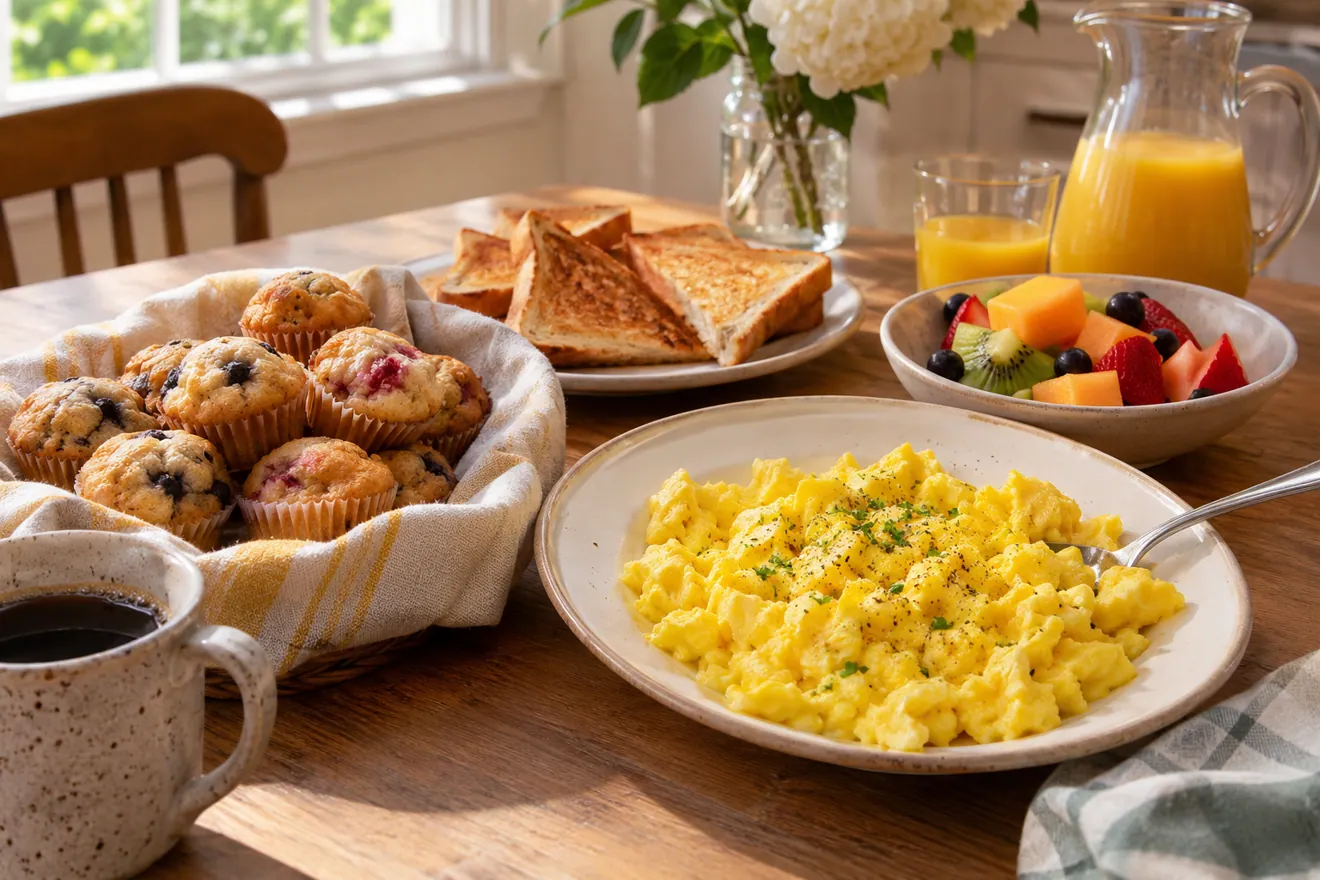
Offer mini muffins, sliced fruit, scrambled eggs prepared fresh in manageable batches and toast. Keep the menu familiar and easy for children to eat. Check allergies and age-appropriate food textures, particularly with whole nuts or small hard toppings.
You can bake muffins the day before and prepare tableware and fruit components ahead. Cook egg dishes safely just before serving.
Set out Mini Muffins baked the day before. Choose the fruit or vegetable variation based on the household and check ingredients for allergies.
The Afternoon-Before Checklist
Choose the menu, read every recipe fully and set aside any ingredients that need room-temperature preparation at the proper time. Shop or check pantry quantities. Decide which dishes need to be baked, chilled or simply assembled. Put serving utensils with the dishes they belong to.
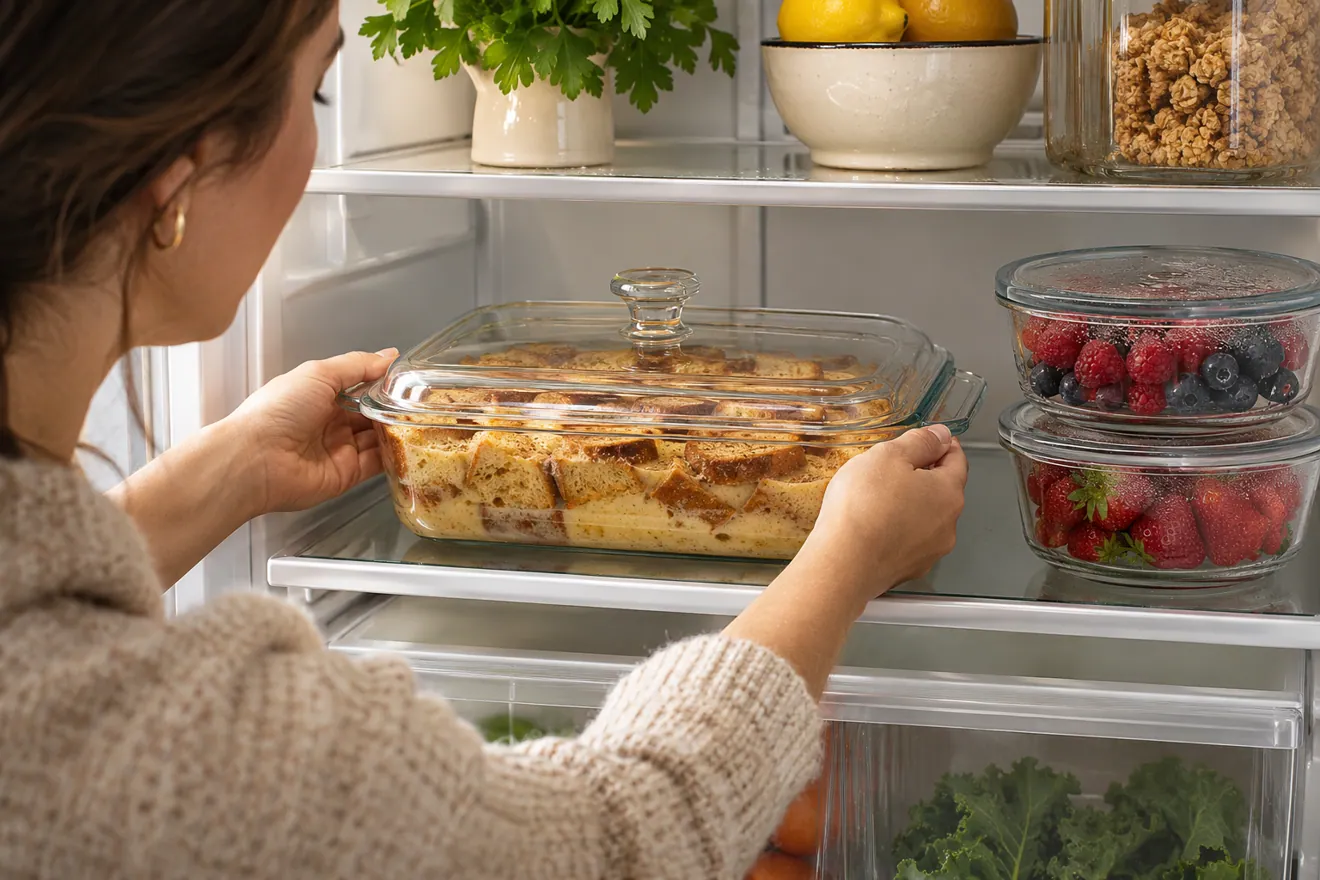
Clear a refrigerator shelf for overnight casseroles and yogurt. Make sure leftovers from dinner aren't occupying all the available space.
What to Do the Evening Before
Bake loaves, muffins or bars that have approved advance storage. Prepare any refrigerator-ready casserole according to its recipe. Measure dry ingredients for a morning bake if it helps, keeping them covered and labelled.
Set out plates, cups, napkins and a coffee station. Fill the kettle or coffee machine only as its instructions allow; don't leave perishable dairy sitting out overnight.
Leave one clear refrigerator shelf for the covered main and fruit. Put the intended baking dish and cook time on your prep list, and set the serving utensils out now. If your guests will eat in shifts, keep only the first few cold portions ready to bring out.
Morning Timeline for a 10 a.m. Brunch
Work backward from 10 a.m. using the cook, rest and preheat times in the recipe. For a casserole that bakes for 45 to 50 minutes and rests for 10, aim to get it in the oven by about 8:55 a.m. so you have a few minutes to check doneness and plate.
Set the table and start the drinks while it bakes. Arrange fruit and bring out only the first few chilled portions just before serving. For scones, leave a clear window to mix, shape and bake while the oven is available.
Make the Kitchen Work for Overnight Guests
Leave the coffee mugs where guests can find them, with milk and alternatives in the refrigerator. Make room for people who want to toast bread without standing in front of the oven. Put the main brunch food on one counter and drinks on another if possible.
If guests have different schedules, a cold self-serve base with one fresh item works better than a delicate plated breakfast that must be eaten immediately.
Set up one self-serve drinks station away from the oven. Leave clean plates and mugs there. Put one person in charge of hot dishes and let late risers know which items are ready to eat and which are still in the refrigerator.
Planning for Dietary Differences
Ask about vegetarian choices, dairy intolerance, gluten restrictions and allergies. One brunch menu does not automatically suit everyone. Keep ingredients and serving utensils separate where cross-contact is a concern, and avoid confidently describing a dish as allergen-free unless you can support that.
Offer a few simple foods with identifiable ingredients rather than creating an entirely separate complex menu at the last minute.
Portioning Without Waste
Count likely portions rather than making multiple full-sized casseroles. A large loaf and a tray of muffins may be redundant for a small group, especially if the main dish includes bread. For bigger groups, double recipes only when the pan and baking instructions support scaling.
Keep extras safely stored and bring them out if needed instead of crowding the table immediately.
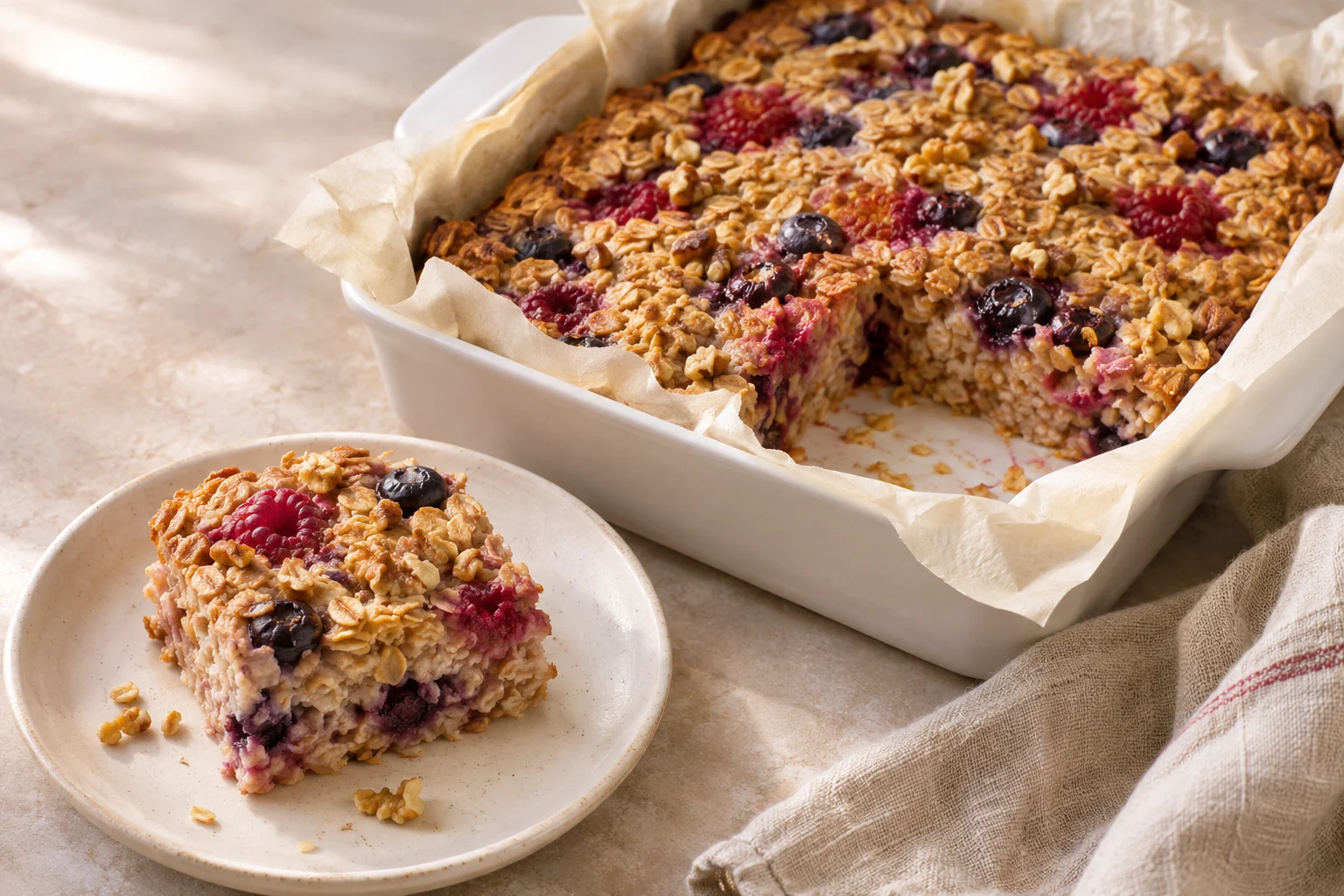
A pan of Baked Oatmeal can cover a second wave of guests. Follow the recipe’s cooking, refrigeration and reheating instructions.
What to Avoid Preparing Too Early
Toast becomes stale or soft, crisp potatoes can lose texture, sliced apples can brown and whipped toppings may weep. Very delicate pastries don't benefit from sitting fully assembled overnight. Save these finishing steps for the morning or choose a more forgiving menu.
When a recipe calls for refrigeration, maintain the correct temperature overnight and don't leave it on the counter to 'come to temperature' without explicit safe guidance.
Food Safety with a Relaxed Morning
Refrigerate casserole mixtures and other perishable foods at 4°C (40°F) or colder. Check egg-based dishes reach 74°C (165°F). Keep yogurt and toppings chilled until serving.
If people eat at different times, put out only what the first group will use and bring out fresh portions from the refrigerator later. Refrigerate cooked leftovers promptly in shallow containers. Reheat them to 74°C (165°F) when serving.
Frequently Asked Questions
What's the easiest brunch for overnight guests?
A recipe-approved baked casserole, fresh fruit and a pre-baked loaf is an approachable menu. For guests with different wake-up times, yogurt, granola and muffins may be even simpler.
Should I make pancakes for a large group?
They're delicious but need batch cooking and careful warm-holding. If you want more time with guests, consider baked French toast or a tested sheet-pan alternative.
Can I set up the table the night before?
Yes. Put out clean plates, cups and nonperishable items, but refrigerate dairy, eggs, meat and other perishables.
What if guests leave at different times?
Use a flexible self-serve base and prepare fresh hot items in small batches, following safe holding and storage guidance.
Be the Host Who Sits Down Too
Overnight guests usually remember the warmth of breakfast more than the number of dishes. Prepare the sturdy parts the night before, choose a practical morning finish and make it easy for everyone to serve themselves. A thoughtful brunch should leave room for conversation.
Some images are AI-generated illustrations of the dishes and techniques described.
IN PICTURES
From the baking notebook
FROM THE RECIPE BOX


