On this page
Custard asks you to stop cooking at a narrow moment: too early and it stays loose; too late and the egg proteins tighten into a grainy or watery mixture. The challenge is that pastry cream, crème brûlée, custard pie and poured crème anglaise don't all finish in the same way. Each style has its own thickening system and expected texture. The dependable approach is to identify the kind of custard you're making and use its recipe-specific doneness cues along with appropriate egg safety.
First decide which custard you mean
A poured sauce such as crème anglaise should coat a spoon but remain fluid. A baked custard must set gently in a ramekin. Pastry cream becomes thick enough to pipe because it contains starch as well as eggs. Custard pie sets within a pastry shell. One fixed wobble test or cooking temperature cannot describe every formula.
Why eggs thicken custard
As eggs are heated, proteins unfold and connect, forming a network that holds liquid. Gentle heating can create smooth texture; overheating can tighten that network too much, producing curds or separated water. The ratio of eggs, dairy, sugar and starch determines the texture and temperature response.
The gentle wobble in baked custard
Many baked custard recipes describe a set edge with a centre that moves slightly as one soft mass when the dish is nudged. It should not slosh like uncooked liquid. The exact degree of movement depends on ramekin depth, whether a water bath is used and the recipe's baking endpoint.
When a custard pie is ready
A baked pumpkin or other custard pie may finish with a gently set centre and a small amount of movement. A broad, liquid wave is not the same thing. Follow the tested pie recipe's doneness instruction and remember that crust colour can become dark before the filling is properly cooked.
Recipe to try: Classic Custard Tart. This offers a baked custard inside pastry. Check the filling according to its recipe rather than judging by crust colour alone.

Temperature and food safety
In Canada, the general safe internal temperature for egg dishes is 74°C (165°F). Check the centre with a clean food thermometer. Use visual cues to assess texture after following a validated recipe and its food-safety instructions.
Why recipes may quote different temperatures
Choose a recipe appropriate to the custard style and check that its procedure meets egg-safety guidance. When a preparation uses eggs without a validated cooking step, choose a recipe that specifies pasteurized egg products.
How to measure temperature
Insert a clean instant-read probe into the centre of the custard without touching the bottom or sides of the hot pan. A probe against hot ceramic or metal can misrepresent the filling's internal temperature. Follow instrument instructions for the shallow depth and read quickly to limit heat loss.
Why a water bath helps
A bain-marie surrounds ramekins with water that transfers heat gently and moderates the oven environment. It reduces the risk of the outer edges overcooking while the centre remains soft. Use the water depth and oven-safe vessels in the recipe; hot water is a scald risk.
Why water bath cooking still needs checking
A water bath moderates heating but doesn't guarantee doneness. Very deep ramekins take longer, an inaccurate oven changes the schedule and different custard formulations set differently. Check the actual filling rather than trusting that thirty minutes in water must be enough.
Stovetop crème anglaise
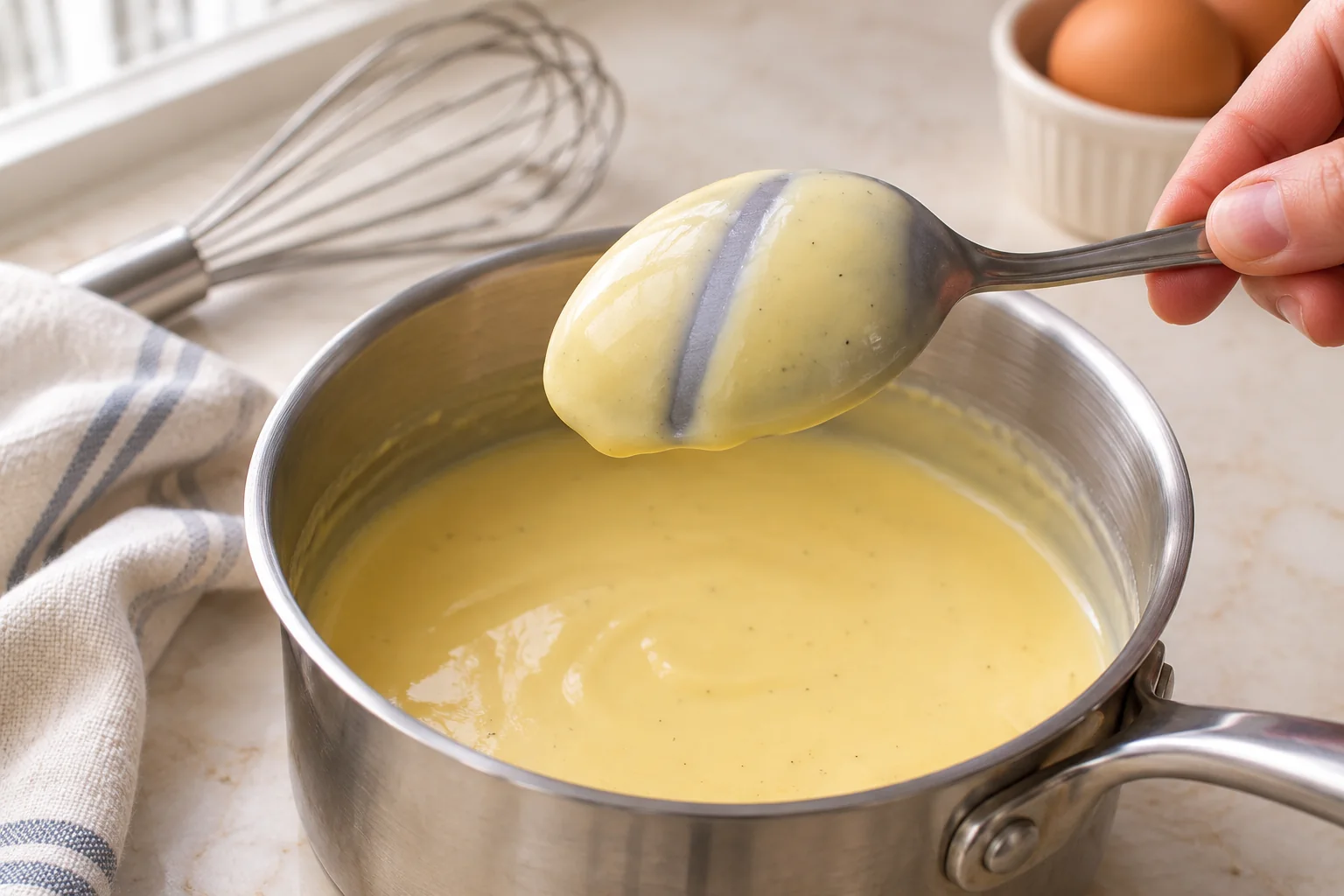
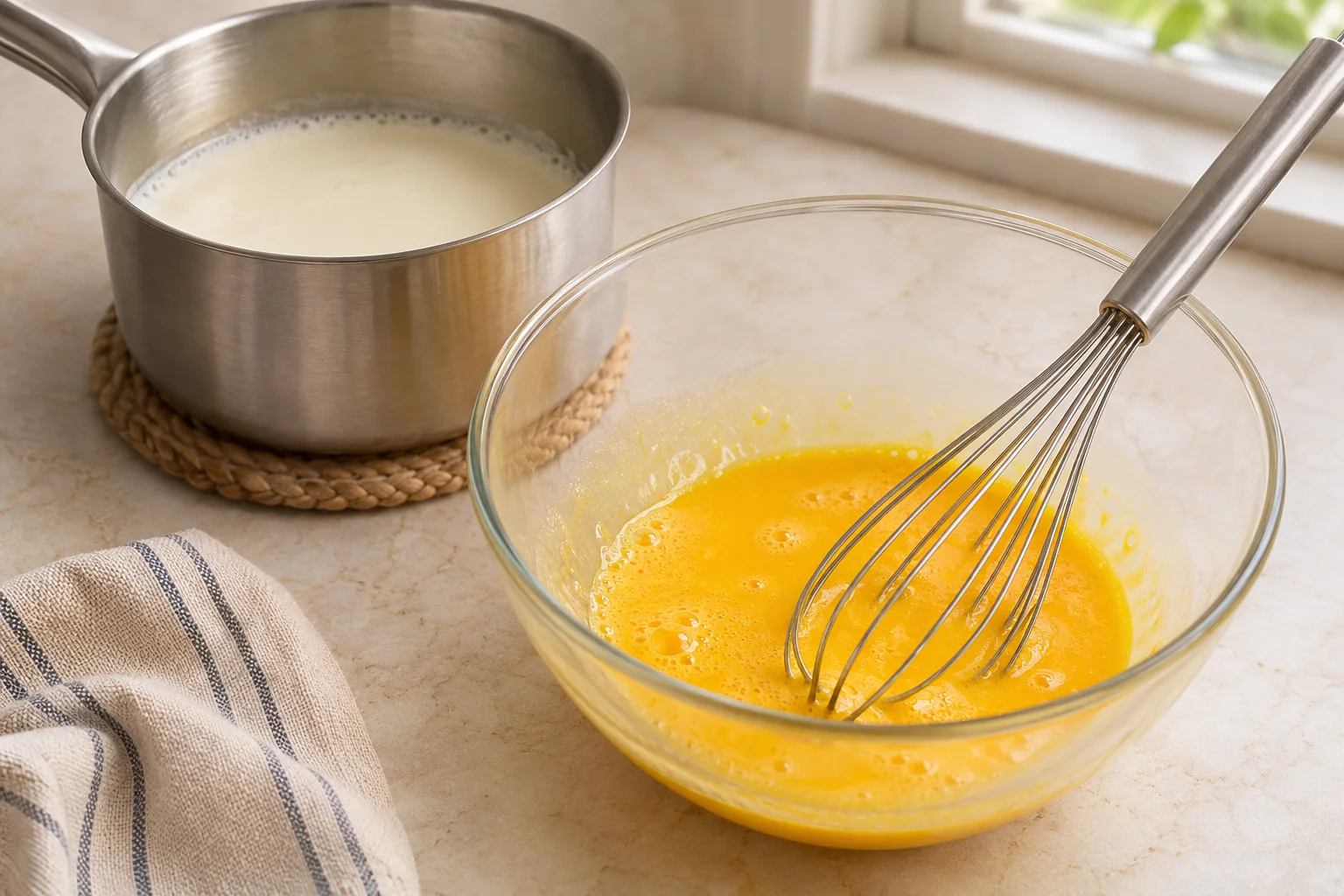
Crème anglaise is a poured egg-thickened sauce. A recipe often instructs you to stir constantly and look for a light coating on the back of a spoon while controlling temperature to prevent curdling. Use a recipe with a safe egg-handling method, potentially including pasteurized eggs where needed.
The spoon-coating test
Dip a clean spoon into a stirred sauce and observe whether it leaves a thin even film. Some recipes ask you to draw a line through the coating with a finger and see whether it stays defined. This is a texture cue only, not a reliable food-safety measurement; follow the recipe's validated cooking temperature as well.
Why pastry cream thickens more dramatically
Pastry cream usually includes starch in addition to eggs. It can reach a much thicker consistency than a poured egg custard. A recipe may require bringing the mixture to a brief controlled boil to activate the starch and reduce residual starch-digesting enzyme activity. Use its full cooking method rather than stopping merely because the mixture coats a spoon.
What a cooked pastry cream looks like
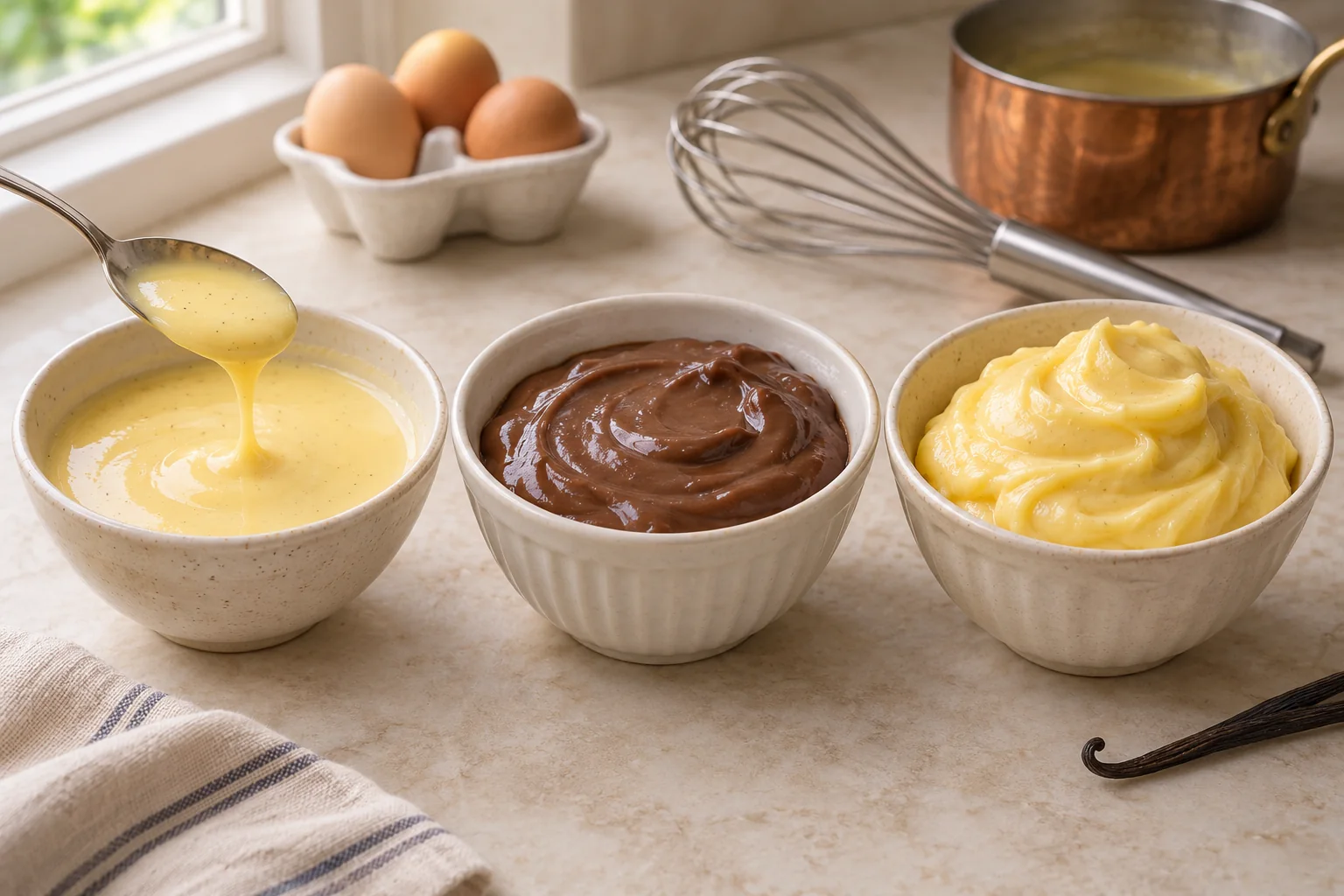
It should thicken uniformly without visible egg curds or raw flour pockets. Some formulas become glossy and thick enough to hold whisk tracks. The precise consistency depends on whether you intend to fill éclairs, tarts or a layered cake.
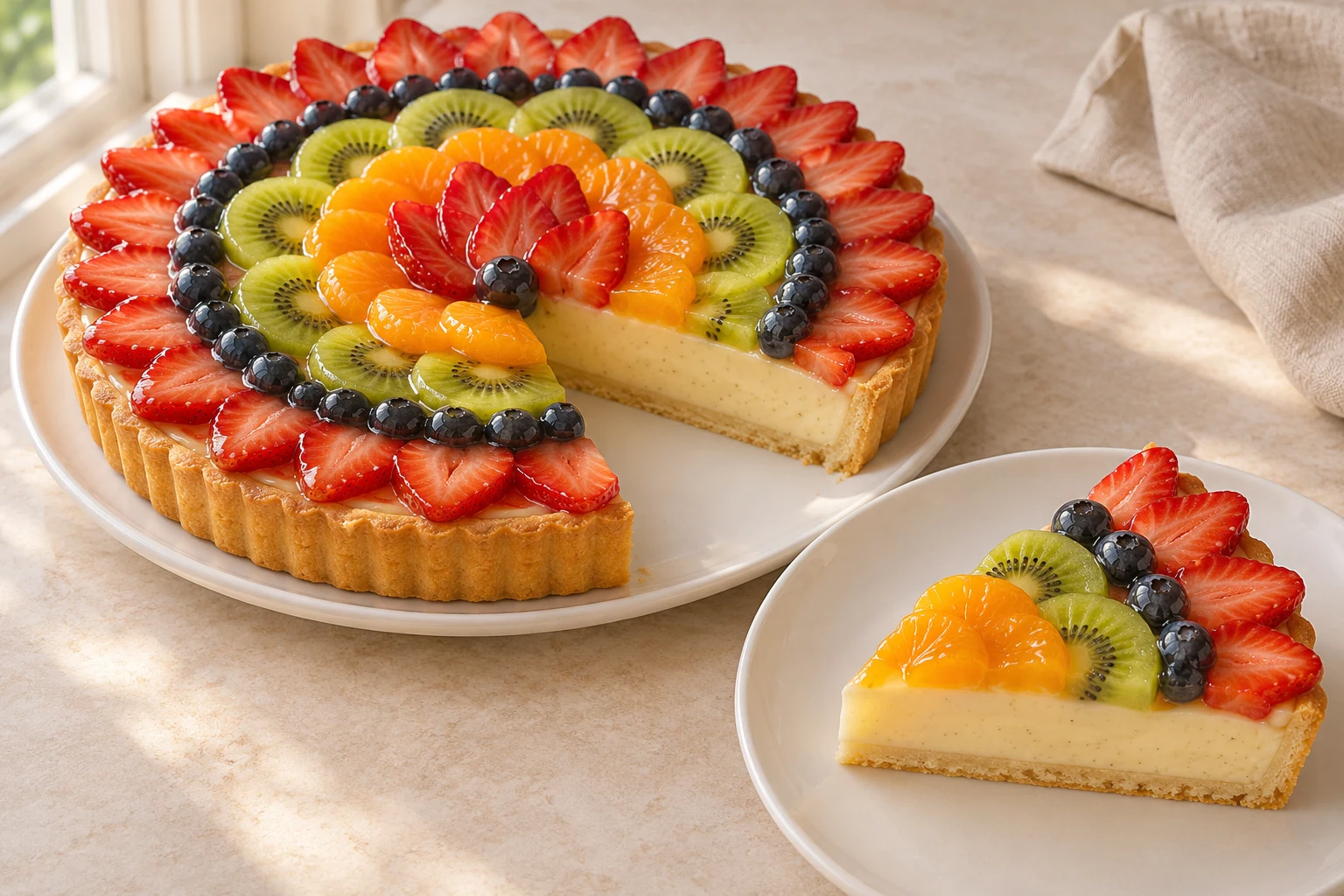
Recipe to try: Classic Fruit Tart. This tart combines a separate pastry shell and filling. Follow the recipe’s order for baking, cooling and assembly.
Why custard turns grainy
Overheating or uneven heat can curdle egg proteins. A too-hot saucepan bottom may cook the mixture faster than stirring can redistribute it. Use a heavy suitable pan, moderate heat and constant stirring when the recipe calls for it. A water bath is the related tool for gentle oven cooking.
Why baked custard develops cracks
Overbaking, too-high heat or excessive expansion can make the surface split. Cracks are more common when a custard sets firmly at the edges before the centre. They're a texture and appearance clue, not a definitive proof of food safety or doneness.
Recipe to try: Vanilla Bean Custard Tart. For another custard project, use this tart’s measured filling and baking sequence. Vanilla flavour does not change the need for careful heat control.

What causes watery separation
If egg proteins coagulate too strongly, they can squeeze out liquid, leaving curds or watery pockets. Incorrect ingredient ratios may also produce weeping. Cooling cannot reunite a severely overcooked custard into the original silky texture.
What if the centre stays runny after cooling?
The original custard may have been undercooked or formulated with too little thickening structure. Refrigeration can firm a properly cooked custard, but cannot reliably make raw eggs safe. Don't serve an obviously uncooked centre; follow a tested corrective method or prepare a fresh batch.
Avoid opening the oven constantly
Frequent checking releases heat and can create longer or uneven baking times. Begin checking near the formula's expected window and assess efficiently. A quick thermometer check near the end is more useful than repeatedly moving hot water-bath dishes.
Cooling and refrigeration
Custards are perishable egg-and-dairy dishes. Cool according to a safe procedure and refrigerate promptly at 4°C (40°F) or below. Don't leave ramekins on a counter all afternoon simply because a baked custard continues setting as it cools.
Serving hot or cold
Crème brûlée is normally served with chilled custard and a freshly caramelized surface. Custard pies are often refrigerated before neat slicing. A poured vanilla sauce may be served warm according to its recipe. Serving temperature affects texture, but safe cooling and holding matter in every case.
Common troubleshooting patterns
Grainy: likely excessive heat or curdling. Liquid centre: insufficient cooking, unusual depth or ingredient imbalance. Rubbery: overcooked or too egg-rich. Water collecting: possible protein tightening and separation. Lumpy pastry cream: poor stirring, egg curds or starch clumps.
Frequently asked questions
Does custard have to stop jiggling entirely? Not in every baked style. Can you use a toothpick? It isn't ideal for all custards. Does refrigeration finish cooking it? No. Is a browned surface enough? No. Should egg custards reach a safe temperature? Yes; follow validated guidance and recipe instructions.
Use the right endpoint for the right custard
Know whether you're making a sauce, a pastry cream or a baked set filling. Watch its specified texture, use controlled heat and verify safe cooking as appropriate. Smooth custard is the product of accurately stopping—neither rushing the centre nor cooking until everything is stiff.
IN PICTURES
From the baking notebook
FROM THE RECIPE BOX


