On this page
An excellent brownie has a tender centre, a rich chocolate bite and perhaps a delicate shiny crust. Leave it uncovered after cutting, however, and the exposed edges can dry out quickly. Wrap it while warm and trapped steam may soften that crust. Good storage is mainly a matter of cooling, limiting air exposure and following the rules for any perishable filling or topping.
Start with cooling and an airtight seal
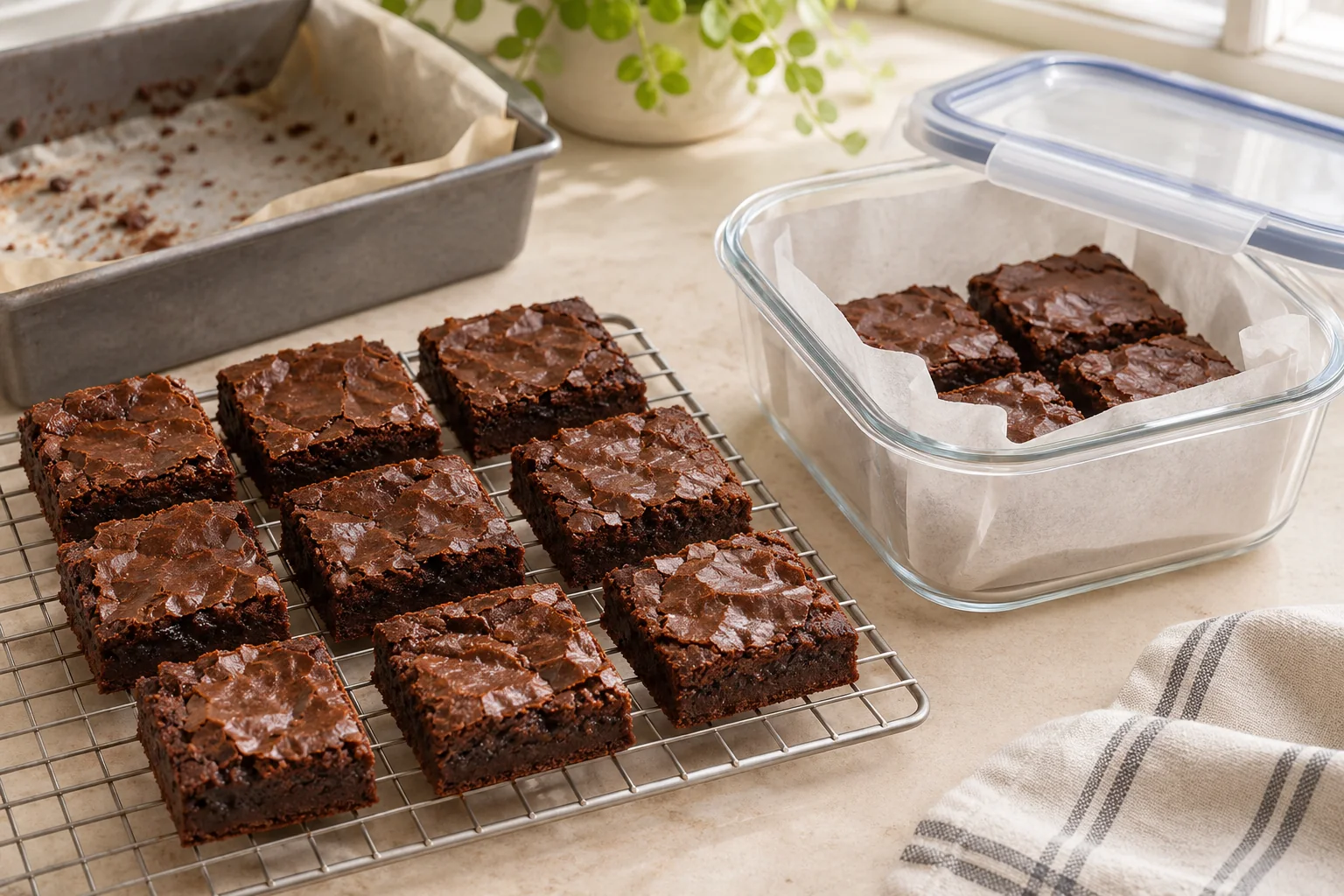
Let brownies cool completely according to the recipe before closing them inside an airtight container. Warm bars release steam that condenses under tight wrapping, leaving sticky surfaces. Cooling also helps the centre set so squares are easier to cut and stack.
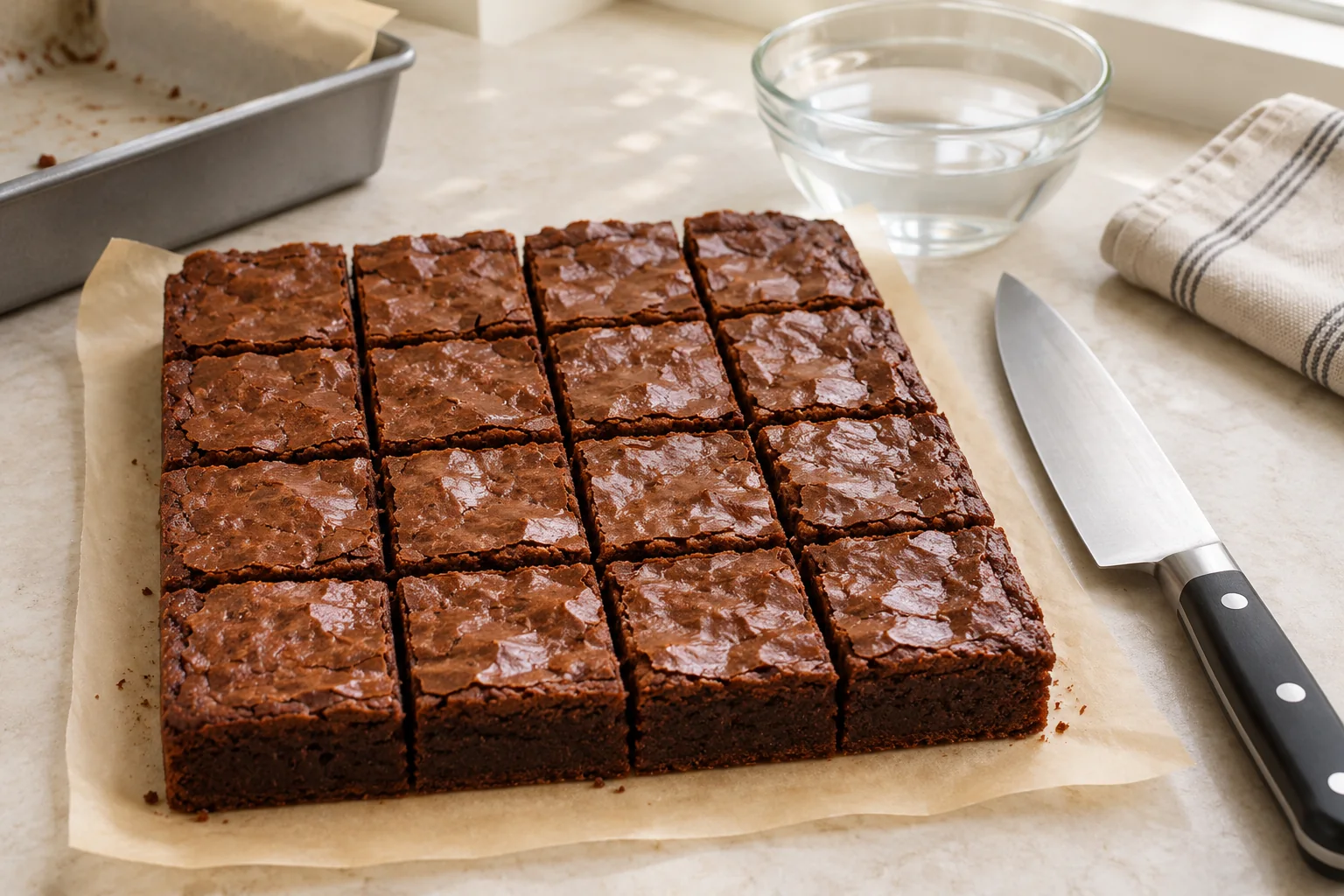
An uncut brownie has less exposed interior than twenty small squares. If you won't serve everything at once, consider leaving part of the slab intact and cutting portions as needed. Protect the cut edge with wrap or a snug container.
A rigid covered container or well-sealed wrapping helps limit moisture loss. Layer cut brownies with parchment if their surfaces are sticky. Avoid loose paper towels directly against glossy tops, which may cling and spoil the surface.
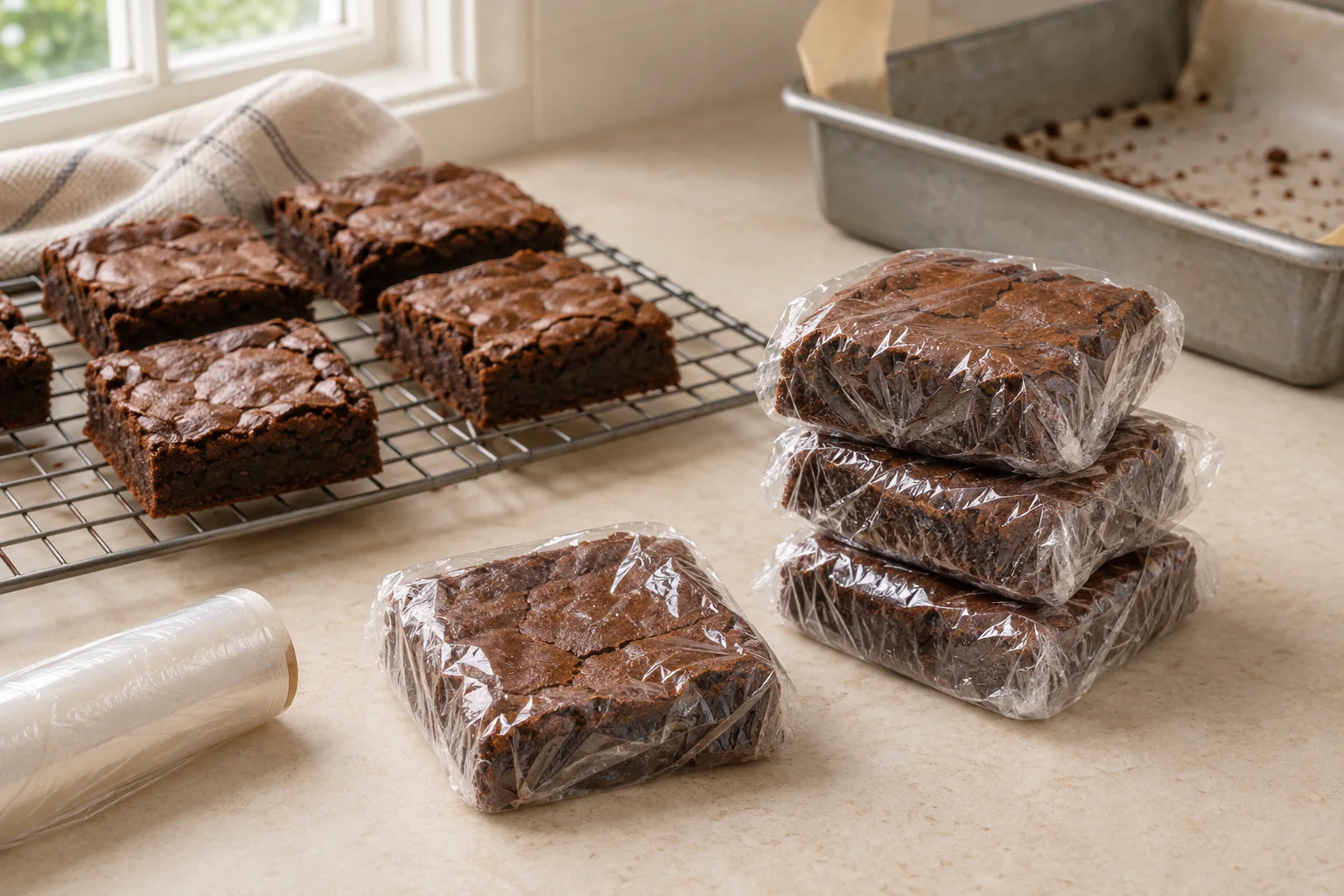
Each new exposed side provides a route for moisture loss. Wrap individual squares closely or place them cut side against another brownie in a suitable container. Avoid repeatedly opening a large box for a single portion if long keeping quality matters.
Parchment between layers limits sticking, especially with a fudgy centre or drizzle. Use it for storage separation rather than assuming it replaces an airtight outer container. Wax paper and parchment have different heat tolerances; storage doesn't authorize oven use.
Countertop or refrigerator? Match storage to the recipe
Many plain fully baked brownies can be held at room temperature for a period specified by the recipe.
Cream cheese swirls, custard, fresh cream or other perishable toppings may require cold storage at 4°C/40°F or colder. Follow the recipe and food-safety guidance. Refrigerating a plain brownie only for texture preference is a different decision from refrigerating one for safety.
Butter and cocoa butter firm as they cool, making brownies denser and harder to bite directly from the fridge. Let a safely stored plain portion return toward serving temperature if the recipe allows. Keep perishable toppings cold until the appropriate service window.
A fragile meringue-like top can become less crisp in a humid container, while leaving brownies uncovered dries the centre. Some loss of surface crackle during storage is normal. For that signature crisp top, serve on baking day when possible.
Chocolate and butter can pick up undesirable odours from the environment. A good seal helps when storing in a refrigerator near savoury foods. Use food-safe containers and keep brownies away from cleaning chemicals or non-food surfaces.
Check the individual recipe rather than assuming every brownie stores identically. For example, our black bean brownies and sweet potato brownies use different ingredients, so follow the storage guidance for the version you bake.
Recipe to try: Almond Flour Brownies. This version combines almond flour with dark chocolate. Its proportions are specific to that flour and are not a one-for-one wheat-flour conversion.

Brownies with frosting, fruit or nuts
The frosting determines storage requirements. A stable baked glaze, ganache and cream cheese frosting can have different handling needs. Don't classify every chocolate topping as shelf-stable merely because it looks firm.
Fresh berries add moisture and may shorten safe holding time. Keep fruit-topped brownies according to the complete recipe's refrigeration guidance, especially if dairy cream is involved. Consider adding fresh fruit immediately before serving for better appearance.
Nuts add texture and contain oils that can develop stale flavours. Use fresh nuts and seal the bars properly. Allergy labels are important when packaging brownies for others, even if nuts are hidden inside the batter.
Freeze and thaw brownies carefully
Many plain brownie recipes allow freezing after full cooling. Wrap a whole slab or separate squares tightly, remove excess air, label the date and follow the recipe's recommended freezer window. Freezing preserves quality better than leaving brownies exposed on a counter for weeks.
Thaw wrapped portions according to the recipe so condensation is managed and the surface doesn't become wet. Remove wrapping at the appropriate stage. Avoid repeated freeze-thaw cycles that gradually change texture and introduce extra handling.
Serving stored brownies and handling dry pieces
A plain fully baked portion may be gently warmed following recipe guidance. Overheating can dry the centre or melt the topping. Brownies with perishable frosting or custard require more careful handling; reheating isn't a substitute for safe storage.
A brief recipe-supported warming may improve eating quality, or the bars may be used in a dessert such as a trifle with properly stored components. This doesn't restore a badly overbaked crumb. For the next batch, check bake time and storage promptly after cooling.
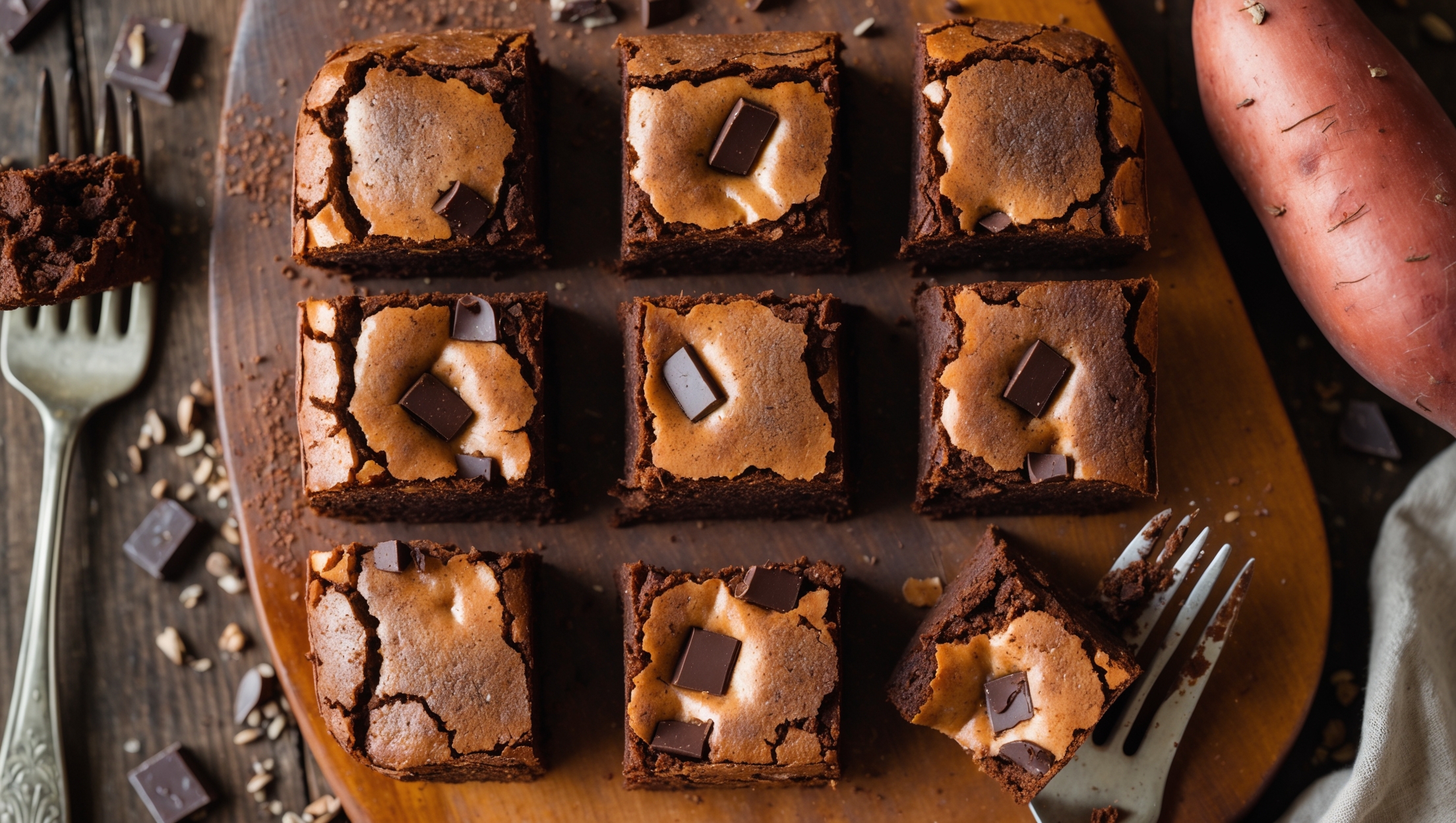
Recipe to try: Sweet Potato Brownies. These brownies use sweet potato in their own formula. Treat them as a separate option, not a direct conversion of a conventional brownie batter.
Packing brownies as gifts
Use sturdy food-safe packaging, keep pieces separated, include ingredient and allergen information and choose products suited to the shipping or travel time. Cold-chain fillings are poor choices for a long unrefrigerated trip.
Recipe to try: Black Bean Brownies. Black beans and cocoa form a different brownie base. Use the stated preparation and baking cues for this formula.

Frequently asked questions
Should brownies be refrigerated? Plain ones often don't require it under their recipe, but perishable fillings do. Can you store warm brownies? Cool first. Is a slab better than individual squares? Often for reducing exposed cut surfaces. Does freezing change texture? It can, but many formulas freeze well.
The simplest rule for fudgy brownies
Cool fully, expose as little crumb as possible and seal well. Decide between the counter, refrigerator and freezer based on the complete recipe—not habit alone. Those small steps help preserve the fudgy centre you worked to bake.
IN PICTURES
From the baking notebook
FROM THE RECIPE BOX


