On this page
A waffle bar turns breakfast into something guests can personalize, whether they prefer berries and yogurt, maple syrup and pecans, or a savoury egg-and-cheese combination. But waffles lose their crisp edges if stacked and covered, and a single waffle iron can create a long queue. A good waffle bar plans the cooking system as carefully as the toppings, so the host isn't trapped beside the counter for the entire party.
Choose the waffle style
Belgian-style deep-pocket waffles, thin crisp waffles and yeasted waffles have different batter methods, cooking times and textures. Pick one tested formula for the main station before adding specialty variations. A second gluten-free or egg-free option needs its own suitable equipment and cross-contact plan where allergies matter.
Recipe to try: Sweet Potato Waffles. The batter includes mashed sweet potato. Use its specific mixing instructions and the capacity of your waffle iron when planning portions.

Estimate how many waffles
Consider guest appetites, waffle size and other food. One large deep-pocket waffle or two smaller waffles per adult can be an initial planning estimate when there are sides, with extra batter available. Children and light eaters may want smaller portions. Follow the recipe's yield by weight or waffle iron capacity.
The waffle iron controls speed
A single iron that makes one waffle at a time can become the bottleneck for ten guests. Test the appliance with the chosen batter to learn actual cooking time and yield. Consider using two suitable irons or preparing a portion of the waffles ahead if the recipe permits reheating.
Can waffles be made ahead?
Many tested recipes allow cooked waffles to cool and freeze, then reheat in a hot oven or toaster to restore crispness. Some batters do not hold safely or effectively overnight, especially once leavening activates. Use the recipe's make-ahead plan rather than leaving raw batter on the counter until morning.
How to keep waffles crisp
Avoid stacking steaming waffles in a closed container; condensation softens their surfaces. Some recipes recommend holding cooked waffles on a rack in a moderately warm oven for a short time, with equipment and temperature carefully controlled. A sealed foil packet may keep them warm but often sacrifices crispness.
Separate wet and dry toppings
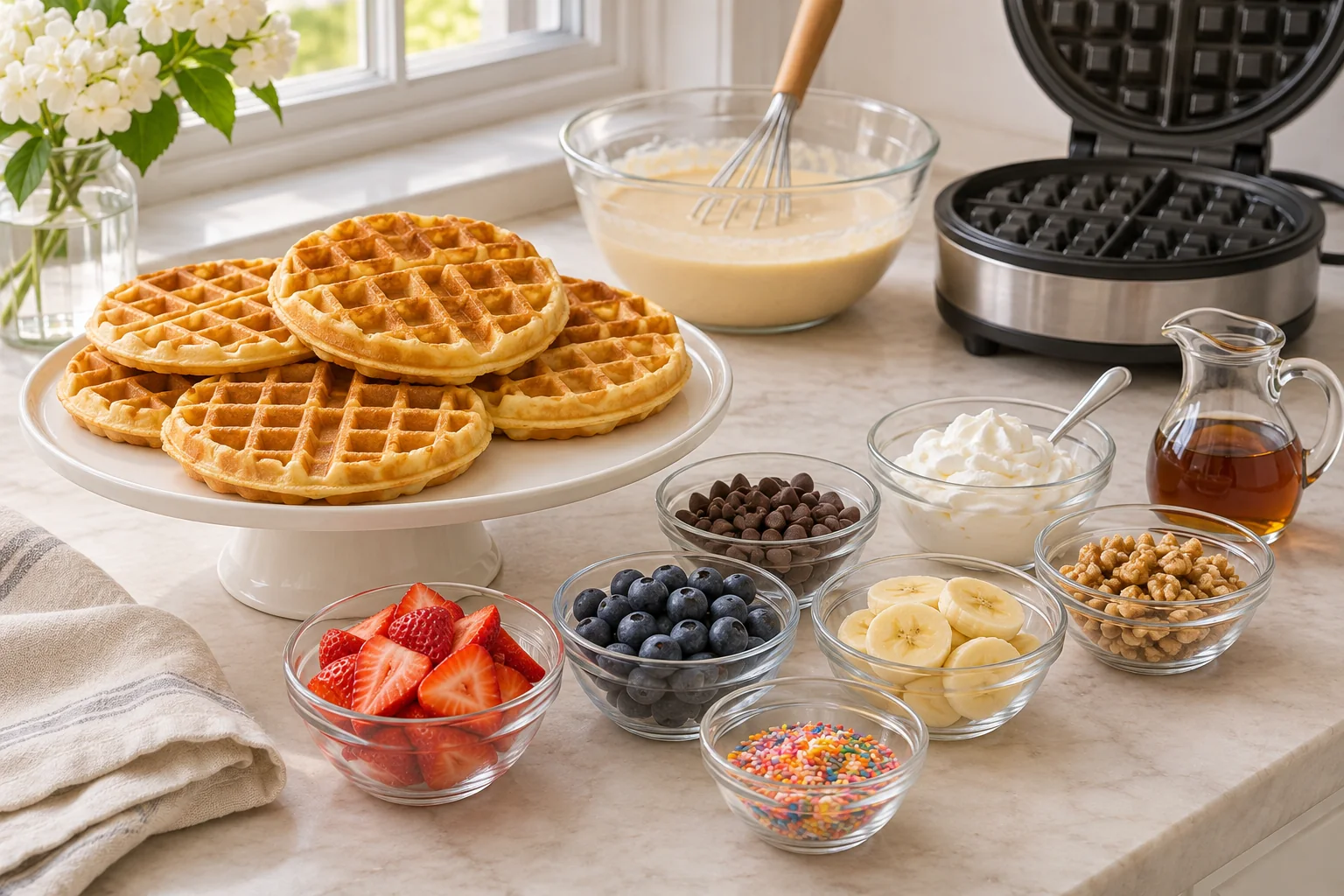
Put berries, fruit compote and yogurt in their own bowls, apart from granola, chopped nuts and chocolate chips. This keeps crunchy toppings dry until the guest serves them. It also gives people space to build a waffle without dripping syrup across the whole table.
Sweet topping group
Offer two or three of sliced fresh fruit, lightly sweetened whipped cream, warm berry sauce, maple syrup and nut butter. You don't need ten jars of nearly identical sweet sauces. Include a tart element, such as raspberries or citrus fruit, to balance a buttery waffle.
Savory topping group
Try fully cooked eggs, sautéed mushrooms, spinach, avocado, grated cheese or a tomato relish. A savoury topping station turns waffles into a main meal rather than only dessert. Keep cooked eggs hot or safely chilled and refreshed according to food-safety guidance.
Recipe to try: Veggie Frittata. A frittata can be portioned for a savoury brunch. Plan its cooking and safe holding around the time guests will eat.

A berry-and-yogurt combination
Set out sliced strawberries, blueberries and plain Greek or plant-based yogurt. A drizzle of maple syrup and lemon zest can finish the plate. For children, prepare fruit in age-appropriate pieces and supervise as needed. Keep dairy and cut fruit cold until serving.
A chocolate and banana combination
Offer sliced banana, a chocolate sauce prepared under a tested recipe and a few toasted hazelnuts if there are no relevant allergies. The contrast of fruit and chocolate feels celebratory without requiring a complicated cake. Keep nut toppings isolated and labelled.
A savoury mushroom waffle
Cook mushrooms until their moisture has evaporated and they develop golden edges. Serve with a small amount of cheese and herbs or a plant-based alternative. The waffles stay crisper when the topping is added individually rather than piled onto a large tray of cooked waffles.
Maple syrup should be easy to pour
Use a stable jug or squeeze bottle with a manageable opening and place it over a tray to catch drips. Don't leave boiling hot syrup within reach of children. Pure maple syrup should be handled according to its storage instructions after opening.
Create a logical serving line
Place plates first, waffles second, then sweet and savoury topping stations, and cutlery and napkins at the end. This prevents guests from reaching over other people's plates for a fork while holding a waffle. Leave enough counter space for multiple people to make selections.
Plan allergen labels
Common waffle ingredients include wheat, eggs and dairy, while toppings may contain tree nuts, peanuts and sesame. Label clearly and use separate utensils. A gluten-free guest with celiac disease may need a dedicated clean waffle iron rather than batter cooked on a shared surface.
Serving warm proteins safely
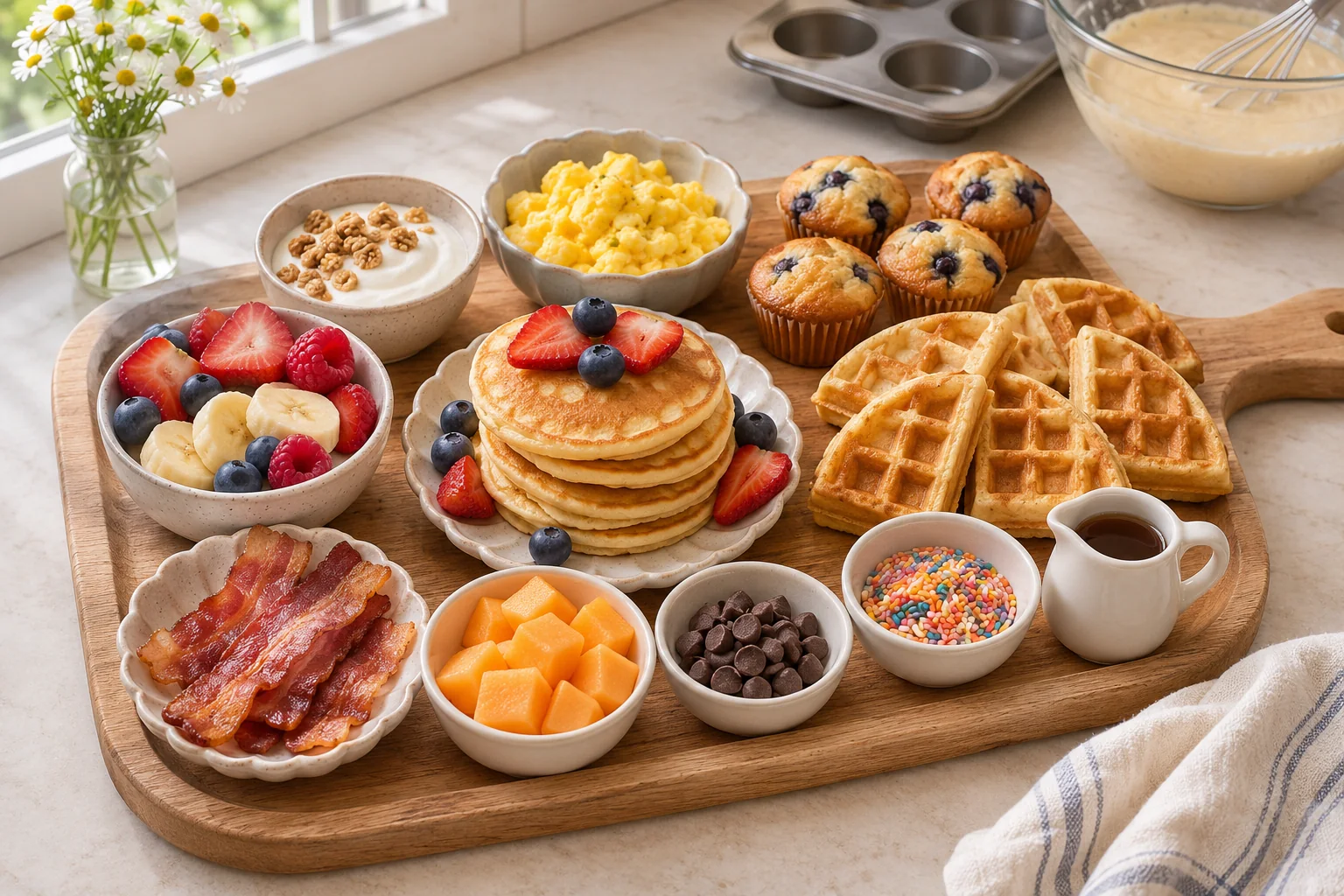
Cooked bacon, sausage and eggs are perishable. Use properly rated hot-holding equipment or replenish small portions from the kitchen rather than leaving them lukewarm beside the waffle iron. Follow product-specific safe internal cooking temperatures for raw meat.
Make a waffle station for kids
Put out small waffles, fruit, yogurt and modest syrup portions in spill-resistant dishes. Keep the hot waffle iron and cords in an adult-controlled area. Children can choose toppings, but they should not reach around hot plates or steam vents.
A day-before checklist
Count plates and serving utensils, prepare safely stored sauces, wash fruit where appropriate and verify that the iron works. Freeze any waffles made ahead using a tested method. Keep the refrigerator stocked with chilled toppings rather than trying to fit a finished assembled buffet inside.
Recipe to try: Breakfast Casserole. This casserole combines hash browns, eggs and sausage or the listed alternative. Use the stated pan size instead of making an unusually deep batch.

The morning timeline
Begin by arranging the cold station in the refrigerator, preheating the waffle iron and preparing the batter at its stated time. Cook or reheat a small first batch, then bring out toppings as guests arrive. If using a hot holding rack, make only the quantity the method can maintain properly.
A small waffle bar for four
One reliable batter, maple syrup, strawberries, yogurt, a bowl of eggs and coffee or tea is usually plenty. More toppings are not necessarily better. Choose contrasting textures and let the waffles remain the main attraction.
A larger waffle bar for twelve
Plan output per hour and consider a second iron or safely reheated frozen waffles. Put perishable toppings in smaller bowls that can be replenished from refrigeration. Assign one person to the cooking station if you are also responsible for greeting guests.
Leftover waffles
Cool suitable leftover waffles and wrap or freeze promptly according to the recipe. Store fresh dairy and fruit toppings separately. Never freeze an already syrup-soaked waffle expecting it to regain the same crispness after thawing.
Make the host part of brunch
The goal is a table where guests can choose their favourite waffle and you can sit down, too. A tested batter, a practical cooking plan and a handful of well-chosen toppings will do more than an enormous decorative display.
IN PICTURES
From the baking notebook
FROM THE RECIPE BOX


