On this page
Mailing homemade cookies feels personal in a way that a store-bought gift rarely does. But cookies that look beautiful on your kitchen counter can arrive as crumbs if the recipe, packaging and shipping conditions aren't suited to the journey. A successful cookie parcel starts before you reach for a box: you need sturdy cookies, fully cooled treats and enough protection to prevent movement.
This guide explains how to package cookies for shipping, which kinds generally travel better and what to check before mailing. It also covers temperature, allergens and storage so the recipient gets a thoughtful treat rather than a damaged or spoiled surprise.
Choose Cookies That Can Survive the Trip
For a simple cookie candidate, review our vegan shortbread cookies. Check their recipe-specific storage guidance, pack them snugly, and avoid perishable additions for shipping without temperature control.
Sturdy shortbread, biscotti and many firm drop cookies can be more practical for shipping than fragile sandwich cookies, thin lace cookies or heavily frosted shapes. The ideal cookie holds its form, has a recipe-supported room-temperature storage window and isn't prone to melting.
Think about weather and travel time. A delicate chocolate coating may become tacky in a warm delivery truck, while a crisp cookie may absorb moisture if packed with a soft or jam-filled one.
Start with a firm, plain cookie such as Air Fryer Scottish Shortbread. Choose pieces of similar thickness and leave out any perishable toppings or fillings.

1. Bake for Consistent Size
Portion dough evenly so cookies finish baking at similar times. Uneven batches can leave some underbaked and others very dry. Follow the recipe's temperature and doneness cues; deliberately overbaking every cookie for sturdiness may make a gift unpleasant to eat.
Choose shapes that pack neatly. Compact rounds and rectangles generally fit more securely than very thin stars with fragile points.
2. Cool Completely Before Packaging
Warm cookies release steam. If sealed too soon, condensation can soften crisp cookies and create unwanted moisture inside the parcel. Allow them to cool as instructed and make sure icing, glaze or chocolate finishes have fully set.
Don't leave perishable filled cookies out for hours simply to dry. For mailing, choose cookies with safe, tested storage conditions.
3. Separate Crisp and Soft Cookies
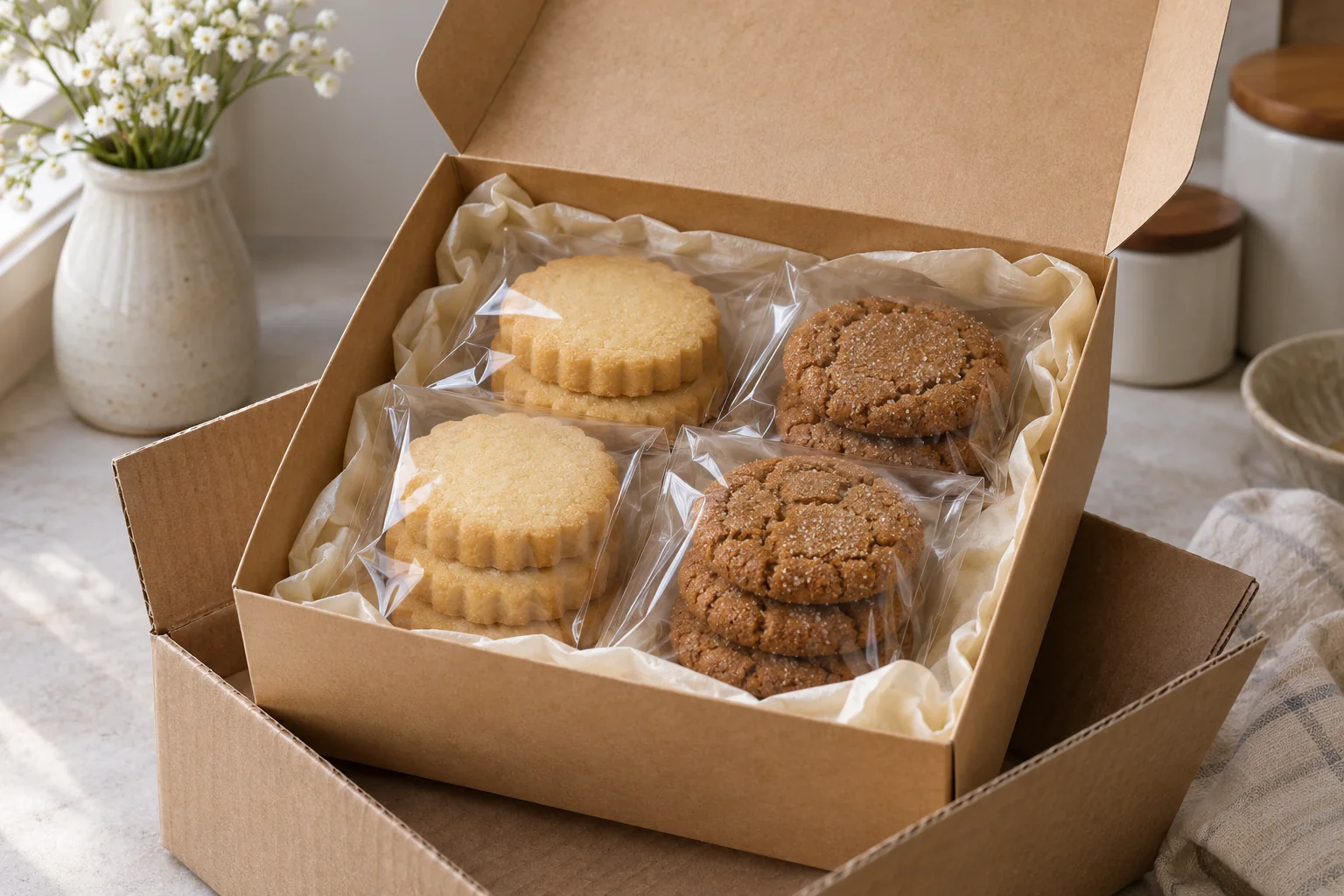
Moisture migrates between foods. If you pack chewy cookies directly beside dry shortbread for days, textures can change. Use separate food-safe bags or sealed compartments for types with different moisture levels.
Strong flavours can also transfer. Spiced gingerbread may overwhelm a delicately flavoured vanilla cookie, so divide them when flavour preservation matters.
If you include Classic Chocolate Chip Cookies with crisp shortbread, keep them in separately sealed packets. That also keeps chocolate smudges away from the shortbread if the parcel warms in transit.

4. Wrap Small Stacks or Pairs
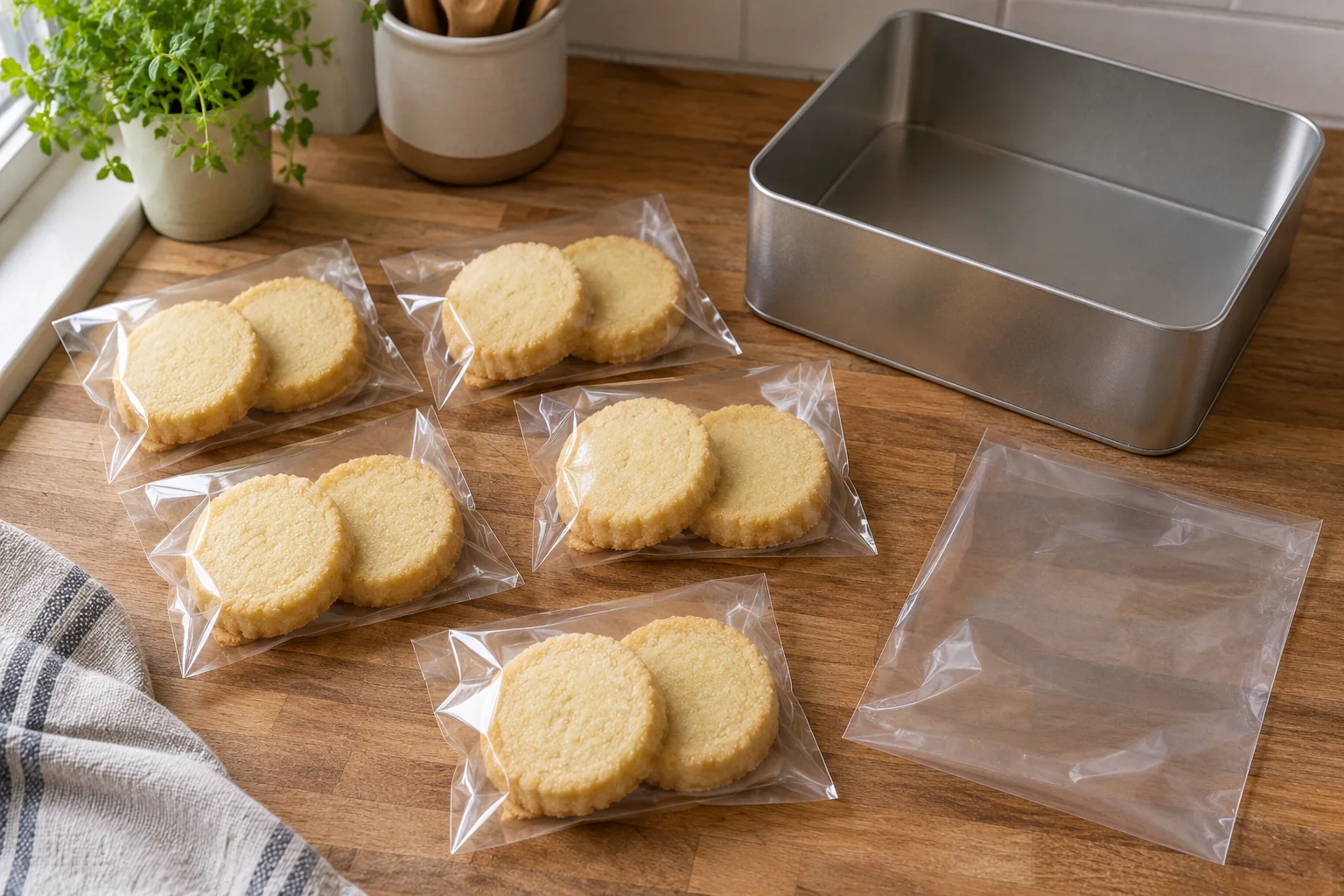
For sturdy cookies, small stacks wrapped in food-safe material can help prevent sliding. Place parchment between delicate decorated surfaces where needed. Don't pack so tightly that the pressure breaks the edges.
Cookies with sticky toppings need packaging that doesn't fuse to the coating. Test a wrapped pair before preparing a whole batch.
Line up cookies of similar diameter and package them in short stacks. For shapes with narrow corners, use a single layer or a stack of two so the tips do not carry the weight of the batch.
5. Choose a Rigid Inner Container
A cookie tin or firm food-safe box offers more protection than a thin bag. Line the container with suitable parchment and arrange cookies snugly. Fill unused space with clean, appropriate packing material kept away from direct food contact.
Shake the closed inner container gently. If you hear everything rattling, adjust the arrangement before proceeding.
6. Add an Outer Shipping Box
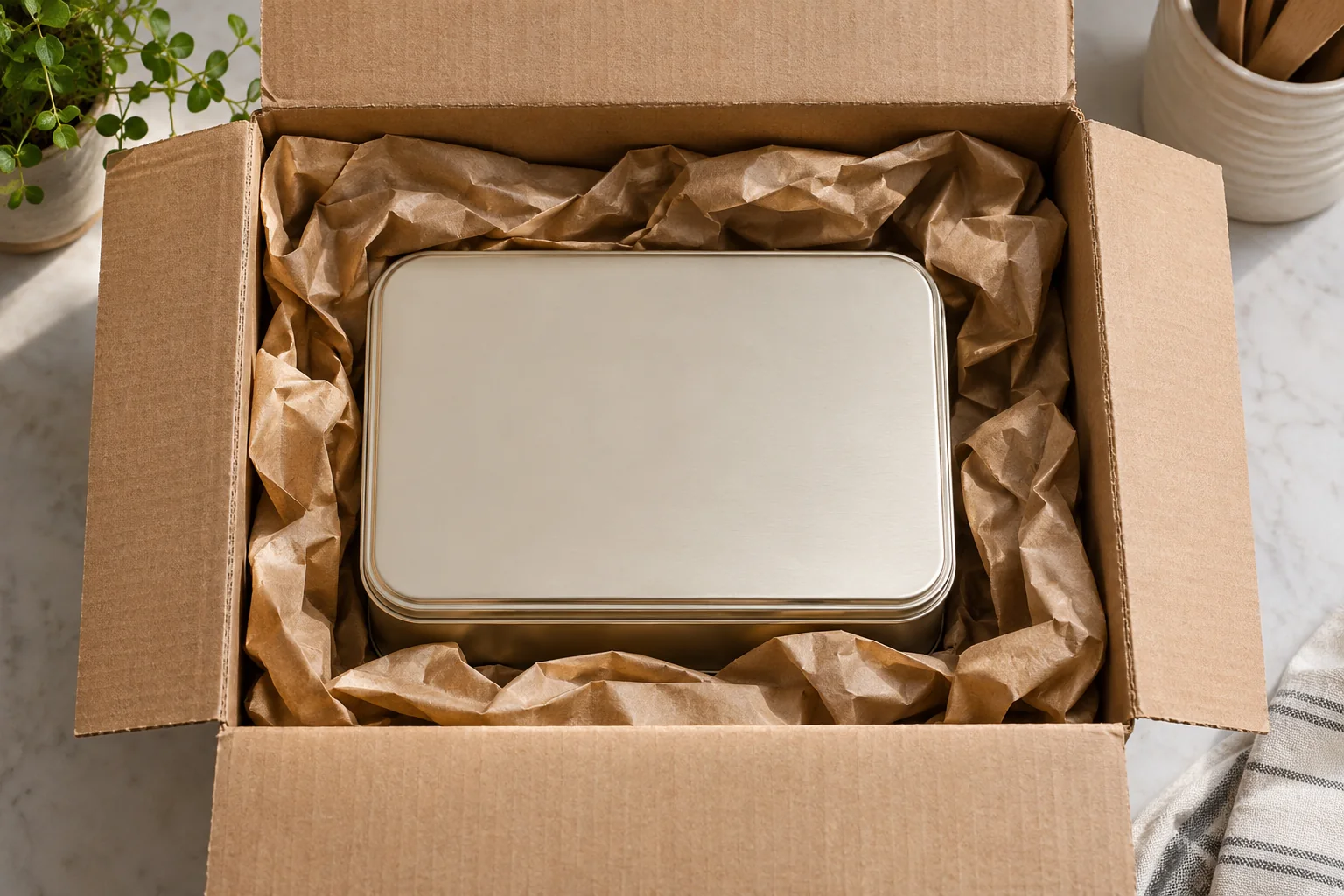
The cookie tin should not sit loose inside the mailing carton. Cushion it on all sides with sufficient protective material so it cannot move during handling. Use a box in good condition and seal it securely according to the shipping carrier's requirements.
A fragile label does not guarantee gentle treatment. Package as though the parcel may be turned sideways or placed beneath another box.
Fill the space along all sides of the inner tin. Close the outer flaps and gently tilt the box. If the tin shifts, add more padding before sealing the carton.
7. Avoid Highly Perishable Fillings
Cheesecake filling, pastry cream, fresh dairy frosting and other perishable ingredients require controlled temperatures. An ordinary mailed parcel typically cannot ensure those conditions. Choose recipes designed to be safely stored at room temperature for the expected journey, with a margin for delays.
If you need refrigerated shipping, use a specialized method that can reliably maintain required temperatures and follow relevant carrier and food-safety rules.
8. Consider Chocolate and Heat
Chocolate chips baked inside cookies are often less delicate than a thick exterior chocolate coating, but warm weather can still affect appearance and texture. Check the forecast and avoid leaving packages where they may sit in direct sun.
Chocolate bloom and condensation are quality problems; temperature abuse can also create safety concerns if other perishable ingredients are present.
9. Include Ingredient and Allergen Information
Write a clear note describing each cookie. List ingredients where possible and identify major allergens including wheat, eggs, milk, peanuts and tree nuts. A home kitchen may have cross-contact, so don't claim a cookie is allergy-safe without being able to support it.
If mailing to a person with a severe food allergy, check with them before baking. A homemade gift may not be appropriate in some situations.
10. Label the Packaging and Storage Instructions
Add the baking or preparation date, flavour and storage instructions based on the recipe. Let the recipient know whether the cookies should be transferred to an airtight container after arrival or eaten promptly for best texture.
A handwritten card adds warmth, but don't place non-food-safe inks, glitter or decorations directly against the cookies.
11. Ship Early in the Week
Try to avoid a parcel sitting over a weekend or holiday closure. Check the carrier's transit estimates and delays, especially during December. Choose shipping that matches the cookie's recipe-supported storage window rather than sending a fresh batch with no realistic delivery plan.
Carrier policies and border rules vary. If mailing internationally, check import restrictions on homemade food before baking.
12. Keep the Box Reasonably Small
Overly large boxes leave room for movement and can cost more to ship. A compact, padded box that matches your inner containers is usually more practical than a large decorative gift basket with lots of air around it.
Pack weight evenly to prevent the box from tipping during handling. Do not stack a heavy tin directly over a fragile sleeve of iced cookies.
Which Cookies Should You Avoid Shipping?
Very thin lace cookies, fragile meringues, cream-filled sandwich cookies and heavily decorated pieces can be risky. Some may travel with specialized packaging, but they are not the easiest place to start. Choose robust cookies over highly delicate ones when the mailing conditions are unknown.
For a local handoff, you have more freedom: a short car trip in a flat carrier is very different from several days in a parcel network.
Plain Gingerbread Cookies in compact shapes are easier to protect during transit. Use sturdier shapes for the parcel and save thin arms, legs and points for a platter at home.

A Practical Cookie-Shipping Checklist
Choose travel-friendly recipes; confirm safe storage windows; bake consistently; cool and set coatings fully; separate cookie types; wrap small stacks; secure them in a rigid food-safe container; cushion that container inside a shipping box; label ingredients and dates; and check transit conditions before sending.
Frequently Asked Questions
Are soft cookies safe to ship?
Some soft cookies may be suitable if the recipe supports room-temperature storage and the packaging prevents damage. Keep them separate from crisp cookies and account for moisture and transit time.
Can I ship cookies in a plastic bag?
A food-safe bag can protect cookies inside a rigid container, but a loose bag alone usually offers too little protection during parcel handling.
Should I freeze cookies before mailing?
Freezing can be useful for preparation, but shipping thawing cookies can introduce condensation and moisture changes. Follow a recipe and packaging method intended for the journey rather than assuming freezing helps.
What is the best holiday cookie to mail?
Firm shortbread or sturdy biscotti are common starting points because they pack well. Pick a recipe whose quality and storage hold through expected transit.
Send the Thought, Not the Crumbs
A carefully mailed cookie gift is a small project in both baking and packaging. Choose cookies built to travel, keep types separate, protect the inner container and plan around the weather and shipping schedule. The result feels generous because it arrives ready to enjoy.
IN PICTURES
From the baking notebook
FROM THE RECIPE BOX


