On this page
An extra-fudgy brownie is closer to a rich chocolate confection than a piece of chocolate cake. It should have a concentrated chocolate flavour and a moist, dense bite, yet still be fully baked and sliceable after cooling. That texture comes from a balanced ratio of fat, chocolate, eggs, sugar and flour—not from taking an ordinary brownie out of the oven while its batter is raw. Understanding the ingredients lets you choose a reliable formula and get the same result again.
What fudgy means
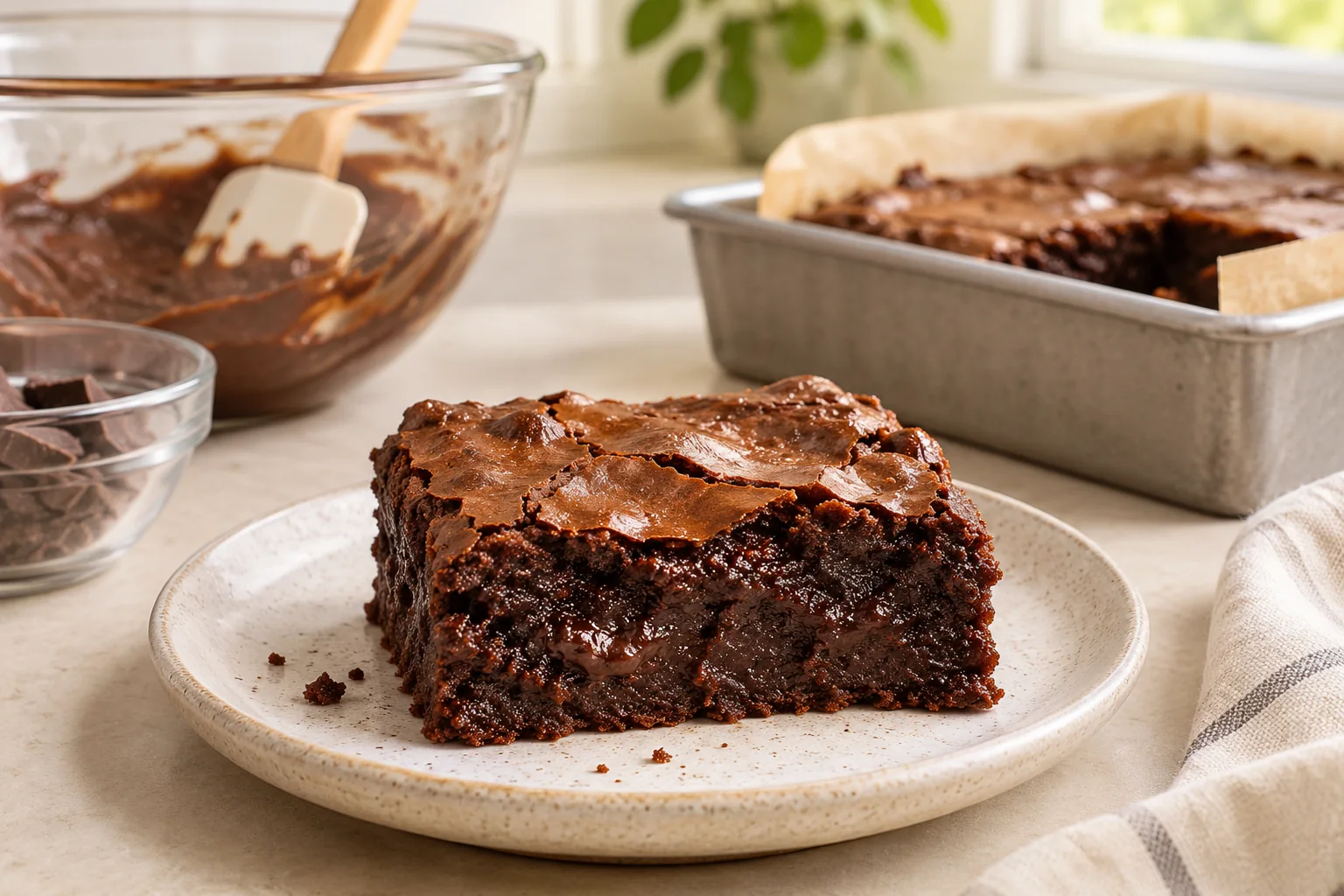
A fudgy brownie has a relatively compact crumb with very little open, cake-like aeration. Its centre may feel soft at room temperature and firmer when chilled. It is not supposed to run like uncooked batter when sliced. Recipe photographs should show a cohesive centre, not a liquid puddle.
Choose a recipe labelled fudgy
The easiest starting point is a formula developed for a dense result. Trying to convert a cakey recipe by omitting leavener and underbaking can upset the whole structure.
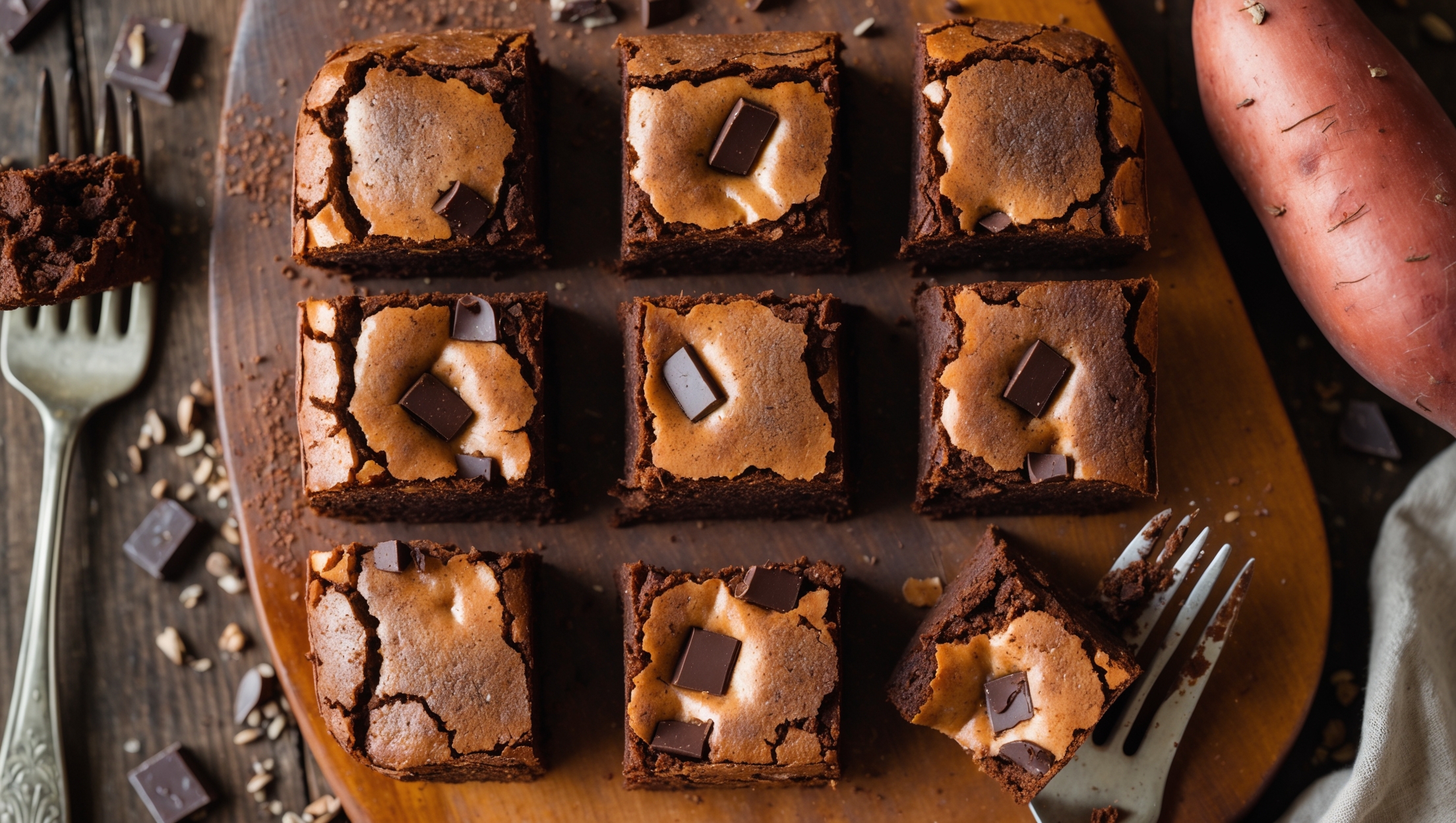
Recipe to try: Sweet Potato Brownies. These brownies use sweet potato in their own formula. Treat them as a separate option, not a direct conversion of a conventional brownie batter.
Understand the role of fat
Butter, oil and cocoa butter from chocolate all contribute to a soft, rich mouthfeel. Recipes with proportionally more fat can create a fudgier sensation. But excessive fat without enough structure can leave a greasy, unstable slab, so follow a tested ratio.
Butter versus oil
Melted butter adds flavour and makes it easy to mix a dense batter without extensive aeration. Liquid oil can help the cooled brownies feel softer because it doesn't firm as much at room temperature. A formula may use both; substituting one for the other changes more than flavour because butter contains water and milk solids.
Melted chocolate
Chocolate contributes cocoa solids, cocoa butter and often sugar. A recipe using melted bittersweet chocolate may develop a particularly smooth, rich bite. Check the required chocolate type and cocoa percentage: a darker bar can change sweetness and fat balance relative to semisweet baking chocolate.
Cocoa powder
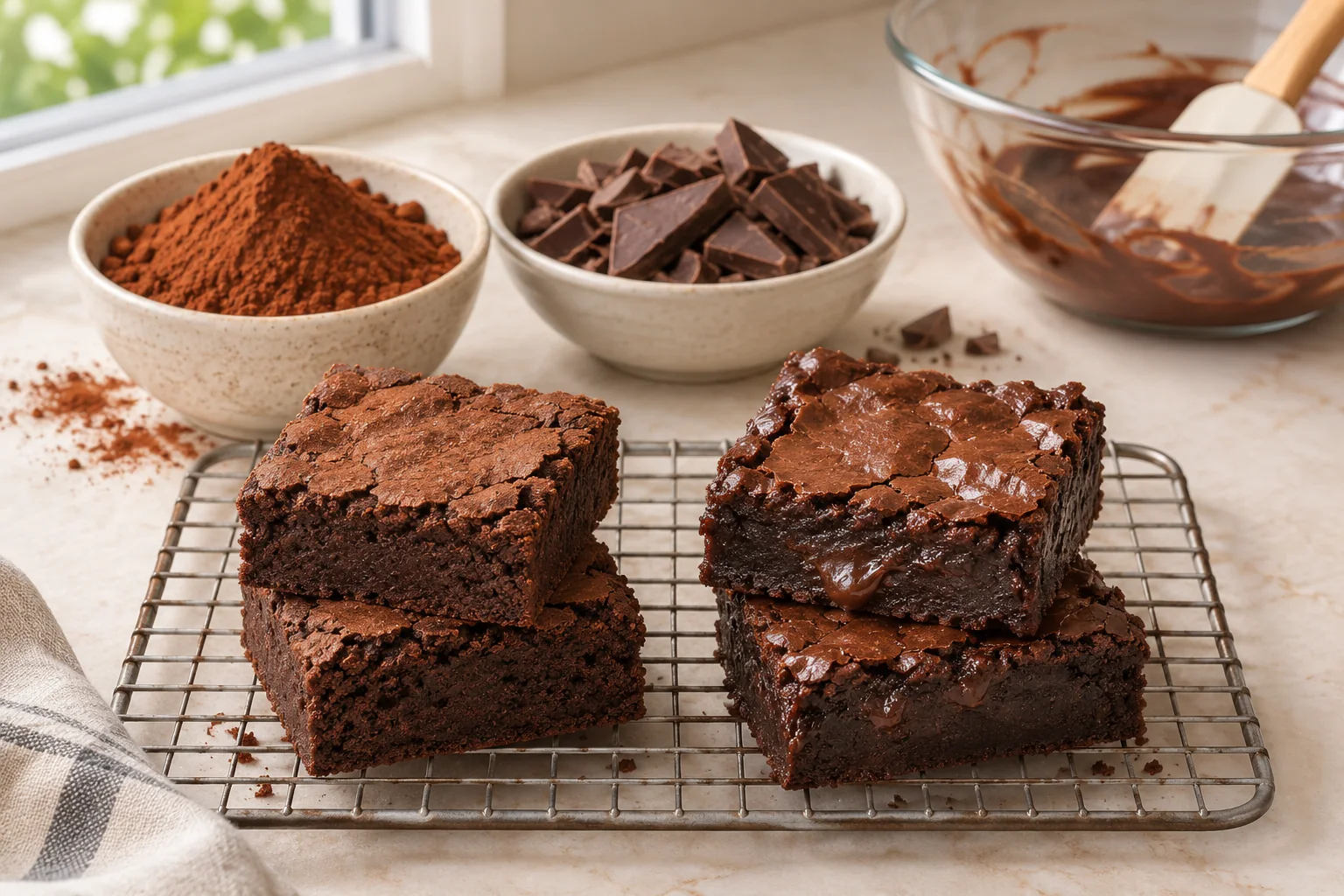
Cocoa supplies concentrated flavour but also absorbs liquid. Many excellent fudgy brownies use cocoa along with an appropriate level of butter or oil. A cocoa-only recipe is not inherently cakey; its overall fat, sugar and flour proportions determine the final texture.
Flour is a structural ingredient
Less flour often means less cake-like crumb, but too little can leave bars fragile or greasy. Weigh flour whenever possible and do not pack cups. Adding an extra handful because the batter looks shiny can shift the texture from fudge-like to dry.
Sugar contributes more than sweetness
Sugar affects moisture retention, surface crust and how the brownie sets as it cools. Reducing it by a third or half without adjusting the entire recipe may yield a less tender bar. Choose a tested less-sweet brownie if that is your preference.
Egg quantity matters
Egg proteins contribute structure while yolks supply fat and emulsifiers. More eggs do not necessarily make brownies fudgier; in some formulas they support a higher, more cake-like crumb. Use the recipe's egg size, quantity and mixing method.
Minimal leavening
Many dense brownie recipes use little or no baking powder, while some include a small amount to balance texture. More leavener can create an airier, cake-like rise. Do not remove or add it arbitrarily, especially when the recipe was tested to produce a specific crumb.
Avoid unnecessary aeration
Whipping eggs and sugar extensively can change the batter's structure, although some shiny-top brownie recipes intentionally beat them. A fudgy formula made by simple stirring should not be converted into a foam cake by prolonged mixing. Follow its exact order and mixing cues.
Handle melted ingredients carefully
Heat chocolate and butter gently using the recipe's method and allow them to reach the instructed temperature before adding eggs. Very hot melted chocolate can cause lumps or harm the emulsion. Water contamination may also affect plain melted chocolate handling.
The pan sets the thickness
An eight-inch square pan holds the same batter deeper than a nine-inch square. Fudgy brownies need sufficient baking to set that depth. Switching to a smaller pan to create a dramatic tall bar can produce overcooked edges and an uncooked middle.
Recipe to try: Almond Flour Brownies. This version combines almond flour with dark chocolate. Its proportions are specific to that flour and are not a one-for-one wheat-flour conversion.

Light metal can simplify baking
Many brownie formulas perform predictably in light-coloured metal pans. Dark finishes and thick glass may brown or retain heat differently. Match the recipe's specified pan first instead of changing material and depth at once.
Learn the right doneness cue
A fudgy brownie can leave a few moist, cooked crumbs on a tester. A smear of melted chocolate chip is not the same as raw batter. Follow the tested recipe's precise cue, including set edges and centre structure, rather than baking until the tester is completely dry.
What underbaked really looks like
If the centre is shiny, flowing or obviously unstructured, that may be raw batter rather than intended fudginess. Uncooked flour and eggs present safety concerns. A long chill cannot replace the cooking that the centre should have received.
Cool fully before judging texture
Warm butter and chocolate keep the crumb very soft. The centre firms while cooling, making it possible to cut clean squares. Some particularly dense brownies slice neatly after a recipe-supported chill, then develop their intended eating texture as they warm slightly.
How to get extra-fudgy edges without burning
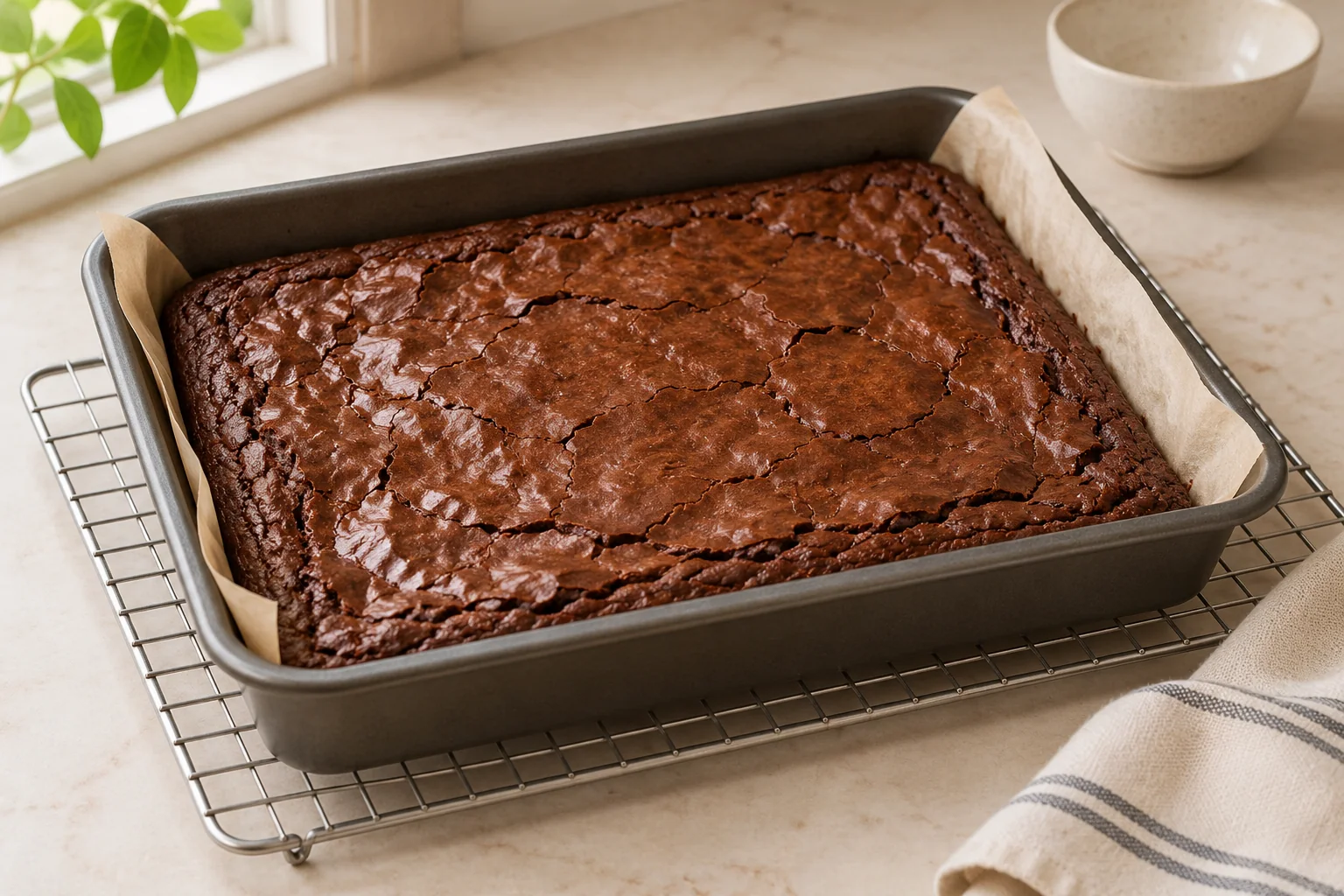
Use the correct pan size, spread batter evenly and check at the recipe's earliest appropriate time. The edge often sets first. Trying to achieve a gooey centre by aggressively increasing oven temperature can make hard borders and an unevenly cooked interior.
Chocolate chips and nuts
Add-ins create textural contrast but can interfere with neat slicing. Use measured quantities. If you want a smooth truffle-like bite, a simpler batter with fewer bulky additions may serve your goal better than a pan overflowing with nuts and chips.
Why fudgy brownies sometimes turn dry
Extra flour, an oversized pan, overbaking or a formula with insufficient fat can dry the crumb. Identify which variable changed before adding more butter. Storage matters too: expose cut edges to air and even a properly baked brownie will firm and dry over time.
Recipe to try: Black Bean Brownies. Black beans and cocoa form a different brownie base. Use the stated preparation and baking cues for this formula.

Why they become greasy
An ingredient measurement error, excessive fat or an unstable emulsion can create visible oil separation. The solution may involve correct mixing temperatures and a different recipe balance. Blotting grease after baking doesn't repair the original structure.
A repeatable brownie workflow
Prepare the correct pan and parchment; weigh flour, chocolate and sugar; melt or combine fat as instructed; add eggs at the prescribed temperature; mix flour only to the intended stage; bake to a set centre; and cool completely before cutting.
Frequently asked questions
Are brownies fudgy because they are raw? No. Does more melted chocolate always help? Not without balancing sugar and fat. Do I need baking powder? Follow your formula. Should they be refrigerated? Plain ones may not require it, but refrigeration can help slicing; perishable toppings need cold storage.
Fudgy is a recipe choice
Start with the right ingredient balance and protect it through measured mixing, an appropriate pan and complete baking. That gives you an indulgent chocolate brownie with a genuinely rich centre—not an accidental underbake.
IN PICTURES
From the baking notebook
FROM THE RECIPE BOX


