On this page
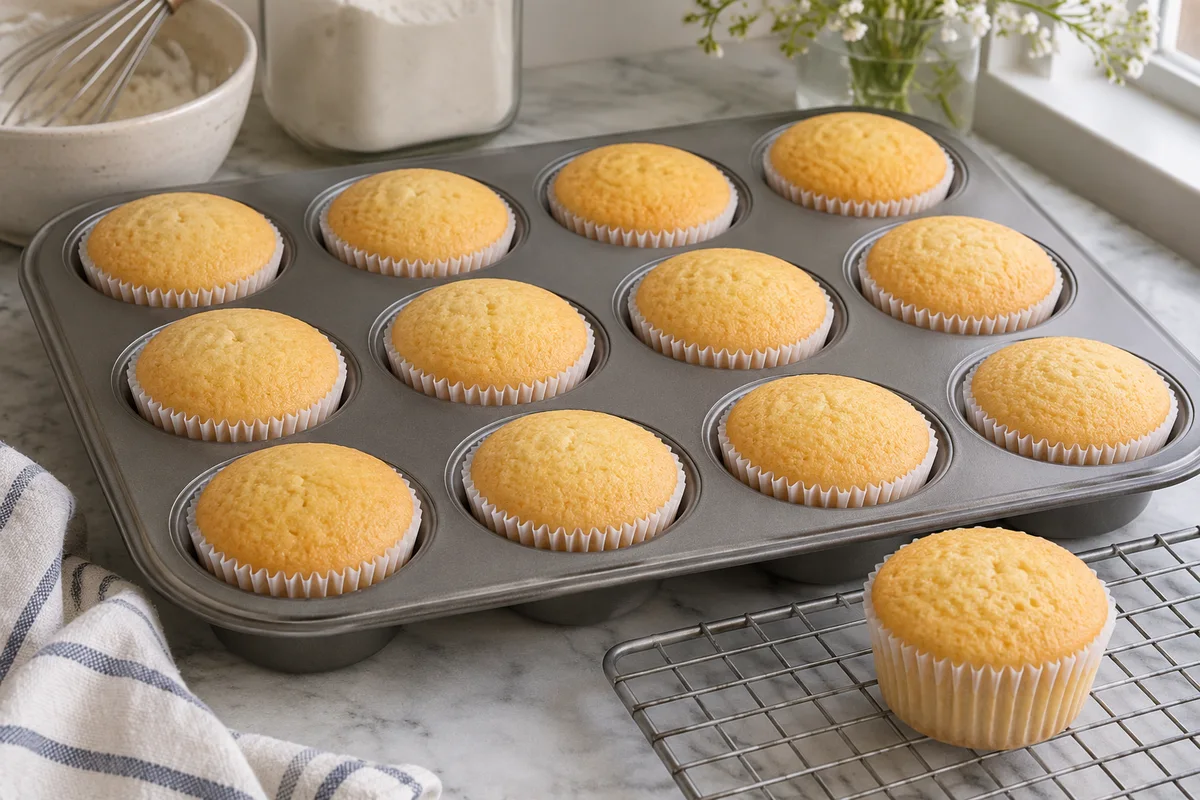
Look at the whole tray before adjusting the recipe. A row leaning toward one side suggests uneven heat. One tall cupcake among otherwise level neighbours points first to its portion. A photo of the unfrosted tray makes the pattern easier to remember.
Choose a reliable cupcake recipe
Cake batter methods vary. A butter-and-sugar creamed cupcake may depend on incorporated air, while a reverse-creamed or oil-based batter builds structure differently. Changing the mixing technique or swapping flours can alter rise substantially. Use a cupcake formula designed for the pan size and texture you want instead of assuming any cake batter will work without adaptation.
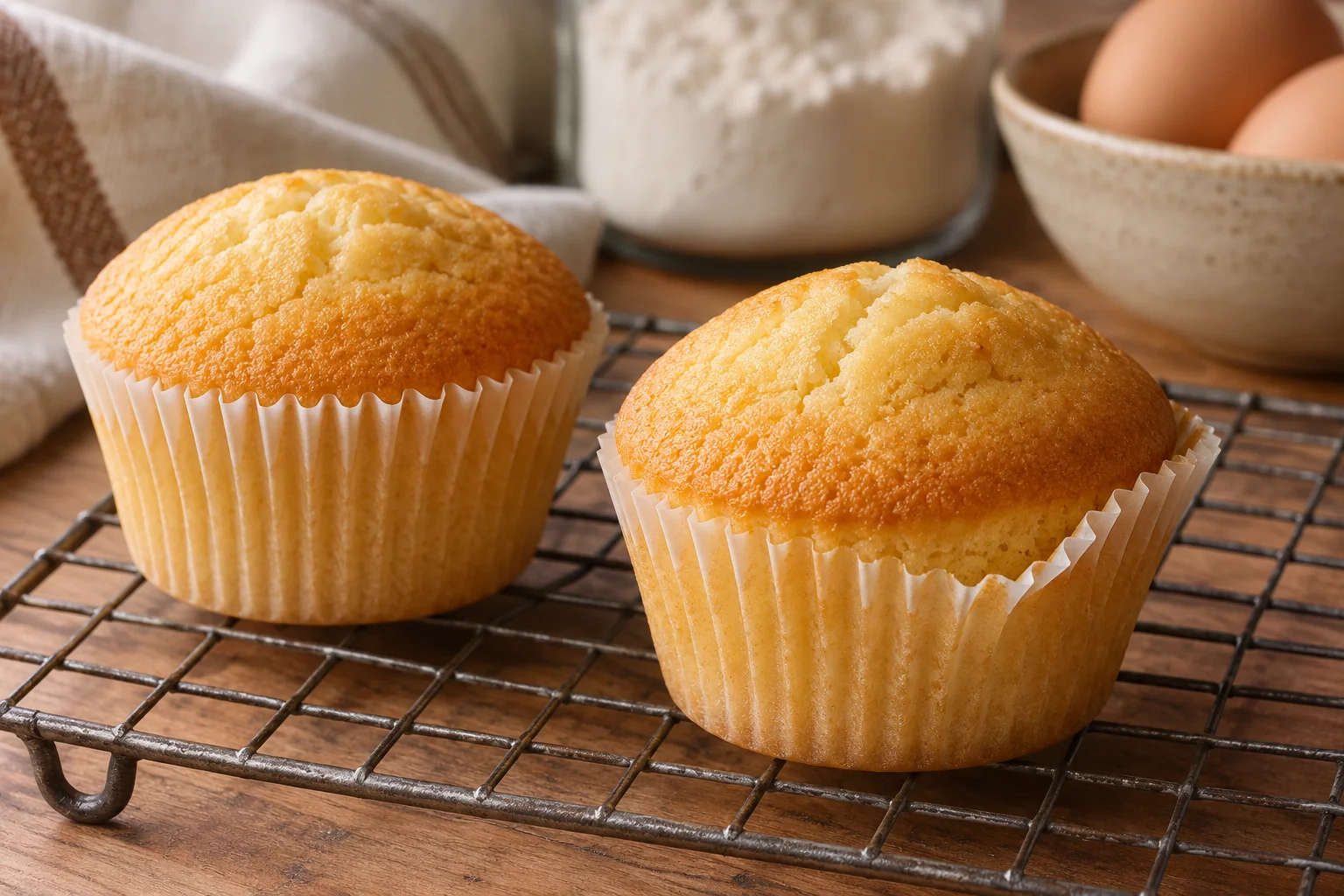
The pale tops of Vegan Vanilla Bean Cupcakes make differences in height and browning easy to compare.
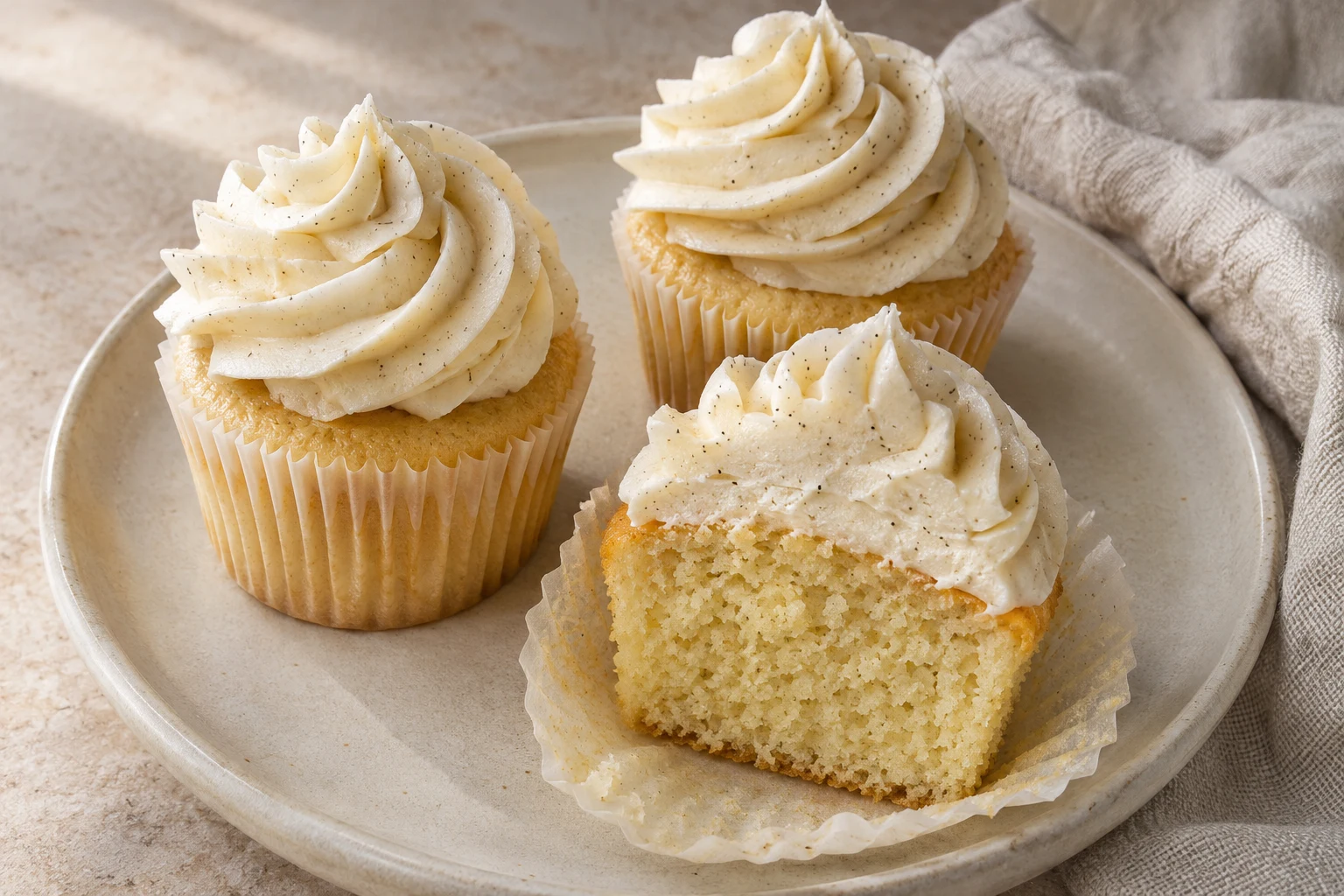
Measure the flour correctly
Too much flour creates stiff batter that may dome sharply, crack or become dry. Too little can produce weak structure and excessive spreading or sinking. Weigh flour in grams when provided; scooping tightly packed cups from a bag can cause major differences. Confirm that the recipe specifies cake flour or all-purpose flour and avoid volume-for-volume substitutions without guidance.
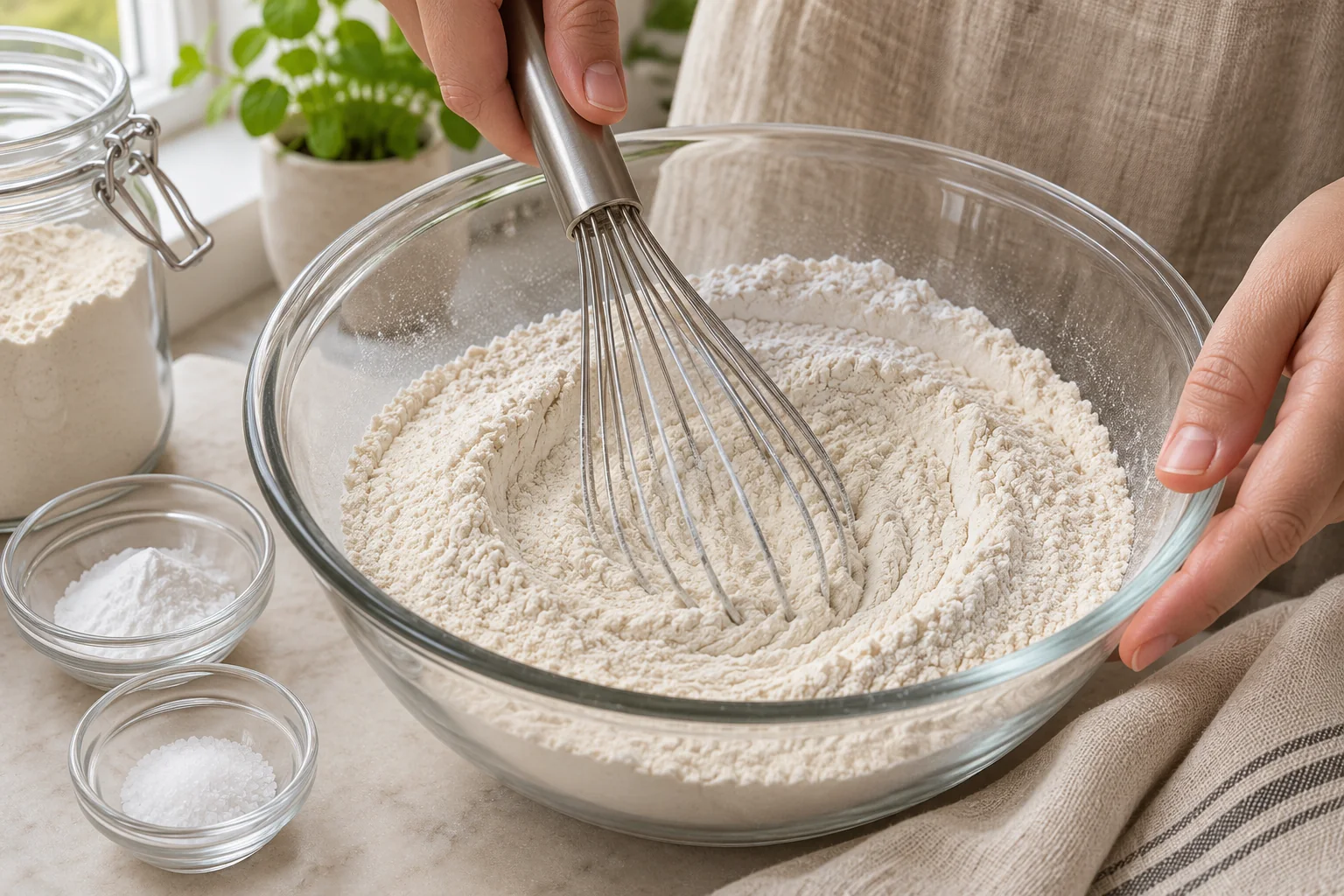
Fresh baking powder and soda
Chemical leaveners create gas that helps cupcakes rise, but their amounts must match the flour and acidic ingredients. Expired or improperly stored leavener may be weaker. Excess leavening can produce dramatic rise followed by collapse or a bitter flavor. Check the recipe's measurements and replace questionable old supplies rather than doubling the amount blindly.
The right mixing endpoint
Undermixed batter can contain pockets of flour or leavener that rise unevenly, while overmixing some formulas can toughen gluten or alter aeration. Creamed cakes need appropriate butter-and-sugar mixing; reverse creaming has its own structure-building stages. Follow the actual method and scrape the bowl's sides and bottom. A few perfectly mixed spoonfuls are not enough if the remaining batter contains lumps.
Use the mixing sequence in Vegan Chocolate Cupcakes when working with cocoa batter.

Ingredient temperature
Butter that is too cold may not cream properly, while partly melted butter changes the aeration. Eggs and milk at the prescribed temperature can support smoother emulsification. Oil-based batters behave differently. Use the recipe's temperature cues rather than placing all ingredients beside a hot oven to warm them rapidly.
Use a consistent scoop
Different amounts of batter create different baking times and rise. Weigh the usable batter and divide by the intended cupcake yield, or use a scoop calibrated with the recipe. Avoid filling one liner halfway and its neighbour nearly to the rim. If a cupcake repeatedly spills over, check the cavity fill before altering the leavener.
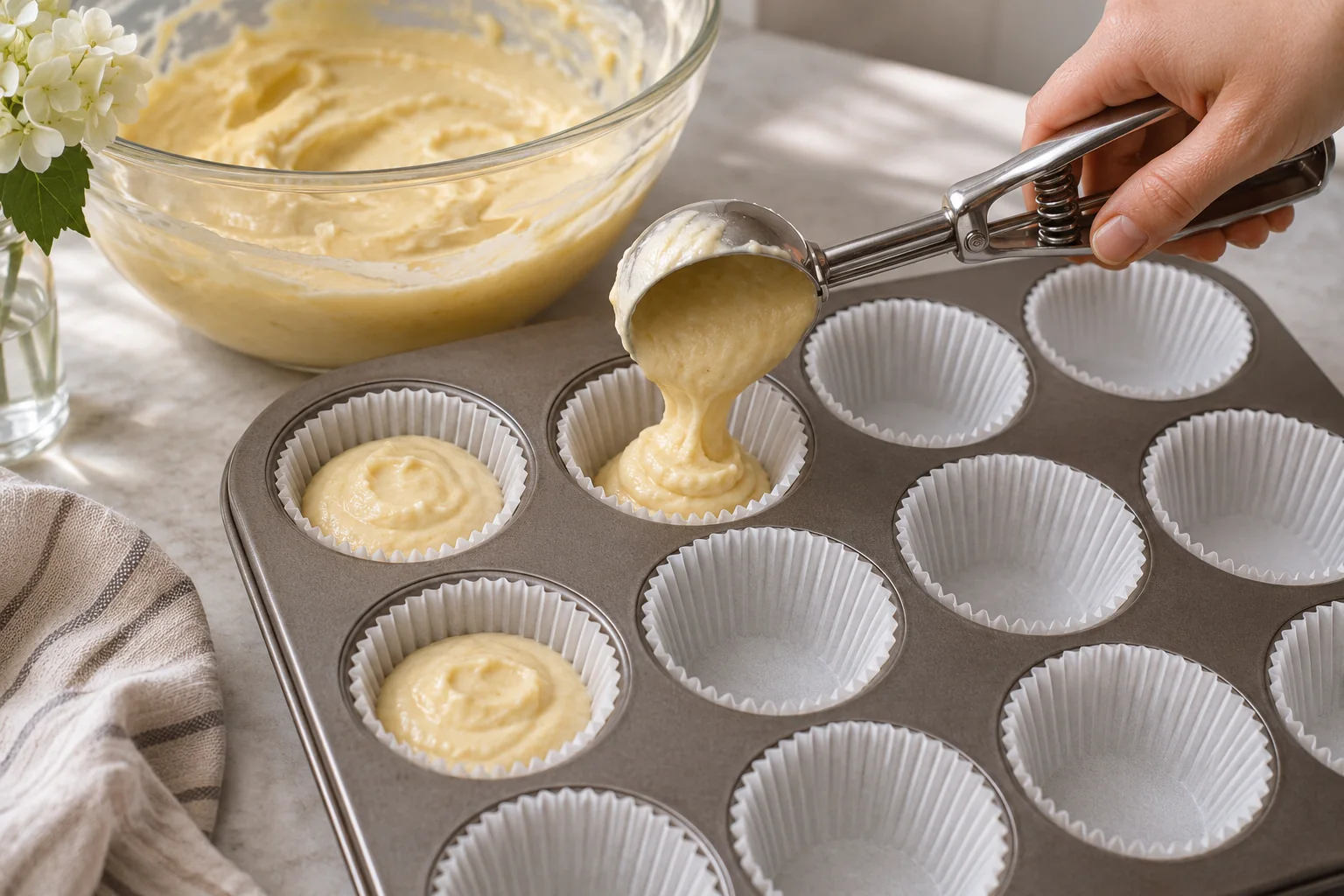
Fill only to the recipe's line
Two-thirds full is a common rule of thumb, but high-rising or unusually dense formulas may specify another amount. Pan cavities vary by manufacturer. An overfilled cup can create a mushroom top that spreads onto the pan; an underfilled one may never reach the paper's upper edge. Follow the tested formula and actual liner volume.
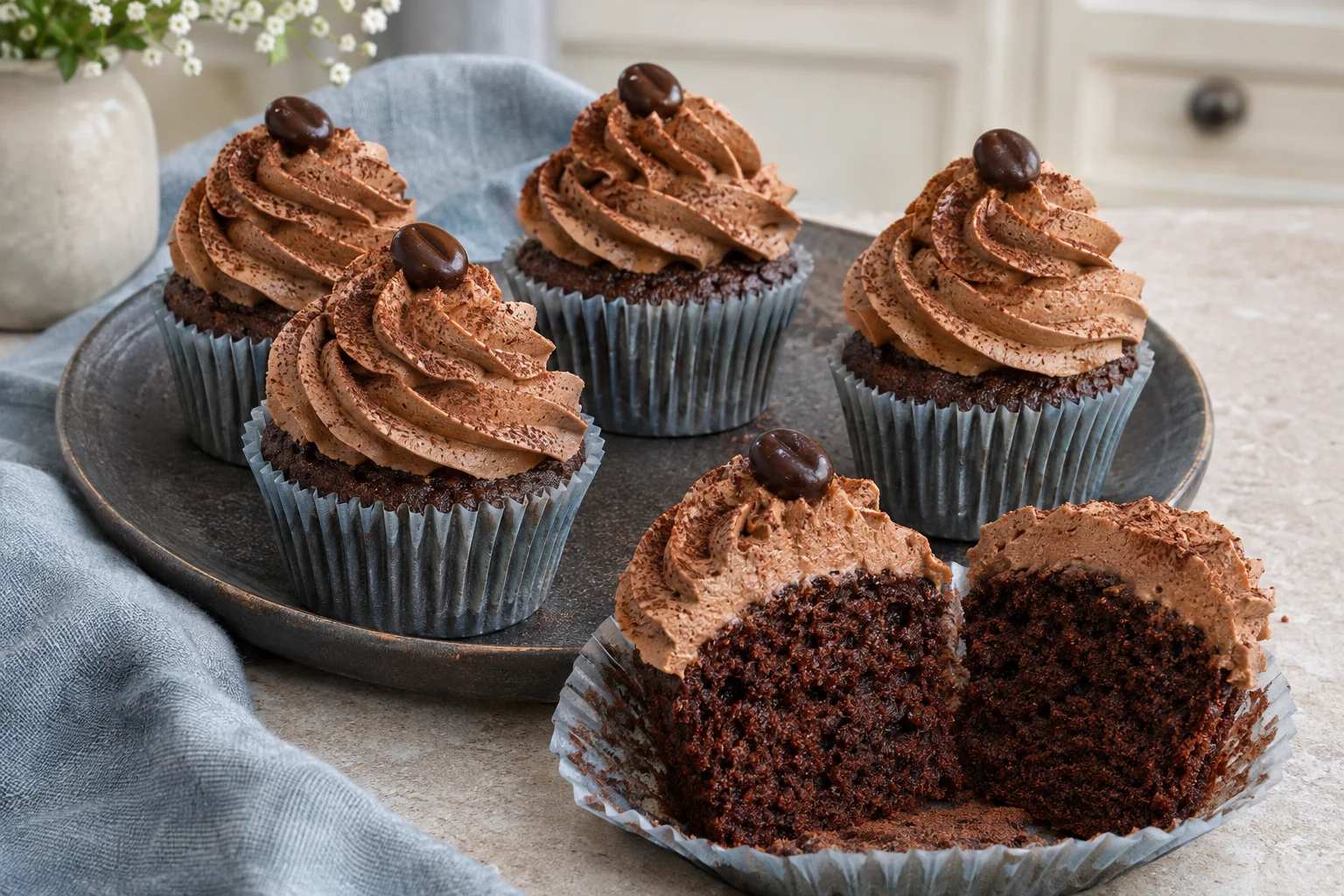
Follow the fill instructions in Vegan Mocha Cupcakes for the first test tray.
Choose suitable liners
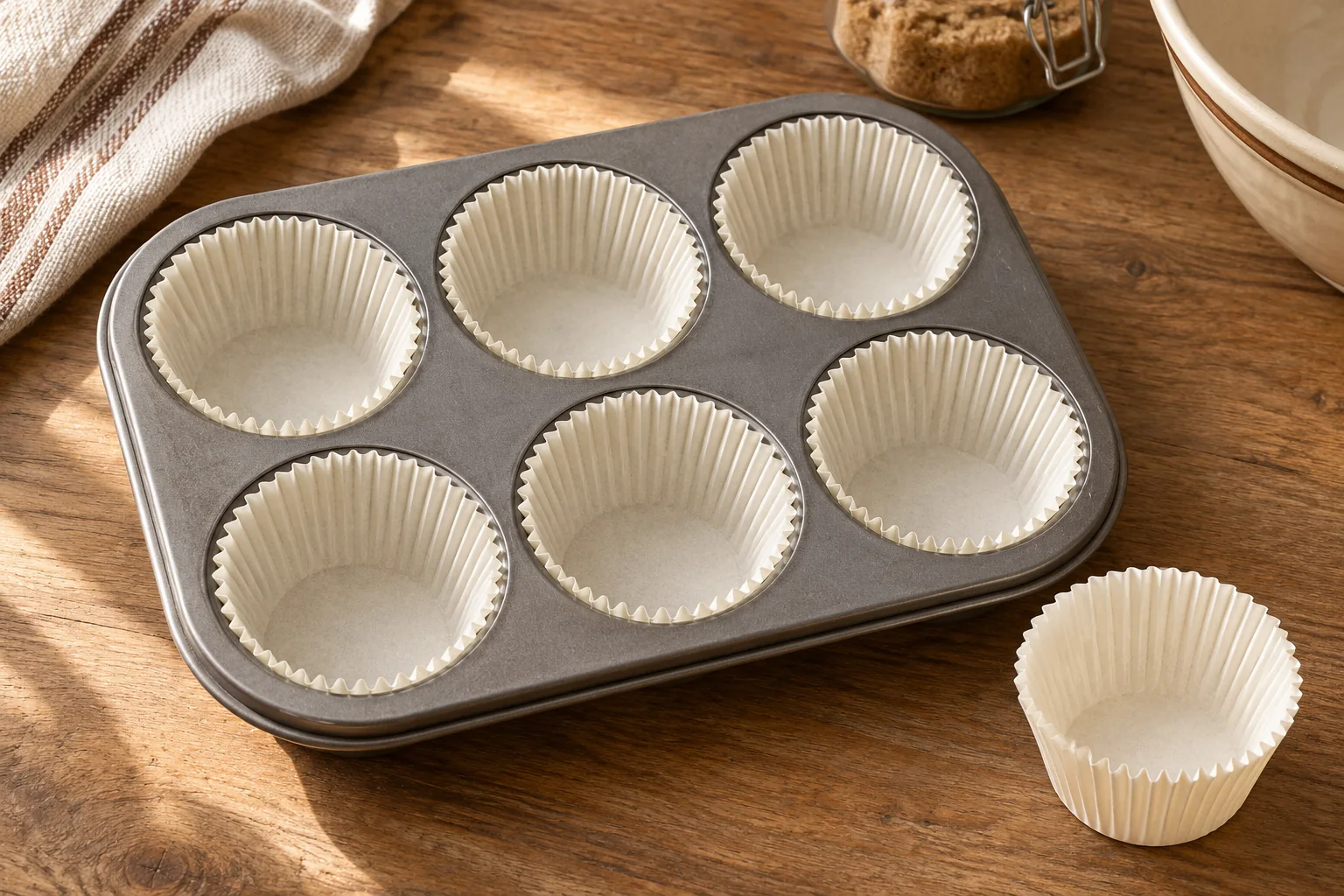
Choose oven-rated liners that fit the pan cavities and sit without large folds. Tall tulip papers and flexible silicone cups can change the apparent fill level. Use a consistent measured batter portion and the liner type specified for the intended bake.
Preheat thoroughly
A partially heated oven changes how batter expands and sets. Depending on the cake, low early heat can encourage spreading or delayed lift, while excessive heat may produce cracks and peaked tops. Use an oven thermometer if results are repeatedly inconsistent with a tested recipe. The oven's readiness signal may not always indicate that its walls and air have stabilized.
Rack position
Most standard cupcake recipes use a central rack or specified position for balanced heat, but ovens differ. Placing the pan near an upper heating element may brown tops before centers cook. A very low rack can darken bottoms. Follow the tested position and evaluate whether your oven has a significant hot spot before moving the pan arbitrarily.
Why one side rises higher
If cupcakes near one corner of the pan dome more strongly, the oven may heat unevenly or the tray may sit on a sloped rack. Batter may also have been portioned in a different order, with unincorporated leavener settling in one area. Scrape and mix according to the formula, fill consistently, and rotate only if appropriate after the structure has set.
Oven door timing
Repeatedly opening the door early can cool the oven and disturb a delicate cupcake structure. Avoid checking every few minutes and use the oven light if available. When the expected bake window approaches, assess several cupcakes rather than assuming the center cavity matches the corner. Rotate the pan only as directed and when the batter can tolerate the movement.
Why cupcakes peak sharply
A very hot oven, stiff batter or excessive leavening can create a tall pointed dome and cracks. A strong peak might be welcome in a muffin but less suitable for a smoothly frosted cupcake. Check actual temperature and flour weight first. Reducing leavener without understanding the recipe can produce a dense cake, so change one controlled factor at a time.
With Coconut Flour Cupcakes, judge the top against the recipe’s own texture before adjusting the heat.

Why cupcakes sink
Cupcakes may rise rapidly then collapse if the center hasn't developed enough structure, or if the formula has too much leavener or liquid. Removing the tray too early can leave underbaked centers. Overmixed or unstable batter can also contribute depending on method. Use full doneness cues and avoid compensating for a sunken cupcake with a pile of frosting over raw batter.
Why the paper peels away
Linings may detach when cupcakes cool in excess trapped steam, from certain batter compositions or after refrigerating moist finished cakes. Allow cupcakes to cool according to the recipe, often transferring from a hot pan to a rack after a short interval. Avoid sealing warm cupcakes in airtight boxes. Liner release is partly a product issue, not solely a sign of incorrect baking.
Cupcake pan material
Dark coated metal may brown the bottoms more quickly than light aluminum under similar conditions. Silicone and other materials can transfer heat differently. A recipe tested in metal may need another published approach for silicone. Do not assume extra frosting will hide an overbaked dry base caused by unsuitable pan heat.
Mini cupcake changes
Smaller cavities cook rapidly and may need shorter bake times or a dedicated mini-cupcake formula. A very high dome on a standard cupcake can turn into an awkward mushroom on a mini. Portion by a tested fill volume and check earlier. Don't mix mini and standard cups in one oven batch without accounting for their different endpoints.
Jumbo cupcakes
Large thick portions need more time for the center to bake and may require different temperature guidance. A dark crust can form while a large middle remains wet. Choose a specific jumbo-cupcake recipe or a tested conversion rather than simply doubling the standard fill. A giant cupcake may be better served as a small cake when presentation and thorough baking matter.
Keep batter handling consistent
If the recipe uses chemical leavener, don't leave half the batter waiting for a long time while the first tray bakes unless the method permits it. Some batters lose lift as time passes, whereas others tolerate rest. Use adequate pans or mix manageable batches to preserve consistent rising. Scraping the bowl and portioning efficiently often produce more even results than elaborate tricks.
For Vegan Chocolate Espresso Cupcakes, keep scoop size and the wait between mixing and baking consistent.

A practical diagnostic batch
Make one tested twelve-cup recipe, weigh portions and bake on the recommended middle rack. Note each cupcake's height after cooling and where it sat in the pan. If the taller cupcakes cluster toward a heat source, investigate the oven; if heights correlate with portion weights, improve scooping. A single measured trial can reveal the cause without guessing.
Before topping Vegan Strawberry Shortcake Cupcakes, set two cupcakes side by side and compare their cooled heights.

IN PICTURES
From the baking notebook
FROM THE RECIPE BOX


