
On this page
For a tall cookie, the challenge is baking the middle before the edges grow hard. Bake one full-size test portion and let it cool before committing a whole tray to the same time and temperature.
What bakery style actually means
Some bakeries sell dense chewy rounds, others make tall cakey cookies or crisp-edged chocolate-filled mounds. There is no single official bakery-cookie formula. Choose the crumb you want before adapting a recipe. A cookie with a firm outer shell and tender center needs a different balance from a light soft frosted cookie, even if both are three centimeters tall.
Choose a recipe designed for thickness
Start with a tested bakery-style cookie method rather than adding an extra cup of flour to your favorite thin cookie. Thick formulas may use a particular combination of flour, starch, sugar and eggs, along with larger portions and controlled chilling. Changing only one ingredient can reduce spread but produce a dry bready result. Structure and moisture must be balanced together.
Use the portions and texture cues for Chewy Chocolate Chip Cookies as a starting point before trying a larger scoop.
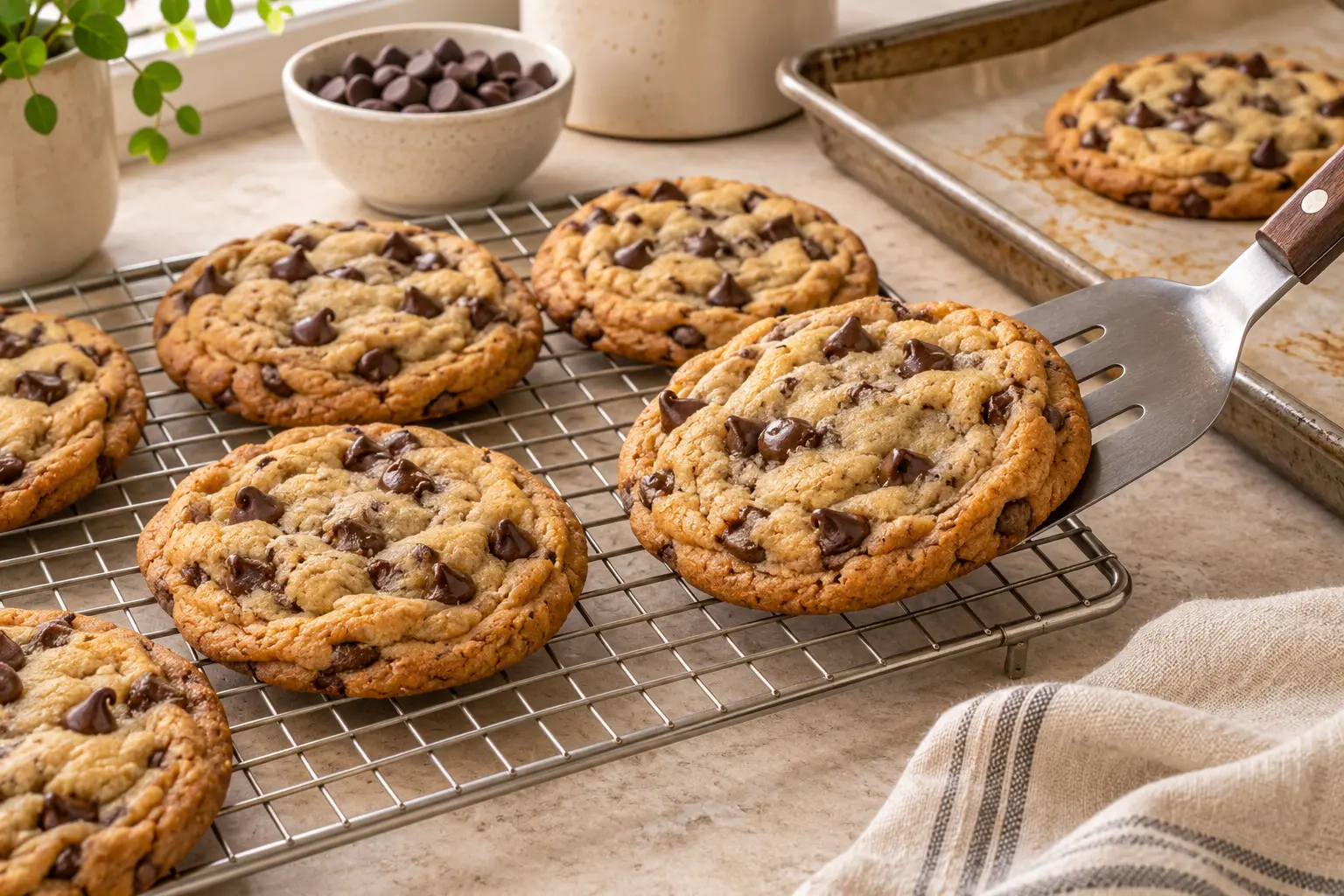
The role of flour weight
More flour relative to fat and sugar often limits spread, but it also absorbs moisture and affects tenderness. Weigh flour rather than scooping heavily packed cups from a bag. A dough that seems dry before baking may remain dry inside a thick cookie even if its height looks impressive. The correct target is a cohesive dough that holds shape while still yielding the intended crumb.
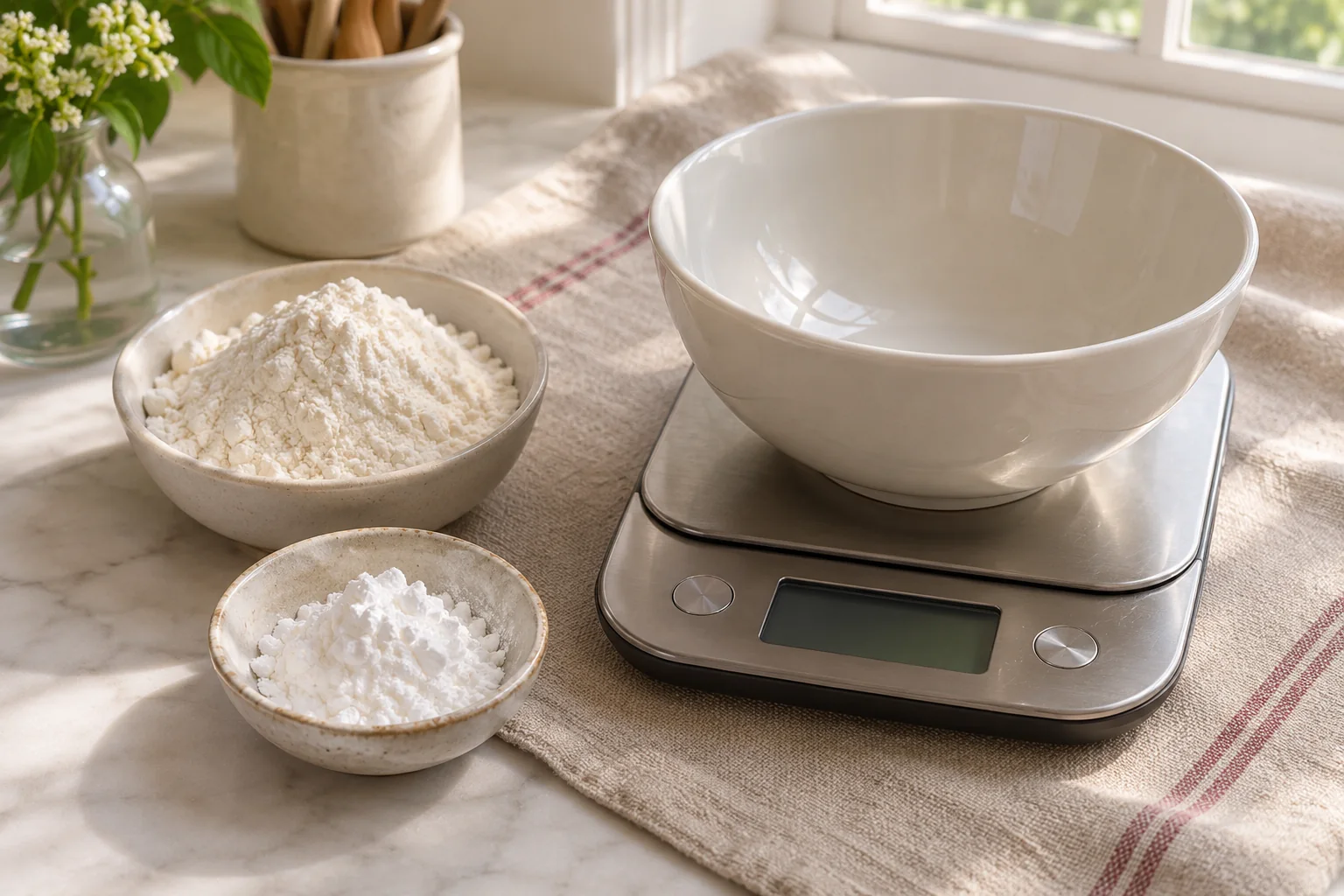
Flour type affects chew
Some tested large-cookie recipes use a stronger wheat flour or a blend of flours for cohesive chew. Others rely on ordinary all-purpose flour for tenderness. Strong flour isn't inherently better; overmixing may produce an undesirable tough cookie. Choose the formula's intended protein characteristics instead of replacing cake flour or all-purpose flour without adjustment.
Butter temperature and shape retention
Warm butter dough spreads more readily before its structure sets. Chilling some formulas firms the fat and encourages a slower spread. But very cold dough may need a different baking duration, and chilling cannot repair a deeply unbalanced ingredient ratio. Follow the recipe's butter state at mixing and its resting instructions rather than assuming overnight refrigeration fixes everything.
Check the butter state specified for Classic Chocolate Chip Cookies before trying to correct spread by adding flour.

Melted versus creamed butter
Melted butter can support dense chewy cookie formulas when sugar, flour and rest are balanced. Creamed butter incorporates air and may create a lighter structure. A bakery-style recipe can use either method. The result depends on the complete system, so melting butter from a creamed recipe purely for flavor may make cookies flatter rather than thicker.

Sugar influences spread
Brown and white sugars provide different moisture, flavor and spreading effects. Some thick cookies emphasize brown sugar for chew, while others use a balance for crisp edges. Reducing sugar substantially might prevent spread but also dry the center and alter browning. Use the tested ratio. A thick cookie shouldn't need to taste like flour paste merely to stay tall.
Compare the chew in Chewy Ginger Cookies after cooling to see how a different sugar and spice formula behaves.

Egg balance
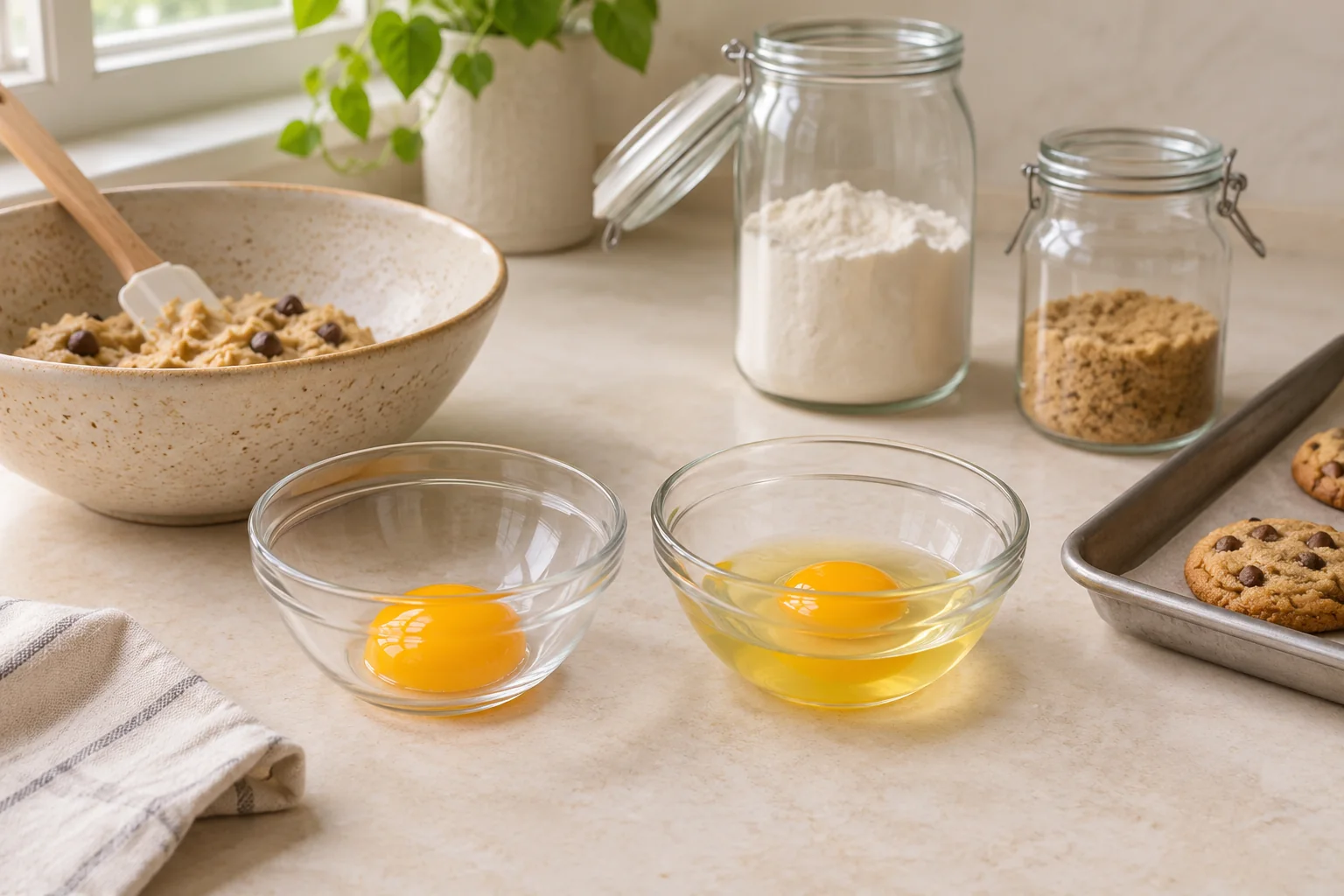
Eggs contribute binding, moisture, proteins and fat. Some recipes use an extra yolk to enrich a chewy center; other bakery cookies require a different ratio. Adding eggs without recalculating flour can make dough looser or cakier. Choose a tested formula rather than throwing in an extra yolk to correct every flat batch.
How baking powder and soda differ
Leavening influences gas, pH and how the cookie spreads or rises. A thicker cookie may use baking powder or a combination of leaveners, but excess can create a strange chemical flavor or collapse. Don't double soda just to make dough balls taller. Follow the recipe's leavener, particularly when brown sugar and cocoa affect acidity.
Use generous even portions
A typical bakery cookie may use a larger dough weight than a standard home cookie, but portion size varies widely. Weigh each mound so it bakes consistently. A thirty-gram portion won't become a giant bakery round merely because it is shaped tall, and a huge mound needs sufficient center baking. Choose a published size and keep it consistent.
Weigh the portions of Chocolate Chunk Cookies so that one chocolate-heavy scoop does not bake at a different rate.

Starting shape makes a difference
Some methods use tall rough mounds or loosely stacked dough rather than flattened balls. The geometry changes how quickly the cookie spreads before setting. Follow recipe instructions and avoid pressing tall dough into a compact dense cylinder unless prescribed. Big chocolate pieces may stick out attractively, but ensure the mound can bake through beneath them.

Chill before baking when directed
A specified refrigerated rest firms dough and can improve handling. Some formulas call for a long rest to hydrate flour and develop flavor. Others are formulated to bake immediately. If your recipe requires chilling, plan it into the schedule instead of turning the oven hotter to compensate. Cold dough may spread less but should still be fully baked.

Why a hotter oven isn't always the answer
Higher heat can set outer edges before the dough spreads widely, but it may also brown or burn the surface while a large center remains raw. Each thick-cookie recipe chooses temperature according to portion and structure. A universal very-hot-oven shortcut is unreliable. Use the recipe's specified temperature and monitor actual oven calibration.
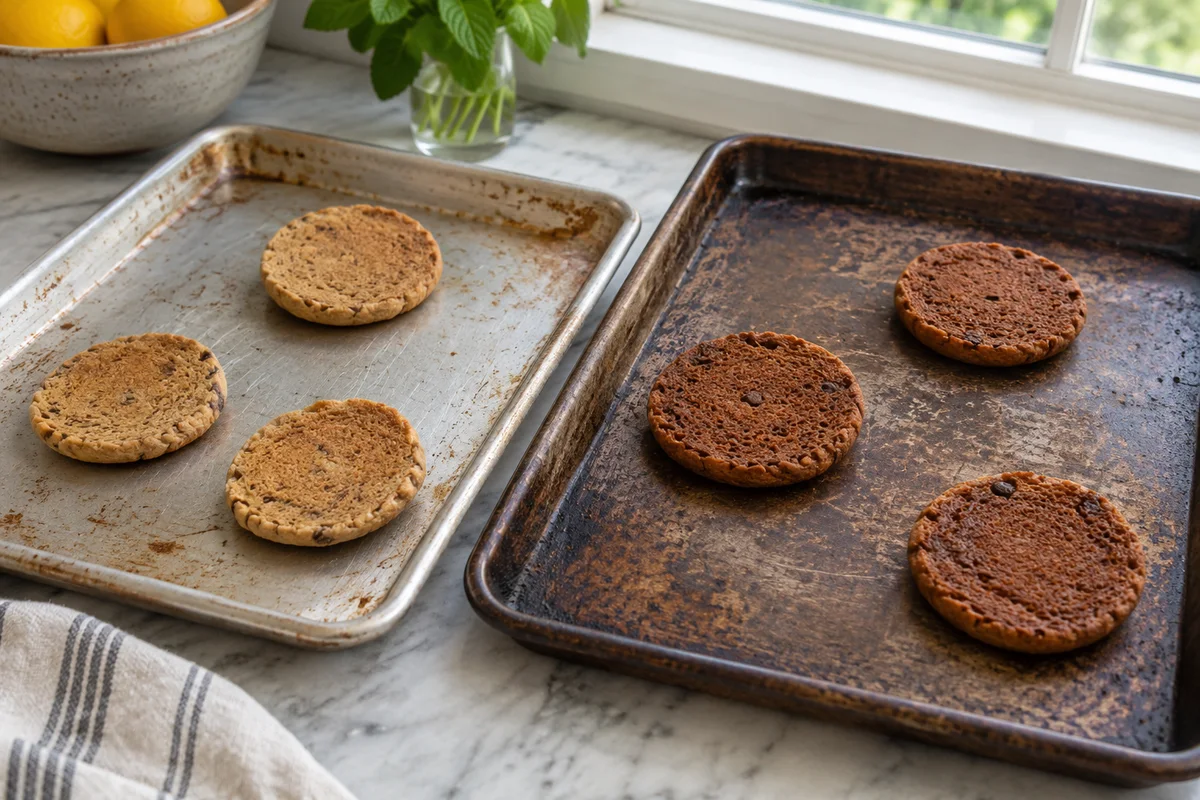
Dark baking sheets can overbrown
A dark metal pan may brown cookie bottoms faster than a light sheet, creating a hard base while the center remains soft. The effect also depends on pan thickness and lining. Choose the pan recommended by the source and check underside color. A thick cookie's success requires even cooking, not merely a dramatic golden ring.
Spread depends on more than chilling
Too little flour, excessive sugar or fat, warm dough, an incorrectly measured egg or a cool oven can all influence spread. If your cookies flatten, record the full recipe and equipment first. Adding extra flour might create height but lose flavor and chew. Identify the real variable before adjusting a trusted formula.
Don't overmix after flour
Some bakery-cookie recipes use a short final mixing stage to avoid toughness and limit excessive gluten development. Others depend on a particular chewy dough strength. Follow the method and incorporate flour evenly without prolonged unnecessary beating. A rough thick dough can be correct, but dry unmixed flour pockets aren't.
Why thick cookies need a center check
A brown outside doesn't guarantee that raw dough in the middle has safely baked. Follow the recipe's intended center texture and validated doneness cues, allowing carryover setting on the baking sheet. A tender fully baked crumb is different from liquid raw batter. Don't market an undercooked flour-and-egg center as the secret to bakery-style softness.
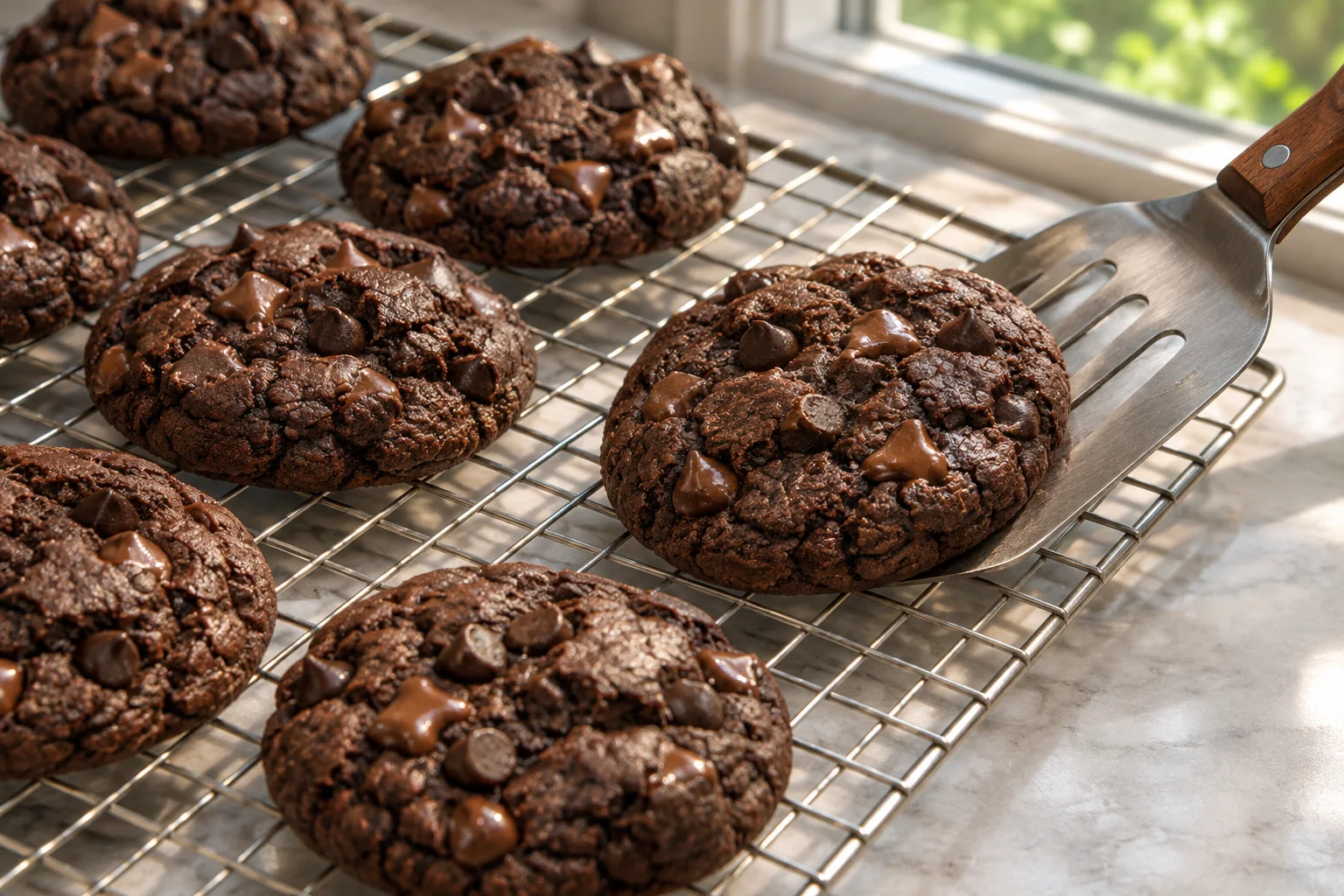
For a dark dough such as Double Chocolate Chip Cookies, check a cooled test cookie because surface browning can be difficult to read.
Carryover heat and cooling
A hot baking sheet continues transferring heat after removal. Some recipes deliberately leave large cookies on the tray longer than small ones so they set enough to move. Follow that instruction before lifting with a spatula. Too much time on a dark hot sheet may harden the base. Evaluate the final texture only after cooling to the recipe's serving stage.

Chocolate chunk placement
Large chopped chocolate creates attractive pools and changes the bite, while smaller chips may hold shape. Keep quantities appropriate to the dough; an overloaded mound can lack enough structure to hold together. A few pieces pressed on top before baking can improve appearance, but do not pack a dense wall of chocolate that shields the dough beneath from heat.
How to freeze bakery dough
Many tested thick-cookie recipes allow portioning and freezing ahead. Label weight and baking instructions. Baking directly from frozen may require a different schedule; a giant frozen mound may brown before the center warms. Use the source's method rather than assuming two additional minutes will work for every size.
If you prepare Oatmeal Chocolate Chip Cookies ahead, keep the recipe and portion weight with the stored dough.

A test tray before the party
Bake two identical large portions first, measuring raw weights and starting temperatures. Evaluate diameter, height, underside color and cooled center texture. If flat, inspect dough warmth and recipe ratios. If raw in the middle, look for a properly tested bake adjustment rather than merely removing the cookie earlier for a tall appearance.
What to do when cookies are too thick and dry
Height isn't success if the cookie tastes bready. Too much flour, excessive baking or an unsuitable formula may be responsible. Choose a recipe with balanced sugar and fat for chewy centers, and use the intended scoop. Don't compensate by pouring syrup over cookies before storage; it can make edges soggy without restoring texture.
IN PICTURES
From the baking notebook
FROM THE RECIPE BOX


