
On this page
The cookie that snaps delicately at the edge but stays tender in the middle is a very specific pleasure. It sounds simple—just bake until the outside is crisp and the center is soft—but getting that contrast consistently means thinking about the dough, its size, the baking sheet and the exact moment the tray leaves the oven.
There is no single trick that transforms every cookie into this texture. A thin lace cookie and a thick bakery-style chocolate chip cookie have different formulas and behave differently under heat. This guide explains how to get crisp edges and soft centers in cookies, with techniques you can apply to a recipe designed for that result.
First, Choose a Recipe Built for Contrast
A cookie recipe determines the balance of flour, fat, sugar, egg and liquid. That balance affects how far the dough spreads, how moisture evaporates and how the center sets. Look for recipes described as having crisp or golden edges with tender, chewy or soft centers. Our Sea Salt Chocolate Chip Cookies recipe is built for crisp edges and soft centers.
It is difficult to achieve the same texture in a dry shortbread or a cake-like pumpkin cookie without reformulating the ingredients. Start with the right base instead of hoping to change everything through oven timing.
What Creates a Crisp Edge?
The edge of a cookie is thinner and heats more rapidly than the center. As moisture leaves, sugars concentrate and browning reactions create colour and flavour. A recipe with suitable fat and sugar proportions can spread enough to form a thinner perimeter that becomes pleasantly crisp as it cools. For a crisper style, compare our Crispy Chocolate Chip Cookies recipe.
A golden edge isn't a guarantee of the ideal center, however. The thickness of the dough portion and the oven temperature determine how far the heat has reached before the surface browns.
What Keeps the Middle Soft?
Soft centers retain more moisture and often have a thicker structure than the edges. They may look slightly less set while the cookies are still hot, yet continue firming as they cool on the tray. You want a properly baked tender center, not raw batter. Our Soft-Batch Chocolate Chip Cookies recipe shows a softer-centered variation.
Follow the recipe's visual cues and recommended resting time. A cookie that collapses into wet dough when handled may be underbaked, while one that looks completely hard in the oven may become dry after cooling.
Butter Temperature Matters
Softened butter used in creaming, melted butter and cold butter produce different mixing and spreading behaviours. Creaming can incorporate air; melted butter can lead to a denser, chewier result in formulas designed for it. Fat temperature also affects how quickly dough spreads when first exposed to heat.
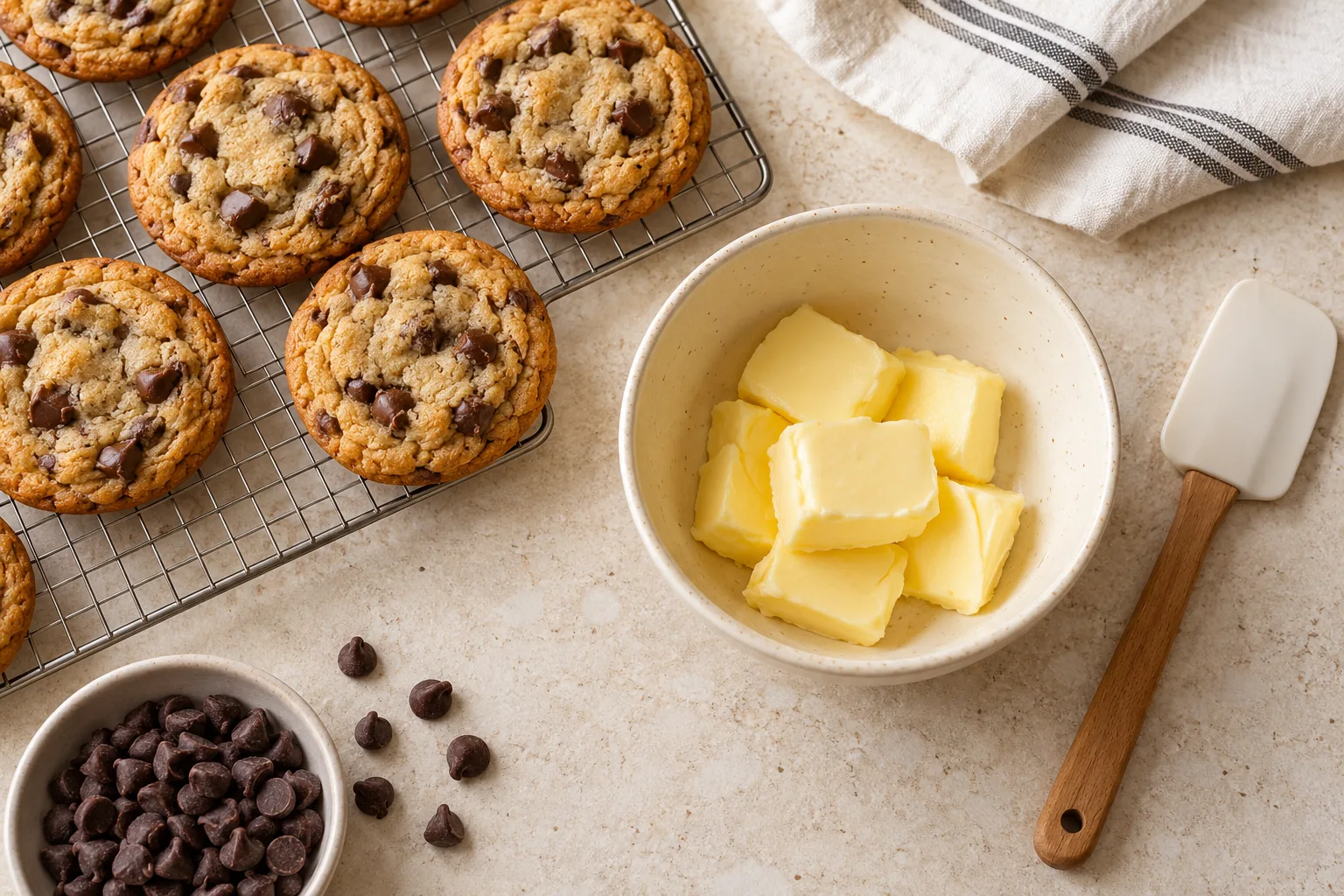
Don't casually swap melted butter for softened butter in a recipe that begins by creaming. The result may spread too far or lose its intended crumb. Use the stated butter temperature and mixing method.
Brown Sugar vs White Sugar
Sugar contributes more than sweetness. It influences moisture retention, spread, browning and texture. Recipes with higher proportions of brown sugar often produce a more moist, chewy character, while white sugar can help create a crispier profile, depending on the overall formula. Use our Classic Chocolate Chip Cookies recipe as a familiar formula for observing this balance.
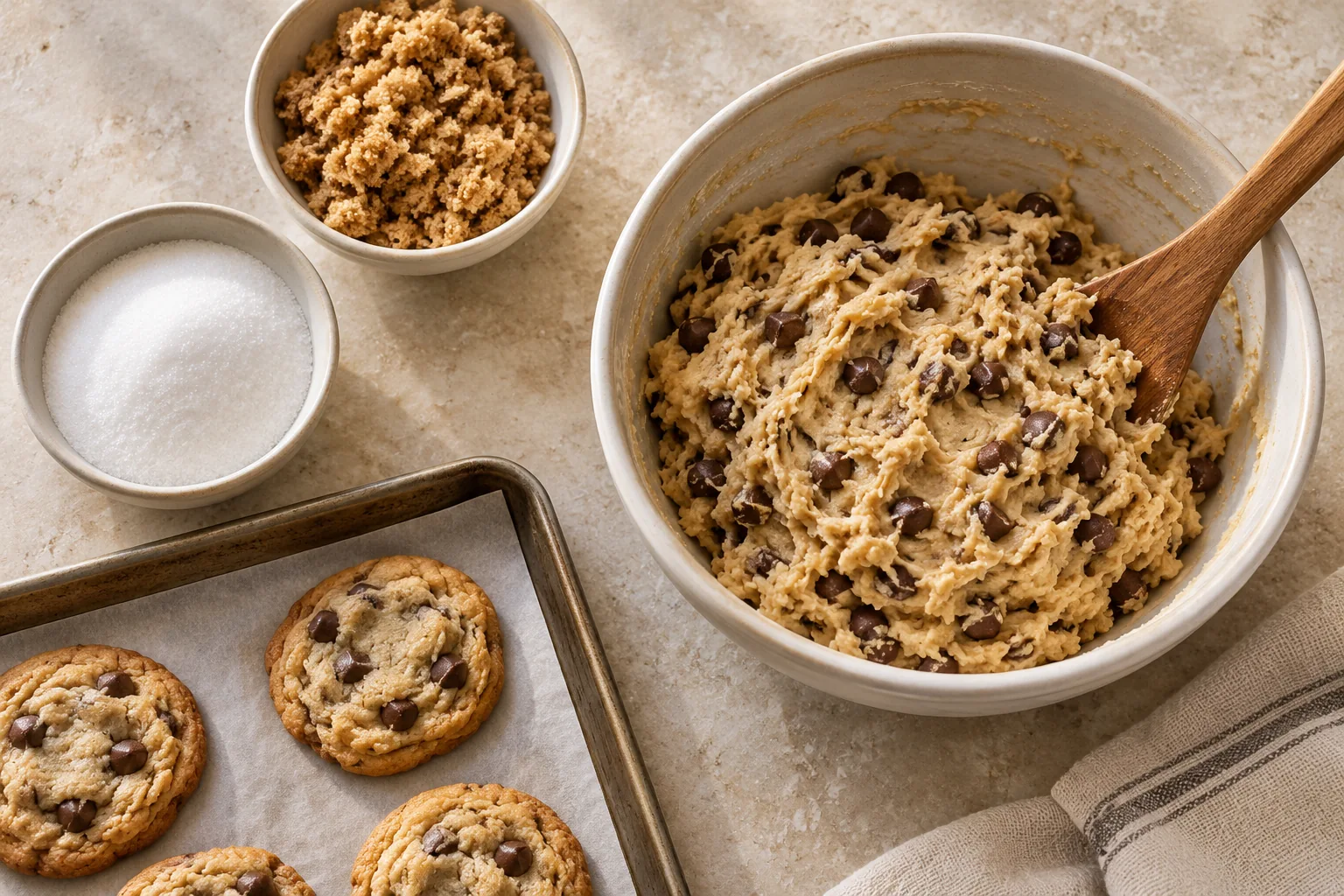
These are tendencies, not universal outcomes. Brown sugar contains molasses and moisture, and changing its proportion also changes sweetness, acidity and structure. Choose a recipe already balanced for contrasting edges and centers instead of replacing all the sugar with one type.
Measure Flour Accurately
Too much flour can prevent cookies from spreading enough to create a thin edge and may leave the crumb dry. Too little flour can allow excessive spread or a fragile structure. Weighing flour with a kitchen scale is a reliable way to follow a recipe.
If you're using cups, use the measuring method described by the recipe. Scooping directly into a bag can compress flour and yield a different amount from spooning and levelling.
Eggs and the Center Texture
Eggs contribute protein, moisture and richness. Some cookie recipes use a whole egg plus an additional yolk for a particular texture; others rely on only a whole egg. The exact balance can influence chew and tenderness.
Do not add an extra egg in an attempt to make every cookie softer. Added liquid and protein change the formula and may produce a cakier or wetter result.
Chilling Cookie Dough
Many recipes benefit from chilling because firmer fat changes the way cookies spread during the early stages of baking. Resting can also allow dry ingredients to hydrate and flavours to develop. But the appropriate duration depends on the recipe and dough.
Chilling isn't automatically the solution to every problem. Some doughs were developed to bake immediately, and excessively cold portions may need the recipe's specified adjustment. Follow the instructions before adding several hours of refrigeration.
Cookie Scoop Size and Thickness
Portion size is one of the biggest factors in the edge-to-center ratio. A small thin cookie has proportionally more edge and can become crisp throughout. A slightly larger dough portion has more center mass and may stay soft while the perimeter browns.
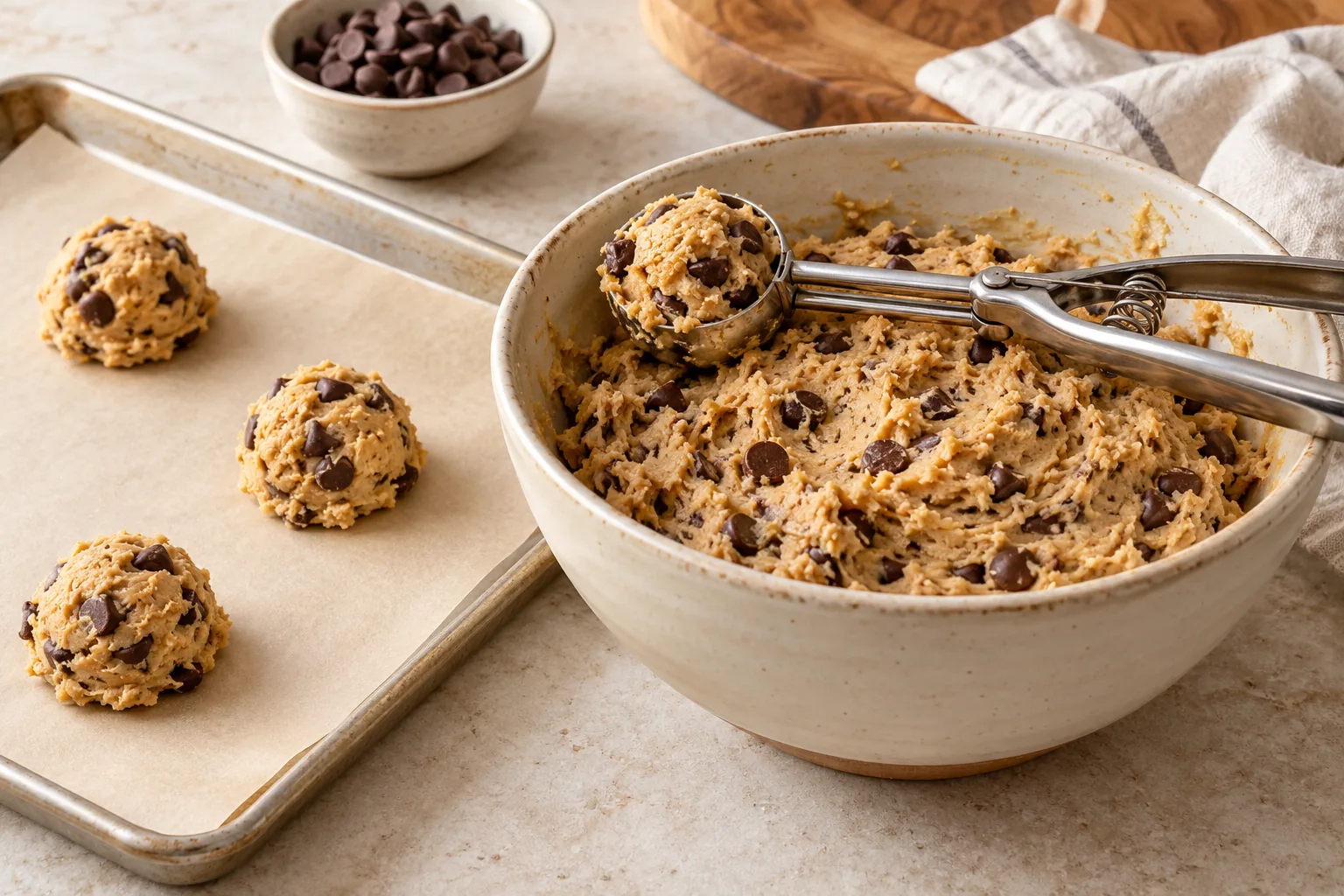
Use a measured scoop or scale and follow the recipe's shaping instructions. Flattened discs bake differently from tall mounds. Don't simply double the dough-ball size without adjusting bake time and spacing according to a reliable method.
Baking Sheet Material and Colour
Dark pans absorb radiant heat differently from light-coloured pans and may brown cookie bottoms faster. Thin sheets can heat unevenly, while heavy light-coloured metal sheets often provide more consistent results for recipes tested on them.
If a recipe specifies a particular pan and lining, use it. Silicone mats, parchment and bare metal can change spread and bottom texture. Switching several of these at once makes troubleshooting difficult.
Preheat the Oven Fully
An underheated oven can allow dough to spread before the intended structure begins setting. An excessively hot oven can brown the outer edge before the center has baked sufficiently. Let the oven reach the stated temperature and consider checking it with an independent thermometer if results are consistently uneven.
Place racks as directed. Avoid opening the door repeatedly during a short cookie bake, because sudden temperature changes can affect how cookies spread and set.
Spacing Cookies Correctly
Cookies need space to spread and for hot air to move around them. Crowding a sheet can cause them to merge or brown inconsistently. Arrange equal-sized portions with the recipe's recommended spacing. The Chewy Chocolate Chip Cookies recipe gives a concrete spacing cue for its portions.
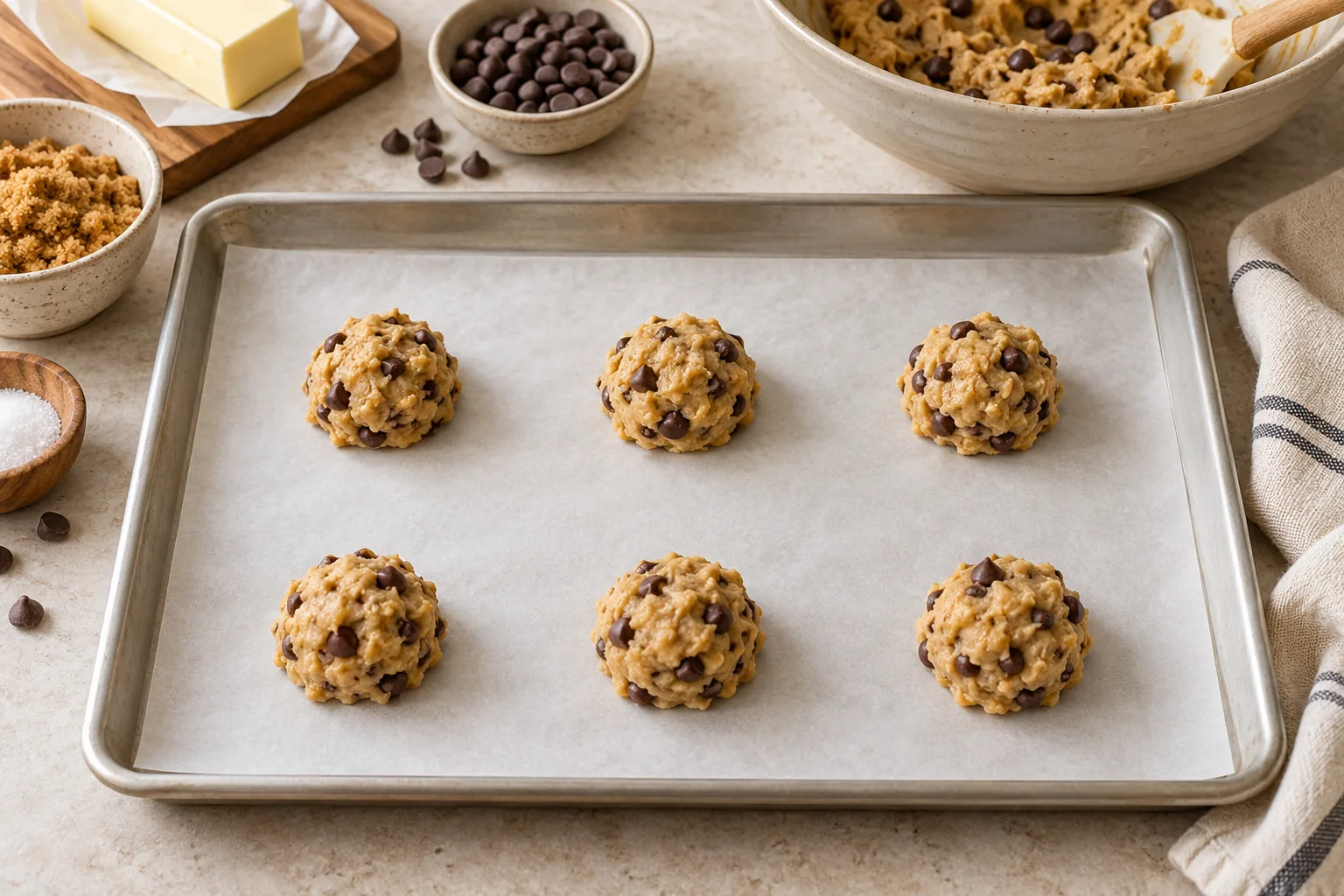
For best consistency, bake one type and size at a time. Mixing miniature cookies with oversized bakery-style portions on the same sheet makes timing difficult.
How to Tell When the Cookies Are Ready
For many crisp-edge, soft-center drop cookies, the outside will be lightly golden or clearly set while the middle still looks softer. The exact colour cue varies with chocolate, cocoa, sugar and flour type, so follow the recipe rather than relying on a universal number of minutes.

Consider how the cookies change during the recommended tray-rest period. They continue to firm as they cool. If they remain visibly wet or taste raw after cooling, they needed additional baking; don't prioritize a soft appearance over proper cooking.
Resting on the Hot Baking Sheet
Many cookie recipes instruct a short rest on the tray before moving cookies to a rack. The residual heat helps the tender centers set enough to transfer without breaking. Leaving cookies on a very hot sheet for too long can continue browning the bottoms, though, so use the stated rest time. Our Ginger Spice Drop Cookies recipe includes a short rest on the baking sheet before rack cooling.

Transfer carefully with a thin spatula. Allow full cooling before evaluating final crispness, because hot cookies often feel softer than they will at room temperature.
Why the Edges Turn Soft the Next Day
Cookies exchange moisture with the surrounding air and with one another. If crisp-edged cookies are sealed while warm, condensation may soften them. If stored beside much softer cookies, moisture migration can affect both textures.
Cool completely before packing and separate cookies with very different moisture levels. Use the recipe's storage window and container recommendations.
Troubleshooting: Cookies Spread Too Much
Common causes include overly warm dough, incorrect butter state, too little flour, excess sugar or fat, an unsuitable pan and an inaccurate oven temperature. Check the original recipe and your measurements before making changes.
If the recipe calls for chilling, honour it. A tray filled with warm dough on a hot baking sheet can also encourage premature spread; let baking sheets cool before reusing them.
Troubleshooting: Cookies Stay Thick and Cakey
Too much flour, different egg proportions or excessive leavening can produce a thick, cakey cookie. If you used a muffin-like cookie recipe, that may be its intended texture. Baking longer won't turn every thick cookie into a chewy chocolate chip cookie.
Choose a formula designed for the desired result and measure ingredients accurately. Change just one variable when testing an adjustment.
Troubleshooting: Cookies Are Crisp All the Way Through
Small portions, very thin shaping or excessive baking can dry the middle. Reduce portion variation by using a scale and follow the recipe's visual cues closely. A smaller cookie will often require less time than a larger one, but there's no reliable universal minute adjustment.
Frequently Asked Questions
Should I remove cookies while the center looks soft?
Follow the recipe's doneness cues. Some cookies are meant to leave the oven with a softer-looking center that sets on the tray, but the dough should not remain raw after cooling.
Does chilling always make cookies thicker?
No. It can affect spread in many formulas, but ingredients, mixing method and oven conditions also determine thickness. Some cookies are designed to bake without chilling.
Do I need brown sugar to get chewy centers?
Brown sugar is common in chewy cookies, but the entire ingredient formula determines texture. White sugar, fat type, eggs and baking technique all contribute.
Why are my cookie bottoms too dark?
A dark or thin baking sheet, overly low rack, high oven temperature or overbaking may be involved. Check the pan and oven against the recipe.
Can I use this approach for gluten-free cookies?
Some gluten-free formulas achieve crisp edges and tender centers, but their binding and moisture requirements differ. Choose a gluten-free recipe tested for that texture.
A Good Cookie Is About Contrast
Crisp edges and soft centers come from the relationship between dough composition, thickness, heat and cooling. Start with a recipe developed for that contrast, measure accurately, use the right pan and pay attention to the finish rather than relying only on the timer. Once you find a dependable method, repeat it before experimenting with new flavours.
Images are AI editorial illustrations of the baking technique.
IN PICTURES
From the baking notebook
FROM THE RECIPE BOX


